Venue spotlights/Mycenae, Greece
Mycenae: the Lion Gate, museum and Treasury of Atreus explained
A monumental gateway, an on-site museum and a tomb outside the citadel tell different stories. Give each a place in your Mycenae visit.
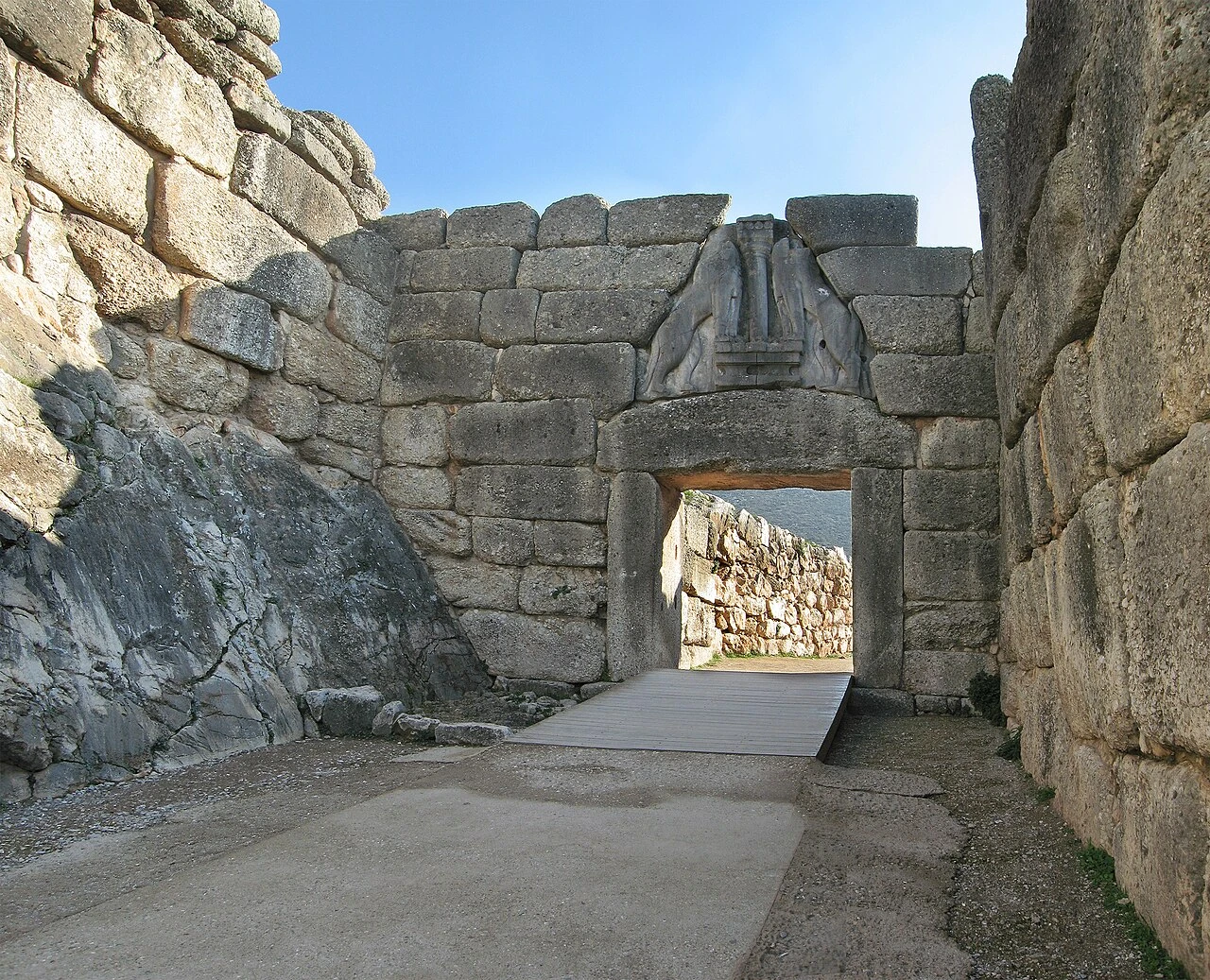
The Lion Gate is the memorable photograph, but it is only one part of Mycenae. The citadel shows how power occupied a hill; the museum gives its inhabitants objects and daily lives; the Treasury of Atreus makes burial architecture tangible. Seeing all three helps you recognise a Bronze Age society rather than use the ruins merely as scenery for Homer.
One ticket does not mean one doorway
The Lion Gate is the ancient entrance into the fortified citadel, not a separate attraction requiring its own ticket. The museum lies within the wider archaeological site, north of the acropolis. The Treasury of Atreus is a tomb down the hill outside the citadel, with its own approach. Do not leave assuming that the tombs beside the main ruins were necessarily the Treasury.
Our suggested sequence is citadel, museum, then Treasury on departure; reverse it if confirmed opening conditions make that more practical. Keep your ticket for each admission point and ask staff about the day’s entry sequence before leaving the main area. Agree the Treasury stop explicitly with a driver. If walking between components, check the current pedestrian approach rather than assuming an internal path or a level, traffic-free connection.
At the Lion Gate, look above the lintel
The Argolis Ephorate dates the gate to the citadel’s expansion around the middle of the 13th century BC. Two animals flank a column in the triangular relief above the great horizontal lintel. Compare this shaped panel with the huge, irregular wall blocks beside it: a controlled entrance could also advertise authority. “Cyclopean” masonry takes its name from the later story that giants built such walls, not from evidence of supernatural builders.
Just inside is Grave Circle A, an older burial enclosure brought within the expanded walls. The sequence matters: the rulers’ graves preceded the gateway you have just crossed. The palace remains lie farther uphill. Follow the permitted route, and do not make access to an underground cistern or every excavated area a condition of a successful visit.
Use the museum to put people back into the ruins
The on-site museum’s official description emphasises everyday life, beliefs about death and Mycenaean achievements. Give it a deliberate part of the visit: choose one object linked to domestic life and one linked to burial, then connect them to the spaces outside. This is a different task from simply searching for gold.
Many celebrated Grave Circle A finds, including the original gold mask commonly called the “Mask of Agamemnon”, belong to the National Archaeological Museum in Athens. That museum’s excavation-diary research dates the Circle A dead to the 16th century BC and rejects Schliemann’s identification with the Homeric king. The label is a history of interpretation, not a verified portrait. Athens is a separate visit with its own admission.
The Treasury is a tomb: read the stonework
“Treasury of Atreus” and “Tomb of Agamemnon” are conventional names, not established identities of an occupant. This is a monumental tholos, or beehive tomb. Pause in the long entrance passage, the dromos, and notice how it directs attention towards the doorway. Inside, where entry is permitted, the stone courses step inward as they rise: a corbelled vault, rather than a dome made from radiating wedge-shaped stones.
Compare the empty relieving triangle above the tomb doorway with the sculpted triangle at the Lion Gate. Related building solutions served different purposes: a fortified threshold for the living and a monumental burial place. The chamber is not a treasury full of surviving gold. Its volume and engineering are the exhibit; the traditional royal names add a later layer of storytelling.
Leave time for all three, and verify their hours
As a planning allowance, reserve around three hours for the three components, including the move to the Treasury and pauses; this is not a measured walking time. On 19 October 2026, Hellenic Heritage lists €20 full admission and 08:00–18:00 for 16–31 October, changing to 08:30–15:30 for 1 November–31 March, with last entry 20 minutes before closing. The museum directory gives a different general summer closing time, so confirm the museum and tomb separately instead of assuming the site’s latest entry leaves time for both. The museum contact is +30 27510 76802.
Stanza’s independent Mycenae guide has a public preview. Try it before buying and choose commentary that suits your actual route; download in the app before travelling for offline listening. Audio, venue admission and transport are separate. A guide’s stop list cannot confirm current access. Even without audio, the comparison between gate, objects and tomb gives this visit a clear thread.
A few more questions before you go
Sources & further reading
Visitor information checked .
Checked 19 October 2026 against Hellenic Heritage, the Argolis Ephorate, the Ministry’s museum directory and National Archaeological Museum research. Official pages differ on summer museum hours; confirm each component’s access before travelling. Route order and time allowances below are editorial suggestions.
- Hellenic Heritage: Mycenae, admission and visitor information
- Argolis Ephorate: Acropolis of Mycenae
- Ministry of Culture: Archaeological Museum of Mycenae
- National Archaeological Museum: Stamatakis’s Mycenae excavation diary
- Smarthistory: Treasury of Atreus, architectural explanation
Questions or a correction? Let us know. Our content standards (English).