Stanza · Audio guide
Burg Hochosterwitz Audio Guide
A place to remember. A story to take with you.
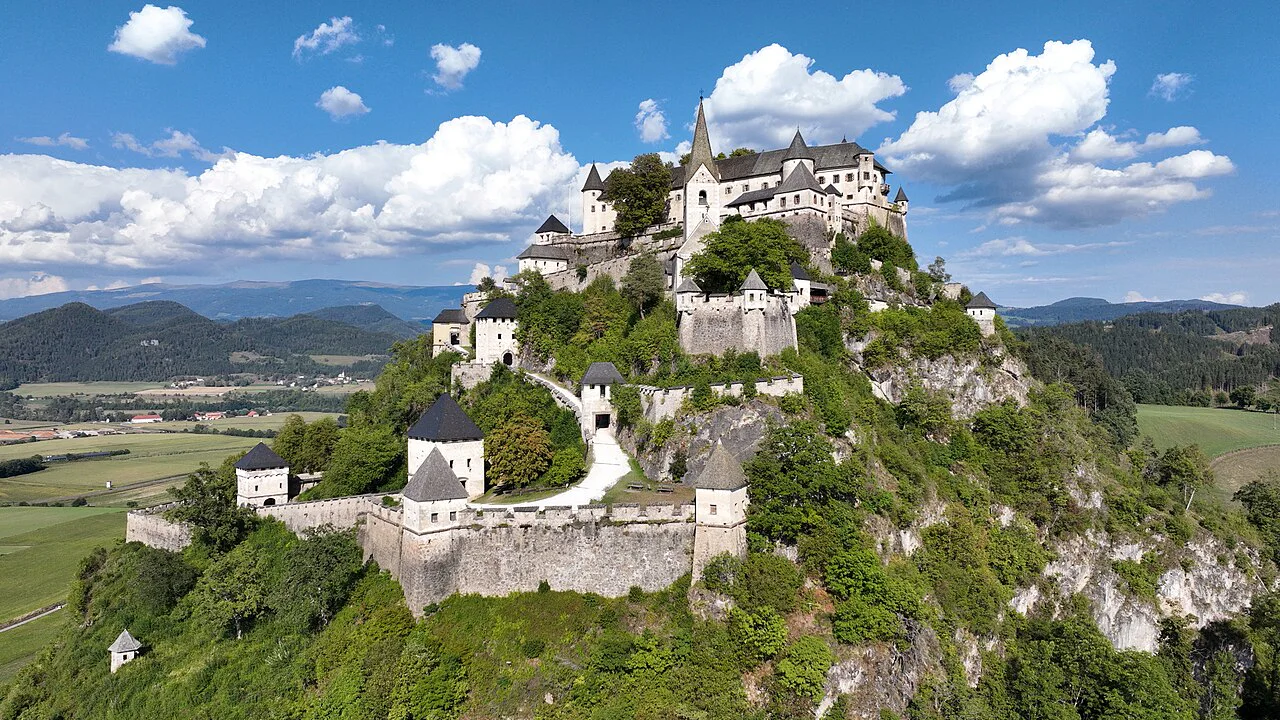
Hochosterwitz Castle is a castle located on a 172-metre-high dolomite rock in Austria. It is considered one of the most impressive medieval castles in the country and serves as a major tourist attraction.
Download Stanza, then search for “Burg Hochosterwitz”.
About the tour
One guide. Your kind of visit.
Hochosterwitz Castle is a castle located on a 172-metre-high dolomite rock in Austria. It is considered one of the most impressive medieval castles in the country and serves as a major tourist attraction.
Ready when you are.
- 01Get the free Stanza app.
iOS & Android
- 02Find your guide.
“Burg Hochosterwitz”
- 03Download before you go.
Works offline
Audio guide / 15 narrated stops
Inside the guide
Get to know a few of the stories before you go. Open a stop to read more.
01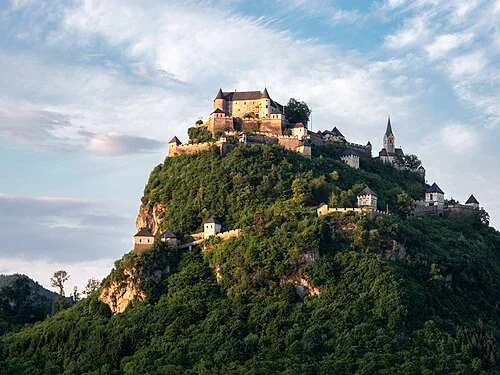 The Dolomite Rock and the Ensign's Gate (Gate 1)
The Rock Castle from Afar
Welcome to Hochosterwitz, a fortress that seems to grow out of the rock itself. A freestanding cone of dolomite rises sheer from the Carinthian plain, more than 170 metres from base to summit. On a clear day the castle can be picked out from as far as thirty kilometres away. At the top sits the citadel; below it, a narrow road coils upward through a chain of gatehouses, one after another. That road raises the question this tour follows: why build a castle on a rock no army could climb, and then ring it with gates? The answer lies in the sixteenth century, and the gates themselves will tell it. The rock was here first, though. A settlement clung to this height as early as the Bronze Age, and the castle was first written down in the year 860, under the name Astarwiza.
Dimitry Anikin · CC0
02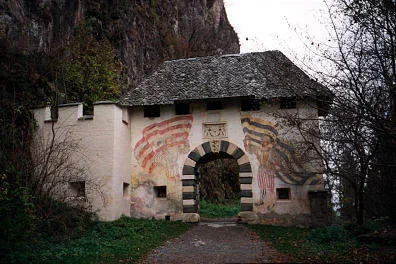 The Dolomite Rock and the Ensign's Gate (Gate 1)
Fähnrichtor - First Gate of Fourteen
The first gate is the Fähnrichtor, the Ensign's Gate, dated 1575. It is the first of fourteen gatehouses on the road, each with its own trick for stopping an attacker. The whole climb covers 620 metres of fortified road. Between 1570 and 1583 Baron Georg von Khevenhüller, who bought the castle outright in 1571, rebuilt it into what he called the Haubt Vestung, the principal stronghold of Carinthia. These were anxious years. Ottoman armies were raiding deep into Inner Austria, and the region's defenses were being strengthened all at once — the Riegersburg, and the cities of Vienna, Graz and Klagenfurt. Hochosterwitz was the Khevenhüller answer on their own mountain. Each gate along the path carries a diagram of the mechanism once used to seal it, so the defenses can still be read gate by gate.
The original uploader was Asterion at English Wikipedia. · CC BY 2.5
03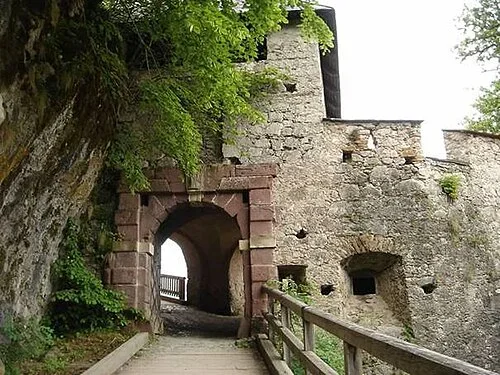 The Lower Defense Line and the Guard Museum (Gate 4)
Engeltor - The Fourth Gate
Tradition here is proud and precise: the castle, people say, has never been taken by force, and no attacking army ever got past this gate, the fourth. The Engeltor, the Angel's Gate, stands in a natural trap, sheltered front and back by deep cuts in the rock and by an overhanging cliff on the mountain side. Its portal is carved from red sandstone, and the slots for the drawbridge chains are still visible in the masonry. In the marble keystone above the arch, an angel gives the gate its name, beside the year 1577. That date marks a rebuilding, not the first raising of the gate. Whether every attacker really stopped here cannot be proven, but the story has traveled with the castle for centuries.
Listen in the appAlois zingl · CC BY-SA 3.0
04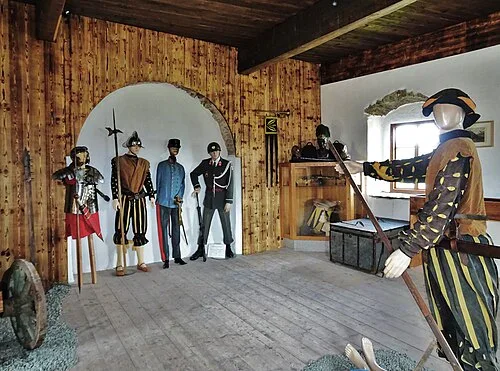 The Lower Defense Line and the Guard Museum (Gate 4)
The Guard Museum in the Watchtower
Beside the Angel's Gate stands the watchtower raised in 1577 to house the gate's soldiers. The men slept upstairs, and the tower is half sunk into a cellar below. Between 2012 and 2015 it was converted into the guard museum of the Khevenhüller castle guard. Mannequins in period dress line the wooden-panelled room, showing uniforms and equipment from the sixteenth century up to the present.
Listen in the appPhoto: Rollroboter · CC BY-SA 4.0
05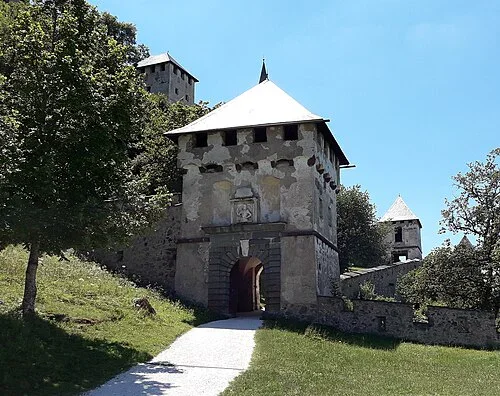 The Khevenhüller Gate and Founder's Monument (Gate 7)
Khevenhüllertor - Gate 7
The seventh gate is the showpiece of the whole ascent. The Khevenhüllertor, finished in 1582, is the most ornate and most heavily defended gatehouse on the mountain. Its round-arched gate is framed in green chlorite schist, and the builders worked deliberately within three materials: red sandstone, green schist, and white limestone or marble. The style is Mannerist — architecture meant to impress as much as to defend.
Listen in the appPhoto: PicturePrince · CC BY-SA 4.0
06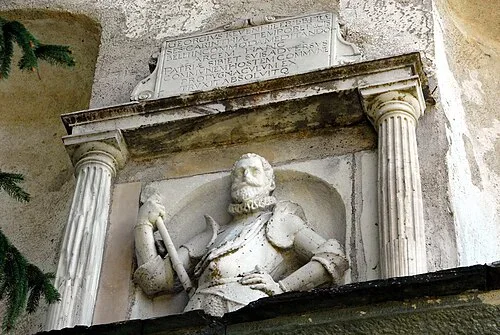 The Khevenhüller Gate and Founder's Monument (Gate 7)
The Builder in Marble
Set into the gate he built is the man himself. A marble relief bust shows Georg von Khevenhüller in plate armor, framed by columns, with a Latin inscription panel above. He was Landeshauptmann of Carinthia, the governor of the province. He wanted the future to see him as its protector.
Listen in the appPhoto: Johann Jaritz · CC BY-SA 4.0
07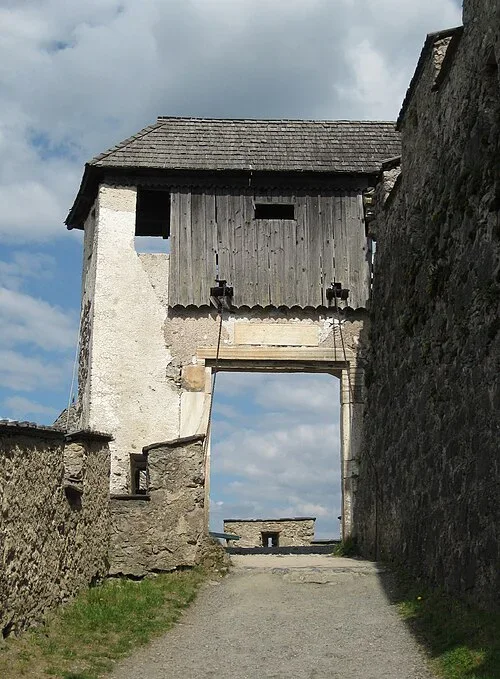 The Chasm Defenses and the Bridge Gate (Gate 12)
Brückentor - Gate over the Void
Near the summit the road itself becomes the weapon. The twelfth gate, the Brückentor, stands where the path crosses bare rock ledges with sheer drops on either side. A drawbridge once spanned the gap here, and its chains hang down the weathered timber face of the gatehouse. When the bridge went up, the main approach vanished in moments, leaving an attacker stranded before a closed wooden front and open sky. Retractable crossings like this were the sharpest tool in the gate sequence: the mountain did half the fighting, and the builders simply cut the road where it could be cut.
Listen in the appSl-Ziga · Public domain
08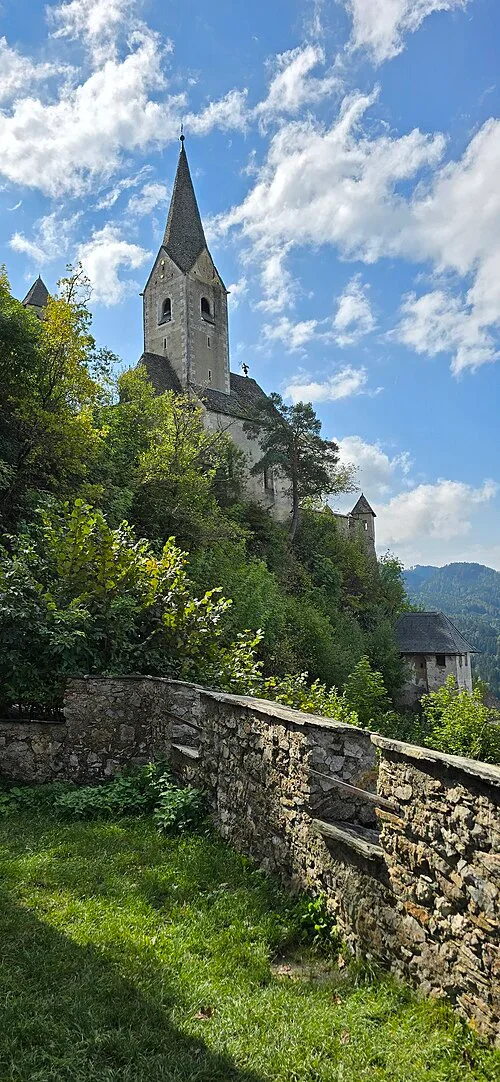 The Castle Church of St. John of Nepomuk
The Castle Church of St. John Nepomuk
Below the thirteenth gate a narrow path leads down to a different building: the castle church of Saint John of Nepomuk, perched on its own rock below the ramparts. Unlike the castle, it always stood open to the local population. Since 1607 it has also held the crypt of the Khevenhüller family. The reason is a rebuff. Franz, Baron von Khevenhüller, was Protestant, and the parish of Villach, Catholic once more, refused him burial in its main church. So the family carried their dead up their own mountain instead. The most recent burial was Maximilian, Prince of Khevenhüller-Metsch, who died in 2010.
Listen in the appPhoto: Qwertzu111111 · CC BY-SA 4.0
09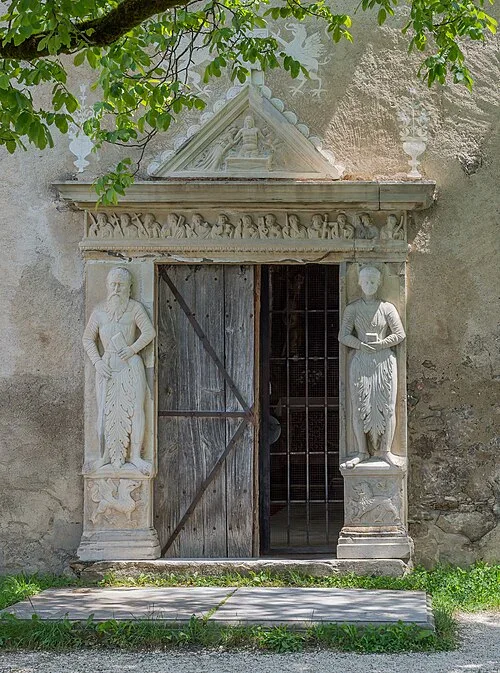 The Castle Church of St. John of Nepomuk
The Italian Portal of the Apostles
The doorway of this mountain church came from Italy. Its upper section carries busts of the twelve apostles with Christ, and two tall figures stand guard on either side of the door itself. Italian Renaissance sculpture, carried over the mountains to a Carinthian hillside.
Listen in the appPhoto: Johann Jaritz · CC BY-SA 4.0
10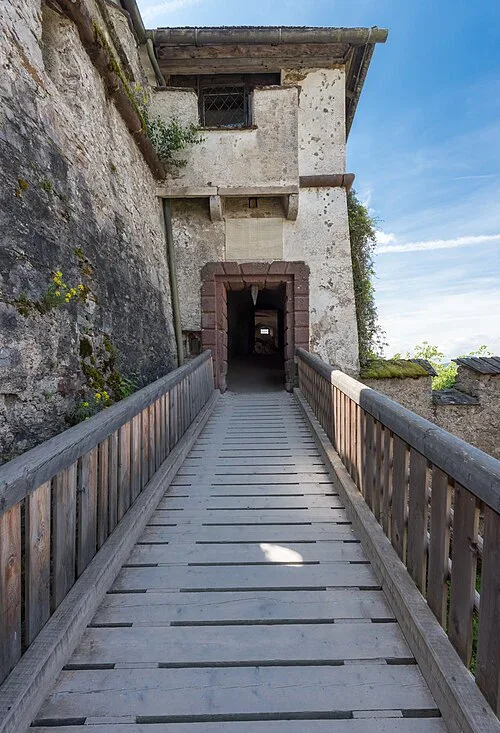 The Summit Gate and Outer Bailey (Gate 14 & Vorhof)
Kulmertor - The Fourteenth Gate
The last barrier is the Kulmertor, raised in 1576 and named for the Kulmern, who served for years as the castle's caretakers. A wooden bridge carries the path to the gatehouse, which is cut straight against the living rock. In earlier times a balance-beam bridge crossed the deep ditch here, backed by a falling beam and a portcullis. Inside the long, vaulted passage the road makes a sharp turn to the left, into the outer court in front of the castle proper. Fourteen gates, and this one closes the line.
Listen in the appPhoto: Johann Jaritz · CC BY-SA 4.0
- 11
The Outer Bailey and the Stuffed Ox
The famous legend of Countess Margaret and the ox stuffed with grain, thrown over the wall to end a siege.
- 12
The Inner Courtyard and the Vow
The 1576 marble plaque in the painted courtyard, where Georg von Khevenhüller bound his family to the castle forever.
- 13
The Chapel of St. Nicholas
The family's private chapel off the courtyard, with its Baroque altar of the Holy Family and apostles painted on the vault.
- 14
The Historic Armory
The armory of the citadel, with racks of halberds and a suit of armor nearly two and a half metres tall.
- 15
From the Ramparts - What Hochosterwitz Tells Us
From the summit ramparts, what the fortress and its unbroken stewardship say about the people who built it.
Burg Hochosterwitz
Frequently asked questions
How much does the guide cost?
Free app download. Listed guide price: $1.99. Guide price shown in the app. Audio guide only. Venue admission is separate.
Can I listen without internet?
Yes. Download the guide’s audio, images, and maps in the app before your visit. Your downloaded content is then available offline.
Can I listen in my language?
This audio guide is available in 15 languages, including English.
Do I need to follow a schedule?
No. This is a self-guided experience. Choose your stops, pause whenever you like, and return to a story at your own pace.
At your own pace
Explore Burg Hochosterwitz.
Download Stanza, then search for “Burg Hochosterwitz”.
Free app download · Guide price shown in the app
Keep exploring
Nearby audio guides
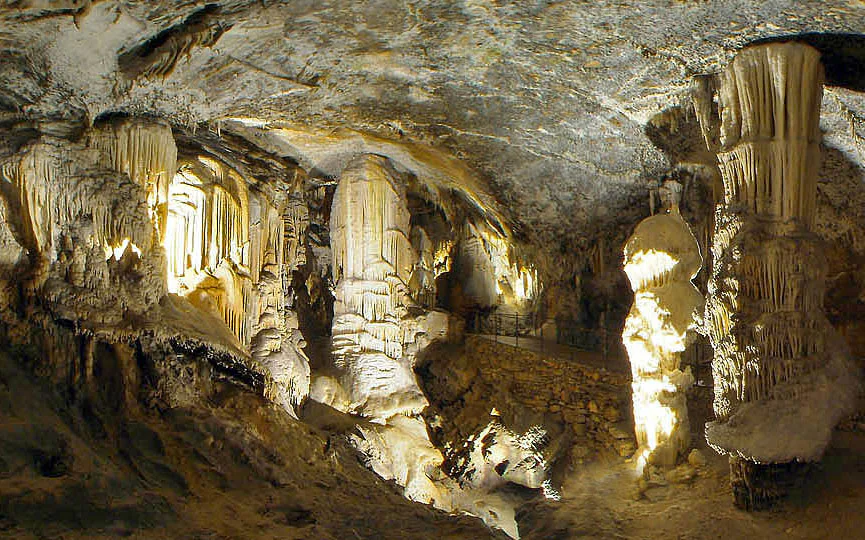
Municipality of Postojna · 110 km
Postojna Cave
Content & sources
Original uploader was Boštjan Burger (Lander) at sl.wikipedia · CC BY-SA 3.0
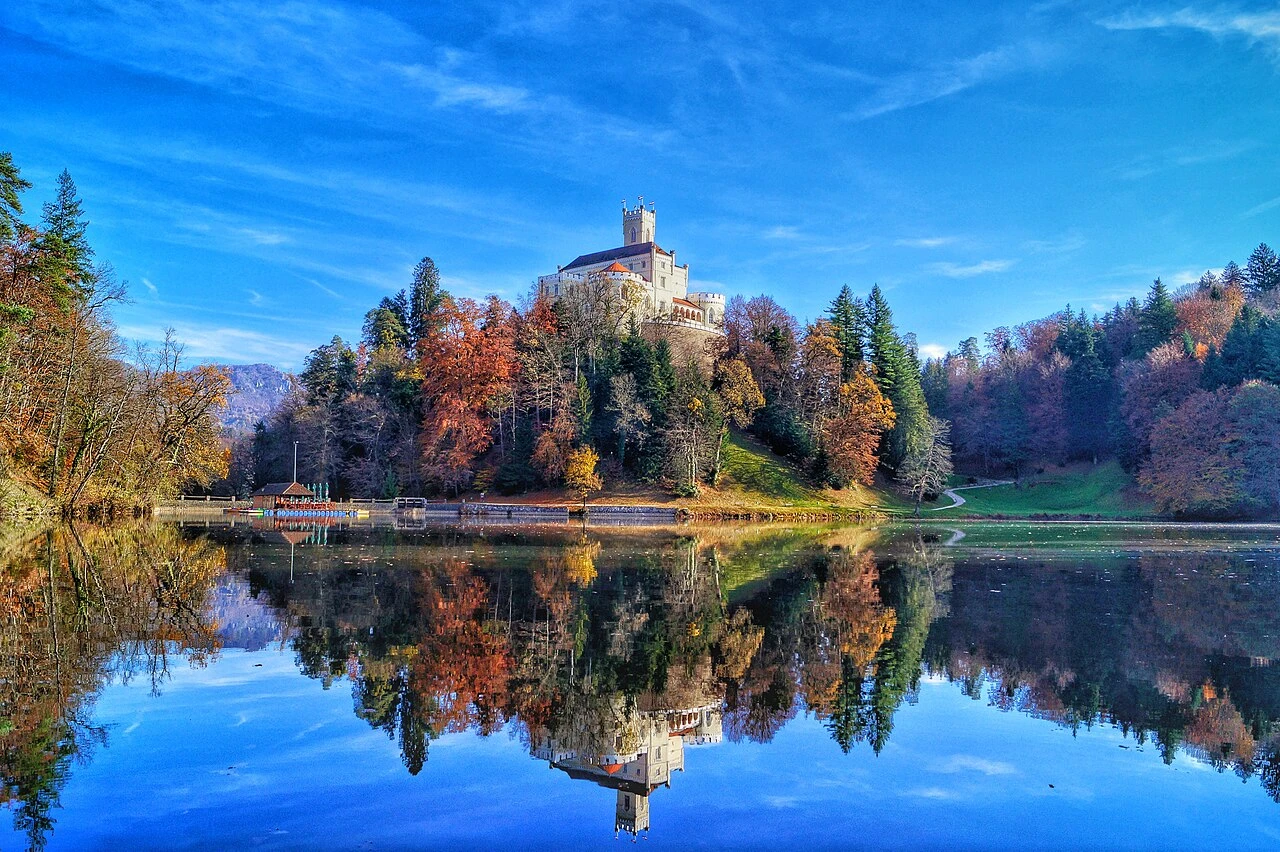
Trakošćan · 127 km
Trakošćan Castle
Content & sources
Drazen Dombaj · CC BY-SA 4.0
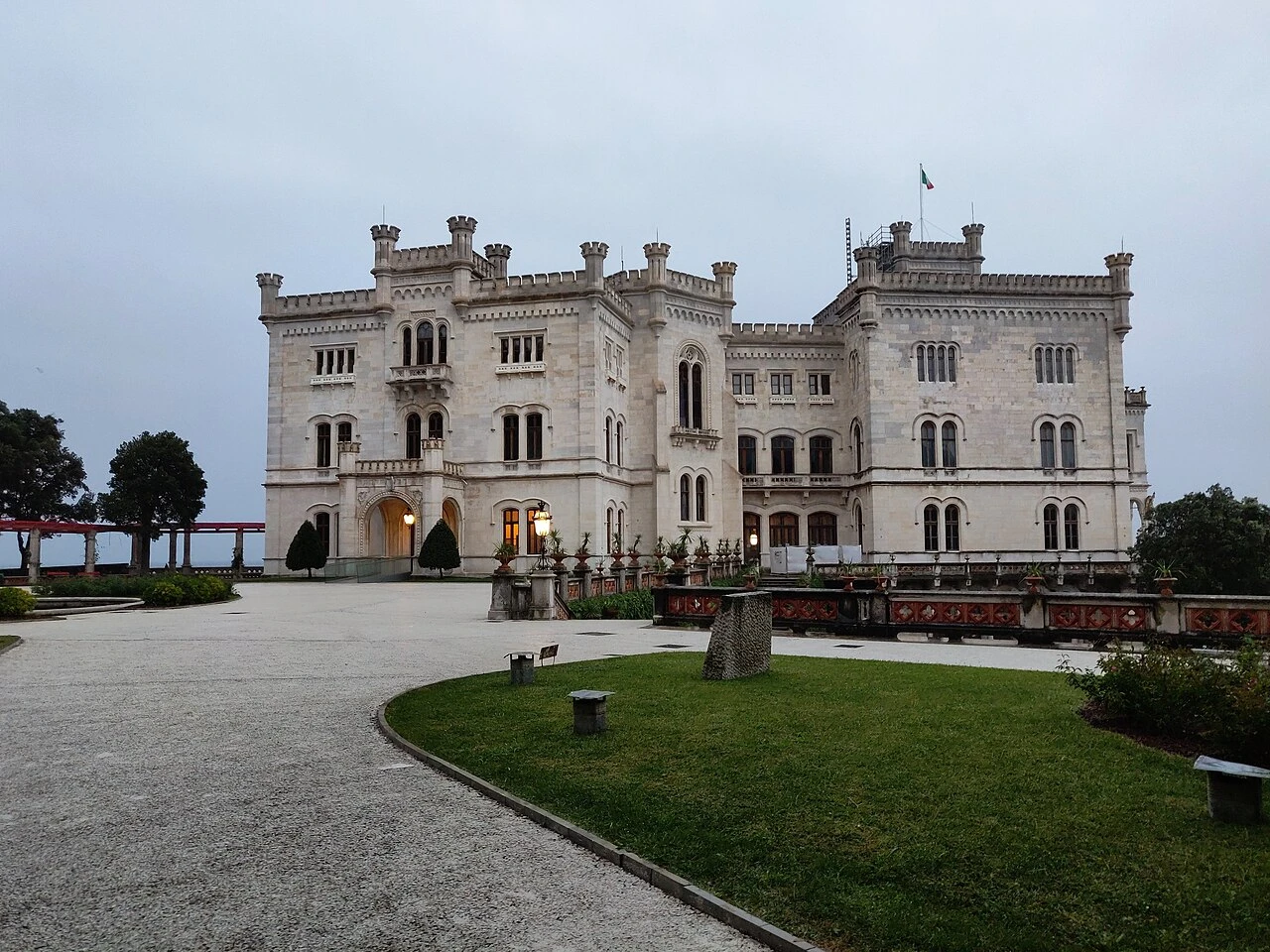
Trieste · 130 km
Miramare Castle
Content & sources
Michał Bulsa · CC BY-SA 4.0
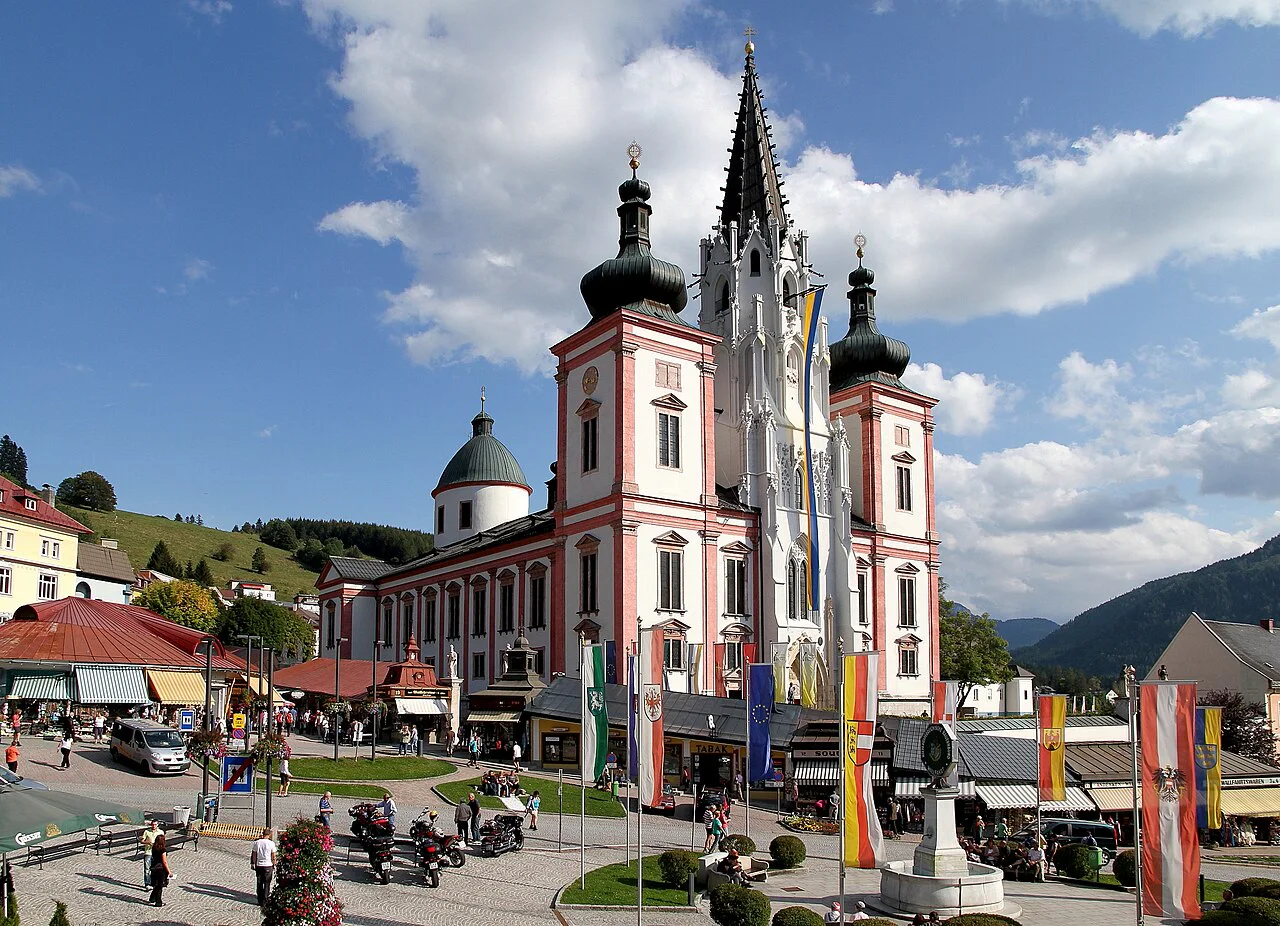
Mariazell · 131 km
Basilika Mariazell
Content & sources
C.Stadler/Bwag · CC BY-SA 3.0 at