Languages
15Festung Hohensalzburg Audio Guide
Festung Hohensalzburg is a landmark in Salzburg, Austria. Explore it with Stanza's GPS-triggered offline audio guide — available in 15 languages.
Quick Facts
32
Stops
15
Languages
100%
Offline
📍 Salzburg, Austria · 47.7950°N, 13.0473°E
About Festung Hohensalzburg
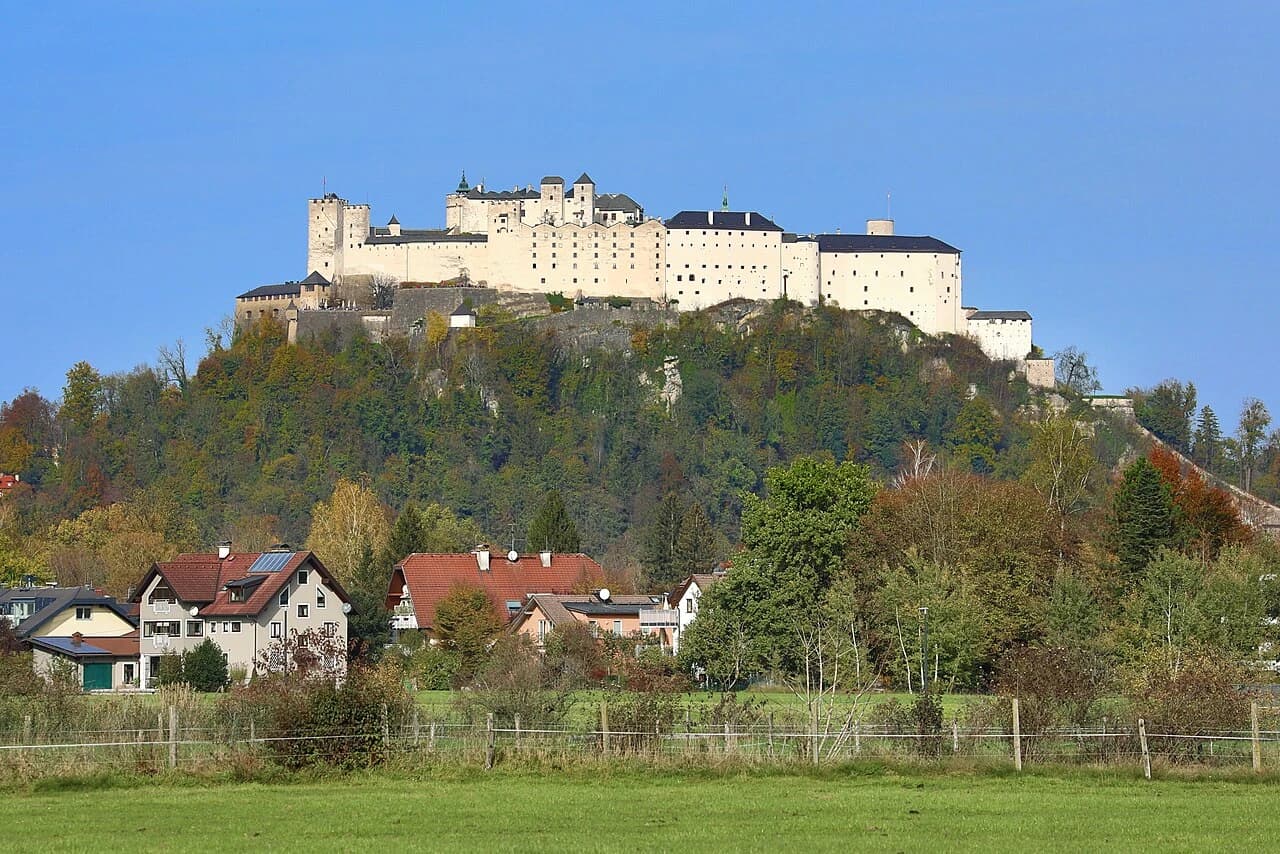
Hohensalzburg Fortress is a large medieval fortress situated atop the Festungsberg mountain in Salzburg, Austria. It is one of the largest and best-preserved medieval castles in Europe, offering panoramic views of the city.
Festung Hohensalzburg is also known as Hohensalzburg, Festung Hohensalzburg Gesamtanlage, Freiflächen archäologisches Fundhoffnungsgebiet, Festung Hohensalzburg.
This self-guided audio tour features 32 narrated stops organized across 6 sections, including Arrival at the Unconquered Goliath, The Reißzug: The World's Oldest Railway, Hoher Stock: The Golden Hall, The Golden Chamber and Tiled Stove, Museums of the Fortress, Panoramic Climax and the Archbishop's Fate. As a fortress, Festung Hohensalzburg offers a unique cultural experience in the heart of Salzburg, Austria.
The Stanza audio guide is available in 15 languages and works entirely offline — download the complete tour including audio narration, maps, and images before your visit. As you walk through Festung Hohensalzburg, GPS-triggered narration plays automatically at each point of interest.
Last updated:
What you will hear
Arrival at the Unconquered Goliath
Establishes the fortress's scale and its 900-year history of never being taken by force. Includes the approach view and the primary entrance gate.
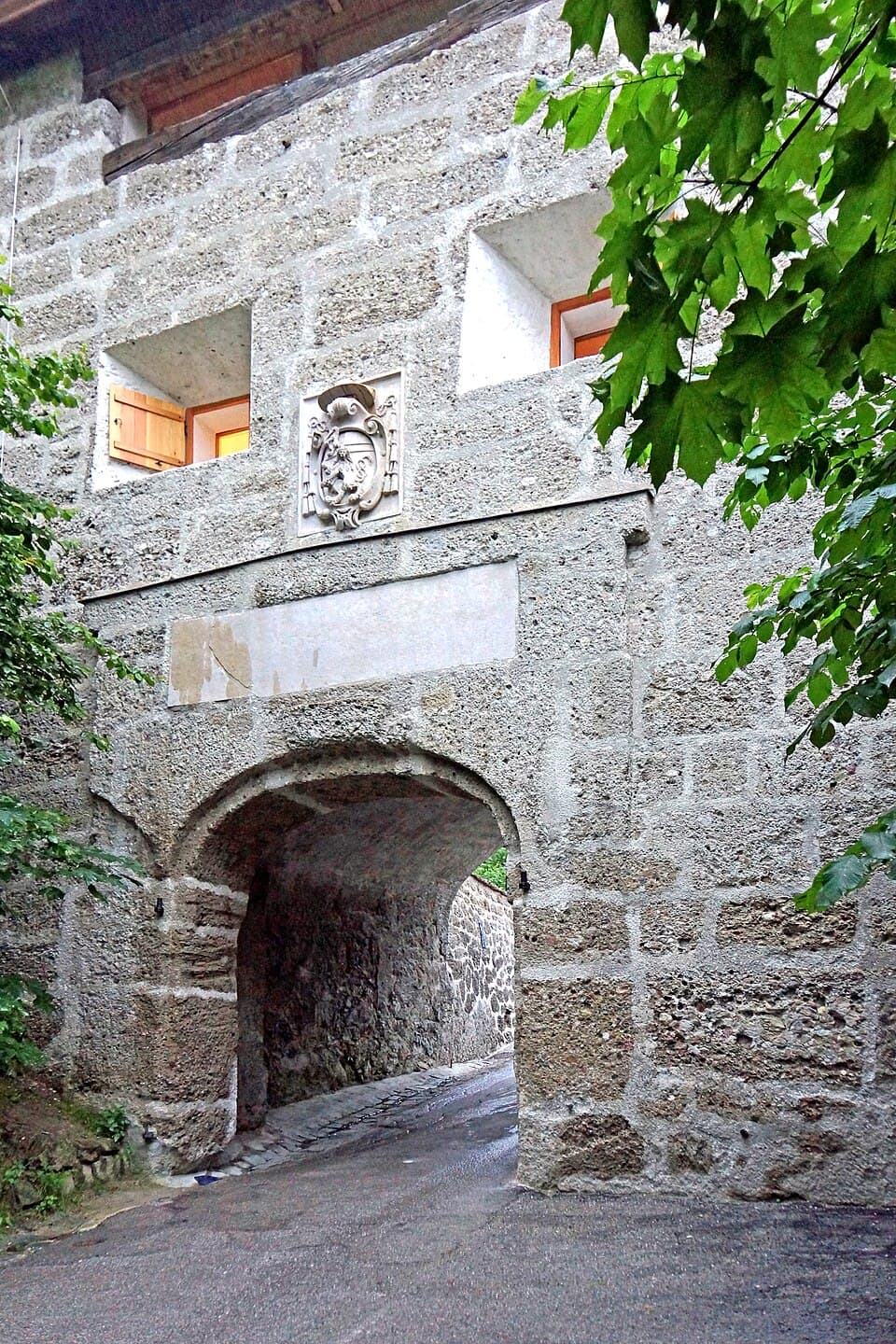
The Upper Gatehouse
The approach to the castle was never intended to be easy. Construction on this formidable site began in 1077 under Archbishop Gebhard von Helfenstein during the Investiture Controversy. He needed a secure refuge against the forces of the Holy Roman Emperor, and these heights provided the perfect location. Notice the thickness of the stone walls and the deliberate narrowing of the passage. This architectural choice was a critical component of medieval defense, designed to bottleneck attackers and leave them vulnerable to projectiles from above. Every inch of the path was engineered to slow progress and break the momentum of a charging force. By forcing intruders into a tight space, the defenders could effectively manage much larger numbers of opponents. This gatehouse stands as a physical reminder of a time when the safety of the city’s rulers depended entirely on the strength of their stone and the cleverness of their engineering.
The Reißzug: The World's Oldest Railway
Highlights the engineering marvel of the supply funicular, in operation since at least 1515.
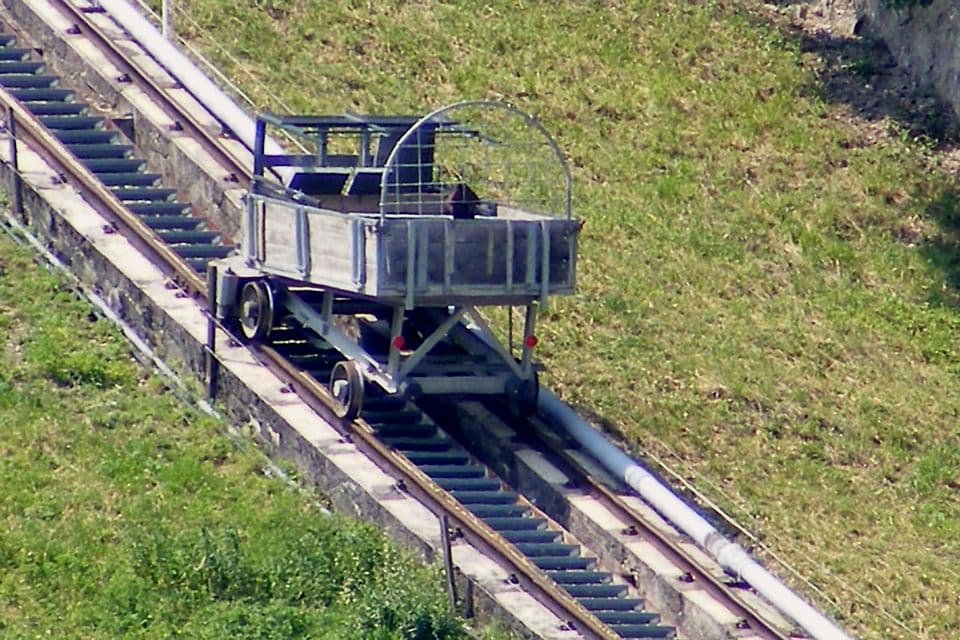
The Reißzug Freight Car
The Reißzug system was the ultimate labor-saving device of its time. For the soldiers and laborers stationed at the top, the 20-minute steep climb from the city was a grueling daily task. For heavy supplies like grain, wine, or stone, that climb was nearly impossible without help. This freight car demonstrates the simple utility that kept the fortress running. By utilizing a winching system, the Archbishops proved they were masters of both military defense and logistics engineering. The design allowed for the steady flow of goods, ensuring that the luxury of the upper state rooms and the needs of the garrison were always met. This efficiency allowed the fortress to operate as a self-sustained community, capable of holding out for months if necessary. Seeing the carriage on its steep incline today serves as a reminder that the grandeur of the castle was supported by practical, innovative solutions to the challenges of mountain living and medieval warfare.
Hoher Stock: The Golden Hall
Enters the most opulent part of the fortress, representing the absolute power and wealth of the Prince-Archbishops.
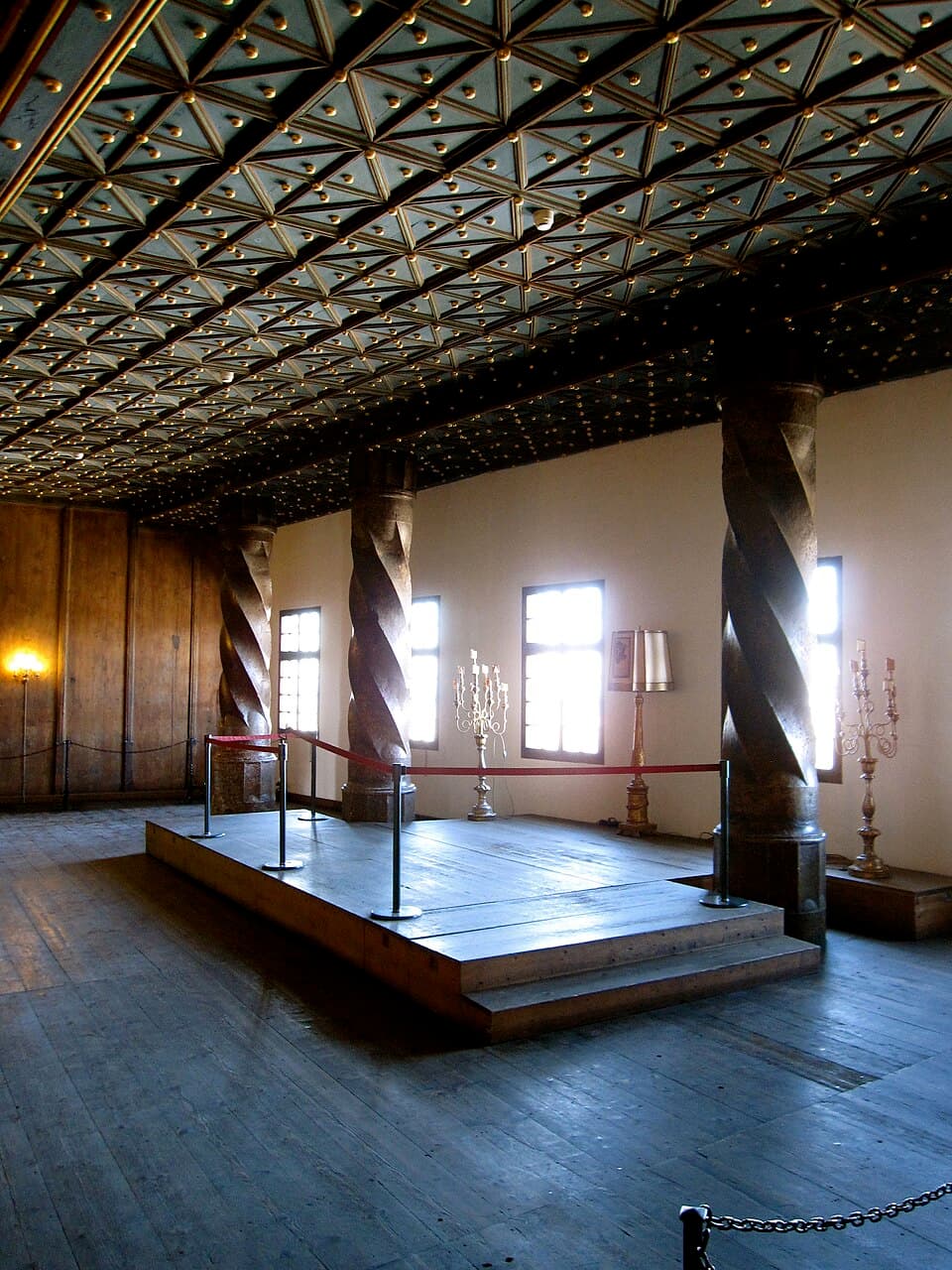
The Golden Hall
Located within the 'Hoher Stock' or main building, the Golden Hall features massive dimensions intended to awe visiting dignitaries and provide a suitable stage for the Prince-Archbishops' most important functions. This was the site of grand banquets, diplomatic receptions, and critical political negotiations that shaped the future of the region. Take a moment to admire the twisted marble pillars that support the space and the elaborate wooden coffered ceiling above. The scale of the room reflects the immense wealth and ambition of the Archbishops, who wanted their residence to rival the great palaces of Europe. Every detail, from the width of the floorboards to the height of the windows, was carefully planned to project power and sophistication. This hall was the public face of the Archbishopric's inner sanctum, where the luxury of the Renaissance met the rugged security of a mountain stronghold.
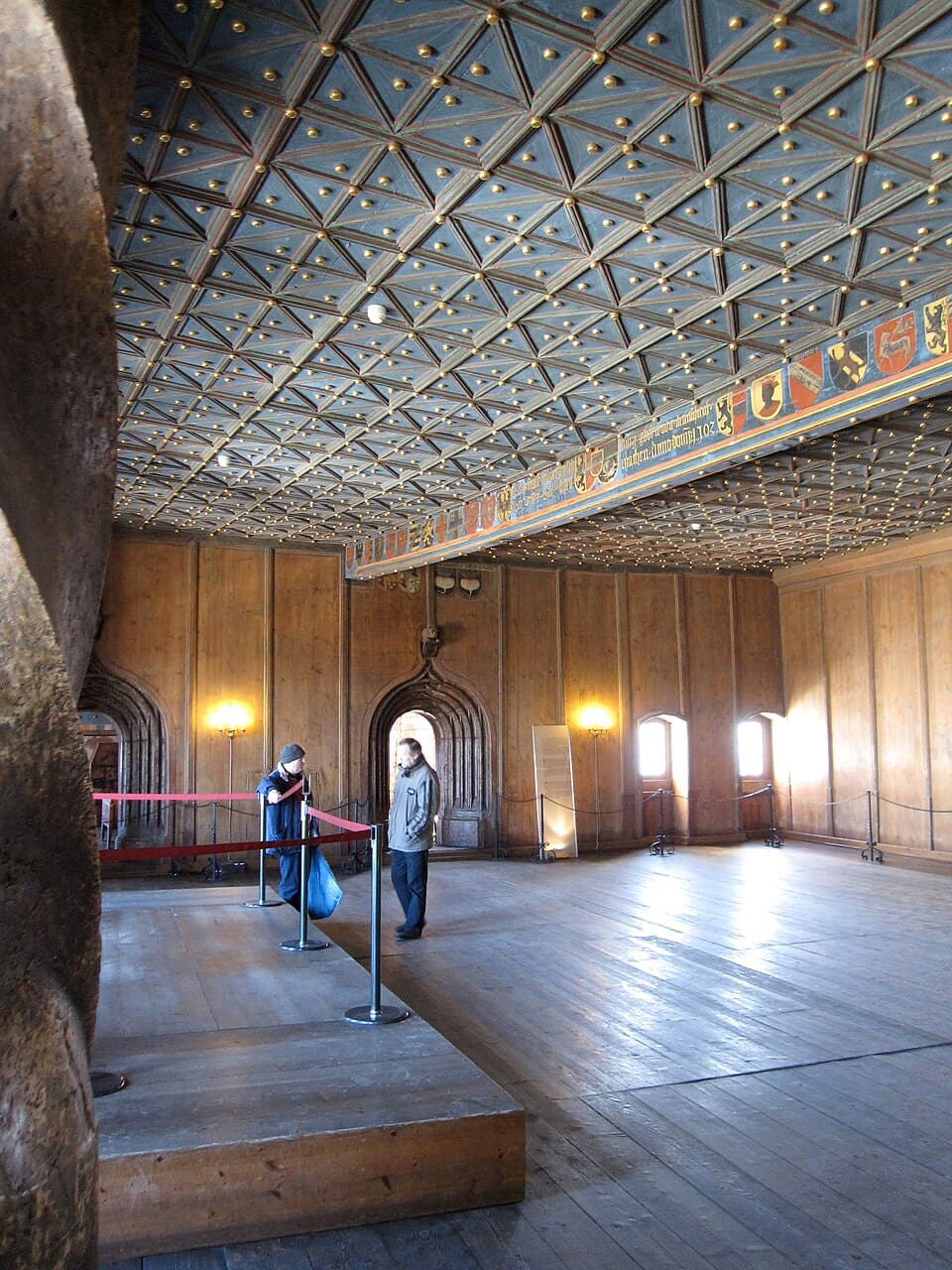
Architecture of Power
The state apartments of the fortress are among the most significant examples of late Gothic secular architecture in all of Europe. What makes them truly remarkable is their state of preservation; these rooms have remained largely unchanged since the early 16th century. Notice the intricate gothic doorways, with their pointed arches and detailed carvings, and the immense wooden paneling that covers the walls. This paneling served both an aesthetic and a practical purpose, providing insulation against the cold mountain winters. The craftsmanship displayed here is of the highest order, featuring complex geometric patterns and floral motifs. Unlike many other medieval castles that were renovated or destroyed over time, these rooms allow us to see exactly how a high-ranking prince of the Renaissance lived. Every door and panel was designed to be a visual reminder of the Archbishop's taste and authority, turning the interior of the fortress into a sophisticated palace hidden behind heavy defensive walls.
The Golden Chamber and Tiled Stove
Focuses on the private state apartments and the world-renowned 1501 majolica stove.
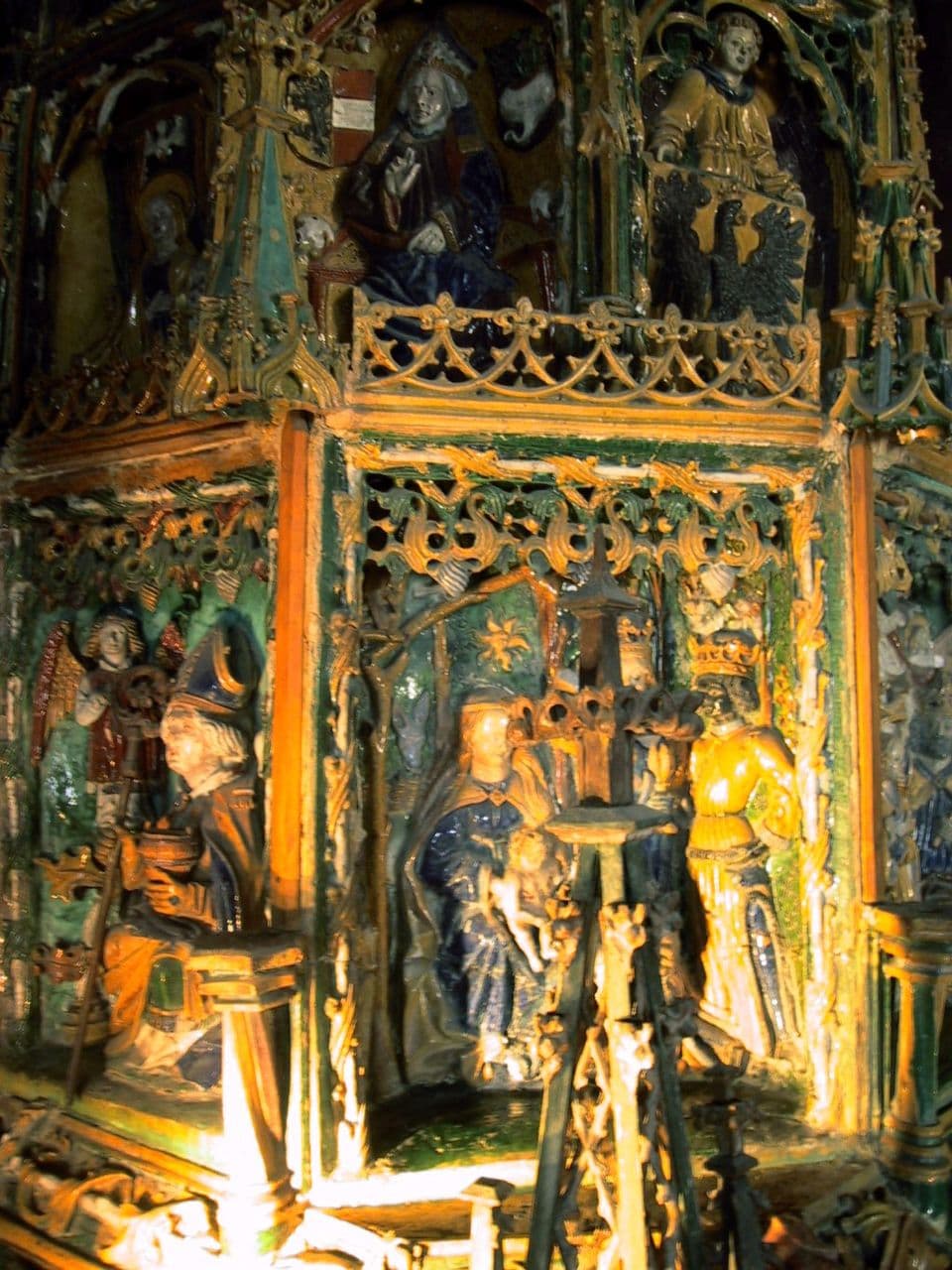
Tiled Stove Close-up
Examining the tiles of the 1501 stove up close reveals the true mastery of the Renaissance ceramicists. Each tile is a miniature work of art, featuring deep, glazed colors that have remained vibrant for over five centuries. The figures are rendered with surprising detail, showing the clothing, tools, and expressions of the era. You can almost feel the texture of their garments and imagine their daily lives. In the remote environment of a mountain fortress, such an object was a rare and valuable possession. It demonstrated that even in a place built for war and defense, there was space for delicate beauty and intellectual pursuits. The stove utilized the latest heating technology of the day, using its thermal mass to radiate heat long after the fire had died down. It is a perfect example of how the elite of the 16th century blended practical necessity with symbolic display, ensuring that their surroundings were as beautiful as they were functional.
Museums of the Fortress
A consolidated look at the military history and local culture housed within the fortress walls, including the Rainer Regiment and Marionette collections.
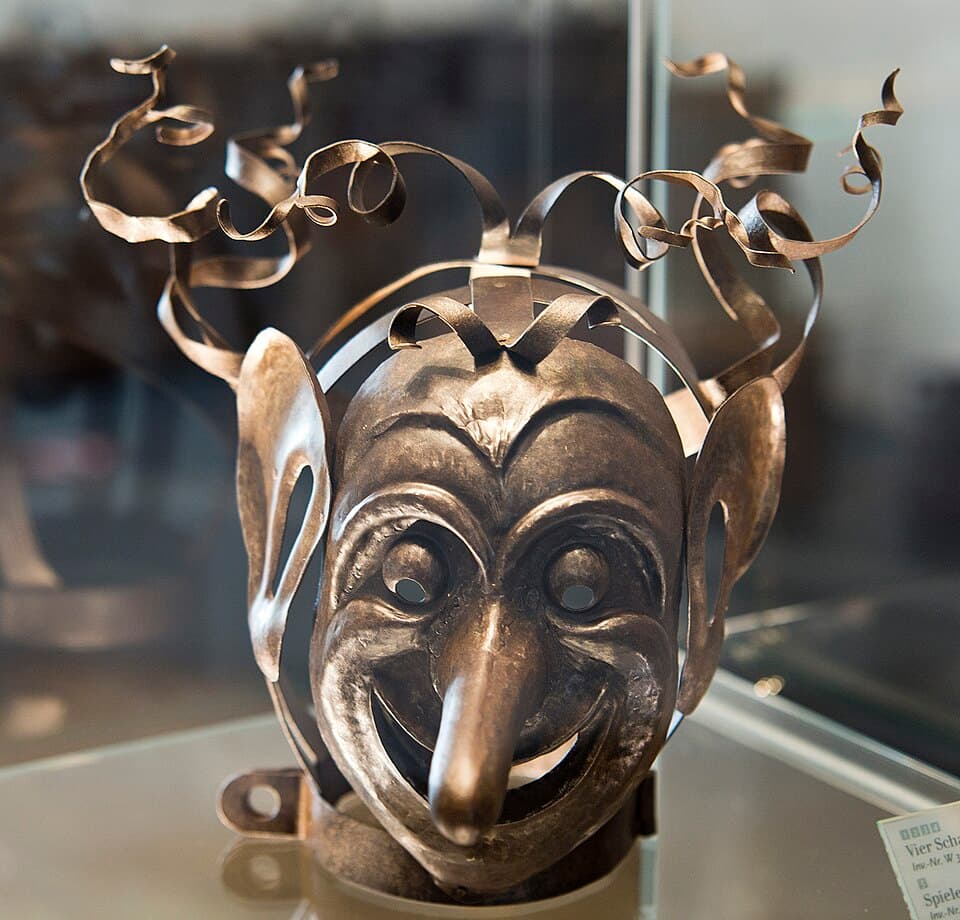
The Mask of Shame
The fortress was not just a home and a military post; it was also a central site for justice and punishment. This iron mask, known as a 'mask of shame,' was used as a form of public humiliation for minor social infractions. Citizens who were caught gossiping, engaging in public intoxication, or committing other social nuisances were forced to wear these heavy, often grotesque masks in the public square. The goal was not physical injury, but the destruction of the person's social standing through ridicule. The masks were often designed to resemble pigs or other animals to further dehumanize the wearer. This form of punishment reflects the medieval and early modern approach to law, where the community played an active role in shaming individuals back into acceptable behavior. Seeing such an object today provides a stark contrast to the luxurious state rooms above, reminding us of the rigid and often harsh social order that the Archbishops maintained from their mountain stronghold.
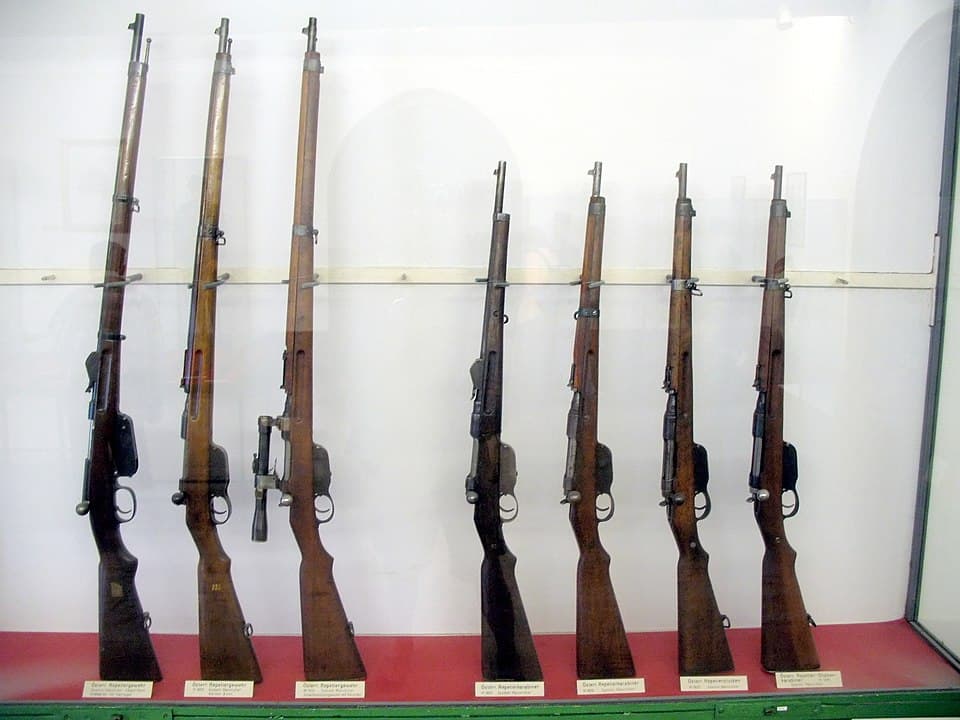
Rainer Regiment Museum
As the centuries passed, the role of the fortress shifted. In the 19th century, it transitioned from being the residence of a Prince-Archbishop to serving as a military barracks. This part of the museum is dedicated to the Rainer Regiment, a famed local Salzburg infantry unit that was stationed here for decades. The display of rifles and uniforms marks a transition into the age of modern military history. You can see how the weaponry evolved from the heavy, hand-forged tools of the Middle Ages to the standardized, industrial firearms of the 1800s and early 1900s. The presence of the regiment ensured that the fortress remained an active part of Salzburg's life even after the Archbishops lost their political power. This period saw the addition of many practical barracks features to the complex, as the focus shifted entirely toward housing large numbers of soldiers and maintaining military readiness in a rapidly changing European landscape.
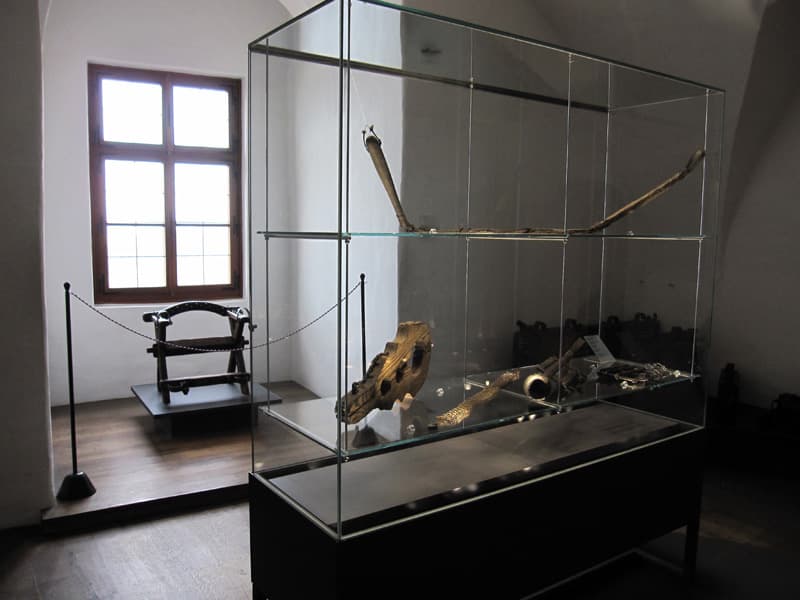
Artifacts of Torture
Acknowledging the darker chapters of the fortress's history is essential to understanding its full role in Salzburg. While the upper floors were filled with gold leaf and fine art, the lower areas often held a different reality. These dungeons and chambers were used for the interrogation and punishment of prisoners. On display are various iron instruments and a torture chair, tools used to extract 'confessions' according to the legal standards of the Middle Ages and the early modern period. In that era, torture was a documented and regulated part of the judicial process, used to ensure that the will of the state was upheld. The thick walls that kept enemies out also served to keep prisoners in, and the silence of the mountain made these lower levels particularly isolating. This collection serves as a somber reminder that the absolute authority of the Prince-Archbishops was backed by the threat of physical force and a legal system that favored the powerful over the accused.
Panoramic Climax and the Archbishop's Fate
The final stop on the tour, offering 360-degree views and the poignant story of Archbishop Wolf Dietrich's imprisonment.
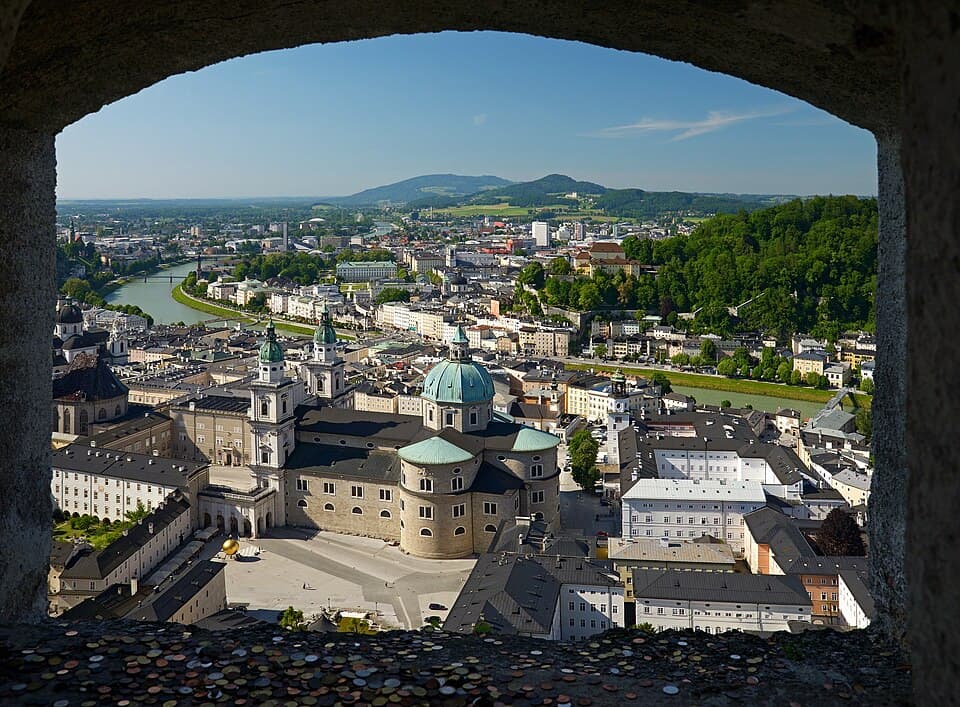
The Archbishop's Exile
As you gaze down at the beautiful Baroque city below, consider the tragic story of Archbishop Wolf Dietrich von Raitenau. He was the visionary responsible for much of the grand architecture you see today, including the layout of the cathedral and the squares. However, his ambitious projects and political conflicts eventually led to his downfall. In 1612, he was overthrown and imprisoned right here in the fortress by his own nephew and successor. He spent the final five years of his life in confinement within these walls, looking out at the very city he had spent his life transforming. He died in 1617, a prisoner in his own stronghold, never again allowed to walk the streets of Salzburg. His story adds a layer of poignant human drama to the stone and mortar around you. It serves as a reminder that even the most powerful figures could fall victim to the intrigues of the church and state, and that the fortress could be as much a gilded cage as a defensive shield.
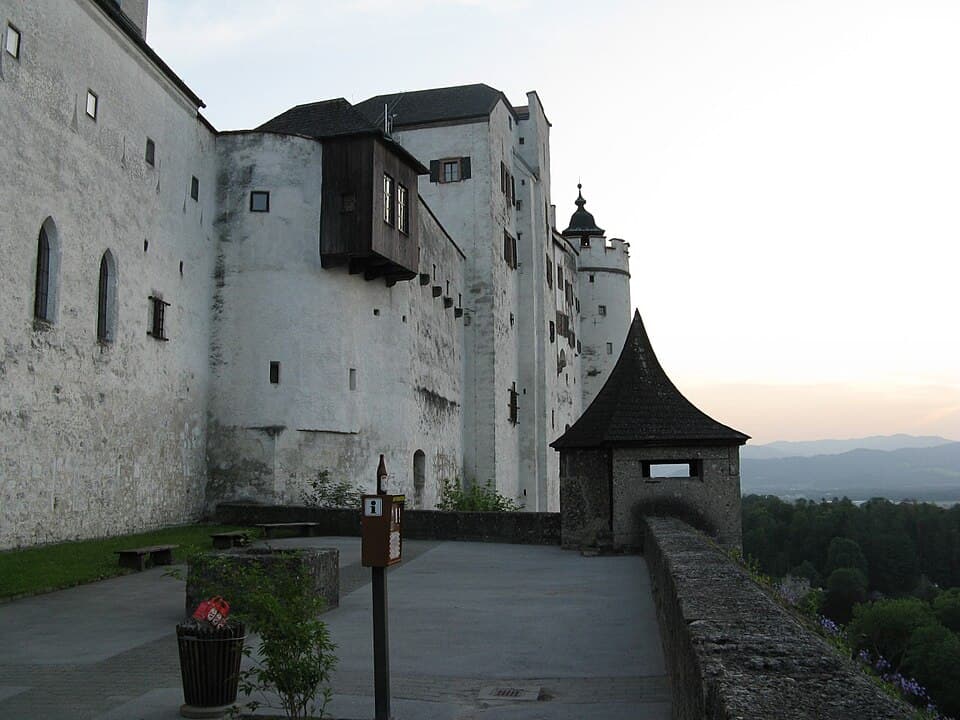
The Kuenburg Bastion Terrace
You are now standing on the expansive Kuenburg Bastion, one of the latest major additions to the complex. Built in the late 17th century, these massive walls represent the final phase of the fortress's military evolution. As you conclude your tour, reflect on the 900-year journey of this site. Today, it stands as a cultural icon, preserved for future generations to explore. These final bastions, with their broad terraces designed for heavy cannons, show how the fortress was constantly updated to meet the challenges of an ever-changing world. Take one last look at the thick masonry and the panoramic views before you begin your descent. The fortress remains as it has always been—an unconquered witness to the history of Salzburg, standing tall as a symbol of endurance, power, and the enduring beauty of the Alps.
Want to hear the rest?
Download the Stanza app to unlock all 32 stops and full GPS-guided navigation.
Frequently Asked Questions
How long does the Festung Hohensalzburg audio tour take?
The Festung Hohensalzburg audio guide includes 32 narrated stops. Most visitors spend 45 minutes to 1.5 hours exploring the complete tour, though you can listen at your own pace and skip or revisit any stop.
Is the Festung Hohensalzburg audio guide available in my language?
Stanza supports 15 languages: English, Spanish, French, German, Italian, Portuguese, Russian, Japanese, Chinese, Korean, Arabic, Hindi, Polish, Dutch, Hebrew. Check the guide in the app to confirm the languages currently available for this tour.
Can I use the audio guide offline at Festung Hohensalzburg?
Yes! Download the complete Festung Hohensalzburg tour — including all audio, maps, and images — before your visit. The Stanza app works completely offline, so you don't need WiFi or mobile data at the venue.
How much does the Festung Hohensalzburg audio guide cost?
The Stanza app is free to download. The current listed price for the Festung Hohensalzburg audio guide is $2.99; app-store region and currency may affect the final price.
How do I use the Stanza audio guide at Festung Hohensalzburg?
Download the free Stanza app, search for "Festung Hohensalzburg", and download the tour. When you arrive at the venue, the app uses GPS to detect your location and automatically plays the relevant narration as you move between points of interest — completely hands-free.
What makes the Stanza audio guide different from other Festung Hohensalzburg tours?
Stanza offers GPS-triggered narration that plays automatically as you walk through Festung Hohensalzburg — no need to manually select stops. The tour is available in 15 languages, works fully offline, and includes 32 expertly narrated stops with images and historical context.
What other audio guides are available near Festung Hohensalzburg?
Stanza offers multiple audio guides in Salzburg, Austria and nearby areas. After downloading the app, browse the map to discover all available tours near Festung Hohensalzburg. Each guide can be downloaded for offline use.