Languages
15Schloss Schönbrunn Audio Guide
Schloss Schönbrunn is a landmark in Vienna, Austria. Explore it with Stanza's GPS-triggered offline audio guide — available in 15 languages.
Quick Facts
21
Stops
15
Languages
100%
Offline
📍 Vienna, Austria · 48.1848°N, 16.3123°E
About Schloss Schönbrunn
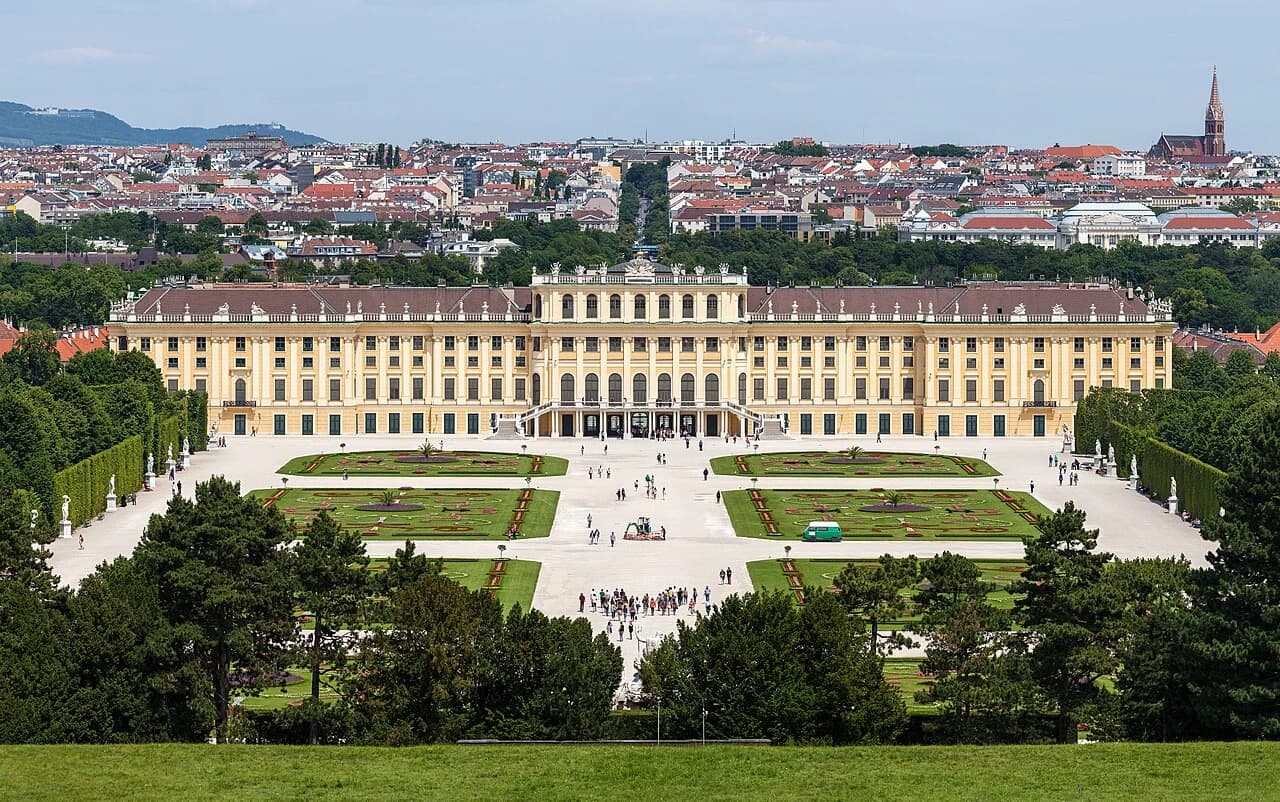
Schönbrunn Palace is a former imperial summer residence located in Vienna, Austria. It is a major tourist attraction and a UNESCO World Heritage site.
Schloss Schönbrunn is also known as Schönbrunn, Schloß Schönbrunn, Schloßpark Schönbrunn, Schloß Schönbrunn Kultur- und Betriebsges.m.b.H., and 4 other names in various languages.
This self-guided audio tour features 21 narrated stops organized across 7 sections. As a palace, Schloss Schönbrunn offers a unique cultural experience in the heart of Vienna, Austria.
The Stanza audio guide is available in 15 languages and works entirely offline — download the complete tour including audio narration, maps, and images before your visit. As you walk through Schloss Schönbrunn, GPS-triggered narration plays automatically at each point of interest.
Last updated:
What you will hear
The Palace Chapel and Ceremonial Entrance
Transitioning from the exterior to the interior, this area covers the physical ascent to the Beletage and the hidden gem of the Palace Chapel. The chapel is a masterpiece of Baroque religious art consecrated in 1745.
The Ceremonial Staircase
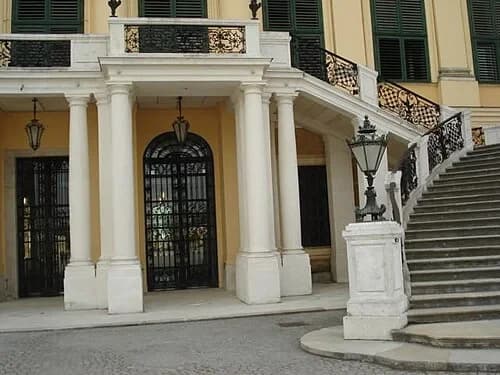
Built with a heavy, prestigious limestone known as "Kaiserstein," this staircase was designed to impress everyone who ascended it. Kaiserstein was a prized material used throughout the palace for its durability and regal appearance, often reserved for the most important structural and decorative elements. This specific passage serves as the vital link between the ground-floor service and administrative areas and the "Beletage," the principal floor where the Habsburg family lived, worked, and hosted grand events. Notice the intricate black ironwork of the railings, which contrasts with the pale stone. The wide, shallow steps were engineered to allow ladies in heavy, elaborate court dresses to ascend with grace and ease. It is not merely a path to the upper floor, but a space for the carefully choreographed theater of court life, where rank and status were on full display with every step taken. Large windows at the landings allow light to flood the space, highlighting the texture of the stone and the craftsmanship of the masonry.
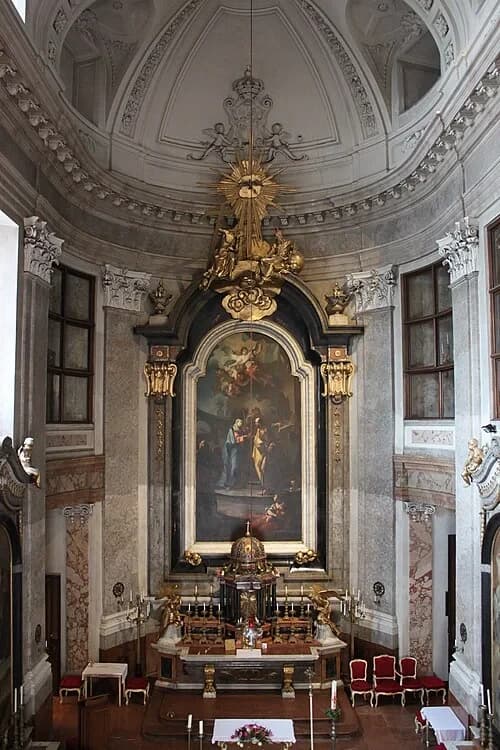
The Palace Chapel
Consecrated in 1745 and dedicated to the Marriage of Mary, this chapel provided a sanctuary for the Habsburg family's most intimate spiritual moments. Despite the vast, public nature of the rest of the palace, the chapel remained a private space reserved for the inner circle of the court. Its interior is a showcase of high Baroque design, featuring a magnificent altar and a vibrant ceiling fresco that draws the eye upward. The decoration here is dense and ornate, with gilded elements and colorful stone surfaces that reflect the deep piety of the dynasty. Many royal weddings and christenings took place right here, far from the crowds of the court. The acoustics in this space were carefully considered for choral performances, making it a place of both religious solemnity and artistic beauty. It remains one of the best-preserved original Baroque spaces within the entire palace complex, offering a sense of quiet reverence that contrasts with the grand reception halls nearby.
Imperial Apartments: Franz Joseph and Sisi
These rooms offer an intimate look at the daily lives of the longest-reigning Emperor and his famous wife. I selected images that highlight the functional, almost modest working environment of Franz Joseph contrasted with the iconic imagery of Elisabeth.
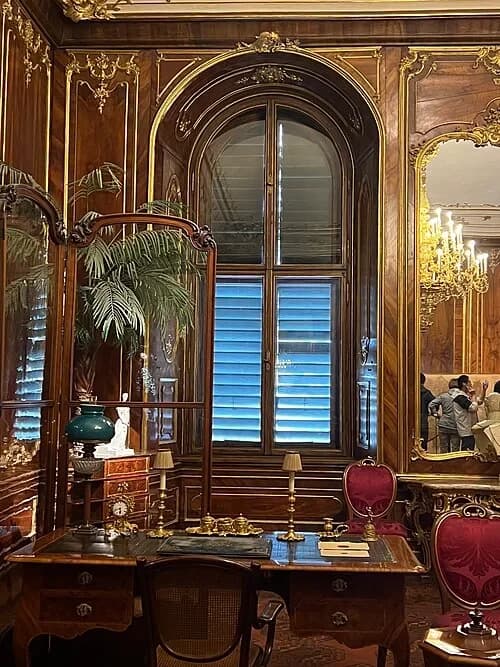
Franz Joseph's Study
In stark contrast to the gilded halls nearby, this room is remarkably functional and almost plain. It reflects the personality of Franz Joseph, who saw himself primarily as the "first servant of the state." He famously adhered to a rigid, Spartan routine, rising at 4:00 AM every morning to begin work at this desk. He would often sleep on a simple iron bed in an adjacent room, even in his old age, shunning the luxury typically associated with his position. From this desk, he managed the administrative complexities of an empire that stretched across Central and Eastern Europe. The room is filled with personal items, portraits of his family, and the tools of his daily labor. The unpretentious atmosphere here offers a rare glimpse into the man behind the crown, highlighting a personal commitment to duty and bureaucratic precision that defined his long, sixty-eight-year reign. It was in this quiet setting that many of the most critical decisions of the late nineteenth century were made.
The Great Gallery: Center of Imperial Social Life
This is the 'Must-See' heart of the palace. The 40-meter hall was used for the highest state functions, including the 1961 Kennedy-Khrushchev summit. The images focus on the ceiling frescoes and the sheer scale of the space.
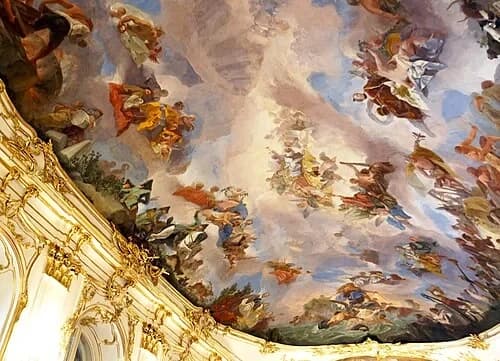
The Ceiling Frescoes
The Great Gallery's ceiling is covered with extensive frescoes that celebrate the wealth and success of the Habsburg monarchy. These paintings use mythological and allegorical figures to represent the empire's various provinces and its triumphs under imperial rule. However, the room's significance extends well into the twentieth century. In 1961, at the height of the Cold War, this very hall was the site of the historic Vienna Summit between U.S. President John F. Kennedy and Soviet Premier Nikita Khrushchev. This meeting brought the leaders of the two global superpowers together to discuss the status of Berlin and nuclear testing. The juxtaposition of the eighteenth-century imperial grandeur with the high-stakes diplomacy of the nuclear age makes this space unique. The frescoes that once celebrated a royal dynasty served as the backdrop for a meeting that helped shape the modern world. The weight of these layers of history is palpable as you stand beneath these colorful scenes, which remain vibrant centuries after they were painted.
The Hall of Ceremonies
This room is defined by its massive cycle of paintings documenting the wedding of Joseph II. It serves as a visual record of 18th-century court protocol and fashion.
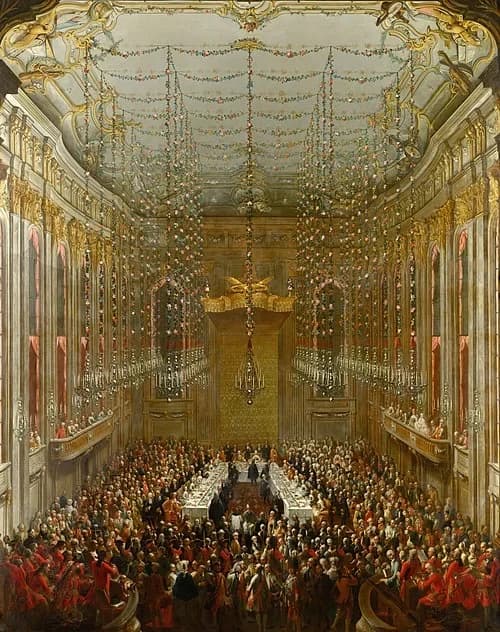
Wedding Supper
Martin van Meytens · 1763 · canvas, oil paint
Housed in the Hall of Ceremonies, this large-scale painting depicts the wedding supper of Joseph II. It is more than just a piece of art; it is a historical record of court etiquette. Notice the strict seating arrangement, where every guest's position was determined precisely by their rank and title. In the world of the Habsburgs, being seated even a few inches closer to the monarch was a significant political statement. The scene is crowded with a vast number of servants and silent observers, illustrating that even a "private" royal meal was a public performance. Every movement of the diners and the staff was choreographed according to centuries-old traditions. The table is laden with elaborate silver and porcelain, and the sheer scale of the event required an army of specialized workers behind the scenes. This work captures the complexity and formality of a society where social hierarchy was the ultimate rule, leaving little room for spontaneous interaction or casual conversation among the elite guests.
The Chinoiserie Masterpieces: Millions and Vieux-Laque Rooms
These are the most expensive and artistically unique rooms in the palace, reflecting the 18th-century fascination with the East. I've included the rare Indo-Persian miniatures and the black lacquer panels.
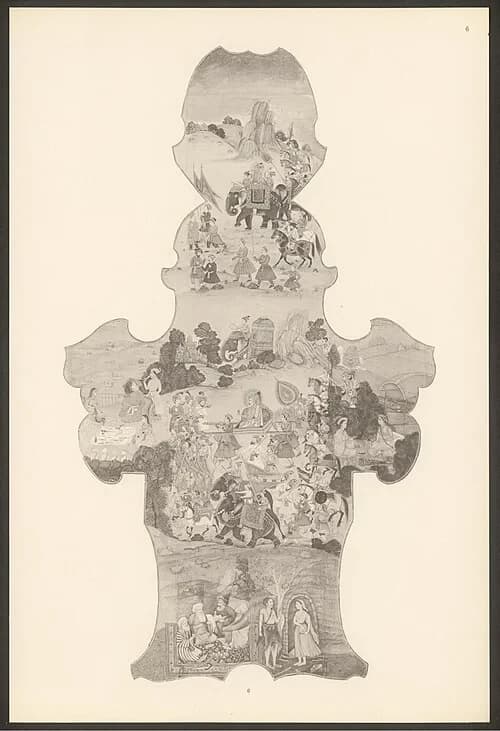
The Million Room
1627
Known as the Millions Room because of its staggering cost, this space reflects the eighteenth-century fascination with "the Orient." The walls are lined with precious rosewood, into which sixty tiny paintings have been delicately set. These miniatures were imported from India and Persia, depicting scenes of courtly life, hunting, and mythology from these distant lands. They were often cut from larger manuscripts to fit the cartouches designed by the palace architects. This room was a private space for Maria Theresa and her inner circle, providing a place for intimate conversation surrounded by global luxury. The integration of Eastern art into Western Baroque design is a hallmark of the Rococo period's exotic tastes. The fine details in each miniature require a close look to truly appreciate the craftsmanship of the original artists. It remains a unique example of the cultural exchanges and artistic interests of the Enlightenment-era Habsburg court, showcasing how global trade influenced local imperial aesthetics.
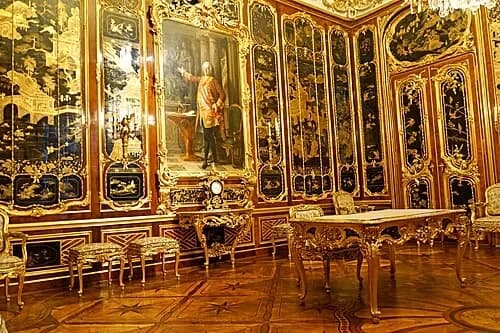
The Vieux-Laque Room
Created by Empress Maria Theresa as a tribute to her late husband, Francis Stephen, this room is unique for its somber yet luxurious palette. The dark walnut wood paneling is inset with rare black lacquer panels imported from China. These panels, featuring scenes of nature and daily life in Asia, are framed by heavy, gilded carvings that provide a striking contrast to the dark background. At the time, such lacquerware was an incredibly expensive and rare luxury, signifying the highest social status. Maria Theresa used this space as a private retreat after her husband’s death in 1765. The room reflects a fusion of European Baroque craftsmanship and East Asian artistry, which was highly sought after by the royalty of the time. The combination of materials creates an atmosphere of quiet reflection and permanent remembrance, serving as a lasting monument to a royal partnership within the heart of the palace. The intricate gold leafing catches the light, drawing attention to the fine details of the imported artwork.
The Great Parterre and Garden Sculptures
Stepping outside, the Great Parterre represents the 'Gesamtkunstwerk' philosophy where nature is perfectly ordered by art. The statues here were designed to reinforce the Habsburgs' connection to classical antiquity.
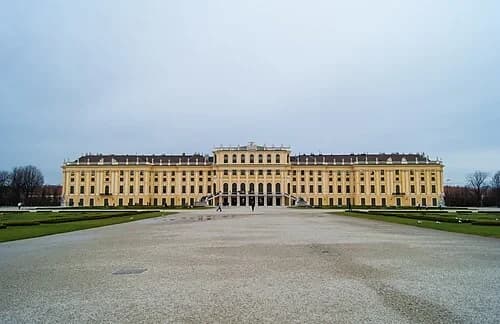
The Garden Facade
Completed between 1743 and 1749 by architect Nicolò Pacassi, this side of the palace reflects the more refined and decorative Rococo style favored by Empress Maria Theresa. Unlike the more austere central facade, this garden-facing view was meant to blend seamlessly with the meticulously manicured parkland. It features large windows that provided the imperial family with sweeping views of the fountains and greenery. While the palace is famous for its scale, containing exactly one thousand four hundred forty-one rooms, only about forty of those are accessible to the public today. The rest serve as government offices or private apartments. This facade overlooks the Great Parterre, the large flat expanse of gardens that leads toward the distant hills. The architectural rhythm of the building, with its many bays and classical pediments, reinforces the sense of order and control that the Habsburgs sought to project over both their people and the natural world. It stands as the definitive image of the palace for many visitors.
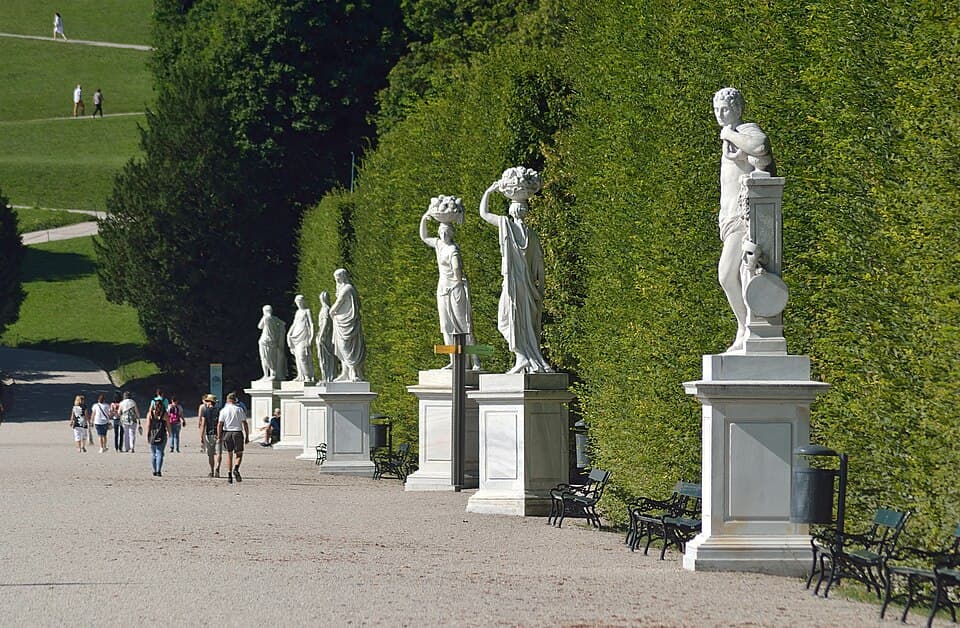
The Western Statue Row
Lining the edges of the gardens is a series of thirty-two large-scale sculptures depicting characters from classical mythology and ancient history. These statues were more than just decoration; they were part of a carefully designed "outdoor theater" that framed the palace and its grounds. By choosing subjects from Roman and Greek antiquity, the Habsburgs were making a bold political claim. They saw themselves as the rightful successors to the ancient Roman Empire, and these figures served to physically ground that legacy in the Viennese landscape. The statues are positioned at regular intervals, guiding your gaze toward the horizon and creating a sense of formal symmetry. Each figure represents a specific virtue or historical lesson, intended to be contemplated by those strolling through the imperial gardens. They contribute to the status of the park as a total work of art, where every element of nature was sculpted to reflect human authority. Notice the varied poses and expressions, each telling a distinct story from the classical past.
The Neptune Fountain
The Neptune Fountain is the dramatic climax of the lower gardens, sitting at the foot of the Gloriette hill. It serves as a monumental 'theatre of water' that visitors can actually walk behind.
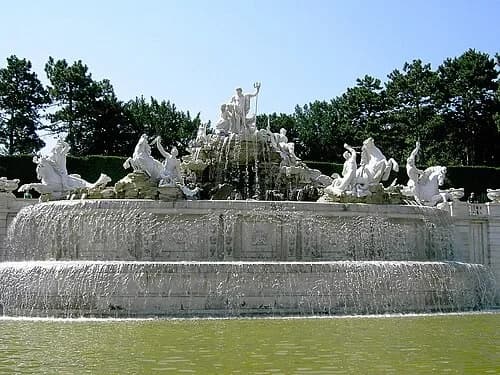
The Neptune Fountain
1778
Located at the foot of the hill leading to the Gloriette, the Neptune Fountain is a masterpiece of late eighteenth-century design. The central figure is Neptune, the god of the sea, shown wielding his trident as he commands the waters. This choice of subject was deeply symbolic for the Habsburgs, representing the ruler’s ability to bring order to the chaos of the elements and, by extension, to their vast empire. Surrounding Neptune are sea-gods, nymphs, and sea-horses, all part of a grand "theatre of water" that would have been especially impressive when the fountains were fully active. The fountain's structure is massive, serving as a visual anchor that draws the eye across the Great Parterre toward the palace. It was completed just before the end of the eighteenth century and remains one of the most photographed features of the entire estate. The water cascades down multiple levels, creating a rhythmic sound that adds to the sensory experience of the gardens. It marks the transition from the flat parterre to the rising forest slope.
Want to hear the rest?
Download the Stanza app to unlock all 21 stops and full GPS-guided navigation.
Frequently Asked Questions
How long does the Schloss Schönbrunn audio tour take?
The Schloss Schönbrunn audio guide includes 21 narrated stops. Most visitors spend 45 minutes to 1.5 hours exploring the complete tour, though you can listen at your own pace and skip or revisit any stop.
Is the Schloss Schönbrunn audio guide available in my language?
Stanza supports 15 languages: English, Spanish, French, German, Italian, Portuguese, Russian, Japanese, Chinese, Korean, Arabic, Hindi, Polish, Dutch, Hebrew. Check the guide in the app to confirm the languages currently available for this tour.
Can I use the audio guide offline at Schloss Schönbrunn?
Yes! Download the complete Schloss Schönbrunn tour — including all audio, maps, and images — before your visit. The Stanza app works completely offline, so you don't need WiFi or mobile data at the venue.
How much does the Schloss Schönbrunn audio guide cost?
The Stanza app is free to download. The current listed price for the Schloss Schönbrunn audio guide is $2.99; app-store region and currency may affect the final price.
How do I use the Stanza audio guide at Schloss Schönbrunn?
Download the free Stanza app, search for "Schloss Schönbrunn", and download the tour. When you arrive at the venue, the app uses GPS to detect your location and automatically plays the relevant narration as you move between points of interest — completely hands-free.
What makes the Stanza audio guide different from other Schloss Schönbrunn tours?
Stanza offers GPS-triggered narration that plays automatically as you walk through Schloss Schönbrunn — no need to manually select stops. The tour is available in 15 languages, works fully offline, and includes 21 expertly narrated stops with images and historical context.
What other audio guides are available near Schloss Schönbrunn?
Stanza offers multiple audio guides in Vienna, Austria and nearby areas. After downloading the app, browse the map to discover all available tours near Schloss Schönbrunn. Each guide can be downloaded for offline use.