Stanza · Audio guide
HofburgAudio guide
A place to remember. A story to take with you.
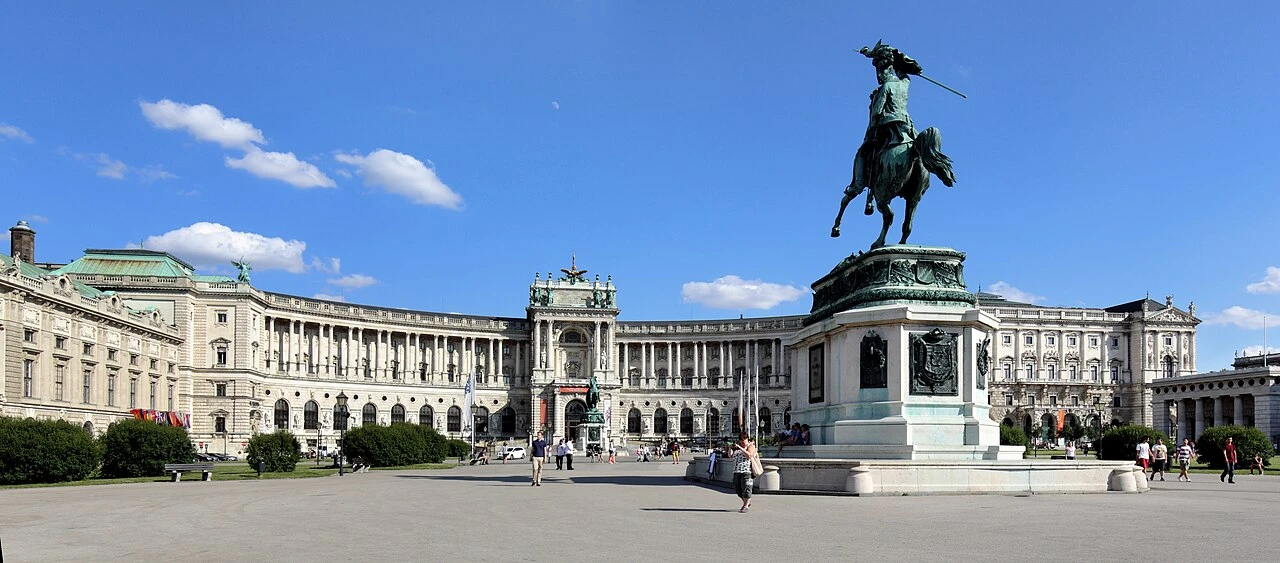
The Hofburg Palace is a former imperial palace located in Vienna, Austria. It served as the principal imperial winter residence of the Habsburg dynasty and today houses several museums and the office of the…
Download Stanza, then search for “Hofburg”.
About the tour
One guide. Your kind of visit.
The Hofburg Palace is a former imperial palace located in Vienna, Austria. It served as the principal imperial winter residence of the Habsburg dynasty and today houses several museums and the office of the President of Austria.
Ready when you are.
- 01Get the free Stanza app.
iOS & Android
- 02Find your guide.
“Hofburg”
- 03Download before you go.
Works offline
Audio guide / 32 narrated stops
Inside the guide
Get to know a few of the stories before you go. Open a stop to read more.
01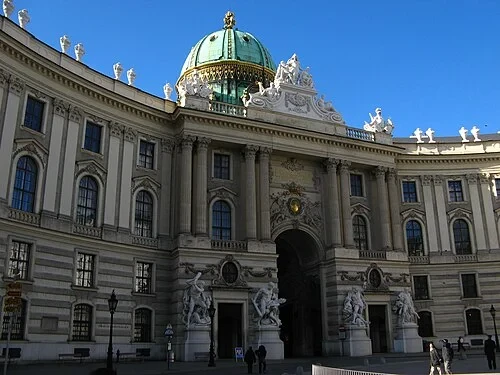 Michaelerplatz and the Imperial FountainsThe St. Michael Wing Facade
Standing before the St. Michael Wing, the sheer scale of the Hofburg becomes clear. For over 600 years, this vast complex served as the winter residence of the Habsburgs, the family that ruled one of history's most powerful empires. Although this specific facade appears to be ancient, it was actually completed quite late, in 1893. The architect, Ferdinand Kirschner, followed original designs from 170 years earlier by Joseph Emanuel Fischer von Erlach, which had been put on hold due to a lack of funds and space. This wing creates a dramatic concave curve that defines Michaelertplatz. In the center, a massive archway known as the St. Michael's Gate beckons. This was the primary entrance for imperial carriages, allowing them to sweep directly from the city streets into the palace's inner sanctum. The facade is adorned with intricate sculptures and a green-domed rotunda. It reflects the grandeur the monarchy wished to project even in its final decades, acting as a bridge between the medieval foundations and the modern city.
Donar Reiskoffer · CC BY 3.0
02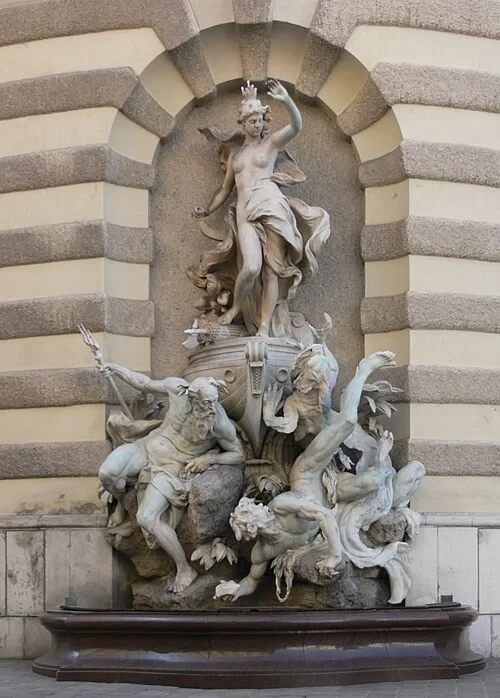 Michaelerplatz and the Imperial FountainsThe Power of the Sea Fountain
Positioned on one side of the St. Michael Wing facade, the "Power of the Sea" fountain is a dramatic display of imperial messaging. Created by sculptor Rudolf Weyr, the composition is dominated by a powerful female figure standing atop a ship’s prow. Below her, a collection of muscular figures battles the churning waters and sea creatures. These statues are not merely decorative; they were designed to broadcast the maritime reach of the Austro-Hungarian Empire. During the late 1800s, as nationalism was rising across Europe, the Habsburgs used public art like this to assert their stability and dominance. You can see the intricate details in the waves and the straining muscles of the figures, intended to convey a sense of unyielding strength. The maritime motifs, including anchors and sea monsters, remind viewers that the empire's influence extended far beyond the landlocked borders of Vienna to the Adriatic coast. It remains a striking example of how the monarchy blended mythology with political propaganda to maintain its prestige on the global stage.
Photo: Andreas Praefcke · CC BY 3.0
03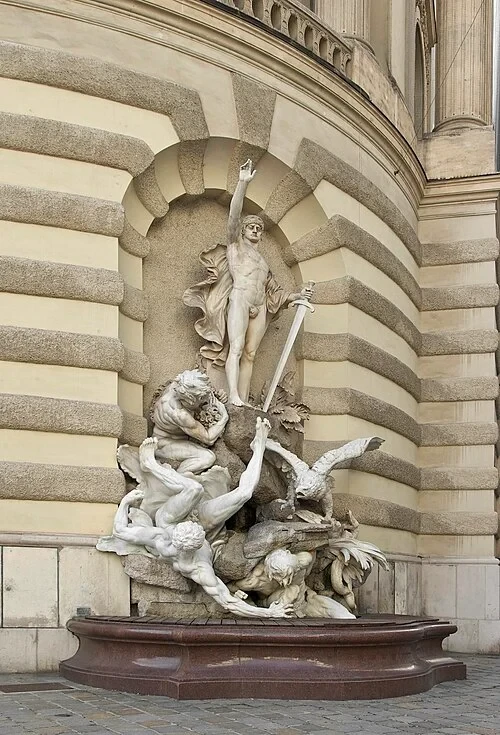 Michaelerplatz and the Imperial FountainsThe Power of the Land Fountain
On the opposite side of the St. Michael’s Gate, the "Power of the Land" fountain serves as the thematic balance to the naval fountain. Here, the focus shifts to the army and the terrestrial borders of the Habsburg realm. The central figure is depicted in a triumphant pose, arm raised high with a sword, while figures representing defeated enemies sprawl at the base. This imagery was a clear statement of military dominance and territorial control. Like its twin, this fountain was part of the final grand architectural statements made at this entrance, completed just a few decades before the eventual collapse of the empire in 1918. The contrast between the two fountains—land and sea—provided a comprehensive map of Habsburg power for anyone entering the palace. Notice the classical armor and the dynamic movement in the sculpture, which draws the eye upward. These twin monuments were intended to leave a lasting impression of authority on every diplomat, citizen, and visitor who passed between them toward the inner courtyards of the palace.
Listen in the appPhoto: Jebulon · CC0
04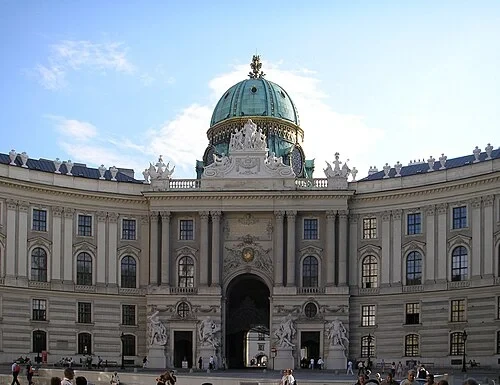 The Michaelertor and Rotunda DomeThe St. Michael’s Gate
The St. Michael’s Gate is the primary passage into the heart of the Hofburg complex. Its immense height and width were not just for show; they were necessary for the tall, ornate imperial carriages and the teams of horses that frequently moved through this space. As you walk through the archway, look at the four monumental figures flanking the entrances on either side. These statues depict Hercules, the hero of Greek mythology, performing various labors. These figures represent strength and perseverance, qualities the Habsburgs associated with their own long-reigning dynasty. Today, these doorways lead to two of the most popular sites within the palace: the Sisi Museum, which chronicles the life of Empress Elisabeth, and the world-famous Spanish Riding School. The gate acts as a bustling crossroads where modern tourists and traditional carriage drivers continue to pass through. The architectural details, from the ironwork to the heavy stone masonry, emphasize the transition from the city’s Michaelertplatz into the sheltered, administrative, and ceremonial world of the Austrian emperors.
Listen in the appGryffindor · CC BY-SA 3.0
05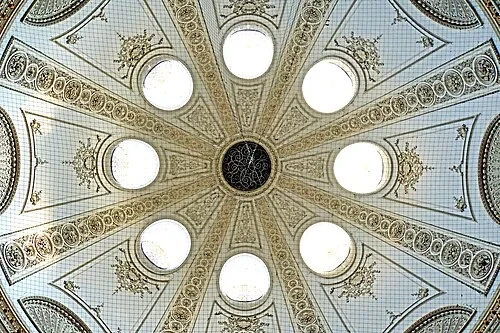 The Michaelertor and Rotunda DomeThe Rotunda Dome
Standing directly beneath the dome, the atmosphere of the palace changes instantly. The city’s noise fades into a reverent hush as you look up at the intricate geometry above. On the outside, this structure is topped by a 54-meter-high green copper dome that serves as a landmark for Vienna. However, the interior tells a different story of architectural ingenuity. The ceiling is adorned with white and gold plasterwork, featuring a series of circular windows and geometric patterns that draw the eye toward the center. This interior shell was considered a technological marvel when it was completed in the 1890s, using advanced structural techniques to create a lightweight but visually imposing space. The play of light through the upper windows highlights the gilding and creates an airy, open feel that belies the massive weight of the building. This rotunda serves as a transitional space, a grand foyer that prepares visitors for the administrative and residential wings that lie beyond. The combination of classical beauty and industrial-age construction perfectly reflects the empire's dual identity at the turn of the century.
Listen in the appDennis G. Jarvis · CC BY-SA 2.0
06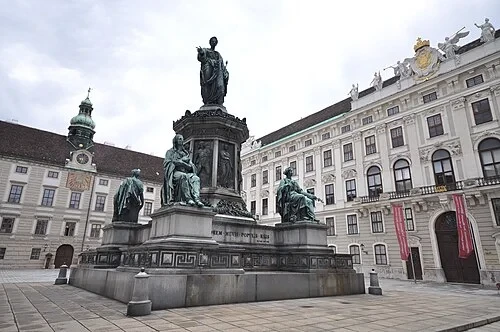 The Inner Castle CourtThe Inner Castle Courtyard
Entering the Innerer Burghof, the true scale of the Hofburg reveals itself. This is not just a single palace, but a sprawling city within a city, covering 300,000 square meters. The complex is composed of eighteen wings and roughly 2,600 rooms, and this courtyard is where those disparate sections meet. Looking around the perimeter, you can see a timeline of architectural styles. To one side is the Leopoldine Wing, built in the seventeenth century, while the Amalienburg across from it dates back to the sixteenth century. The St. Michael Wing represents the late nineteenth-century additions. This courtyard was the stage for courtly life, military parades, and the arrival of heads of state. It functioned as the hub for the imperial bureaucracy, housing everything from the emperor's private apartments to administrative offices. The vast open space and the uniform facades create a sense of orderly power, yet each corner holds clues to a different era of the Habsburg reign. It is an ideal place to appreciate how the palace grew organically over hundreds of years of continuous use.
Listen in the appJorge Láscar from Australia · CC BY 2.0
07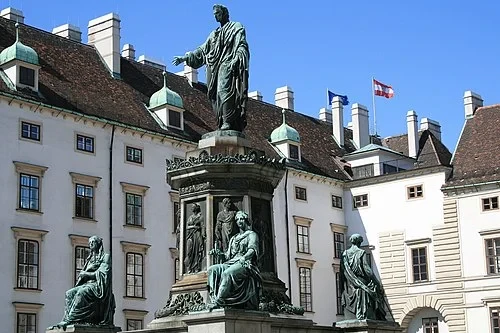 The Inner Castle CourtMonument to Emperor Francis I
In the center of the Innerer Burghof stands the monument to Emperor Francis I. His history is unique; he held the title of the last Holy Roman Emperor until he dissolved it in 1806, and simultaneously became the first Emperor of Austria to ensure his dynasty’s survival. He is depicted here in the classical style, wearing a Roman-style toga to emphasize his imperial lineage. The four female figures seated around the base of the pedestal represent Faith, Strength, Peace, and Justice—the virtues Francis wished to be remembered for during his reign. Francis I’s tenure was defined by the Napoleonic Wars. In a move of high-stakes diplomacy, he even gave his daughter, Marie Louise, in marriage to his enemy, Napoleon Bonaparte, to secure a temporary peace. The monument was designed by Pompeo Marchesi and completed in 1846, long after the Emperor’s death. It remains a focal point of the courtyard, surrounded by the various wings he and his ancestors inhabited. Looking closely at the base, you can see the intricate reliefs that further detail the milestones of his long and complicated rule.
Listen in the appManfred Werner - Tsui · CC BY-SA 3.0
08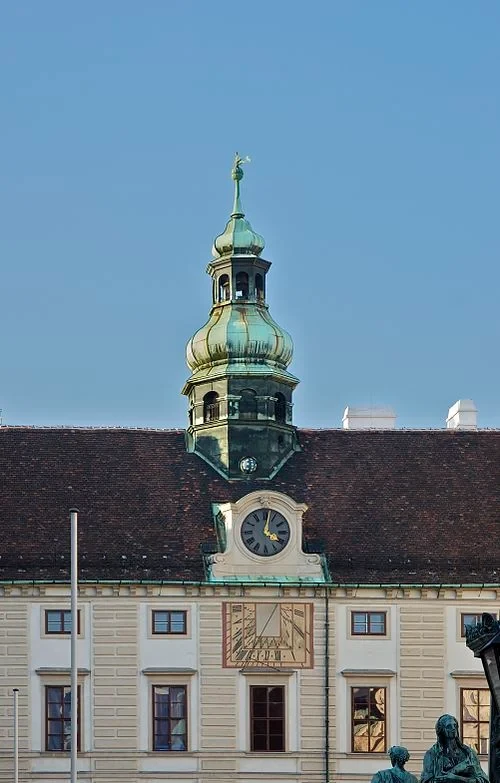 The Amalienburg Wing and SundialThe Amalienburg Clock Tower
Facing the Leopoldine Wing is the Amalienburg, one of the oldest sections of the Hofburg. Named after Empress Amalia Wilhelmina, the wife of Emperor Joseph I, this wing was built in the late sixteenth century on the foundations of earlier structures. Its most distinctive feature is the tower with its green copper spire and two separate clocks. The upper clock is a traditional mechanical timepiece that showed the hours to the general public outside. However, the lower clock served a more exclusive purpose: it was used to synchronize the schedules within the imperial court itself. In the nineteenth century, this wing gained new fame as the residence of Empress Elisabeth. The interior rooms were modified to suit her tastes and her famous, eccentric habits. From the courtyard, you can see the windows of the apartments where she spent her time away from the rigid protocols of the main palace wings. The tower’s spire has become a signature silhouette of the Hofburg skyline, marking the transition between the medieval castle foundations and the Renaissance-style additions.
Listen in the appPhoto: Jebulon · CC0
09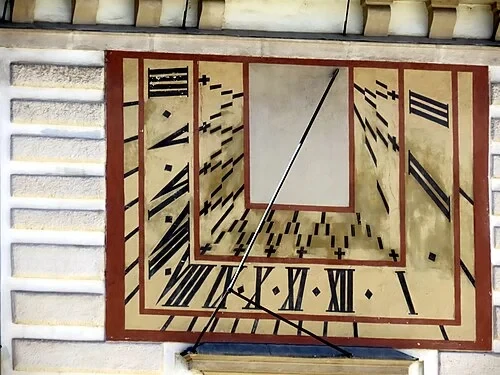 The Amalienburg Wing and SundialThe Painted Sundial
High on the facade of the Amalienburg wing, you can see a colorful and highly detailed sundial. In an era before digital precision, this was an essential piece of equipment for the imperial court. It was used to regularly calibrate the mechanical clocks in the tower and throughout the palace, ensuring everyone from the kitchen staff to the Emperor himself followed the same time. The sundial features a gnomon—a vertical metal rod—which casts a shadow across a field of painted Roman numerals and geometric lines. As the sun moves across the sky, the shadow tracks the hours. The artwork surrounding the numbers is intricate, featuring decorative borders that match the Renaissance character of the building. It is a reminder that even in a place as grand as the Hofburg, daily life was dictated by the fundamental cycles of nature. Despite centuries of exposure to the elements, the colors remain vivid, allowing you to still read the time on a sunny day just as the Habsburg residents would have done hundreds of years ago.
Listen in the appDonald Judge · CC BY 2.0
10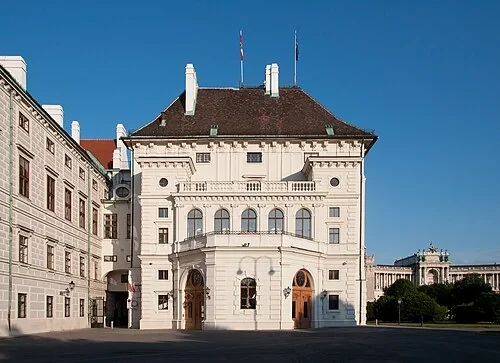 The Leopoldine WingThe Leopoldine Wing
The Leopoldine Wing, characterized by its long, rhythmic facade of windows and Baroque detailing, connects the Amalienburg to the Swiss Wing. It was built during the reign of Emperor Leopold I in the 1660s. While it was once home to imperial family members, its role changed dramatically after the end of the monarchy. Since 1946, this wing has been the seat of the Federal President of Austria. Because of this, you will notice a higher level of security around the entrances and guards in ceremonial dress. A reliable way to tell if the President is currently working inside is to look at the roof; if the Austrian flag is flying, the head of state is in residence. This wing represents the ongoing life of the Hofburg, showing how a former center of absolute monarchy has been repurposed for a modern democracy. Despite the heavy weight of its imperial history, the Leopoldine Wing remains a functioning workplace where the contemporary political life of the nation is managed daily within walls that have stood for over three centuries.
Listen in the appPhoto: MrPanyGoff · CC BY-SA 3.0
Hofburg
Frequently asked questions
How much does the guide cost?
Free app download. Listed guide price: $1.99. Guide price shown in the app. Audio guide only. Venue admission is separate.
Can I listen without internet?
Yes. Download the guide’s audio, images, and maps in the app before your visit. Your downloaded content is then available offline.
Can I listen in my language?
Stanza supports 15 languages. Check the app for the languages available for this guide.
Do I need to follow a schedule?
No. This is a self-guided experience. Choose your stops, pause whenever you like, and return to a story at your own pace.
At your own pace
Explore Hofburg.
Download Stanza, then search for “Hofburg”.
Free app download · Guide price shown in the app
Keep exploring
Nearby audio guides
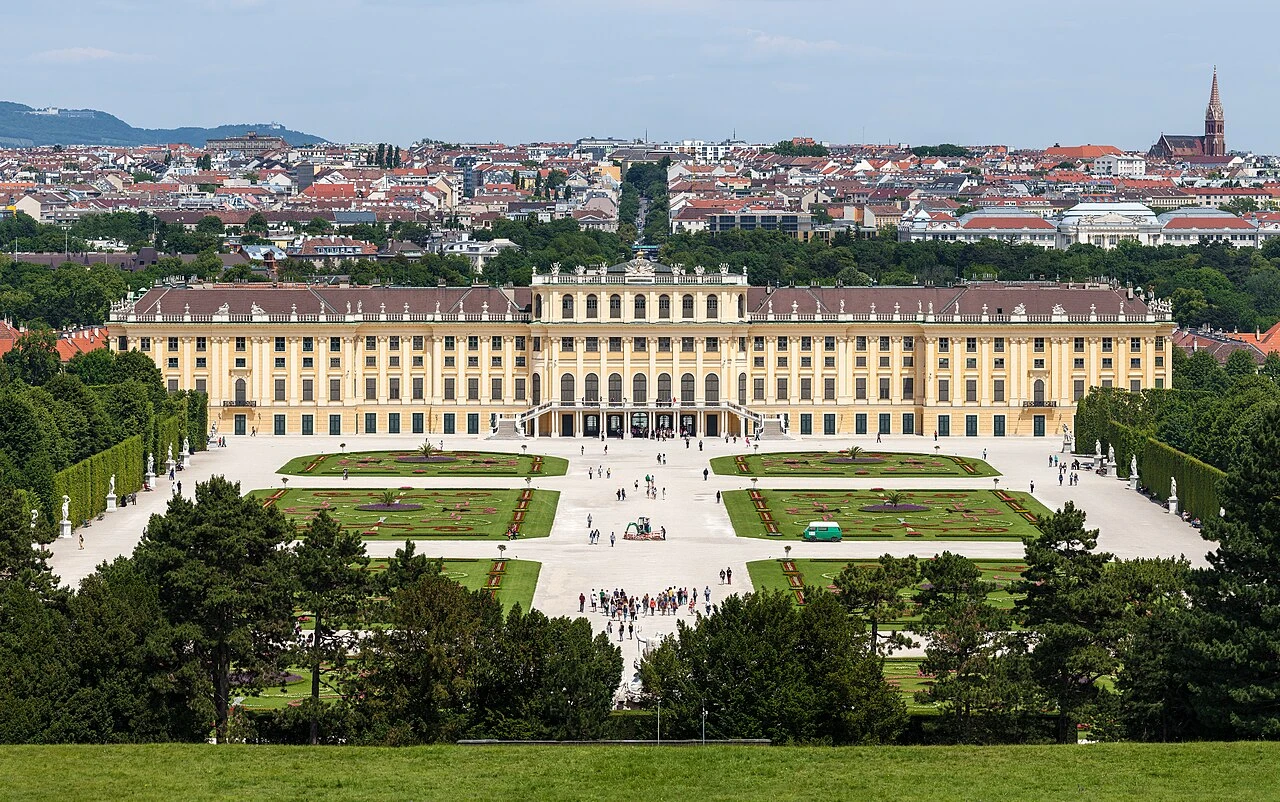
Vienna
Schloss Schönbrunn
Content & sources
Thomas Wolf, www.foto-tw.de · CC BY-SA 3.0 de
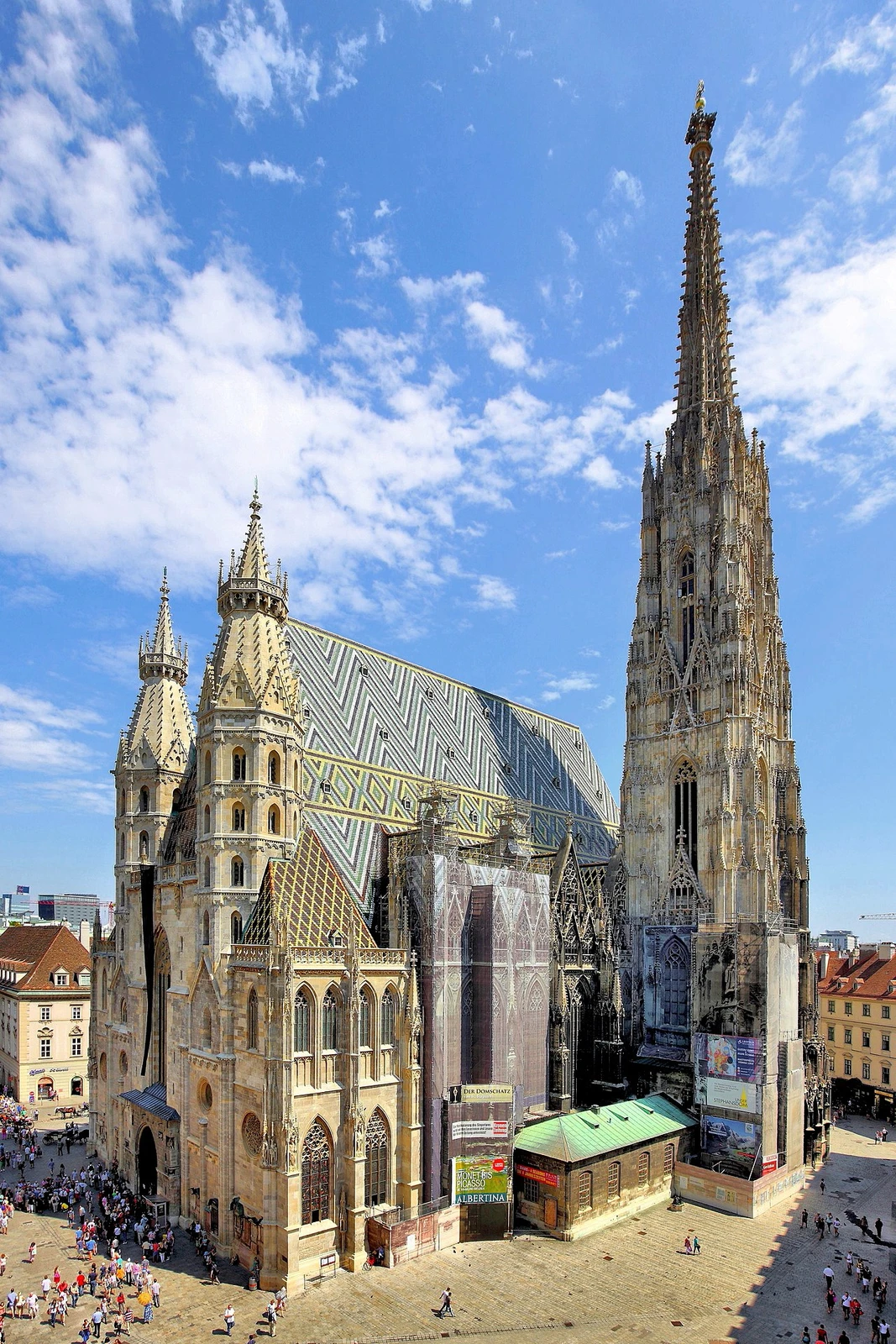
Vienna
Stephansdom
Content & sources
C.Stadler/Bwag · CC BY-SA 4.0
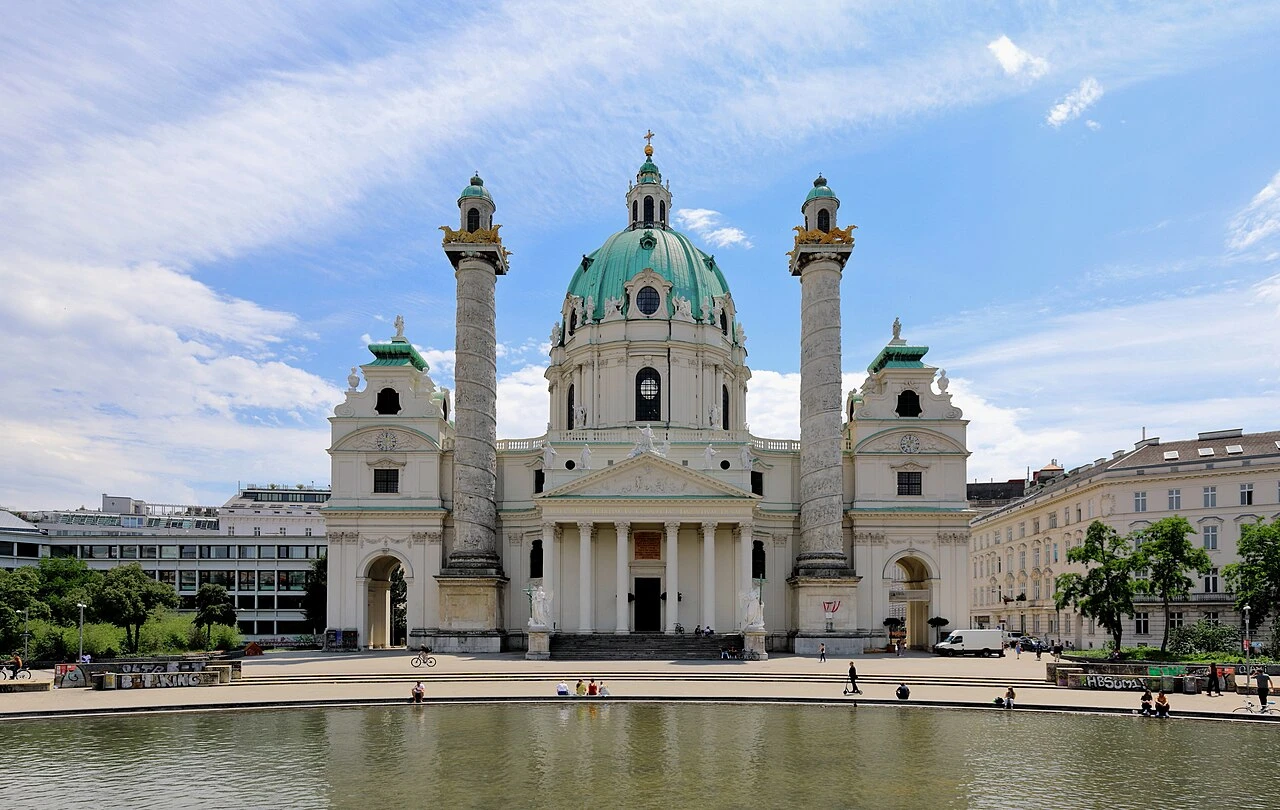
Vienna
Wiener Karlskirche
Content & sources
C.Stadler/Bwag · CC BY-SA 4.0
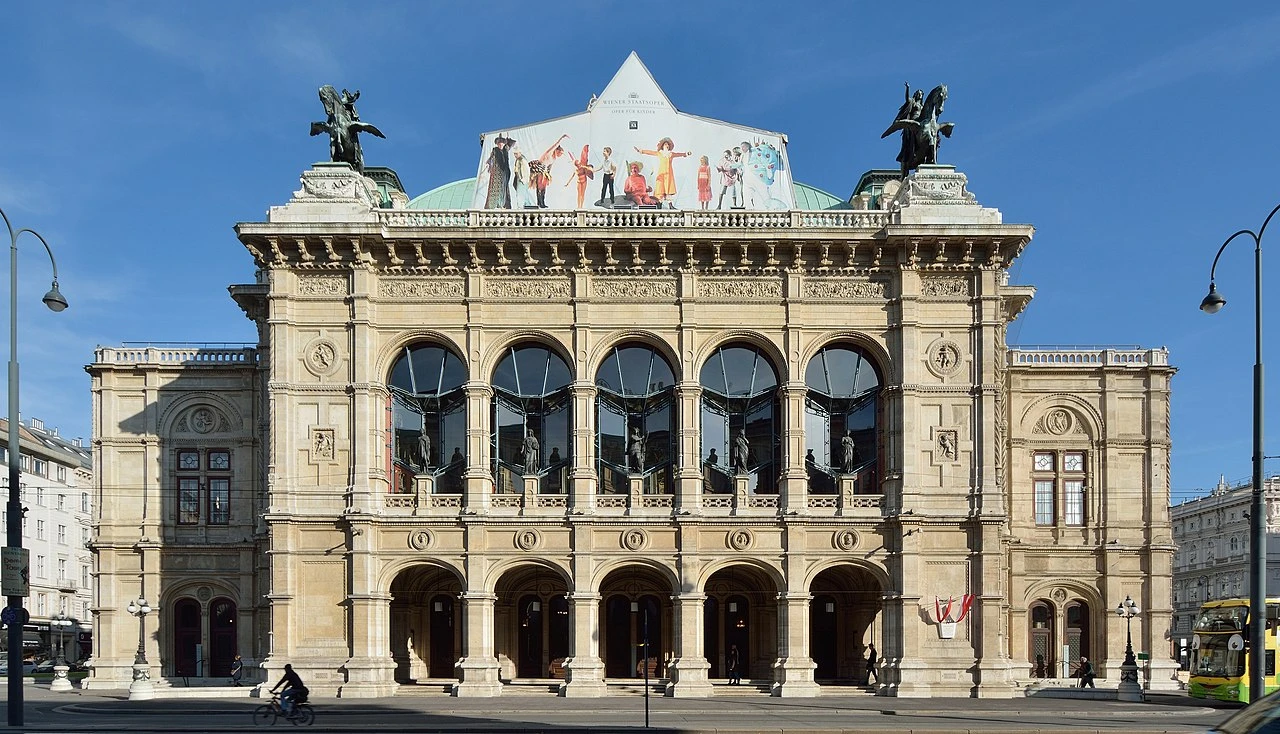
Vienna
Wiener Staatsoper
Content & sources
Photo: P e z i · CC BY-SA 3.0 at