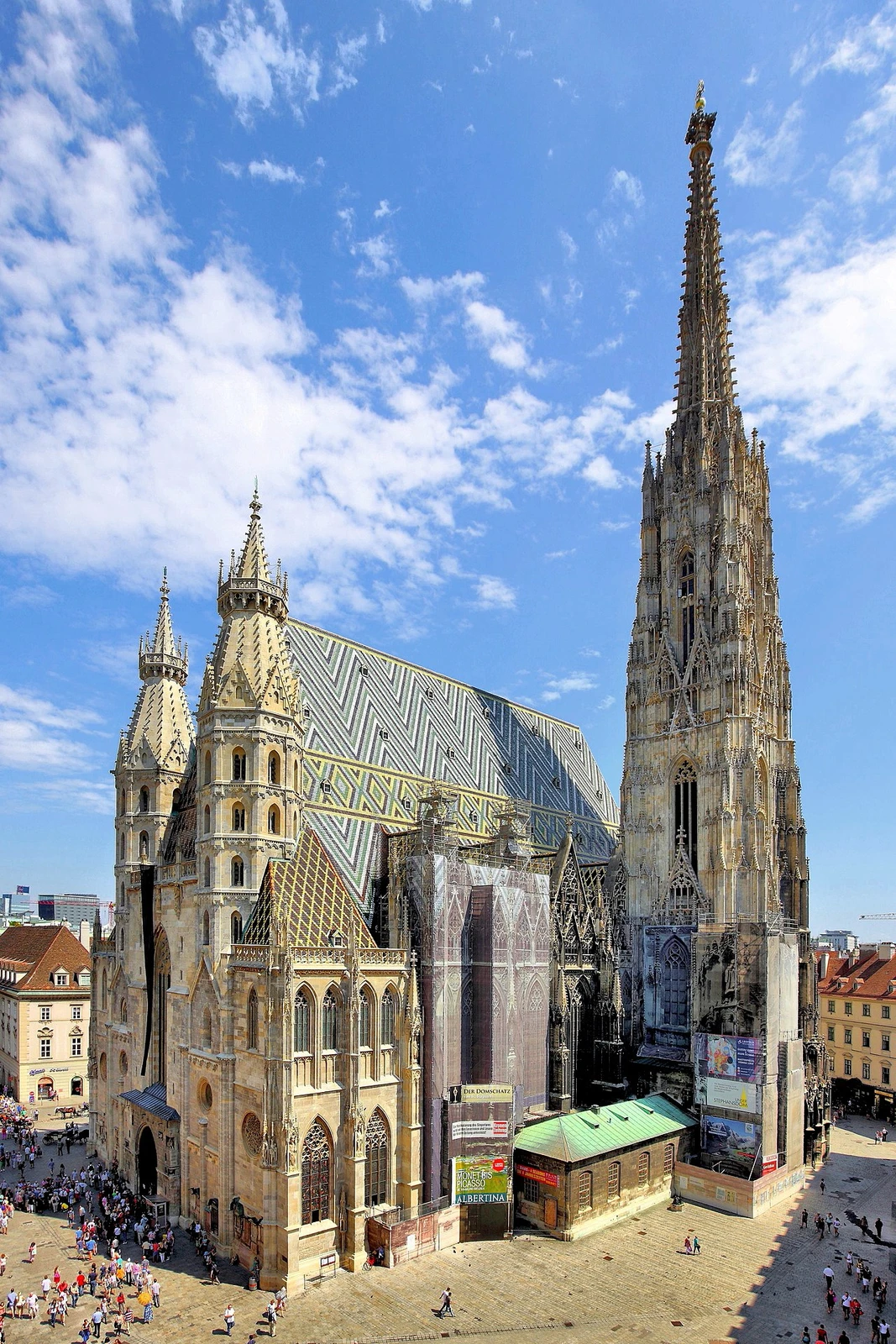
Stanza · Audio guide
StephansdomAudio guide
A place to remember. A story to take with you.
St. Stephen's Cathedral, or Stephansdom, is a magnificent Gothic cathedral in the heart of Vienna, Austria. It serves as the mother church of the Roman Catholic Archdiocese of Vienna and is one of the city's…
Download Stanza, then search for “Stephansdom”.
About the tour
One guide. Your kind of visit.
St. Stephen's Cathedral, or Stephansdom, is a magnificent Gothic cathedral in the heart of Vienna, Austria. It serves as the mother church of the Roman Catholic Archdiocese of Vienna and is one of the city's most important religious buildings and a major landmark.
Ready when you are.
- 01Get the free Stanza app.
iOS & Android
- 02Find your guide.
“Stephansdom”
- 03Download before you go.
Works offline
Audio guide / 25 narrated stops
Inside the guide
Get to know a few of the stories before you go. Open a stop to read more.
01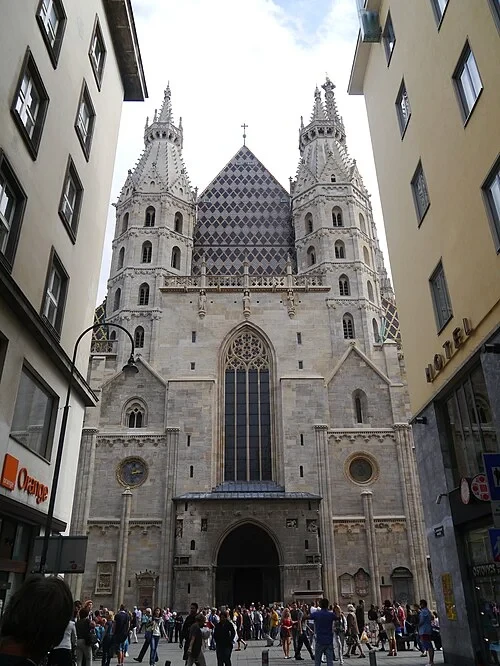 The West Facade and the Giant's DoorSt. Stephen's Cathedral
Welcome to one of the most significant landmarks in Austria. St. Stephen's Cathedral, or Stephansdom, is not just a place of worship but a powerful symbol of national identity. Its history began in 1137, when the foundation for the first church was laid. Over the following 441 years, the structure evolved continuously, transitioning through various architectural phases from its original Romanesque roots into the soaring Gothic masterpiece you see today. Standing at a massive scale of 108.7 meters long and 72 meters wide, the cathedral dominates the skyline of Vienna's first district. However, its survival was never guaranteed. This building is a true survivor, having endured numerous sieges and most notably the devastating fire of April 1945. During the final days of World War II, sparks from nearby burning shops ignited the wooden roof, causing it to collapse and destroying much of the interior. The cathedral we see now is the result of a massive, collective restoration effort by the people of Austria, who view this stone giant as a testament to their endurance and rebirth. As we begin our tour, notice the blend of historical styles that tell the story of a city that grew alongside its church.
Photo: Zairon · CC BY-SA 3.0
02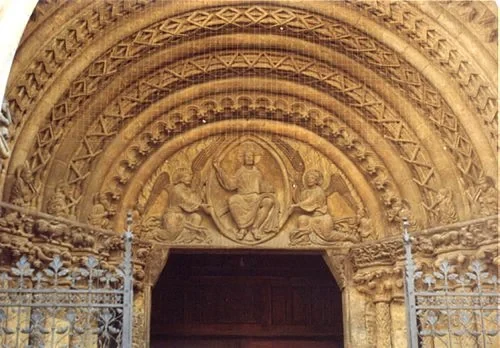 The West Facade and the Giant's DoorThe Giant's Door
Notice the massive entrance known as the 'Riesentor,' or the Giant's Door. Its name stems from a fascinating piece of local folklore. During excavation work for the cathedral in the Middle Ages, workers unearthed a massive, prehistoric bone. Lacking modern scientific knowledge, the locals believed it belonged to a giant who had perished during a great flood. This bone�which we now know was actually a mammoth�s tibia�was hung above the door for centuries, cementing the name in the city's history. Looking above the doorway, you will see a detailed carving in the semi-circular space known as the tympanum. This central sculpture depicts Christ in Majesty, seated on a throne and surrounded by an almond-shaped halo called a mandorla. He is flanked by two angels, serving as the official welcome to everyone entering this sacred space. This Romanesque feature is one of the oldest parts of the cathedral, dating back to the 13th century. It sets a solemn and reverent tone for the transition from the busy city streets into the quiet sanctuary within. The combination of ancient myth and traditional religious iconography makes this portal one of the most unique entranceways in European ecclesiastical architecture.
Photo: Radomil · CC BY-SA 3.0
03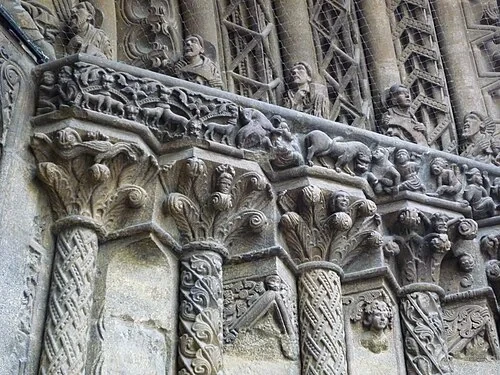 The West Facade and the Giant's DoorRomanesque Portal Carvings
As you move closer to the main entrance, take a moment to examine the intricate funnel-shaped doorway. This style of entrance, typical of Romanesque architecture, draws the eye inward through several receding layers of stone. Within these layers, you will find a dense and puzzling collection of carvings. Look for the bizarre figures intertwined among the columns: you may spot lions, dragons, and various saints carved with expressive, if slightly distorted, features. These figures were not merely decorative; they served a profound symbolic purpose for the medieval visitor. In the Middle Ages, the exterior of a church was often populated with monsters and beasts to represent the chaotic struggle between good and evil that exists in the worldly realm. By walking through this portal, a person was symbolically leaving those base temptations and spiritual dangers behind to enter the peace and order of the House of God. The craftsmanship here is a fine example of the late Romanesque period, where the stone seems almost alive with movement. Notice how the figures are packed tightly together, creating a sense of density and complexity that reflects the multifaceted nature of the spiritual journey.
Listen in the appPhoto: Uoaei1 · CC BY-SA 3.0
04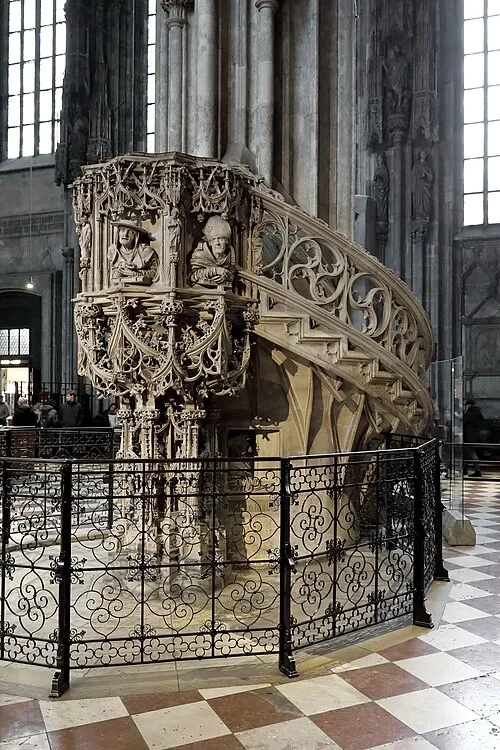 The Nave and the Master's PulpitPulpit of St. Stephen's Cathedral
Standing within the nave, you will find the Gothic pulpit, a breathtaking achievement in stone carving. This intricate structure was meticulously crafted from three massive blocks of sandstone, and the detail is so fine it almost resembles lace rather than heavy rock. The pulpit served as the primary place for preaching, elevated so that the priest's voice could carry throughout the vast space before the era of modern microphones. Around the sides of the pulpit�s basket, you can see four expertly carved figures. These represent the 'Doctors of the Church': Saints Augustine, Ambrose, Gregory, and Jerome. Each figure is depicted with a distinct personality and expression, intended to represent the four different human temperaments and the various stages of a man's life. For example, Jerome is often depicted as the eldest, symbolizing wisdom and old age, while others appear younger or more contemplative. The theological significance of these figures was meant to remind the congregation of the different ways one can approach and understand divine truth. The sheer technical skill required to achieve this level of realism in sandstone makes this pulpit one of the most celebrated examples of late Gothic sculpture in Europe.
Listen in the appC.Stadler/Bwag · CC BY-SA 4.0
05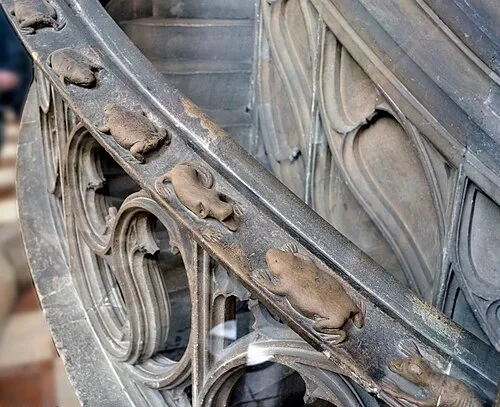 The Nave and the Master's PulpitLizards and Toads
Direct your attention to the handrail leading up the pulpit stairs, where you will find an unusual and charming set of carvings. Creeping along the stone rail are several lizards and toads. In the symbolic language of the medieval church, these reptiles were often referred to as 'animals of darkness,' representing the sins and worldly distractions that can tempt a person away from a virtuous life. They are shown crawling upward, seemingly trying to reach the preacher at the top. However, their path is blocked. At the very top of the rail sits a small, alert dog. The dog serves as a symbol of faithfulness and protection. Its role here is to guard the preacher from the 'animals of darkness,' ensuring that the message delivered from the pulpit remains pure and undisturbed by evil influences. This clever use of animal symbolism provided a visual sermon for the largely illiterate congregations of the past. Even today, the smoothness of these figures is a testament to the millions of hands that have touched them over the centuries. It adds a touch of narrative whimsy to the solemn Gothic architecture, reminding us that every detail in this cathedral was designed with a specific spiritual story in mind.
Listen in the appPhoto: Jim.kovic · CC0
06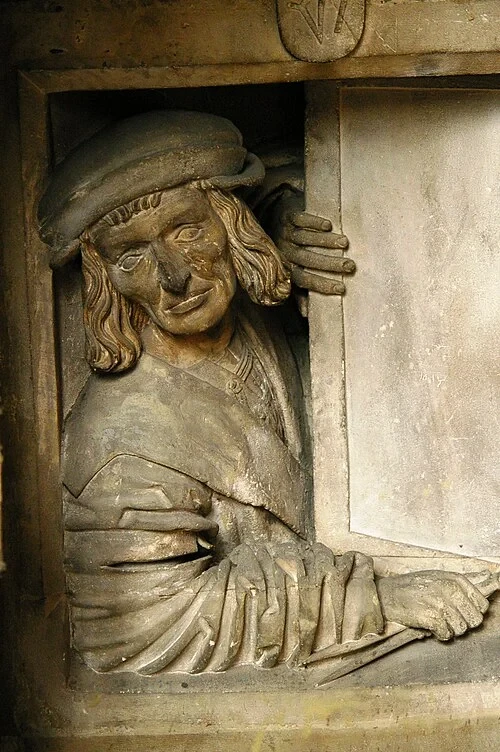 The Nave and the Master's PulpitThe Window Peeker
Beneath the stairs of the pulpit, you will find one of the most beloved features of the cathedral: the 'Fenstergucker,' or Window Peeker. This lifelike figure appears to be leaning out of a stone window, resting his chin on his hand as he looks out into the church. This is widely believed to be a self-portrait of the master sculptor, Anton Pilgram, though some historians suggest it might represent an earlier artist. At the time it was carved, around 1515, placing a self-portrait in a religious building was a bold and modern move. It was essentially the artist's way of signing his work. By placing himself under the stairs, Pilgram�or the master responsible�literally holds up his masterpiece, ensuring he keeps an eye on his creation forever. Notice the incredible detail in the face: the deep lines around the eyes and the textured hair suggest a man of experience and great skill. In his hand, he holds a pair of compasses, the essential tool of the stonemason and architect. This small, human touch bridges the gap between the divine scale of the cathedral and the individual craftsmen whose labor and vision brought it to life over many generations.
Listen in the appPhoto: Werner100359 · CC BY-SA 3.0
07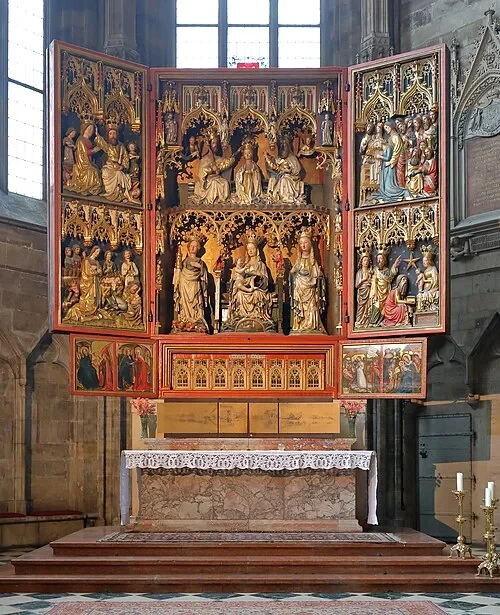 The North Aisle and the Winged AltarWiener Neustadt Altar
The Wiener Neustadt Altar is a stunning example of a late Gothic winged altar, or polyptych. Commissioned in 1447 by Emperor Frederick III, it was originally created for the Cistercian Abbey in Wiener Neustadt. It only found its home here in St. Stephen's in the mid-19th century. The altar is celebrated for its complexity, featuring a series of panels that could be opened or closed depending on the liturgical season. When the wings are fully opened on important feast days, the altar reveals an incredible array of 72 distinct saints and biblical scenes, many of them intricately carved and covered in shimmering gold leaf. The central part of the altar focuses on the life of the Virgin Mary, surrounded by a celestial court. The level of detail is extraordinary, with each tiny figure possessing unique features and attire. This type of altar served as a 'visual Bible' for the congregation, bringing the stories of the faith to life through vibrant color and gold. The sheer scale and the number of individual carvings make it one of the most important and well-preserved examples of 15th-century religious art in Central Europe, reflecting the immense wealth and piety of the Habsburg court during that era.
Listen in the appC.Stadler/Bwag · CC BY-SA 4.0
08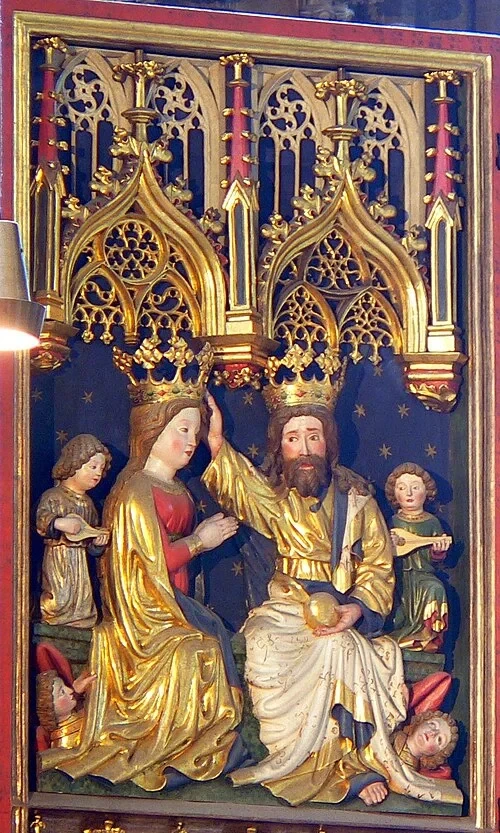 The North Aisle and the Winged AltarGilded Coronation Detail
Focus your attention on the central panel of the Wiener Neustadt Altar, where the Coronation of the Virgin Mary is depicted in exquisite detail. This scene shows Mary being crowned by Christ and God the Father, a popular subject in late Gothic art. Notice the 'soft style' of the figures�their flowing robes and gentle, serene facial expressions are hallmarks of the artistic trends found in the mid-15th century. The entire scene is bathed in gold leaf, which was more than just a display of wealth. In the dim light of the medieval cathedral, illuminated only by candles and the sun through stained glass, the real gold on the altar would catch and reflect every flicker of light. This created a glowing, heavenly effect that would have seemed miraculous to the worshippers of the time. The gilding helps to highlight the intricate architectural motifs that frame the figures, such as the delicate spires and tracery that mimic the cathedral's own exterior. This focus on light and precious materials was intended to give visitors a foretaste of the celestial kingdom. Even today, the craftsmanship remains remarkably vibrant, allowing us to appreciate the skill of the anonymous carvers and painters who dedicated years to this work.
Listen in the appPhoto: Joachim Köhler · CC BY-SA 3.0
09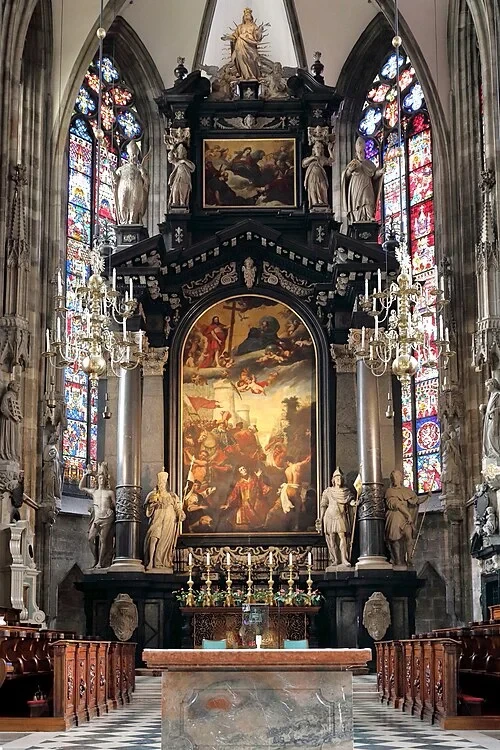 The High Altar and the Great ChoirThe High Altar
In the middle of the 17th century, the cathedral's interior was updated with this massive High Altar, which introduced the dramatic and emotional Baroque style to the Gothic space. The centerpiece is a monumental painting by Tobias Pock, covering 28 square meters. It depicts the stoning of Saint Stephen, the cathedral's patron and the first Christian martyr. You can see the saint in the center, looking toward the heavens as he is surrounded by his executioners. The structure surrounding the painting is made of dark, polished marble, which creates a sharp visual contrast with the light-colored stone and airy verticality of the Gothic nave. This was a deliberate choice by the Baroque architects, intended to draw the eye immediately to the most sacred part of the church: the altar. Flanking the painting are larger-than-life statues of saints, including St. Leopold and St. Florian, further emphasizing the grandeur of the counter-reformation era. While the Gothic elements of the cathedral emphasize a reach toward the sky, this Baroque altar focuses on theatricality and emotional impact, inviting the viewer to contemplate the sacrifice of the martyr. It remains the focal point of the choir, where the most important liturgical celebrations take place.
Listen in the appC.Stadler/Bwag · CC BY-SA 4.0
10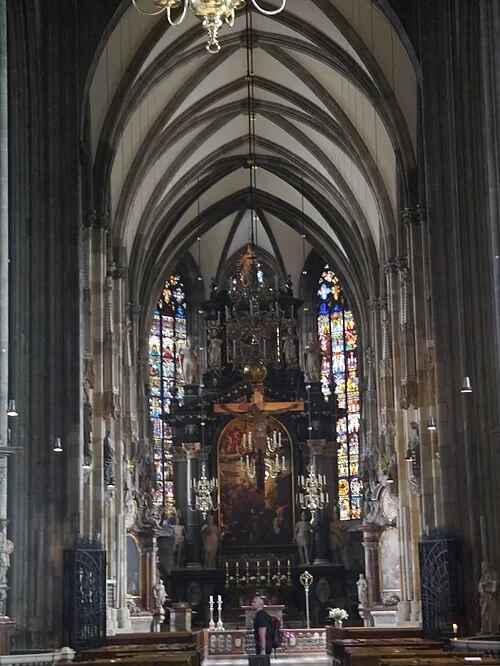 The High Altar and the Great ChoirThe Great Choir
The Great Choir is one of the most visually impressive parts of the cathedral interior. As you look up, you can truly appreciate the verticality of the Gothic architecture, where the tall, slender columns seem to stretch endlessly toward the ribbed vaulting of the ceiling. This design was intended to draw the spirit upward, creating a sense of awe and transcendence. The light in this area is constantly changing, filtered through the tall stained-glass windows that line the walls, casting patches of brilliant red, blue, and gold across the stone floor. Beyond its visual beauty, this space is famous for its acoustics. This is where the liturgical music of the cathedral comes to life. Historically, this choir was the home of Vienna�s famous boy choir, and it counts several musical legends among its alumni. Most notably, a young Joseph Haydn sang here as a choirboy in the 18th century, beginning his journey to becoming one of the most famous composers in history. The combination of the soaring architecture, the historic light, and the lingering echoes of centuries of music creates a powerful atmosphere. It is a place where art, history, and spirituality converge, offering a moment of quiet reflection amidst the grandeur of the cathedral.
Listen in the appPhoto: Zairon · CC BY-SA 3.0
Stephansdom
Frequently asked questions
How much does the guide cost?
Free app download. Listed guide price: $1.99. Guide price shown in the app. Audio guide only. Venue admission is separate.
Can I listen without internet?
Yes. Download the guide’s audio, images, and maps in the app before your visit. Your downloaded content is then available offline.
Can I listen in my language?
Stanza supports 15 languages. Check the app for the languages available for this guide.
Do I need to follow a schedule?
No. This is a self-guided experience. Choose your stops, pause whenever you like, and return to a story at your own pace.
At your own pace
Explore Stephansdom.
Download Stanza, then search for “Stephansdom”.
Free app download · Guide price shown in the app
Keep exploring
Nearby audio guides
Vienna
Hofburg
Content & sources
C.Stadler/Bwag · CC BY-SA 3.0 at
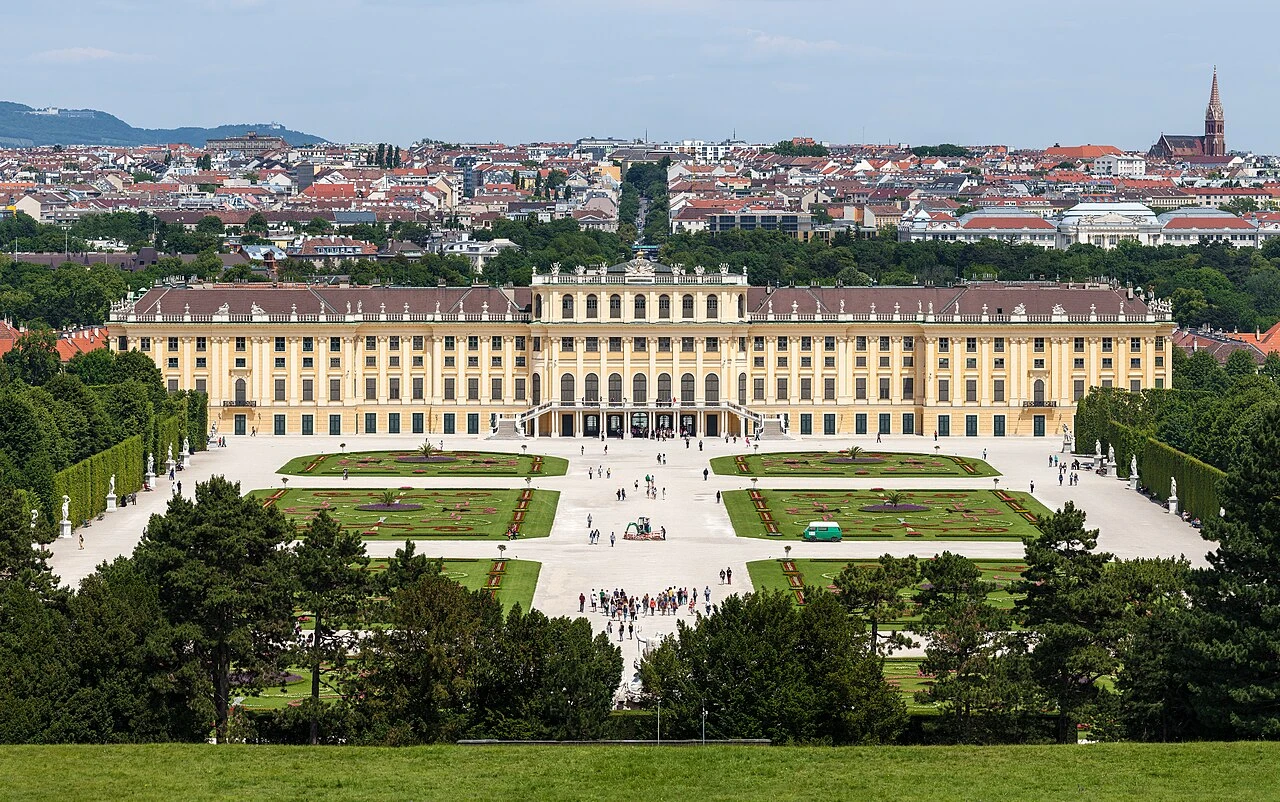
Vienna
Schloss Schönbrunn
Content & sources
Thomas Wolf, www.foto-tw.de · CC BY-SA 3.0 de
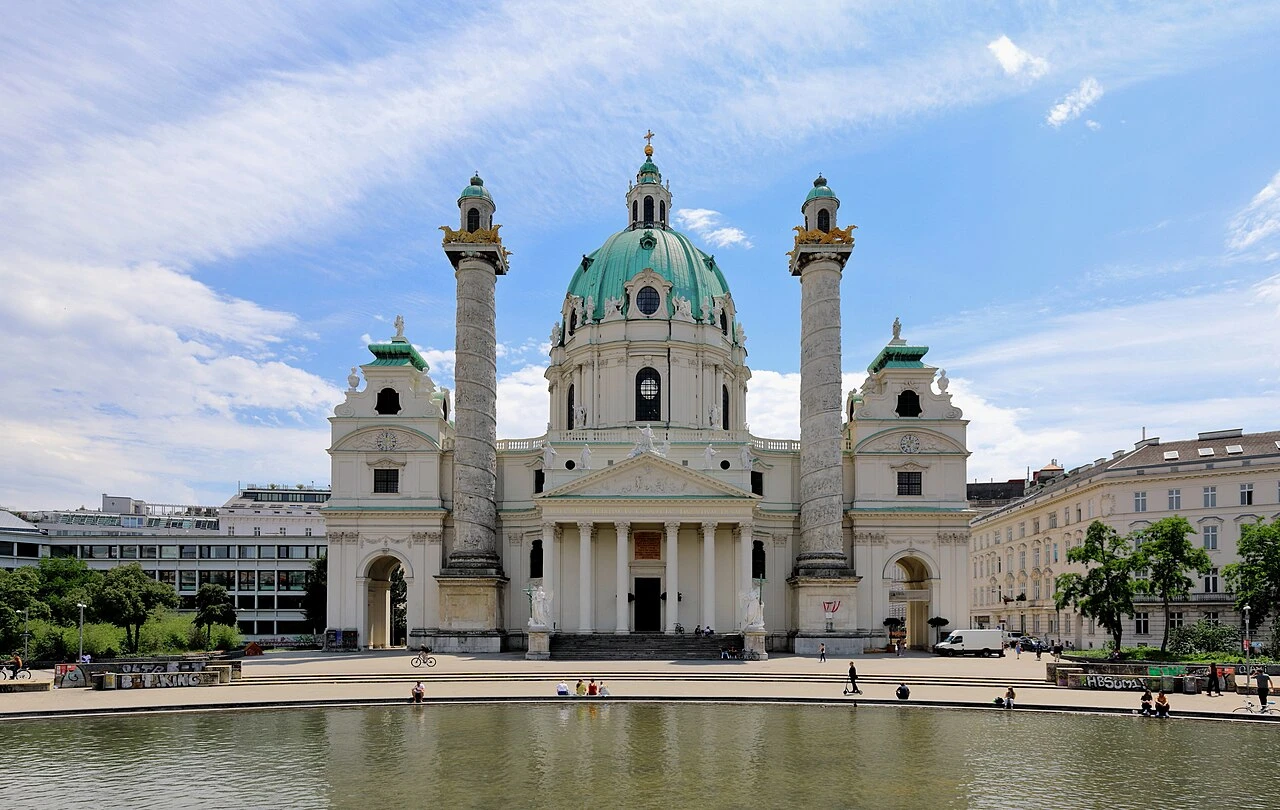
Vienna
Wiener Karlskirche
Content & sources
C.Stadler/Bwag · CC BY-SA 4.0
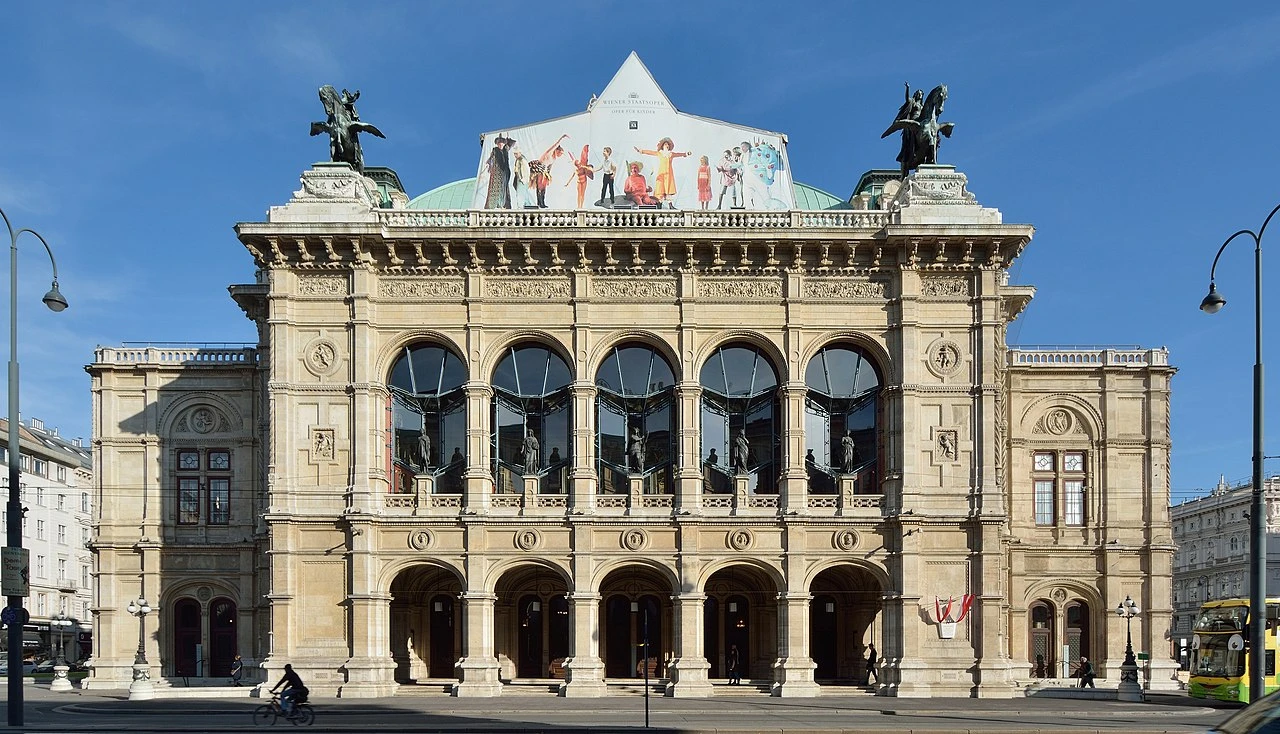
Vienna
Wiener Staatsoper
Content & sources
Photo: P e z i · CC BY-SA 3.0 at