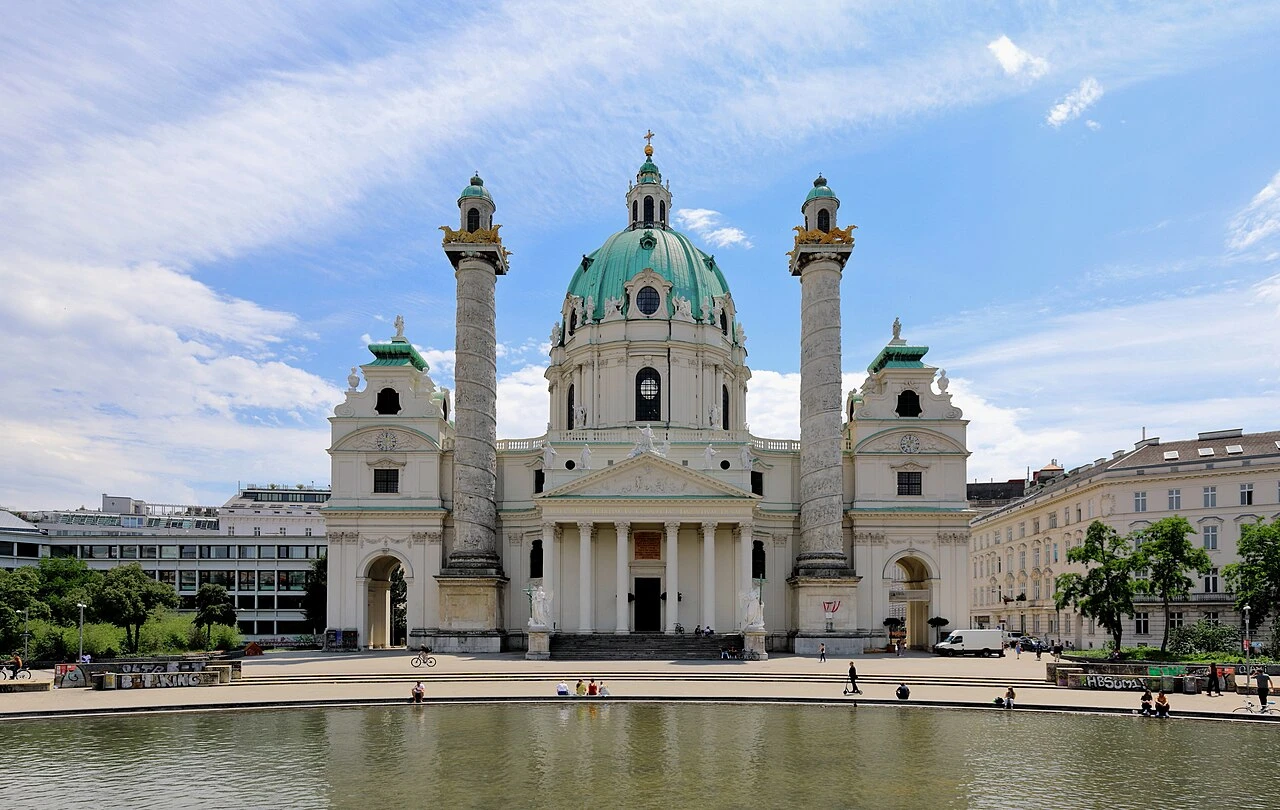
Stanza · Audio guide
Wiener KarlskircheAudio guide
A place to remember. A story to take with you.
The Karlskirche is a prominent Baroque church located in Vienna, Austria. Dedicated to Saint Charles Borromeo, it is renowned for its distinctive dome and two flanking columns.
Download Stanza, then search for “Wiener Karlskirche”.
About the tour
One guide. Your kind of visit.
The Karlskirche is a prominent Baroque church located in Vienna, Austria. Dedicated to Saint Charles Borromeo, it is renowned for its distinctive dome and two flanking columns.
Ready when you are.
- 01Get the free Stanza app.
iOS & Android
- 02Find your guide.
“Wiener Karlskirche”
- 03Download before you go.
Works offline
Audio guide / 26 narrated stops
Inside the guide
Get to know a few of the stories before you go. Open a stop to read more.
01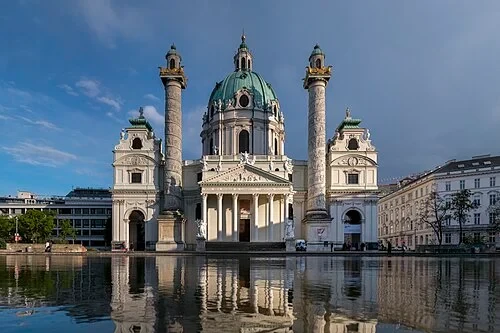 Karlsplatz and the Reflection PondThe Baroque Masterpiece
Welcome to one of the most significant and visually striking buildings in all of Europe. As you stand before the Karlskirche, or St. Charles Church, you are witnessing the crowning achievement of the renowned architect Johann Bernhard Fischer von Erlach. This architectural marvel was commissioned in the early 18th century and was designed to be much more than just a place of worship; it was a projection of imperial power. The grand design was intended to position the Habsburg Empire as the 'Third Rome,' effectively claiming the mantle of the Holy Roman Empire�s spiritual and political legacy. One of the most impressive features you�ll notice is the massive green dome, which reaches a staggering height of 70 meters. Its scale was meant to dominate the skyline, much like the great cathedrals of Rome. The eclectic facade blends elements of various styles�including a Greek portico and Roman columns�creating a unique, imperial synthesis that has captivated visitors for centuries. Take a moment to appreciate the sheer scale and ambition of this structure before we move closer to explore the unique modern contrast sitting in the pond ahead of us.
Thomas Ledl · CC BY-SA 4.0
02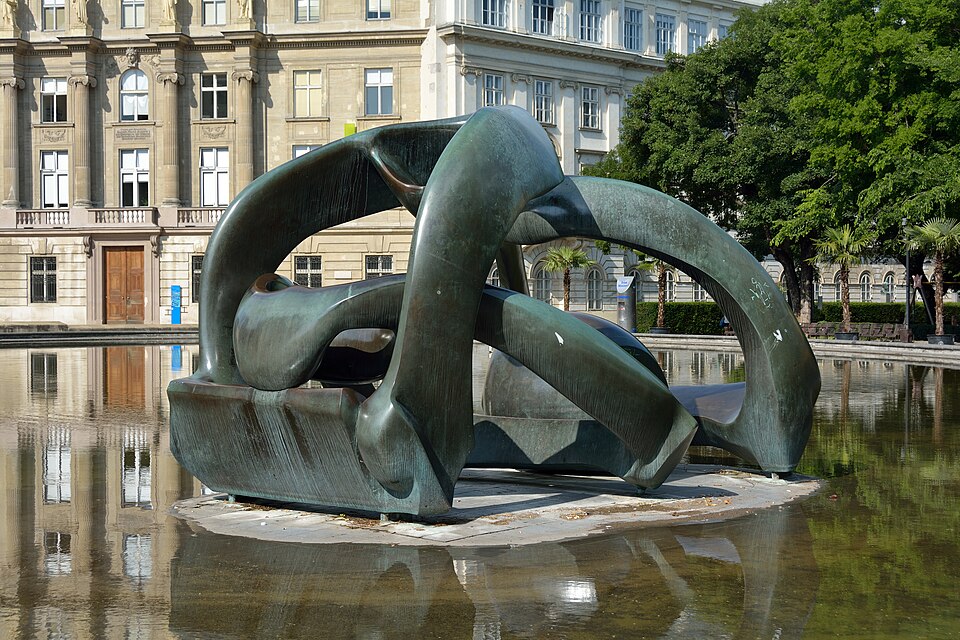 Karlsplatz and the Reflection PondThe Henry Moore Sculpture
Standing in the reflection pond directly in front of the church is a modern contrast that often surprises first-time visitors. This bronze sculpture, titled 'Hill Arches,' was created by the legendary British artist Henry Moore. While at first it may seem out of place against the backdrop of an 18th-century Baroque church, the sculpture was intentionally placed here to create a dialogue between the old and the new. Notice how the organic, abstract shapes of the sculpture appear to shift as you move around the pond. These flowing, heavy forms are a hallmark of Moore�s style, often intended to evoke natural landscapes or the human body in a simplified, abstract way. The reflection pond itself plays a crucial role in this interaction. On a clear day, the still water mirrors both the intricate church facade and the dark bronze of the sculpture, effectively framing the Karlskirche within Moore�s modern vision. It serves as a reminder that the space around the church is not frozen in the past, but continues to be a site for artistic evolution and public engagement.
Photo: P e z i · CC BY-SA 3.0
03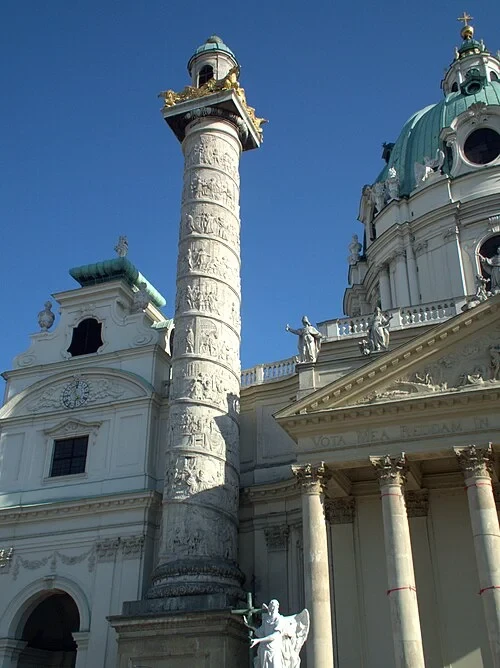 The Two Imperial ColumnsThe Imperial Columns
Perhaps the most distinctive features of the exterior are the two monumental columns that flank the central portico. Reaching a height of 33 meters, these towers were modeled after the famous Trajan's Column in Rome, but here they carry a layered, triple symbolism unique to the Habsburgs. First, they represent the 'Pillars of Hercules,' which were the heraldic symbols of the Spanish power once held by the Habsburg dynasty. This was a clear political statement, signaling the reach and might of the empire. Second, they evoke the biblical columns of Boaz and Jachin that stood at the entrance to the Temple of Solomon in Jerusalem, connecting the church to ancient sacred traditions. Finally, they represent the ultimate triumph and resilience of the Catholic Church. By incorporating these Roman-style columns into a Christian church, the architect von Erlach was physically manifesting the idea of Vienna as a successor to the glory of Rome. While the columns themselves are grand in scale, it is the intricate detail carved into their surfaces that tells the most human part of the church's story, which we will examine more closely in a moment.
Listen in the appPhoto: DALIBRI · CC BY-SA 3.0
04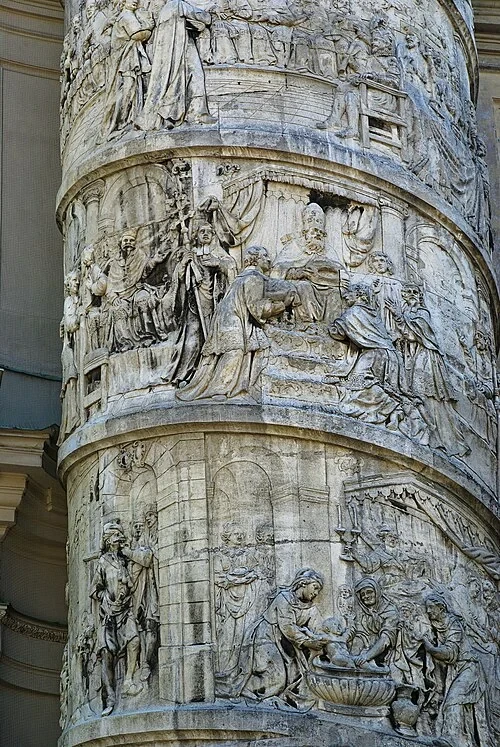 The Two Imperial ColumnsReliefs of Saint Charles
As you look closer at the two massive columns, you�ll notice that they are covered in a continuous spiral of carved reliefs. This is not merely decoration; it is a narrative masterpiece. These reliefs depict scenes from the life of Saint Charles Borromeo, the patron saint of the church. Because many people at the time were unable to read, these carvings served as a visual story, winding upward like a comic strip from the 1700s. The scenes illustrate his acts of charity, his dedication to the sick during the plague in Milan, and his unwavering faith. The level of detail achieved in the stone carving is remarkable�you can see individual expressions, the folds of clothing, and architectural backgrounds in each panel. This storytelling method allowed the church to communicate the virtues of its namesake to every passerby. The spiraling movement draws the eye upward, symbolically linking the earthly deeds of the saint to the heavens above. It�s worth spending a minute to follow the narrative as it twists around the pillars, showcasing the incredible craftsmanship of the 18th-century stonemasons who brought Borromeo's history to life for the citizens of Vienna.
Listen in the appPhoto: Txllxt TxllxT · CC BY-SA 4.0
05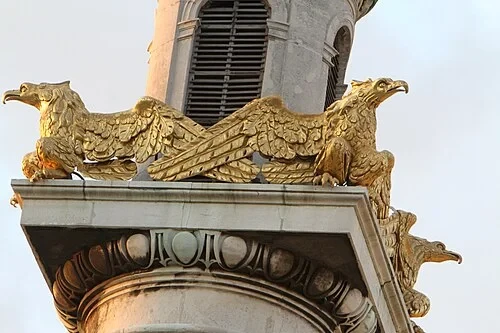 The Two Imperial ColumnsThe Golden Imperial Eagles
If you direct your gaze to the very top of the massive columns, just below the copper domes, you will see four prominent golden eagles sitting on the corners of the square platforms. These are not merely decorative birds; they are the heraldic animals of the Holy Roman Emperor, Charles VI. Their presence is a deliberate and powerful signature. These eagles serve as a constant reminder that this was an 'Imperial' church, built under the direct patronage and funding of the Habsburg crown. In the 18th century, such symbols were essential for establishing authority and showing that the Emperor was the protector of both the state and the faith. The use of gold leaf ensures that they catch the sunlight, making them visible from quite a distance as they stand guard over the city. While the columns themselves speak of ancient Rome and biblical wisdom, these golden eagles ground the building firmly in the political reality of the Austrian Empire. They represent the watchful eye of the sovereign and the immense wealth he funneled into this project to ensure its grandeur would be unmatched in the capital.
Listen in the appPhoto: PictureObelix · CC BY-SA 3.0 at
06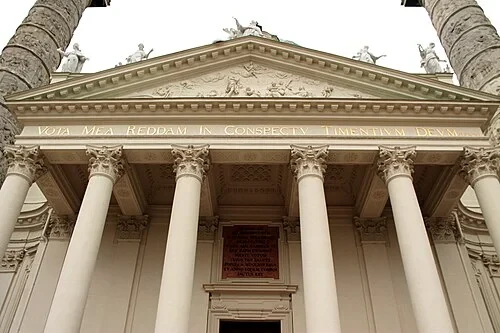 The Portico and Votive InscriptionThe Portico Inscription
As you approach the grand Greek-style entrance, look up to the frieze just above the towering columns. You will see a Latin inscription that reads: 'Vota mea reddam in conspectu timentium deum.' Translated, this means: 'I will pay my vows in the sight of them that fear God.' This phrase is the key to understanding why this church exists in the first place. In 1713, a devastating plague swept through Vienna, claiming thousands of lives. Facing a catastrophe he could not control with medicine or politics, Emperor Charles VI made a solemn vow to God: if the city were spared from further destruction, he would build a magnificent church dedicated to Saint Charles Borromeo, who was known as a healer of plague victims. This inscription is the public fulfillment of that imperial promise. The architecture here deliberately mimics a classical Greek temple, symbolizing wisdom and stability, but the words themselves are deeply religious. It transforms the building from a mere monument into a profound act of gratitude and a lasting testament to a moment of historical crisis and spiritual resolution that reshaped the city's skyline.
Listen in the appJohn Samuel · CC BY-SA 4.0
07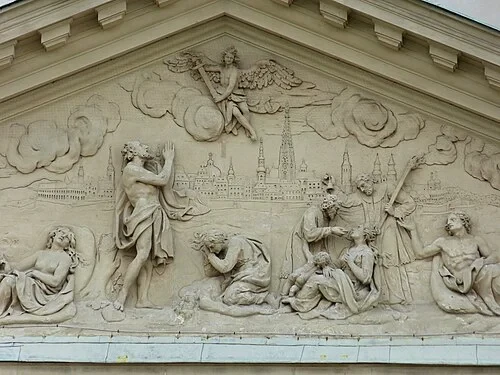 The Portico and Votive InscriptionThe Plague Pediment
Directly above the portico is the large triangular pediment, which contains a deeply moving relief sculpture. This scene depicts the city of Vienna during the height of the 1713 plague epidemic. You can see the suffering of the citizens and the desperation of the time rendered in high detail. In the center, Saint Charles Borromeo is shown interceding with God, pleading for the lives of the Viennese people. It is a theatrical and emotional composition typical of the High Baroque style. One of the most important figures to notice is the angel on the right side. The angel is shown holding a sword, but importantly, the sword is being sheathed. This symbolizes the end of the 'Divine Wrath' and the cessation of the disease. The relief acts as a visual history of the event that led to the church's founding, showing the transition from death and despair to divine mercy and health. By placing this scene prominently on the front of the building, the architects ensured that the story of the city�s survival would never be forgotten, serving as a permanent memorial to those who were lost and a celebration of those who survived.
Listen in the appWolfgang Sauber · CC BY-SA 3.0
08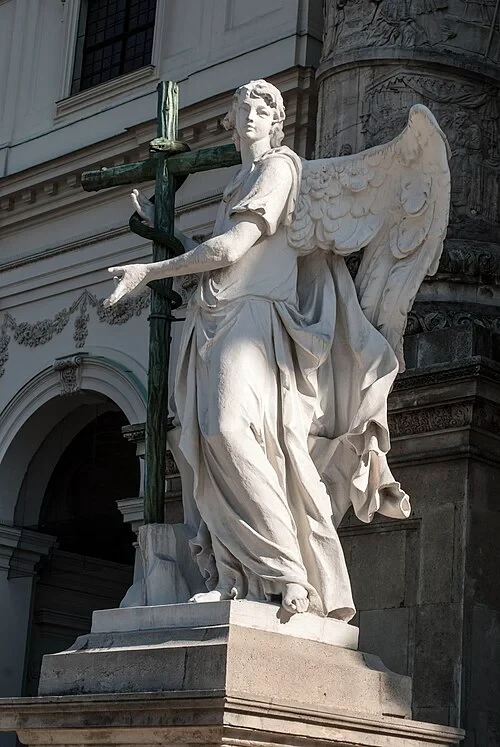 The Portico and Votive InscriptionThe Angel with the Cross
Standing near the entrance, you will encounter the graceful statue of a guardian angel. Notice the large cross the figure holds, which is the defining symbol of the 'Knights of the Cross with the Red Star.' This is a Bohemian religious order with roots dating back to the 13th century, founded by Saint Agnes of Bohemia. While the church was built by the Emperor, it has been under the careful stewardship of this specific order since the year 1738. The presence of the angel here signifies their role as the spiritual protectors and administrators of the Karlskirche. The carving style of the figure is elegant and fluid, characteristic of the late Baroque period, with draped robes that suggest movement. This statue serves as a bridge between the grand imperial story of the exterior and the active religious life that takes place inside. For nearly three hundred years, the Knights of the Cross have maintained the church�s musical traditions, its treasury, and its status as a place of active worship, ensuring that the Emperor's 1713 vow continues to be honored every day through prayer and community service.
Listen in the appPhoto: Diana Ringo · CC BY-SA 3.0
09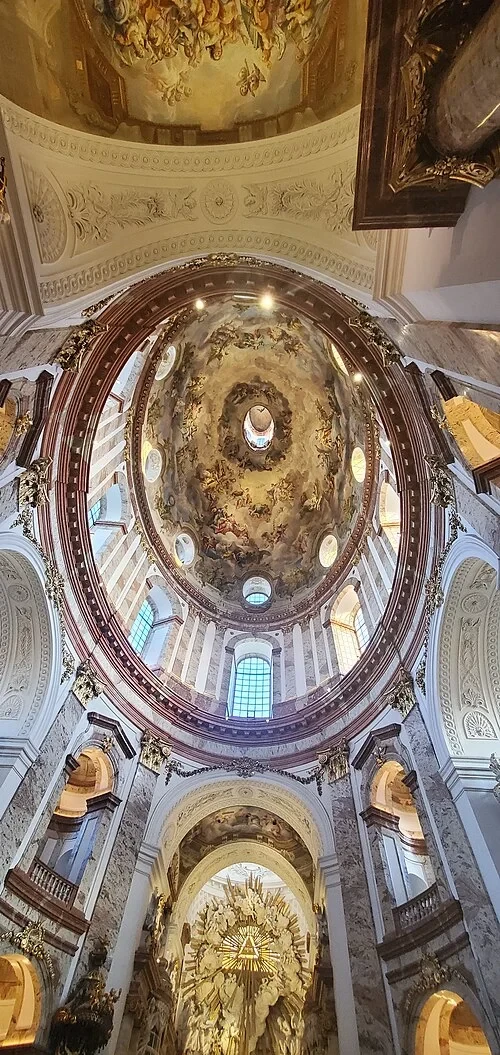 The Elliptical NaveThe Elliptical Dome
As you step into the interior and look upward, you are greeted by the church's most remarkable architectural feat. While most domes of this era are perfectly circular, this one is uniquely elliptical. This oval shape measures approximately 25 meters across. Architect Johann Bernhard Fischer von Erlach chose this elliptical form to create a dynamic sense of space that changes as you walk through the nave. This geometry creates a subtle optical illusion; depending on where you stand, the dome can appear more elongated or more expansive, making the interior feel significantly larger than its actual footprint. The light filtering in from the windows around the base of the dome enhances this effect, illuminating the curves and creating a soft, heavenly glow. This design was incredibly difficult to engineer at the time, but it allows for a more fluid movement of light and air. The elliptical shape also serves to focus the viewer's attention toward the main altar, drawing the eye forward and upward in a single, sweeping motion. It is a masterpiece of Baroque geometry, designed to humble the visitor and evoke a sense of the infinite within a finite space.
Listen in the appPhoto: Rəcəb Yaxşı · CC BY-SA 4.0
10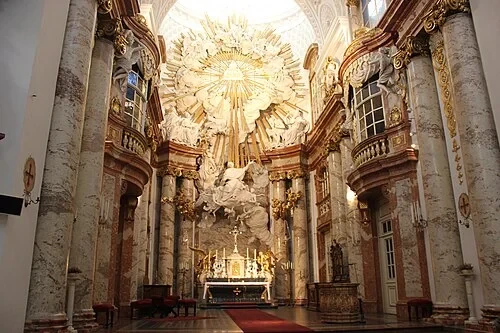 The Elliptical NaveThe Main Nave
The main nave of the Karlskirche is a masterclass in Baroque theatricality and imperial wealth. To build this sanctuary, the Habsburg crown spent an immense sum of over 304,000 Gulden, a staggering fortune for the early 18th century. As you walk through the space, notice how the architecture is designed to manipulate light. The high, strategically placed windows allow beams of sunshine to flood the interior, illuminating the rich marble-patterned walls and gilded accents. This lighting was not accidental; it was carefully planned to lead the visitor�s eye instinctively toward the high altar at the far end of the church. The scale of the nave is intended to overwhelm the senses, reminding the faithful of the grandeur of the divine and the power of the Emperor who commissioned it. The verticality of the columns and the sweep of the arches create a rhythmic movement that pulls you deeper into the heart of the building. Every surface is decorated with a level of detail meant to reflect the complexity and beauty of creation, making the nave a physical representation of heaven on earth where the material and spiritual worlds meet.
Listen in the appAndrzej Otrębski · CC BY-SA 4.0
Wiener Karlskirche
Frequently asked questions
How much does the guide cost?
Free app download. Listed guide price: $0.99. Guide price shown in the app. Audio guide only. Venue admission is separate.
Can I listen without internet?
Yes. Download the guide’s audio, images, and maps in the app before your visit. Your downloaded content is then available offline.
Can I listen in my language?
Stanza supports 15 languages. Check the app for the languages available for this guide.
Do I need to follow a schedule?
No. This is a self-guided experience. Choose your stops, pause whenever you like, and return to a story at your own pace.
At your own pace
Explore Wiener Karlskirche.
Download Stanza, then search for “Wiener Karlskirche”.
Free app download · Guide price shown in the app
Keep exploring
Nearby audio guides
Vienna
Hofburg
Content & sources
C.Stadler/Bwag · CC BY-SA 3.0 at
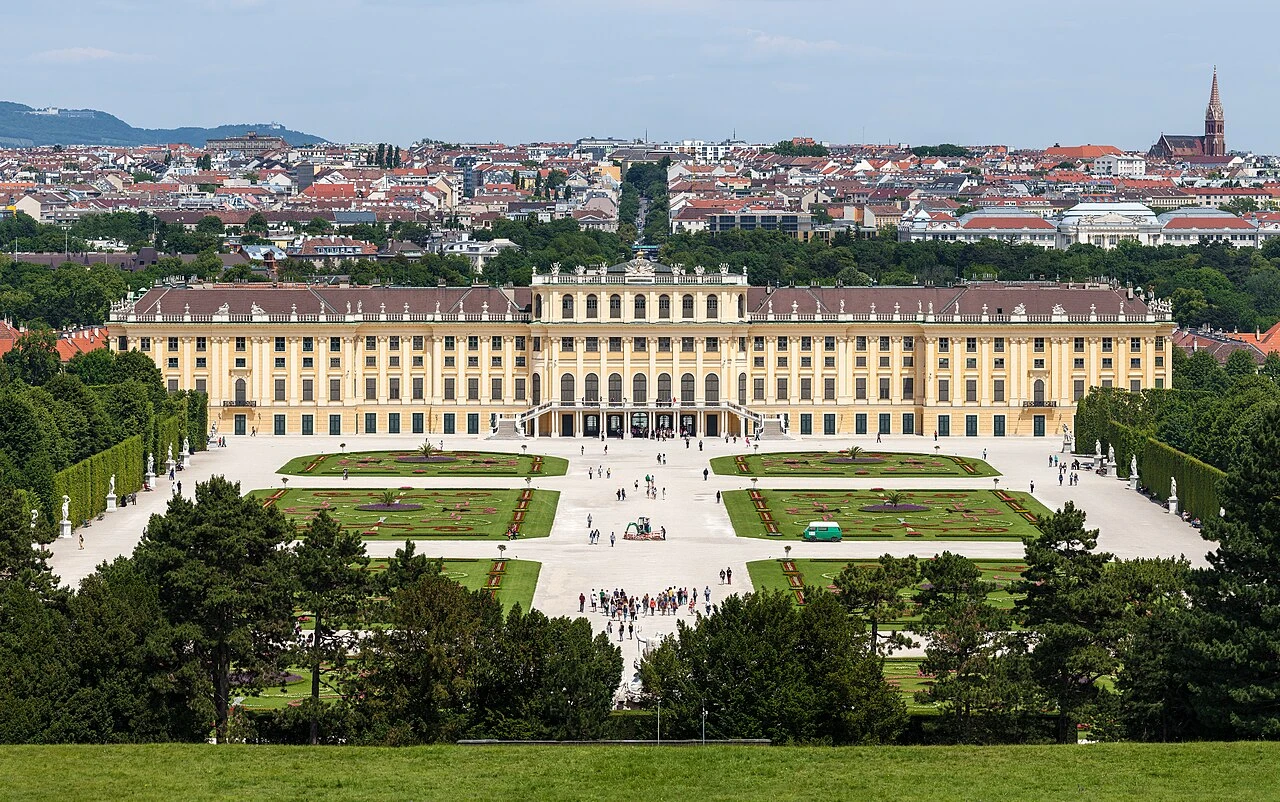
Vienna
Schloss Schönbrunn
Content & sources
Thomas Wolf, www.foto-tw.de · CC BY-SA 3.0 de
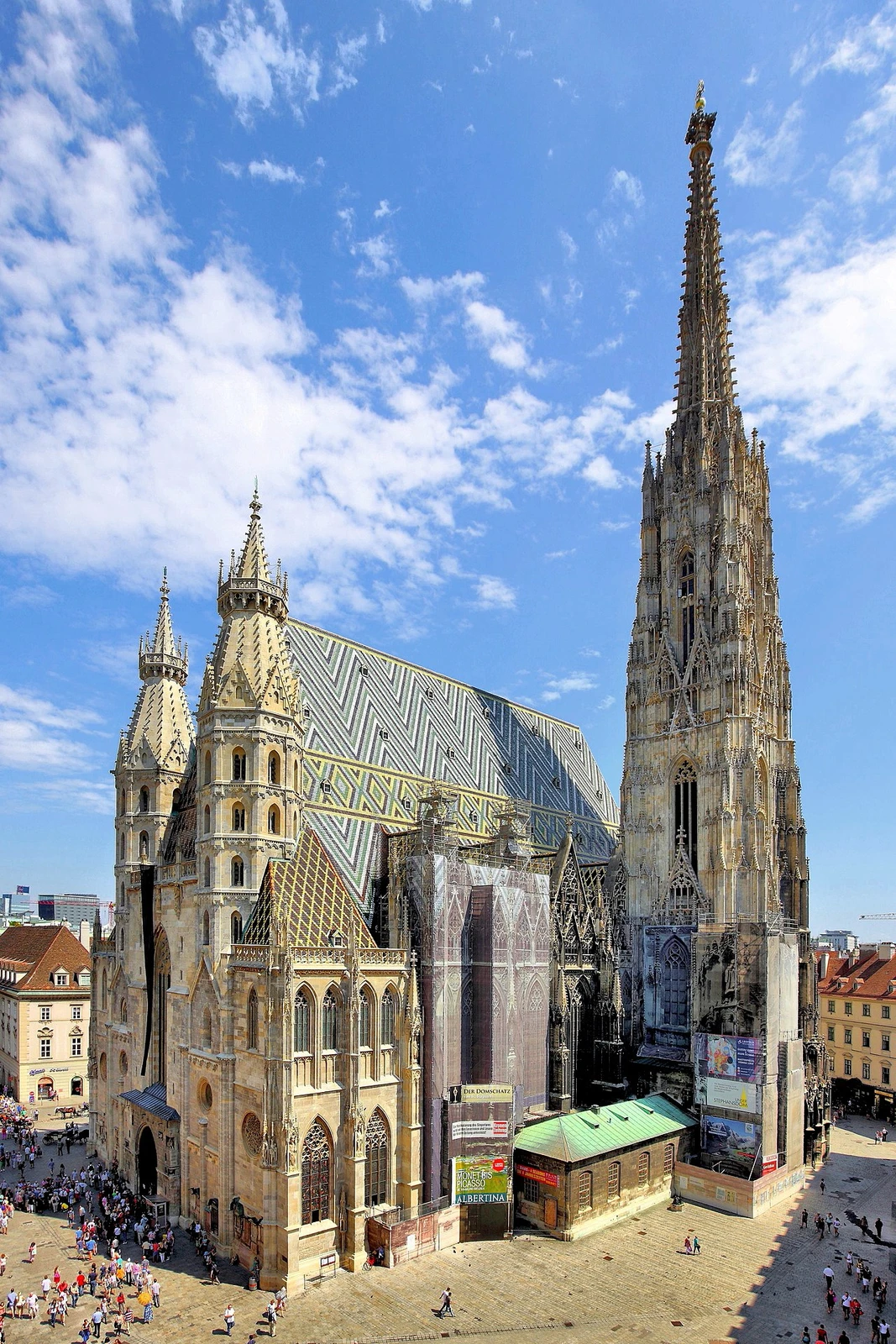
Vienna
Stephansdom
Content & sources
C.Stadler/Bwag · CC BY-SA 4.0
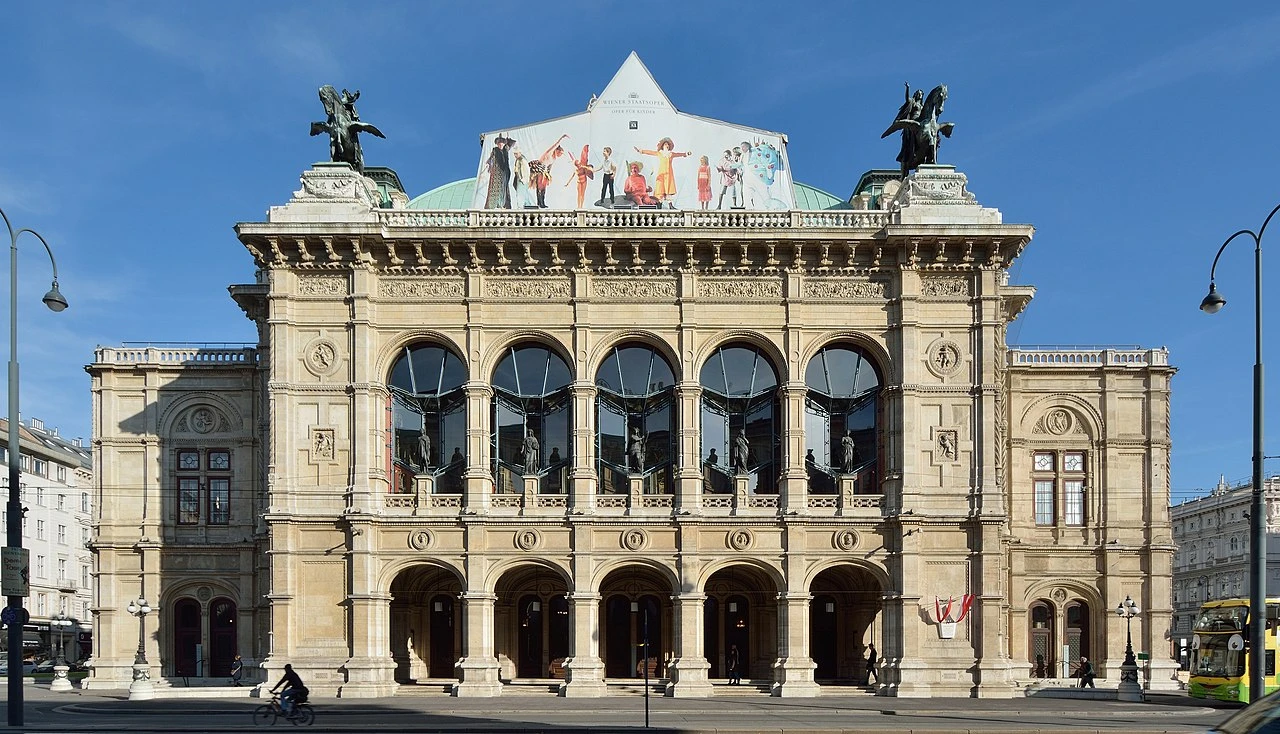
Vienna
Wiener Staatsoper
Content & sources
Photo: P e z i · CC BY-SA 3.0 at