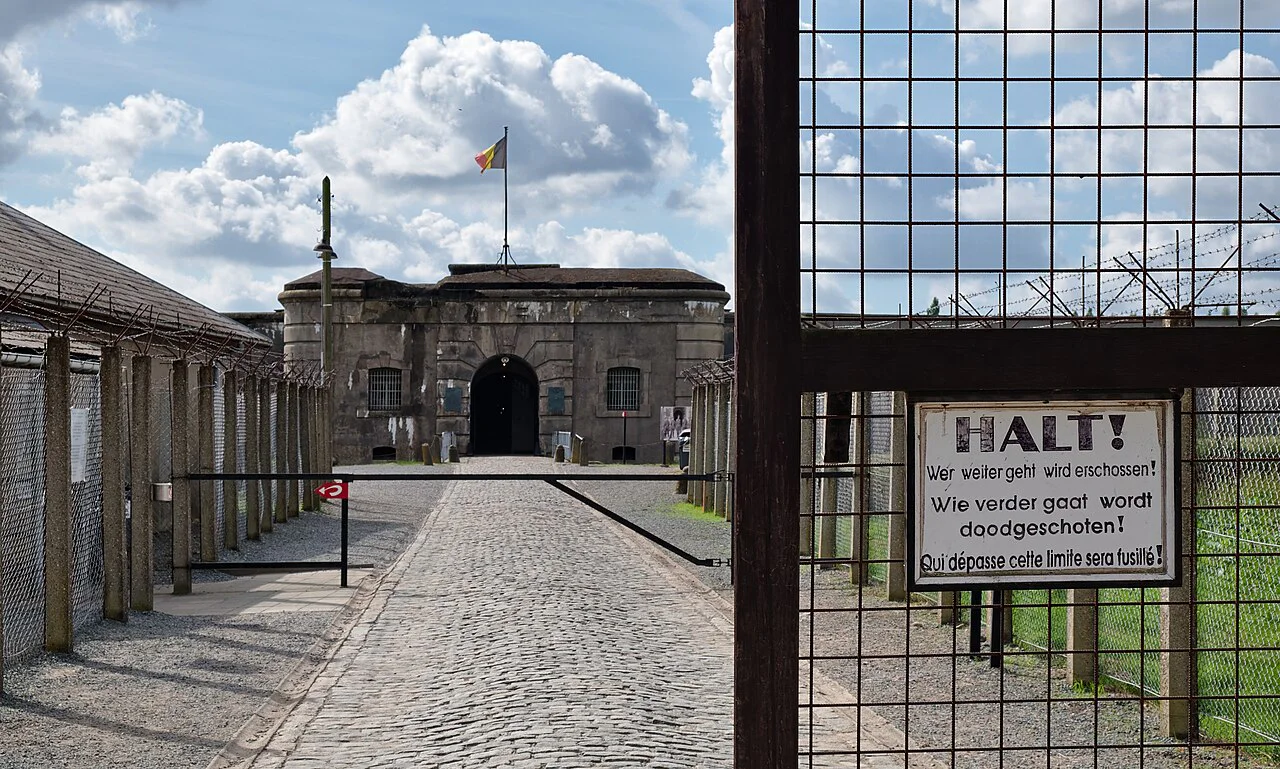
Stanza · Audio guide
Fort van Breendonk Audio Guide
A place to remember. A story to take with you.
Fort Breendonk is a former military installation located near Mechelen, Belgium. It served as a Nazi prison camp during the German occupation of Belgium in World War II.
Download Stanza, then search for “Fort van Breendonk”.
About the tour
One guide. Your kind of visit.
Fort Breendonk is a former military installation located near Mechelen, Belgium. It served as a Nazi prison camp during the German occupation of Belgium in World War II.
Ready when you are.
- 01Get the free Stanza app.
iOS & Android
- 02Find your guide.
“Fort van Breendonk”
- 03Download before you go.
Works offline
Audio guide / 16 narrated stops
Inside the guide
Get to know a few of the stories before you go. Open a stop to read more.
01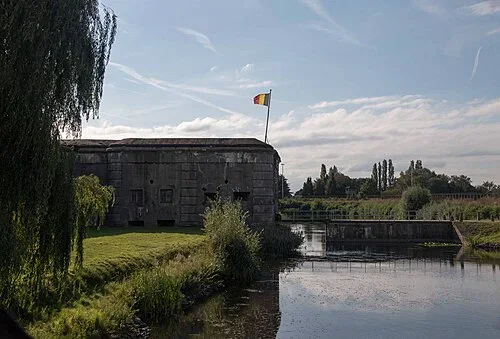 Moat Approach and Fort Entrance Gate
The Moat and the Fortress
Welcome to Fort van Breendonk, a place with two very different stories. The concrete walls beside the water were raised by the Belgian Army between 1906 and 1913. Antwerp was then the keystone of national defense, and this fort belonged to the second ring of the National Redoubt around the city. The design was meant to make the place almost invisible. A layer of soil five metres thick covered the structure, and a water-filled moat ringed it. The whole footprint measured two hundred by three hundred metres. The fort did see war. On the first of October 1914, German howitzers fired on it from beyond the reach of its own guns. The garrison surrendered a week later, without the fort ever being stormed. By the Second World War it was already militarily obsolete. How a fortress built to shield a city became something else entirely is the story this tour follows.
Photo: Sally V · CC BY 4.0
02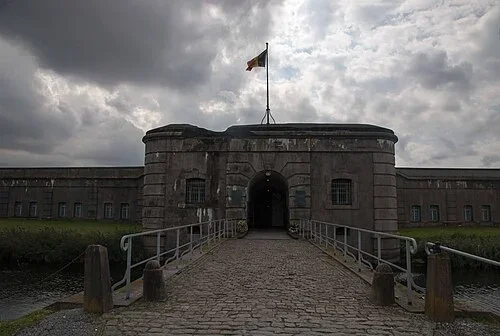 Moat Approach and Fort Entrance Gate
The Entrance Gate
The gate is where the fort changed its purpose. In May 1940, as German forces invaded Belgium, the fort served for a short time as the initial headquarters of the Belgian General Staff under King Leopold the Third. It was abandoned as the Germans advanced, and the Belgian Army surrendered on the twenty-eighth of May. Soon after, the SS requisitioned the empty fort and opened it as a prison camp under the name SS-Auffanglager Breendonk. The first prisoners arrived on the twentieth of September 1940. At the start they were mostly petty criminals, people deemed anti-social, or those who did not conform to the German race laws. Later came resistance fighters, political prisoners, and ordinary people captured as hostages. The footbridge and gate that carry visitors into the fort today are the same ones the prisoners once used.
Photo: Sally V · CC BY 4.0
03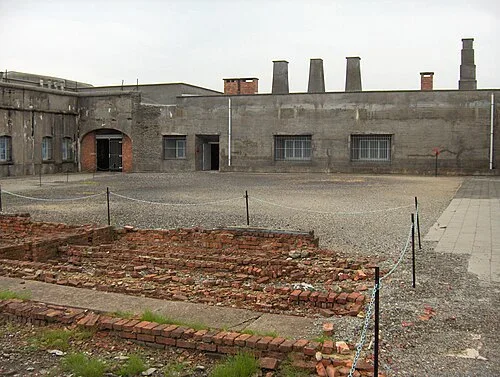 Roll-Call Courtyard (Appelplatz)
The Appelplatz: Roll-Call Courtyard
The courtyard was the first thing new prisoners saw of the camp. On arrival they were brought here and made to stand facing the wall until they were processed into the camp. That could take hours. They were forbidden to move, and any motion was severely punished. Roll call then set the rhythm of the days that followed, holding every prisoner to account in full view of the guards. Across the ground here, low courses of brick rise from the gravel. They are the bare remains of structures whose original use is no longer easy to say. The concrete walls facing them are the ones the new arrivals were made to study, hour after hour, while they waited to learn what kind of place they had entered.
Listen in the appPhoto: JoJan · CC BY-SA 3.0
04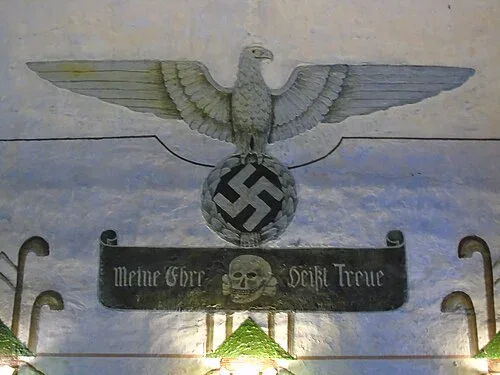 Roll-Call Courtyard (Appelplatz)
The SS Emblem: Who Ran the Camp
A painted eagle with spread wings grips a swastika above the motto Meine Ehre heisst Treue, my honour is loyalty. It is the emblem of the SS, and it survives here as the insignia of the men who ran the camp. The commandant through the first years was Philipp Schmitt, an SS major who spent much of his time in his office. He was notorious for his German shepherd, Lump, trained to bite prisoners. The guards also included Flemish collaborators, Belgians who turned openly and cruelly against their fellow countrymen in the service of their Nazi paymasters. Fernand Wyss of Antwerp admitted after the war that he had beaten or killed at least sixteen prisoners. His companion Richard De Bodt was just as brutal. The two made bets on who could invent the most outlandish tortures, and De Bodt once beat a prisoner to death to win a wager worth a bottle of cognac.
Listen in the appFernando Losada Rodríguez · CC BY-SA 4.0
05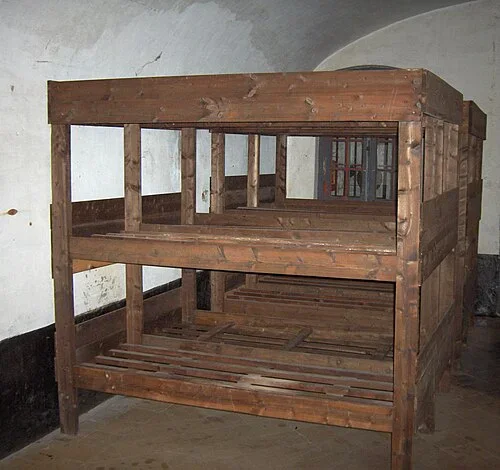 Casemate Living Quarters and Sanitary Facilities
The Casemate Bunks
These wooden bunks held the camp's everyday misery. The old barracks rooms were built from thick stone, without windows and with only minimal ventilation, so they stayed cold and damp through the year. Each room had a single small coal-burning stove, and heating the walls was nearly impossible. The rooms were originally designed for no more than thirty-eight soldiers. In the camp they frequently held more than fifty prisoners, sleeping on three-tier bunks with straw mattresses. The top bunks were the prized places. A single small bucket per room served as a toilet during the night. Many of the sick and weakened inmates simply let their waste drop down to the lower levels, which caused much fighting between prisoners. That fighting was probably what the guards wanted. Food was rationed harshly as well, starting the day with two cups of a coffee substitute made from roasted acorns and a small piece of bread.
Listen in the appPhoto: JoJan · CC BY-SA 3.0
06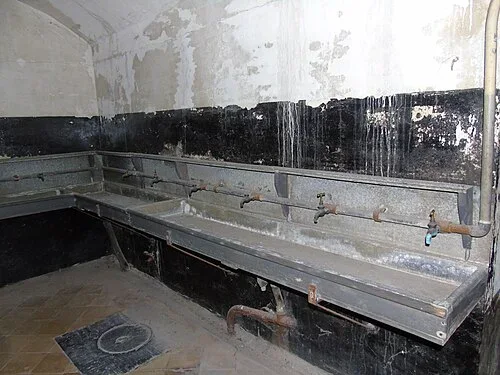 Casemate Living Quarters and Sanitary Facilities
The Washroom
The long metal troughs along the wall carry the theme of this room, which is that nothing, not even washing, was private. Prisoners were allowed to use the toilet only twice a day, and only in the order given. There were two gathering spaces inside the fort, one on the east side and one on the west. Each held a small building made of brick and without doors, equipped with four holes and one urinal. Only in 1944 was a larger facility added. Every visit was made under surveillance, in a group, and in a hurry. The guards used these periods as yet another opportunity to intimidate and humiliate the prisoners. Even the most basic bodily needs were turned into a ritual of control.
Listen in the appFernando Losada Rodríguez · CC BY-SA 4.0
07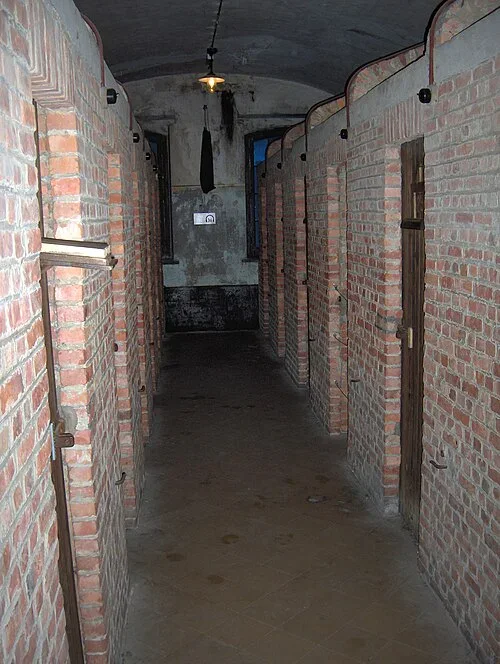 Solitary Confinement Cells (The Bunker)
Corridor of the Isolation Cells
The brick walls and heavy wooden doors mark the bunker, the fort's isolation wing. Prisoners were held here either alone or in small groups, and the aim was stated plainly: to isolate certain prisoners for later interrogation and torture. A stretch in these cells was often the step between arrival and questioning. The corridor did its work simply by cutting one man off from everyone else. What happened at the end of that process is told at the torture chamber, a few stops on.
Listen in the appPhoto: JoJan · CC BY-SA 3.0
08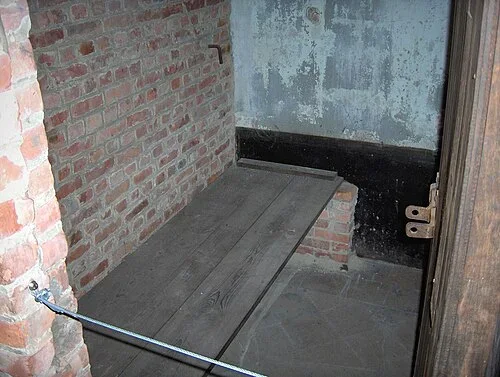 Solitary Confinement Cells (The Bunker)
Inside a Solitary Cell
Inside, a solitary cell worked by taking things away. There was almost no light. Prisoners could be confined here for weeks at a stretch. The rules forbade them even to lean or sit against the walls. The narrow wooden platform against the brick was the only furniture the cell contained. Everything else in the room, the bare plaster and the heavy door, belonged to the wait.
Listen in the appPhoto: JoJan · CC BY-SA 3.0
09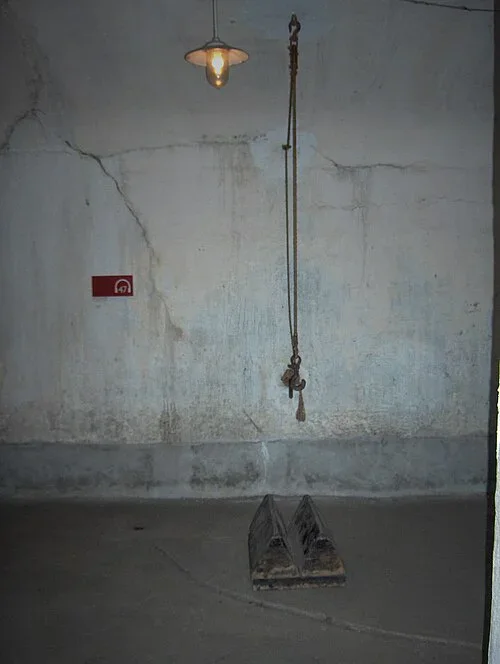 The Interrogation and Torture Chamber
The Torture Chamber
A hook hangs from the ceiling of this room, beneath a single lamp. Under the SS, the fort's old gunpowder magazine became a place of torture. Jean Améry, a writer and philosopher once named Hans Mayer, was captured in July 1943 while fighting with the Belgian resistance. He was brought to Breendonk and severely tortured. He was bound and hoisted by his wrists from a hook like the one that hangs here. Afterwards he was sent on to Auschwitz. He survived, and in 1966 he set down what had been done to him in a book he called At the Mind's Limits. Its subject was the dehumanization between victim and perpetrator during the Holocaust.
Listen in the appPhoto: JoJan · CC BY-SA 3.0
10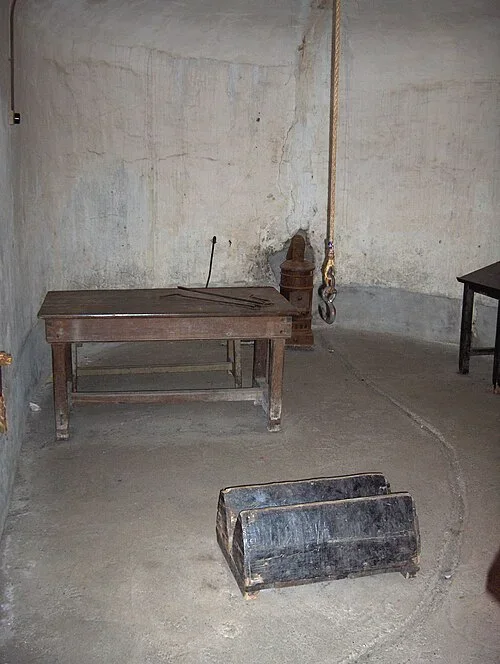 The Interrogation and Torture Chamber
The Interrogation Room
The questioning of prisoners was organized, methodical work. The interrogators were members of the Gestapo, sent from the Sipo-SD headquarters in Ghent, Antwerp, Brussels, Liège and Charleroi. Sometimes Breendonk's own SS men sat in on a session. There the interrogator wrote down the answers of the political prisoner or the resistance fighter, answer by answer. Anyone who did not cooperate enough was sent for what the SS called an intensified interrogation, in the torture room. A desk there carried a revolver, a sheet of paper for the confession, and iron pokers. From the ceiling hung a hoist with a thick rope and a meat hook, and two large wooden wedges stood beneath it. The original implements were wrecked before liberation. The blocks now shown at Breendonk are reconstructions, built from the testimony of captured SS men.
Listen in the appPhoto: JoJan · CC BY-SA 3.0
- 11
The Minecarts: Exhaustion Through Labour
Rusted carts from the narrow-gauge railway on which prisoners moved a quarter of a million cubic metres of earth by hand.
- 12
The Deportation Wagon
A red freight wagon by the moat, and the separate fate of the camp's Jewish prisoners.
- 13
The Execution Posts
Wooden posts where 184 prisoners faced a firing squad, while the whole camp was forced to watch.
- 14
The Gallows
The camp gallows against the fort wall, and the SS canteen that doubled as a courtroom.
- 15
The Memorial Hall
The memorial hall of 1947, where the names of the camps on the walls meet the camp's ledger of the dead.
- 16
The Fort Remembered
The fort seen from across the moat, kept as one of the best-preserved Nazi camps in Europe.
Fort van Breendonk
Frequently asked questions
How much does the guide cost?
Free app download. Listed guide price: $0.99. Guide price shown in the app. Audio guide only. Venue admission is separate.
Can I listen without internet?
Yes. Download the guide’s audio, images, and maps in the app before your visit. Your downloaded content is then available offline.
Can I listen in my language?
This audio guide is available in 15 languages, including English.
Do I need to follow a schedule?
No. This is a self-guided experience. Choose your stops, pause whenever you like, and return to a story at your own pace.
At your own pace
Explore Fort van Breendonk.
Download Stanza, then search for “Fort van Breendonk”.
Free app download · Guide price shown in the app
Keep exploring
Nearby audio guides
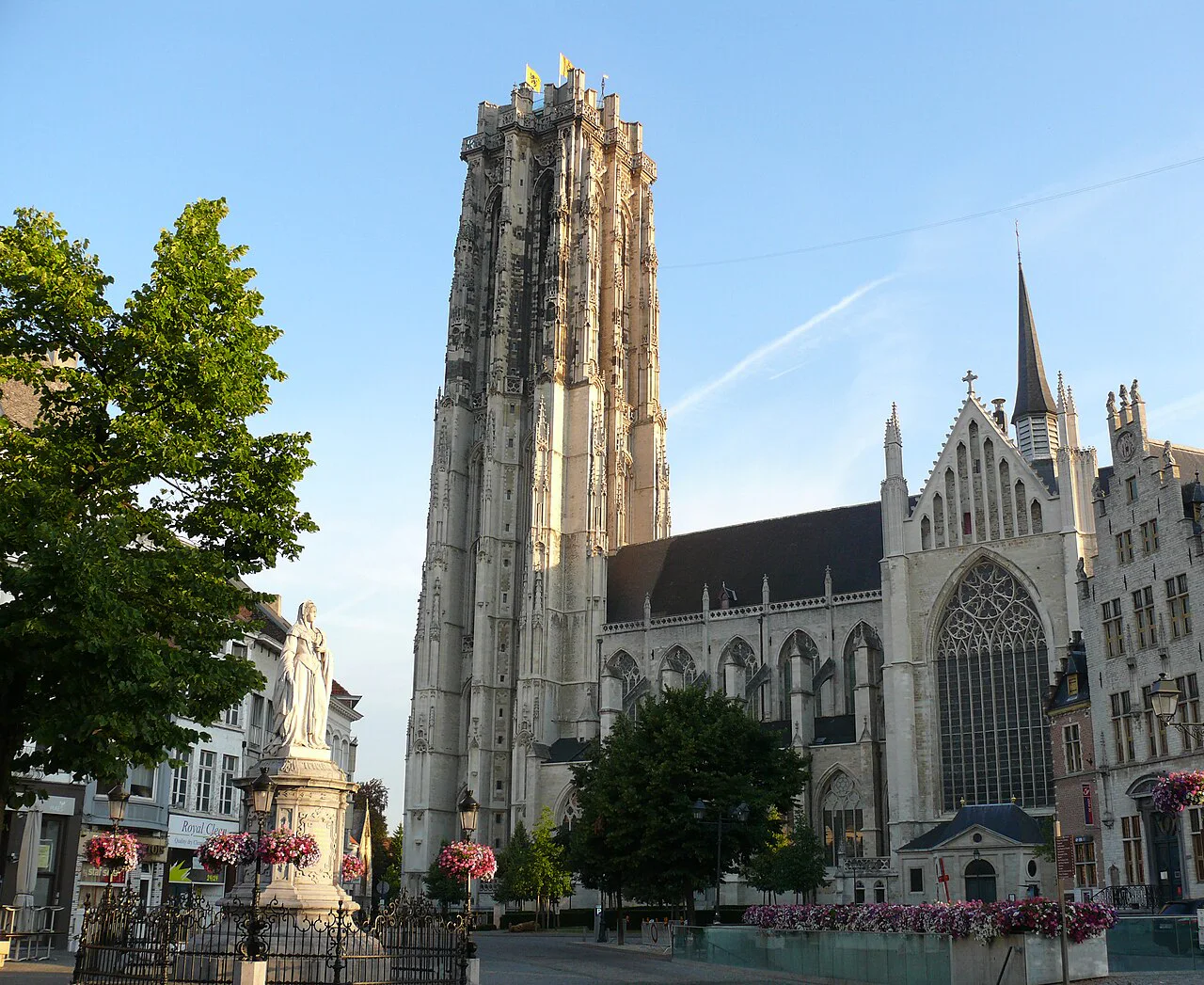
Mechelen · 10 km
Sint-Romboutskathedraal
Content & sources
Photo: Ad Meskens · CC BY-SA 3.0
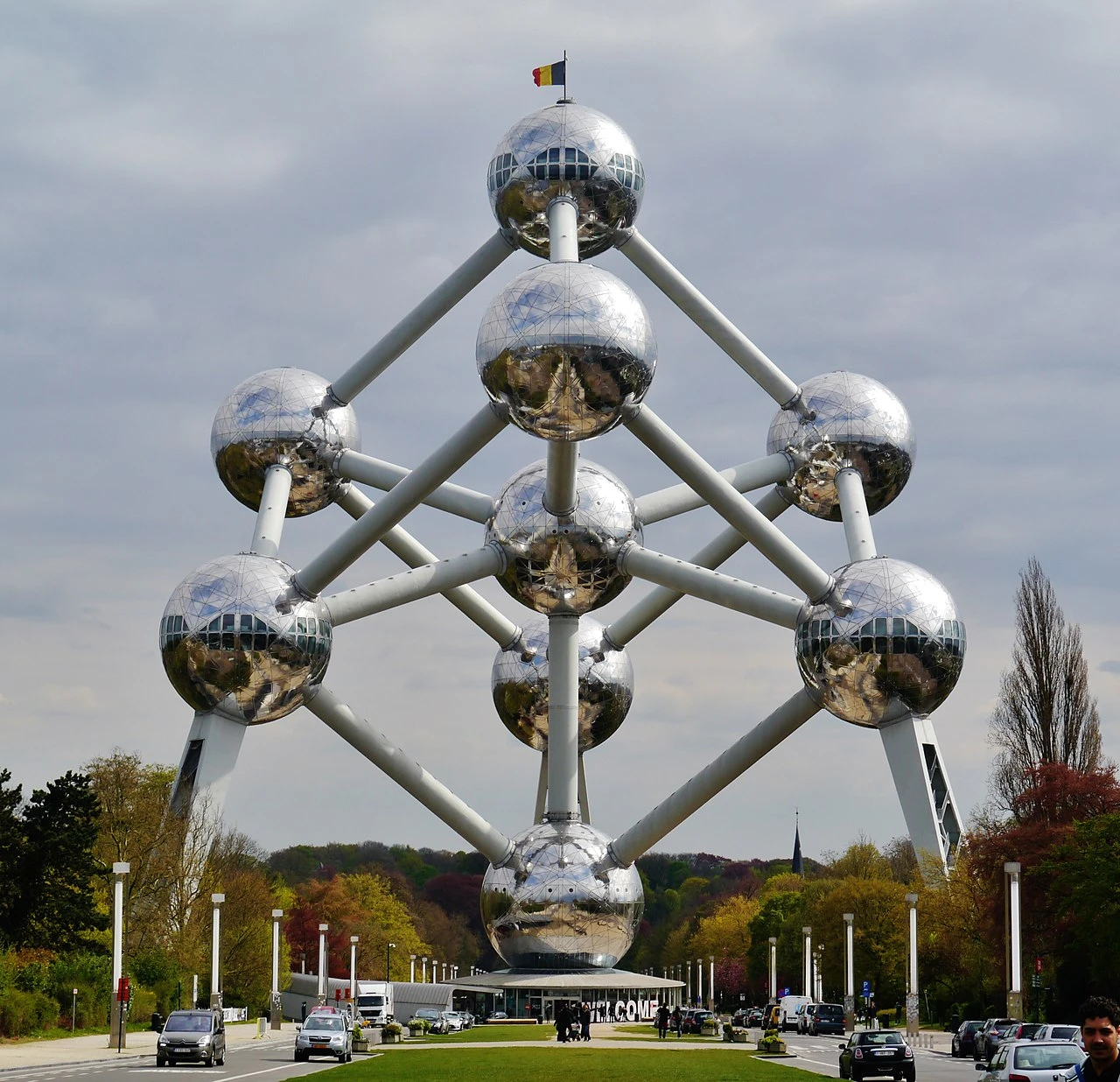
Brussels · 18 km
Atomium
Content & sources
Photo: Zairon · CC BY-SA 4.0
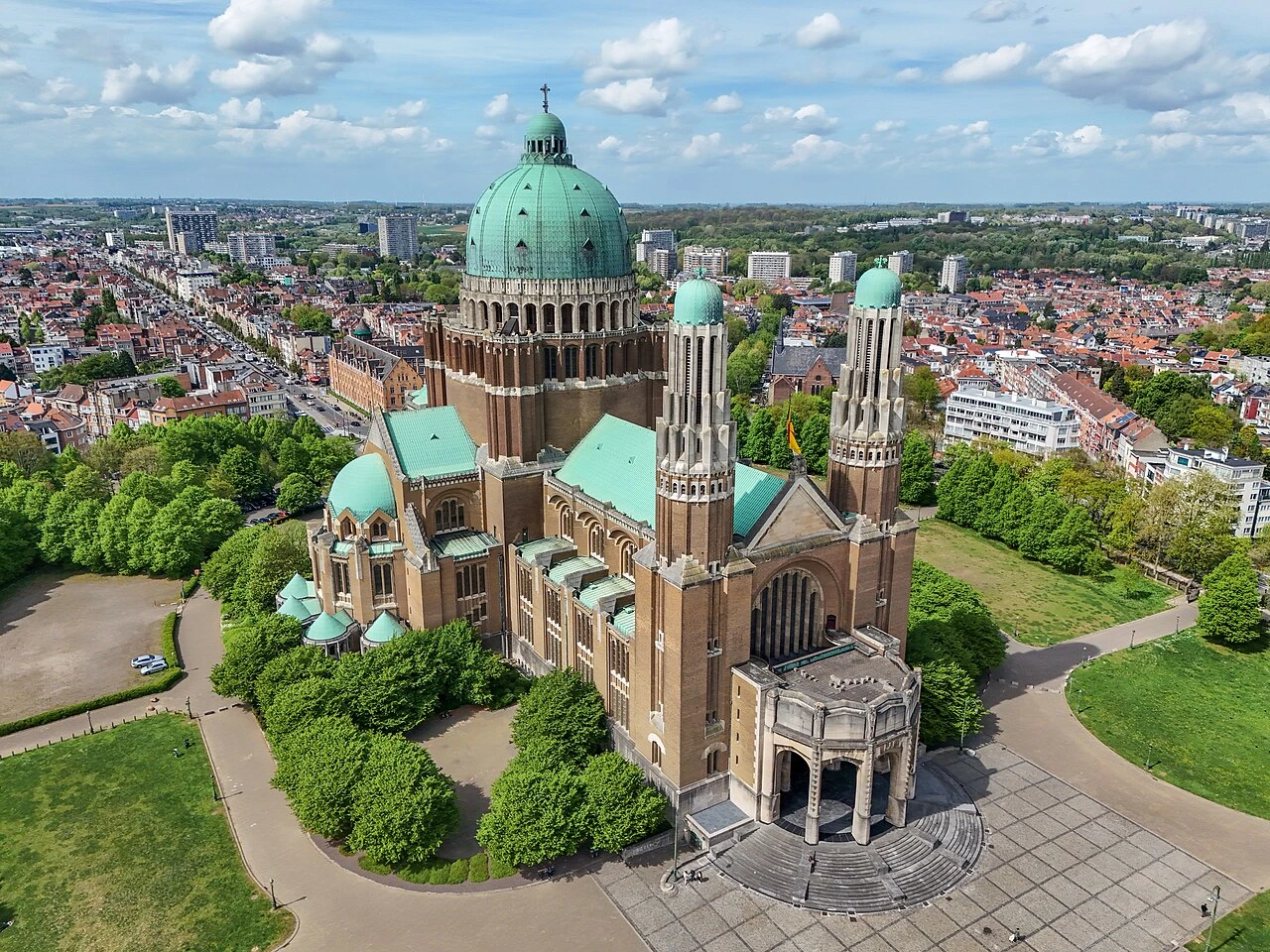
Koekelberg · 21 km
Basilica of the Sacred Heart, Brussels
Content & sources
Photo: Giles Laurent · CC BY-SA 4.0
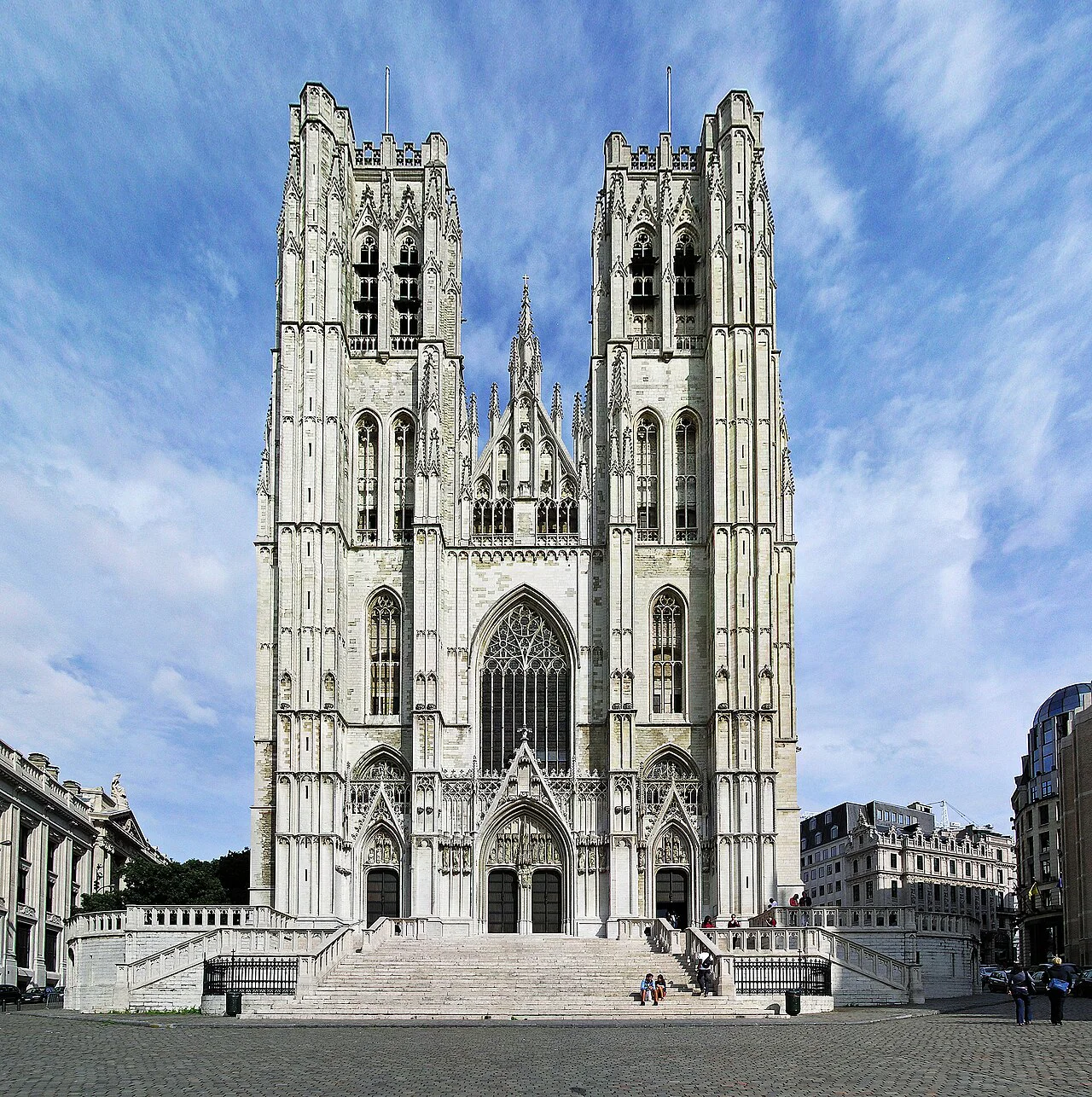
Brussels · 23 km
Kathedraal van Sint-Michiel en Sint-Goedele
Content & sources
Photo: Donaldytong · CC BY-SA 3.0