Stanza · Audio guide
Christ the RedeemerAudio guide
A place to remember. A story to take with you.
A colossal Art Deco statue of Jesus Christ atop Corcovado Mountain, overlooking Rio de Janeiro, Brazil.
Download Stanza, then search for “Christ the Redeemer”.
About the tour
One guide. Your kind of visit.
A colossal Art Deco statue of Jesus Christ atop Corcovado Mountain, overlooking Rio de Janeiro, Brazil.
Ready when you are.
- 01Get the free Stanza app.
iOS & Android
- 02Find your guide.
“Christ the Redeemer”
- 03Download before you go.
Works offline
Audio guide / 35 narrated stops
Inside the guide
Get to know a few of the stories before you go. Open a stop to read more.
01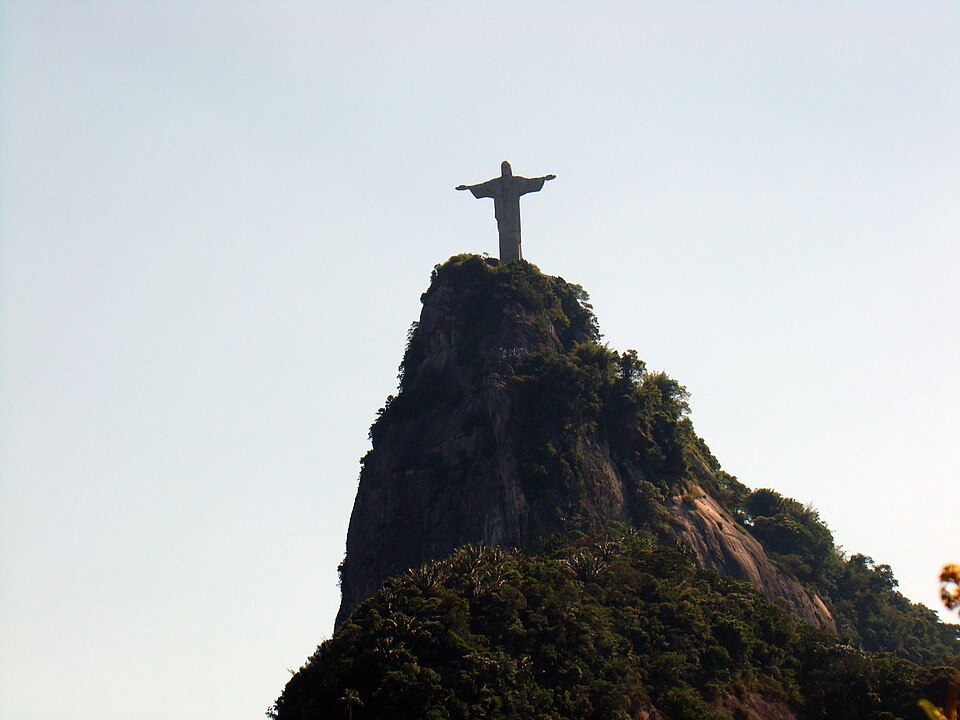 The Ascent: Tijuca Forest and CorcovadoThe Peak of Corcovado
The lush expanse of the Tijuca Forest is the largest urban jungle in the world. Rising above the emerald canopy is Corcovado Mountain—meaning 'the Hunchback' in Portuguese—whose granite summit serves as the pedestal for Christ the Redeemer. Perched at an altitude of 710 meters, this figure was conceived as a spiritual sentinel, positioned intentionally so it would be visible from almost any point in Rio. The location ensures that the monument remains a constant presence above the city's diverse neighborhoods. The surrounding peak is often shrouded in mountain mists, which can suddenly clear to reveal the entire harbor below.
Rodrigo Soldon from Rio de Janeiro, Brazil · CC BY 2.0
02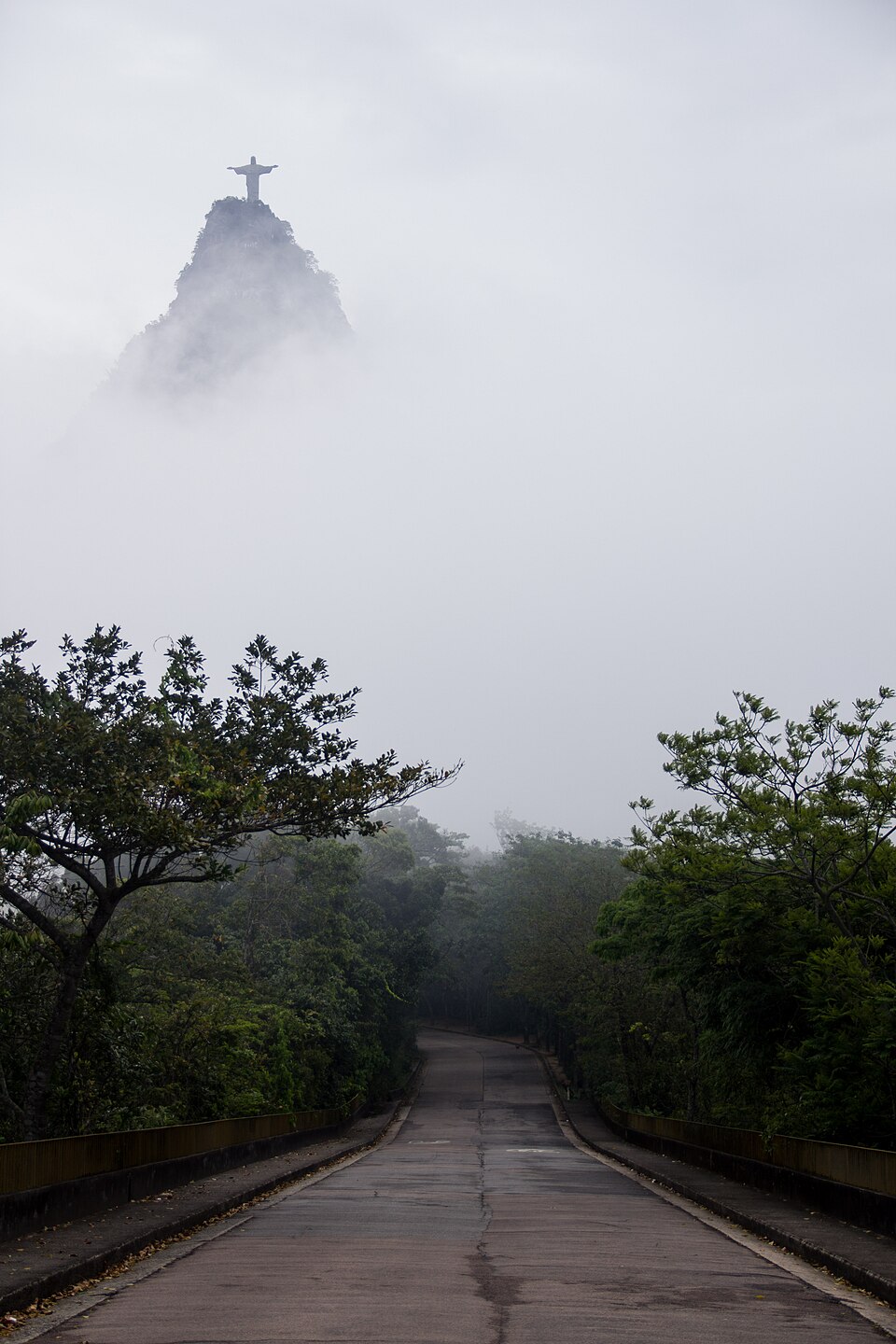 The Ascent: Corcovado MountainThe Peak of Corcovado
Welcome to the summit of Corcovado Mountain. Right now, you’re standing 710 meters above sea level, a height that often places you directly within the Atlantic clouds. There is a persistent mystery to this peak; on many days, the summit is wrapped in a thick veil of fog, only to reveal the colossal figure above as the mist suddenly breaks. Long before Christ the Redeemer was even a sketch on paper, people were already making this journey. The Corcovado Rack Railway was inaugurated in 1884, making it nearly half a century older than the statue itself. It’s a remarkable piece of engineering that actually predates the monument it now serves. In fact, without these tracks, the statue might not exist at all, as the railway was the primary way to transport the heavy materials and stone sections up this steep terrain during construction in the 1920s. As you emerge from the dense, humid canopy of the Tijuca Forest, the environment shifts. The air thins and cools, and the scale of the landscape truly hits you. You are standing on a massive granite monolith that has watched over the bay for millions of years. It’s a place of transition, where the natural world meets human ambition. The granite here is part of the same formation as Sugarloaf Mountain.
Photo: Rafavital · CC BY-SA 4.0
03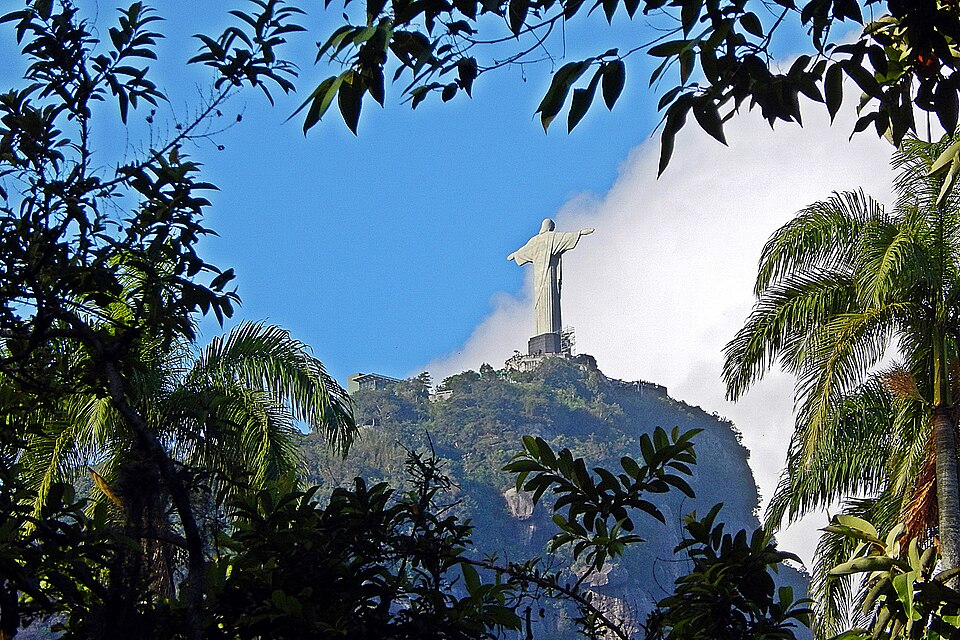 The Ascent: Corcovado MountainTijuca Forest Frame
The journey up Corcovado Mountain is more than just a climb; it is a transition between two worlds. As you ride the historic rack railway, you are enveloped by the Tijuca Forest. This is widely considered the largest urban forest on the planet, a dense, hand-replanted ecosystem that serves as the green lungs of Rio de Janeiro. From this vantage point, you see the statue not as a distant landmark, but as a modern icon emerging directly from the wild, tropical greenery. This specific framing was central to the vision of the monument’s creators. They intended to build a symbol of faith that felt both contemporary and eternal, designed to be visible from almost any street corner in the city below. Notice the contrast between the clean, Art Deco lines of the soapstone-covered figure and the chaotic, organic textures of the surrounding palms and ferns. By placing the statue at the summit of this lush peak, the designers created a permanent dialogue between human engineering and the natural world. It is a reminder that while Rio has grown into a bustling metropolis, its heart remains rooted in this vibrant landscape. The forest is home to hundreds of species of birds and the small capuchin monkeys often seen near the tracks.
Listen in the appPhoto: Rubi Rolf · CC BY-SA 4.0
04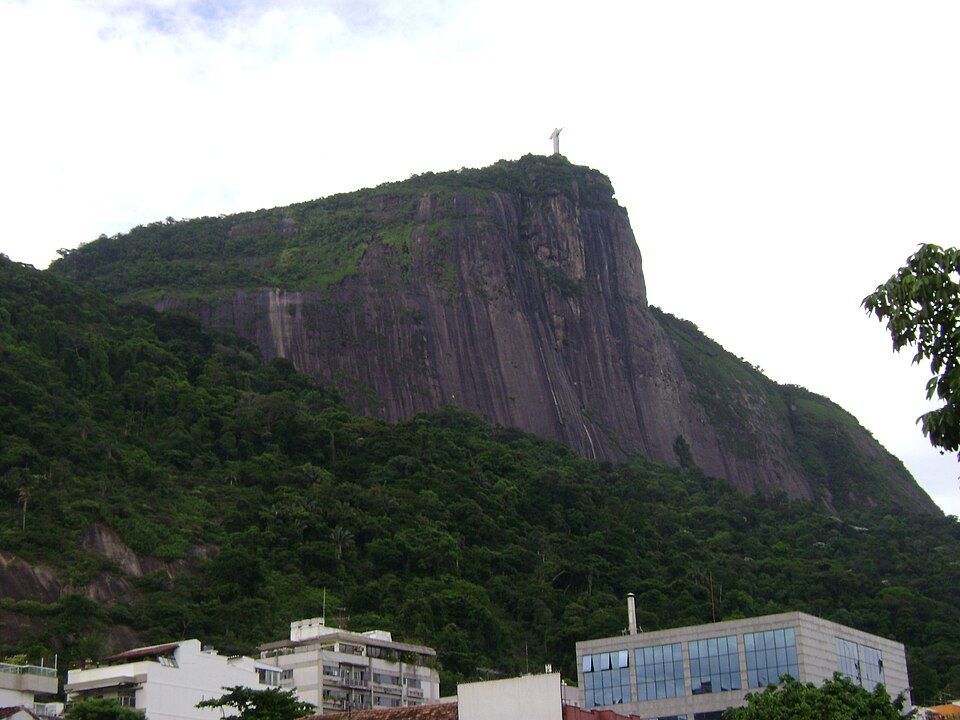 The Ascent: Tijuca Forest and CorcovadoThe Granite Pedestal
Looking up at the near-vertical face of Corcovado Mountain, you are seeing what was once one of the most daunting construction sites on Earth. This granite peak forms the pedestal for the monument, but placing such a massive structure atop this precipice required an incredible feat of logistics. Engineers moved approximately 1,145 tons of material to the summit. Without the luxury of modern cranes or helicopters, they relied on the Corcovado Cog Train. This railway is a piece of history itself, having been inaugurated in 1884 by Emperor Dom Pedro II—decades before the statue was even a blueprint. The train served as the vital lifeline, chugging up these steep grades with heavy loads of materials. Work crews in the 1920s navigated these vertical slopes by clambering onto rudimentary wooden scaffolding with no modern safety harnesses. They worked in high winds and mountain mists to assemble the figure. Every support beam was a hard-won victory over gravity. As you observe the rugged grey stone against the lush forest, the sheer human grit required to transform this wild, inaccessible peak is evident.
Listen in the appPhoto: Andrevruas · CC BY 3.0
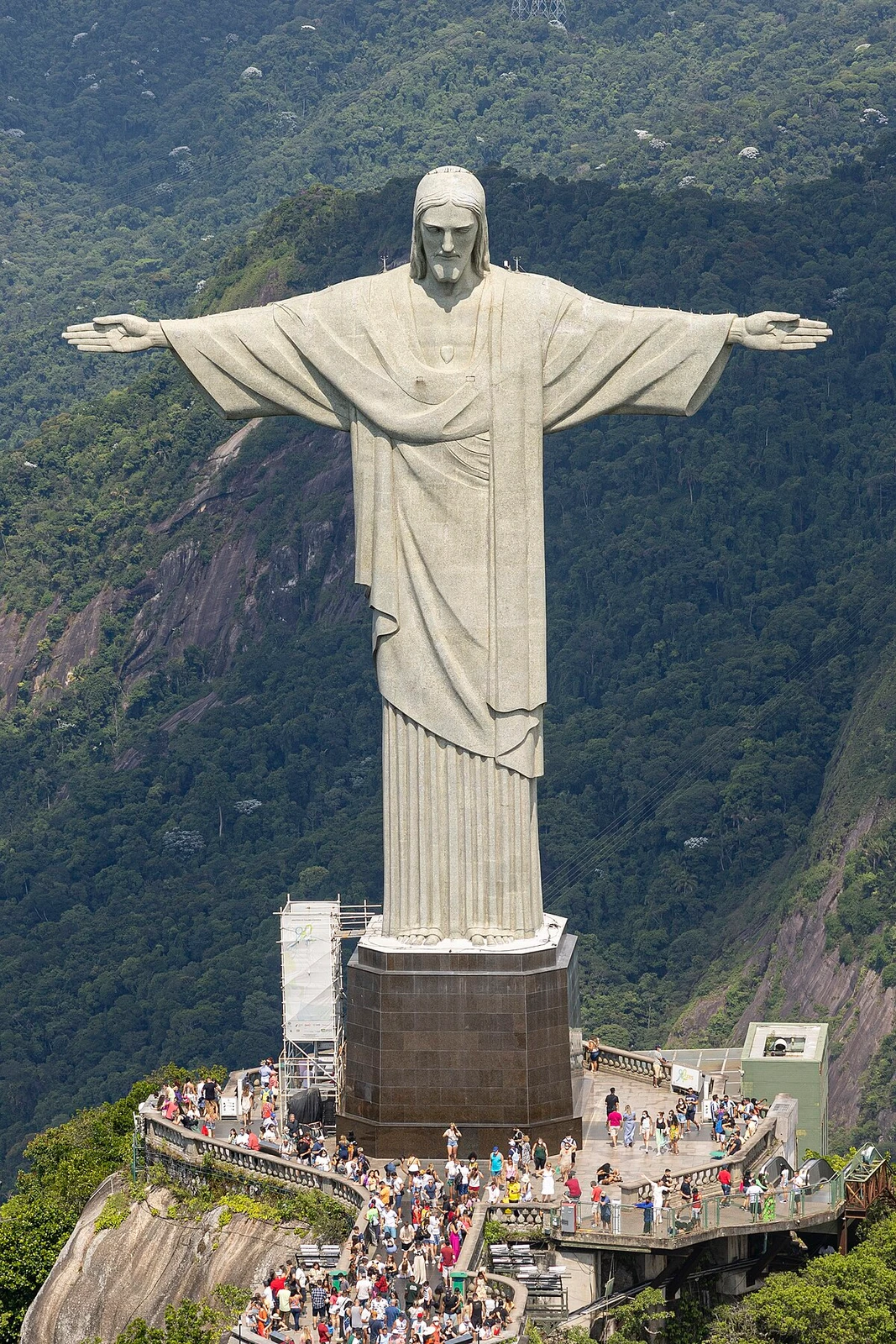
05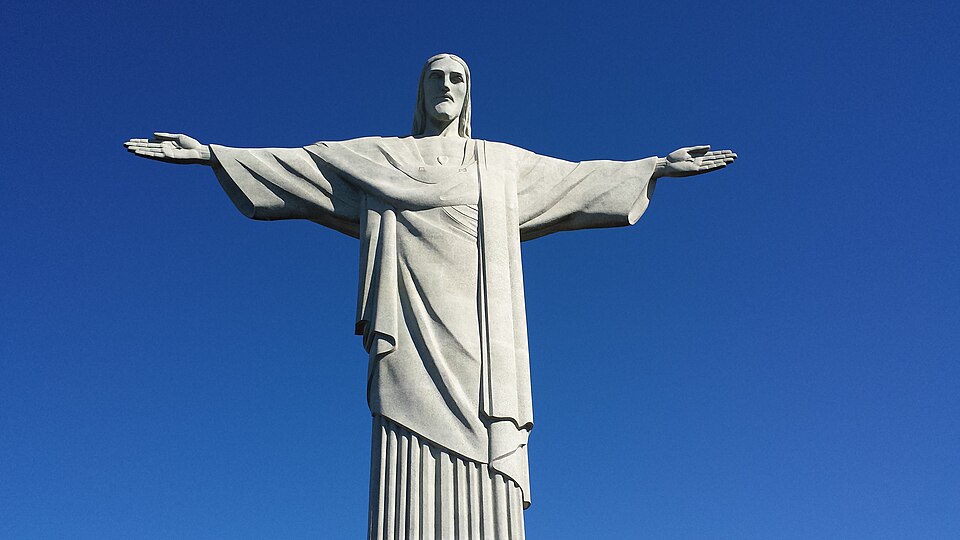 The Monumental PresenceThe Monumental Frontal View
Standing here at the base, you are looking up at the largest Art Deco monument in the world. It is a feat of engineering that is as heavy as it is symbolic. To put the scale into perspective, the figure of Christ stands 30 meters tall on top of an 8-meter pedestal, reaching a total height of 38 meters. The span of those outstretched arms is 28 meters across the sky. The clean, bold lines you see are classic Art Deco, but the silhouette almost looked very different. The original proposal depicted Christ holding a globe in one hand and a cross in the other. Eventually, that idea was set aside in favor of the 'Open Arms' design. The creators felt that a simple, welcoming embrace better captured the spirit of peace and hospitality they wanted to project over Rio de Janeiro. By choosing this pose, the monument moved beyond being just a religious figure; it became a universal symbol of a city with its arms wide open to the world. The pedestal itself houses a small chapel dedicated to Our Lady of Aparecida.
Listen in the appPhoto: Cleber Vallin · CC BY-SA 4.0
06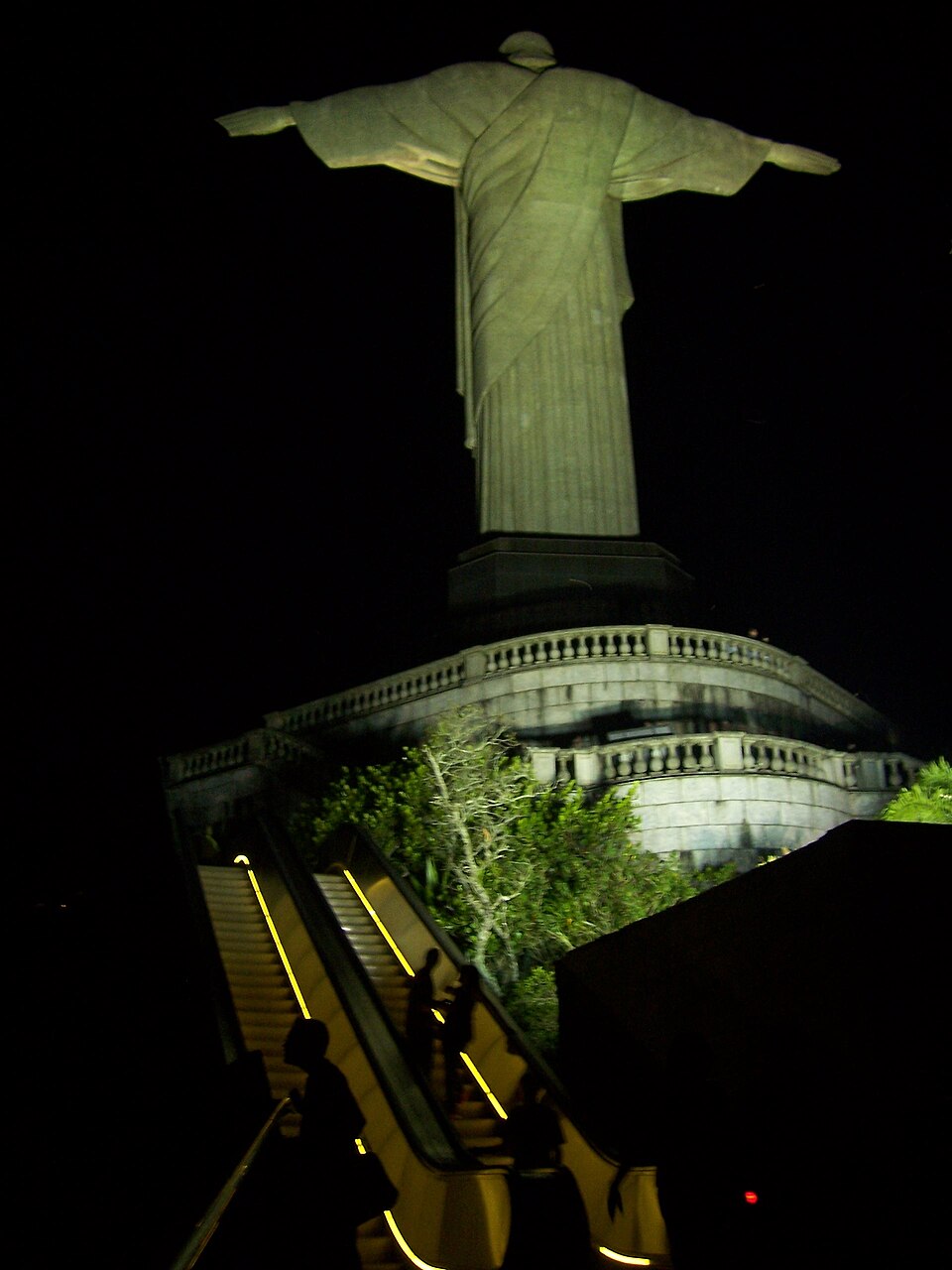 The Arrival: Reaching the SummitThe Modern Ascent
Looking up from this vantage point, you see the glowing lines of contemporary engineering cutting through the darkness of Corcovado Mountain. For over 70 years, reaching the feet of Christ the Redeemer meant conquering a steep, 220-step concrete staircase—a physical pilgrimage that was nearly impossible for many visitors. That changed in 2003 with a major modernization project. To make the site accessible to everyone, a series of four outdoor escalators and three elevators were installed. These systems, designed by the Otis Elevator Company, were specifically engineered to withstand the extreme weather and humidity of the mountain. The escalators follow the natural contours of the slope; they were designed to be as unobtrusive as possible, preserving the lush greenery that surrounds you. At night, the experience becomes even more dramatic. The soft, golden illumination of the escalators creates a stark contrast against the deep black of the surrounding forest canopy. Above you, the statue is bathed in light from a system upgraded in 2010.
Listen in the appCatherine from Australia · CC BY 2.0
07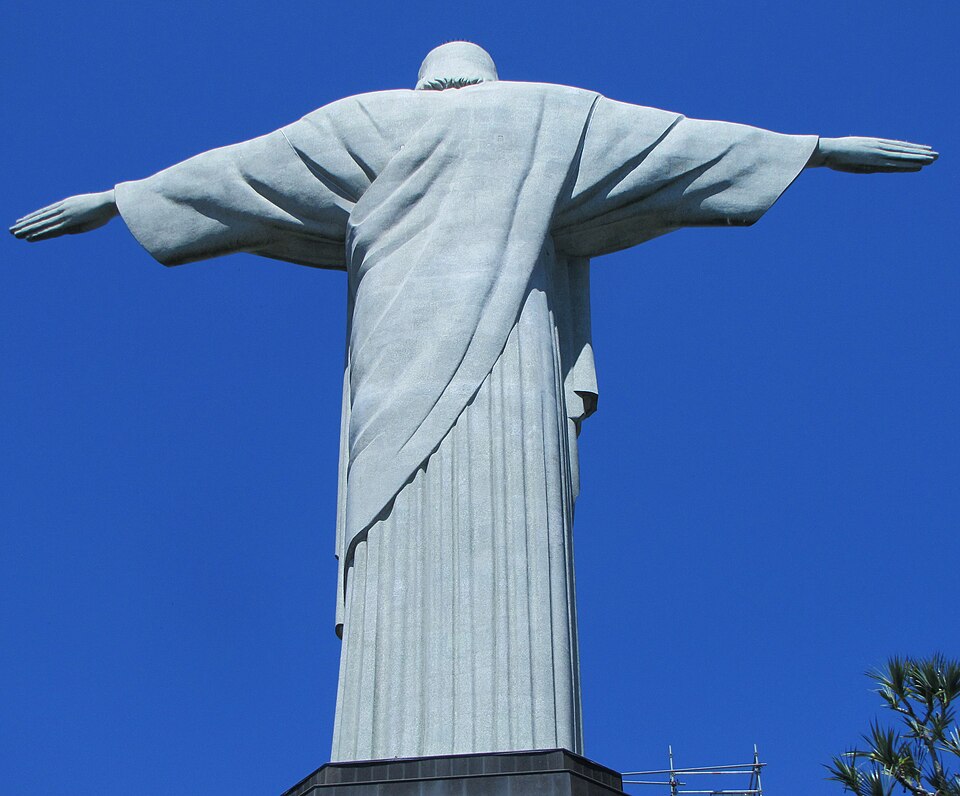 The Arrival: Reaching the SummitAn Art Deco Giant
The architectural precision of the figure is best appreciated from this perspective. It stands as the largest Art Deco-style sculpture in the world, a movement characterized by its embrace of modern, geometric forms. The designers chose clean, stylized lines to give the statue an 'eternal' and monumental quality. Rather than attempting a hyper-realistic depiction of fabric, the robes are defined by deep vertical ridges. This classic Art Deco motif serves a functional visual purpose: it draws the viewer's eye upward, emphasizing the statue’s spiritual presence against the Rio sky. The sharp angles of the shoulders and the flat planes of the chest are hallmarks of this 1920s aesthetic, designed to look as modern today as they did a century ago.
Listen in the appPhoto: Wellyngton Nunes · CC BY-SA 3.0
08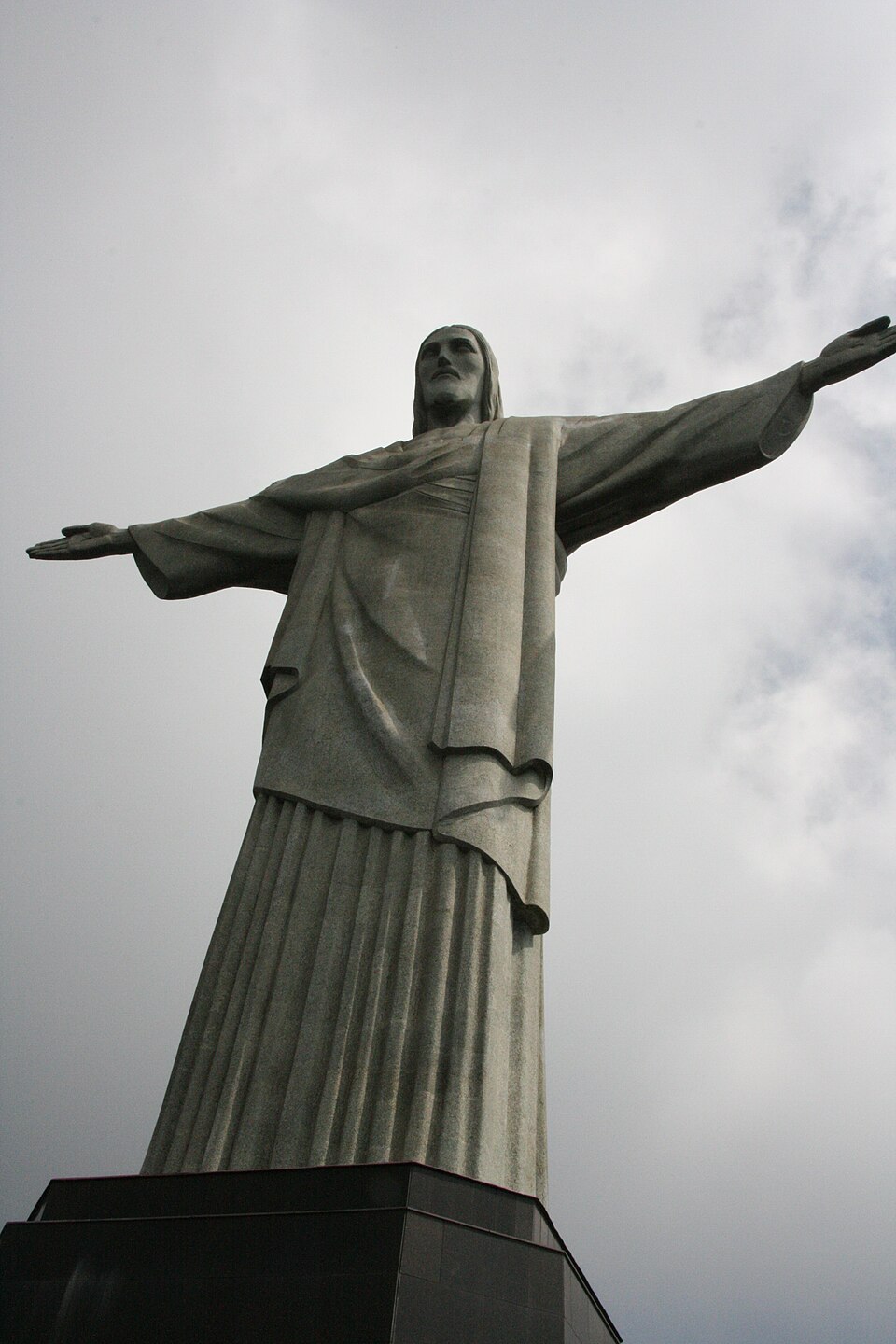 The Monumental PresenceThe Soapstone Skin
Look up at the surface of Christ the Redeemer, and you’ll notice it isn't a smooth, solid block. Its 'skin' is actually a massive, intricate mosaic. It is composed of approximately six million small, triangular soapstone tiles, meticulously applied over the structure. The choice of soapstone—or 'pedra-sabão'—was for its durability and resistance to extreme weather. Up here on Corcovado Mountain, the statue is constantly battered by intense tropical sun, heavy Atlantic rains, and even frequent lightning strikes. Soapstone is uniquely suited to handle these conditions without cracking or eroding easily. Interestingly, the application of these tiles was a labor of love. Many were glued by hand by groups of women volunteers, who reportedly wrote the names of their friends and family on the back of the stones before fixing them in place. This adds a deeply personal, hidden history to the statue’s monumental scale. To keep it looking pristine, a major restoration in 2010 saw experts replace about 60,000 of these tiles, carefully matching the color to maintain a uniform appearance. The tiles are roughly three centimeters on each side.
Listen in the appMarco Zanferrari from Doha, Qatar · CC BY-SA 2.0
09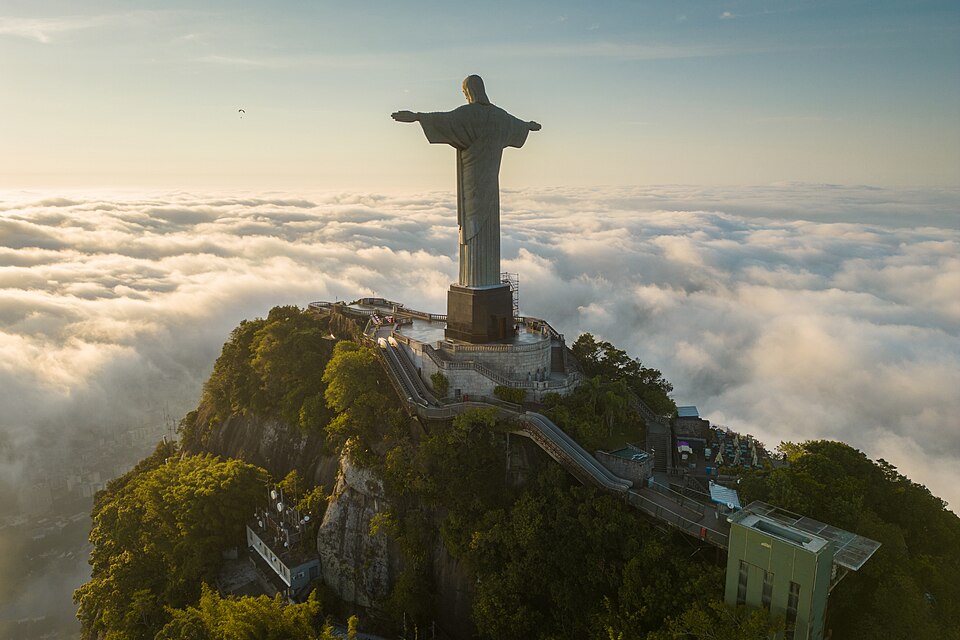 The Monumental PresenceThe Summit Platform
Standing here at the summit of Corcovado Mountain, you are positioned at the heart of Rio’s identity. This platform serves as the final stage of a journey that offers a vantage point where the scale of the statue becomes undeniable. The monument seems to command the entire landscape from this height. For decades, reaching this point required a climb up more than 200 steps. However, a major renovation in 2003 introduced a system of escalators and elevators. This change was transformative, ensuring that the breathtaking views and the monumental presence of the statue became accessible to everyone, regardless of physical ability. The geography here is unique. Because the peak is so narrow and steep, the statue acts as a sentinel, keeping a watchful eye over the sprawl of the city and the Atlantic Ocean. On some days, you might even find yourself standing above a sea of clouds, feeling detached from the urban bustle below. The platform provides a clear view of the Maracanã Stadium to the north.
Listen in the appPhoto: Donatas Dabravolskas · CC BY-SA 4.0
10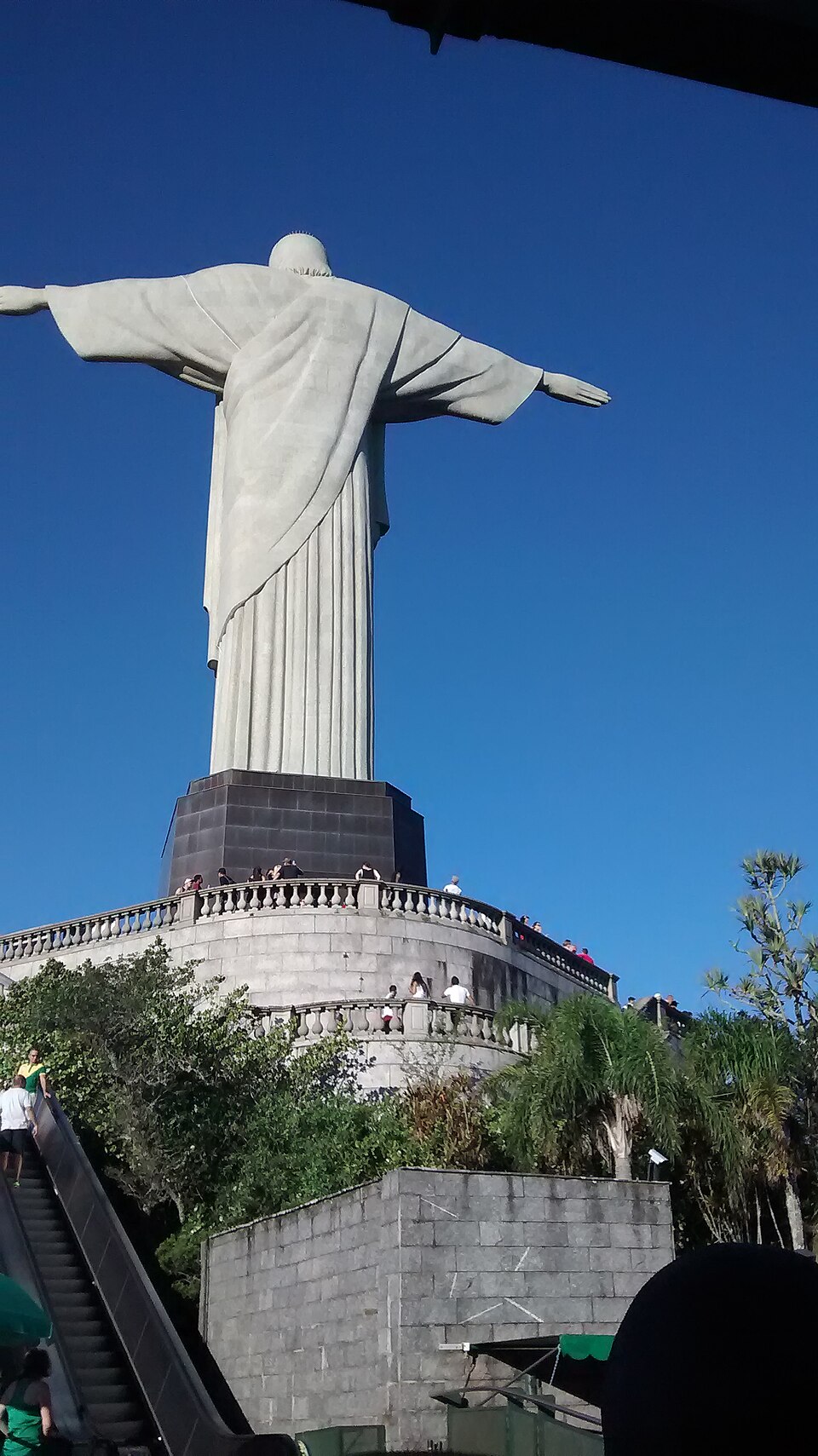 The Arrival: Reaching the SummitThe Immense Span
The perspective from behind the figure reveals the staggering scale of this global icon. From this vantage point, you can appreciate the 'Immense Span' of the arms, which stretch 28 meters from fingertip to fingertip. This design was a significant engineering challenge. Because the summit is exposed to high-velocity winds that can exceed 150 miles per hour, the outstretched arms are not just a symbolic gesture; they function as a vital structural element, balanced precisely to keep the monument stable. The cross-like silhouette was specifically engineered to distribute the pressure of these mountain gales. Look at the texture of the robes where they meet the shoulders; the lines are clean and functional, helping the structure remain firm against the elements.
Listen in the appPhoto: Gabrielsdapaz · CC BY-SA 3.0
Christ the Redeemer
Frequently asked questions
How much does the guide cost?
Free app download. Listed guide price: $2.99. Guide price shown in the app. Audio guide only. Venue admission is separate.
Can I listen without internet?
Yes. Download the guide’s audio, images, and maps in the app before your visit. Your downloaded content is then available offline.
Can I listen in my language?
Stanza supports 15 languages. Check the app for the languages available for this guide.
Do I need to follow a schedule?
No. This is a self-guided experience. Choose your stops, pause whenever you like, and return to a story at your own pace.
At your own pace
Explore Christ the Redeemer.
Download Stanza, then search for “Christ the Redeemer”.
Free app download · Guide price shown in the app