Stanza · Audio guide
Catedral Metropolitana de São Paulo Audio Guide
A place to remember. A story to take with you.
The Metropolitan Cathedral of Our Lady Assumption and Saint Paul is the cathedral of the Roman Catholic Archdiocese of São Paulo. It is a Gothic Revival style building that is considered by some to be the…
Download Stanza, then search for “Catedral Metropolitana de São Paulo”.
About the tour
One guide. Your kind of visit.
The Metropolitan Cathedral of Our Lady Assumption and Saint Paul is the cathedral of the Roman Catholic Archdiocese of São Paulo. It is a Gothic Revival style building that is considered by some to be the fourth largest neo-Gothic cathedral in the world.
Ready when you are.
- 01Get the free Stanza app.
iOS & Android
- 02Find your guide.
“Catedral Metropolitana de São Paulo”
- 03Download before you go.
Works offline
Audio guide / 11 narrated stops
Inside the guide
Get to know a few of the stories before you go. Open a stop to read more.
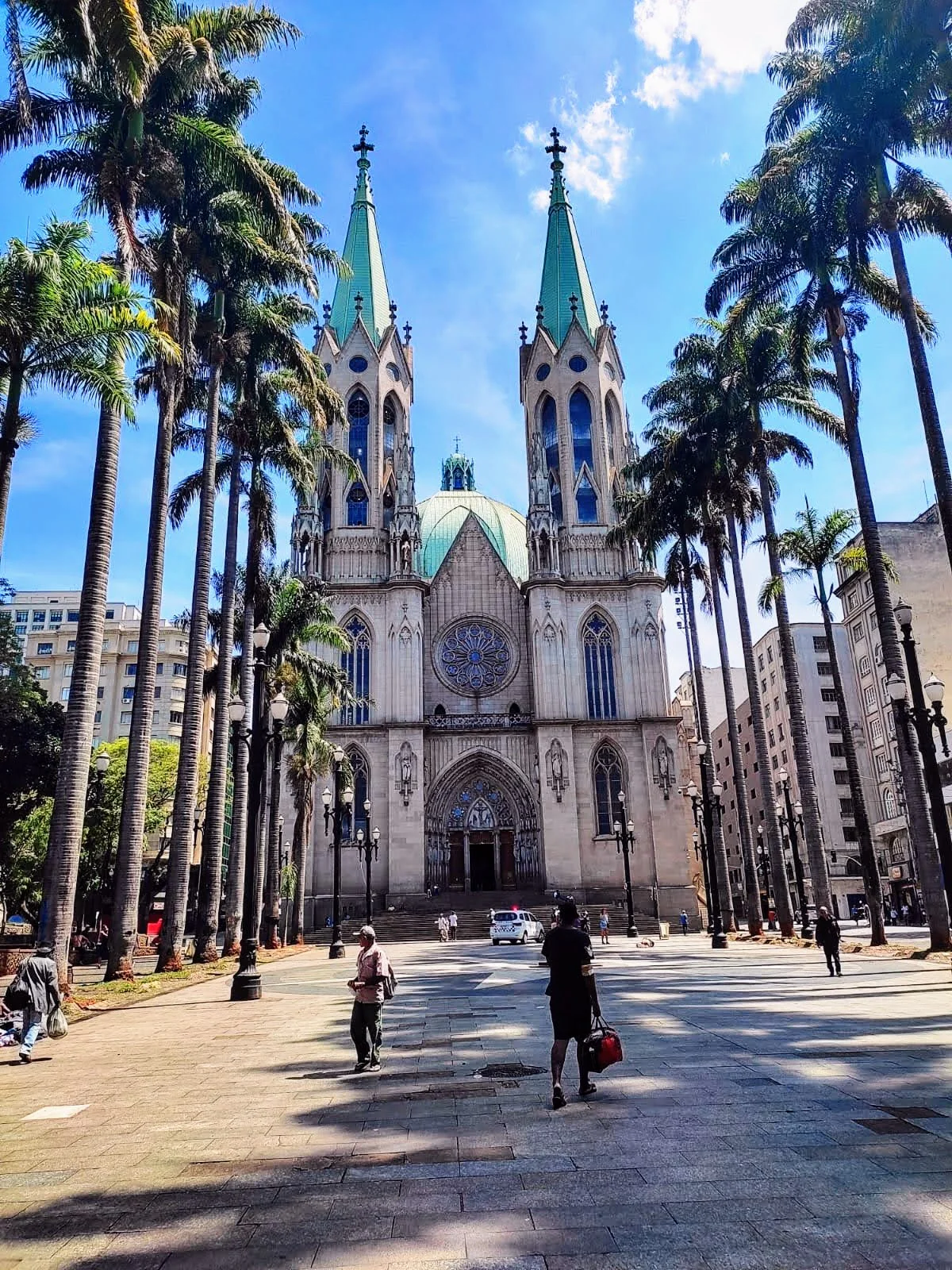
01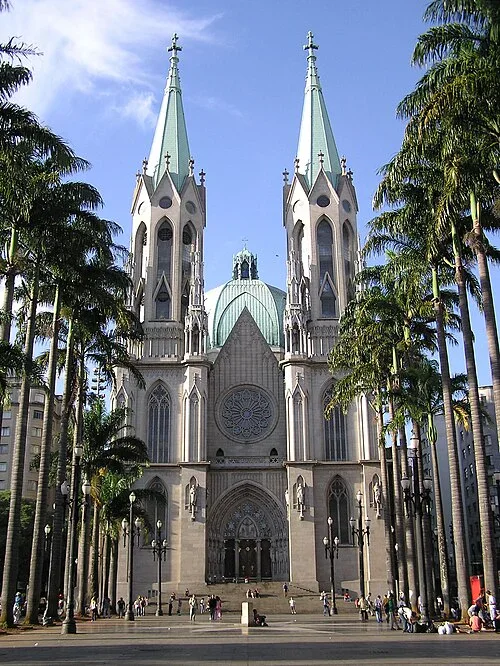 Praça da Sé and Main Facade
The Facade and Twin Spires from Praça da Sé
Welcome to the Catedral da Sé, the mother church of São Paulo and the seat of its Roman Catholic archbishops. Over the next stops the story runs from this square down to the tombs beneath the altar. The two towers flanking the facade rise 92 meters, and they were among the last pieces of a build that stretched across half a century. The design came from the German architect Maximilian Emil Hehl, who gave the church its Neo-Gothic face. The east tower holds something you can hear as well as see, a carillon of 61 bells cast by the Petit and Fritsen foundry in the Netherlands. It was installed in 1959. It is the largest and heaviest carillon in Central and South America.
Photo: Morio · CC BY-SA 3.0
02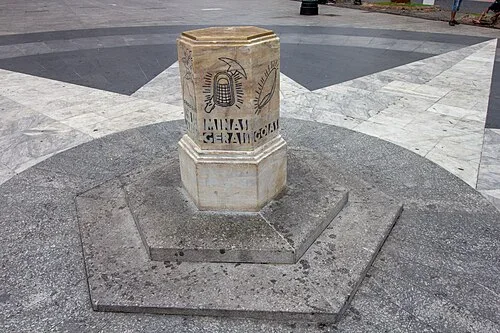 Praça da Sé and Main Facade
Marco Zero: the Zero Point of São Paulo
São Paulo measures itself from this square. The Marco Zero marker in Praça da Sé is the point from which the city's street distances are counted. The cathedral beside it was inaugurated on 25 January 1954. The date was chosen to match the four hundredth anniversary of the founding of São Paulo. The founding itself was a modest affair, a small villa established by Cacique Tibiriçá together with the Jesuit priests Manuel da Nóbrega and José de Anchieta. When the cathedral opened, the towers were still unfinished, and the spires came years later. Tibiriçá himself now rests below the altar, in the crypt where this tour ends.
Photograph by Mike Peel (www.mikepeel.net). · CC BY-SA 4.0
03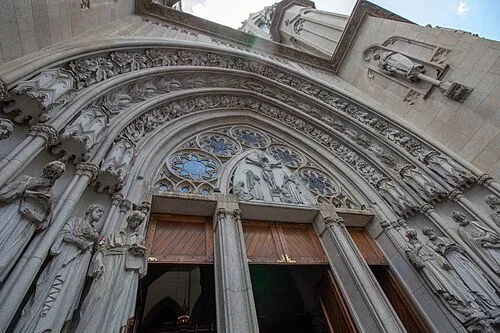 Main Entrance Portal
The Main Entrance Portal
The main entrance is some of the finest carving in the building. Rings of sculpted arches, one inside the other, lead the eye up to the doors and the round rose window above. The figures along those arches were worked by hand, and the window frames around them are granite, cut by a firm called Palici-Baccaro. It was founded in the 1940s by the children of Italian immigrants, with Angelo Palici and João Baccaro as partners, from a workshop on Oratório street in the Mooca district. That firm later grew into Baccaro Marbles and Granites, a traditional name in the São Paulo stone trade.
Listen in the appPhotograph by Mike Peel (www.mikepeel.net). · CC BY-SA 4.0
04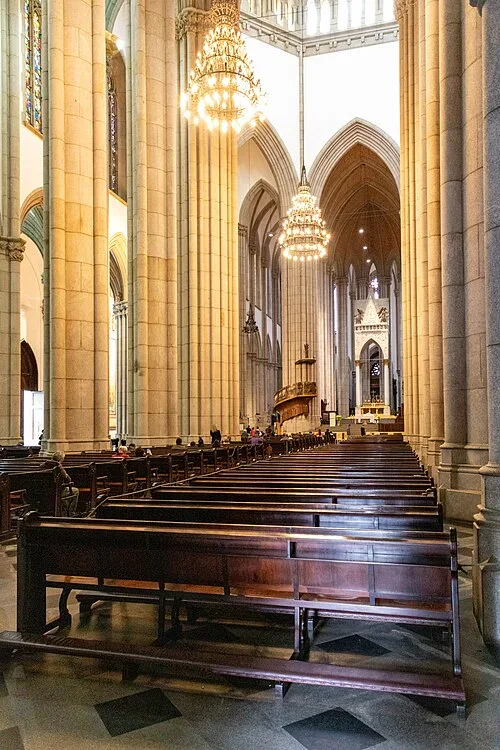 Central Nave and Brazilian Stone Capitals
The Central Nave
Inside, the church opens into a five-aisled nave laid out in the shape of a Latin cross. It runs 111 meters from end to end. Across the aisles it measures 46 meters. Eight thousand people fit inside, which makes it the largest Catholic church in the city of São Paulo. Work began in July 1913 under Dom Duarte Leopoldo e Silva, the first archbishop of São Paulo, on the site of the demolished colonial cathedral. The two world wars slowed the work badly. The inauguration came only in 1954, more than forty years after the first stone.
Listen in the appPaul R. Burley · CC BY-SA 4.0
05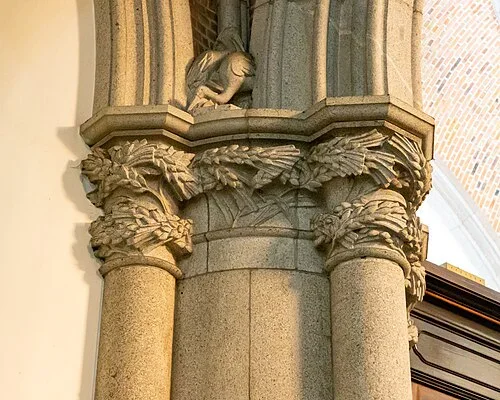 Central Nave and Brazilian Stone Capitals
Brazilian Nature in Stone: the Column Capitals
In most Gothic churches, the capitals at the tops of the columns carry the foliage of Europe. Here the sculptors turned to Brazil instead. The inner capitals are carved with coffee branches, pineapples and armadillos, called tatus in Portuguese. The one here shows a bird-like creature among carved stalks of grain. Gothic carving was a language born in medieval Europe, and the sculptors gave it a Brazilian accent, filling the style with the plants and animals of home.
Listen in the appPaul R. Burley · CC BY-SA 4.0
06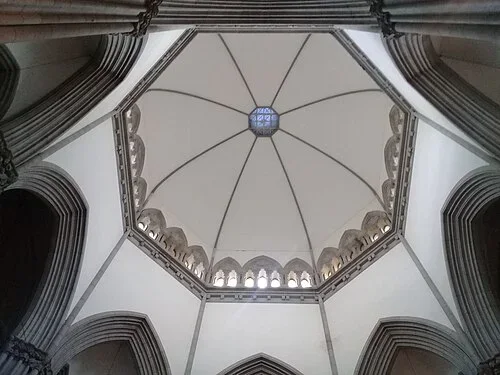 The Renaissance Dome and Italian Stained Glass
The Renaissance Dome over the Crossing
The surprise waits at the crossing, where the nave and the transept meet. Overhead rises a dome reaching 30 meters, and its model is not Gothic at all. Hehl patterned it on the great Renaissance dome of Florence Cathedral. He designed the church as an eclectic building, Gothic above all but willing to borrow from other ages. Some rank it the fourth largest Neo-Gothic cathedral in the world, dome and all.
Listen in the appPhoto: Milena Bispo · CC BY-SA 4.0
07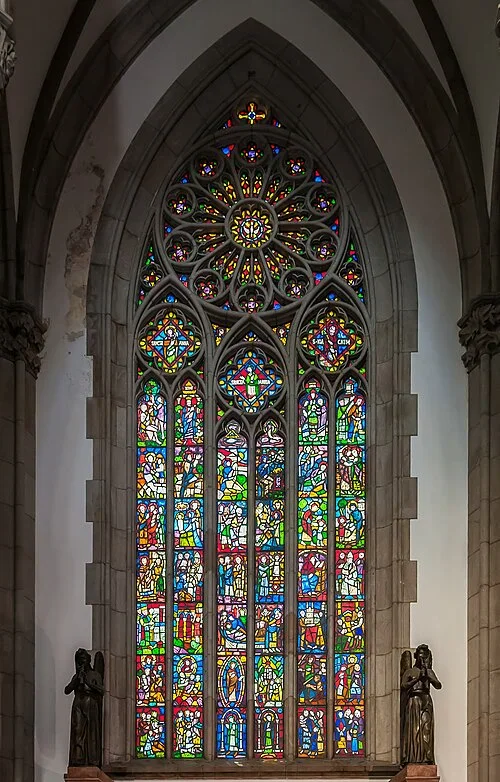 The Renaissance Dome and Italian Stained Glass
Italian Stained Glass
The windows are Italian, and so is nearly everything else that decorates this church. This one rises in a pointed Gothic arch, with a circle of rose tracery at the top and rows of small narrative scenes below. The mosaics, the sculptures and the furniture all crossed the Atlantic by ship from Italy. With the seas closed by war, those shipments stalled, and the finishing work waited with them. After decades of decay, the cathedral was completely restored in the early 2000s, guided by the original construction plans found inside the building.
Listen in the appPhoto: Wilfredor · CC0
08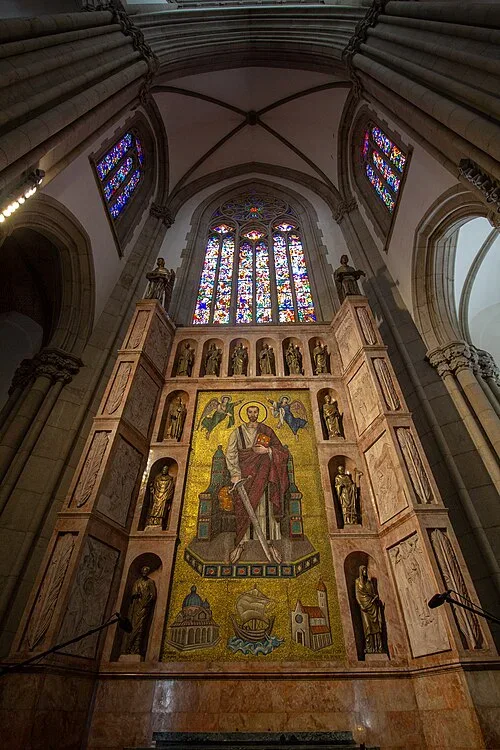 High Altar and Balbiani & Rossi Pipe Organ
The High Altar and Saint Paul Mosaic
At the head of the church, the high altar glows gold. A mosaic altarpiece shows the apostle standing, sword at his side, set into a marble reredos lined with niches of statues beneath a tall stained glass window. The cathedral's full name is the Metropolitan Cathedral of Our Lady Assumption and Saint Paul, and this altar carries the second half of that dedication. The marble tells the scale of the finishing work. More than 800 tons of rare marble went into the interior.
Listen in the appPhotograph by Mike Peel (www.mikepeel.net). · CC BY-SA 4.0
09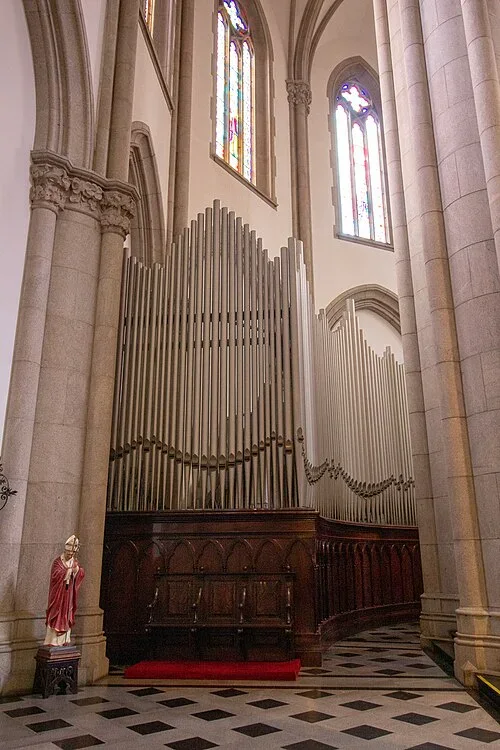 High Altar and Balbiani & Rossi Pipe Organ
The Balbiani Vegezzi-Bossi Pipe Organ
Behind the columns that surround the high altar, the cathedral keeps its musical voice. The great organ was built in Milan in 1954 by the Italian firm Balbiani Vegezzi-Bossi. It has five keyboards. Its pipes number somewhere near twelve thousand. The mouth of every pipe carries a relief engraved by hand in Gothic style. It is the largest pipe organ in Brazil and in all of Latin America. The instrument was inaugurated on the twenty-fifth of November that same year, given to the cathedral by the Antárctica company.
Listen in the appPhotograph by Mike Peel (www.mikepeel.net). · CC BY-SA 4.0
10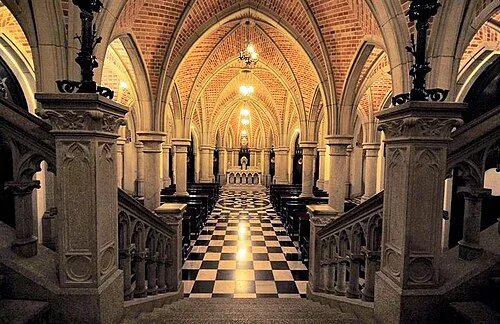 Subterranean Crypt and Historic Tombs
The Subterranean Crypt
Below the main altar lies a second church. The crypt is so large it counts as an underground church in its own right, held up by columns and arches with Gothic profiles under vaults of brick. It has its own altar and a floor of black and white squares. This is where the bishops and archbishops of São Paulo are buried. Around the tombs, marble sculptures by Francisco Leopoldo e Silva tell the history of Job and Saint Jerome.
Listen in the appTatiana Sapateiro from São Paulo, Brasil · CC BY 2.0
- 11
Tombs of the Founders: Tibiriçá, Feijó and Gusmão
The bronze tombs of Cacique Tibiriçá, Regente Feijó and the airship pioneer Bartolomeu de Gusmão.
Catedral Metropolitana de São Paulo
Frequently asked questions
How much does the guide cost?
Free app download. Listed guide price: $0.99. Guide price shown in the app. Audio guide only. Venue admission is separate.
Can I listen without internet?
Yes. Download the guide’s audio, images, and maps in the app before your visit. Your downloaded content is then available offline.
Can I listen in my language?
This audio guide is available in 15 languages, including English.
Do I need to follow a schedule?
No. This is a self-guided experience. Choose your stops, pause whenever you like, and return to a story at your own pace.
At your own pace
Explore Catedral Metropolitana de São Paulo.
Download Stanza, then search for “Catedral Metropolitana de São Paulo”.
Free app download · Guide price shown in the app
Keep exploring
Audio guides — Brazil

Rio de Janeiro
Christ the Redeemer
Content & sources
Photo: Arne Müseler · CC BY-SA 3.0 de
Rio de Janeiro
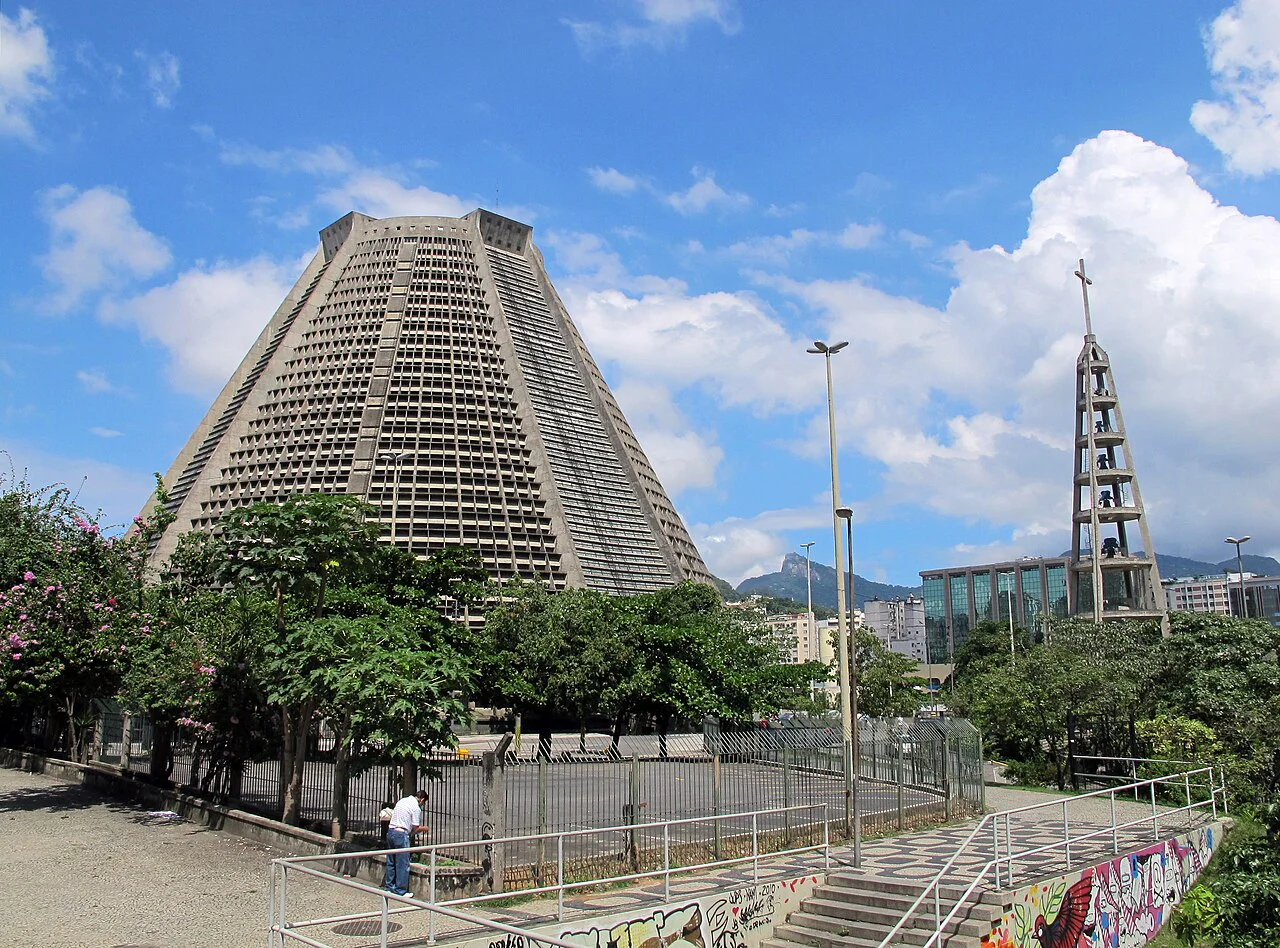
Catedral de São Sebastião do Rio de Janeiro
Content & sources
Haakon S. Krohn · CC BY-SA 3.0
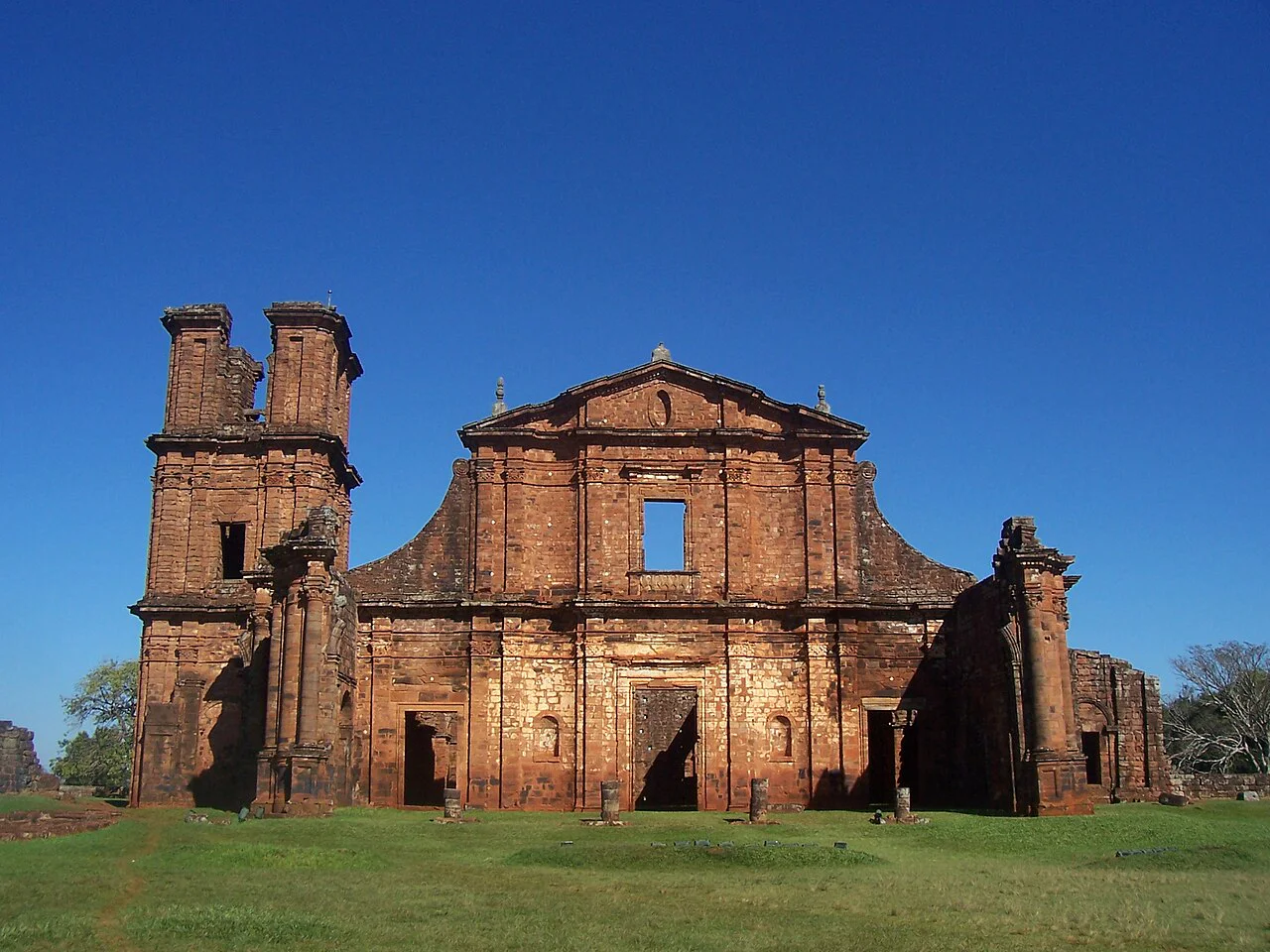
São Miguel das Missões
Sítio Arqueológico de São Miguel Arcanjo
Content & sources
Leandro Kibisz (Loco085) · CC BY-SA 3.0
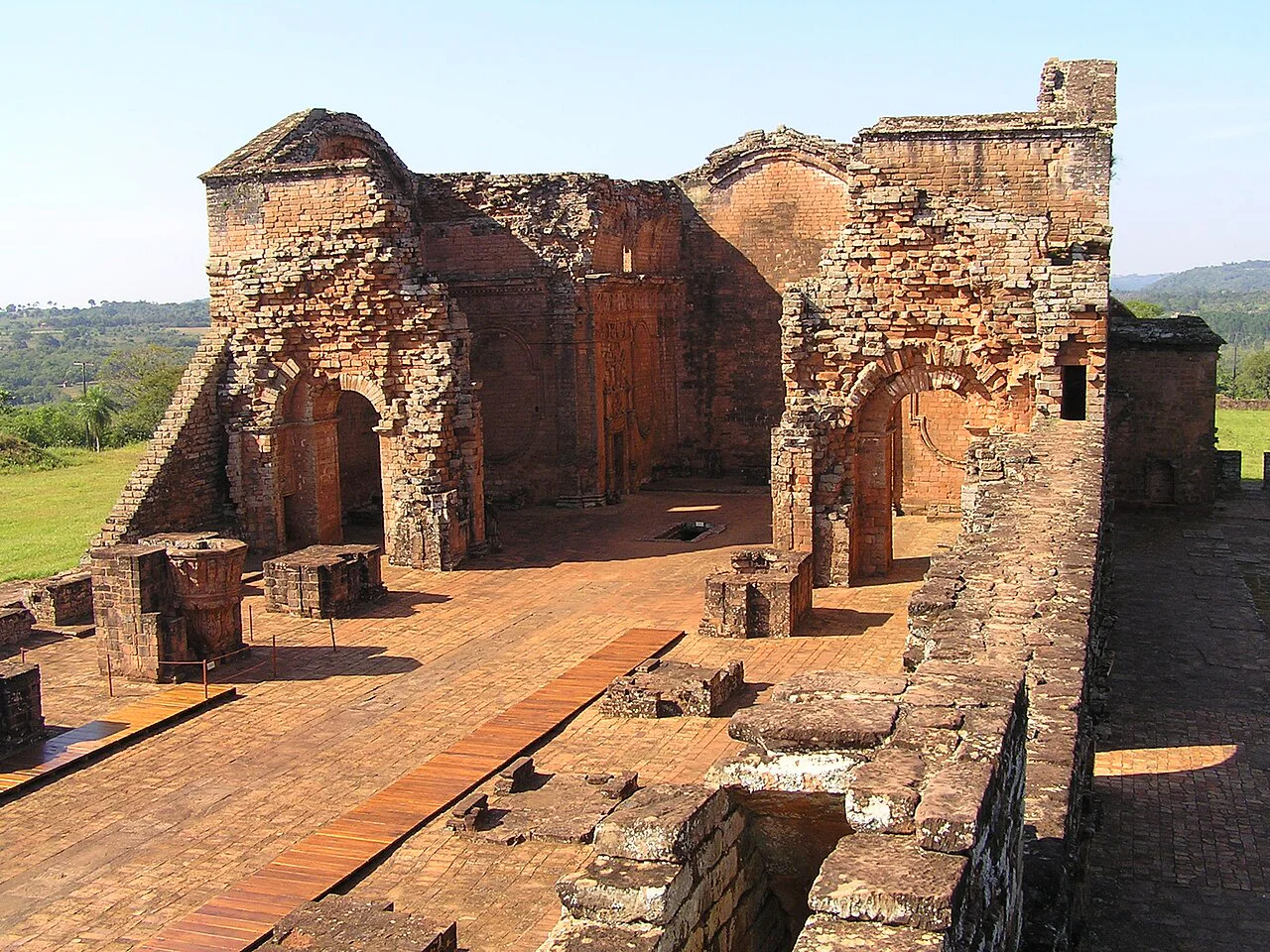
Trinidad
La Santísima Trinidad de Paraná
Content & sources
ogwen · CC BY-SA 3.0
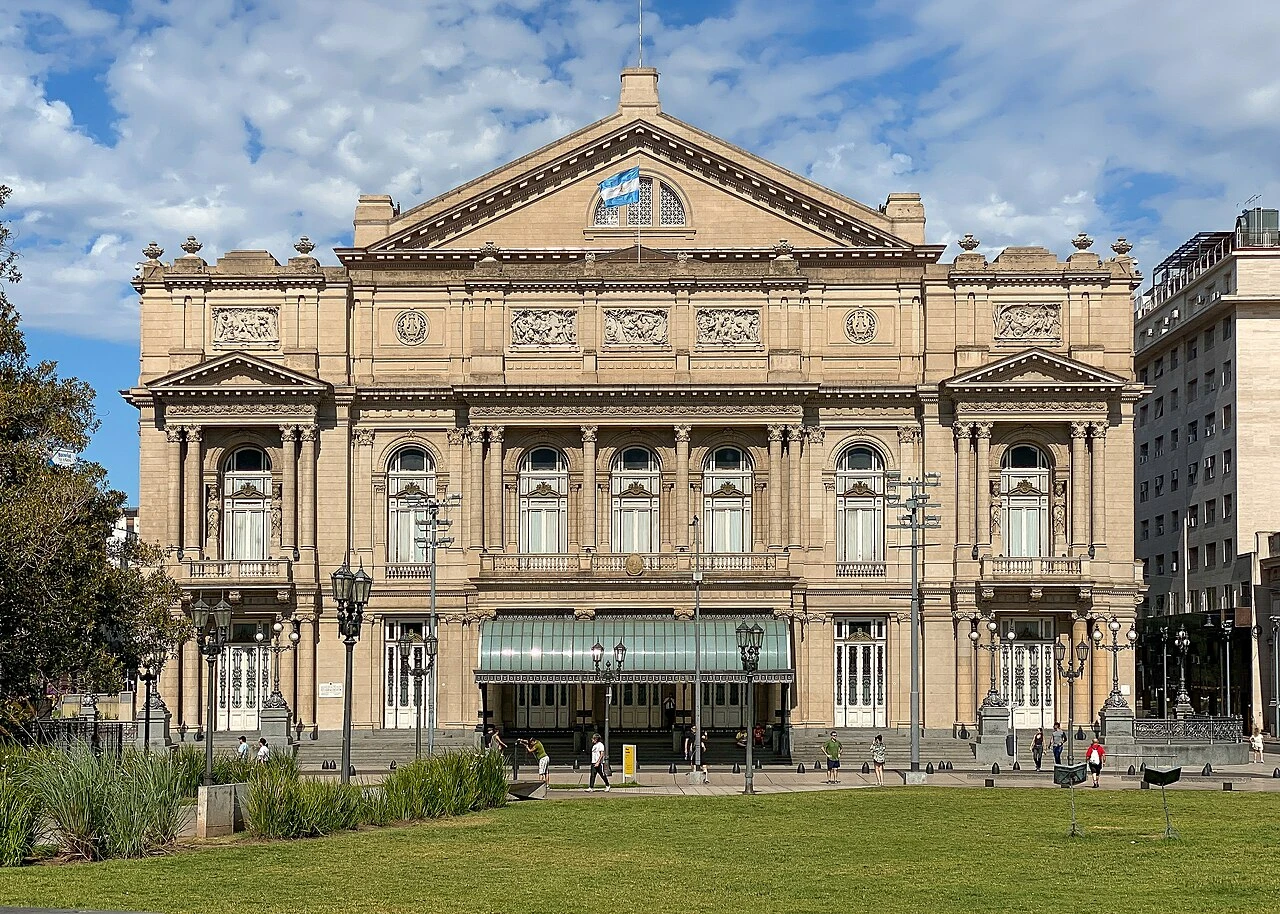
Buenos Aires
Teatro Colón
Content & sources
Photo: EEJCC · CC0