Languages
15Bachkovo Monastery Audio Guide
Bachkovo Monastery is a landmark in Bachkovo, Bulgaria. Explore it with Stanza's GPS-triggered offline audio guide — available in 15 languages.
Quick Facts
14
Stops
15
Languages
100%
Offline
📍 Bachkovo, Bulgaria · 41.9423°N, 24.8499°E
About Bachkovo Monastery
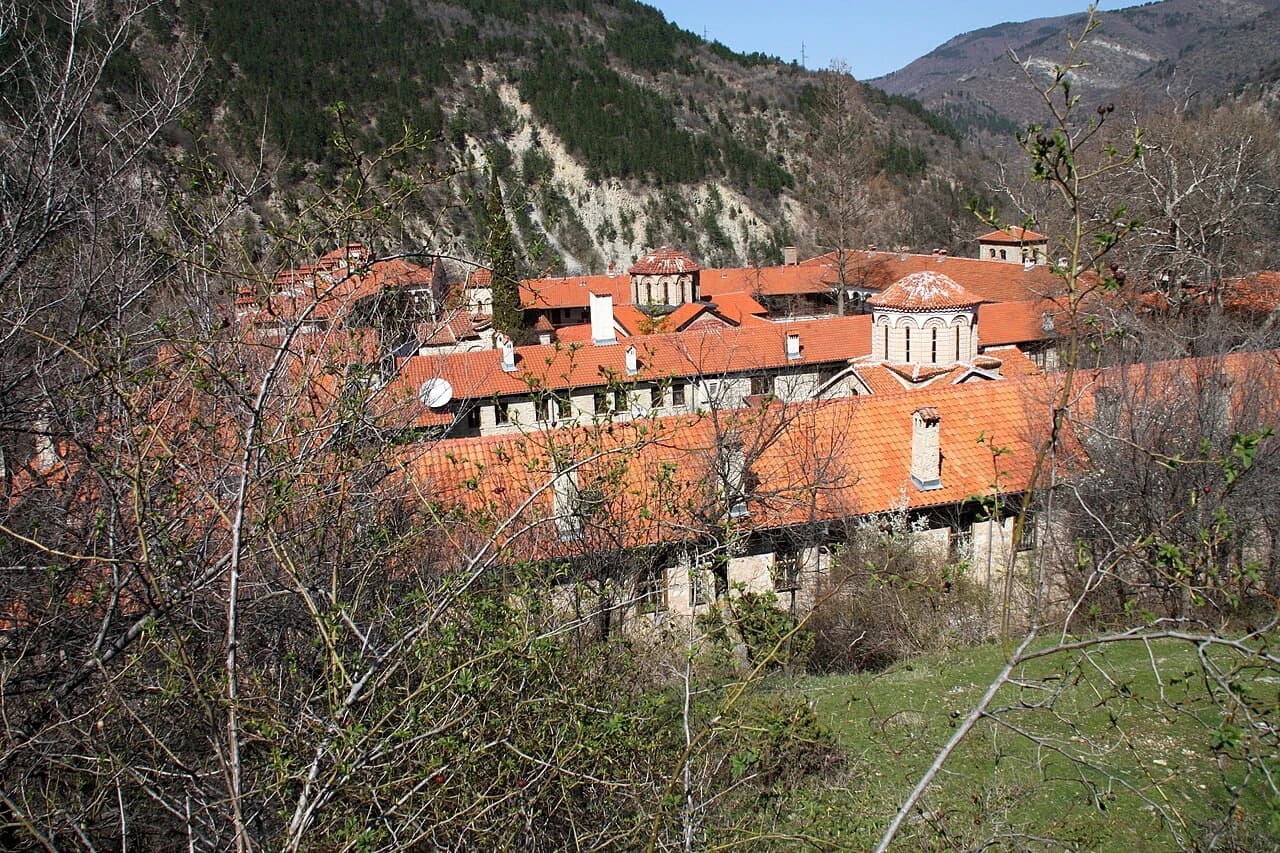
Bachkovo Monastery is a stavropigial monastery located in Bulgaria. It is one of the largest and most important Eastern Orthodox monasteries in the country.
Bachkovo Monastery is also known as Bachkovo Monastery of the Dormition of the Theotokos, Monastery of the Mother of God Petritzonitissa.
This self-guided audio tour features 14 narrated stops organized across 7 sections. As a monastery, Bachkovo Monastery offers a unique cultural experience in the heart of Bachkovo, Bulgaria.
The Stanza audio guide is available in 15 languages and works entirely offline — download the complete tour including audio narration, maps, and images before your visit. As you walk through Bachkovo Monastery, GPS-triggered narration plays automatically at each point of interest.
Last updated:
What you will hear
Arrival at the Monastery Gate
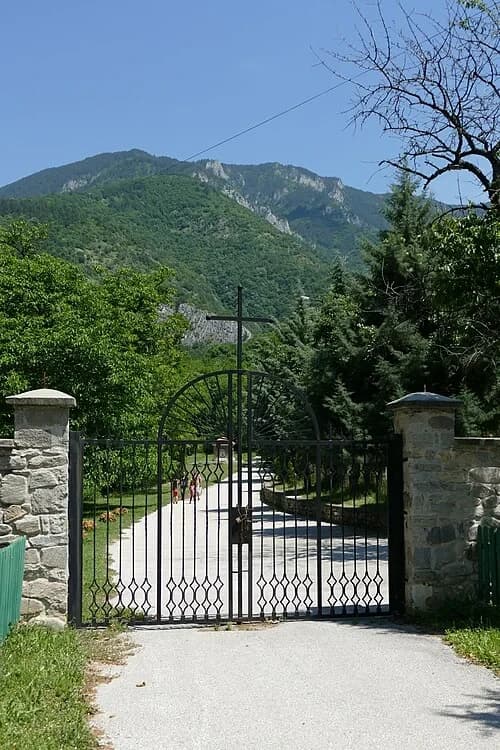
Establishes the setting at the entrance gate where the monastery meets the Rhodope Mountains.
The Monastery Gate
Welcome to Bachkovo Monastery, a spiritual retreat that has stood in the heart of the Rhodope Mountains for nearly a millennium. Located about 189 kilometers from Sofia and just 10 kilometers from the town of Asenovgrad, this site was established in 1083 by Prince Gregory Pakourianos. As a prominent Georgian military commander in Byzantine service, Pakourianos envisioned a place where Georgian and Byzantine traditions would merge. This cultural synthesis remains the defining characteristic of the complex you see today. The monastery's location was chosen for its isolation and defensive natural terrain. As you pass through the entrance, consider the unique architectural language around you. Unlike many other Bulgarian religious sites, Bachkovo retains strong ties to its Georgian roots, visible in the specific stone-carving styles and the early layout of the complex. This foundation established a vital link between the Caucasus and the Balkans that survived centuries of political upheaval. The heavy gates serve as the threshold between the secular world and a monastic sanctuary that continues to function as a major center of Orthodox Christianity. Your journey through the grounds will reveal how these two distinct cultures created a unique artistic legacy in the Bulgarian wilderness.
Cathedral of the Dormition of the Virgin Mary
The spiritual heart of the monastery, housing the miraculous icon and exquisite 17th-century art.
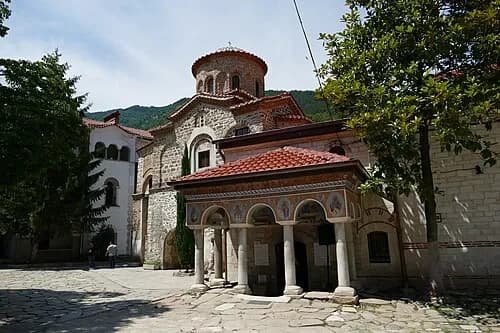
Cathedral of the Dormition
This imposing structure is the Cathedral of the Dormition, the spiritual centerpiece of the monastery. While the site was founded in 1083, the church you see now was completed in 1604 during a major reconstruction period. This era was critical for the monastery’s survival, as the 17th-century updates replaced earlier medieval structures that had fallen into disrepair. The exterior showcases a classic combination of stone and red brickwork, a hallmark of the architectural style favored during this revival. Take a moment to examine the portico. It is covered in colorful frescoes that depict various biblical narratives, intended to educate and inspire those entering the sanctuary. The layered masonry, alternating between rough stone and precise brick lines, gives the building a textured, rhythmic appearance. This specific reconstruction phase highlights the monastery's resilience; despite the passage of centuries and shifting empires, the community was able to fund and execute a massive building project that has stood for over four hundred years. The church's design, with its multiple domes and wide porch, was intended to accommodate the large numbers of pilgrims who traveled to the Rhodope Mountains for major feast days. The sturdy walls and elaborate exterior decoration reflect the importance of Bachkovo as a regional center of faith and culture.
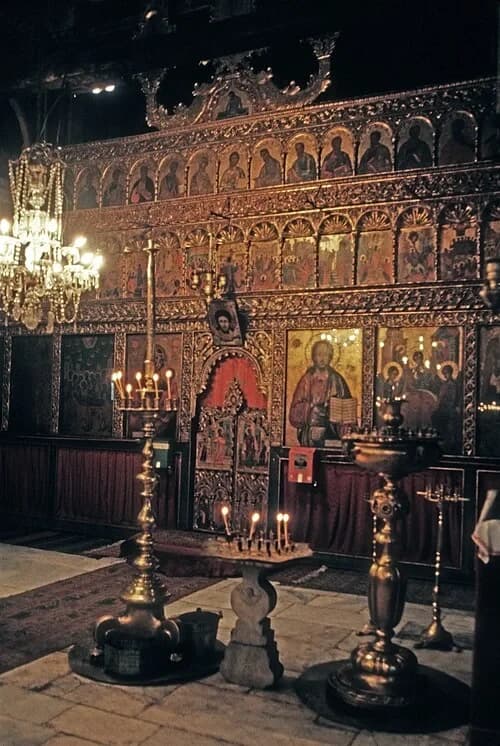
The Gilded Iconostasis
Stepping inside the cathedral, the air is often thick with the scent of burning beeswax and the quiet murmur of prayer. The interior is dominated by the massive gilded iconostasis, a wall of icons that separates the nave from the altar. The intricate carvings are coated in shimmering gold leaf, designed to catch the flickering light of candles and oil lamps, creating a space that feels separated from the outside world. This sensory experience is a central part of the Orthodox liturgy, intended to evoke a sense of the divine. The most significant treasure here is the icon of the Virgin Mary Eleusa, or 'The Tenderness.' Dating to 1310, it was brought here from Georgia and is considered one of the most powerful 'wonder-working' icons in the country. It is often encased in silver or gold plating, with only the faces of Mary and the child Christ visible. Pilgrims travel from all corners of Bulgaria and beyond specifically to touch or kiss this icon, believing in its healing properties. The presence of such a rare 14th-century object emphasizes the monastery's historical continuity and its role as a guardian of sacred art. The constant glow of the gold and the dark, aged wood of the iconostasis create a solemn environment for contemplation and worship.
The Church of the Archangels
A rare two-story medieval church that stands as a testament to the monastery's longevity.
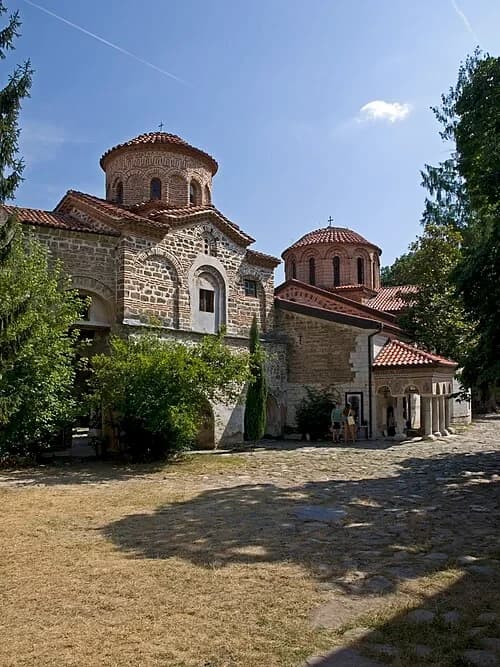
The Church of the Archangels
Visible in the north yard, the Church of the Archangels is a remarkable survival from the monastery's medieval period. Unlike the 17th-century cathedral, this structure preserves its rare two-story design, a style often used in Byzantine and Bulgarian architecture to combine different functions within a single building. Typically, the upper floor was reserved for services, while the lower level could serve as a chapel or storage. It stands as a testament to the sophisticated engineering of the Middle Ages. Observe the open narthex, or entrance porch, which is supported by heavy arches. The masonry reveals layers of history; if you look closely at the walls, you can see where different eras of stone and brick have been integrated or repaired. This church likely dates back to the 12th century, making it one of the few original structures to survive centuries of conflict and environmental wear. Its position on the northern edge of the complex gives it a commanding view of the mountains. The architectural simplicity and the raw, weathered appearance of the exterior offer a direct connection to the early centuries of the monastery’s life. It serves as a crucial link between the initial foundation and the later, more ornate reconstructions seen elsewhere in the courtyard.
The Church of Saint Nicholas
Famous for its vividly painted porch and the iconic frescoes by the Bulgarian master Zahari Zograf.
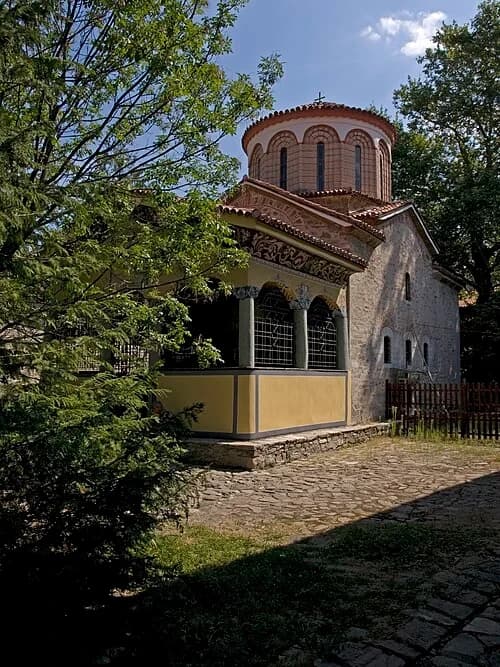
The Church of Saint Nicholas
Constructed in the mid-19th century, the Church of Saint Nicholas represents the final major architectural addition to the monastery complex. Its style marks a clear transition from the medieval and early modern buildings you have seen so far. This era, known as the Bulgarian National Revival, saw a surge in church building and a shift toward more open, decorative designs. The most striking feature of this church is its large exonarthex, or external porch, which was built specifically to serve as a massive canvas for religious art. Unlike the earlier, more fortress-like churches, this building feels more integrated with its surroundings. The wide, arched porch allowed for large groups of worshippers to gather outside while still being in a consecrated space. The masonry here is smoother and more uniform than the ancient walls of the Church of the Archangels, reflecting the different construction techniques of the 1800s. This addition allowed the monastery to expand its spiritual capacity during a time of growing national consciousness and religious fervor in Bulgaria. The porch provides a shaded area where visitors can appreciate the intricate artwork that covers every available inch of the ceiling and upper walls, bridging the gap between the quiet interior of the church and the active life of the courtyard.
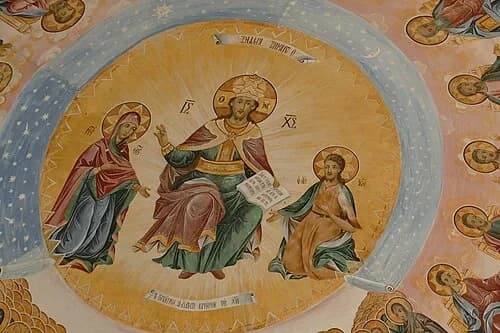
The Porch Frescoes
The ceiling of the Church of Saint Nicholas is covered in the work of Zahari Zograf, the most celebrated painter of the Bulgarian National Revival. Working in the mid-19th century, Zograf was known for his ability to maintain traditional Orthodox iconography while introducing modern, realistic elements. As you look up, you can see the central figure of Christ Pantocrator and various depictions of the Virgin Mary. The colors remain remarkably vivid, thanks to the quality of the pigments used during this period. Zograf’s signature style involved incorporating real-world faces and social commentary into his religious scenes. He often painted his own self-portrait or the portraits of local donors and contemporary figures among the saints and biblical characters. In some sections, he used the murals to critique the social vices of his time, depicting the consequences of greed and vanity with surprising detail. This approach made the ancient stories feel immediate and relevant to the 19th-century audience. The fluid lines and expressive faces found here are a departure from the flatter, more symbolic style of medieval iconography. These frescoes are considered a masterwork of Bulgarian art, representing a time when traditional religious painting was infused with a new sense of realism and local identity.
Monastic Art and the Founders' Legacy
Explores the artistic patronage of the monastery, including the refectory murals and the founders' portraits.
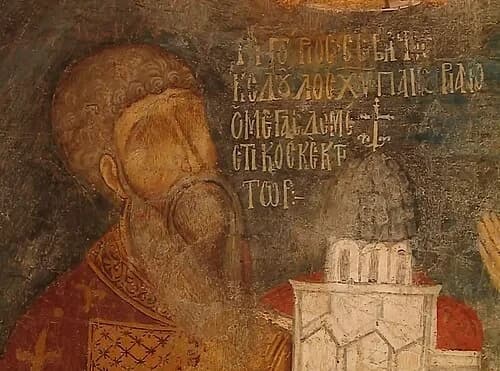
Portrait of the Founder
This artwork is a traditional donor portrait of Prince Gregory Pakourianos, also known as Bakuriani. In the medieval tradition, such portraits were painted to honor the individual who provided the funds and leadership to build a church or monastery. Pakourianos is depicted here in a style that emphasizes spiritual and social authority rather than physical realism. The figure is flat and symbolic, dressed in the ornate attire befitting a high-ranking Byzantine commander and Georgian prince. Notice that he is shown holding a small, detailed model of the monastery complex. This is a common iconographic convention used to identify a patron; it symbolically presents his life's work to God. The script surrounding the portrait identifies him and his role in the monastery's foundation. While the painting has weathered over the centuries, the focus remains on the intensity of the founder's expression and his gesture of offering. This portrait was intended to ensure that the monks would remember to pray for the founder’s soul in perpetuity. It serves as an important historical record, providing a visual link to the 11th-century origin of the site and the man whose vision and military success made its construction possible in this remote mountain location.
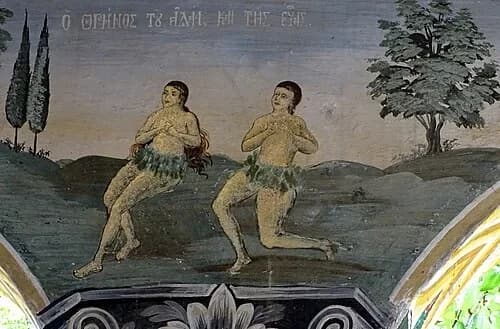
The Refectory Murals
The Refectory, or communal dining hall, contains some of the most extensive mural cycles in the monastery. The paintings here were created using the 'fresco buono' technique, where pigments are applied directly to wet plaster, allowing the colors to bond permanently with the wall. One visible scene depicts Adam and Eve from the Book of Genesis, shown after their expulsion from Eden. These images were not merely decorative; they were designed to provide moral instruction to the monks as they ate their meals in silence. While eating, the monks would listen to a reading of scripture, and the murals surrounding them served as visual reinforcements of those lessons. Outside the Refectory, you may see the famous 'Panorama' mural, which is recognized as the largest scenic mural in the Balkan Peninsula. It depicts the monastery and the surrounding mountains as they appeared in the early 19th century, providing a unique historical snapshot. The interior murals cover themes ranging from the history of the Orthodox Church to the lineage of the founders. The use of the Refectory for both physical and spiritual nourishment is a central part of monastic life. The scale and detail of the paintings reflect the importance placed on this communal space, ensuring that even the most routine parts of the day were focused on the sacred.
The Medieval Ossuary (Charnel House)
The oldest surviving part of the monastery (11th century), featuring unique two-story architecture and rare frescoes.
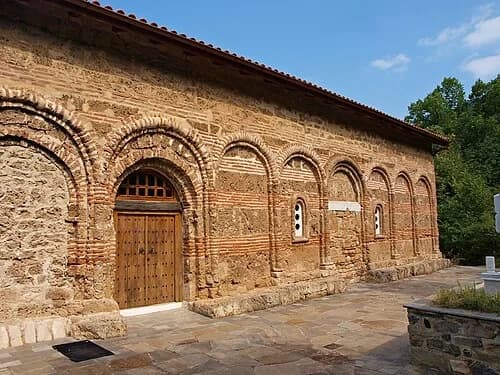
The Stone Facade
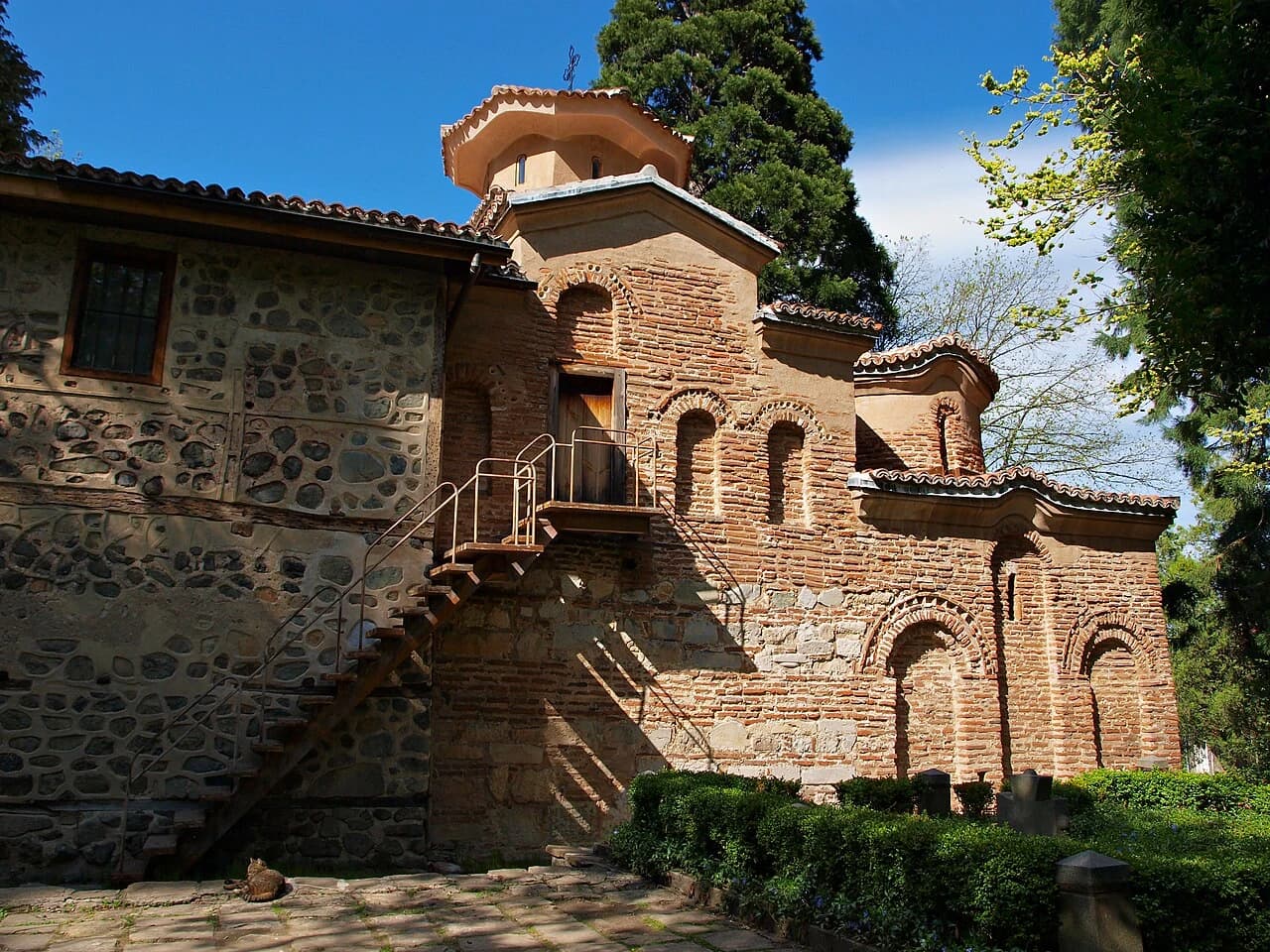
The exterior walls of the medieval ossuary are a prime example of 11th-century Byzantine masonry. One of the most distinctive features is the use of 'blind niches'—recessed arches that are built into the wall but do not contain windows. These niches were used to break up the flat surface of the stone, creating a rhythmic pattern of light and shadow that adds visual depth and elegance to the structure. The combination of local stone and precisely laid red brick is a classic technique from this period. The bricks are often arranged in horizontal rows or decorative patterns, serving both a structural and aesthetic purpose. This style of masonry, known as 'cloisonné' or 'cellular' brickwork, was highly prized for its durability and its ability to withstand the seismic activity common in the region. The narrow, arched windows are positioned to allow only small shafts of light into the interior, maintaining the somber atmosphere required for a funerary chapel. Notice how the patterns of the brick follow the curves of the arches, demonstrating the high level of skill possessed by the medieval builders. This facade has survived for nearly a millennium, standing as a testament to the sophisticated architectural traditions that the Georgian and Byzantine founders brought to the Rhodope Mountains during the Middle Ages.
The Holy Spring (Ayazmo)
A peaceful conclusion to the tour, where pilgrims visit the sacred spring and ancient plane trees.
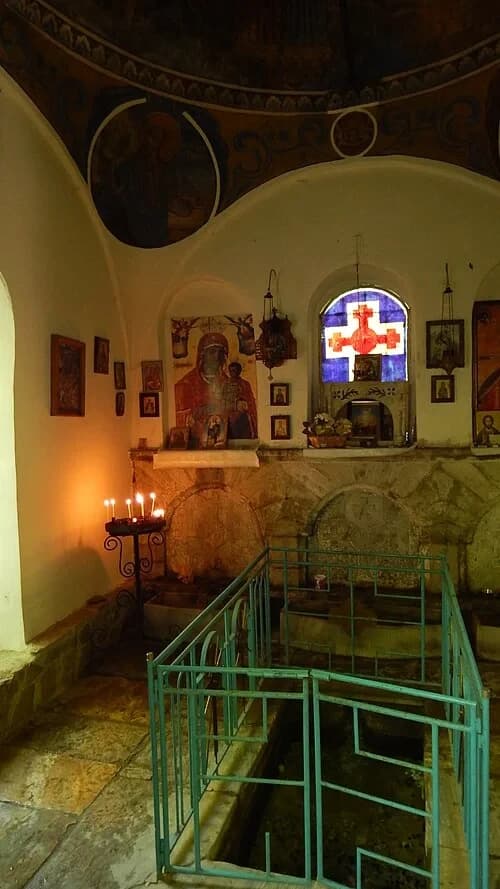
The Chapel of the Spring
The interior of the small chapel at the Holy Spring offers an intimate and personal contrast to the grand scale of the main cathedral. Inside, the space is simple and narrow, with a few traditional icons and several stands for burning candles. The primary focus is the pool or stone basin where the water from the sacred spring is collected. The light in the chapel is soft, primarily coming from the flickering candles left by visitors and pilgrims. This quiet spot is often used for private prayer and reflection, away from the busier areas of the monastery complex. The simplicity of the decorations emphasizes the focus on the water and the act of personal devotion. As you look at the icons, you will see they are often worn from the touch of countless hands over the years. Before you conclude your visit and head back toward the entrance, this chapel provides a final moment of stillness. The cool temperature of the stone and the steady sound of dripping water create a meditative environment. It is a fitting place to reflect on the layers of history, art, and tradition you have encountered throughout the grounds of Bachkovo. From the grand 17th-century cathedral to this small mountain spring, the monastery remains a testament to nearly a thousand years of continuous faith and preservation.
Want to hear the rest?
Download the Stanza app to unlock all 14 stops and full GPS-guided navigation.
Frequently Asked Questions
How long does the Bachkovo Monastery audio tour take?
The Bachkovo Monastery audio guide includes 14 narrated stops. Most visitors spend 45 minutes to 1.5 hours exploring the complete tour, though you can listen at your own pace and skip or revisit any stop.
Is the Bachkovo Monastery audio guide available in my language?
Stanza supports 15 languages: English, Spanish, French, German, Italian, Portuguese, Russian, Japanese, Chinese, Korean, Arabic, Hindi, Polish, Dutch, Hebrew. Check the guide in the app to confirm the languages currently available for this tour.
Can I use the audio guide offline at Bachkovo Monastery?
Yes! Download the complete Bachkovo Monastery tour — including all audio, maps, and images — before your visit. The Stanza app works completely offline, so you don't need WiFi or mobile data at the venue.
How much does the Bachkovo Monastery audio guide cost?
The Stanza app is free to download. The current listed price for the Bachkovo Monastery audio guide is $1.99; app-store region and currency may affect the final price.
How do I use the Stanza audio guide at Bachkovo Monastery?
Download the free Stanza app, search for "Bachkovo Monastery", and download the tour. When you arrive at the venue, the app uses GPS to detect your location and automatically plays the relevant narration as you move between points of interest — completely hands-free.
What makes the Stanza audio guide different from other Bachkovo Monastery tours?
Stanza offers GPS-triggered narration that plays automatically as you walk through Bachkovo Monastery — no need to manually select stops. The tour is available in 15 languages, works fully offline, and includes 14 expertly narrated stops with images and historical context.
What other audio guides are available near Bachkovo Monastery?
Stanza offers multiple audio guides in Bachkovo, Bulgaria and nearby areas. After downloading the app, browse the map to discover all available tours near Bachkovo Monastery. Each guide can be downloaded for offline use.