Languages
15Church of the Holy Trinity Audio Guide
Church of the Holy Trinity is a landmark in Bansko, Bulgaria. Explore it with Stanza's GPS-triggered offline audio guide — available in 15 languages.
Quick Facts
9
Stops
15
Languages
100%
Offline
📍 Bansko, Bulgaria · 41.8353°N, 23.4869°E
About Church of the Holy Trinity
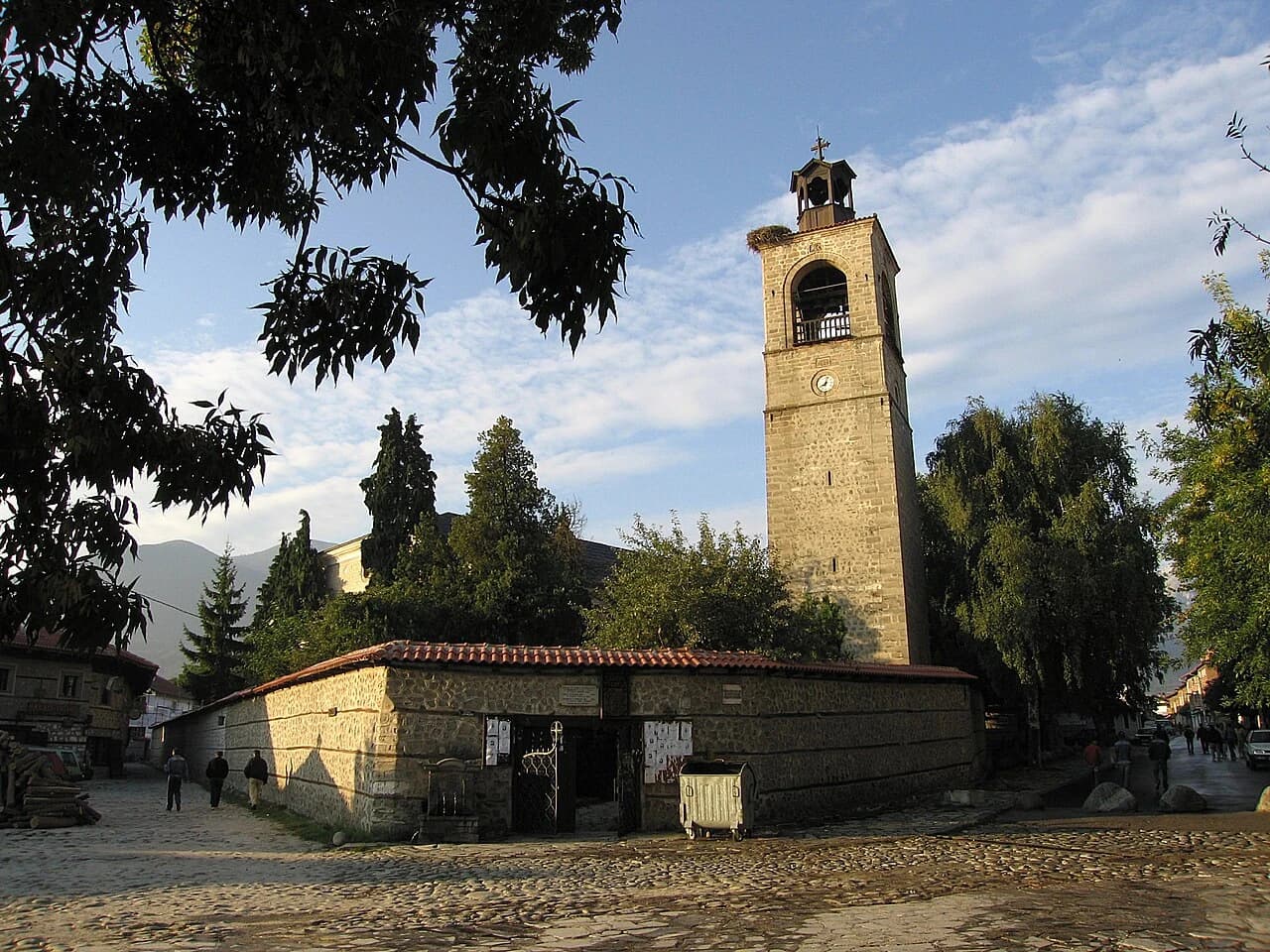
The Church of the Holy Trinity is a historic Eastern Orthodox church building located in Bansko, Bulgaria. It is a significant religious site in the region.
This self-guided audio tour features 9 narrated stops organized across 5 sections, including The Churchyard and Site of Liberation, The Clock Bell Tower, Architecture of the Bulgarian Revival, The House of Neofit Rilski, The Iconostasis and Sacred Art. As a church, Church of the Holy Trinity offers a unique cultural experience in the heart of Bansko, Bulgaria.
The Stanza audio guide is available in 15 languages and works entirely offline — download the complete tour including audio narration, maps, and images before your visit. As you walk through Church of the Holy Trinity, GPS-triggered narration plays automatically at each point of interest.
Last updated:
What you will hear
The Churchyard and Site of Liberation
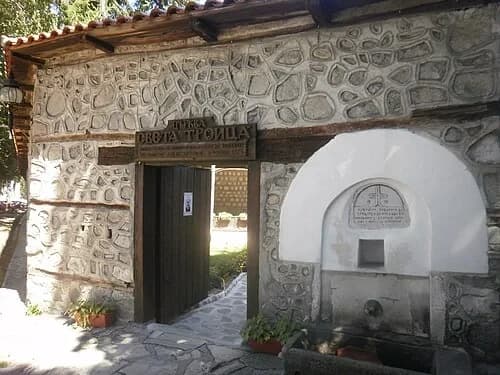
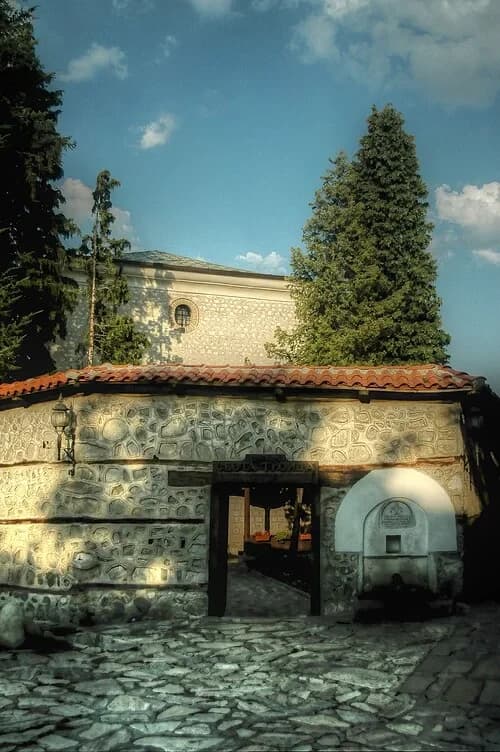
This area introduces the visitor to the historic grounds where Peyo Yavorov declared Bansko's freedom in 1912. It features the stone perimeter and the historic drinking fountain.
The Humble Entrance
Welcome to one of the most significant spiritual sites in Bulgaria. As you look at this stone gate, you might notice how unassuming it appears. This was a deliberate choice. During the Ottoman era, Christian churches were strictly regulated and often required to be lower than surrounding buildings, hidden away from the main streets. This architectural modesty served as a protective measure, ensuring the church did not attract unwanted attention from the ruling authorities. Notice the white-arched drinking fountain integrated into the wall. These fountains are a common sight in Bulgarian courtyards, serving as a point for both physical and ritual refreshment. Before entering the sacred ground beyond the gate, visitors would stop here to wash and drink, transitioning from the dusty streets of Bansko into the quiet sanctity of the complex. The contrast between this simple stone entrance and the spiritual weight of what lies inside is a defining characteristic of the local architectural style. It highlights the community's determination to preserve their faith while navigating the complex realities of life under foreign rule.
Walls of Deception
The perimeter walls surrounding this complex are far more than just a boundary; they tell a story of local cunning and resistance. In the early nineteenth century, obtaining permission to build a church was an arduous task. To convince the Ottoman authorities that this specific plot of land was suitable, the residents of Bansko reportedly 'planted' an ancient icon in the ground, later 'discovering' it to claim the site was historically sacred. This trick, combined with substantial bribes and persistence, eventually won them the right to build. The stonework you see here features thick, fortress-like construction. While it looks like a simple enclosure, it was designed to protect the community’s activities from prying eyes. Behind these heavy walls, locals were not just building a church; they were also holding secret meetings and making preparations for the 1835 Bulgarian Conspiracy, a planned uprising against foreign rule. The walls provided a essential sanctuary for these revolutionary ideas to take root. Today, the weathered stones remain as a record of that era, showing the intersection of religious devotion and the growing desire for national sovereignty. If you examine the lower sections, you can see how the massive stones were fitted together to create a structure intended to last for centuries.
The Clock Bell Tower
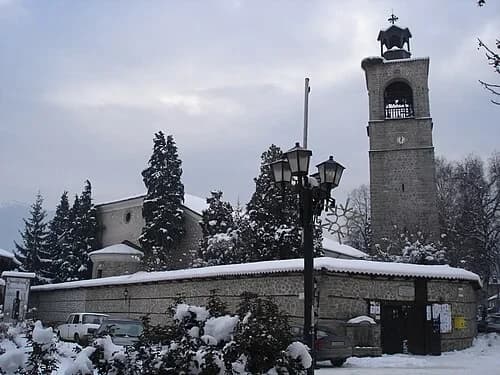
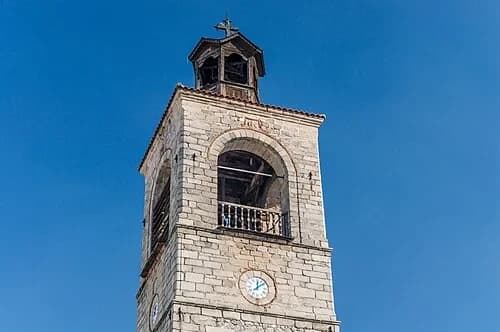
A prominent landmark of Bansko, this 15-meter stone tower serves as a symbol of the town's resilience and architectural ambition during the 19th century.
The Holy Trinity Complex
This wide view allows you to appreciate the full scale of the Holy Trinity complex, a project that was a massive undertaking for its time. Completed in 1835, the construction was finished in just one year—an extraordinary feat that required the coordination of the entire Bansko community. Master builders Dimitar and Gligor Doyuv led the design, utilizing local materials and traditional techniques to create a space that could accommodate a growing congregation. This site emerged during the Bulgarian National Revival, a period defined by a cultural and spiritual awakening after centuries of foreign administration. At that time, building such a large structure was a bold assertion of identity. The complex includes the church itself, the surrounding courtyard, and various auxiliary buildings that served as social and educational hubs. It became the heart of the town, where residents gathered not just for liturgy, but to discuss the future of their nation. The architectural layout reflects the transition from secret, hidden chapels to large, public houses of worship. Notice how the church dominates the space without overwhelming the traditional mountain aesthetic of the region. The harmony between the buildings and the surrounding landscape remains one of the site's most praised features.
The Landmark Bell Tower
The bell tower is perhaps the most recognizable silhouette in Bansko. Built after the main church was completed, it stands fifteen meters high and was designed to be visible from across the valley. Look at the construction and you will see a clear transition: the lower section is composed of heavy, unyielding stone, while the top features a more decorative, open wooden belfry. This wooden crown houses the bells and allows their sound to carry over the rooftops. The addition of a clock face turned the tower into the town’s primary timekeeper, a function it still serves today. More importantly, the tower was a literal 'shout' of Christian presence. For centuries, bells were often silenced or restricted under Ottoman rule, making the construction of such a tall, ringing tower a significant act of cultural reclamation. It served as a landmark for travelers and a point of pride for residents. The stone walls at the base are exceptionally thick, designed to support the weight of the structure and withstand the harsh mountain winters of the Pirin region. Small windows pierce the masonry, providing light to the interior staircase. Even today, the tower remains a symbol of the town’s enduring character and its history as a center of trade and religion.
Architecture of the Bulgarian Revival
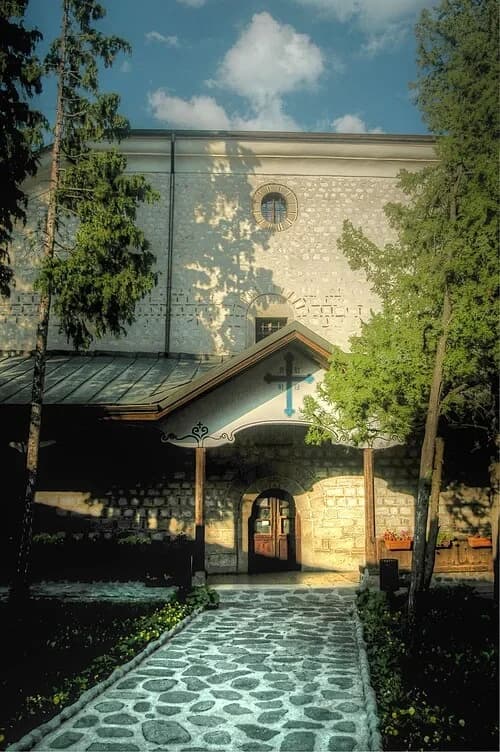
The main church building, completed in 1835, is a masterpiece of the National Revival era, built by master masons Dimitar and Gligor Doyuv as an act of cultural defiance.
The Entrance Portal
As you approach the main door of the church, take a moment to look at the architectural details of the portal. You will see a low-hanging porch supported by wooden pillars, an arched stone doorway, and a painted cross positioned directly above the entrance. This entrance was designed with a specific psychological effect in mind. The exterior of the church, as we have seen, is relatively plain and modest, reflecting the constraints of the era in which it was built. However, once you pass through these doors, the space opens up into an interior that is unexpectedly vast and richly decorated. This deliberate 'reveal' was intended to surprise and inspire worshippers, moving them from the humble, everyday world outside into a grand, celestial-like environment. The low height of the porch forces a sense of humility as one approaches. The cross above the door serves as a final reminder of the sacred nature of the space you are entering. The heavy wooden doors, often reinforced with iron, were designed to secure the church during times of unrest. Even the stones around the archway show signs of wear from the millions of hands that have touched them over the nearly two centuries since the building's completion. This threshold marks the boundary between the historical struggle of the community and their spiritual aspirations.
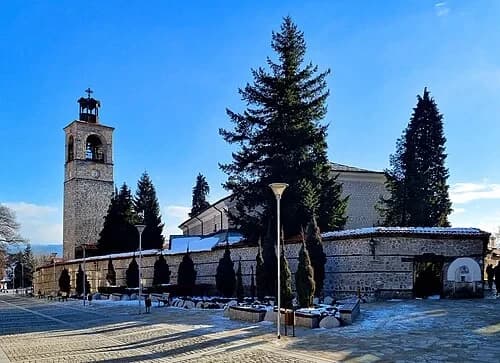
The Site of Liberation
The courtyard you are looking at is a place of immense historical weight. For decades, it was a quiet, secret sanctuary where people came to pray and organize in private. However, its purpose shifted dramatically on October 5, 1912. On that day, the revolutionary poet and voivode Peyo Yavorov stood in this very yard to proclaim Bansko’s freedom from Ottoman rule. The scene was one of overwhelming emotion, with crowds of local residents gathering to hear the words they had waited generations for. This moment transformed the church grounds from a hidden religious site into a public stage for national liberty. The announcement marked the end of an era and the beginning of a new chapter for the Bulgarian state. Following the declaration, the church became a focal point for the newly liberated community, hosting celebrations and memorials for those who fought in the struggle for independence. The open space of the yard allowed for large gatherings that were previously impossible. Today, as you look at the peaceful garden and the surrounding stone paths, it is worth remembering the energy and noise of that October morning. The courtyard remains a site where the spiritual and political history of the region are inextricably linked, preserving the memory of a pivotal moment in the nation's path toward independence.
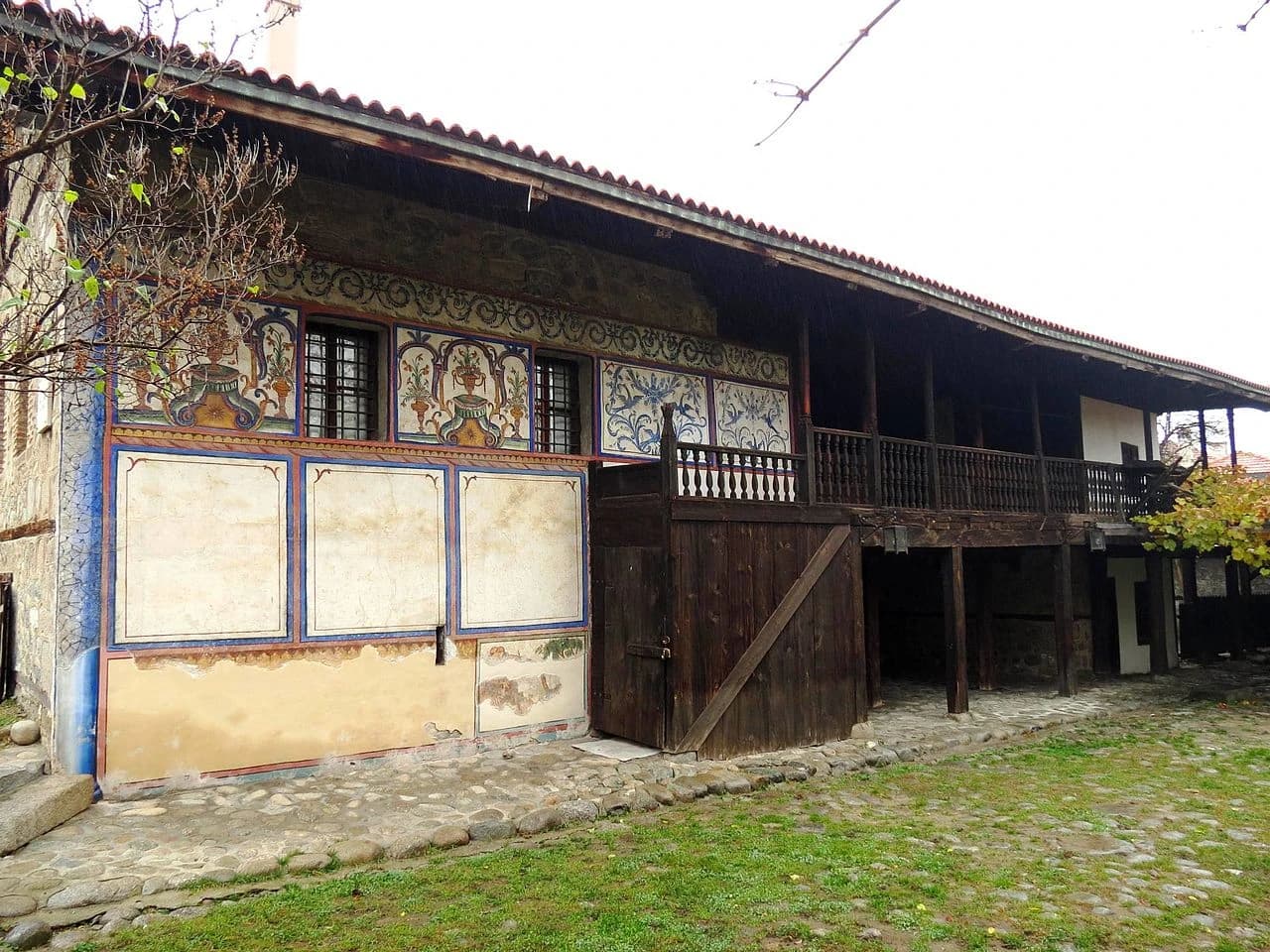
The House of Neofit Rilski
Located within the historic complex, this museum honors Neofit Rilski, a key figure of the Bulgarian National Revival and a native of Bansko.
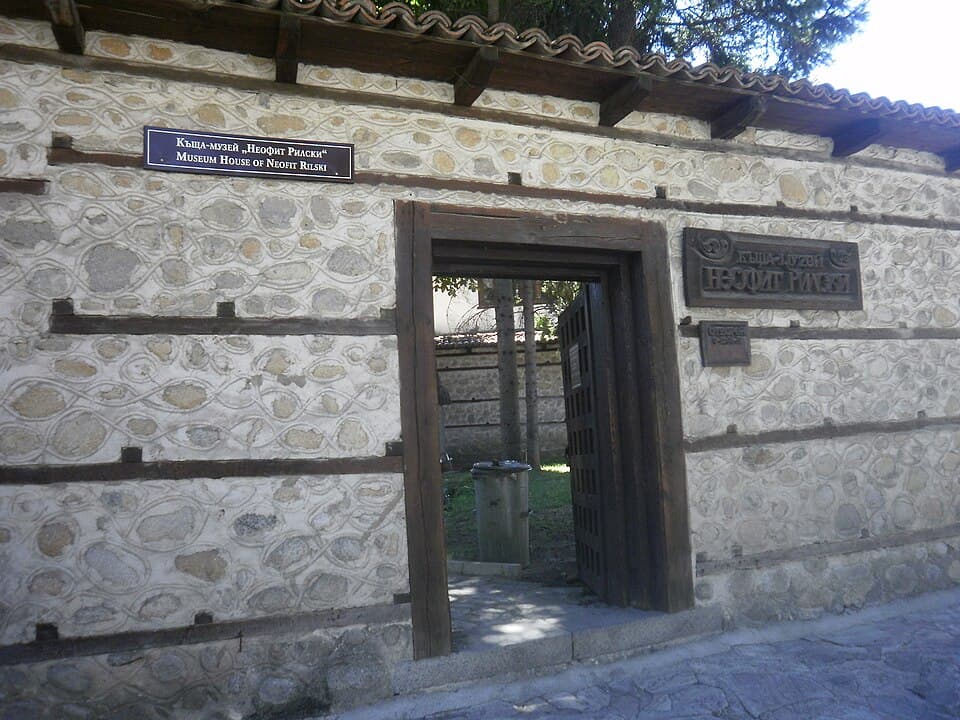
House of Neofit Rilski
Bansko’s legacy is not just one of stone and revolution, but also of profound intellectual achievement. This house belonged to Neofit Rilski, a monk and scholar who is widely regarded as the father of modern Bulgarian secular education. Born here in 1793, Rilski dedicated his life to teaching and standardizing the Bulgarian language. At a time when education was mostly confined to religious texts in archaic scripts, he pushed for the use of the modern, spoken tongue in schools. His work in creating a standard grammar was essential to the formation of a cohesive national identity, much like the stone walls of the nearby church served to protect the community. Rilski had a deep connection to the Holy Trinity Church, and his intellectual contributions provided the cultural foundation for the independence movements that would follow. The house itself is a well-preserved example of local residential architecture, featuring thick walls and small windows suited for the cold mountain climate. Inside, the layout reflects the lifestyle of an eighteenth-century scholar-monk. By standardizing the language, Rilski ensured that Bulgarians could communicate their shared history and goals across different regions. His legacy remains a cornerstone of the Bulgarian National Revival, proving that pens and textbooks were as vital as swords in the quest for sovereignty.
The Iconostasis and Sacred Art
The interior of the church houses exceptional icons by master painters Dimitar Molerov and Toma Vishanov, representing the pinnacle of 19th-century Bulgarian religious art.
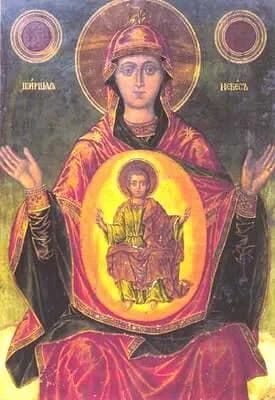
Icon of the Virgin Mary
This icon is a premier example of the Bansko School of painting, which flourished during the eighteenth and nineteenth centuries. The central figure is the Virgin Mary, depicted with the Christ child held within a golden mandorla, a pointed oval of light symbolizing divine glory. The artist, Dimitar Molerov, was a key figure in this movement. If you look closely at the faces, you can see his signature style: he moved away from the extreme rigidity of traditional Byzantine icons, introducing a more humanized, expressive quality to the figures. The colors are rich and deep, intended to stand out in the candlelit interior of the church. For the nineteenth-century worshippers who stood before this image, it was much more than art; it was considered a window to the divine, a point of focus for their prayers and hopes. The gold leaf used for the background and the mandorla was designed to catch the light, creating a shimmering effect that suggested a heavenly realm. This style of icon painting became famous throughout the Balkans, exported from small workshops in Bansko to major monasteries and churches across the region. The icon shows the high level of craftsmanship that local families maintained through generations, passing down the secrets of pigment preparation and brushwork. It remains a focal point of the church's artistic and spiritual collection.
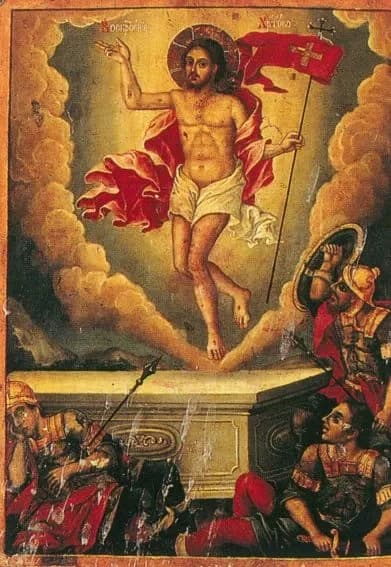
The Resurrection
This icon of the Resurrection provides a fascinating contrast to the more traditional works found in the church. It was painted by Toma Vishanov, who was nicknamed 'Molera' and is credited with founding the Bansko School of painting. Vishanov traveled and studied in Western Europe, and you can see those influences reflected in the dynamic movement of this piece. Unlike the static poses common in older icons, Christ is shown here rising triumphantly above the tomb with flowing robes and a sense of upward motion. Below him, the reactions of the Roman soldiers are equally dramatic, showing surprise and fear in a way that feels quite modern for its time. This blend of traditional Orthodox themes with European Baroque and Rococo elements was a major innovation in Bulgarian religious art. It reflected the outward-looking, cosmopolitan nature of Bansko’s merchant class, who sponsored such works. As you look at the surface, you can see the visible wear—cracks in the wood and areas where the paint has thinned over nearly two hundred years. These marks are a physical record of the icon's history, surviving the mountain climate and the touch of generations of the faithful. This piece concludes our tour, serving as a reminder of how Bansko’s artists bridged the gap between ancient Eastern traditions and the evolving artistic currents of the West.
Frequently Asked Questions
How long does the Church of the Holy Trinity audio tour take?
The Church of the Holy Trinity audio guide includes 9 narrated stops. Most visitors spend 45 minutes to 1.5 hours exploring the complete tour, though you can listen at your own pace and skip or revisit any stop.
Is the Church of the Holy Trinity audio guide available in my language?
Stanza supports 15 languages: English, Spanish, French, German, Italian, Portuguese, Russian, Japanese, Chinese, Korean, Arabic, Hindi, Polish, Dutch, Hebrew. Check the guide in the app to confirm the languages currently available for this tour.
Can I use the audio guide offline at Church of the Holy Trinity?
Yes! Download the complete Church of the Holy Trinity tour — including all audio, maps, and images — before your visit. The Stanza app works completely offline, so you don't need WiFi or mobile data at the venue.
How much does the Church of the Holy Trinity audio guide cost?
The Stanza app is free to download, and the Church of the Holy Trinity audio guide is currently listed as free.
How do I use the Stanza audio guide at Church of the Holy Trinity?
Download the free Stanza app, search for "Church of the Holy Trinity", and download the tour. When you arrive at the venue, the app uses GPS to detect your location and automatically plays the relevant narration as you move between points of interest — completely hands-free.
What makes the Stanza audio guide different from other Church of the Holy Trinity tours?
Stanza offers GPS-triggered narration that plays automatically as you walk through Church of the Holy Trinity — no need to manually select stops. The tour is available in 15 languages, works fully offline, and includes 9 expertly narrated stops with images and historical context.
What other audio guides are available near Church of the Holy Trinity?
Stanza offers multiple audio guides in Bansko, Bulgaria and nearby areas. After downloading the app, browse the map to discover all available tours near Church of the Holy Trinity. Each guide can be downloaded for offline use.