Languages
15Velyan's House Audio Guide
Velyan's House is a museum in Bansko, Bulgaria. Explore it with Stanza's visual scanner and offline audio guide — available in 15 languages.
Quick Facts
8
Stops
15
Languages
100%
Offline
📍 Bansko, Bulgaria · 41.8355°N, 23.4883°E
About Velyan's House
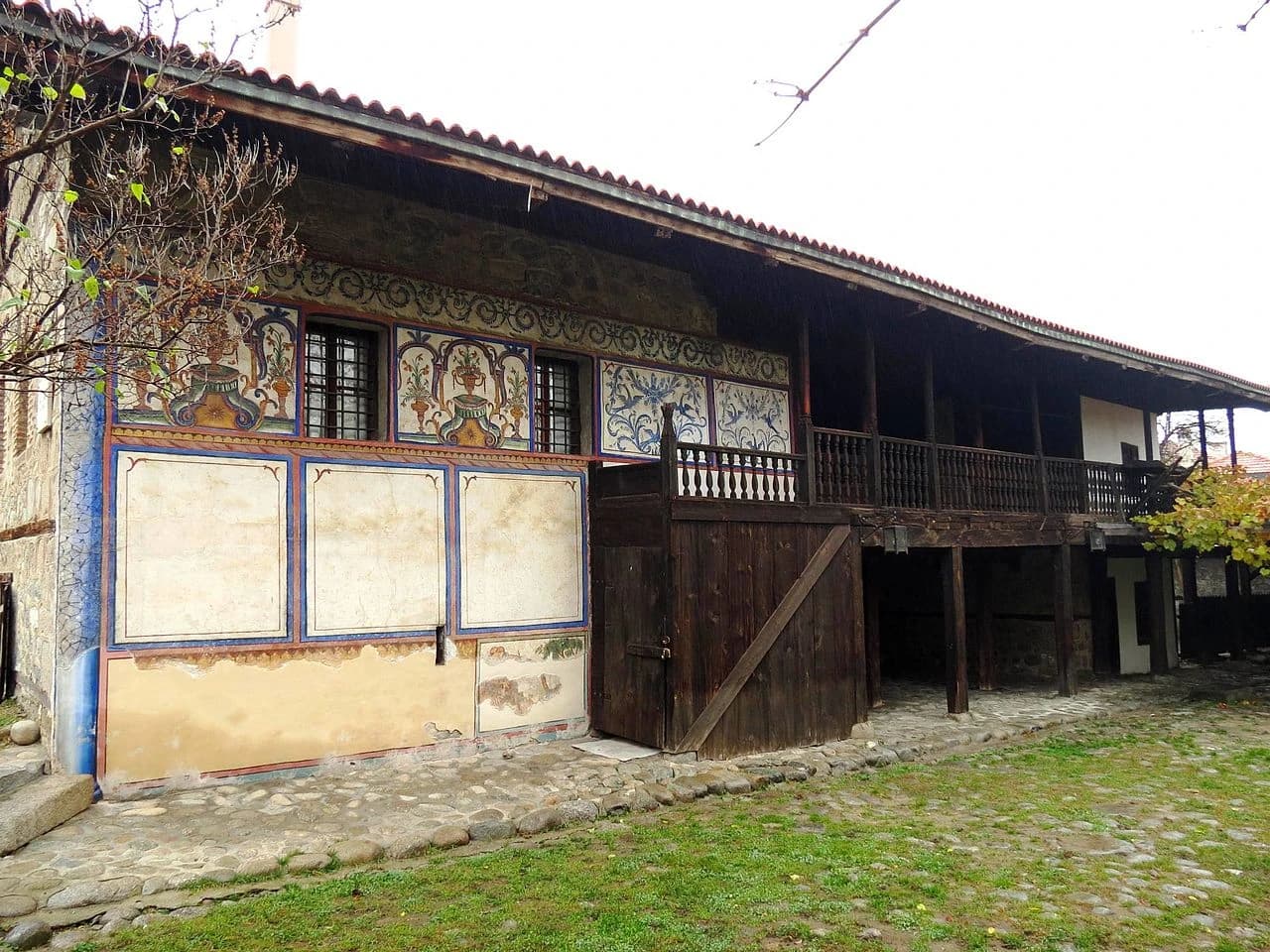
Velyan's House is a historic house museum located in Bansko, Bulgaria. It preserves the traditional architecture and interior of a 19th-century wealthy local home, showcasing local customs and craftsmanship.
Velyan's House is also known as Velyan's House in Bansko.
This self-guided audio tour features 8 narrated stops organized across 5 sections, including The Fortified Facade, Ground Floor and Daily Life, The Master's Living Quarters, The Mural Gallery, The Family Quarters and Exit. As a house museum, Velyan's House offers a unique cultural experience in the heart of Bansko, Bulgaria.
The Stanza audio guide is available in 15 languages and works entirely offline — download the complete tour including audio narration, maps, and images before your visit. As you walk through Velyan's House, GPS-triggered narration plays automatically at each point of interest.
Last updated:
Artworks on display
The Fortified Facade
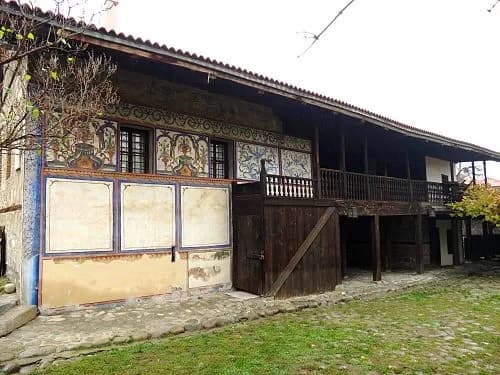
Establishing the house as a 'fortress-home' typical of the Bulgarian National Revival. Includes the main exterior view and a detail of the painted balcony.
The Fortified Facade
The ground floor is constructed with massive stone walls designed for endurance. During the period of Ottoman rule, wealthy merchants needed more than just a place to live; they required a secure stronghold. Notice how the upper floor, built with wood, overhangs the street below. This design, combined with the small, high-placed windows on the lower level, provided a significant defensive advantage. In an age when brigands and unrest were common, these homes functioned as miniature castles. The reinforced structure ensured that the family and their valuable trade goods remained safe behind thick barriers. From the outside, the house looks almost impenetrable, emphasizing the owner's need for privacy and protection. As you observe the contrast between the heavy stone base and the lighter timber top, you are seeing a physical manifestation of the survival strategies employed by the local elite during the 19th century. This architecture was both a status symbol and a practical necessity for the prominent families of the region who navigated a complex and often volatile social landscape.
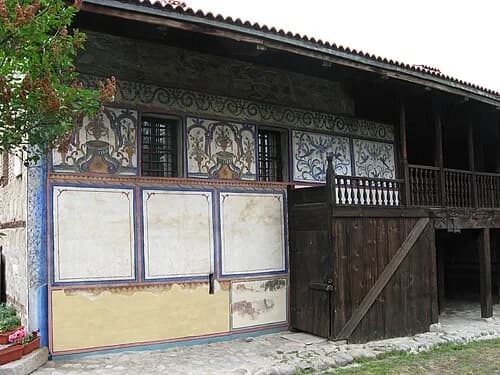
The Painted Veranda
This exterior wall reveals a shift from pure defense to sophisticated decoration. The intricate floral patterns you see here are the work of Velyan Ognev, a master artist from the Debar region. He was originally invited to this town to decorate the grand Holy Trinity Church, but he turned his own residence into a living portfolio for his talents. These murals represent the Bansko School of Art, where traditional folk motifs were elevated to match the growing wealth and ambition of the local merchant class. The soft colors and flowing lines of the flowers provided a stark contrast to the rough stone walls nearby. By painting the outside of his home, Ognev made a bold statement about his professional status and personal taste. The veranda served as a space for relaxation and social interaction, where the beauty of the artwork could be enjoyed in the open air. This blending of traditional craftsmanship with newfound prosperity helped define the aesthetic of the Bulgarian National Revival, turning functional living spaces into galleries of local identity and individual achievement.
Ground Floor and Daily Life
Focuses on the functional areas of the house, where the family managed their economy and daily chores.
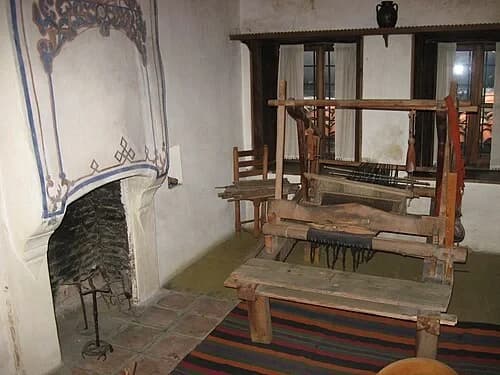
The Weaving Room
In the 1800s, a household in this region had to be largely self-sufficient. This room was a hub of productivity, where families spent long hours spinning, dyeing, and weaving their own textiles. The massive wooden loom dominating the space produced everything from heavy blankets to delicate clothing. Next to it, the white-washed fireplace provided both heat for the workers and a place to cook simple meals. The life lived here was industrious and tied closely to the seasonal availability of materials like wool and linen. Near the corner of the room, you might spot a set of steep, narrow stairs. These weren't just a way to save space; they were part of the home's defensive layout. Narrow passageways made it much easier for a resident to defend the upper floors if the house were ever breached by intruders. Every element in this room balances the hard work of domestic production with the ever-present need for security. The thick walls and small window openings here kept the heat in during the cold mountain winters while maintaining a constant watch on the outside world.
The Master's Living Quarters
The heart of the house, showcasing the Bansko School of Art through Velyan Ognev's personal craftsmanship. This area features the most intricate woodcarvings and frescoes.
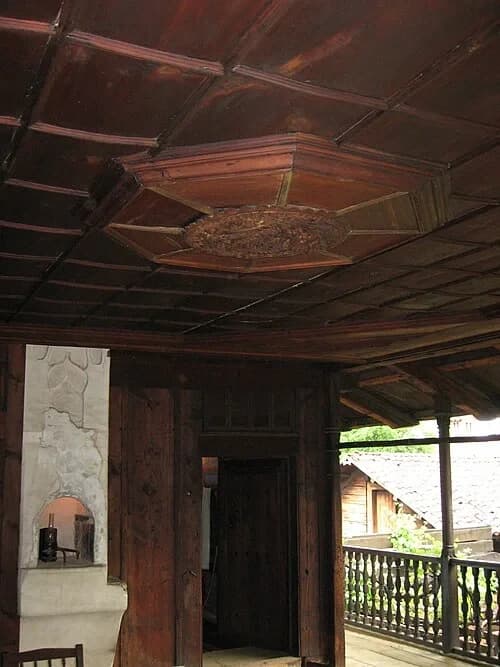
Masterpiece in Wood
The central wood-carved rosette above you is a highlight of the house's interior. In the Bansko tradition, the ceiling was often the focus of a room's decorative scheme, and the sunburst pattern was a recurring favorite. Velyan Ognev was not just a painter; he was an accomplished carver who likely created this piece himself. The geometric symmetry of the intersecting lines and the depth of the carving demonstrate a high level of technical mastery. Such features were intended to impress guests and signal the owner's sophisticated lifestyle and connection to the arts. During this period, a master artist like Ognev used every surface—from walls to ceilings—to prove his skill. The wood used in these carvings was selected for its durability and fine grain, allowing for the minute details you can see in the rays of the sunburst. This decorative work turned a functional ceiling into a major focal point, reflecting the light from the hearth and creating a sense of height and grandeur in a relatively small space. It remains one of the best-preserved examples of 19th-century regional craftsmanship found within a private residence.
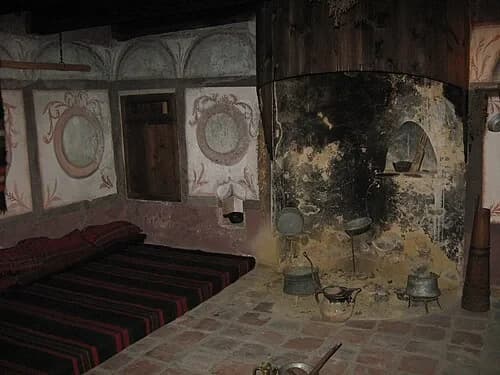
Wall Frescoes and Hearth
Velyan Ognev used his brushes to bring a touch of cosmopolitan luxury into this traditional home. By painting these oval medallions, he created an illusion of space and refinement that was very popular among the elite during the Bulgarian National Revival. These frescoes acted as substitutes for expensive imported mirrors or oil portraits, which were difficult to transport to remote mountain towns. In the center of the room, you can see the hearth, which was the heart of the home. Families lived their lives close to the floor on low-seated beds and cushions to stay warm. Bansko’s winters are notoriously long and cold, and the heat rising from the floor was essential for comfort. This combination of high-style art on the walls and traditional floor-based living illustrates the unique cultural blend of the era. While the family looked at murals inspired by European trends, they remained grounded in the practical customs of mountain life. The soft glow from the fire would have illuminated the frescoes at night, making the painted frames appear even more lifelike against the plaster walls, effectively bridging the gap between local necessity and global aspiration.
The Mural Gallery
Highlighting the unique secular landscapes that Velyan Ognev painted, which were highly unusual for the period and reflect his travels.
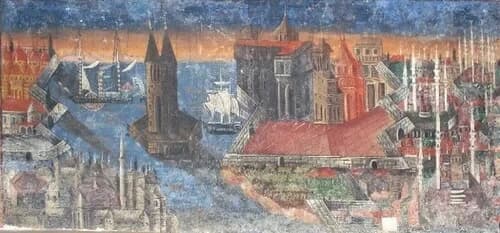
The Constantinople Panorama
Look for the distinct silhouettes of minarets and bridges that identify this city as Constantinople, the modern-day Istanbul. For a merchant family living in Bansko, this city was the center of power and a crucial destination for trade. Velyan Ognev brought his impressions of the grand capital back to his home, painting this panorama to act as a window to the world. At a time when travel was slow and difficult, such an image provided a constant connection to the vast territories of the Ottoman Empire. The detail in the skyline shows an attempt to capture the architectural variety of the metropolis, from its domes to its crowded waterfronts. By featuring the imperial capital on his wall, Ognev acknowledged the sources of his patronage and the reality of the political landscape of his time. These secular murals distinguish Velyan’s House from almost any other residence of the period, as they prioritize worldly observation over traditional religious imagery. They remind us that the people of Bansko, despite their geographic isolation, were deeply integrated into the cultural and economic life of a massive, multi-continental empire.
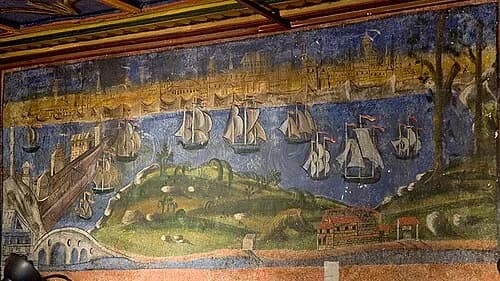
The Harbor Mural
At a time when most Bulgarian art was strictly reserved for religious icons in churches, this secular landscape was a revolutionary choice. The painting shows a wide harbor, likely modeled after Venice or another major Mediterranean trading hub. The presence of such a scene in the Pirin Mountains speaks volumes about the world of the 19th-century Bansko merchants. These individuals traveled far across Europe and the Ottoman Empire to sell their goods, bringing back stories and images of distant lands. Velyan Ognev captured that international spirit by painting this panorama on a domestic wall. Notice the varied shapes of the ships and the architecture of the city lining the shore. This mural served as more than just a decoration; it was a conversation piece that allowed the owner to share his experiences or aspirations with visitors. It reflects a shift in worldview, where the focus of art expanded from the divine to the earthly achievements of man and the excitement of global trade. The choice to place a maritime scene in a landlocked mountain town underscores the far-reaching connections that defined the local economy during the National Revival period.
The Family Quarters and Exit
A look into the private family life of the 19th century before concluding the tour.
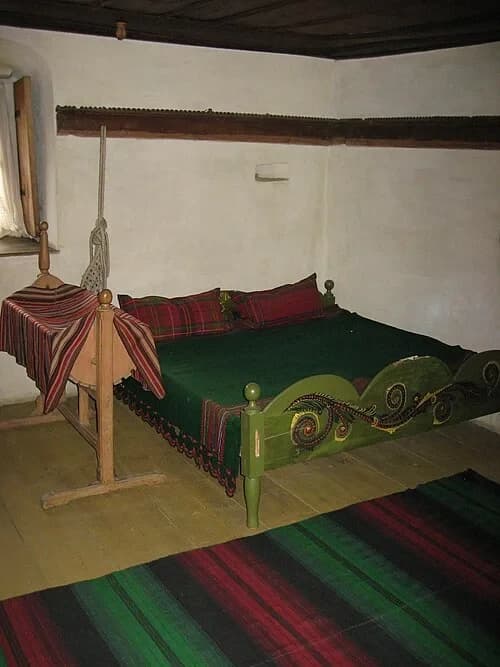
The Private Quarters
The private quarters offer a glimpse into the intimate daily life of the Ognev family. The painted bed and the heavy, colorful rugs demonstrate the continued influence of traditional craftsmanship even in the home’s most personal corners. These textiles were often the work of the women in the house, showcasing patterns that had been passed down through generations. While the public rooms were designed to impress visitors, these spaces were built for comfort and privacy. Interestingly, like many fortified homes of the Bulgarian National Revival, this house contains hidden features that are not obvious to the casual observer. Secret compartments and hiding places were often integrated into the very structure of the building, providing a final layer of protection for valuables or individuals during times of crisis. Today, Velyan’s House is celebrated as one of the 100 Tourist Sites of Bulgaria, a recognition of its importance in preserving the history of Bansko’s unique artistic and architectural heritage. As you finish your visit, take a final look at the blend of rugged stone and delicate paintwork that defines this extraordinary building. The house stands as a well-preserved record of a time when art and defense were woven into the fabric of everyday life.
Frequently Asked Questions
How long does the Velyan's House audio tour take?
The Velyan's House audio guide includes 8 narrated stops. Most visitors spend 45 minutes to 1.5 hours exploring the complete tour, though you can listen at your own pace and skip or revisit any stop.
Is the Velyan's House audio guide available in my language?
Stanza supports 15 languages: English, Spanish, French, German, Italian, Portuguese, Russian, Japanese, Chinese, Korean, Arabic, Hindi, Polish, Dutch, Hebrew. Check the guide in the app to confirm the languages currently available for this tour.
Can I use the audio guide offline at Velyan's House?
Yes! Download the complete Velyan's House tour — including all audio, maps, and images — before your visit. The Stanza app works completely offline, so you don't need WiFi or mobile data at the venue.
How much does the Velyan's House audio guide cost?
The Stanza app is free to download, and the Velyan's House audio guide is currently listed as free.
How do I use the Stanza audio guide at Velyan's House?
Download the free Stanza app, search for "Velyan's House", and download the tour. When you arrive at the venue, the app uses GPS to detect your location and automatically plays the relevant narration as you move between points of interest — completely hands-free.
What makes the Stanza audio guide different from other Velyan's House tours?
Stanza offers GPS-triggered narration that plays automatically as you walk through Velyan's House — no need to manually select stops. The tour is available in 15 languages, works fully offline, and includes 8 expertly narrated stops with images and historical context.
What other audio guides are available near Velyan's House?
Stanza offers multiple audio guides in Bansko, Bulgaria and nearby areas. After downloading the app, browse the map to discover all available tours near Velyan's House. Each guide can be downloaded for offline use.