Stanza · Audio guide
Thracian Tomb of Kazanlak Audio Guide
A place to remember. A story to take with you.
A vaulted-brickwork tomb located near Kazanlak, Bulgaria, dating back to the Hellenistic period. It is a UNESCO World Heritage site recognized for its unique Thracian architecture and murals.
Download Stanza, then search for “Thracian Tomb of Kazanlak”.
About the tour
One guide. Your kind of visit.
A vaulted-brickwork tomb located near Kazanlak, Bulgaria, dating back to the Hellenistic period. It is a UNESCO World Heritage site recognized for its unique Thracian architecture and murals.
Ready when you are.
- 01Get the free Stanza app.
iOS & Android
- 02Find your guide.
“Thracian Tomb of Kazanlak”
- 03Download before you go.
Works offline
Audio guide / 8 narrated stops
Inside the guide
Get to know a few of the stories before you go. Open a stop to read more.
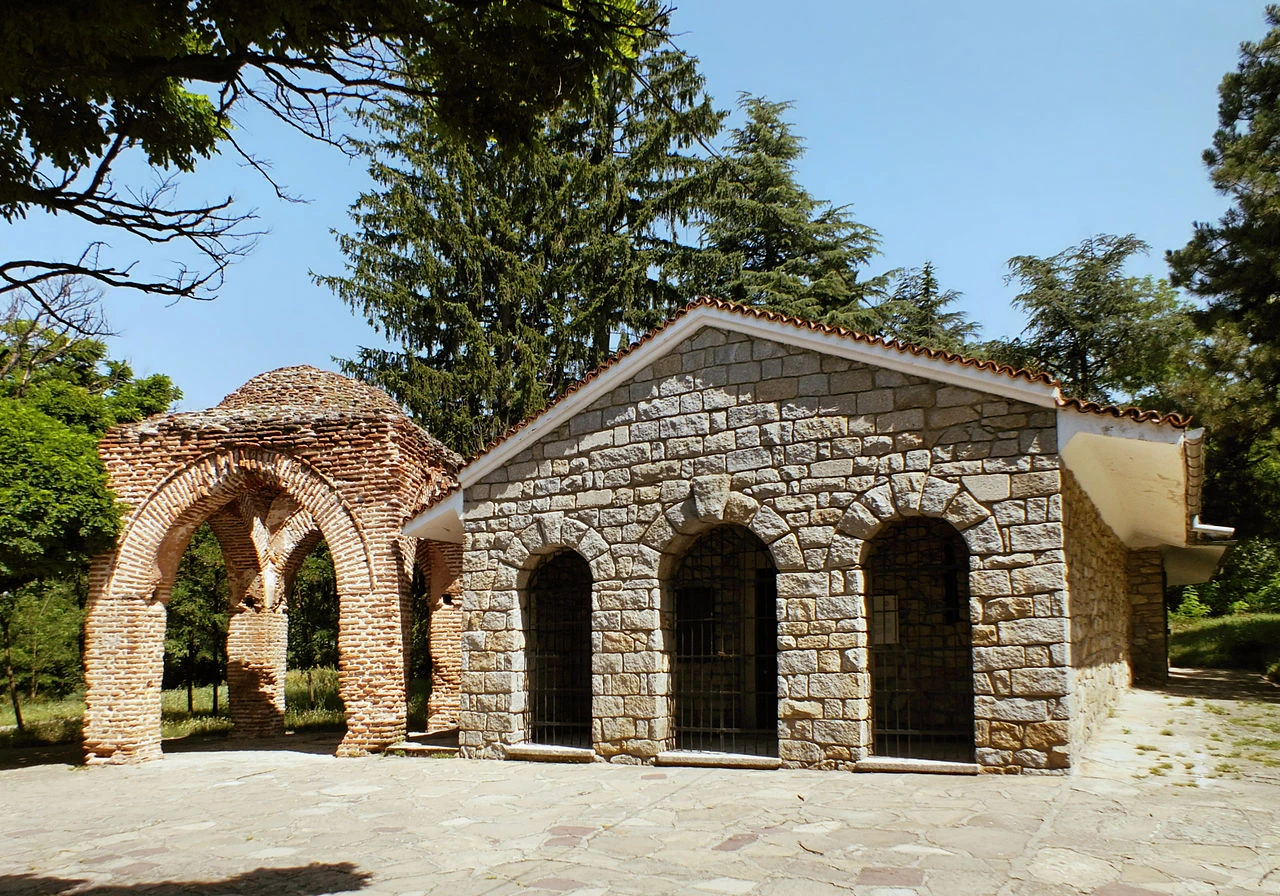
01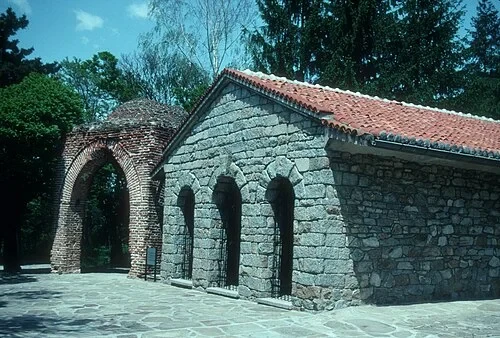 Arrival at the Valley of the Thracian Rulers
The Protective Enclosure
This unassuming structure serves a vital purpose: safeguarding one of the most significant archaeological finds of the Hellenistic world. Dating back to the late 4th century BC, the original tomb was discovered in 1944. However, to protect its delicate internal frescoes from environmental decay and the moisture of human breath, the original site is strictly closed to the public. The building you see is a protective shell, ensuring that this funerary masterpiece remains preserved for the future. In recognition of its unique artistic and historical value, UNESCO inscribed the site on the World Heritage List in 1979. Today, you are about to enter a precise, full-scale replica located just a few meters away. This reconstruction was built to allow modern visitors to experience the exact architecture and artistry of the Thracian elite without endangering the ancient originals. As we approach, we transition from the modern landscape into a realm created for the aristocracy of a lost civilization. The surrounding valley contains hundreds of similar mounds, though few possess the artistic complexity found here.
JERRYE AND ROY KLOTZ MD · CC BY-SA 3.0
02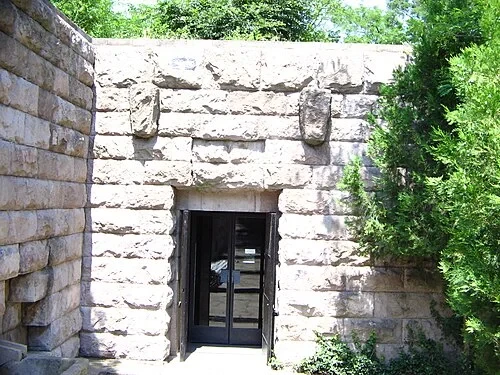 The Dromos: Corridor of the Warriors
The Replica Entrance
While the outer facade reflects modern construction techniques, the interior follows the original closely. The original was commissioned for a high-ranking Thracian ruler, though the specific identity of the occupant and the master craftsmen who painted the walls remain unknown to history. These anonymous artists blended local traditions with sophisticated Hellenistic styles, creating a sanctuary fit for the afterlife. Stepping inside, the transition is intentional. You leave behind the bright, open Bulgarian sky and enter a dim, solemn environment. This shift in light and atmosphere mimics the experience of ancient mourners who would have entered the original mound. The heavy masonry and low light focus the attention inward, preparing you for the elaborate decorative program that lies ahead in the corridor and central chamber. The replica ensures that the spatial relationships and lighting conditions of the original are preserved. This modern entrance is the gateway to a world of ancient royal ritual.
Original uploader was Ivelin Mincov at bg.wikipedia · CC BY-SA 3.0
03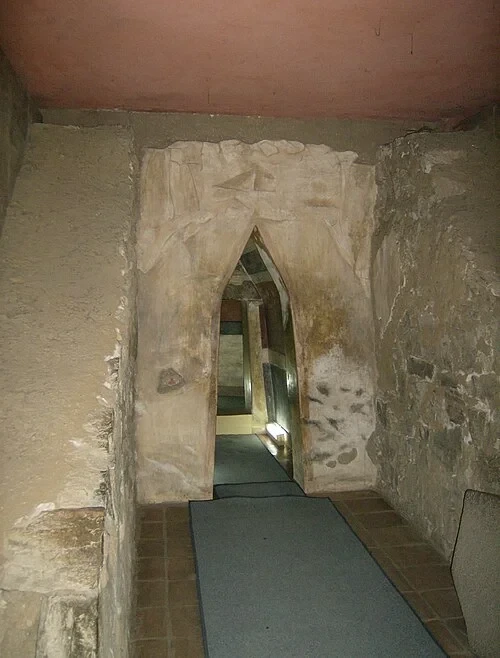 The Dromos: Corridor of the Warriors
The Narrow Corridor
Ancient Thracian engineers used corbelled masonry for their most prestigious burials, a hallmark of their sophisticated skills. As you move through this corridor, notice the specific geometry of the passage. The walls lean inward to form a corbelled arch, a technique that allowed the structure to support the immense weight of the earthen mound above. This particular dromos provides a clear visual narrative of the tomb's hierarchy. Near the entrance, the walls consist of rougher, unadorned stone, reflecting the structural foundations of the site. However, as you move deeper toward the burial chamber, the surfaces become noticeably smoother. The transition from raw stone to finely plastered and painted surfaces signals that you are approaching the most sacred part of the monument. This spatial progression was designed to heighten the sense of importance for those entering the final resting place of a ruler. The dromos serves as a functional and symbolic bridge between the world of the living and the eternal chamber of the dead. The triangular shape at the top of the passage is a recurring motif in funerary construction across the region.
Listen in the appPhoto: Izvora · Public domain
04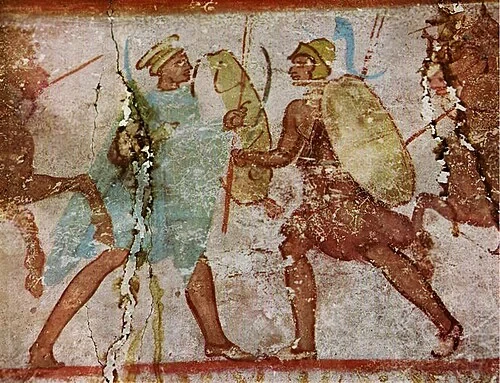 The Dromos: Corridor of the Warriors
The Thracian Warriors
The walls of the dromos are decorated with scenes depicting warriors, providing invaluable insight into Thracian military life. Two figures stand facing one another, captured in a dynamic stance that suggests movement and readiness. Look closely at their gear; they carry large oval shields and hold short, curved swords typical of the period. Their helmets are particularly distinctive, featuring forward-leaning peaks that were a signature element of Thracian attire. These paintings reveal a strong Hellenistic influence, which was spreading through the region during the late 4th century BC. This is evident in the realistic proportions of the human figures and the careful use of color to suggest three-dimensional form. The artists didn't just paint symbols; they depicted real-world physical presence. These warriors likely represent the honor guard or the military retinue of the deceased ruler, standing in eternal service. The precision of the brushwork on the shields and the fold of the garments shows a level of artistic sophistication usually reserved for the highest levels of the aristocracy. The warriors appear to be engaged in a ceremonial or defensive posture at the entrance to the inner chamber.
Listen in the appAnonymousUnknown author · Public domain
05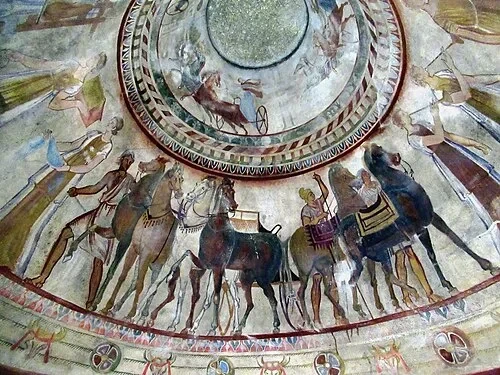 The Burial Chamber: A Royal Farewell
The Vaulted Dome
The central chamber of the tomb is a remarkable feat of ancient engineering. Unlike the rectangular corridor, this space is a perfect circle, rising into a self-supporting vaulted dome known as a tholos. The complex brickwork required to achieve this shape while supporting the pressure of the burial mound demonstrates a high level of mathematical and architectural skill. Encircling the very top of the dome is a narrow frieze depicting a high-speed chariot race. Horses are captured mid-gallop, their legs extended to convey a sense of intense velocity as they pull two-wheeled chariots around the circular space. These races were a central part of the funeral games held to commemorate a deceased leader. In Thracian society, such competitions were not merely entertainment; they were vital rituals that demonstrated the status, wealth, and military prowess of the ruler being honored. The circular shape of the room enhances the feeling of the race, making the chariots appear as if they are in perpetual motion around the ceiling. The contrast between the red brick and the painted frieze highlights the architectural transition between the wall and the dome.
Listen in the appDavid Stanley from Nanaimo, Canada · CC BY 2.0
06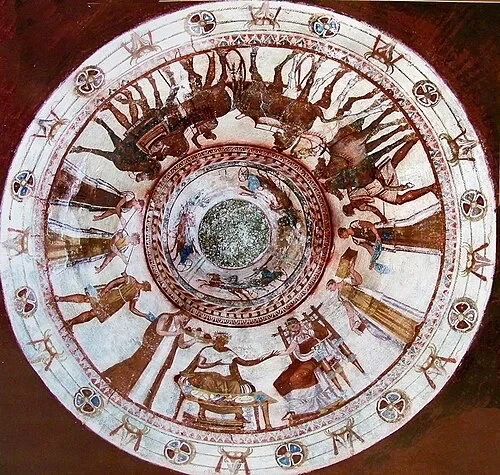 The Burial Chamber: A Royal Farewell
The Ritual Funeral Feast
This central mural is the defining masterpiece of the Kazanlak tomb. It depicts a ruler and his wife seated at a low table laden with food and drink, surrounded by attendants. The focus of the composition is the Gesture of Equality—the moment where the man and woman reach out to grasp each other’s wrists. Scholars have debated the meaning of this touch for years. Some believe it represents a tender final farewell, while others argue it symbolizes a sacred bond that transcends death, ensuring their union continues in the afterlife. The woman, draped in fine garments and seated with quiet dignity, has become a national symbol in Bulgaria. Her likeness is so recognizable that she appears on the reverse of the 50 stotinki coin. The realism in their facial expressions and the delicate rendering of their hands sets this work apart from other ancient Thracian art. It captures a moment of human connection that feels remarkably intimate despite the thousands of years that have passed since it was painted. Notice the detailed rendering of the furniture and the various vessels used for the feast.
Listen in the appPhoto: Kmrakmra · CC BY-SA 3.0
07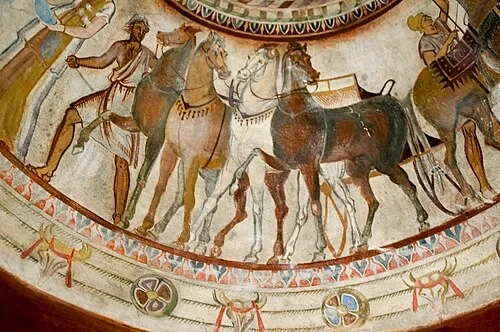 The Chariot Race: Motion and Mastery
The Royal Horses
Horses held a place of immense spiritual and military importance for the Thracians, and their presence in this tomb is significant. In the murals, you can see detailed harnesses and bridles, indicating the high value placed on these animals. Notice the riderless, saddled horses being led toward the funeral feast. In Thracian burial traditions, it was common for a ruler's favorite horses to be sacrificed and buried alongside them, intended to serve their master in the next world. This practice highlights the horse as a bridge between the physical and spiritual realms. Below the main figurative scenes, look for the decorative bands that encircle the base of the dome. These include geometric patterns and stylized cattle skulls, known as bucrania. These motifs were common in Hellenistic art and often symbolized sacrifice or the cycle of life and death. The contrast between the naturalistic, moving horses and the static, repetitive patterns of the skulls creates a balanced decorative program. The fine lines used to define the horses' muscles and manes demonstrate the artist's keen observation of nature. The horses are painted with different coat colors, from chestnut to a pale grey.
Listen in the appPhoto: Kufareu · CC BY-SA 4.0
08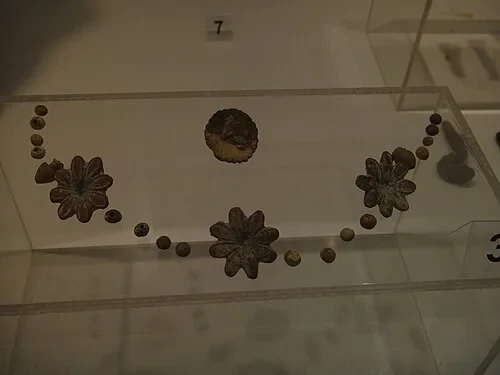 Beyond the Tomb: Treasures and Legacy
The Golden Legacy
While the Kazanlak tomb is primarily famous for its wall paintings, the Thracians were legendary throughout the ancient world for their skill as goldsmiths. The valley surrounding this site has yielded an incredible wealth of artifacts, including delicate gold flowers, beads, and intricate jewelry found within various burial mounds. These ornaments were more than mere decoration; they were symbols of the immense wealth and the sophisticated, cosmopolitan lifestyle enjoyed by the Thracian elite. The craftsmanship involved in creating these tiny, detailed pieces—some no larger than a fingernail—rivaled anything found in contemporary Greece or Persia. These golden treasures offer a glimpse into the material world of a people who controlled the trade routes of the Balkans. Although the original tomb remains locked away for its own preservation, the existence of these artifacts brings the lost civilization of the Thracians into a clearer light. They represent the final traces of a culture that valued both artistic beauty and the eternal display of status. You can see the fine wirework on the petals of the golden rosettes and the uniformity of the small beads.
Listen in the appPhoto: SashaCoachman · CC BY-SA 3.0
Thracian Tomb of Kazanlak
Frequently asked questions
How much does the guide cost?
Free app download. Listed guide price: Free guide. Guide price shown in the app. Audio guide only. Venue admission is separate.
Can I listen without internet?
Yes. Download the guide’s audio, images, and maps in the app before your visit. Your downloaded content is then available offline.
Can I listen in my language?
This audio guide is available in 15 languages, including English.
Do I need to follow a schedule?
No. This is a self-guided experience. Choose your stops, pause whenever you like, and return to a story at your own pace.
At your own pace
Explore Thracian Tomb of Kazanlak.
Download Stanza, then search for “Thracian Tomb of Kazanlak”.
Free app download · Guide price shown in the app
Keep exploring
Nearby audio guides
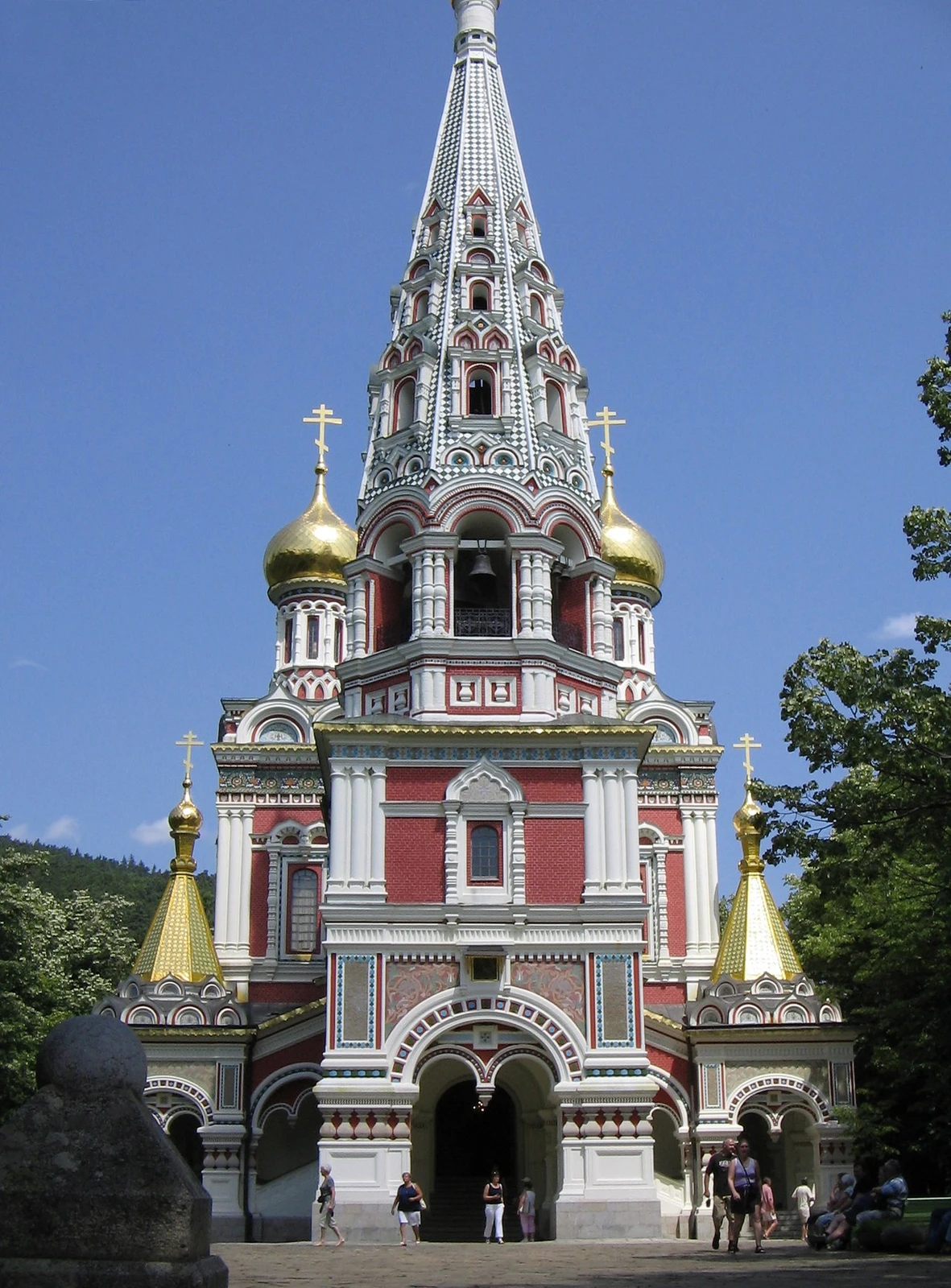
Shipka · 12 km
The Memorial Temple of the Birth of Christ
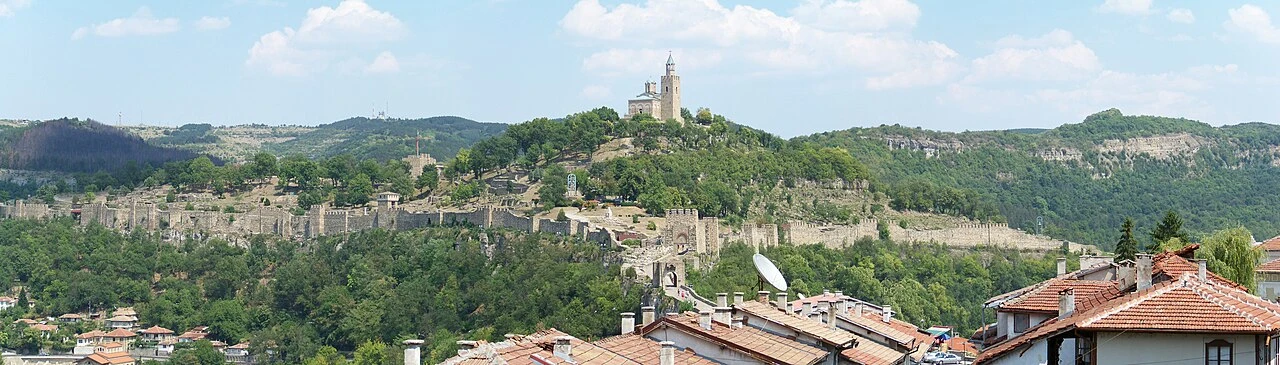
Veliko Tarnovo · 55 km
Tsarevets Fortress
Content & sources
www.vacacionesbulgaria.com · CC BY-SA 4.0
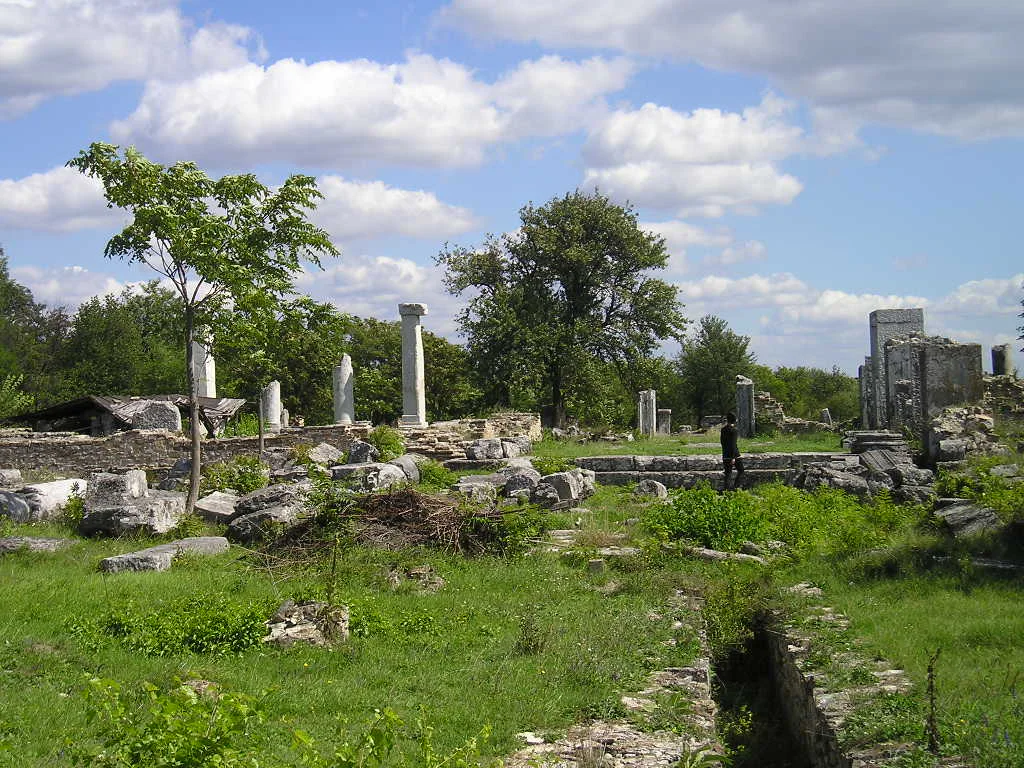
Polikraishte · 68 km
Nicopolis ad Istrum
Content & sources
Photo: Nk · Public domain
Plovdiv · 75 km
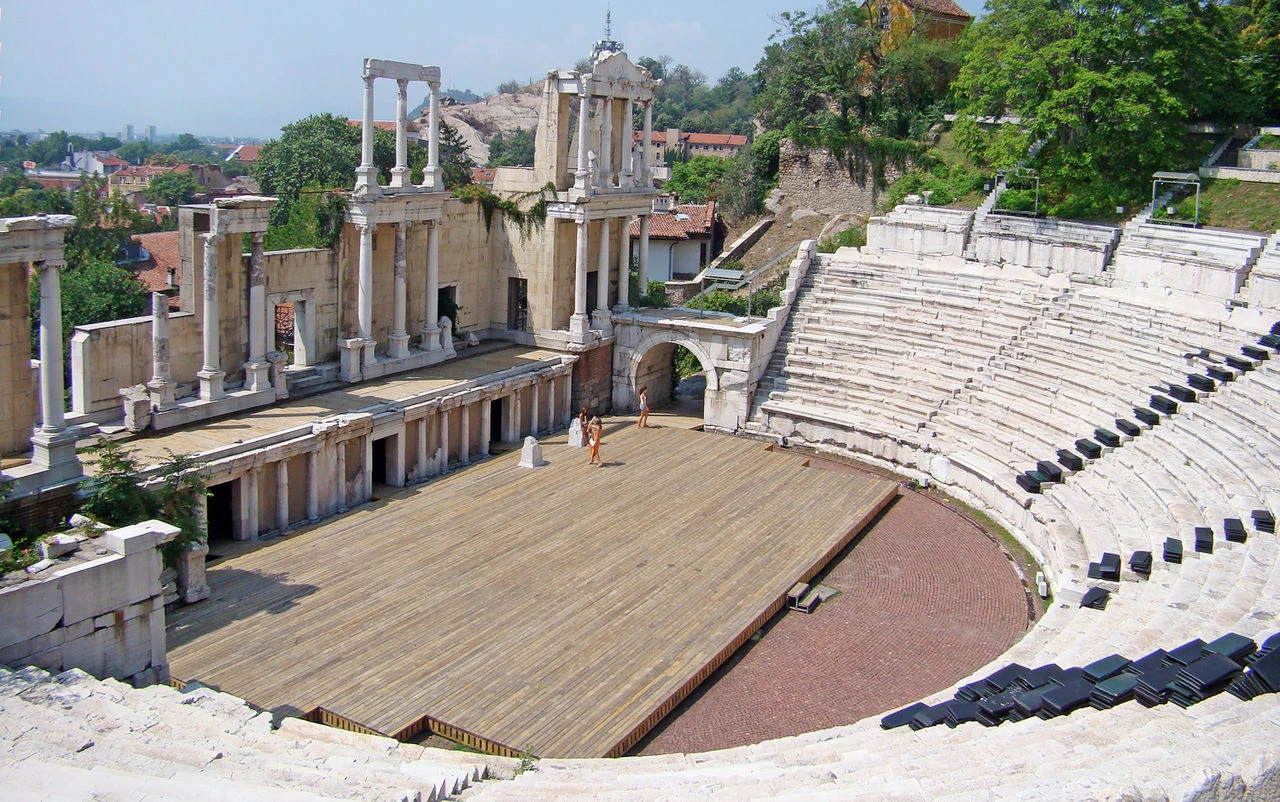
Roman theatre of Plovdiv
Content & sources
Edal Anton Lefterov · CC BY-SA 3.0