Languages
15Крепост Царевец Audio Guide
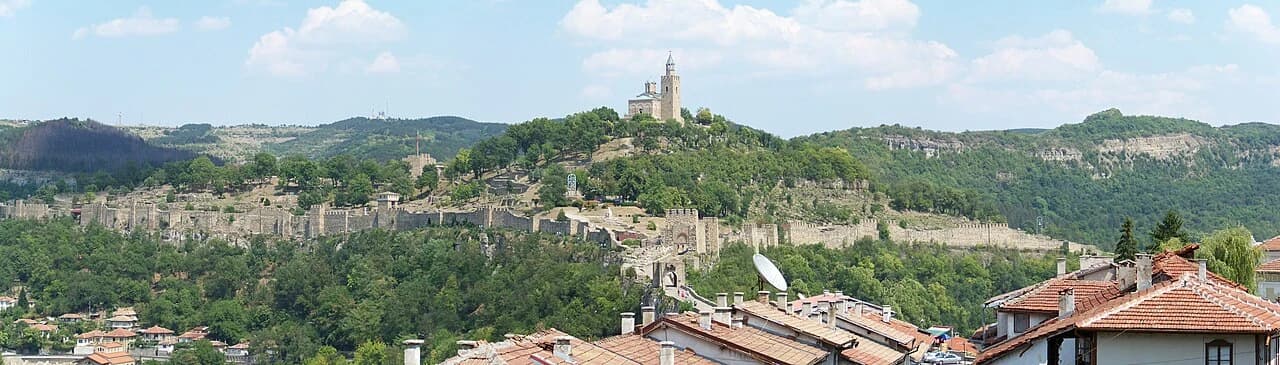
Крепост Царевец is a landmark in Veliko Tarnovo, Bulgaria. Explore it with Stanza's GPS-triggered offline audio guide — available in 15 languages.
Quick Facts
22
Stops
15
Languages
100%
Offline
📍 Veliko Tarnovo, Bulgaria · 43.0833°N, 25.6528°E
About Крепост Царевец
Tsarevets is a medieval stronghold located on a hill in Veliko Tarnovo, which served as the primary fortress of the Second Bulgarian Empire. It is now a prominent open-air site featuring restored walls and the Patriarchal Cathedral.
Крепост Царевец is also known as Tsarevets fortress.
This self-guided audio tour features 22 narrated stops organized across 8 sections. As a fortress, Крепост Царевец offers a unique cultural experience in the heart of Veliko Tarnovo, Bulgaria.
The Stanza audio guide is available in 15 languages and works entirely offline — download the complete tour including audio narration, maps, and images before your visit. As you walk through Крепост Царевец, GPS-triggered narration plays automatically at each point of interest.
Last updated:
What you will hear
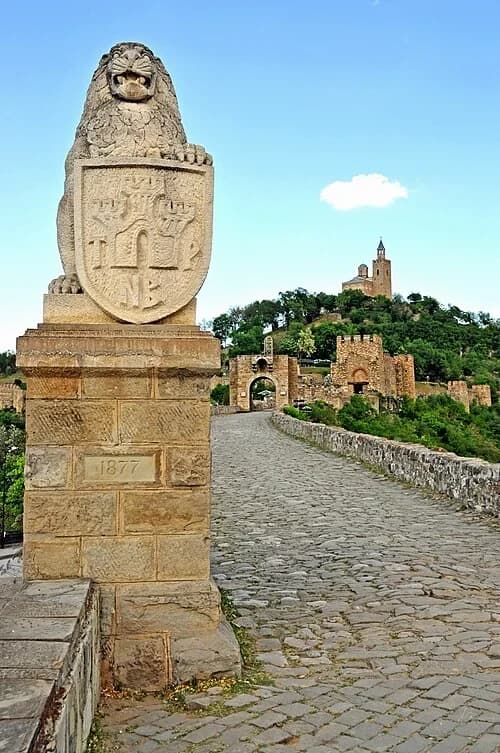
The Main Gate and Lion Sentinel
The primary entrance to the fortress. Includes the iconic stone lion and the narrow approach that served as a major defensive bottleneck.
The Lion Sentinel
The hill where you stand rises 206 meters above sea level, providing a commanding view of the surrounding landscape. Between 1185 and 1393, this location was the political and cultural heart of Bulgaria, acting as the primary seat of government. The stone lion sculpture you see here is a modern addition, installed during the extensive 20th-century restorations of the complex. It was chosen as a symbol of state sovereignty and military strength. Unlike the weathered ruins nearby, the lion's crisp features reflect the 1930s efforts to revitalize national pride through architectural heritage. Looking past the statue, the road follows the natural ridge, leading deeper into the heart of the medieval city. During its peak, this hill was home to the royal family and high-ranking nobility, guarded by several rings of fortifications. The lion marks the transition from the outer defensive works into the administrative and residential districts. Its presence today serves as a marker for the gateway to Bulgaria's medieval history.
The Western Defensive Walls
Massive stone fortifications up to 3.6 meters thick that protected the capital of the Second Bulgarian Empire.
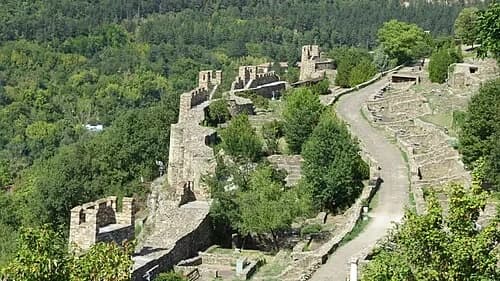
The Northern Ramparts
The path along the northern edge of the hill follows the natural contours of the cliff, providing the defenders with maximum visibility over the river valley below. While the walls are impressive, the most fascinating aspect of this area is the density of the buildings once located just inside them. Archaeological excavations have identified the remains of 22 different churches and four large monasteries packed within the fortress walls. This high concentration of religious structures highlights the city's role as a major Orthodox center during the medieval period. The placement of these buildings near the ramparts ensured that even the most distant corners of the stronghold had access to spiritual guidance. From this vantage point, soldiers could monitor the approaches from the north while citizens moved through the narrow streets between the ecclesiastical foundations. The cliffside provided a natural moat, and the ramparts were built to mirror every twist and turn of the rock. This integration of man-made walls and natural precipices created a defensive system that used the topography to its full advantage.
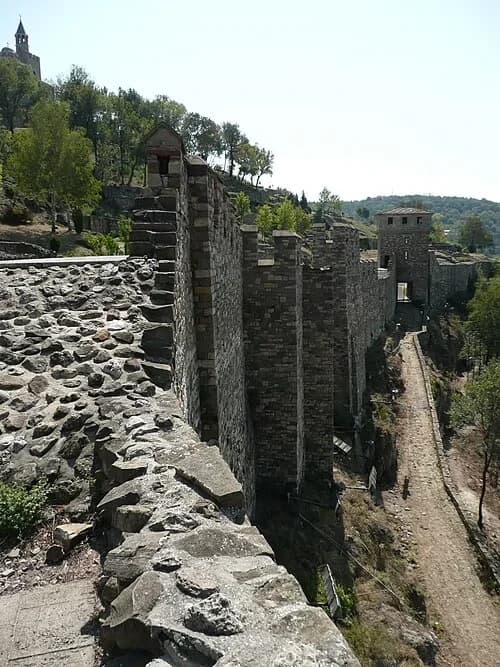
The Western Defensive Walls
The thickness of these defensive walls is their most striking feature, measuring up to 3.6 meters in several sections. This incredible mass was a functional necessity to withstand the impact of heavy stone projectiles launched by catapults. Along the exterior, you can see vertical stone buttresses spaced at regular intervals. These architectural supports served a dual purpose, reinforcing the vertical stability of the walls against the vibrations of earthquakes—which are common in this region—and providing extra structural integrity during prolonged military sieges. The masonry consists of rough-hewn stone blocks held together by durable mortar that has survived centuries of exposure to the elements. Looking up, the height of the walls creates a nearly vertical face that made scaling them with ladders almost impossible. These fortifications enclosed the entire hill, turning the natural terrain into a virtually impregnable sanctuary for the empire's leaders. The scale of the construction project required immense resources and thousands of laborers over several decades.
The Residential Quarters
Ruins of over 400 residential buildings and workshops, showing where common citizens and craftsmen lived within the safety of the fortress.
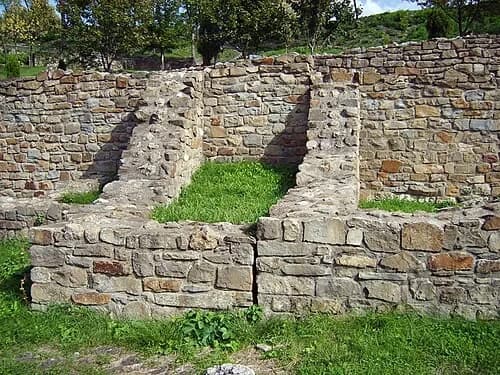
Artisan Workshops
Proximity to the main road was crucial for the artisan class, and these foundations belonged to a district dedicated to production. Excavations here have uncovered evidence of specialized workshops where blacksmiths, potters, and jewelers practiced their trades. These craftsmen were essential to the empire's economy, creating everything from iron spearheads for the garrison to intricate gold ornaments for the nobility living in the palace nearby. Notice the narrow alleyways that weave between the stone bases; these were the veins of the commercial district. The workshops often doubled as homes, with the family living above the street-level shop. Small furnaces and kilns have been found in this area, indicating a high level of industrial activity. Because the capital was a major trade hub, these artisans likely had access to raw materials from across the Balkans and the Byzantine Empire. Their work reflected the artistic styles of the Second Bulgarian Empire, blending local traditions with international influences. Today, the quiet stone ruins hide what was once the most productive and noisy part of the stronghold.
Baldwin's Tower
A reconstructed tower where Latin Emperor Baldwin I of Constantinople was reportedly held prisoner after his capture in 1205.
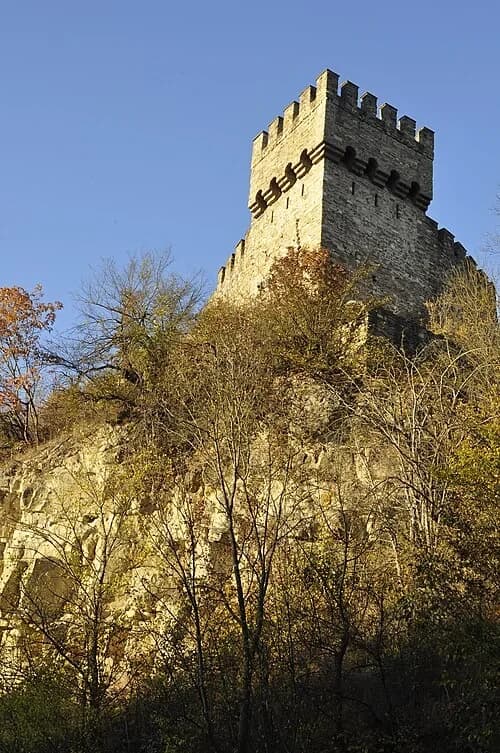
The Tower Ascent
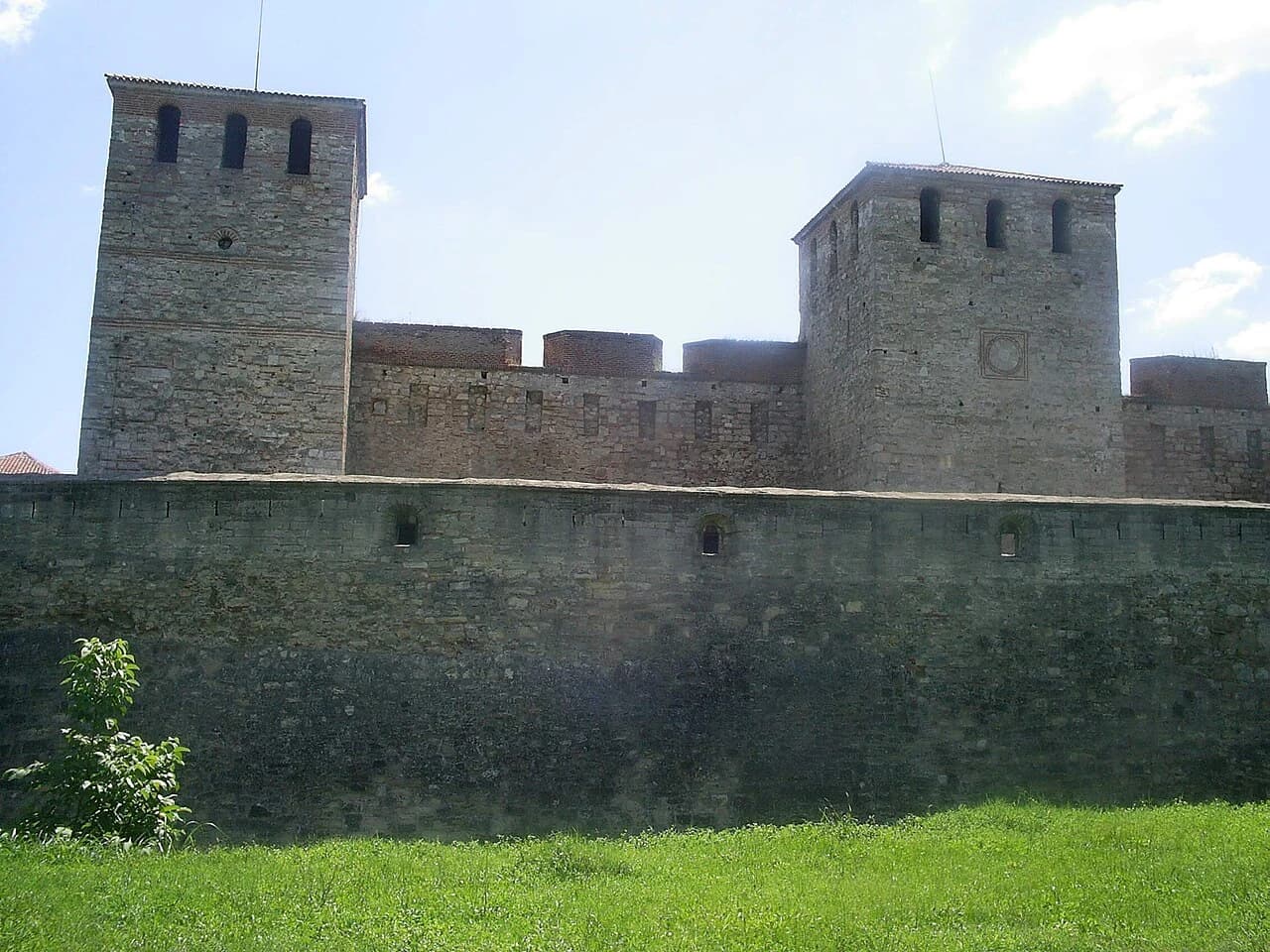
The tower you are viewing is a 20th-century reconstruction, carefully built to match the architectural style of the Second Bulgarian Empire. Architects used historical descriptions and archaeological evidence to recreate the specific features of medieval defense. Along the top, you can see the crenelations, which provided cover for soldiers while they launched projectiles. The narrow vertical openings in the stone are arrow slits, designed to allow a wide field of fire for archers while presenting a very small target to those on the ground. The exterior masonry uses the same techniques found in ruins across the hill, featuring layered stones and recessed mortar. This faithful restoration allows us to see how the fortress would have appeared to a medieval traveler approaching the gates. The tower's height was its primary asset, giving the garrison an advantage in both spotting threats and defending the walls. Inside, wooden floors and ladders once connected the different levels, allowing troops to move quickly during an assault.
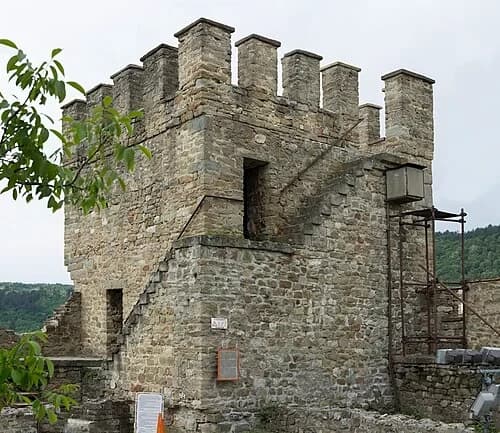
Baldwin’s Tower
The tower at this corner of the fortress is inextricably linked to the story of Baldwin I, the Latin Emperor of Constantinople. Following his defeat at the Battle of Adrianople in 1205, he was captured by the Bulgarian Tsar Kaloyan. Tradition holds that the emperor was brought back to the capital and imprisoned in a tower located on this exact spot. While he was a high-ranking prisoner of war, his fate remains shrouded in mystery and various conflicting historical accounts. Beyond the legend, the tower played a critical role in the fortress's defense system. It was positioned to guard the southern gate, monitoring traffic coming from the mountain passes to the south. Its height allowed archers to rain fire down on any force attempting to breach the entrance. The strategic importance of this corner is evident in the thickness of the masonry and the unobstructed views of the river bend below. Although the original medieval structure was eventually destroyed, its location remains a focal point for understanding the military interactions between the Bulgarian Empire and the Crusaders.
Medieval Siege Engines
Displays of reconstructed ballistae and catapults, illustrating the military technology used to defend and attack medieval strongholds.
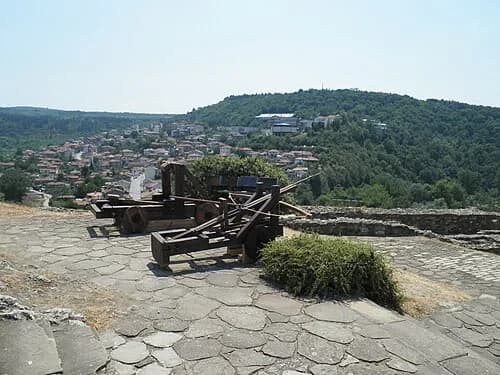
Medieval Ballistae
To protect a fortress as large as Tsarevets, the garrison relied on more than just high walls; they used sophisticated siege engines. These wooden ballistae are modern reconstructions based on historical designs. Such machines functioned like giant crossbows, using tension to launch heavy stone bolts or long arrows over great distances. They were typically positioned on the ramparts or in towers to maximize their range. From this elevated position, a ballista could strike targets moving through the valley or attempting to cross the Yantra River. The mechanical advantage provided by these weapons allowed a small number of soldiers to hold off much larger forces. The construction involved seasoned timber and iron reinforcements to handle the extreme forces of the tension cables. Soldiers trained extensively to calculate the trajectory and power needed to hit moving targets. Seeing these machines today helps us understand the level of technological sophistication present in the 13th and 14th centuries. They were the long-range artillery of their time, essential for maintaining security.
The Royal Palace Complex
The seat of power for Bulgarian kings, once covering nearly 5,000 square meters and containing the throne hall and royal chambers.
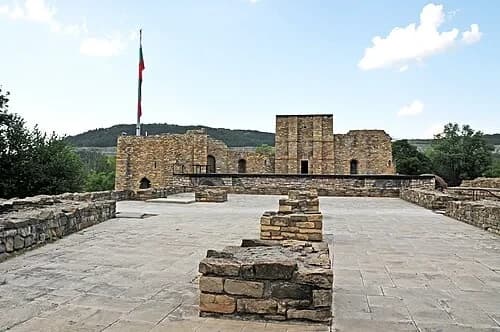
The Palace Courtyard
The open area before you was once the central courtyard of the palace, the focal point around which the most important buildings were arranged. To one side stood the grand throne hall, where official ceremonies took place, while the royal chambers provided the private living space for the Tsar's family. The complex also included a private church dedicated to the patron saint of the dynasty. Today, the Bulgarian national flag flies prominently over this terrace, marking the spot where the royal standard once signaled the presence of the monarch. The courtyard would have been a hive of activity, filled with court officials, guards, and servants. Excavations have revealed that the ground was likely paved with stone or bricks, creating a formal atmosphere for the imperial residence. During festivals or state visits, this space would have been decorated to impress visitors with the wealth and culture of the empire. Although the grand buildings are now reduced to foundations, the scale of the courtyard still gives a sense of the spaciousness and order that defined imperial life.
The Modernist Frescoes
The interior of the Cathedral features unique, non-traditional frescoes by Teofan Sokerov, depicting the tragic and glorious history of Bulgaria.
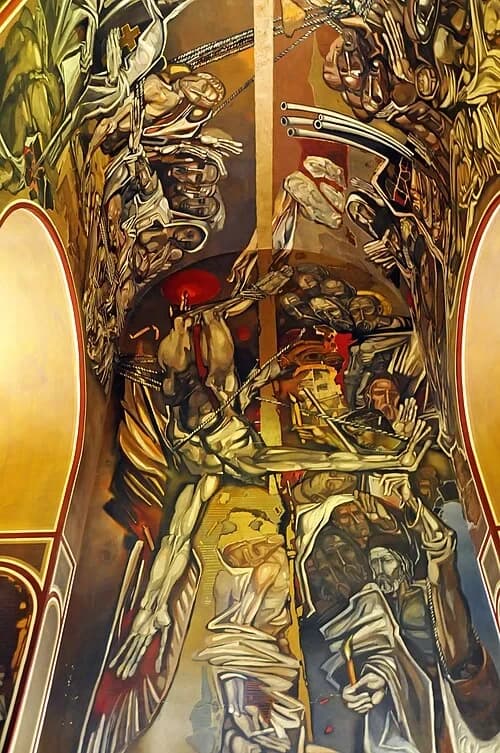
Modernist Interior Frescoes
Unlike any other Orthodox church you might visit in Bulgaria, the interior here is filled with murals that bypass traditional Byzantine iconography. Completed by artist Teofan Sokerov, these frescoes utilize a stark, modernist style characterized by expressive lines and a muted color palette. Sokerov’s intent was not to create a typical space for worship, but rather a monumental narrative of the Second Bulgarian Empire's rise and eventual tragic fall. You will notice that the figures are not static or serene; they are depicted with dynamic, often pained expressions that reflect the turbulence of the 13th and 14th centuries. The scale of the work is immense, covering nearly every square inch of the internal walls. By using contemporary artistic techniques rather than centuries-old religious templates, the murals create a direct emotional link to the historical events themselves. The artist focused on capturing the essence of historical struggle, heroism, and sorrow, turning the walls of the cathedral into a massive visual chronicle that feels more like a contemporary art gallery than a medieval chapel. Many visitors are surprised by the dark, intense atmosphere created by these scenes, which intentionally lack the gold leaf typically found in religious settings.
Execution Rock
A sheer cliff overlooking the Yantra River where traitors were historically pushed to their deaths as a form of medieval justice.
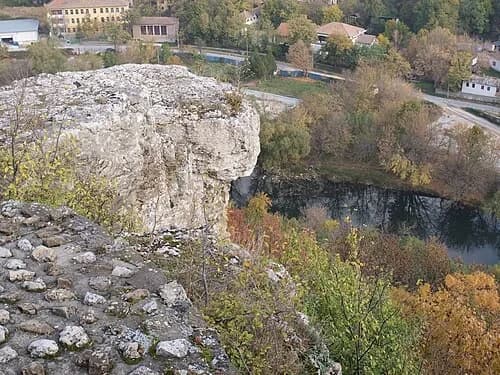
Execution Rock
Perched on the northern edge of the hill, this natural limestone formation is known as Execution Rock. It juts out precariously over the Yantra River, offering a direct vertical drop of dozens of meters. During the Middle Ages, this spot served as a site for capital punishment, specifically for those accused of high treason or political conspiracy against the Tsar. Rather than using the sword or the gallows, the condemned were brought to this windswept edge and pushed into the void. The execution was highly public, visible to those in the valley below, serving as a visceral deterrent to anyone considering rebellion. Historical accounts suggest that even high-ranking officials and disgraced nobles met their end here. The choice of the river as the final destination was symbolic, as the flowing water was thought to wash away the shame brought upon the state by the traitor’s actions. Today, the spot offers one of the most panoramic views of the river's horseshoe bend, but the height remains intimidating. The uneven surface of the rock and its exposed position make it a stark, unyielding feature of the fortress's natural defenses. Looking down, you can still see the churning white water where the river hits the base of the cliffs.
Want to hear the rest?
Download the Stanza app to unlock all 22 stops and full GPS-guided navigation.
Frequently Asked Questions
How long does the Крепост Царевец audio tour take?
The Крепост Царевец audio guide includes 22 narrated stops. Most visitors spend 45 minutes to 1.5 hours exploring the complete tour, though you can listen at your own pace and skip or revisit any stop.
Is the Крепост Царевец audio guide available in my language?
Stanza supports 15 languages: English, Spanish, French, German, Italian, Portuguese, Russian, Japanese, Chinese, Korean, Arabic, Hindi, Polish, Dutch, Hebrew. Check the guide in the app to confirm the languages currently available for this tour.
Can I use the audio guide offline at Крепост Царевец?
Yes! Download the complete Крепост Царевец tour — including all audio, maps, and images — before your visit. The Stanza app works completely offline, so you don't need WiFi or mobile data at the venue.
How much does the Крепост Царевец audio guide cost?
The Stanza app is free to download. Free and paid audio guides are available; current prices are shown in the app.
How do I use the Stanza audio guide at Крепост Царевец?
Download the free Stanza app, search for "Крепост Царевец", and download the tour. When you arrive at the venue, the app uses GPS to detect your location and automatically plays the relevant narration as you move between points of interest — completely hands-free.
What makes the Stanza audio guide different from other Крепост Царевец tours?
Stanza offers GPS-triggered narration that plays automatically as you walk through Крепост Царевец — no need to manually select stops. The tour is available in 15 languages, works fully offline, and includes 22 expertly narrated stops with images and historical context.
What other audio guides are available near Крепост Царевец?
Stanza offers multiple audio guides in Veliko Tarnovo, Bulgaria and nearby areas. After downloading the app, browse the map to discover all available tours near Крепост Царевец. Each guide can be downloaded for offline use.