Languages
15The Memorial Temple of the Birth of Christ Audio Guide
The Memorial Temple of the Birth of Christ is a landmark in Shipka, Bulgaria. Explore it with Stanza's GPS-triggered offline audio guide — available in 15 languages.
Quick Facts
14
Stops
15
Languages
100%
Offline
📍 Shipka, Bulgaria · 42.7161°N, 25.3290°E
About The Memorial Temple of the Birth of Christ
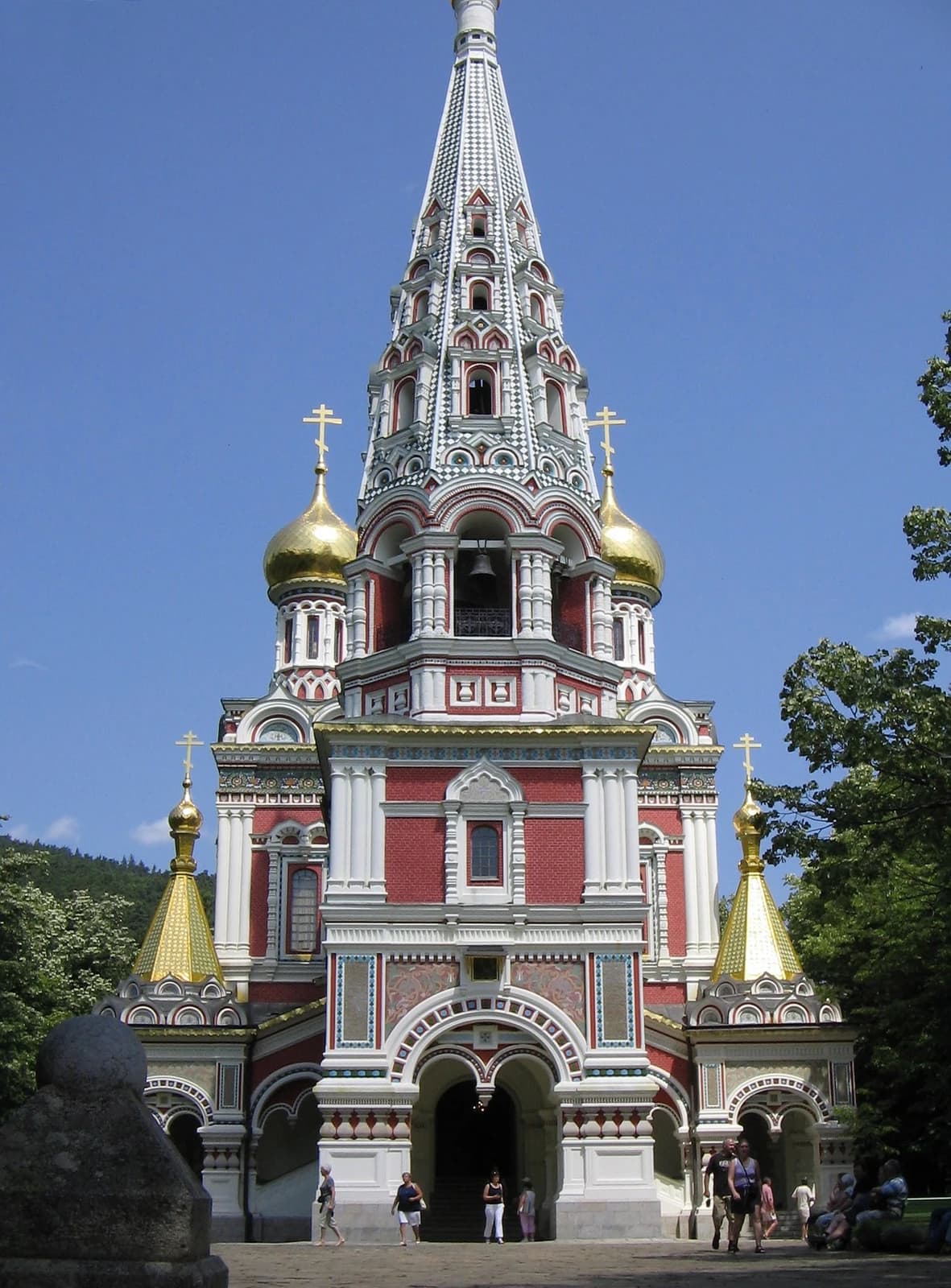
The Memorial Temple of the Birth of Christ, also known as the Shipka Memorial Church, is an Eastern Orthodox church building located near the town of Shipka, Bulgaria. It was built between 1885 and 1902 in the 17th-century Russian church style to commemorate Russian, Ukrainian and Bulgarian casualties of the Russo-Turkish War.
The Memorial Temple of the Birth of Christ is also known as Historical and Architectural Reserve "Shipka", Shipka Memorial Church.
This self-guided audio tour features 14 narrated stops organized across 7 sections. As a church, The Memorial Temple of the Birth of Christ offers a unique cultural experience in the heart of Shipka, Bulgaria.
The Stanza audio guide is available in 15 languages and works entirely offline — download the complete tour including audio narration, maps, and images before your visit. As you walk through The Memorial Temple of the Birth of Christ, GPS-triggered narration plays automatically at each point of interest.
Last updated:
What you will hear
The Ornate Western Facade
Focuses on the intricate craftsmanship of the main entrance, including the mosaics and stonework designed by Antoniy Tomishko.
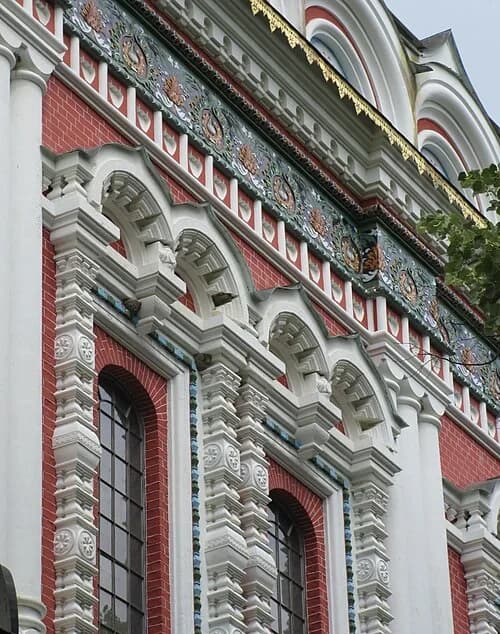
Ceramic and Brick Details
Moving your eyes along the side of the temple, the layered textures of the masonry become apparent. One of the most prominent features here is the use of 'kokoshnik' arches. These semi-circular decorative elements, named after traditional Russian headwear, are stacked in tiers to create a sense of upward movement and structural rhythm. These arches, along with the multicolored ceramic tiles integrated into the brickwork, are hallmarks of the Russian architectural tradition. The application of these delicate details was a painstaking process that contributed significantly to the nearly two-decade-long construction period. Each ceramic piece had to be fired and set with precision to survive the harsh mountain climate of the Shipka Pass. The alternating patterns of red brick and white stone bands create a visual texture that softens the massive scale of the walls. These elements were not just for show; they served to break up the flat surfaces and provide the building with a hand-crafted quality. The meticulous nature of this work underscores the devotion of the artisans who labored here, creating an exterior that remains as crisp and detailed today as it was over a century ago.
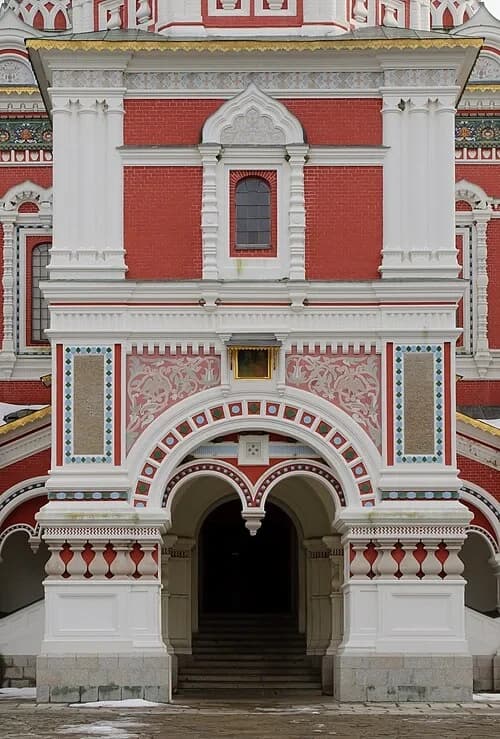
The Main Portico
Examining the western facade reveals the exceptional level of detail poured into the building's craftsmanship. The main portico is defined by its grand arches and rhythmic ornamentation. Architect Alexander Pomerantsev, who also designed the GUM department store in Moscow, oversaw the construction here to ensure every decorative element met the standards of a national monument. Above the arches, look for the colorful mosaic work and the varied geometric patterns that cover the pillars and trim. Each tile and carved stone was carefully placed to create a rich, tactile surface that changes as the sun moves across the sky. These features were designed to impress upon visitors the prestige of the site. The pillars themselves are shaped with distinctive bulbous bases and intricate capitals, a signature of the Russian style that differentiates this entrance from more austere classical designs. The combination of colorful masonry and repeating ceramic motifs provides a sense of layered complexity. This level of decorative intensity continues across the entire facade, turning the exterior walls into a sprawling canvas of late nineteenth-century artistic expression.
The Golden Domes of Shipka
Explains the symbolism and construction of the onion-shaped gold-plated domes, a signature element of the temple.
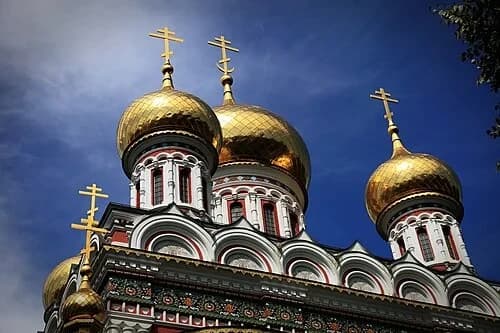
The Five Golden Domes
The arrangement of the five domes carries deep religious significance. The large central dome represents Jesus Christ, while the four smaller surrounding domes symbolize the four Evangelists: Matthew, Mark, Luke, and John. This traditional Orthodox configuration ensures that the primary figure of the faith is always central to the church's silhouette. Beyond their spiritual meaning, the distinctive onion shape of these domes serves a very practical purpose in this high-altitude environment. The steep, curved surfaces are designed to prevent the heavy snow of the Shipka Pass from accumulating on the roof. During the harsh mountain winters, the snow simply slides off, protecting the structure from the immense weight that could otherwise cause a collapse. This architectural feature is a classic adaptation found in northern climates, brought here to ensure the temple's longevity. The domes sit upon drum-like bases, which are themselves decorated with small windows and intricate arches, allowing the light to enter the interior from multiple heights. This combination of theology and engineering is a testament to the foresight of the architects who worked in this challenging alpine landscape.
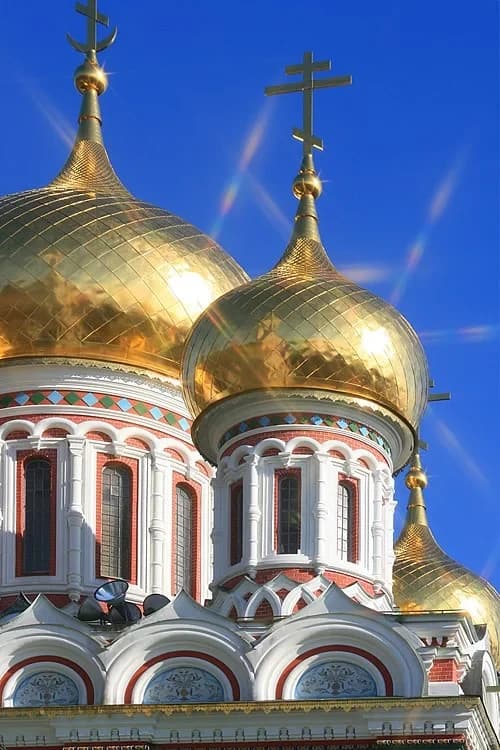
Reflection and Gold
The visual impact of the temple is greatly enhanced by the 24-karat gold plating found on each of its domes. This gold isn't just for decoration; it serves as a powerful symbol, reflecting the changing light of the Balkan Mountains throughout the day. On clear days, the domes catch the sun and can be seen as a brilliant beacon from the floor of the Kazanlak valley, miles below the Shipka Pass. This luminosity was intended to represent a light of peace and hope shining over a region once defined by the smoke and fire of battle. Over time, the gold has been meticulously maintained to preserve its luster against the elements. The way the light interacts with the faceted surfaces of the domes creates a dynamic appearance, shifting from a bright, mirror-like yellow at noon to a deep, warm orange during the golden hour of sunset. This constant play of light makes the building feel alive and ever-changing. The sheer amount of gold leaf used here reflects the immense financial contribution and national pride that funded the construction, turning the church into one of the most recognizable and revered landmarks in Bulgaria.
The Main Nave and Iconostasis
Moves the visitor inside to the spiritual center, focusing on the golden iconostasis and the atmosphere of Orthodox worship.
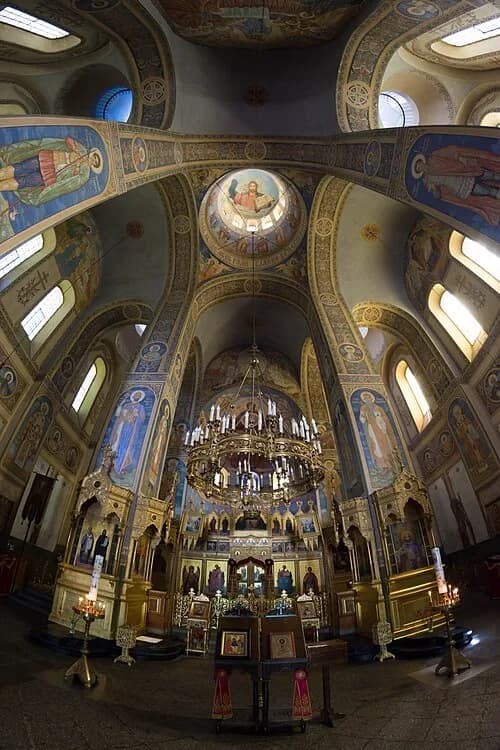
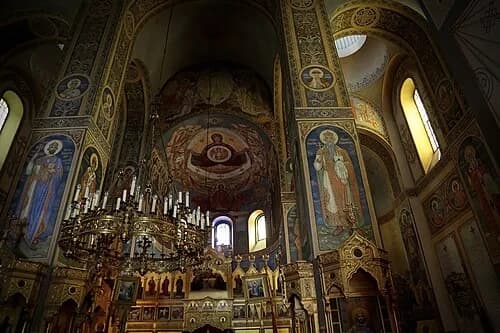
The Main Nave
Standing in the center of the main nave, the scale of the interior becomes fully apparent. The air often carries the faint, sweet scent of incense, a reminder of the many liturgies held here over the decades. Your eyes are naturally drawn upward by the towering verticality of the space, leading toward the central dome. Hanging from that height is a massive, ornate chandelier, which provides a focal point for the entire room. This interior was specifically designed to accommodate large crowds and formal ceremonies. This was especially important in 1902, when the temple hosted the major celebrations marking the twenty-fifth anniversary of the liberation battles at Shipka. The broad floor and high ceilings allow for excellent acoustics, essential for the choral music traditional in Orthodox services. The walls are covered in colorful frescoes, which soften the stone structure and fill the space with a sense of warmth and history. This nave serves as the heart of the memorial, where the religious and the national intersect. It is a place built for collective memory, designed to make every visitor feel small in the face of the monumental history it commemorates.
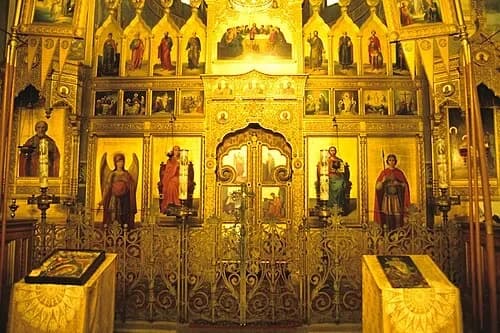
The Golden Iconostasis
Entering the church, the most striking feature is the iconostasis—the ornate, gilded screen that separates the nave, where the congregation stands, from the sanctuary behind the altar. This golden wall is entirely covered in intricately painted icons depicting saints and various biblical scenes. In Orthodox tradition, the iconostasis is more than just a partition; it is a gateway between the earthly and the divine. The surface is carved with delicate floral and geometric motifs, all heavily gilded to catch any available light. During services, the flickering flames of candles placed nearby dance across the golden surfaces, creating a shimmering effect that brings the static images of the saints to life. Each icon follows strict theological rules for composition and color, serving as a visual encyclopedia of the faith for worshippers. The central doors, known as the Royal Doors, are particularly ornate and are only opened during specific moments of the liturgy. The scale and richness of this work reflect the importance of the temple as a site of national and religious significance. The quiet, hallowed atmosphere within this space invites contemplation of the artistry and the spiritual traditions it represents.
The Celestial Interior Dome
Highlights the religious iconography and frescoes located high above the nave, specifically the image of Christ.
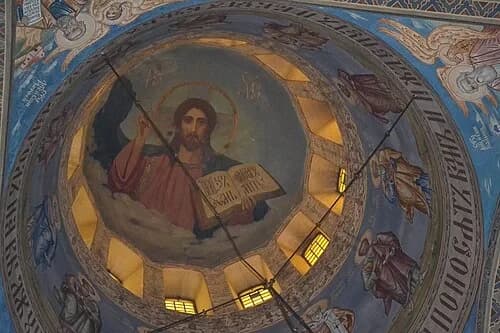
Christ Pantocrator Fresco
Looking directly up into the highest point of the central dome, you are met by the gaze of Christ Pantocrator. This title translates to 'Ruler of All,' and it is one of the most common and significant images in Orthodox iconography. In this traditional depiction, Christ is shown holding a book of scripture in one hand while his other hand is raised in a gesture of blessing. The artist used deep, rich blues for the background to represent the heavens, while gold leaf highlights the halo and the details of the robes. This fresco is surrounded by circular borders of decorative patterns and smaller figures, creating a complex celestial hierarchy that covers every inch of the ceiling. The perspective is designed so that from wherever you stand in the nave, it feels as though the figure is looking down upon you. The use of vibrant pigments has allowed the artwork to remain vivid for over a century. This central image serves as the spiritual crown of the temple, anchoring the various other decorative elements found throughout the building into a single, cohesive religious narrative that looks down over the site of the historic struggle for freedom.
The Memorial Walls of the Regiments
Dedicated to the 34 marble plates inscribed with the names of the fallen and the history of the 17 sarcophagi located in the crypt below.
Walls of Remembrance
Along the walls of the temple, you will find thirty-four marble plates that ground the spiritual beauty of the building in historical reality. These plates are inscribed with the names of the specific Russian regiments and Bulgarian volunteer units that participated in the defense of the Shipka Pass. Seeing these names transforms the church from a general monument into a very personal record of service. It is here that the temple's role as a memorial is most tangible. Each plate lists a unit that faced the brutal winter conditions and the intense combat of the 1877 to 1878 campaign. For many families, these inscriptions were the only physical recognition their loved ones ever received. The choice of marble for these lists ensures that the memory of these soldiers remains permanent and dignified. The plates are positioned so that visitors can read the names at eye level, encouraging a moment of quiet reflection on the scale of the human effort involved in the war. These walls serve as a permanent roll call for the thousands who fought, ensuring that their contribution to the nation's independence is never forgotten by those who pass through these doors.
The Bells of War and Peace
Explains the 53-meter bell tower and the powerful story of the bells cast from battlefield shell casings.
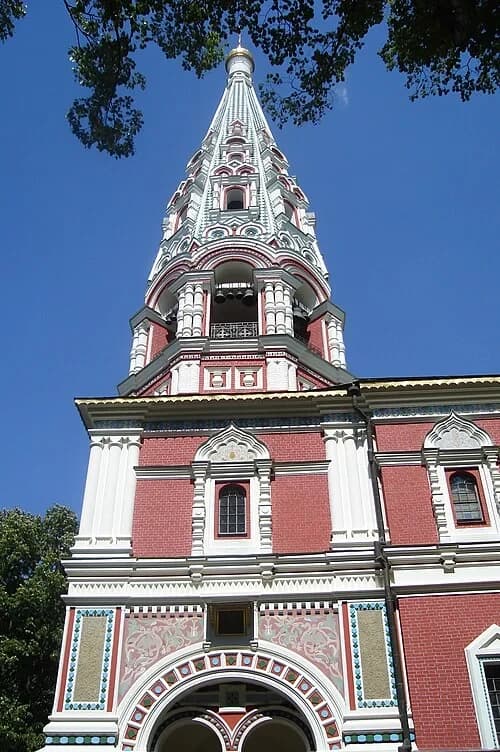
The Great Bell Tower
The Great Bell Tower is a dominant feature of the temple’s exterior, soaring to a height of fifty-three meters. As the highest point of the structure, it was intentionally designed to be a prominent landmark in the rugged landscape of the Balkan Mountains. The tower's height serves a functional purpose as well: it allows the sound of the bells to travel deep into the surrounding valleys and across the Kazanlak plain. In the silence of the mountains, the ringing from this height can be heard for miles, acting as a recurring acoustic reminder of the history this site commemorates. The architecture of the tower mirrors the rest of the building, with its tiered sections and intricate white and red brickwork. It is topped with its own golden dome and a cross, reaching toward the sky as a final exclamation point on the temple's design. The windows and open-air galleries near the top are specifically arranged to maximize the resonance of the bells held within. Standing at the base and looking up, you can appreciate the sheer engineering feat required to build such a tall, decorative structure on the steep mountain slopes in the late nineteenth century.
Final Reflection in the Church Grounds
Concludes the tour with a wide view of the church, reflecting on its status as a national monument and its place in the '100 Tourist Sites of Bulgaria'.
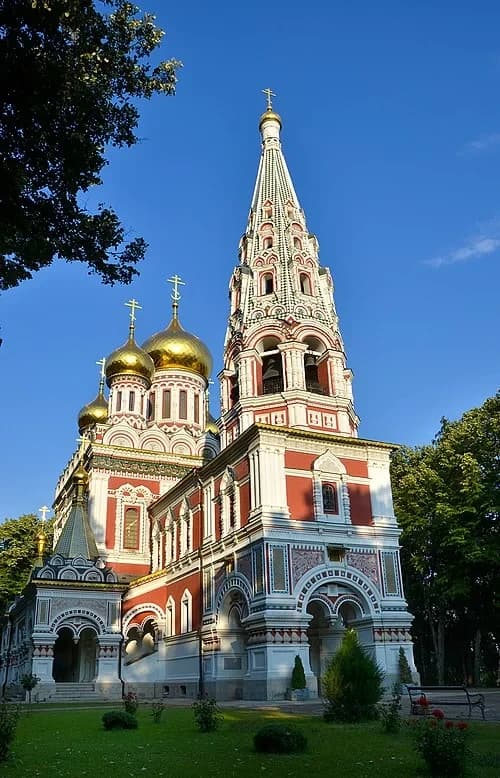
The Crypt and Legacy
As you walk through the temple gardens, it is worth noting that the memorial continues below the ground you stand on. Beneath the temple lies a somber crypt that houses seventeen stone sarcophagi. These contain the remains of the Russian and Bulgarian soldiers who fell in the defense of the pass. This final resting place makes the building a true mausoleum as well as a place of worship. The atmosphere in the gardens is typically quiet and reflective, providing a space to consider the long legacy of this site. In 1970, the temple was officially designated as a national monument of culture, ensuring its protection and preservation for future generations. It remains a key stop on the list of the 'One Hundred Tourist Sites of Bulgaria,' attracting visitors from across the country and the world. The legacy of the temple is tied not just to the events of 1878, but to its continued role as a symbol of international friendship and national identity. The site stands as a permanent fixture in the Bulgarian landscape, bridging the gap between the historical battles of the nineteenth century and the modern state that grew from those sacrifices.
Want to hear the rest?
Download the Stanza app to unlock all 14 stops and full GPS-guided navigation.
Frequently Asked Questions
How long does the The Memorial Temple of the Birth of Christ audio tour take?
The The Memorial Temple of the Birth of Christ audio guide includes 14 narrated stops. Most visitors spend 45 minutes to 1.5 hours exploring the complete tour, though you can listen at your own pace and skip or revisit any stop.
Is the The Memorial Temple of the Birth of Christ audio guide available in my language?
Stanza supports 15 languages: English, Spanish, French, German, Italian, Portuguese, Russian, Japanese, Chinese, Korean, Arabic, Hindi, Polish, Dutch, Hebrew. Check the guide in the app to confirm the languages currently available for this tour.
Can I use the audio guide offline at The Memorial Temple of the Birth of Christ?
Yes! Download the complete The Memorial Temple of the Birth of Christ tour — including all audio, maps, and images — before your visit. The Stanza app works completely offline, so you don't need WiFi or mobile data at the venue.
How much does the The Memorial Temple of the Birth of Christ audio guide cost?
The Stanza app is free to download, and the The Memorial Temple of the Birth of Christ audio guide is currently listed as free.
How do I use the Stanza audio guide at The Memorial Temple of the Birth of Christ?
Download the free Stanza app, search for "The Memorial Temple of the Birth of Christ", and download the tour. When you arrive at the venue, the app uses GPS to detect your location and automatically plays the relevant narration as you move between points of interest — completely hands-free.
What makes the Stanza audio guide different from other The Memorial Temple of the Birth of Christ tours?
Stanza offers GPS-triggered narration that plays automatically as you walk through The Memorial Temple of the Birth of Christ — no need to manually select stops. The tour is available in 15 languages, works fully offline, and includes 14 expertly narrated stops with images and historical context.
What other audio guides are available near The Memorial Temple of the Birth of Christ?
Stanza offers multiple audio guides in Shipka, Bulgaria and nearby areas. After downloading the app, browse the map to discover all available tours near The Memorial Temple of the Birth of Christ. Each guide can be downloaded for offline use.