Stanza · Audio guide
Nicopolis ad Istrum Audio Guide
A place to remember. A story to take with you.
Nicopolis ad Istrum was a Roman and Early Byzantine town. It is an ancient Roman city located in Bulgaria.
Download Stanza, then search for “Nicopolis ad Istrum”.
About the tour
One guide. Your kind of visit.
Nicopolis ad Istrum was a Roman and Early Byzantine town. It is an ancient Roman city located in Bulgaria.
Ready when you are.
- 01Get the free Stanza app.
iOS & Android
- 02Find your guide.
“Nicopolis ad Istrum”
- 03Download before you go.
Works offline
Audio guide / 11 narrated stops
Inside the guide
Get to know a few of the stories before you go. Open a stop to read more.
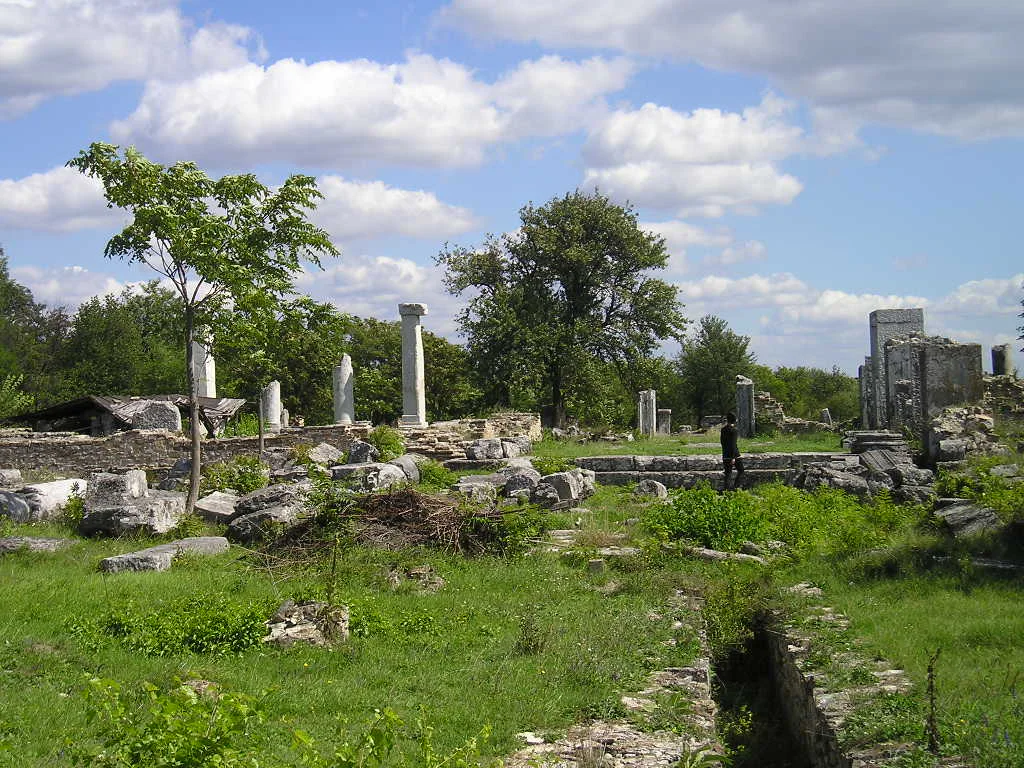
01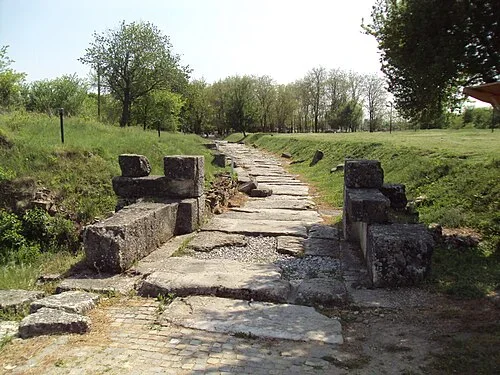 The North Gate and Trajan's Imperial Foundation
The North Gate: Trajan's Victory City
Welcome to Nicopolis ad Istrum, a Roman city born from a war on the Danube frontier. In the winter of 101 to 102, Emperor Trajan massed his army where the Yantra and Rositsa rivers meet. Across the water waited the Roxolani, a tribe from north of the Danube allied to the Dacians. Trajan defeated them, and won further victories a few years later. To mark those wins he founded a city on this spot, sometime between 102 and 106. Trajan's Column in Rome shows the wars, and ties the founding to them. He named the place Ulpia Nicopolis, Ulpia being his own family name and Nicopolis meaning victory city. Early geographers knew it by another name, Nicopolis ad Haemum. This was never a soldiers' camp. It was laid out as a real Roman town, with streets, public buildings and room for civilians to live. The stone gate once framed the road into that city. Its story runs from imperial triumph to slow decline.
Photo: Vislupus · CC BY-SA 4.0
02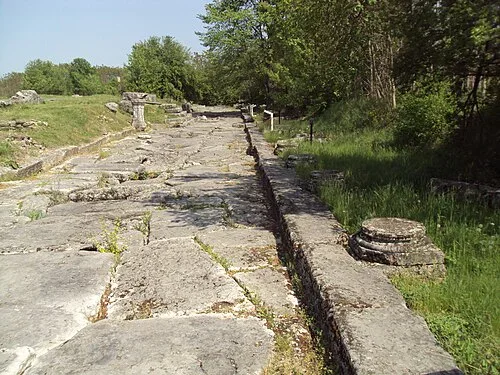 The Decumanus and Subterranean Drainage Network
The Paved Street and the Orthogonal City
Roman town planners drew Nicopolis before anyone laid a stone. The city followed the orthogonal system, streets crossing at right angles in a strict grid, a design the Romans borrowed from the Greeks. One of its main streets ran north to south, and this paving carried the traffic. The slabs are massive blocks of limestone, laid to take cartwheels and boots for centuries. Stone bases along the edges once carried columns. What the builders produced here, in architecture and sculpture alike, closely resembles the cities of Roman Asia Minor. That likeness tells you this was a designed provincial showcase, not a settlement that grew lane by lane. At the center of the grid sat the forum, the city's public heart.
Photo: Vislupus · CC BY-SA 4.0
03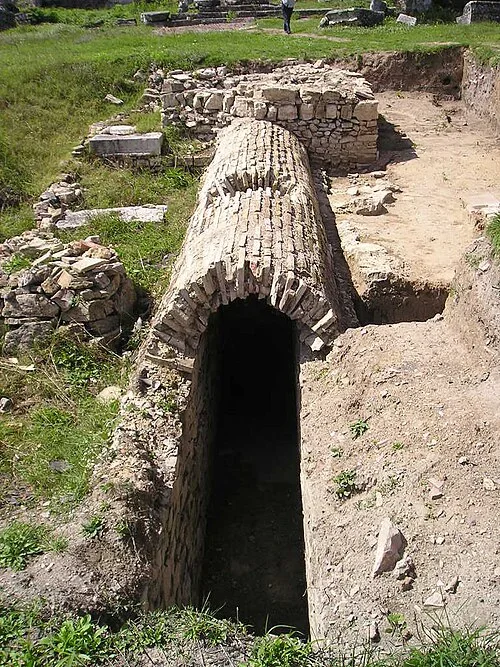 The Decumanus and Subterranean Drainage Network
Underground: The City Drain and the Aqueducts
Ancient cities lived and died by water, and Nicopolis was engineered for both ends of it. The brick-vaulted conduit in the trench is the city's main drain, carrying off what the streets shed. Supply came from three aqueducts. The western one ran twenty-five kilometers to reach the city. Where it crossed the valley of the Rositsa, its bridge stretched nearly three kilometers long. It stood almost twenty meters tall. Its water was gathered near the town of Musina, where springs still rise inside the Musina Cave. Wells inside the city have been unearthed as well, many of them. A large water distribution station of the western line still stands west of the city, beyond the excavated center. Drain and supply, rain and spring water: the quiet engineering that kept a Roman town alive.
Listen in the appPhoto: Nk · Public domain
04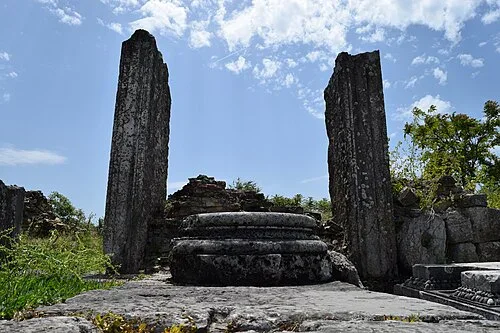 The Central Forum and Ionic Stoa
The Forum: Heart of the City
The forum was the public heart of any Roman city, and Nicopolis had a fine one. Assembly, law, commerce and ceremony all happened in this one square. The tall stone jambs framed one of its entrances, and beyond them opened a space ringed by an Ionic colonnade. Among its marble statues stood the most telling of all, a statue of Trajan on horseback. An image of the city's founder, set up where every citizen came to do business, was imperial favor made visible. Statues like that were more than decoration. They reminded everyone who had given them the city, and whose goodwill kept it prospering. Markets, announcements, deals and gossip all passed beneath the founder's gaze.
Listen in the appPhoto: Vislupus · CC BY-SA 4.0
05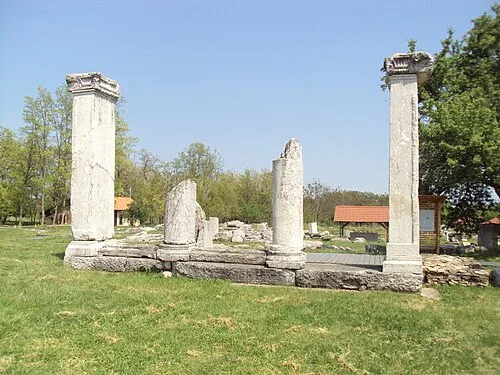 The Central Forum and Ionic Stoa
The Ionic Colonnade and the Monumental City
The founder laid out Nicopolis, but its grandest face arrived a generation later. The monumental building visible in the ruins dates mainly to Hadrian and Antoninus Pius, emperors from 138 to 161. The carved inscriptions found here go no earlier than 136, by which time the full name Ulpia Nicopolis ad Istrum was in use. In that building phase the agora gained a monumental Ionic stoa, a covered walkway framed by columns. The Ionic order is easy to spot. Each capital curls into a pair of scroll shapes, like a ram's horns. Beside the stoa rose a sumptuous hall, built with obvious expense, and its function is simply unknown. Whatever happened inside it, the hall was meant to impress. Under Hadrian and his successors, the victory foundation matured into a showpiece of the Danube provinces.
Listen in the appPhoto: Vislupus · CC BY-SA 4.0
06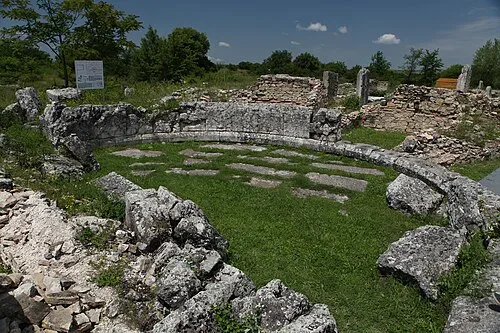 The Odeon and Bouleuterion
The Odeon: Council and Performance
A Roman city ran on talk as much as on trade. Among the public buildings of Nicopolis stood a bouleuterion, the council chamber where the city's decisions were made, and beside it a small odeon. In an odeon, the seating curved around a modest stage in a tight semicircle. The rows were close enough for an ordinary voice to carry without effort. Buildings of this type hosted civic gatherings and intimate performance, music and recitation rather than spectacle. The great dramas belonged to the open-air theatres of other cities; a hall like this suited quieter work. No programme for it survives, so the curved seats themselves are the best evidence of its scale.
Listen in the appSimeon Goranov · CC BY-SA 4.0
07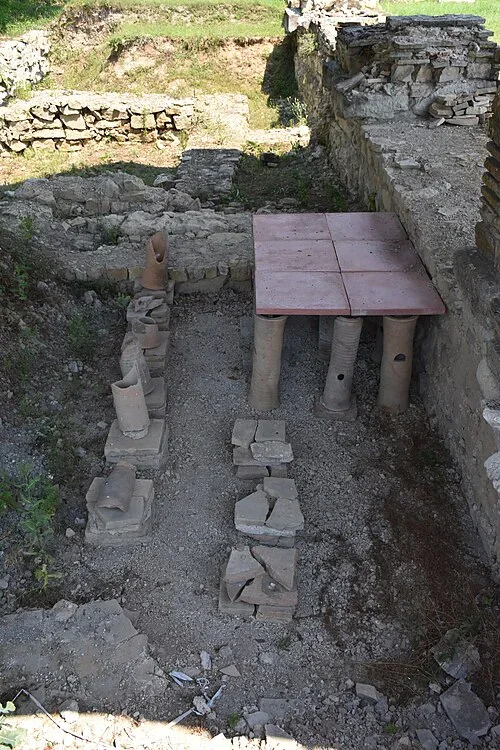 The Thermoperipatos Heated Walking Complex
The Thermoperipatos: A Building Unique in the Empire
The Roman Empire had thousands of cities, and exactly one of them, so far as is known, has given up a thermoperipatos. The word means something like a heated promenade, and this building filled an entire city block. It went up under Commodus in the years 184 and 185, on the ruins of an earlier structure. The heating system lies open in the excavation. Floors were raised on short pillar-like stacks of tile. Hot air from a furnace circulated in the space beneath, and ceramic pipes carried warmth up through the walls. It is the same principle that warmed Roman baths, applied here to a whole public building. The thermoperipatos was probably used for trading, and shops lined it. A heated indoor street with shops: no other city in the empire has produced one.
Listen in the appVladislav Nedelev · CC BY 4.0
08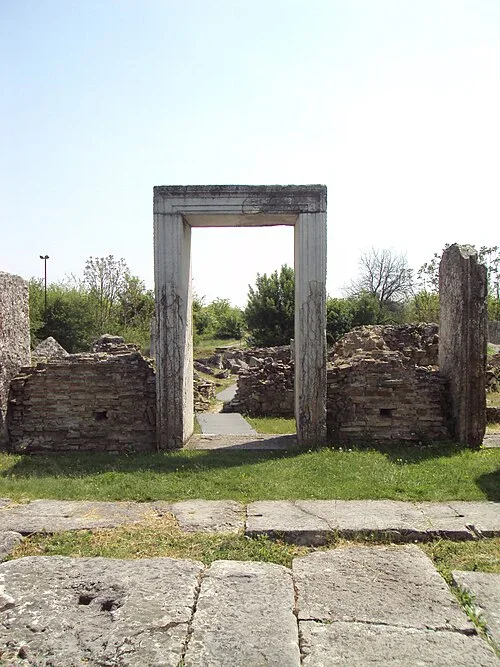 The Thermoperipatos Heated Walking Complex
Shops and Strolls: Inside the Thermoperipatos
What people did inside the thermoperipatos was practical. Shops ran along its walks, so shopping, business meetings and strolling all happened under one warm roof. The enclosed space gave townspeople somewhere to walk and talk when the weather turned bad. Commerce carried on in comfort, all year round. The city around it kept growing, and under Diocletian's reforms Nicopolis developed further as a major urban center. But the thermoperipatos itself did not last. It was ruined in the fourth century, and later another building was put up right over it. Its doorway and heated halls passed out of use, and the city built over its own most original invention.
Listen in the appPhoto: Vislupus · CC BY-SA 4.0
09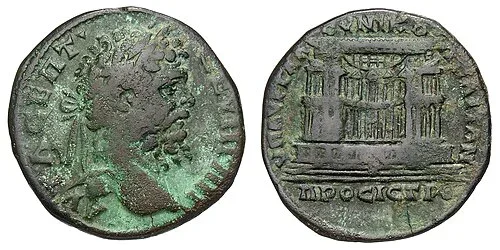 The Civic Mint and Imperial Coinage
The City's Coins and Caracalla's Wrath
A small bronze coin can carry a city's political fortunes, and this one does. In the year 198, the emperors Septimius Severus and Caracalla wrote to the city with thanks. Its people had held a festival celebrating their victory over the Parthians, and sent a substantial gift of money. The gesture may have been aimed at winning favor, perhaps even a coveted honor. Then the relationship soured. Caracalla visited the city in 211 or 212, and left displeased. He closed the city's mint, and from about 212 the honorary title Ulpia, Trajan's family name, vanished from public inscriptions. The city lost its rank as a tributary city, the civitas stipendaria, and its prosperity went with it. After Caracalla's death the city staged games for the new emperor and seems to have won back its civic status, though never its full name. The mint reopened, striking coins that showed the city's own public buildings. On the reverse of this piece a many-columned structure stands beneath the Greek letters naming the people, the Nicopolitans. The city advertising itself, in bronze, to everyone who handled its money.
Listen in the appReinhard Saczewski · Public domain
10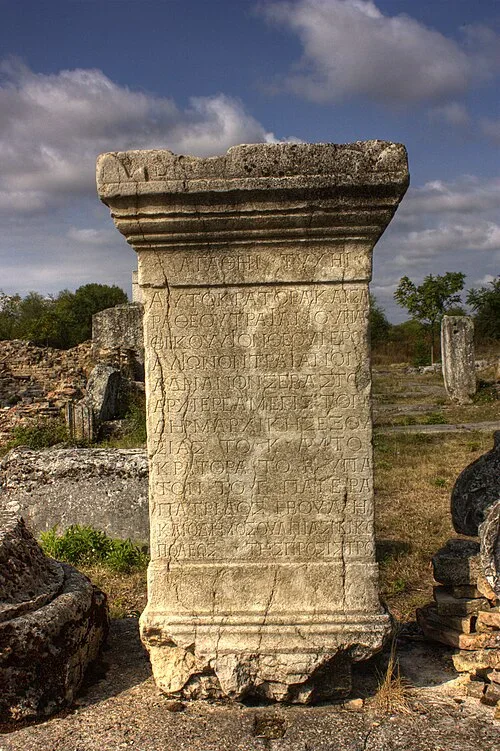 Epigraphy and the Gothic Legacy of Bishop Ulfilas
The Written Word: Greek Inscriptions and Bishop Ulfilas
Stone after stone at Nicopolis carries Greek lettering, cut for a city that did its public writing in Greek. The letters on this tall stele are worn now, but inscriptions like it were how the city spoke in public. In the fourth century, that Greek-written world produced something unexpected: the beginning of Germanic literature. The Gothic bishop Ulfilas, a missionary to his people, obtained permission from Emperor Constantius II to settle with his flock of converts in Moesia. He came in 347 or 348, near Nicopolis. There he devised the Gothic alphabet, and oversaw a group of scholars translating the Bible from Greek into Gothic. The translation drew directly on the Greek texts and Greek learning that flourished around this city. That is why Nicopolis ad Istrum can be called the birthplace of the Germanic literary tradition.
Listen in the appKlearchos Kapoutsis from Santorini, Greece · CC BY 2.0
- 11
The Shrunken Fortress: How the City Ended
Attila's Huns, and the shrunken fortress built from the rubble of the classical city.
Nicopolis ad Istrum
Frequently asked questions
How much does the guide cost?
Free app download. Listed guide price: $0.99. Guide price shown in the app. Audio guide only. Venue admission is separate.
Can I listen without internet?
Yes. Download the guide’s audio, images, and maps in the app before your visit. Your downloaded content is then available offline.
Can I listen in my language?
This audio guide is available in 15 languages, including English.
Do I need to follow a schedule?
No. This is a self-guided experience. Choose your stops, pause whenever you like, and return to a story at your own pace.
At your own pace
Explore Nicopolis ad Istrum.
Download Stanza, then search for “Nicopolis ad Istrum”.
Free app download · Guide price shown in the app
Keep exploring
Nearby audio guides
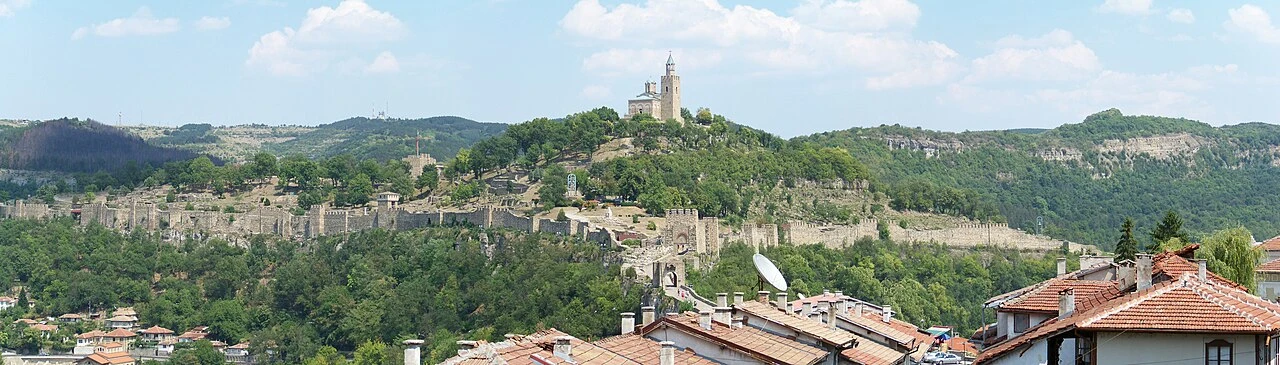
Veliko Tarnovo · 15 km
Tsarevets Fortress
Content & sources
www.vacacionesbulgaria.com · CC BY-SA 4.0
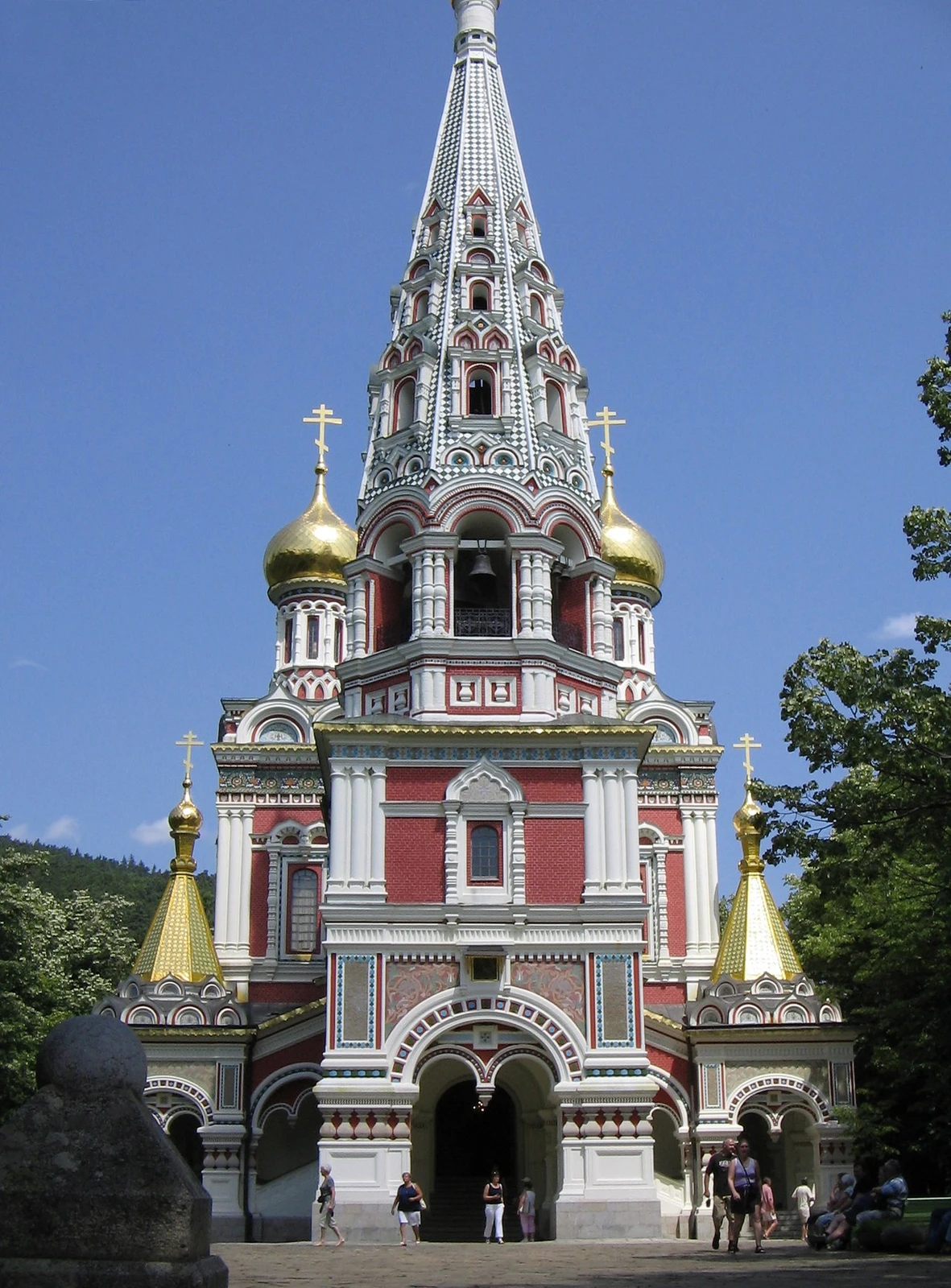
Shipka · 60 km
The Memorial Temple of the Birth of Christ
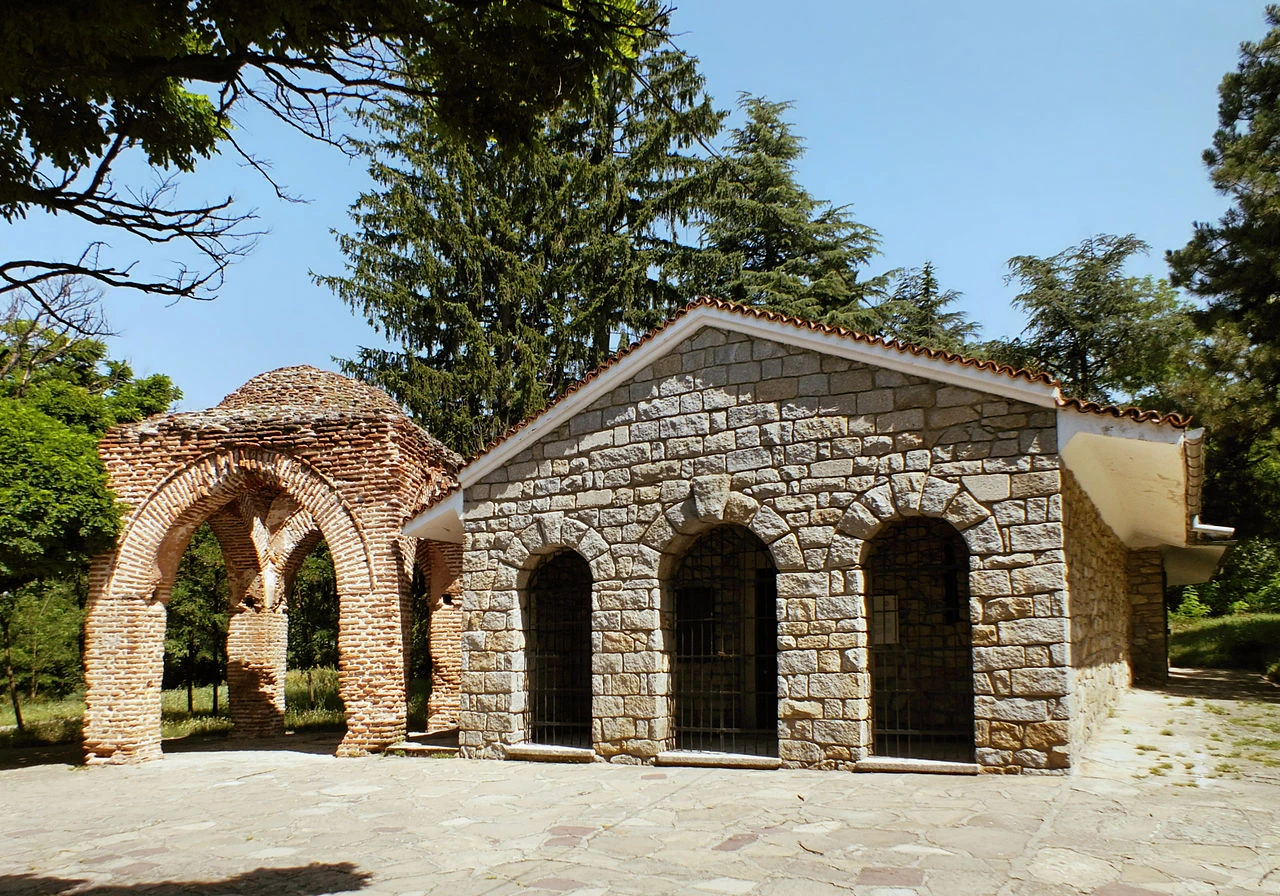
Kazanlak · 68 km
Thracian Tomb of Kazanlak
Content & sources
Photo: Roweromaniak · CC BY-SA 3.0
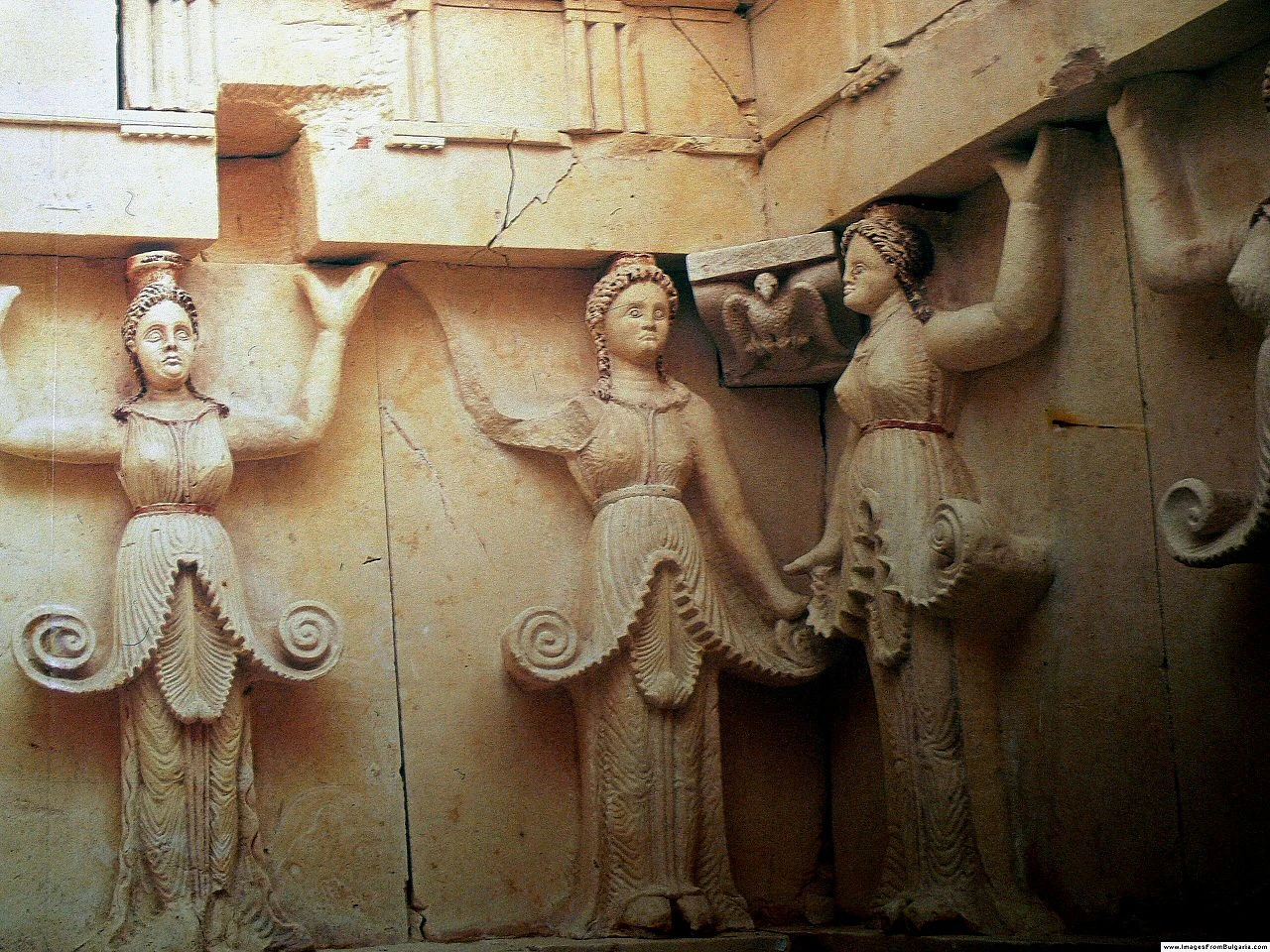
Malak Porovets · 110 km
Thracian Tomb of Sveshtari
Content & sources
Photo: Martyr · CC BY 2.5