Stanza · Audio guide
Thracian Tomb of SveshtariAudio guide
A place to remember. A story to take with you.
An ancient Thracian tomb located near Sveshtari, Bulgaria. This UNESCO World Heritage site is renowned for its unique architectural decoration and archaeological significance.
Download Stanza, then search for “Thracian Tomb of Sveshtari”.
About the tour
One guide. Your kind of visit.
An ancient Thracian tomb located near Sveshtari, Bulgaria. This UNESCO World Heritage site is renowned for its unique architectural decoration and archaeological significance.
Ready when you are.
- 01Get the free Stanza app.
iOS & Android
- 02Find your guide.
“Thracian Tomb of Sveshtari”
- 03Download before you go.
Works offline
Audio guide / 3 narrated stops
Inside the guide
Get to know a few of the stories before you go. Open a stop to read more.
01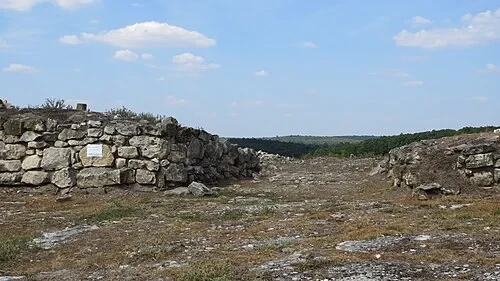 The Ancient City of HelisThe City of Helis
Welcome to one of the most significant archaeological landscapes in the Balkans. The tomb you see today is not an isolated monument standing alone; instead, it served as a vital part of a vast 647-hectare necropolis. This extensive city of the dead was situated near the ancient Getic capital of Helis. Looking at the visible stone ruins of the city entrance, you can begin to ground yourself in the physical reality of the Getae, a powerful Thracian tribe that once dominated this region. While the living residents of Helis relied on massive stone walls for protection, their most enduring and impressive architectural legacy was intentionally hidden away beneath the earth. Scattered across the horizon are numerous burial mounds, or tumuli, which shielded these sacred spaces from the outside world for millennia. The Getae believed in the immortality of the soul, and these elaborate subterranean structures were designed to bridge the gap between the earthly realm and the divine. As you look across the rugged terrain, notice how the natural hills blend with these man-made mounds. The stone blocks of the city gate indicate a sophisticated urban center that existed long before the tomb was rediscovered.
The original uploader was Octopus at Slovenian Wikipedia. · CC BY-SA 3.0
02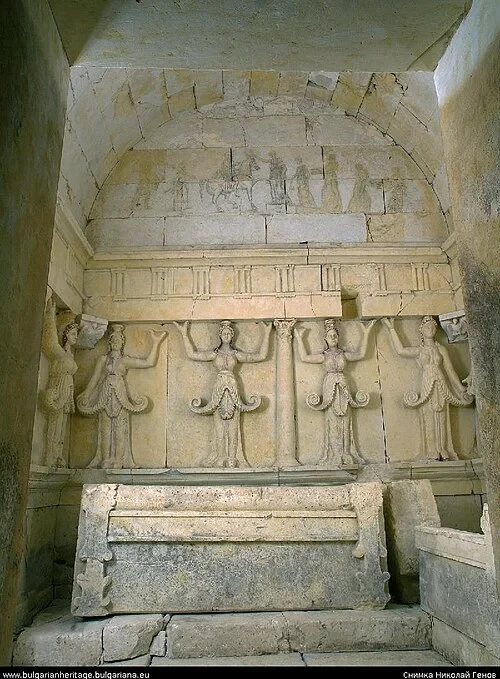 The Royal Burial ChamberThe Royal Burial Chamber
Entering this chamber is like stepping back into the first quarter of the 3rd century BCE. This remarkable structure lay hidden and forgotten inside Mound Number 7 until its accidental discovery by archaeologists in 1982. The interior is defined by massive limestone blocks fitted together with precision, supporting a heavy vaulted ceiling that creates an intimate yet grand atmosphere. If you look toward the lunette—the semi-circular space above the decorative figures—you will see an unfinished mural. This painting depicts a scene of investiture: a rider on horseback is being crowned by a goddess. Scholars believe the rider represents the Getic King Dromichaetes, a famous ruler of the Getae tribe. The fact that the mural remains unfinished provides a poignant snapshot of a moment interrupted by history. The sudden sealing of the tomb, perhaps due to the king's death or an external threat, preserved the interior exactly as it was left 2,300 years ago. This isolation meant that the colors, carvings, and architectural details were protected from the erosive forces of wind, rain, and looters. Each block and brushstroke remains a direct link to the Hellenistic era.
Николай Генов · CC BY 3.0
03 The Ten CaryatidsThe Ten Caryatids
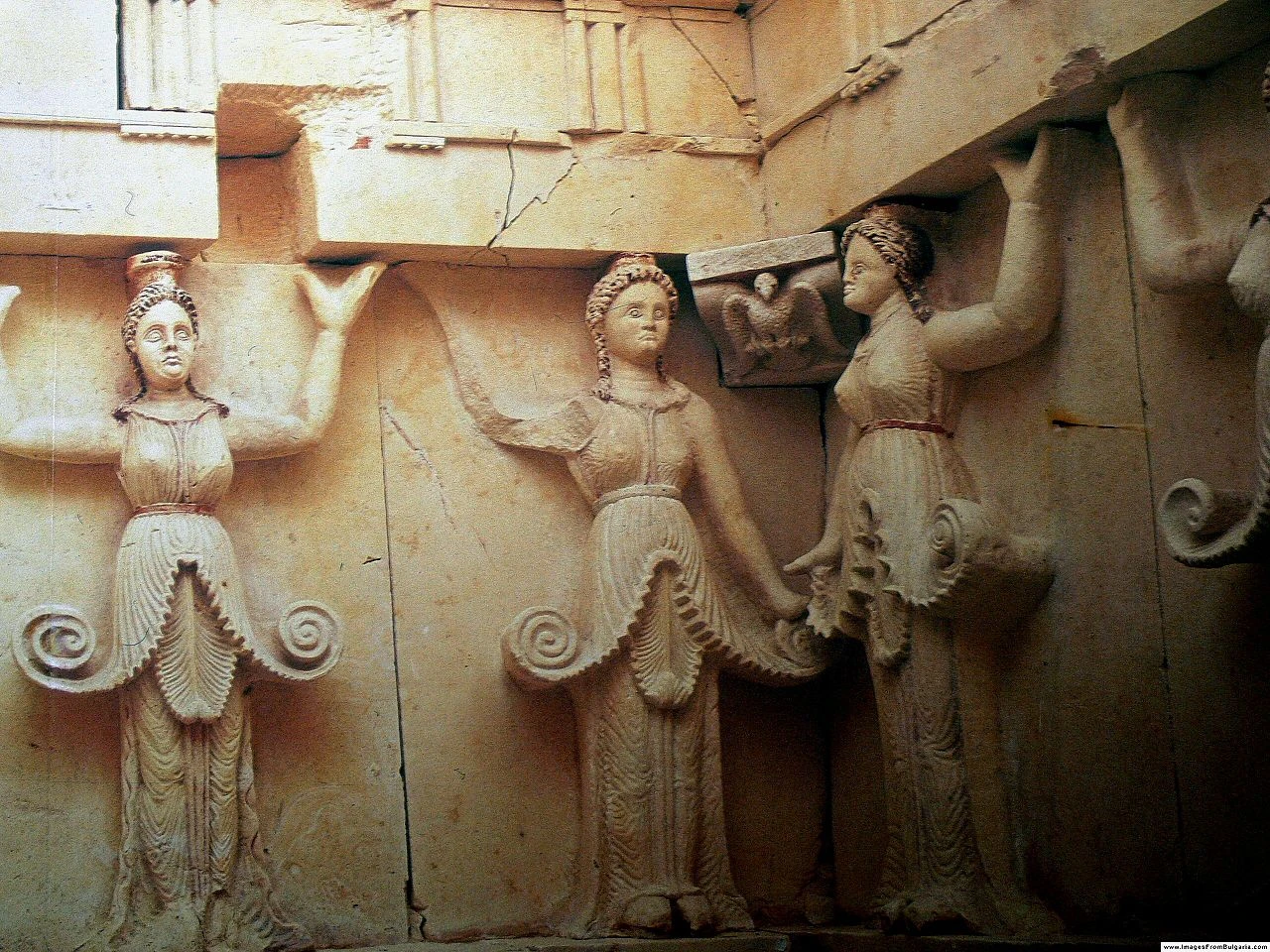
The most striking feature of this chamber is the presence of ten female figures, known as caryatids, which appear to support the weight of the architrave. These figures are unique in the world of Thracian art due to their highly specific decorative style. Unlike traditional Greek caryatids that resemble standard human women, these figures blend human forms with botanical elements. Notice the skirts of their dresses, which are sculpted to resemble inverted acanthus leaves, curling outward in elegant, organic spirals. Their arms are raised high, creating a rhythmic pattern that encircles the room. This specific artistic treatment is found nowhere else in Thracian lands, representing a rare and sophisticated fusion of local Getic traditions and Hellenistic influences. This exceptional artistry and the tomb's impeccable state of preservation are why the site was inscribed as a UNESCO World Heritage Site in 1985. The figures were originally painted, and traces of blue, red, and yellow pigment can still be seen on their garments. Rather than being mere structural supports, they act as silent participants in the royal ritual depicted in the mural above. The repetition of the figures adds a sense of movement and ceremony to the static stone walls.
Listen in the appPhoto: Martyr · CC BY 2.5
Thracian Tomb of Sveshtari
Frequently asked questions
How much does the guide cost?
Free app download. Listed guide price: $0.99. Guide price shown in the app. Audio guide only. Venue admission is separate.
Can I listen without internet?
Yes. Download the guide’s audio, images, and maps in the app before your visit. Your downloaded content is then available offline.
Can I listen in my language?
Stanza supports 15 languages. Check the app for the languages available for this guide.
Do I need to follow a schedule?
No. This is a self-guided experience. Choose your stops, pause whenever you like, and return to a story at your own pace.
At your own pace
Explore Thracian Tomb of Sveshtari.
Download Stanza, then search for “Thracian Tomb of Sveshtari”.
Free app download · Guide price shown in the app
Keep exploring
Nearby audio guides
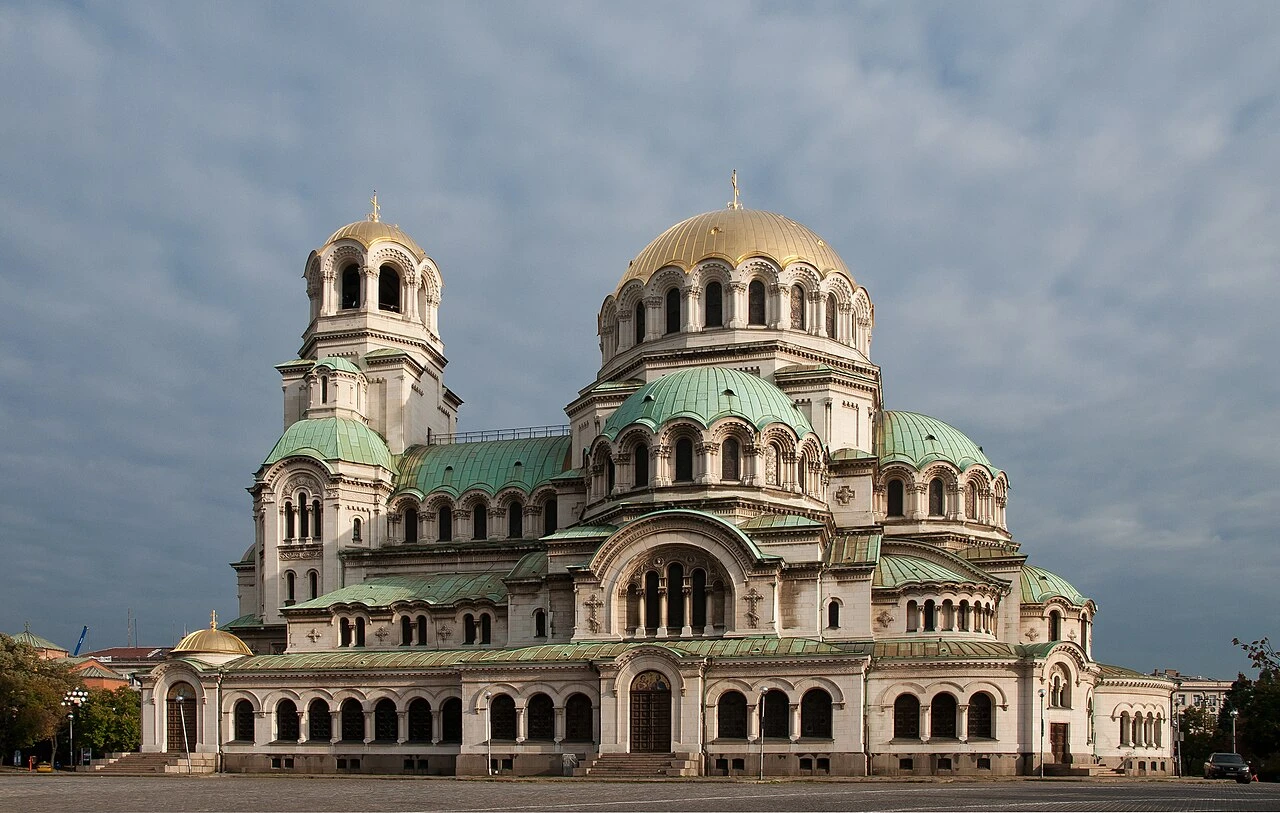
Sofia
Alexander Nevsky Cathedral
Content & sources
Plamen Agov (user:MrPanyGoff) · CC BY-SA 4.0
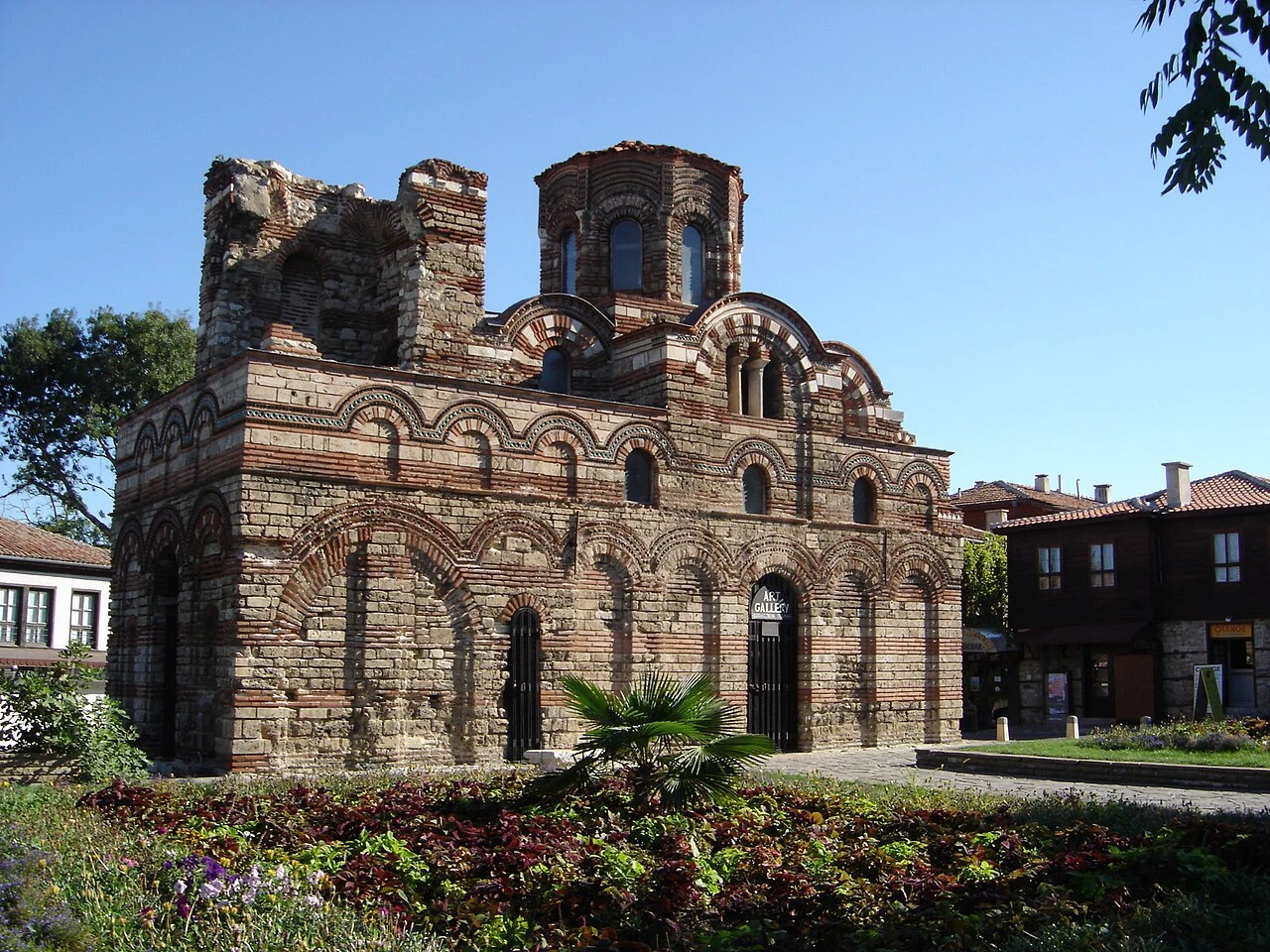
Nesebar
Ancient City of Nessebar
Content & sources
Photo: Gérard Janot · CC BY-SA 3.0
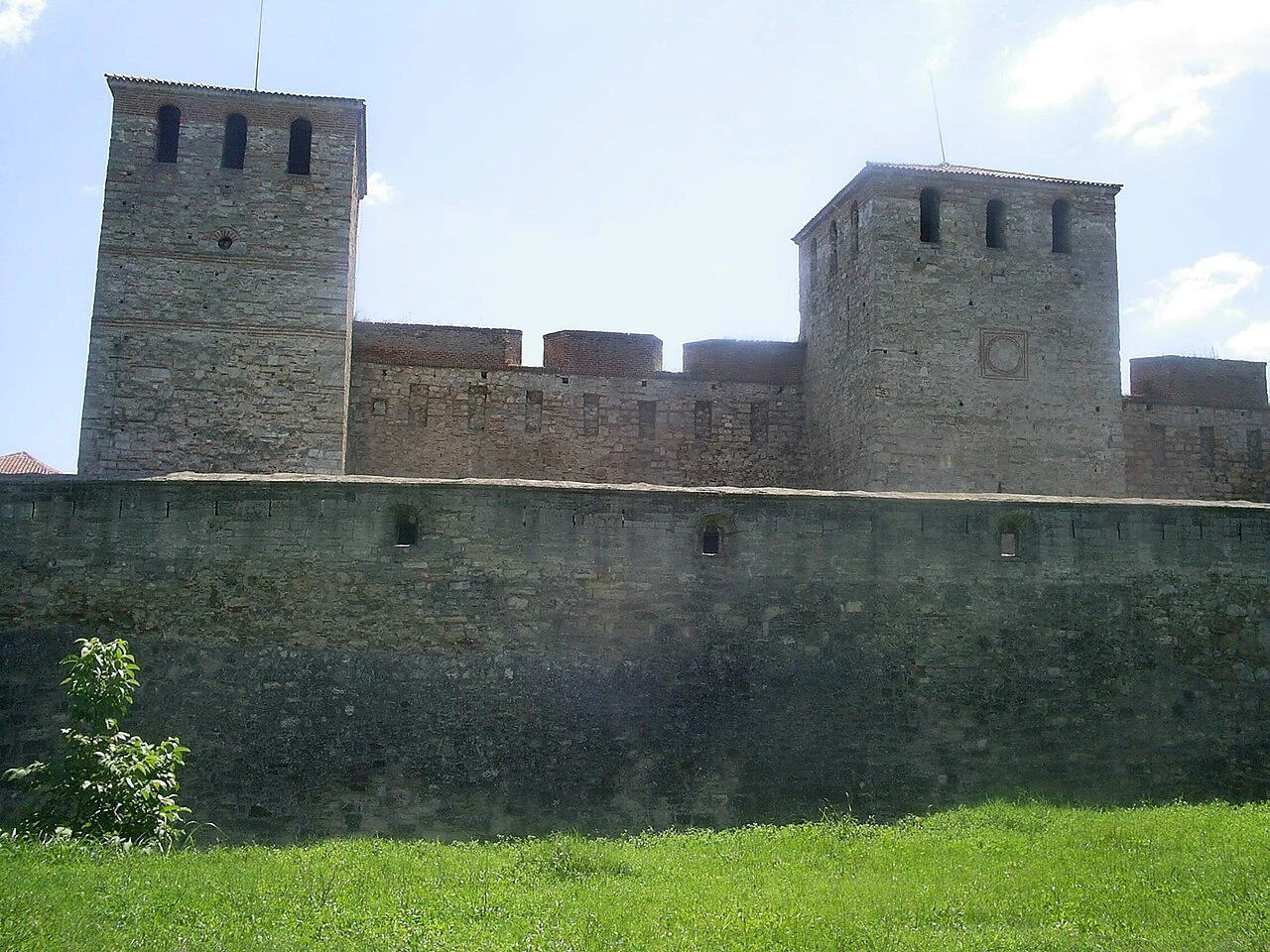
Vidin
Baba Vida Fortress
Content & sources
Photo: Martyr · CC BY-SA 3.0
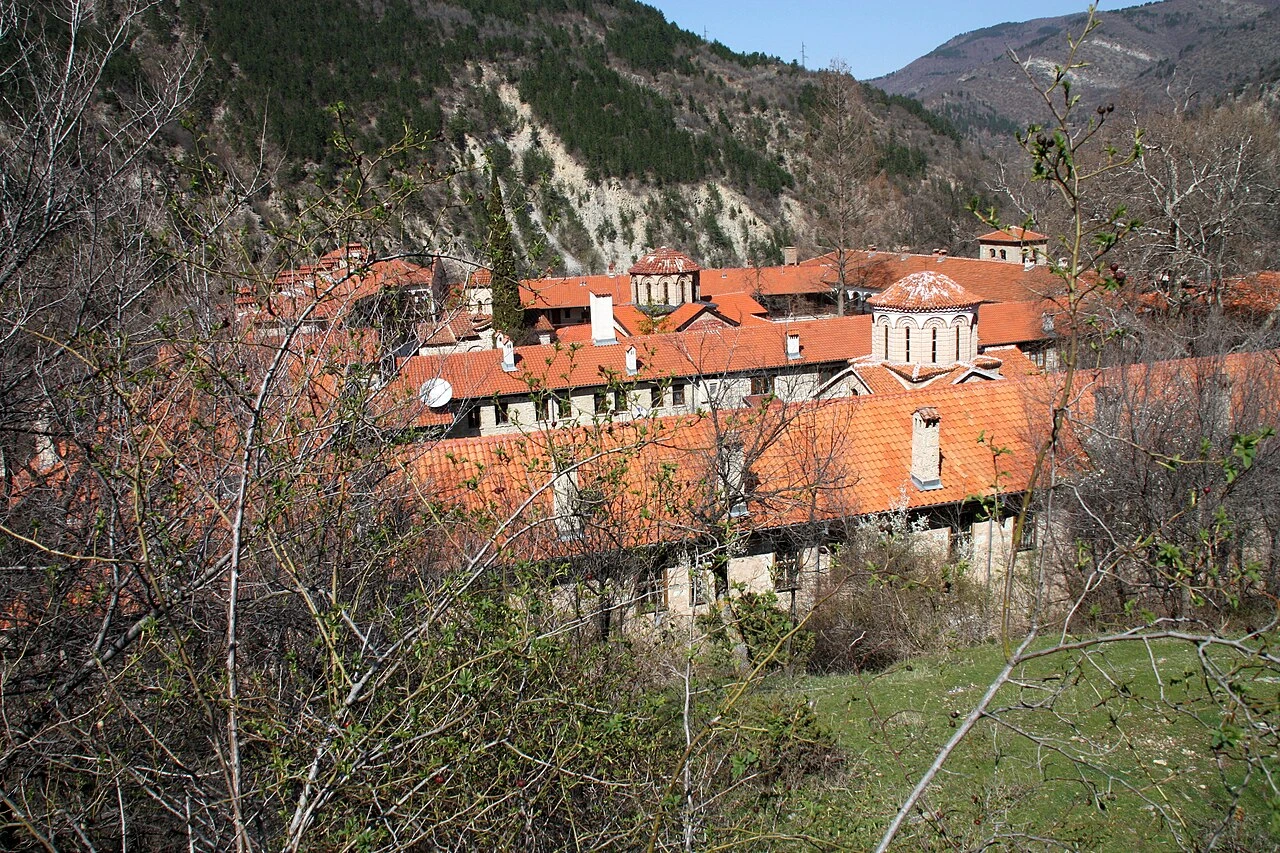
Bachkovo
Bachkovo Monastery
Content & sources
Photo: Reneman · CC BY 2.0 de