 Stanza / Audio guide
Content & sources
Stanza · Audio guide
Saint Sophia Church, SofiaAudio guide
A place to remember. A story to take with you.
A historic Eastern Orthodox church building located in the city of Sofia, Bulgaria. It is one of the oldest churches in the capital and an important example of early Christian architecture.
Download Stanza, then search for “Saint Sophia Church, Sofia”.
About the tour
One guide. Your kind of visit.
A historic Eastern Orthodox church building located in the city of Sofia, Bulgaria. It is one of the oldest churches in the capital and an important example of early Christian architecture.
Ready when you are.
- 01Get the free Stanza app.
iOS & Android
- 02Find your guide.
“Saint Sophia Church, Sofia”
- 03Download before you go.
Works offline
Audio guide / 9 narrated stops
Inside the guide
Get to know a few of the stories before you go. Open a stop to read more.
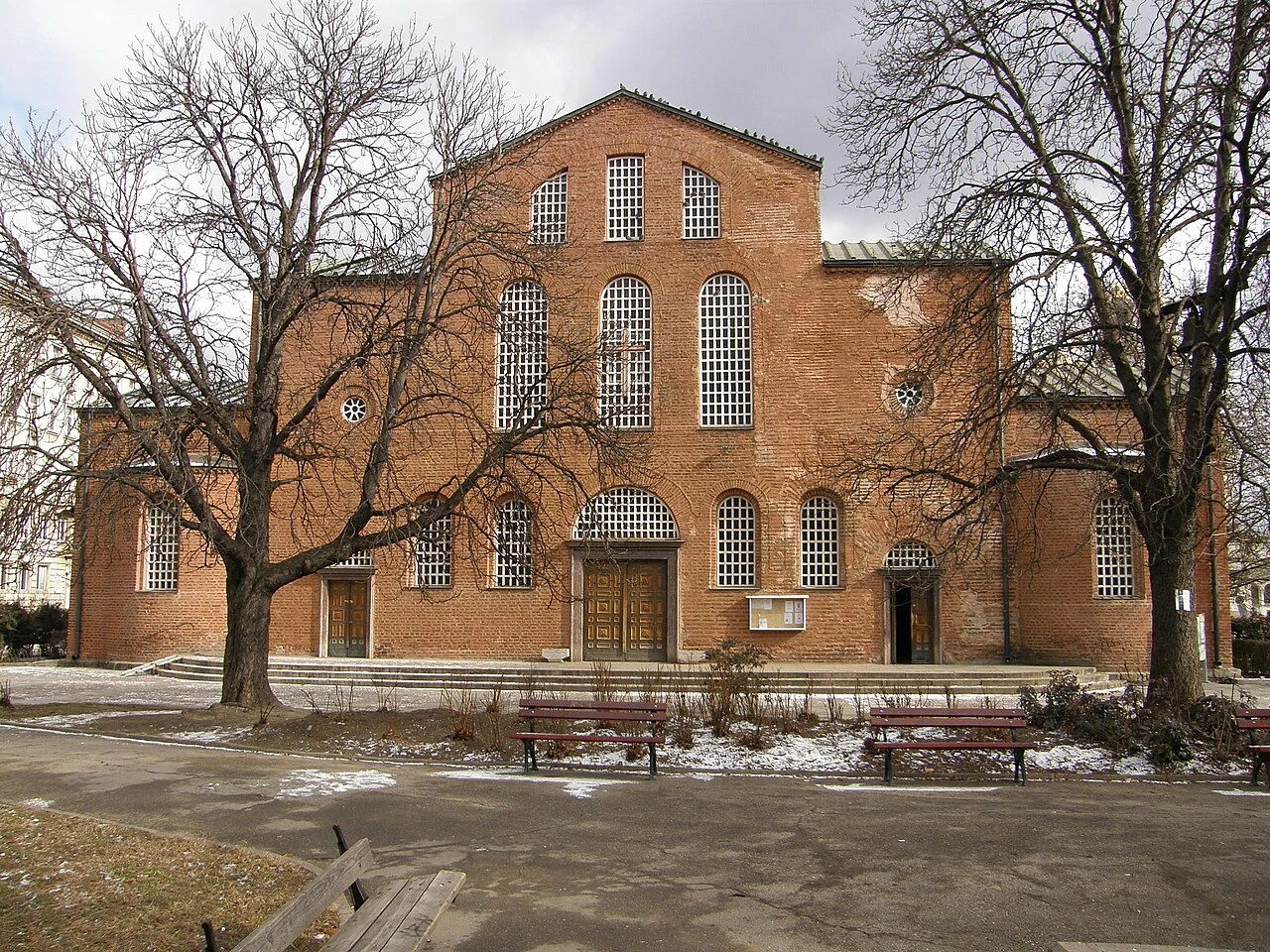
01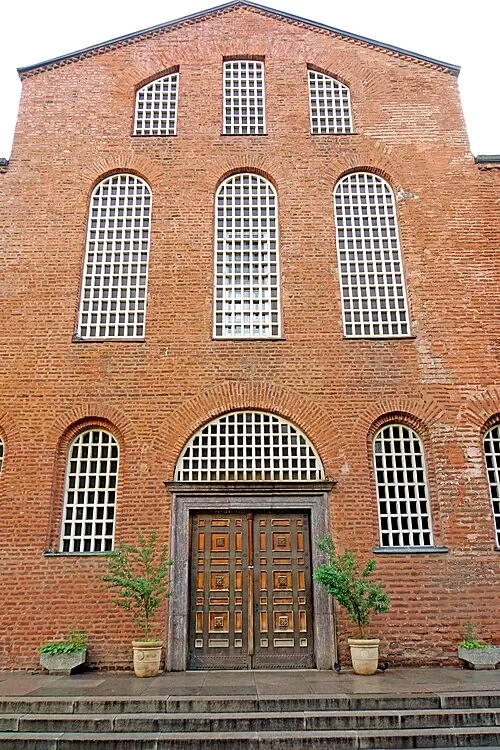 The Grand Facade and Byzantine EntranceThe Red Brick Facade
Welcome to Saint Sophia Church, one of the oldest active Christian temples in Europe. Looking up at the main facade, the simple red-brick construction instantly stands out. Notice the flat triangular pediment at the very top and the neat rows of arched windows, which are classic characteristics of early Byzantine architecture. This basilica was constructed between 527 and 565 CE during the golden reign of Byzantine Emperor Justinian I. It is a substantial structure, measuring forty-seven meters in length and twenty meters in width. Over the centuries, its historical and spiritual influence grew so immense that in the fourteenth century, the surrounding city of Serdica was officially renamed Sofia in its honor. The name "Sofia" itself translates from Greek as "Holy Wisdom," reflecting the church’s original dedication to the divine wisdom of Christ. The exterior bricks you see today are highly durable, fired from local clay to withstand the elements over fifteen centuries.
Dennis G. Jarvis · CC BY-SA 2.0
02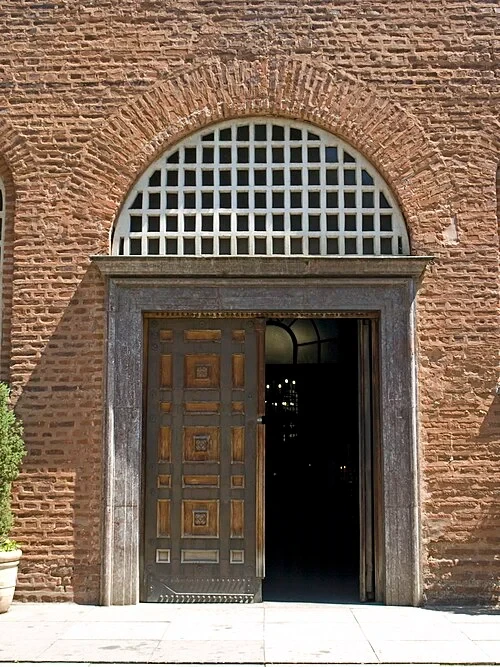 The Grand Facade and Byzantine EntranceThe West Entrance
A heavy set of wooden double doors, framed by a plain, unadorned stone portal, serves as the main western entrance to the church. Positioned directly underneath a large, semicircular window, this portal acts as a physical bridge, moving visitors from a bustling twenty-first-century city into a quiet, fifteen-hundred-year-old sanctuary. The simple appearance of the entrance today is the result of a meticulously planned twentieth-century restoration process. Led by the prominent Bulgarian historian Bogdan Filov, the archaeological and architectural preservation work concluded in 1935. For centuries under Ottoman rule, the building served as a mosque, during which its original brick exterior was completely covered in thick layers of white plaster and modified with Islamic architectural elements. Filov and his team systematically stripped away these later additions to reveal and secure the original Roman and Byzantine brickwork underneath. The restored entrance portal reflects the architectural restraint typical of late antiquity, focusing on geometric symmetry rather than elaborate decoration.
Photo: Ymblanter · CC BY-SA 4.0
03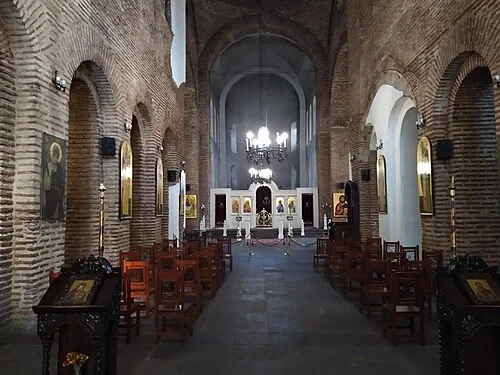 The Red Brick Nave and DomeThe Red Brick Nave
High, vaulted ceilings and thick brick piers characterize the spacious, minimalist interior of the main nave. Unlike later medieval or Baroque churches, you will find no elaborate gold gilding, marble paneling, or dramatic frescoes here. Instead, natural light filters softly through rows of high-arched windows, illuminating the earthy red bricks. This austere simplicity is highly typical of sixth-century early Christian basilicas, which prioritized volume and natural lighting over interior opulence. Long before the construction of this specific basilica, the site held supreme spiritual importance. In 343 CE, the famous Council of Serdica took place on or near this immediate ground. That council brought together three hundred and sixteen Christian bishops from across the Roman Empire to discuss theological doctrine and Church law, establishing the city as a major center of early Christianity. The broad semicircular arches supporting the roof line still follow the exact spatial layout established during that ancient era.
Listen in the appRadosław Botev · CC BY 3.0 pl
04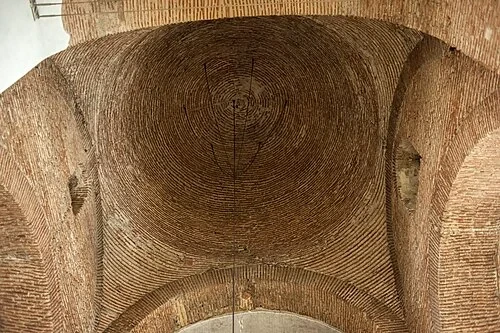 The Red Brick Nave and DomeThe Central Dome
Looking upward reveals a striking view of the church’s central dome, formed by meticulously laid concentric rings of red brick. Byzantine builders mastered a unique vaulting technique, choosing to lay relatively thin bricks flat and horizontally in thick beds of mortar, rather than relying on heavy, precisely cut stone blocks. This clever engineering method drastically reduced the overall weight of the ceiling vault while maintaining incredible structural strength. The lightweight nature of this masonry dome proved crucial to the building's survival over the centuries. Sofia sits in an active seismic zone, and the region has experienced several devastating earthquakes. During the nineteenth century, major tremors caused severe damage across the city, toppling towers and collapsing structures, including the minaret added when the church functioned as an Ottoman mosque. While other parts of the building suffered heavily from these seismic shifts, this brick dome remained intact, showcasing the resilience of ancient Roman construction techniques.
Listen in the appPhoto: Ggia · CC BY-SA 4.0
05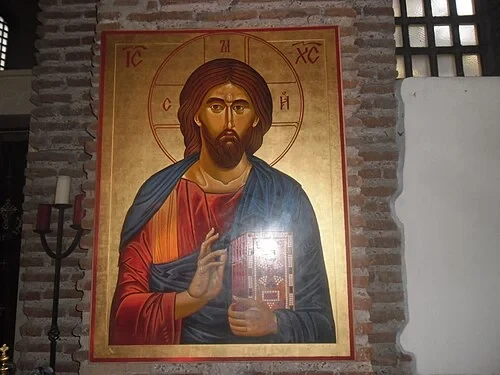 Iconography and Historical TransitionsIcon of Christ Pantocrator
Mounted on one of the robust red-brick pillars inside the nave is an icon of Jesus Christ, depicted in the traditional Eastern Orthodox style known as Christ Pantocrator, or Ruler of All. In this classic portrayal, Christ holds a decorative, jewel-encrusted gospel book in His left hand while raising His right hand in a specific gesture of blessing. This icon provides an important clue to the church's true dedication. Although called Saint Sophia, the church is not named after a female saint or martyr; rather, it honors the Greek concept of Hagia Sophia, meaning the "Holy Wisdom" of God, which Orthodox theology associates directly with the person of Jesus Christ. The artistic style of the icon presents a striking visual contrast within the sanctuary. The glowing, smooth gold leaf of the background reflects the soft, ambient light of the church, standing out sharply against the rough, uneven, and earthy texture of the ancient brick wall behind it.
Listen in the appPhoto: August Dominus · CC BY-SA 4.0
06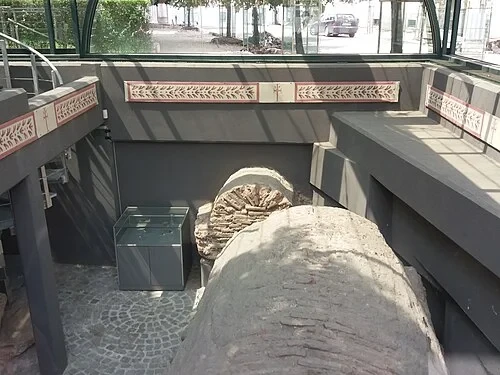 The Subterranean Necropolis and Ancient MosaicsTomb of Honorius
Descending into the underground excavation site beneath the basilica floor reveals a subterranean world of ancient burials. Prominent among these archaeological features is the Tomb of Honorius, easily recognizable by its intact brick-arched roof. This structural tomb is merely one component of a vast, multi-layered Roman necropolis of ancient Serdica that spreads widely beneath the church foundations. Modern grey metal and stone pathways allow visitors to navigate safely through the sensitive excavation zone. Archaeologists have documented tombs here dating from the fourth and fifth centuries, containing burials stacked on top of and alongside one another. These findings confirm that the site was treated as a highly sacred cemetery for generations before the current sixth-century church was built. The vaulted red bricks of the Honorius tomb are bonded with ancient lime mortar, which remains remarkably well-preserved despite the damp conditions of the underground chamber.
Listen in the appPhoto: TodorBelomorski · Public domain
07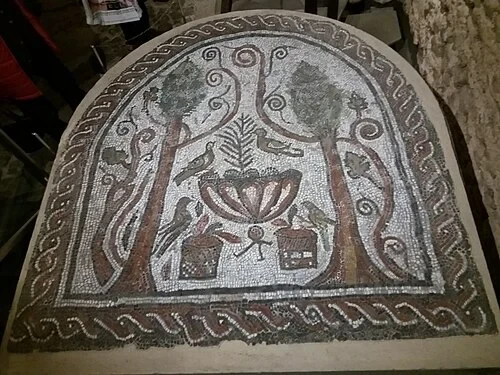 The Subterranean Necropolis and Ancient MosaicsThe Paradise Mosaic
Tucked within the subterranean archaeological park under the church is a circular floor mosaic, which once decorated the top of an early Roman Christian tomb. The mosaic contains rich iconographic symbols representing the Garden of Eden. In the center, two stylized cypress trees flank a central bird bath or fountain, which represents the water of life. Around this central spring, several small birds are depicted, representing the souls of the deceased resting peacefully in paradise. This entire composition is assembled from thousands of tiny, naturally colored stone cubes called tesserae, laid carefully by hand to form the intricate design. In the early centuries of Christianity, before churches were built above ground, these colorful mosaic floors served both as decorative markers for family tombs and as a visual expression of hope for the afterlife. The earthy tones of the stones have retained their soft red, grey, and green colors despite being buried for more than fifteen hundred years.
Listen in the appPhoto: TodorBelomorski · CC BY-SA 4.0
08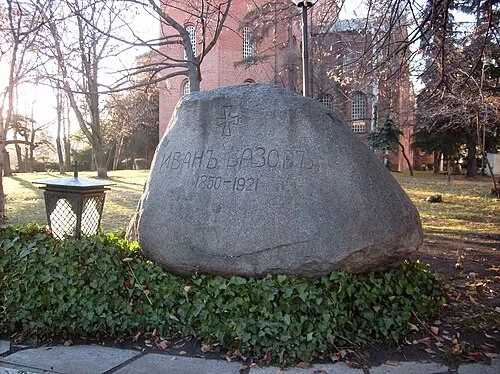 The Churchyard and National LegacyGrave of Ivan Vazov
Resting in the green park just outside the church wall is the grave of Ivan Vazov. Unlike standard marble monuments, his grave is marked by a massive, rough-hewn granite boulder transported directly from the nearby Mount Vitosha. The stone is carved simply with the writer’s name and his life dates, 1850 to 1921. Vazov is widely revered as the "Patriarch of Bulgarian Literature," most famous for authoring the seminal historical novel "Under the Yoke," which chronicled the struggle for independence from Ottoman rule. Choosing this specific location for his burial was a highly calculated act of national reverence. By burying Vazov in the shadow of Saint Sophia Church, state authorities sought to associate his literary legacy permanently with the city's oldest and most sacred historic building. The rough texture of the mountain stone acts as a memorial marker, surrounded by ivy and shaded by mature trees in the quiet park.
Listen in the appPhoto: Vassto · Public domain
09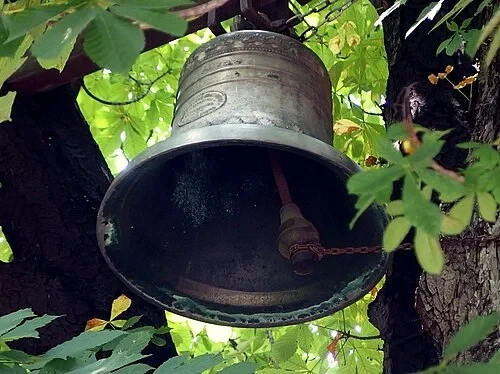 The Churchyard and National LegacyThe Liberty Bell
Suspended directly from the sturdy branch of a mature chestnut tree outside the church is a historic, silver-colored metal bell. This unusual open-air placement stems from the events of 1878, when Sofia was officially liberated from Ottoman rule. The local citizens wanted to ring a bell to celebrate their newfound freedom, but the Saint Sophia Church lacked a bell tower. Under centuries of Ottoman rule, church bells had been strictly banned, and the church itself had been converted into a mosque, whose minaret had only recently been demolished. Lacking any structure to support a heavy bell, the residents improvised, hanging the newly acquired instrument from the nearest sturdy tree branch to ring out the news. The bell was never relocated to a formal tower, remaining in the foliage of the chestnut tree as a physical marker of the day of liberation. It can still be seen swaying gently amidst the green leaves, suspended by heavy iron chains.
Listen in the appPhoto: Mark Ahsmann · CC BY-SA 4.0
Saint Sophia Church, Sofia
Frequently asked questions
How much does the guide cost?
Free app download. Listed guide price: Free guide. Guide price shown in the app. Audio guide only. Venue admission is separate.
Can I listen without internet?
Yes. Download the guide’s audio, images, and maps in the app before your visit. Your downloaded content is then available offline.
Can I listen in my language?
Stanza supports 15 languages. Check the app for the languages available for this guide.
Do I need to follow a schedule?
No. This is a self-guided experience. Choose your stops, pause whenever you like, and return to a story at your own pace.
At your own pace
Explore Saint Sophia Church, Sofia.
Download Stanza, then search for “Saint Sophia Church, Sofia”.
Free app download · Guide price shown in the app
Keep exploring
Nearby audio guides
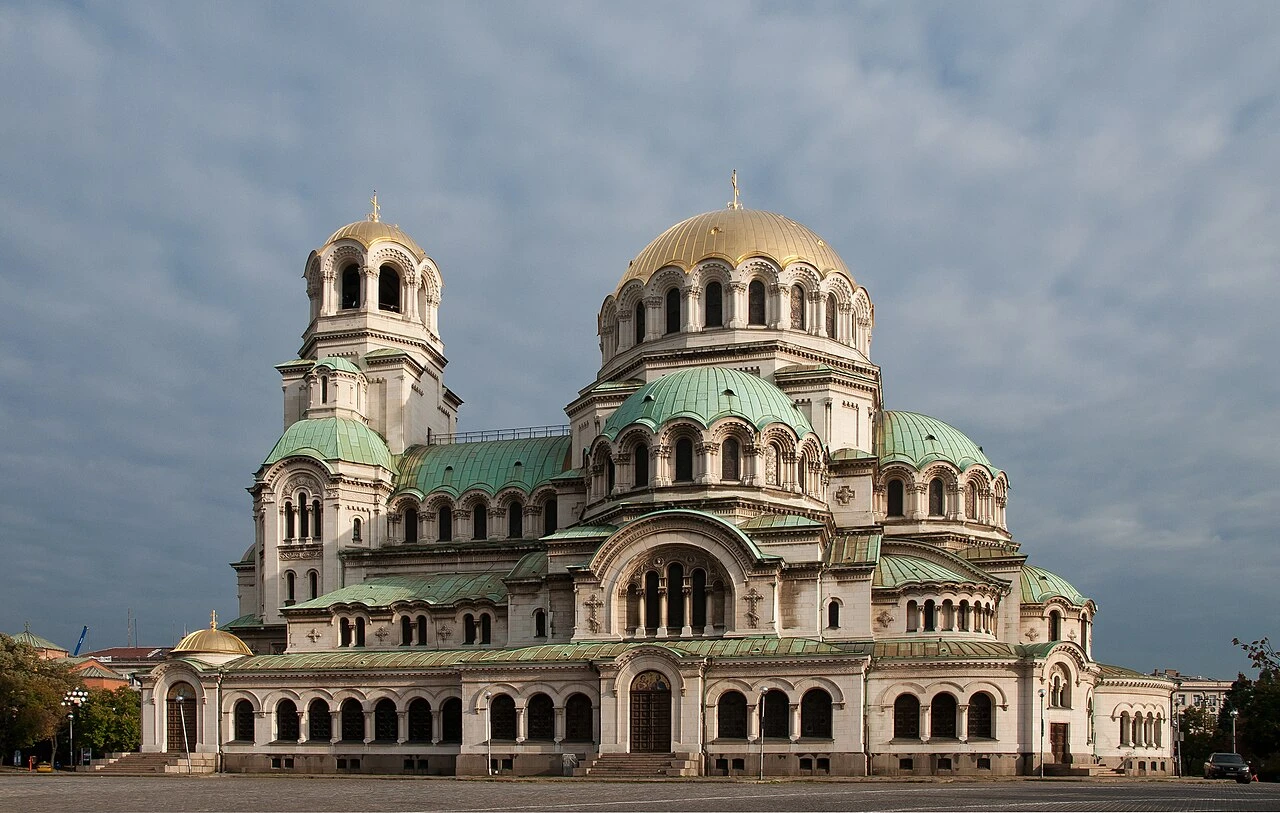
Sofia
Alexander Nevsky Cathedral
Content & sources
Plamen Agov (user:MrPanyGoff) · CC BY-SA 4.0
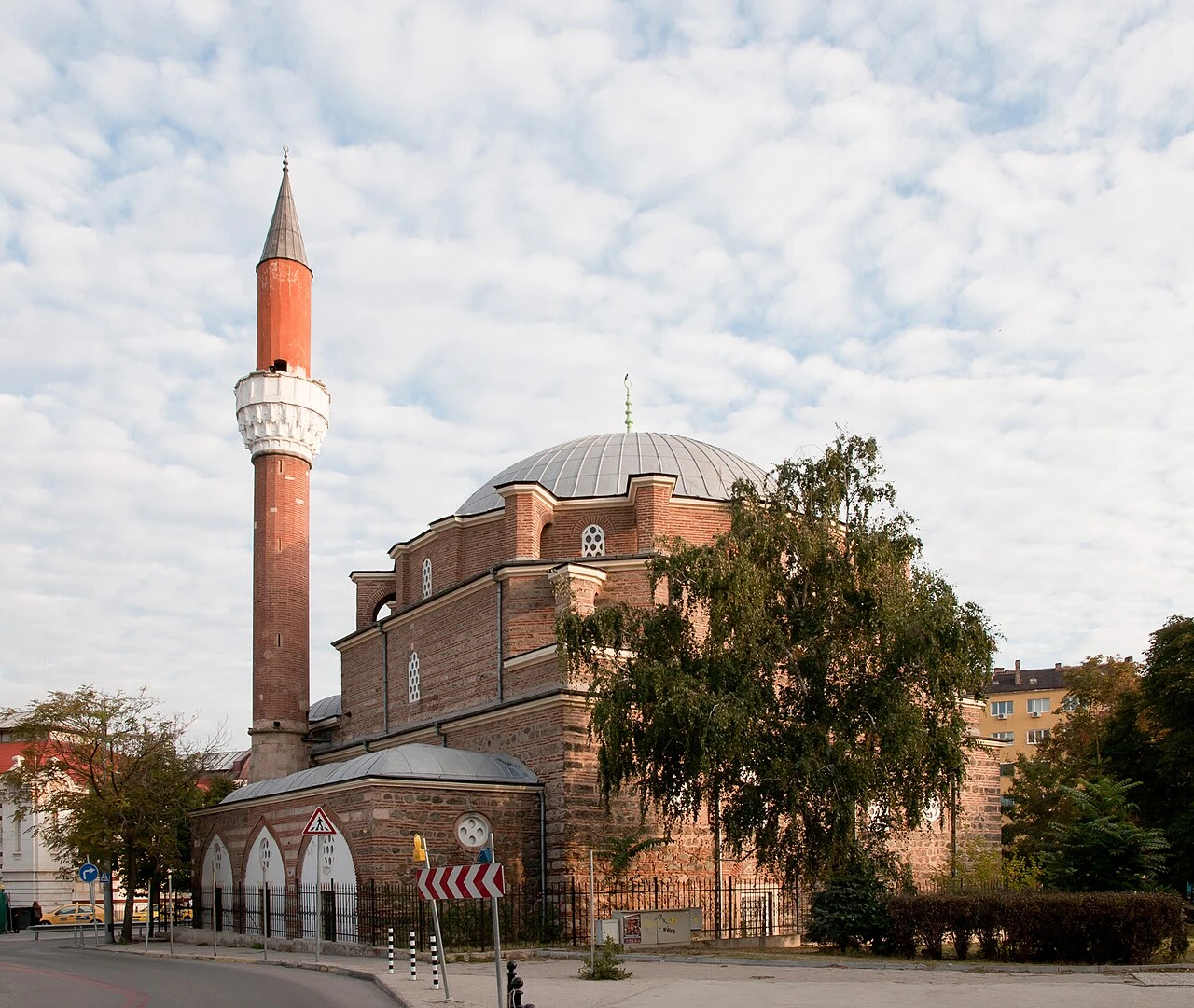
Sofia
Banya Bashi Mosque
Content & sources
Photo: MrPanyGoff · CC BY-SA 3.0
Sofia
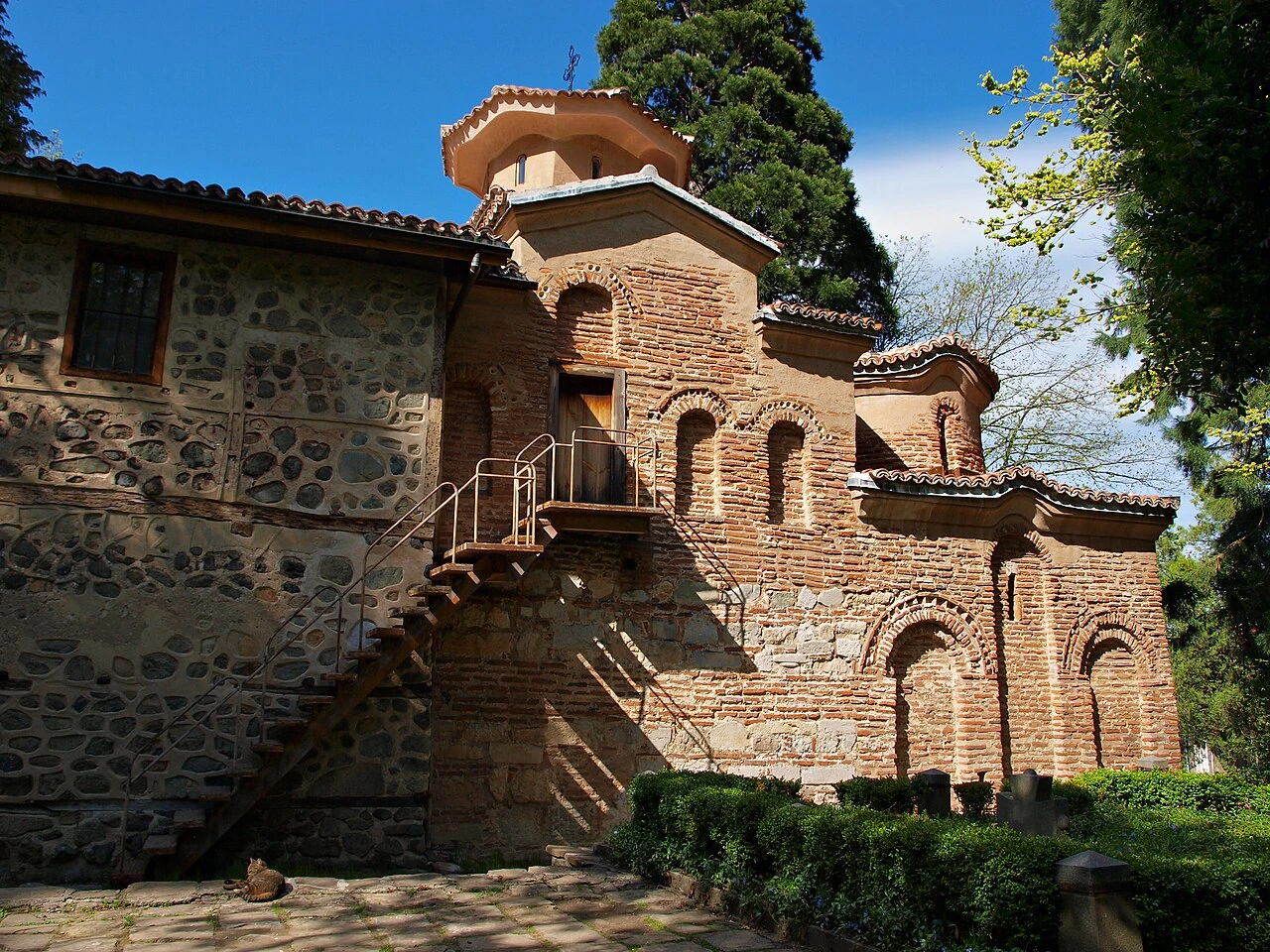
Boyana Church
Content & sources
Todor Bozhinov / Тодор Божинов · CC BY-SA 3.0
Sofia
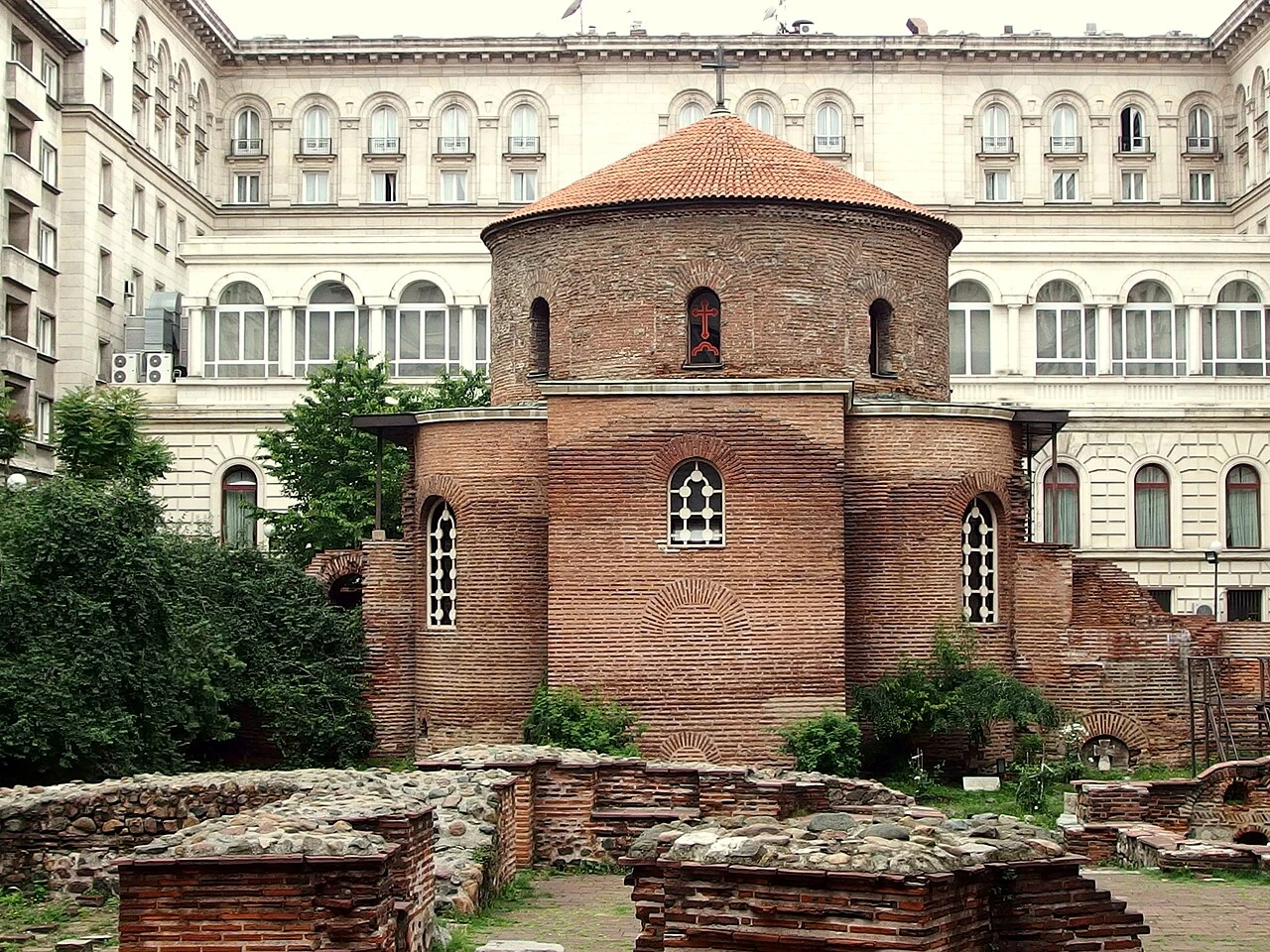
Saint George Rotunda Church, Sofia
Content & sources
Photo: Mark Ahsmann · CC BY-SA 4.0