 Stanza / Audio guide
Content & sources
Stanza · Audio guide
Royal Palace of Cambodia Audio Guide
A place to remember. A story to take with you.
The Royal Palace of Cambodia is a complex of buildings that serves as the official royal residence of the King of Cambodia. Cambodian monarchs have occupied the site since it was built in the 1860s.
Download Stanza, then search for “Royal Palace of Cambodia”.
About the tour
One guide. Your kind of visit.
The Royal Palace of Cambodia is a complex of buildings that serves as the official royal residence of the King of Cambodia. Cambodian monarchs have occupied the site since it was built in the 1860s.
Ready when you are.
- 01Get the free Stanza app.
iOS & Android
- 02Find your guide.
“Royal Palace of Cambodia”
- 03Download before you go.
Works offline
Audio guide / 13 narrated stops
Inside the guide
Get to know a few of the stories before you go. Open a stop to read more.
01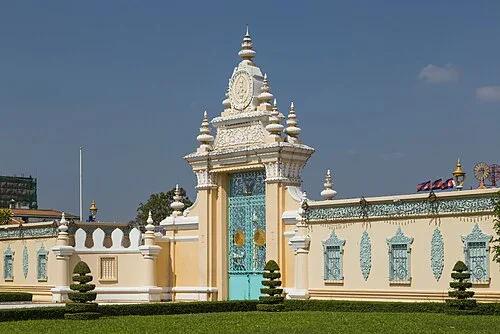 Main Eastern Entrance & Palace Walls
The Eastern Gate and Holy Walls
Welcome to the Royal Palace of Phnom Penh, the official residence and ceremonial seat of the King of Cambodia. Over the next stops we move from this gate through the Throne Hall, the pavilions, and the Silver Pagoda with its painted galleries. Monarchs have lived and reigned here since the 1860s. Before that, the court sat at Oudong, a town to the northwest. In 1866 King Norodom brought his court back to Phnom Penh, and work on a permanent palace began the same year. The wall around the compound carries a detail worth knowing: decorative leaf shapes called seima along its top. The same markers ring the walls of monasteries. On both, they signal that everything within is holy ground. That is why this ornate gate reads less like a fortress entrance and more like a temple boundary.
Marcin Konsek · CC BY-SA 4.0
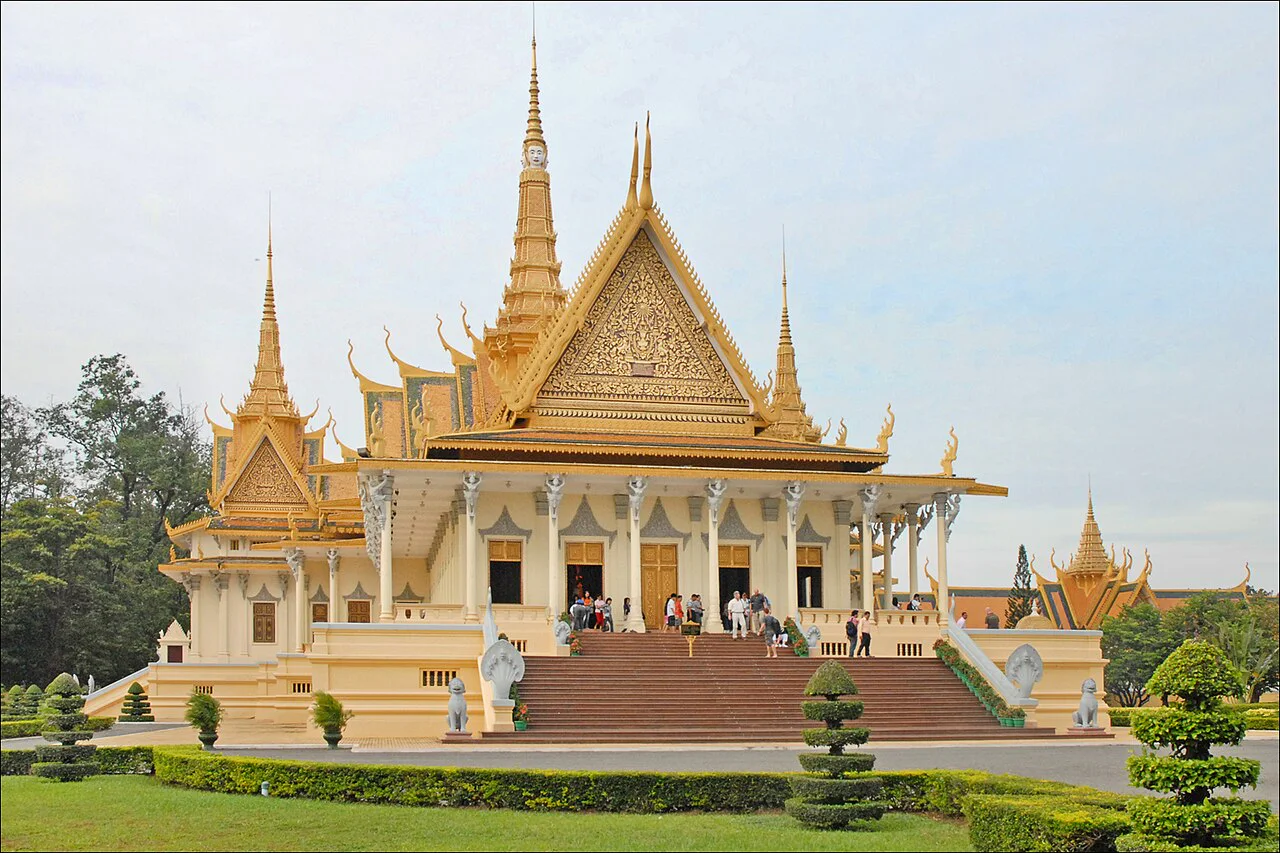
02 Throne Hall Courtyard & Brahma Spire
The Throne Hall - Sacred Seat of Judgement
The Throne Hall's Khmer name means the Sacred Seat of Judgement, and like every building in the palace, it faces east. This is the second hall to stand on the site. King Norodom's first was built in 1869. It was demolished in 1915. The present cross-shaped building rose in 1917. King Sisowath inaugurated it in 1919. It still does the work it was built for. Coronations and royal weddings take place here, along with religious ceremonies and audiences for the King's guests. Inside stand three royal thrones, two traditional and one in western style, and golden busts of Cambodian kings and queens reaching back to King Ang Duong. The interior cannot be photographed, which is why the golden roofs outside carry so much of the story.
Marcin Konsek · CC BY-SA 4.0
03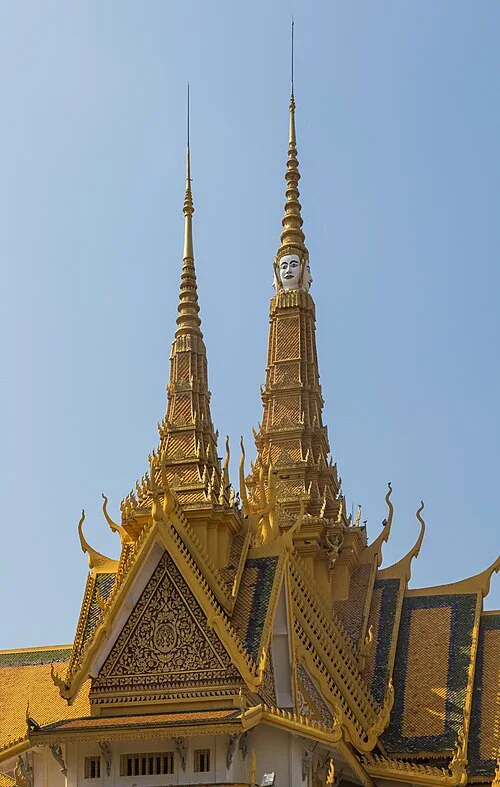 Throne Hall Courtyard & Brahma Spire
The Four-Faced Spire
The tallest of the Throne Hall's three spires rises fifty-nine metres. Its crown is the palace's most striking detail: a white, four-faced head of Brahma. Each face stands for one of the Buddhist virtues. They are loving-kindness, compassion, sympathy, and equanimity. So the spire that crowns the hall of coronations watches in four directions at once, carrying those four qualities over the ceremonies held beneath it.
Listen in the appMarcin Konsek · CC BY-SA 4.0
04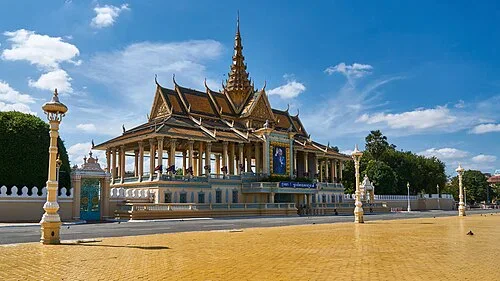 Moonlight Pavilion & Napoleon III Pavilion
The Moonlight Pavilion
Open to the air and built right into the palace wall, the Moonlight Pavilion dominates the palace's public face on Sothearos Boulevard. It is a stage for Khmer classical dance, a tribune from which the King addresses crowds, and a setting for state banquets. The pavilion seen today is the second one. King Sisowath rebuilt it in 1913 and 1914, replacing an earlier version from Norodom's time, in much the same design. Its balcony once served a plainer purpose too: watching parades pass along the boulevard. At the 2004 coronation of King Norodom Sihamoni, the new King was banqueted and addressed the crowds from here.
Listen in the appRadek Kucharski from Warsaw, Poland · CC BY 2.0
05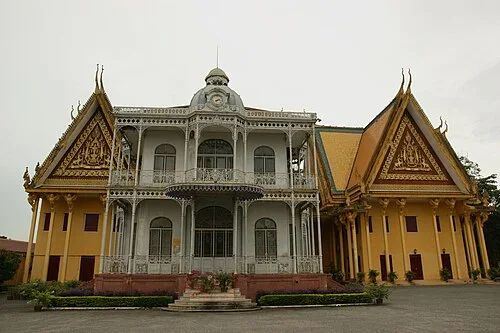 Moonlight Pavilion & Napoleon III Pavilion
The Iron Pavilion
Among all the golden spires, one building here is made of iron. This prefabricated cast-iron villa was manufactured for King Norodom by the Paris firm Docros in 1875. For decades it was known simply as the maison de fer, the Iron House. The famous story says Napoleon III sent it as a gift, built for the Empress Eugenie to attend the opening of the Suez Canal in 1869. That version first appears in 1925, in a history by the former colonial administrator Paul Collard, so the imperial gift is best taken as legend. Norodom had his own name for the place: Tusitala, the Buddhist heaven where the fifth and final Buddha waits before entering the world. He used the villa as a reception hall, and today it serves as a museum.
Listen in the appAllie_Caulfield from Germany · CC BY 2.0
06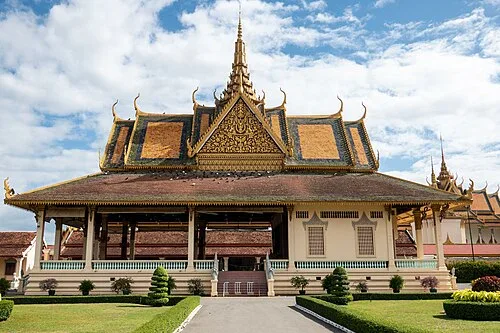 Phochani Pavilion & Hor Samritvimean
The Phochani Banquet Pavilion
Hospitality has its own building here. The Phochani, whose name means banquet, went up in 1912 in reinforced concrete. It replaced an older banquet and dance complex that stood slightly to the north, between it and the Throne Hall. Its role is celebration on the grandest scale. The King's birthday banquet is held here, with displays of royal dance, for distinguished guests from Cambodia and abroad. Where the Moonlight Pavilion stages performance against the palace wall, the Phochani is an open public hall built for feasting.
Listen in the appPsamatheM · CC BY-SA 4.0
07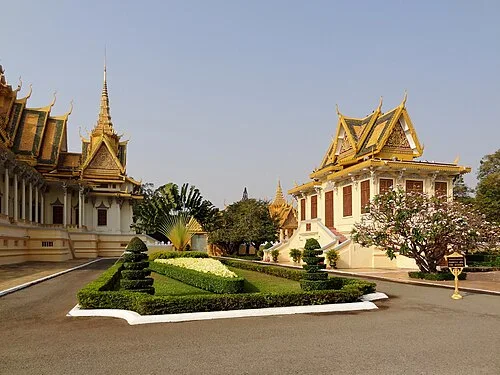 Phochani Pavilion & Hor Samritvimean
Public Grounds and the King's Garden
Half of the palace grounds are closed. The buildings of this tour all sit in the public eastern compound. The King's living area takes up roughly half the total palace ground and stays off limits to visitors. The Khemarin Palace, the King's official residence, stands there, set apart by a small wall. The Villa Kantha Bopha houses the Queen Mother. In Norodom's day the divide was even stricter. His western courtyard was reserved for the king's women, and the only adult male allowed inside was the king himself.
Listen in the appOlaf Tausch · CC BY 3.0
08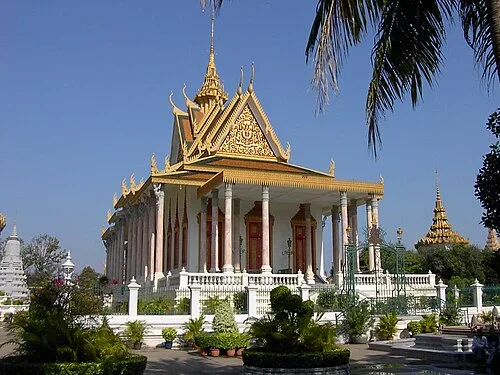 Silver Pagoda Temple Courtyard
The Silver Pagoda
South of the main compound stands the royal temple, officially Preah Vihear Preah Keo Morakot, known to everyone simply as Wat Preah Keo. Its famous nickname, the Silver Pagoda, is meant literally. During King Sihanouk's pre-Khmer Rouge reign its floor was inlaid with more than five thousand silver tiles, and parts of the outer facade were remodelled in Italian marble. Inside rest the temple's two most sacred images. One is a small crystal Buddha, Cambodia's own Emerald Buddha. Whether it is Baccarat crystal from the nineteenth century, or another crystal from the seventeenth, no one has settled. The other is a near-life-size Maitreya Buddha, the Buddha yet to come, dressed in royal regalia and commissioned by King Sisowath.
Listen in the appOriginal uploader was User:Adam Carr at en.wikipedia · Public domain
09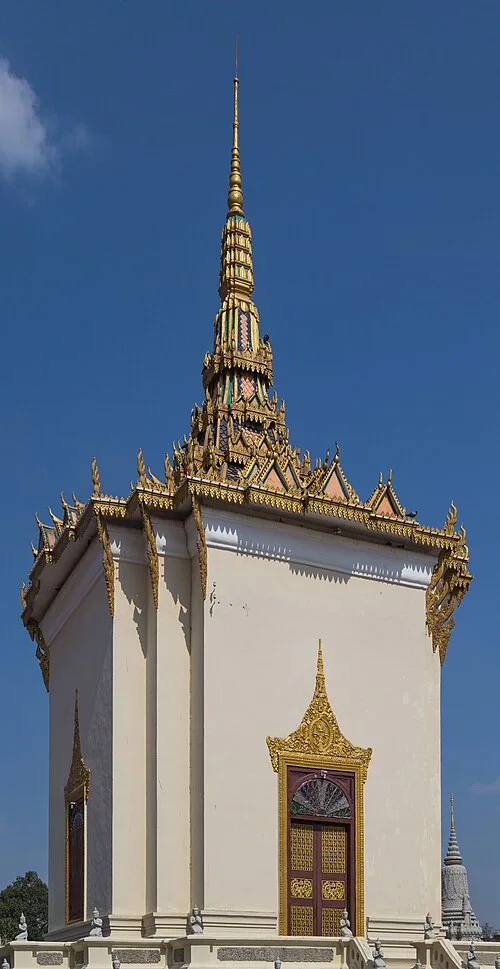 Silver Pagoda Temple Courtyard
The Pavilion on Phnom Mondop
Around the temple, the courtyard fills with smaller structures. To the north stands the library, and at the northwestern corner a bell tower that once signalled religious ceremonies. A model of Angkor Wat sits south of the tower. South of the temple itself rises an artificial mound called Phnom Mondop, crowned by a statue of the sacred cow Preah Ko. The statue carries a story of loss. Lore holds that the original bronze Preah Ko carried sacred scriptures and laws inside its belly. The Siamese plundered them, the story goes, when they took the old capital of Longvek in 1593. The cow on the mound today is a symbolic replacement, standing guard over texts that survive only in memory.
Listen in the appMarcin Konsek · CC BY-SA 4.0
10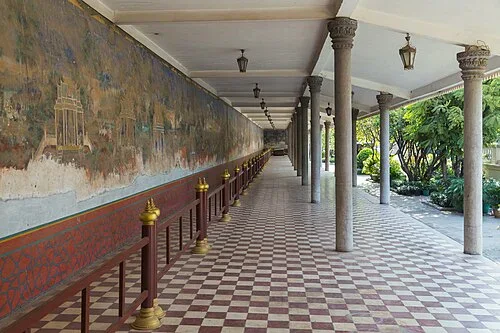 Reamker Gallery Murals
The Gallery of the Reamker
The covered galleries around the temple carry one continuous painting, and it runs 642 metres. Painted in 1903 and 1904, it depicts the Reamker, the Khmer telling of the Ramayana. Five Khmer artists created it under King Sisowath. A century of weather has taken its toll. Neglect faded the lower half of the murals, and acid rain keeps eroding the paint bit by bit. In 2015 the government began a repair project, with master painters restoring colour under the Ministry of the Royal Palace.
Listen in the appMarcin Konsek · CC BY-SA 4.0
- 11
Reading a Mural Panel
How to read a panel of the Reamker, the Khmer retelling of the Ramayana painted along the gallery.
- 12
King Norodom on Horseback
The founder on horseback, honoured in the stone palace that replaced everything he built.
- 13
The Stupa of King Ang Duong
The white stupa of King Ang Duong, where the palace joins its royal dead to its living king.
Royal Palace of Cambodia
Frequently asked questions
How much does the guide cost?
Free app download. Listed guide price: $0.99. Guide price shown in the app. Audio guide only. Venue admission is separate.
Can I listen without internet?
Yes. Download the guide’s audio, images, and maps in the app before your visit. Your downloaded content is then available offline.
Can I listen in my language?
This audio guide is available in 15 languages, including English.
Do I need to follow a schedule?
No. This is a self-guided experience. Choose your stops, pause whenever you like, and return to a story at your own pace.
At your own pace
Explore Royal Palace of Cambodia.
Download Stanza, then search for “Royal Palace of Cambodia”.
Free app download · Guide price shown in the app
Keep exploring
Audio guides — Cambodia
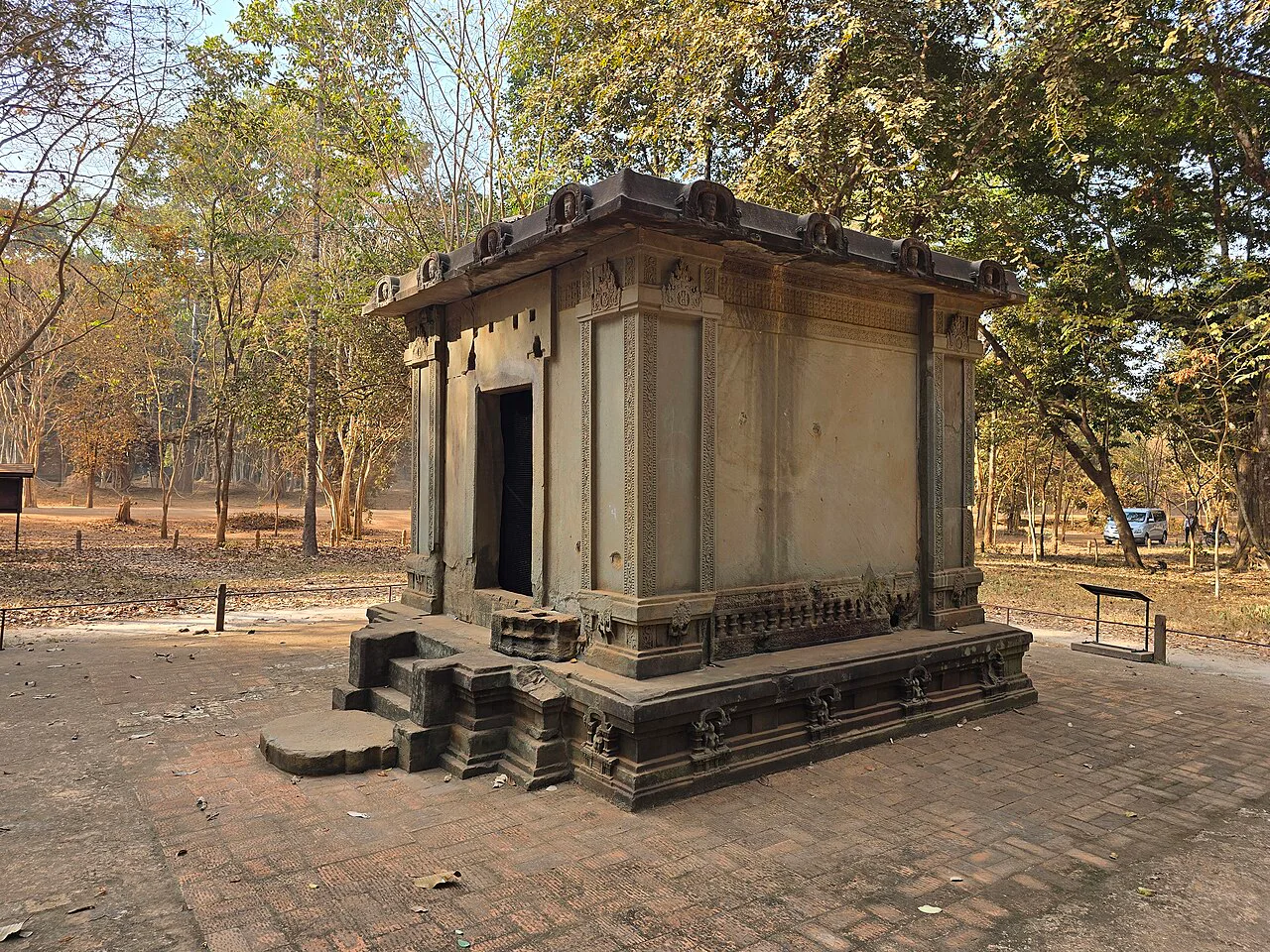
Prasat Sambor · 145 km
Sambor Prei Kuk
Content & sources
Photo: Ms Sarah Welch · CC0
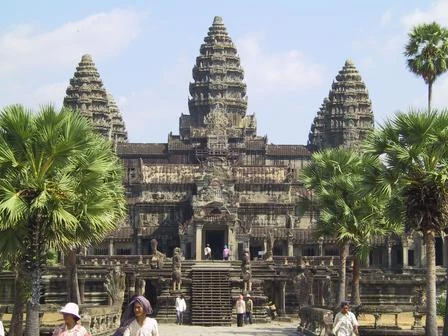
Siem Reap
Angkor Wat
Content & sources
The original uploader was Fuzheado at English Wikipedia. · CC BY-SA 2.0
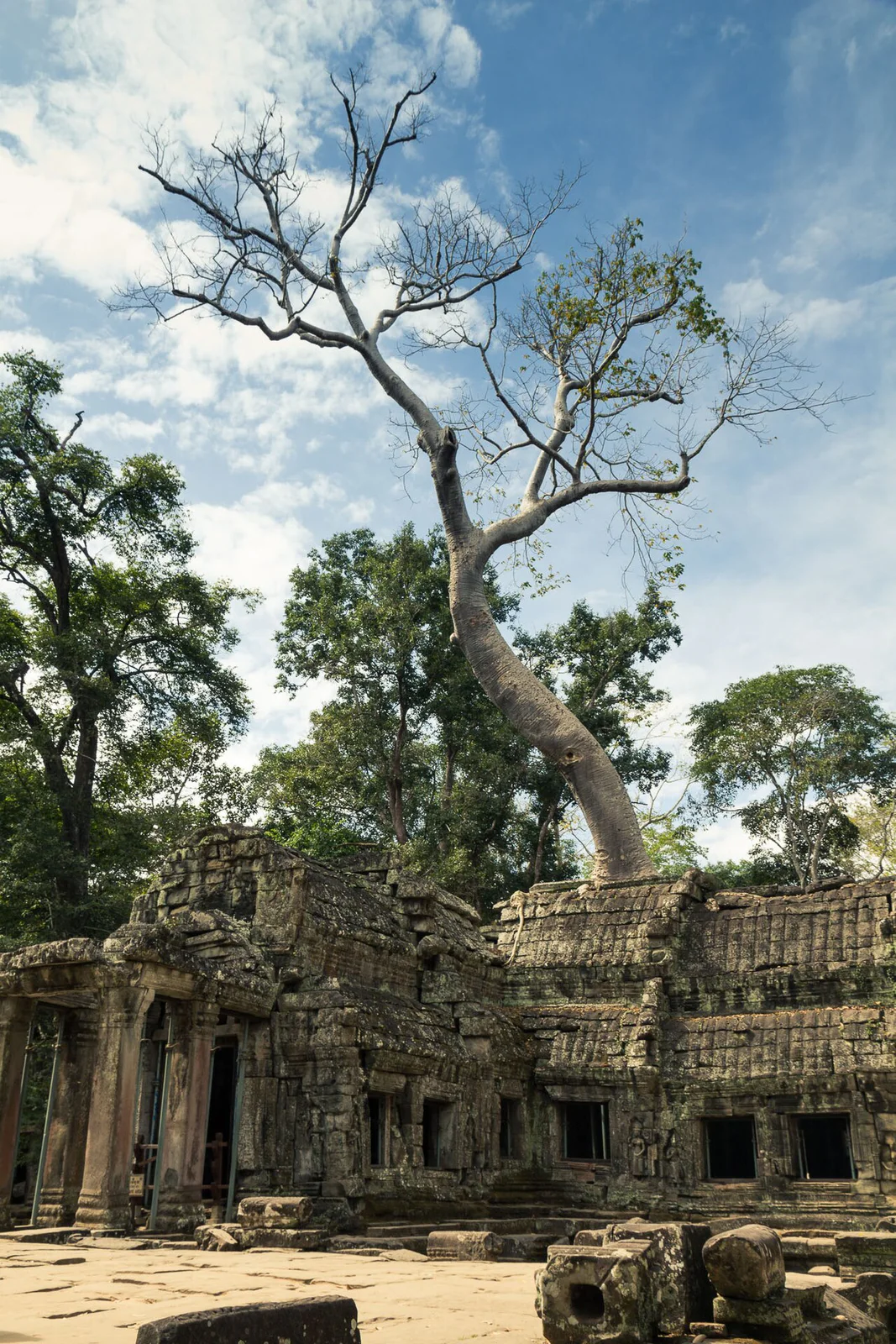
Siem Reap
Ta Prohm
Content & sources
Dmitry A. Mottl · CC BY-SA 4.0
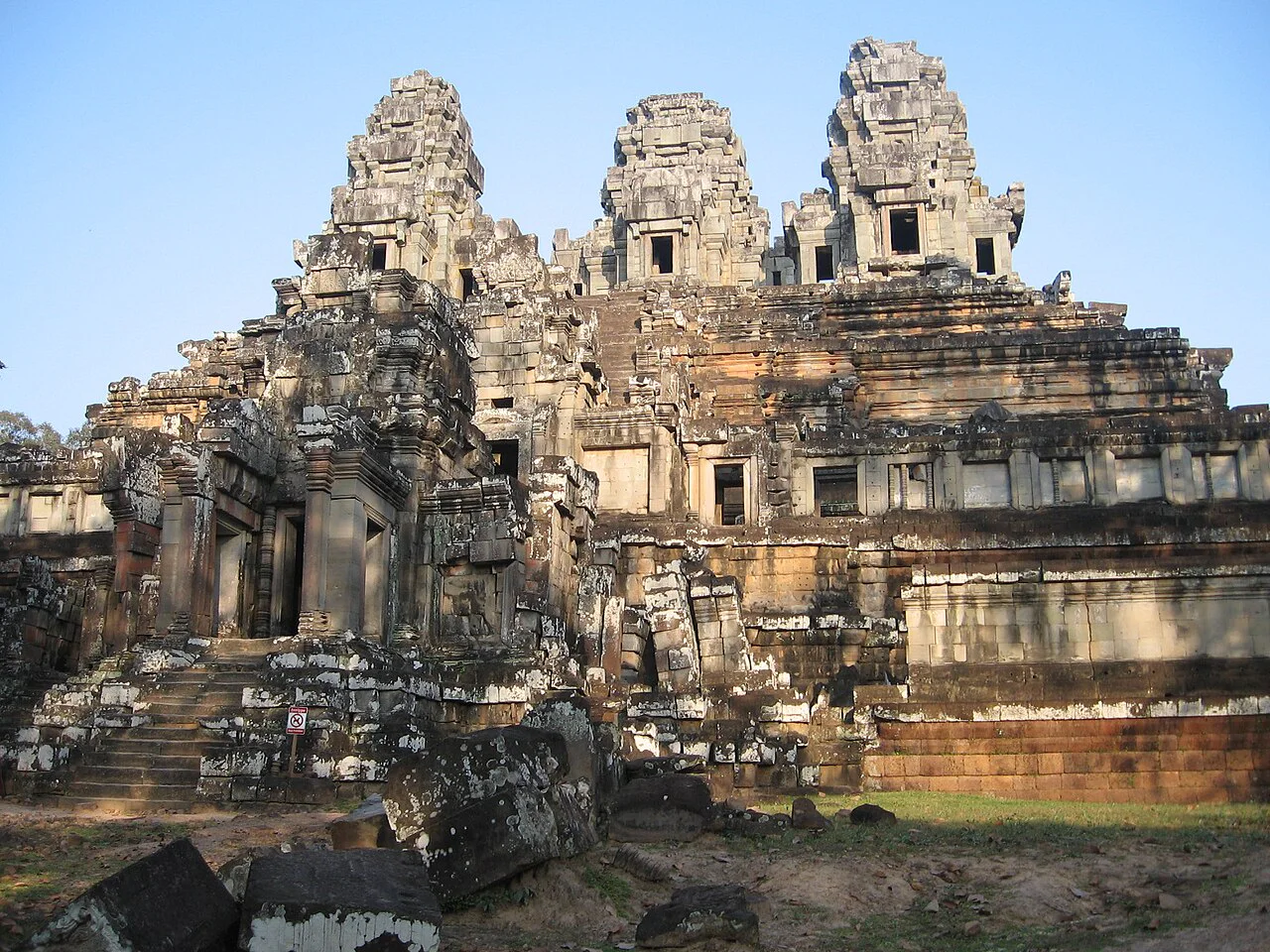
Siem Reap
Ta Keo
Content & sources
Liftold at vi.wikipedia · Public domain