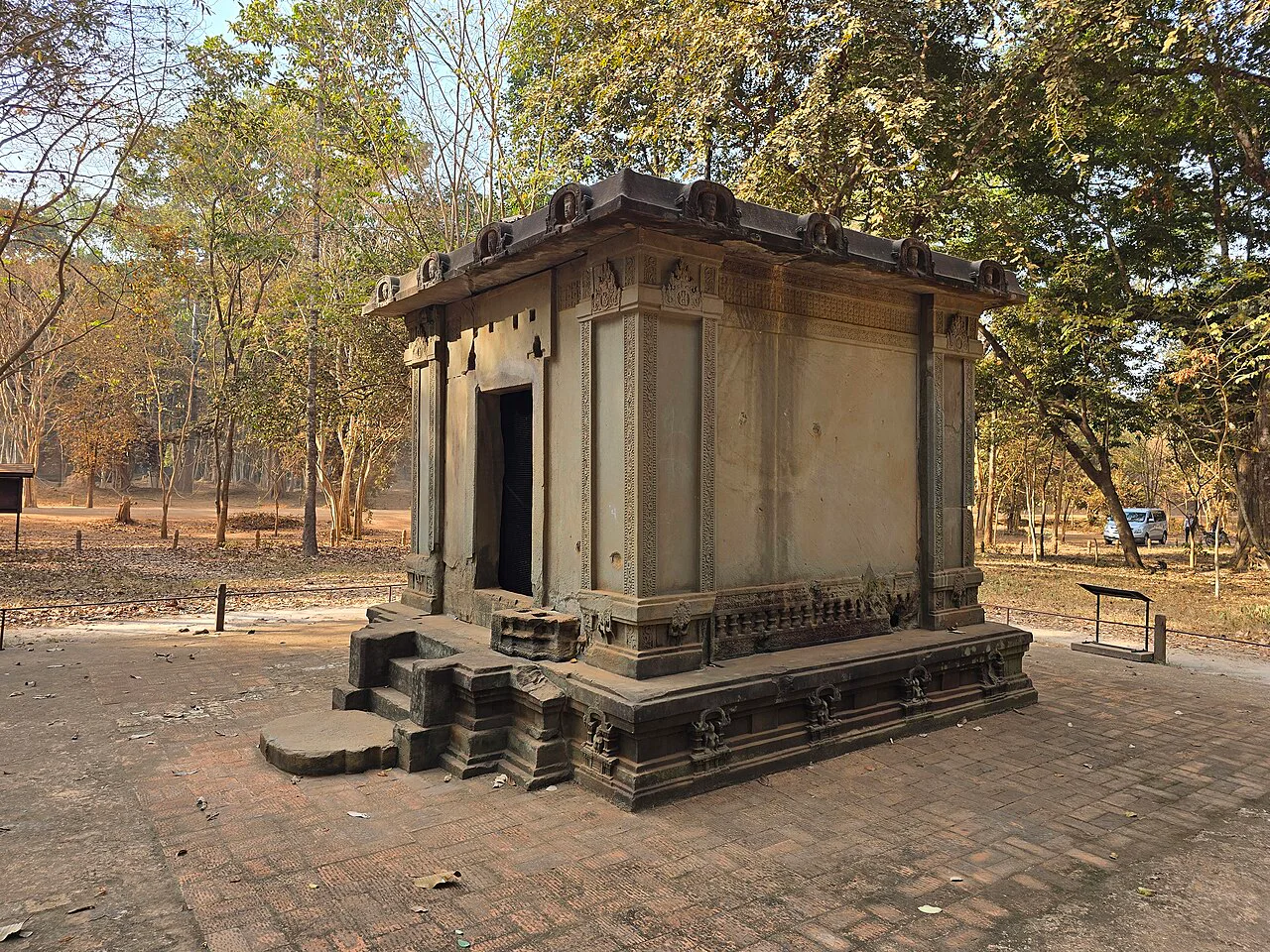
Stanza · Audio guide
Sambor Prei Kuk Audio Guide
A place to remember. A story to take with you.
Sambor Prei Kuk is an archaeological site in Cambodia that dates back to the Pre-Angkorian Chenla Kingdom. It was established as a central royal sanctuary and capital known as Isanapura and was declared a…
Download Stanza, then search for “Sambor Prei Kuk”.
About the tour
One guide. Your kind of visit.
Sambor Prei Kuk is an archaeological site in Cambodia that dates back to the Pre-Angkorian Chenla Kingdom. It was established as a central royal sanctuary and capital known as Isanapura and was declared a UNESCO World Heritage Site in 2017.
Ready when you are.
- 01Get the free Stanza app.
iOS & Android
- 02Find your guide.
“Sambor Prei Kuk”
- 03Download before you go.
Works offline
Audio guide / 14 narrated stops
Inside the guide
Get to know a few of the stories before you go. Open a stop to read more.
01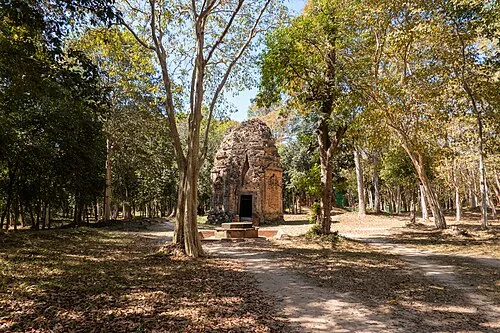 Main Entrance and the Legacy of Isanapura
A Brick Temple Tower in the Forest
Welcome to Sambor Prei Kuk, a seventh-century temple city asleep in the forest of Kampong Thom Province. This was Isanapura, the capital and central royal sanctuary of the Chenla Kingdom, established by King Isanavarman I in the early 600s. A brick tower stands at the end of the sandy path, one of some one hundred and fifty Hindu temples that once filled the site. Two great enclosure walls ringed the whole compound, and the ruins still spread across three main clusters, known simply as Central, North and South. The place lies close to the Steung Saen river, about a hundred and eighty kilometres east of Angkor. When the Khmer kings later raised their stone temples at Angkor, they were building on foundations laid here first. In 2017, UNESCO inscribed the Temple Zone of Sambor Prei Kuk on the World Heritage list, as the archaeological site of ancient Isanapura. The tower down the path is only a first glimpse of what the forest holds.
PsamatheM · CC BY-SA 4.0
02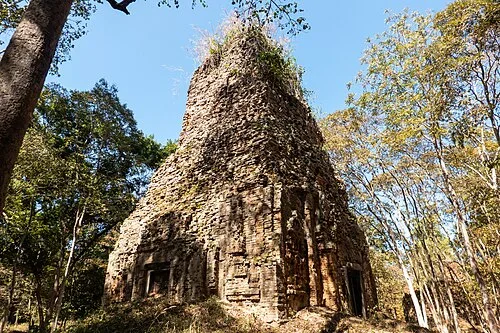 Main Entrance and the Legacy of Isanapura
A Sanctuary of Solid Brick
Brick made nearly everything at Sambor Prei Kuk. The builders of Chenla worked before the age of Khmer stone; their principal material was brick, with sandstone reserved for certain elements such as doorframes and fittings. The tall tower rising through the trees shows the method plainly. It is a solid mass of brick, laid course upon course, standing straight off the forest floor. When Angkor built its famous monuments in stone, several centuries lay between the two. These brick sanctuaries came first, in the seventh century, and they set the pattern that later Khmer builders would translate into stone. Time has treated the towers unevenly, but this one still keeps its shape against the sky.
PsamatheM · CC BY-SA 4.0
03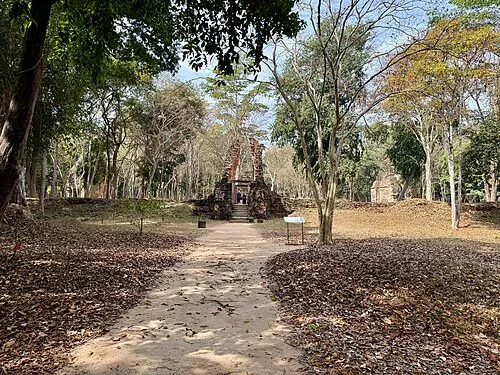 Prasat Yeah Puon (The South Group)
Approaching Prasat Yeah Puon
The sandy path runs towards a ruined gateway set in a long bank of earth. That gateway opens into the South Group, the core of the original capital. Its principal temple is Prasat Yeah Puon, and within its walls once stood twenty-two brick sanctuaries. The first went up around the year 600. The work was finished by 635, all of it under King Isanavarman I. Each cluster of temples at Sambor Prei Kuk sat inside its own square enclosure, and the lines of the South Group's walls still show as earthworks and broken masonry among the trees. Of those shrines, most are ruins now, their brick tumbled into low mounds. A few towers still stand tall enough to show what the whole court of sanctuaries once looked like.
Listen in the appPhoto: Ms Sarah Welch · CC0
04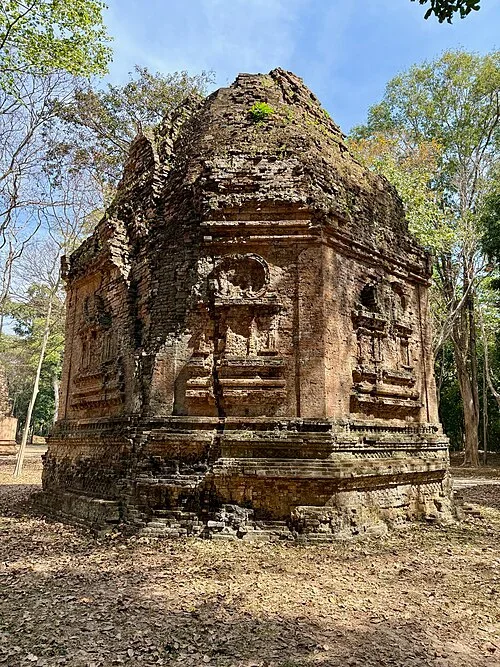 Prasat Yeah Puon (The South Group)
An Octagonal Sanctuary
Most Khmer temple towers are square. The sanctuaries of Prasat Yeah Puon break that rule with eight faces instead of four. Sambor Prei Kuk holds a rare concentration of these octagonal towers; in later Khmer architecture the shape all but disappears, which makes the eight-sided plan a signature of this site's style. The geometry has invited modern readings, and some see in it the ordered circle of the Hindu cosmos, but that is interpretation rather than something the builders left behind. What the tower itself shows is craft. Each face is dressed with pilasters and mouldings, and the brick courses turn the corners cleanly, well over a thousand years after the masons set them.
Listen in the appPhoto: Ms Sarah Welch · CC0
05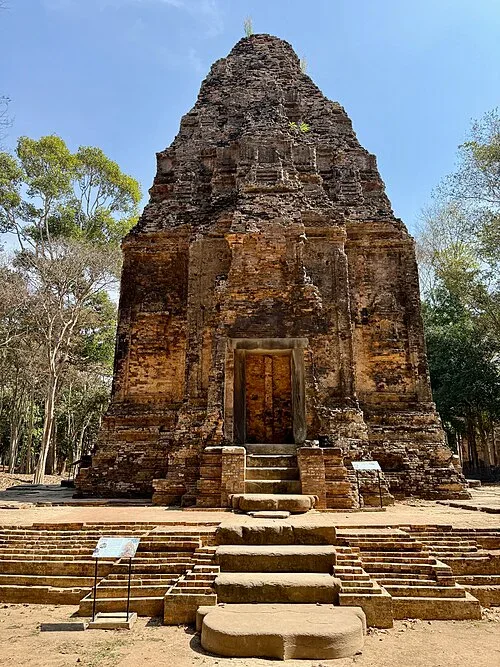 Prasat Yeah Puon (The South Group)
Inside a Chenla Sanctuary
These sanctuaries belonged to Shiva. The shrines of Prasat Yeah Puon were dedicated to the Hindu god in the early seventh century, and his presence is what the whole group served. A temple of this kind worked to a simple plan, common to small Hindu sanctuaries of the age. One sacred image stood in a single cell, reached through a single doorway, with the whole building raised on a platform and climbed by a stair. The tower at Yeah Puon follows that pattern closely. Its stairway rises in straight flights to a doorway framed in carved stone, and the doorway is the only break in the brick face.
Listen in the appPhoto: Ms Sarah Welch · CC0
06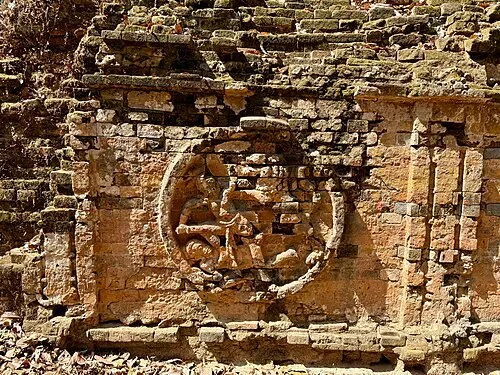 The Artistry and Flying Palaces of Yeah Puon
Carving in Brick
The roundel on this wall was not hung on the temple. It was the temple. Chenla's masons carved decoration directly into the brick fabric, shaping the relief as the courses rose, instead of applying panels of carved stone. That is why image and wall share one body of clay, and why a broken brick means a broken figure. The medallion frames a figure inside a pavilion-like setting, and walls like this one made a motif famous: the flying palaces, miniature dwellings of the gods set into the brickwork of Yeah Puon. Whether this particular roundel is one of those palaces is harder to say. The pavilion frame makes the reading tempting, but the identification is not settled. What is certain is the ambition of the technique, sculpture made of the temple's own bricks.
Listen in the appPhoto: Ms Sarah Welch · CC0
07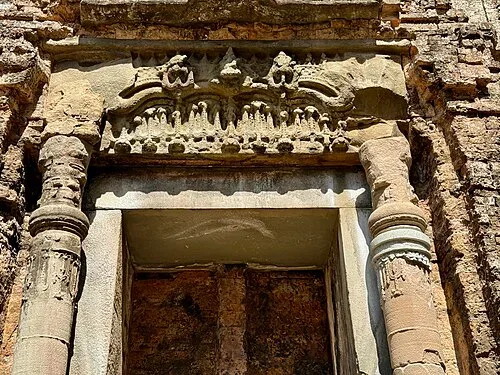 The Artistry and Flying Palaces of Yeah Puon
A Sandstone Lintel
Above the doorway, the material changes. Lintels and door fittings are where sandstone takes over from brick, and the carved beam over this entrance, with its round columns, is stone within an otherwise brick building. The lintel carries rows of small figures, a habit the site shares with southern India. In Pallava temples there, a row of vyalas, hybrids of lion and goat, runs along the upper band of the building. That South Indian row, the vyalamala, is not found in Southeast Asia. Sambor Prei Kuk answers it with other animals set in the same arrangement: horses, winged lions, and garudas shown as winged humans. Another motif recorded at Yeah Puon is the jutting leaf, a rolled leaf laid in a row with gaps between, which a sandstone capital here carries alternating with hamsas, the wild geese of Hindu myth. One lintel from this site travelled further than any of them, all the way to the Guimet Museum in Paris.
Listen in the appPhoto: Ms Sarah Welch · CC0
08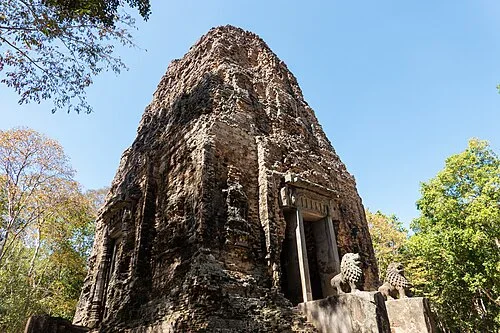 Prasat Tao - The Lions' Temple
Prasat Tao, the Lions' Temple
The Central Group holds the grandest sanctuary of the three. Its main tower is called Prasat Boram, and it is the newest of the groups, dating to the ninth century. The popular name of the place, Prasat Tao, means the Lions' Temple, and it came from the stone lions crouched at the stairway. The group held about eighteen other structures besides, together with a tower known as the Ashram Issey, and nearly all of that is ruined now. Two of the lions, though, still keep their posts at the foot of the tower, facing out towards the forest.
Listen in the appPsamatheM · CC BY-SA 4.0
09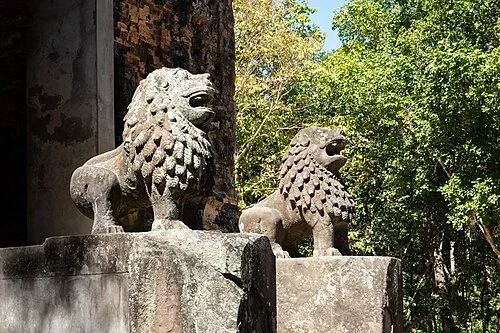 Prasat Tao - The Lions' Temple
The Stone Lions
The lions of Prasat Tao sit on their pedestals with manes worked in large, stylized curls, mouths open as if mid-roar. They are counted among the high points of pre-Angkorian sculpture. Their style also travelled. A lion from Prasat Tao shares its curled mane with a terracotta lion from Wat Phra Men, at Nakhon Pathom in central Thailand. Two animals made in different lands, yet the mane falls in the same heavy curls on both. It is a measure of how far Chenla's artistic ideas moved across the region, from the forests of Cambodia to the river plains of Thailand.
Listen in the appPsamatheM · CC BY-SA 4.0
10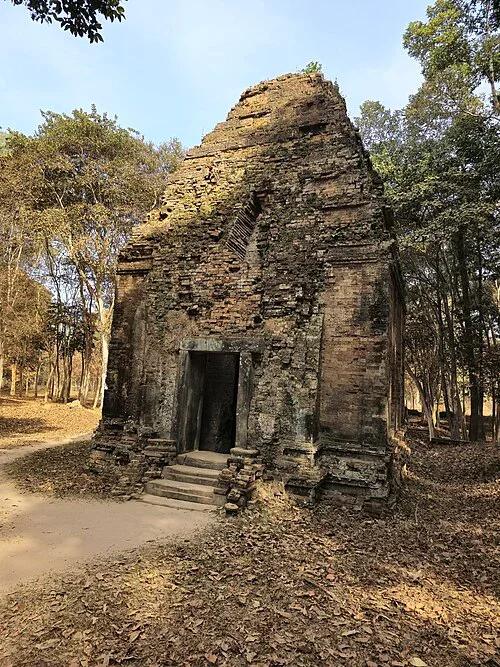 Prasat Sambor (The North Group)
The Durga Temple (N9), Prasat Sambor
The North Group is the principal temple complex of Sambor Prei Kuk, and Prasat Sambor within it is considered the main temple of the whole site. The group was dedicated to Gambhireshvara, a solemn form of Shiva; the name joins the Sanskrit word gambhir, meaning profound or deep, with Shiva himself. One sanctuary of the group, numbered N9, is known as the Durga temple. In this group the site also yielded its most precisely dated trace of the founding king: an inscription attributed to the reign of Isanavarman I, dated the thirteenth of September, 627. In it the king is called the King of Kings, who rules over Suvarnabhumi, the land of gold. Vong Sotheara of the Royal University of Phnom Penh has argued that the inscription proves Suvarnabhumi was the Khmer realm itself. A fixed day in the seventh century, carved in stone in this forest.
Listen in the appPhoto: Ms Sarah Welch · CC0
- 11
The End of the Capital
The last king of Isanapura, the kingdom that broke apart, and the road to Angkor.
- 12
The Linga Pedestal of Temple N14
A linga pedestal unearthed in 2005, proof that the park is still giving up its secrets.
- 13
War in the Forest
Secret bombing in 1970, craters near the temples, and mines cleared only in 2008.
- 14
The Forest Reclaims the Capital
A tower held in the arms of a tree, and what its survival means for Angkor.
Sambor Prei Kuk
Frequently asked questions
How much does the guide cost?
Free app download. Listed guide price: $0.99. Guide price shown in the app. Audio guide only. Venue admission is separate.
Can I listen without internet?
Yes. Download the guide’s audio, images, and maps in the app before your visit. Your downloaded content is then available offline.
Can I listen in my language?
This audio guide is available in 15 languages, including English.
Do I need to follow a schedule?
No. This is a self-guided experience. Choose your stops, pause whenever you like, and return to a story at your own pace.
At your own pace
Explore Sambor Prei Kuk.
Download Stanza, then search for “Sambor Prei Kuk”.
Free app download · Guide price shown in the app
Keep exploring
Nearby audio guides
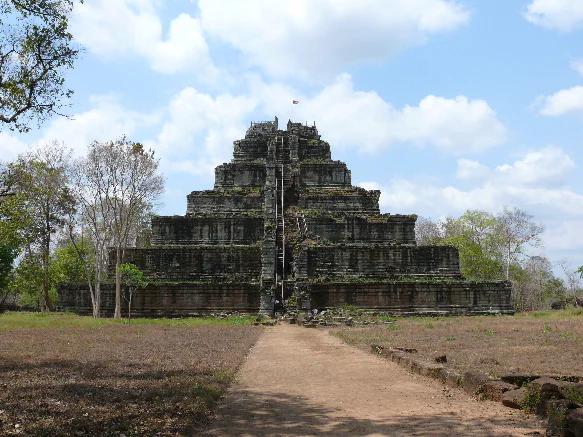
Srok Kulaen · 112 km
Koh Ker
Content & sources
Du Hangst from Osimo, Italia · CC BY 2.0
Siem Reap · 140 km
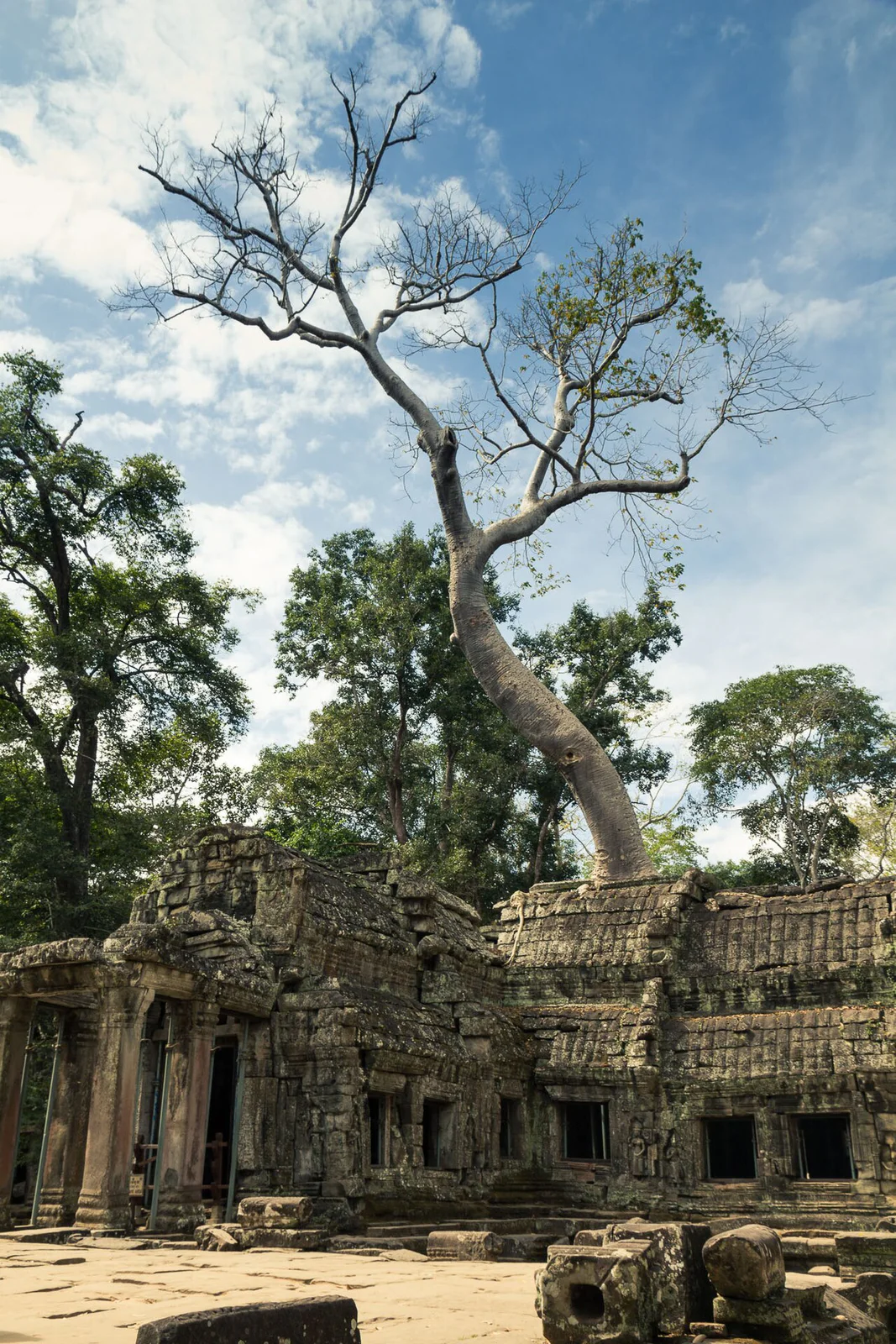
Ta Prohm
Content & sources
Dmitry A. Mottl · CC BY-SA 4.0
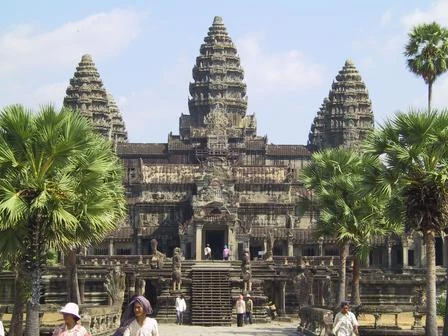
Siem Reap · 141 km
Angkor Wat
Content & sources
The original uploader was Fuzheado at English Wikipedia. · CC BY-SA 2.0
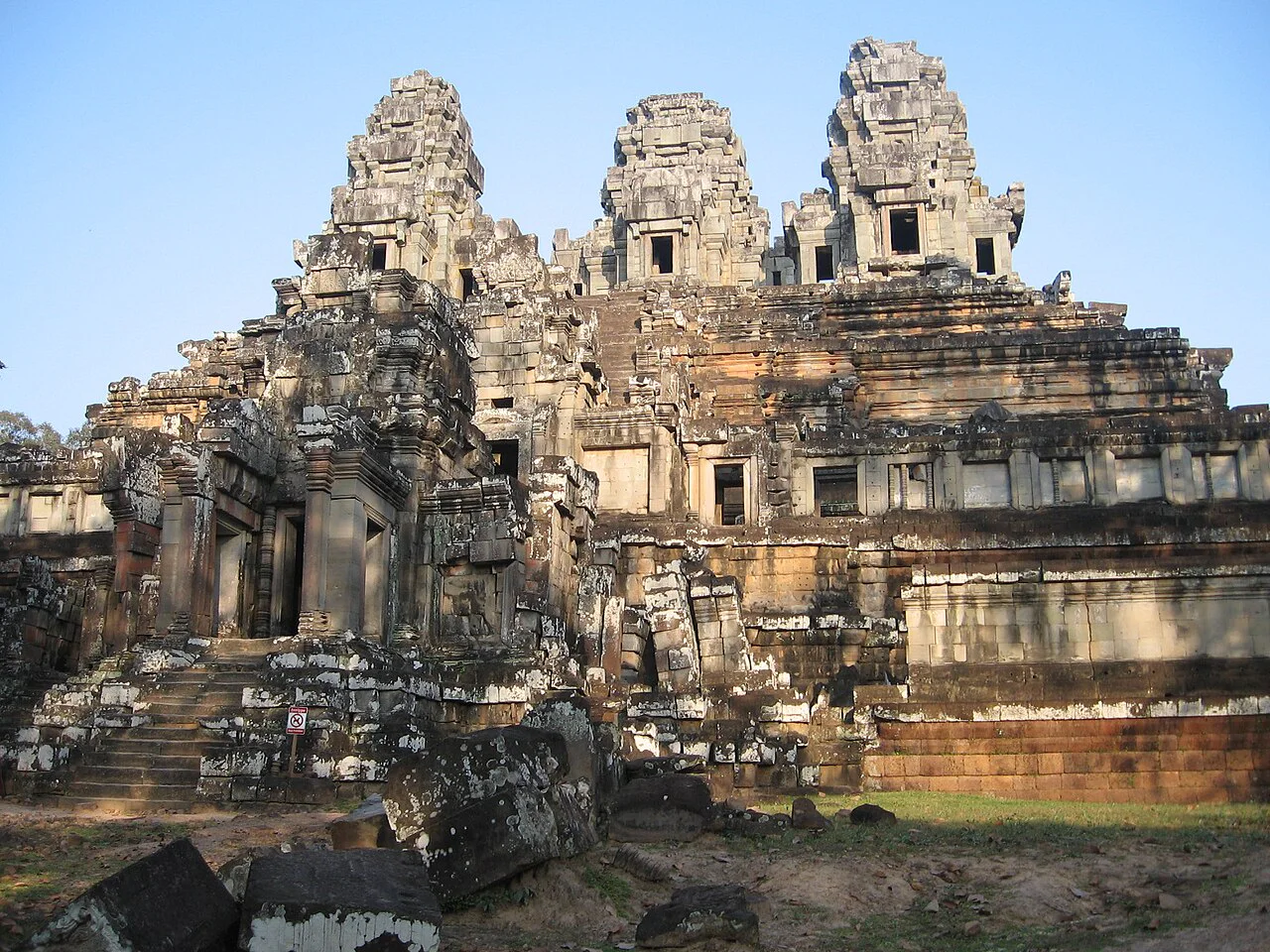
Siem Reap · 141 km
Ta Keo
Content & sources
Liftold at vi.wikipedia · Public domain
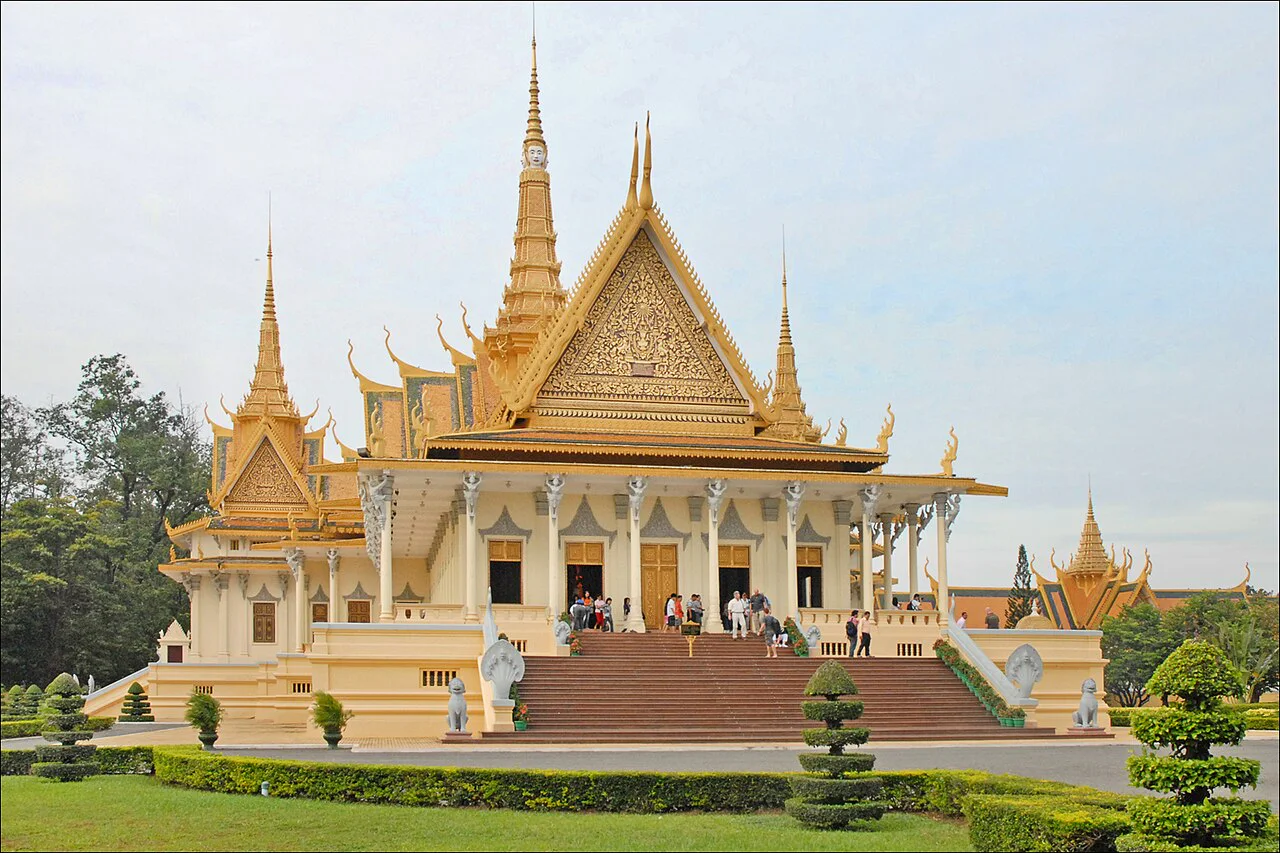
Phnom Penh · 145 km
Royal Palace of Cambodia
Content & sources
Jean-Pierre Dalbéra from Paris, France · CC BY 2.0