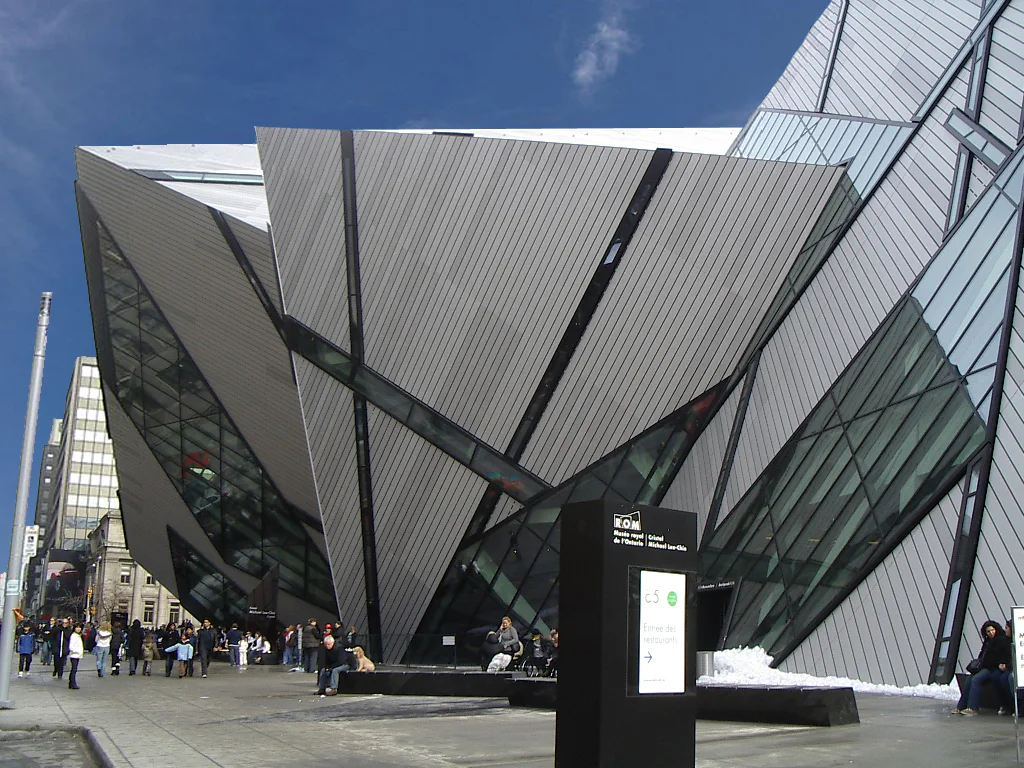
Stanza · Audio guide
Royal Ontario Museum Audio Guide
A place to remember. A story to take with you.
The Royal Ontario Museum is a museum of art, world culture and natural history in Toronto, Ontario, Canada. It is one of the largest museums in North America and the largest museum in Canada, attracting more…
Download Stanza, then search for “Royal Ontario Museum”.
About the tour
One guide. Your kind of visit.
The Royal Ontario Museum is a museum of art, world culture and natural history in Toronto, Ontario, Canada. It is one of the largest museums in North America and the largest museum in Canada, attracting more than one million visitors every year, making it the most-visited museum in Canada.
The Royal Ontario Museum guide tells the stories of 21 artworks, including Statue of Sekhmet (Unknown Artist), Bust of Cleopatra (Unknown Artist), Fan print with two bugaku dancers (Utagawa Kunisada), Female Ghost (Utagawa Kunisada), Actor Nakamura Shikan II as Satake Shinjuro (Shungyōsai Hokusei), View of Tempōzan Park in Naniwa (Utagawa Kunimasu), Actor Arashi Rikan II as Osome (Ryūsai Shigeharu), and Three Travellers before a Waterfall (Ryūsai Shigeharu). Every artwork is free to hear in the Stanza app until 1 January.
Ready when you are.
- 01Get the free Stanza app.
iOS & Android
- 02Find your guide.
“Royal Ontario Museum”
- 03Download before you go.
Works offline
Audio guide / 21 artworks
Inside the guide
Get to know a few of the stories before you go. Open a stop to read more.
01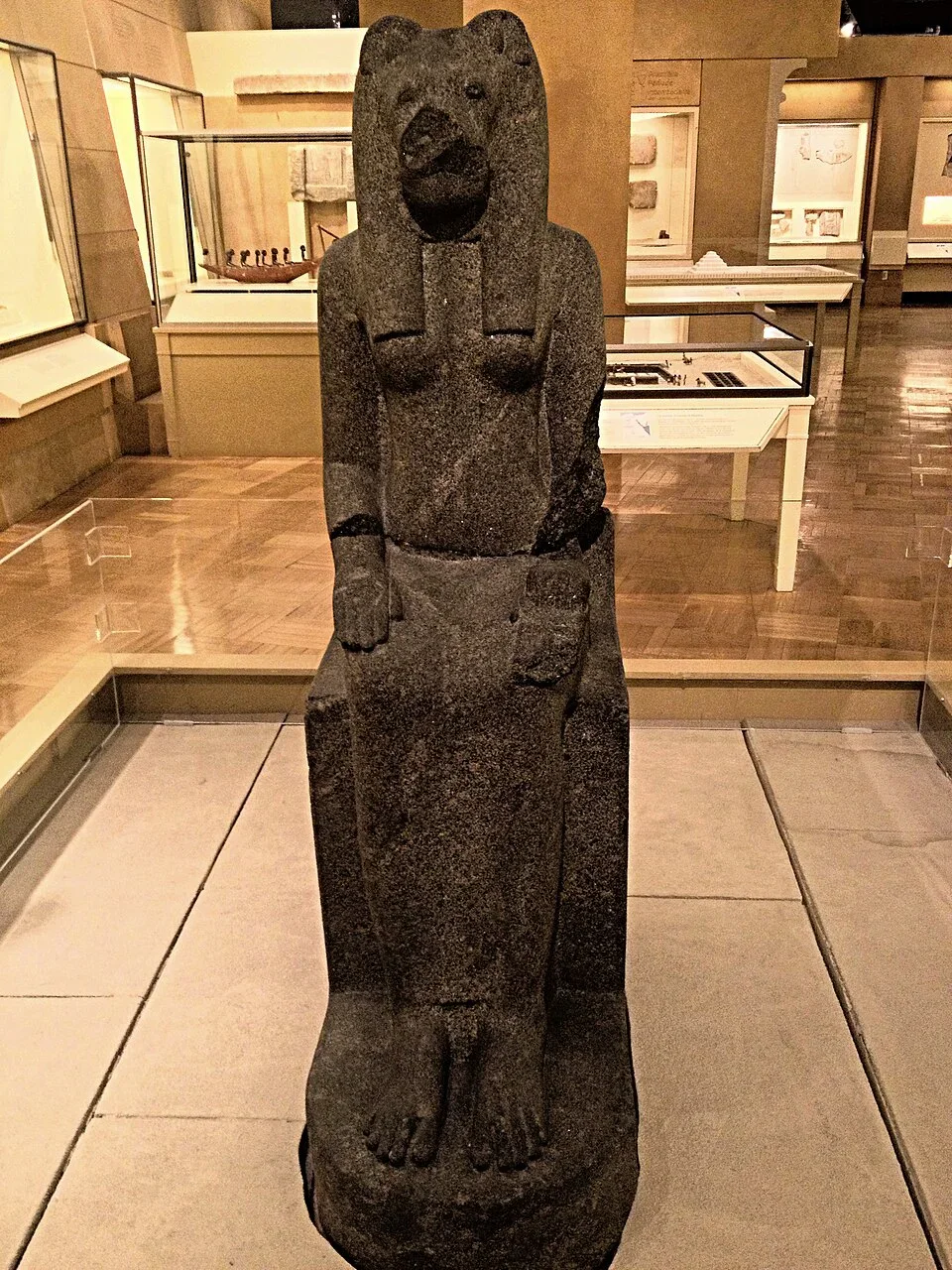
Statue of Sekhmet
A woman sits here with the head of a lioness. Her name comes from the Egyptian word for power, meaning the Powerful One. She was Egypt's goddess of war, and a protector of balance and of her people. Yet war was only half of her. She was also linked to healing, and her priests were trained as doctors and surgeons. She was made around 1360 BC, in the reign of Amenhotep the Third. She is thought to have come from the Temple of Mut at Karnak. That temple was known for its hundreds of statues of Sekhmet. In her left hand she holds an ankh, a sign of eternal life. Sekhmet is usually shown with a lotus in her right hand too, a flower of creation and rebirth. This one holds only the ankh.
Listen in the appPhoto: Sasaki.y · CC BY-SA 3.0
02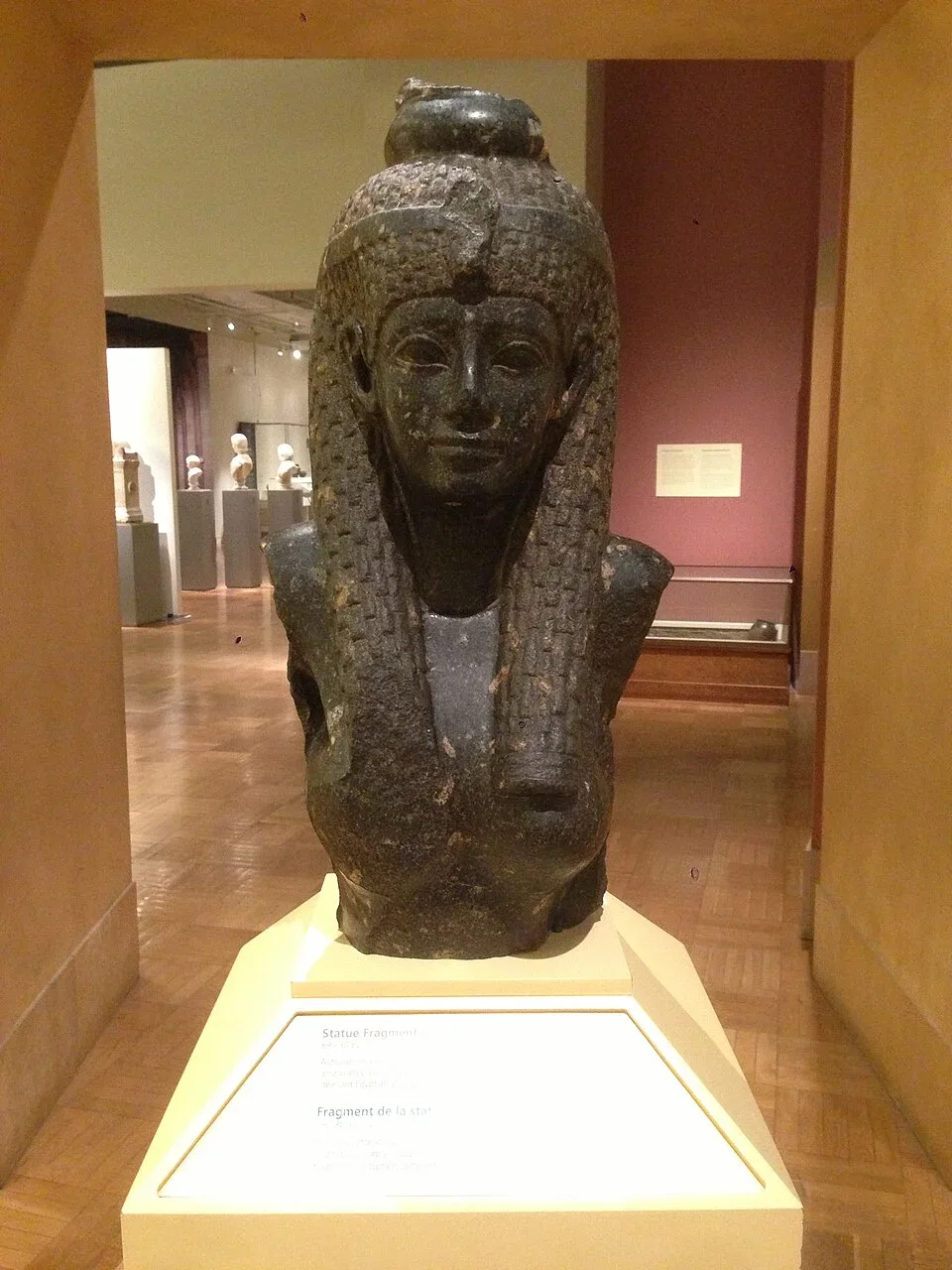
Bust of Cleopatra
On this head, the headband carries a single cobra. No one knows who carved her, and scholars have struggled to say who she is. The first attempt came in 1960. The thin line at her neck and the style of the face put her around 240 to 200 BC. That would make her Berenice the Second or Arsinoe the Third. The cobra could not settle it. The same emblem could mark a queen or a goddess. But comparing her neckline with other statues moved the date to between 200 and 100 BC. In profile the face is flat, almost angular, with deep carving around the eyes, like Roman copies of older Egyptian sculpture. Cleopatra had a policy of linking herself with Arsinoe the Second, an earlier queen who remained a popular goddess. Copying the old statues was part of it, so older features turned up in portraits of her own time. A near twin in London supplied the last clue. Like this one, it has the unusual pillar behind the head. But it carries an inscription, king's sister and king's wife, and it wears three cobras. So this may be Cleopatra early in her reign, before she adopted three cobras. It is believed to have come from Cleopatra's sunken palace in Alexandria, and was bought by the museum's founder early in the last century.
Listen in the appPhoto: KevinDInno · Public domain
03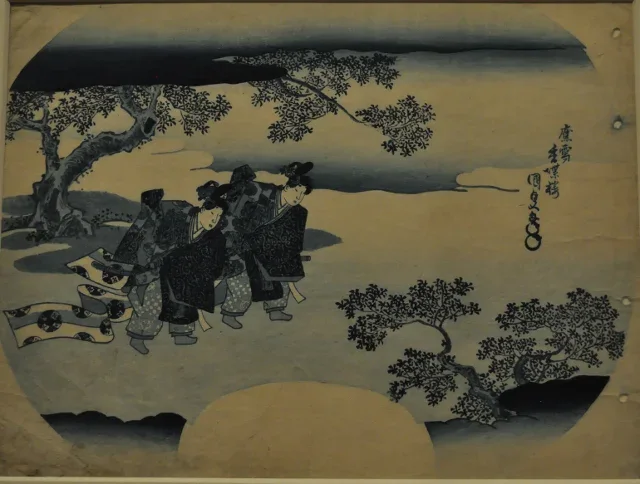
Fan print with two bugaku dancers
This is an uchiwa, a flat oval fan for keeping cool in summer. Blue prints like this were popular on fans, perhaps because one colour was cheaper to print. In the clouds and across the ground, the blue runs from very pale to almost black. To get that shading, Kunisada brushed water and pigment onto the printing block in careful steps, a technique called bokashi. It was a costly way to work, and artists usually saved it for formal prints, not a cheap summer fan. He spent it on this one. On top of that shaded blue he set two bugaku dancers in ceremonial costume. They appear to be stepping in unison, with no audience in front of them. Bugaku is an old court dance, often performed in masks. These two show their faces. What is still not known is exactly when he made it, sometime between the mid 1820s and 1844.
Listen in the appPhoto: Sianljones · CC BY-SA 3.0
04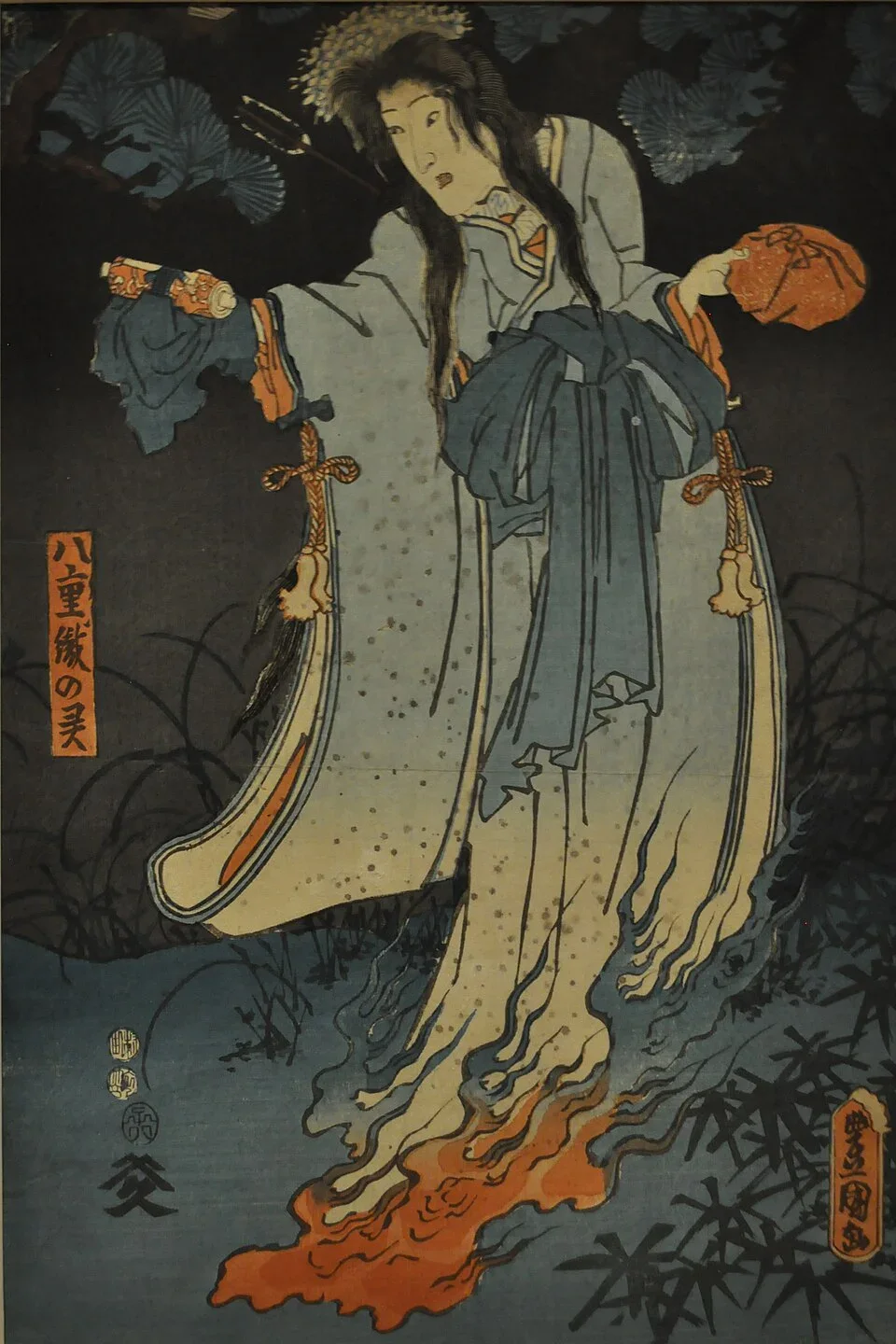
Female Ghost
A woman floats above a grassy field, footless, with flames around her. Her long black hair streams out, and pine boughs frame her head. She wears a long pale blue kimono with long sleeves. She is Princess Yaeki, a ghost in a kabuki play, and the actor who played her was Onoe Baiko. His name is not on the print. Her kimono closes left over right, the way a living woman's would. For burial, the dead were dressed right over left. This print is the centre of a triptych, and the image on the left shows Akamatsu Shigetamaru, played by Ichikawa Kodanji. Her gaze follows her outstretched right arm. Ghost plays were popular with audiences, and Kunisada made pictures of their ghost characters. He made more than twenty prints from this one play.
Listen in the appUtagawa Kunisada · Public domain
05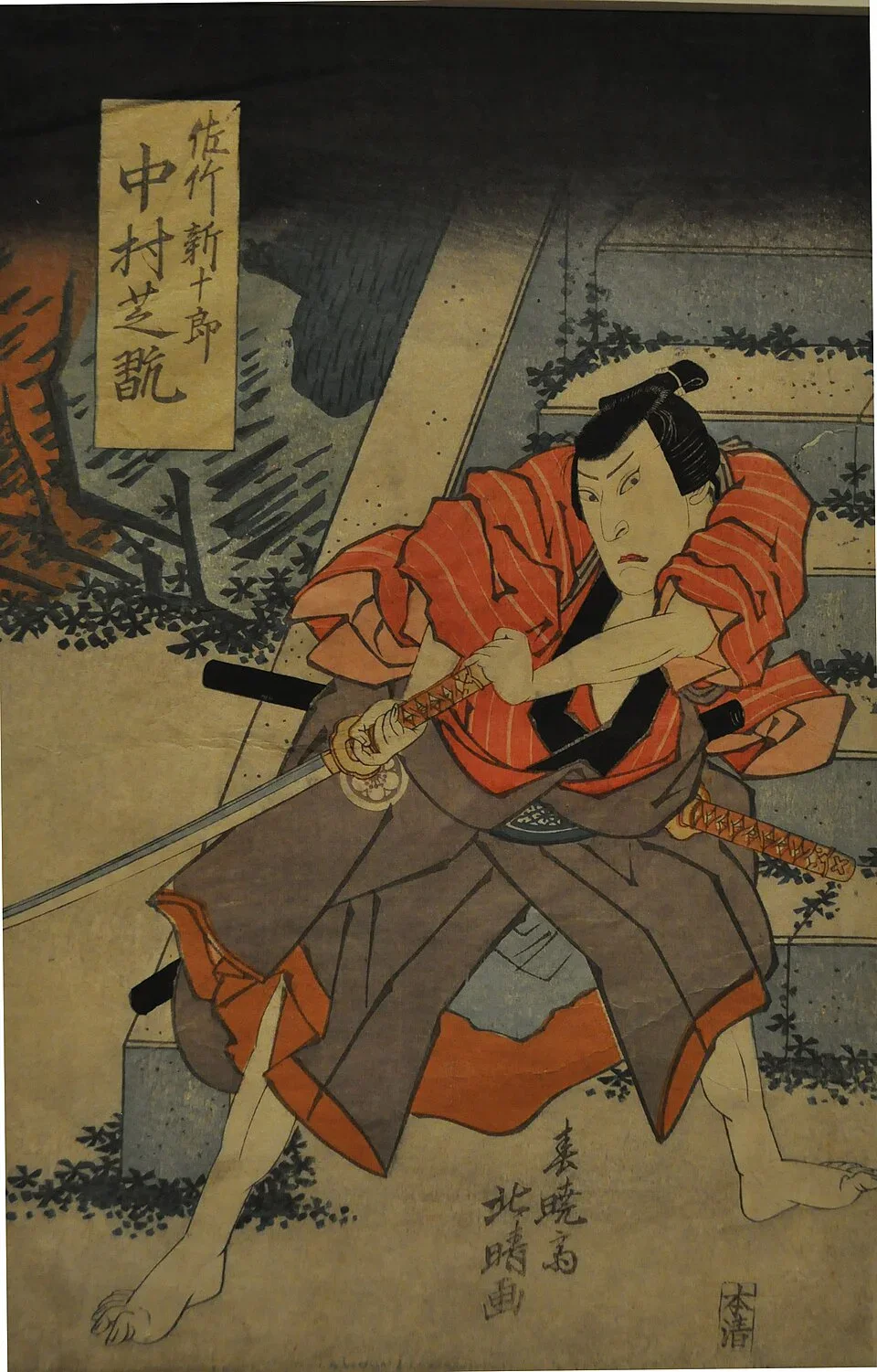
Actor Nakamura Shikan II as Satake Shinjuro
A sword is drawn, and the actor holds it out in front of him with both hands. Barefoot at the bottom of a stone stair, he looks to his right, away from the others, his face serious. His whole costume is set up for a fight. His arms have come out of the grey jacket, and its sleeves hang at his sides. A cord holds back the long sleeves of his red kimono, striped with thin white lines. Both free him to move. The actor is Nakamura Shikan the Second, and the part is Satake Shinjuro, a samurai. The play, Keisei Asoyama Sakura, was staged in 1827 at two Osaka theatres at once, which was unusual. Shikan played this part at the Kado Theatre. The star there, Nakamura Utaemon the Third, is credited with writing that version, a political thriller. Its high point seems to have been a dance by the three leading actors. Hokusei, an Osaka artist known for actor portraits, drew this sheet for a set of three prints brought out soon after the performance. Two other artists made the other two, yet all three share one seamless background. And there is a second sword behind him, still in its sheath. Its handle peeks out on the left, where a right-handed samurai could reach it most easily.
Listen in the appPhoto: Sianljones · CC BY-SA 3.0
06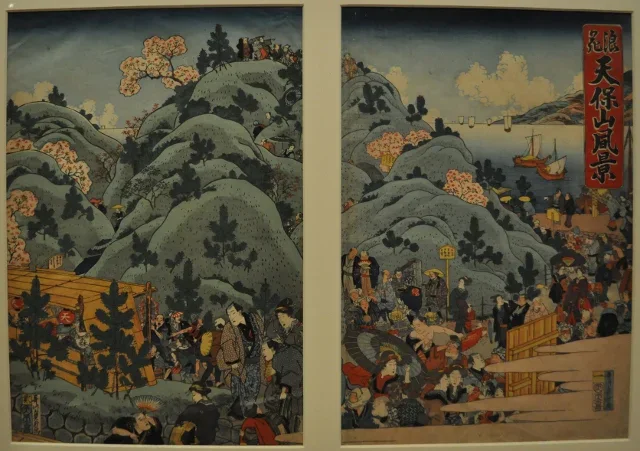
View of Tempōzan Park in Naniwa
Almost nothing is known about the man who signed these two prints. Yet his name is right there, in a rectangular cartouche. It reads Sadamasu. That was the name he used before 1848, when he took the name Kunimasu. So the signature here is one he gave up. He was a wealthy landowner in Osaka, not a professional artist. He had studied with Kunisada in Edo. He put his fortune into backing other printmakers in Osaka and running a school of print design. Most prints from Osaka and Kyoto then showed kabuki actors, and many were made by amateur kabuki fans. Instead, he shows a hill in Naniwa, the old name for Osaka, crowded with visitors out for the cherry blossoms. At the top of each sheet, yellow squares carry the numbers one and two. These are the first two panels of a set of four, read from right to left. Both sheets bear the mark of a publisher called Tenki. The seal used here appears on prints made between 1826 and 1838.
Listen in the appPhoto: Sianljones · CC BY-SA 3.0
07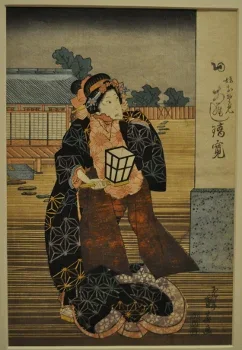
Actor Arashi Rikan II as Osome
Night is made here by a gradual change of colour. The sky is pale grey at the bottom and darkens to black along the top edge. The technique is called bokashi. The house behind the woman is completely dark, and she is leaving it. She carries a lit lantern, and her kimono is dark but patterned with colour. She looks up to her left, uneasy, her gaze going past the edge of the print. She is Osome, heroine of a play about the love of Osome and Hisamatsu. It began in the puppet theatre and reached the kabuki stage in 1782. It tells a true story. In 1710, a merchant's daughter and her father's apprentice killed themselves together. The face is Arashi Rikan the Second, an actor known for male roles, here playing a woman. He played Osome at Osaka's Kado theatre in the ninth lunar month of 1830, and this print was probably made to mark that performance. Its maker, Ryūsai Shigeharu, was one of very few print artists in Osaka working professionally. Almost every other actor print there came from amateur kabuki fans. What is still not known is whether a matching print of Hisamatsu was meant to stand beside this one.
Listen in the appPhoto: Sianljones · CC BY-SA 3.0
08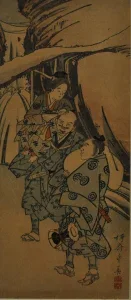
Three Travellers before a Waterfall
Is this a picture of a waterfall, or of three people on a country path? The travellers fill the front of the print, two men and a boy walking through the countryside. The falling water sits well behind them. The men wear straw sandals, leggings and swords, their kimono ending at the calf, just as Edo period travellers dressed. And each of them carries something. The boy has a closed folding fan. The man in the middle carries the boy on his shoulder. The man in front holds a small drum in his left hand and a large white bundle in his right. That was the appeal of prints like this, to feel you were right there with ordinary people on the move. When waterfalls were in fashion, Hokusai's waterfall series from around 1832 made the falling water huge and the people tiny. Ryūsai Shigeharu did the reverse here, leaving the waterfall in the distance and giving the foreground to the travellers. By then a journey itself had become a pleasure, and the sights and small adventures along the way were what people wanted to see.
Listen in the appPhoto: Sianljones · CC BY-SA 3.0
09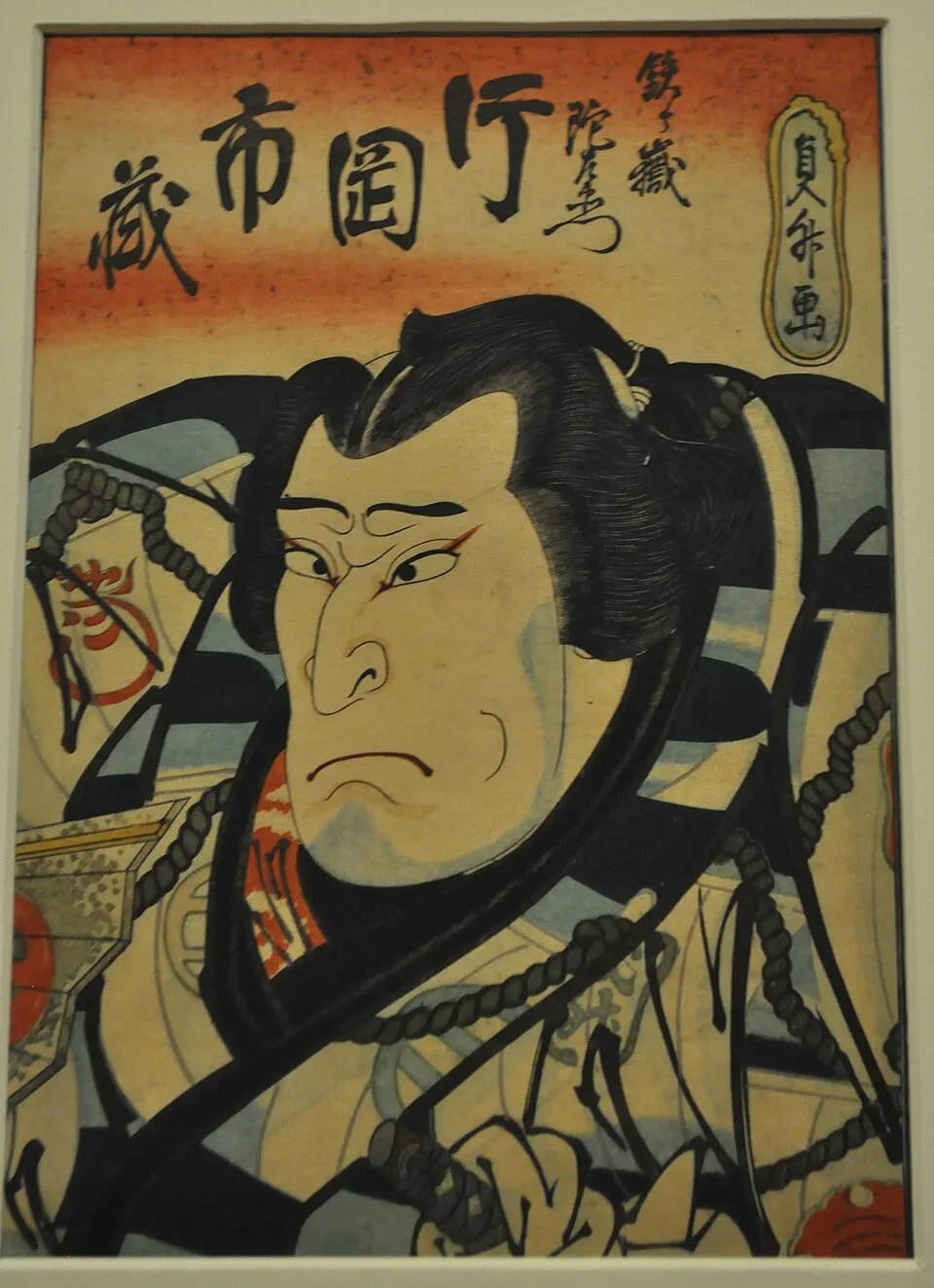
Bust portrait of Actor Kataoka Ichizō I
A small frame on this print holds the artist's name. Its edge is yellow and its middle pale blue, a mark of good luck the Utagawa school used. The name reads Sadamasu. That one name belonged to two printmakers. One of them kept it until 1848, when he changed it to Kunimasu. The other was his pupil, who took it up and worked under it only between 1849 and 1850, making a handful of prints. So which man drew this face? There is no date seal and no censor's mark to help you decide. If it was the teacher, the print came before 1848. A likely year is 1839, when the play was staged in Osaka. If it was the pupil, it belongs to those two short years. The actor is not in doubt. Kataoka Ichizō played villains, and here he is Tetsugadake Dazaemon, the rival the hero beats in a sumo play about debt and duty. His head fills the sheet, with his name and role written beside him. He was drawn as the right half of a pair. The left sheet shows the play's hero, and the two heads mirror one another.
Listen in the appPhoto: Sianljones · CC BY-SA 3.0
10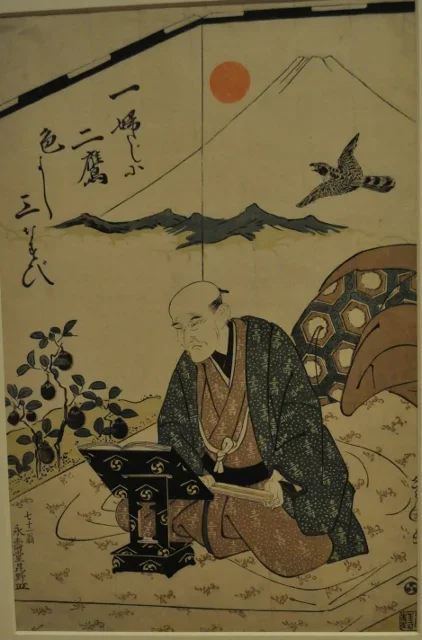
Eijudō Hibino at Seventy-one
A publisher reached seventy-one and had a print made of himself. In his day, single prints showed beautiful women or actors, never an ordinary man. Nishimuraya Yohachi wanted the year marked. He sits on his bedding before a folding screen. Across his winter coat and kimono one character repeats. It means long life, and it is also the second character in Eijudo, the name of his shop. His business name becomes a wish for more years. On the screen are an outline of Mount Fuji, a hawk in flight, and an eggplant. A New Year verse above repeats them. In the year's first dream, seen in that order, these were thought to bring good fortune. Hawk can mean high or great. Eggplant can mean to succeed. Fuji, written with other characters, can mean no death. Together the three sounds can be heard as unparalleled success. Toyokuni, an artist known for actor prints, drew him before a lectern bearing his publishing house's mark, with an open book. A folded fan lies on his lap. He is probably reciting Noh plays, a New Year custom meant to show elegance and learning. A small flourish follows his own signature at the lower left, and it hints that Nishimuraya himself may have done the calligraphy and perhaps the screen's images.
Listen in the appPhoto: Sianljones · CC BY-SA 3.0
- 11
Ichikawa Omezō as a Pilgrim and Ichikawa Yaozō as a Samurai
Utagawa Toyokuni I · 1800–1804
- 12
Actor Ichikawa Ebijuro as Samurai
Shunshosai Hokucho · 1823
- 13
Two Actors in Samurai Roles
Konishi Hirosada · 1847–1850
- 14
Paradise of Maitreya
Zhu Haogu
- 15
Spring and autumn landscapes (Hara Zaishō)
Hara Zaishō
- 16
Portrait of Namjar
Unknown Artist · 1759
- 17
Wei Bin's Temple Bell
Unknown Artist · 1518
- 18
Tomb of General Zu Dashou
Unknown Artist
- 19
Earl of Pembroke's Armour
Unknown Artist · 1550s
- 20
Homage to the Highest Power (East Wall)
Unknown Artist · 1325
- 21
Light of the Desert
Unknown Artist
Royal Ontario Museum
Frequently asked questions
How much does the guide cost?
Free app download. Free until 1 January. Listed guide price: $1.99. Audio guide only. Venue admission is separate.
Can I listen without internet?
Yes. Download the guide’s audio, images, and maps in the app before your visit. Your downloaded content is then available offline.
Can I listen in my language?
In English for now. More languages soon.
Do I need to follow a schedule?
No. This is a self-guided experience. Choose your stops, pause whenever you like, and return to a story at your own pace.
Which artworks are in the Royal Ontario Museum audio guide?
21 artworks, including Statue of Sekhmet (Unknown Artist), Bust of Cleopatra (Unknown Artist), Fan print with two bugaku dancers (Utagawa Kunisada), Female Ghost (Utagawa Kunisada), Actor Nakamura Shikan II as Satake Shinjuro (Shungyōsai Hokusei), View of Tempōzan Park in Naniwa (Utagawa Kunimasu), Actor Arashi Rikan II as Osome (Ryūsai Shigeharu), and Three Travellers before a Waterfall (Ryūsai Shigeharu). The full list is on this page.
Is this the museum’s official audio guide?
No. Stanza is an independent audio guide app and is not affiliated with Royal Ontario Museum. Museum admission is separate.
At your own pace
Explore Royal Ontario Museum.
Download Stanza, then search for “Royal Ontario Museum”.
Free app download · Guide price shown in the app
Keep exploring
Audio guides — Canada
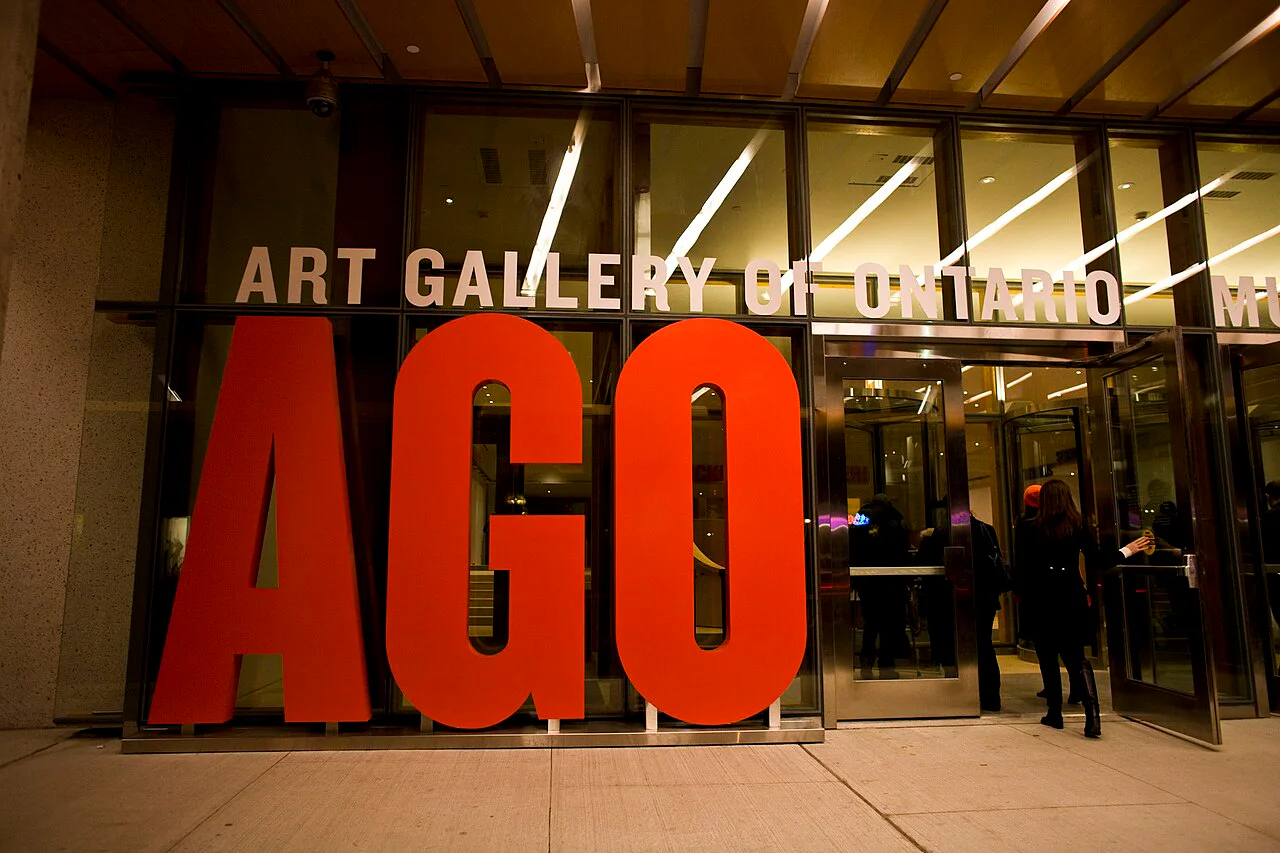
Toronto · 2 km
Art Gallery of Ontario
Content & sources
Owen Byrne from Ottawa, Canada · CC BY 2.0
Toronto · 2 km
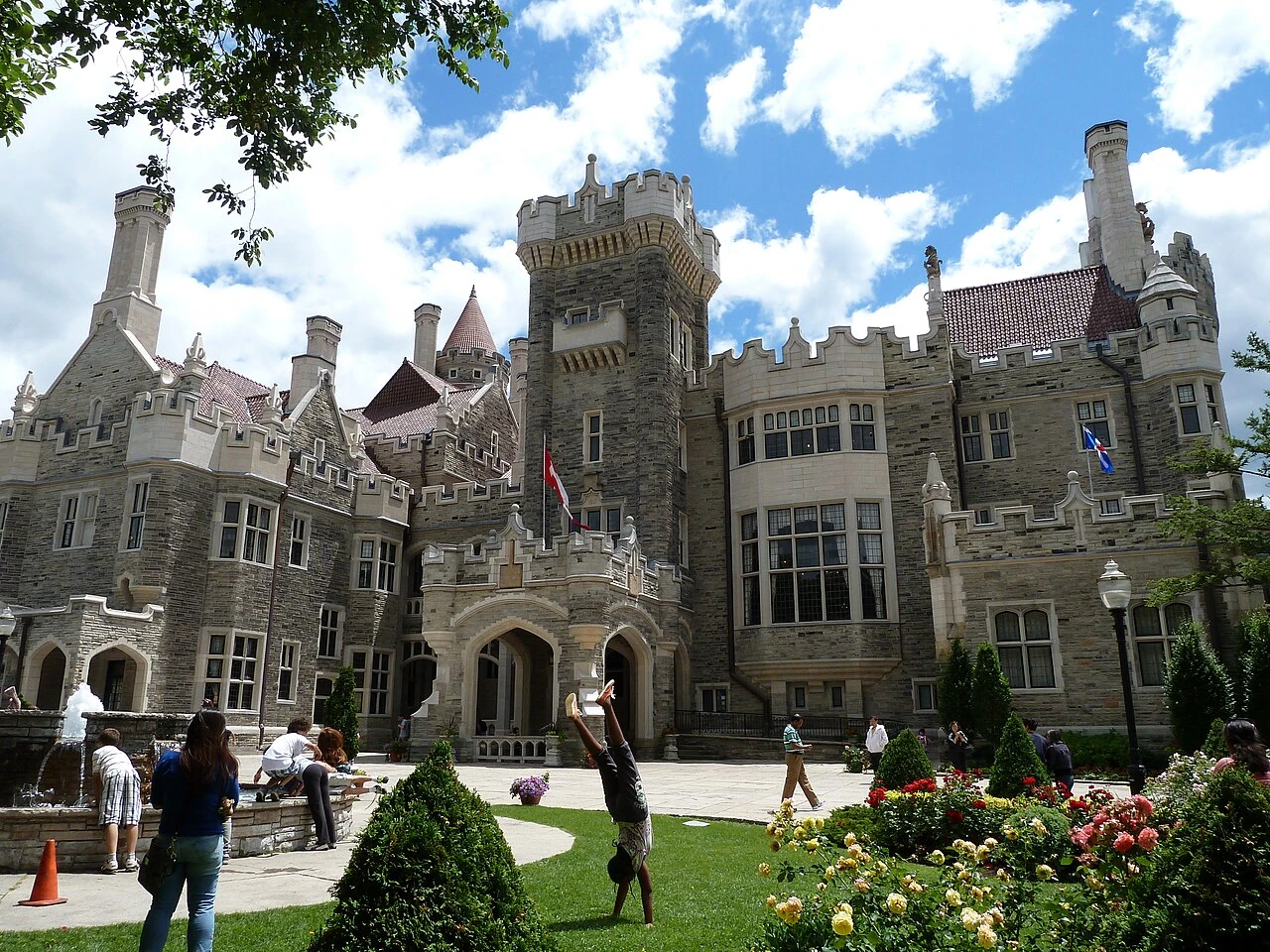
Casa Loma
Content & sources
Priscilla Jordão from São Paulo, Brasil · CC BY-SA 2.0
Toronto · 3 km
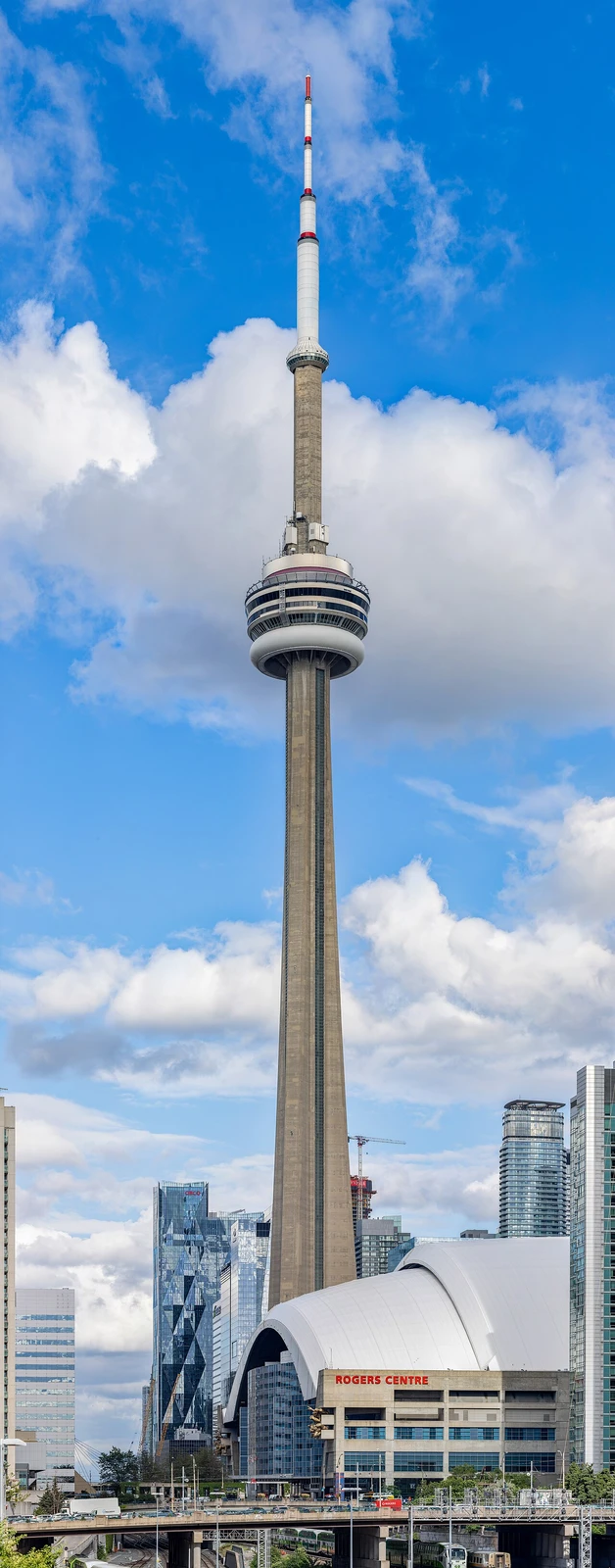
CN Tower
Content & sources
Chris Woodrich · CC BY-SA 4.0
Montreal
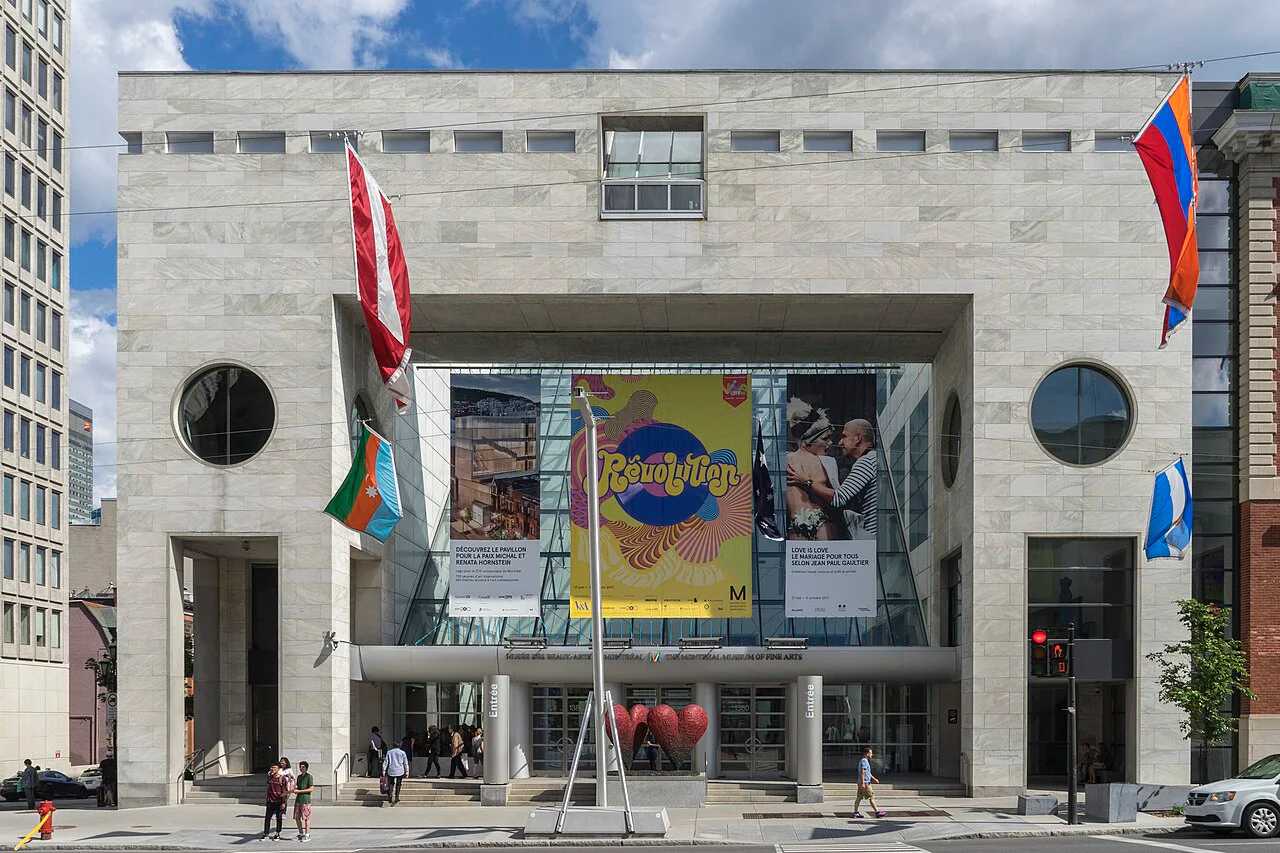
Montreal Museum of Fine Arts
Content & sources
Thomas Ledl · CC BY-SA 4.0
Art museums
More art museum audio guides
Toronto · 21 artworks
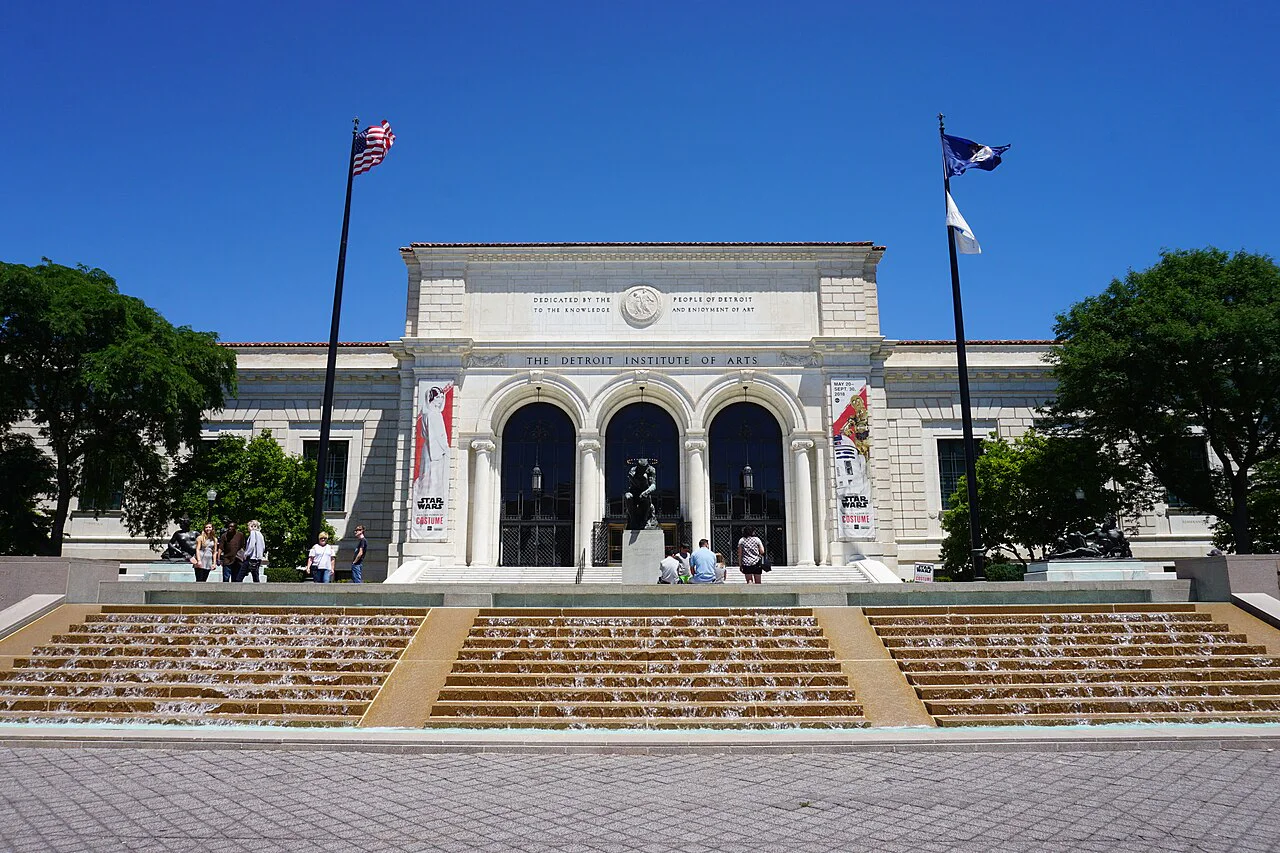
Art Gallery of Ontario
Content & sources
Owen Byrne from Ottawa, Canada · CC BY 2.0
Detroit · 57 artworks
Detroit Institute of Arts
Content & sources
Photo: Michael Barera · CC BY-SA 4.0
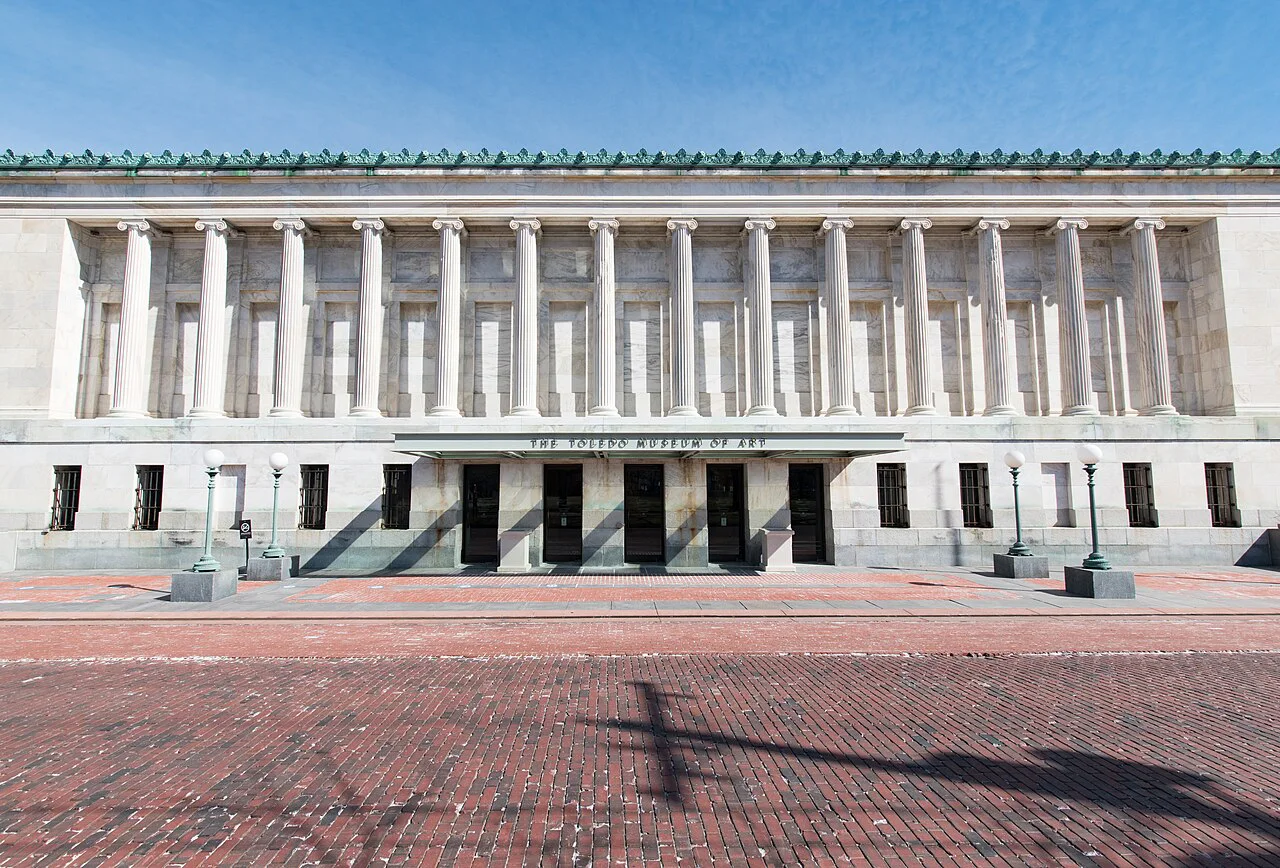
Toledo · 32 artworks
Toledo Museum of Art
Content & sources
Photo: Ɱ · CC BY-SA 4.0
Montreal · 31 artworks
Montreal Museum of Fine Arts
Content & sources
Thomas Ledl · CC BY-SA 4.0
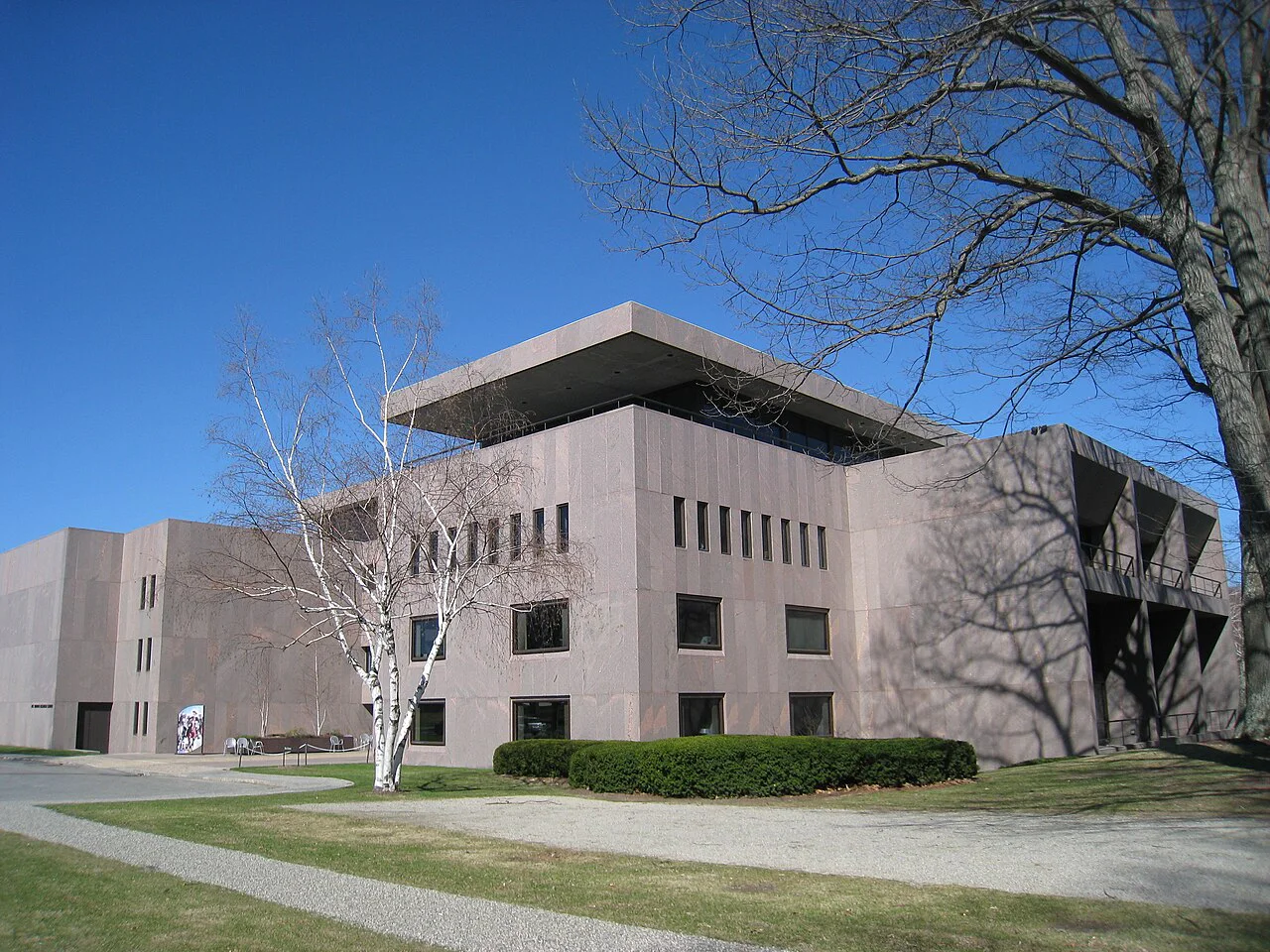
Williamstown · 39 artworks
Clark Art Institute
Content & sources
Photo: Daderot · Public domain
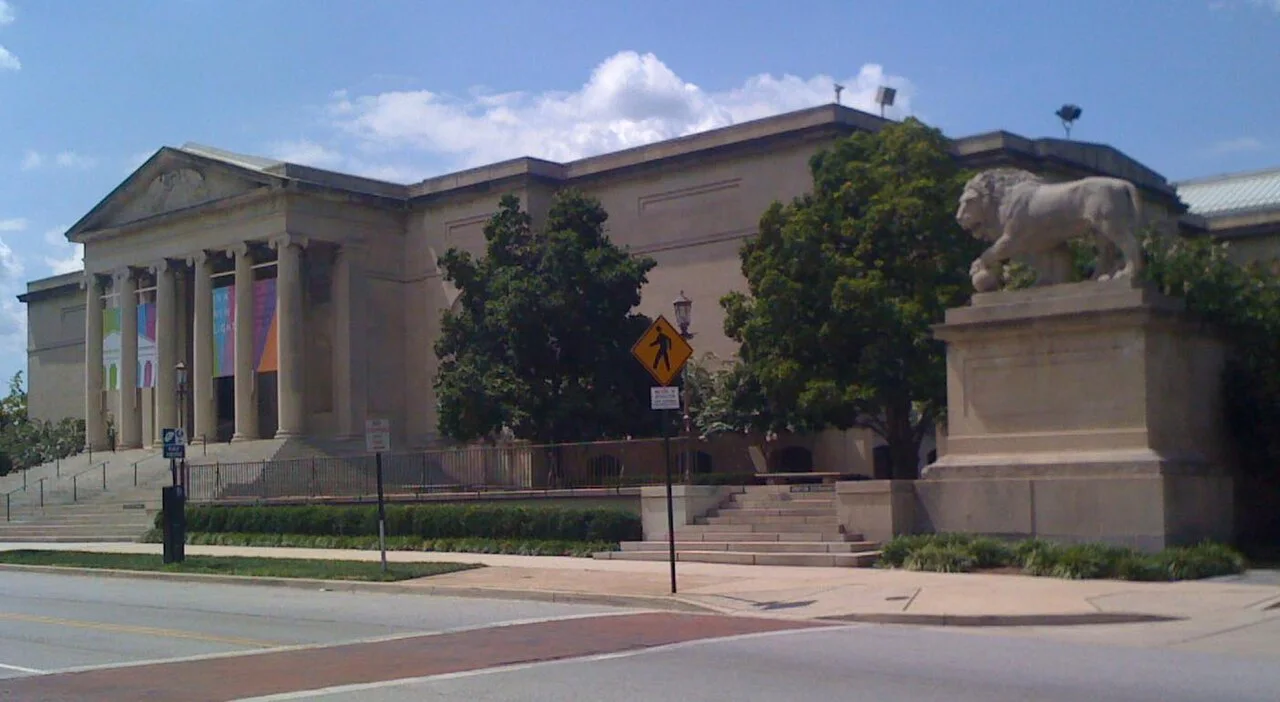
Baltimore · 19 artworks
Baltimore Museum of Art
Content & sources
«Marylandstater» «reply» at English Wikipedia. · Public domain