Stanza · Audio guide
Stari grad Dubrovnik Audio Guide
A place to remember. A story to take with you.
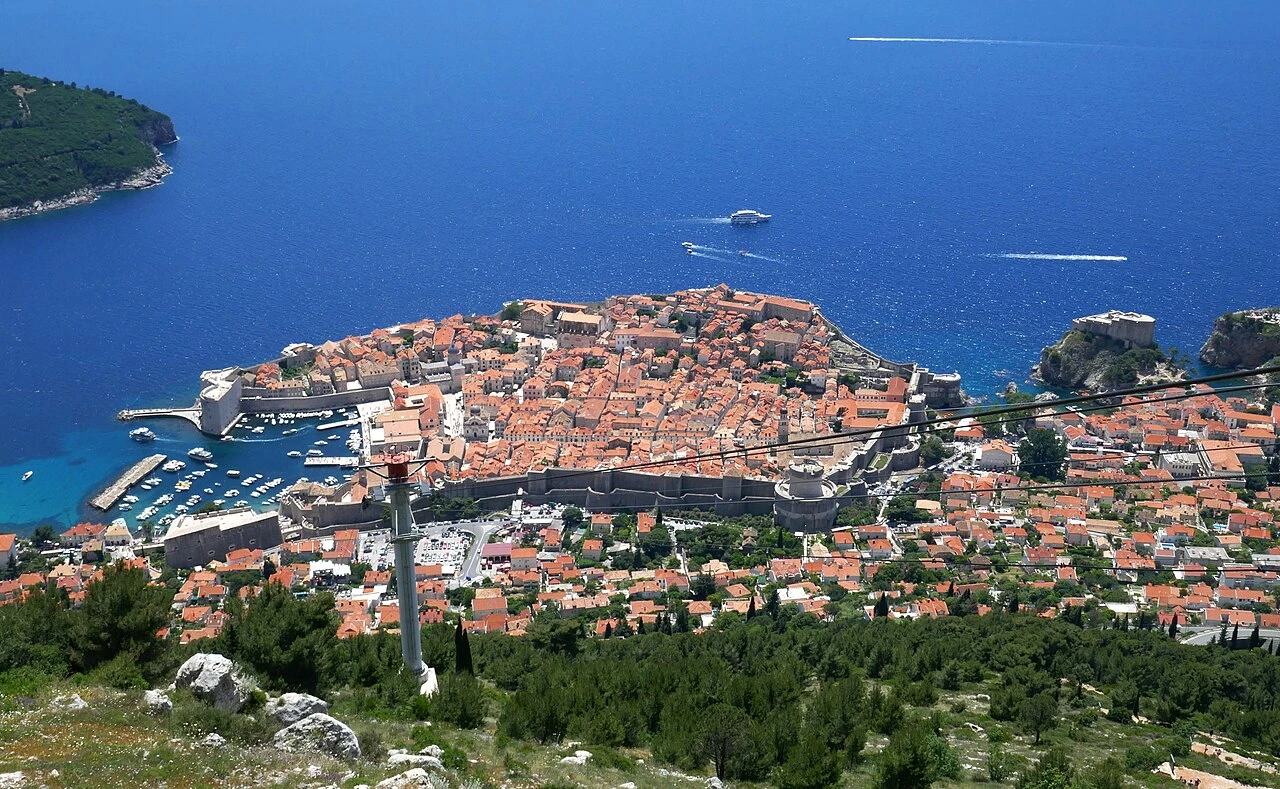
The Old City of Dubrovnik is a historic urban area enclosed by massive stone walls along the Adriatic Sea. It is a UNESCO World Heritage site renowned for its well-preserved medieval architecture and…
Download Stanza, then search for “Stari grad Dubrovnik”.
About the tour
One guide. Your kind of visit.
The Old City of Dubrovnik is a historic urban area enclosed by massive stone walls along the Adriatic Sea. It is a UNESCO World Heritage site renowned for its well-preserved medieval architecture and limestone streets.
Ready when you are.
- 01Get the free Stanza app.
iOS & Android
- 02Find your guide.
“Stari grad Dubrovnik”
- 03Download before you go.
Works offline
Audio guide / 41 narrated stops
Inside the guide
Get to know a few of the stories before you go. Open a stop to read more.
01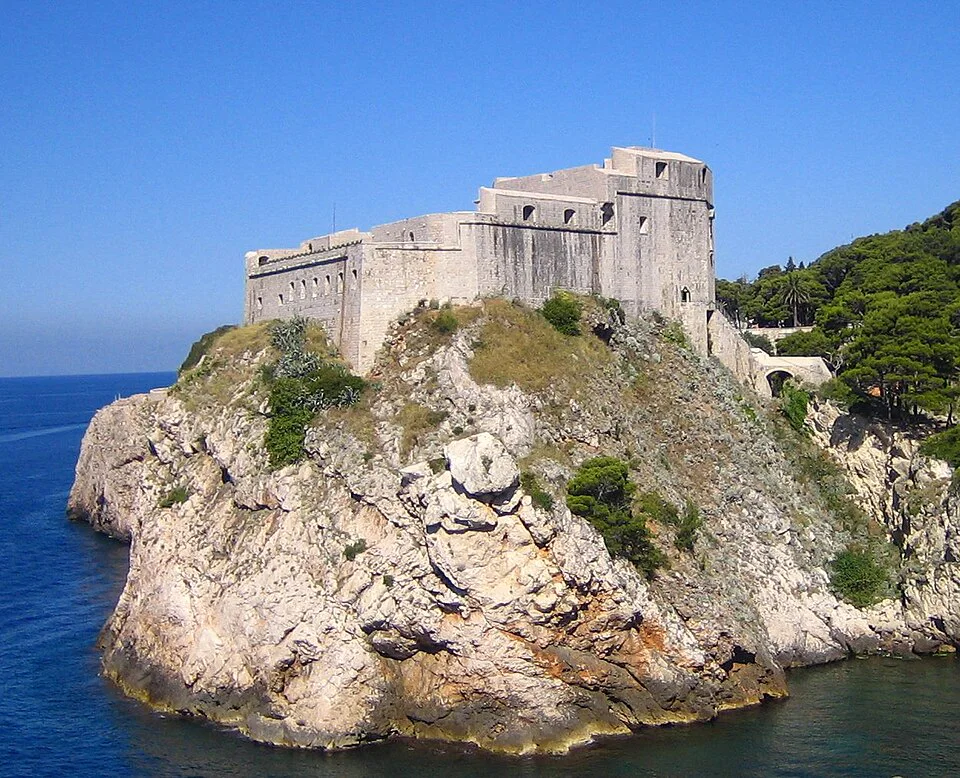 Fort Lovrijenac
This is Fort Lovrijenac, a fortress on its own rock, apart from the city walls, rising about thirty-seven metres above the sea. People call it Dubrovnik's Gibraltar. Its story begins with a race. Early in the eleventh century, Venice tried to build a fort on this very spot. Had the Venetians succeeded, they would have kept Dubrovnik under their power. The people of the city beat them to it. The Chronicles of Ragusa say the fort went up in just three months, so that when Venetian ships arrived loaded with building materials, they were told to sail home. From then on the fort was constantly rebuilt. Its walls tell the same story of distrust. The sides facing outward reach twelve metres thick. The wall facing the city itself is only sixty centimetres. Two drawbridges lead in, and above the gate runs an inscription: Liberty cannot be sold for all the gold in the world. But the earliest record of the fort is from 1301, when the city council voted on its commander. The fort overshadows both ways into the city, from the sea and by land. Today it is best known as a stage, and its open-air Hamlet has become the symbol of the Dubrovnik Summer Festival.
Listen in the appPhoto: Pufacz · Public domain
02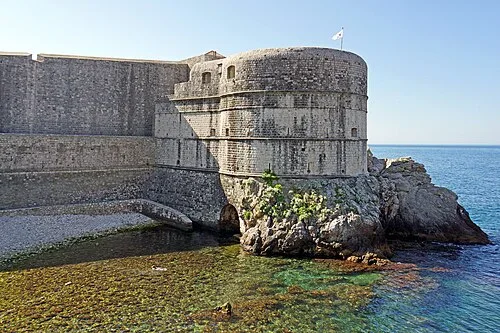 Bokar Fortress
Out at the western corner of the walls, a round bastion rises from rock above the sea. This is Bokar, one of the five most important towers of the city's defences, close to the fortress of Lovrijenac. Its design follows the plans of Michelozzo, an architect from Florence. Work began in 1461. The tower was only completed to his drawings in 1570. It has a horseshoe shape, a clean circular body with three cornices, and inner rooms and terraces. Its job was artillery. Bokar's guns were meant to sweep the moat and the bridge at the Pile Gate, and to watch the approach from the sea in case of a siege or an enemy landing. A casemate inside held ammunition and smaller guns. Facing the open sea, it also suited practice: from 1463 onwards, the range of the city's cannons was tested from here.
Listen in the appDennis G. Jarvis · CC BY-SA 2.0
03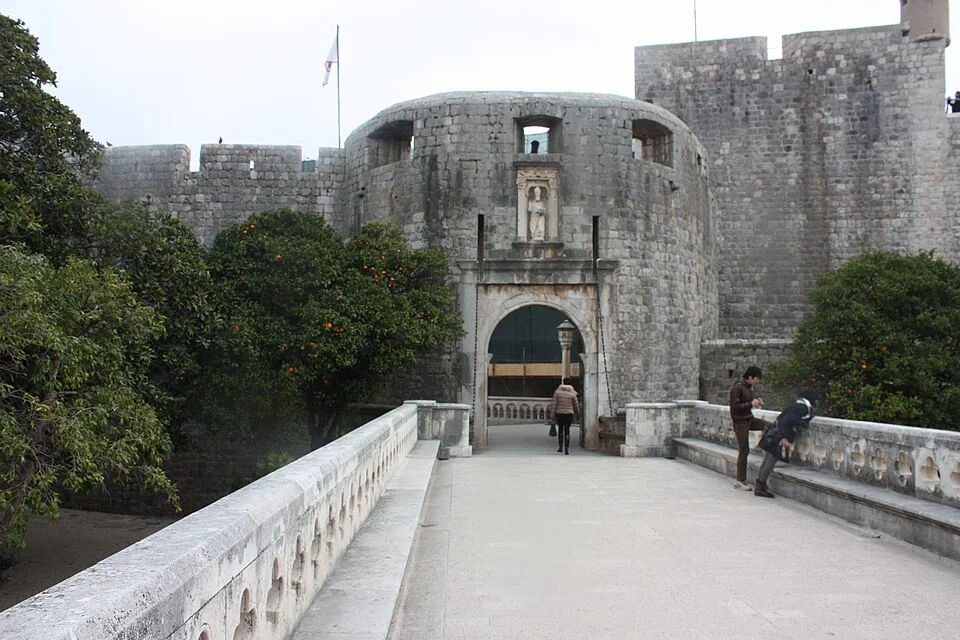 Pile Gate
Dubrovnik's Old Town is a walled medieval city that grew rich on trade and kept its independence between larger powers. It was built and governed by the Republic of Ragusa, a merchant republic whose main growth came between the fourteenth and sixteenth centuries. Two disasters mark its later story: an earthquake in 1667, and a siege in the early 1990s. This gate was the city's western entrance, traditionally the first meeting with the town. A fortress already stood here in 972. It was pulled down in 1818, though traces can still be seen between the outer and inner gates. The outer gate took its Renaissance arch form in 1573, set in the wall of a semicircular fortress. A stone bridge of three arches leads up to it. Paskoje Miličević, a city engineer whose name is attached to many Dubrovnik buildings, raised it in 1471. In the time of the Republic, the bridge ended at a wooden drawbridge, raised at a set hour each night and lowered in the early morning to let in the suburban folk and traders. The inner gate, set into the main wall, is a Gothic arch of 1460, built on the site of gates recorded back in the thirteenth century. The quarter's name, Pile, is a word of Greek origin that means gates.
Listen in the appPhoto: Bracodbk · CC BY-SA 3.0
04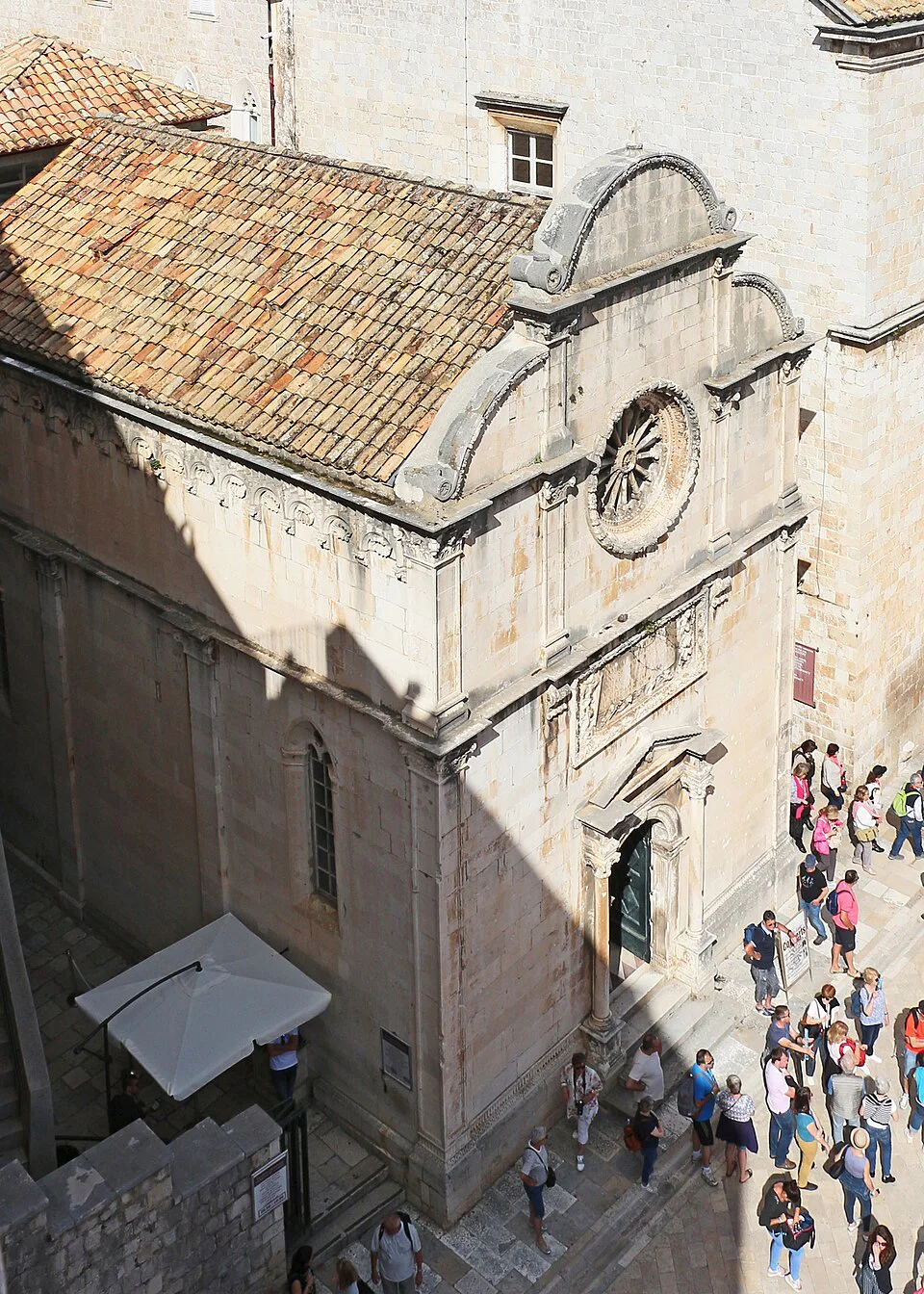 St. Saviour Church
A small church squeezed among taller buildings, with a tiled roof and a carved portal under a curved pediment. It is St Saviour, a votive church, meaning it was built as an act of thanks. On 17 May 1520 an earthquake killed about twenty people and damaged many buildings in Dubrovnik. The Senate which governed the Republic commissioned this church in gratitude that the city had been spared worse. A monumental inscription above the main entrance still records it. The design came from Petar Andrijić, an architect from Korčula. Construction began that same year and was completed in 1528. The church mixes its styles openly: a Gothic ribbed vault inside, pointed Gothic windows at the sides, and a Renaissance portal with a three-lobed curved top outside. In 1667 a far worse earthquake struck the city. It killed some five thousand citizens and destroyed much of Dubrovnik. St Saviour withstood it, and so it stands today in its original form, a fine example of the town's Renaissance architecture.
Listen in the appBernard Gagnon · CC BY-SA 4.0
05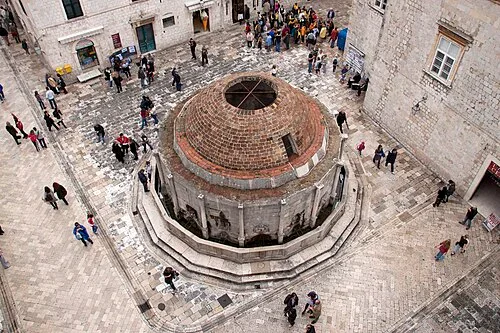 Big Onofrio Fountain
A domed stone fountain stands at the edge of the square, a many-sided basin with people gathered all around it. This is Big Onofrio's Fountain, built in 1438 by Onofrio della Cava, an engineer from Naples, as part of Dubrovnik's aqueduct. The feat was remarkable for its time: fresh water was brought from a spring twelve kilometres away. Water leaves the fountain through sixteen carved stone masks. It stands in front of the Poor Clares' monastery, beside the Pile Gate. Originally it was richly decorated; the plainer form visible today dates from after the great earthquake of 1667. Together with the Small Onofrio Fountain at the other end of the main street, it gave the city's people water at two central points, and smaller fountains served the rest of the town. The big fountain remained in use until the end of the nineteenth century. A statue of a dog that once stood here, set up in the fifteenth century, was removed in the nineteenth, and only returned, repaired, in 2016.
Listen in the appTony Hisgett from Birmingham, UK · CC BY 2.0
06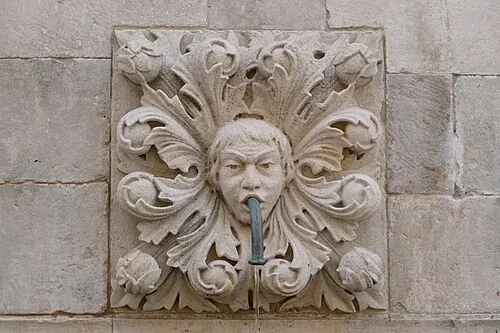 Big Onofrio Fountain
Carved Water Spout
Where the water left the fountain, the practical business of plumbing became sculpture. A face looks out from a square panel of stone, framed by deeply carved leaves curling around it. A metal pipe passes through its mouth, set through the carved lips so the water falls clear of the stone. Masks like this were the decorative points of outflow on the city's fountains: the spout did the work, and the carving dressed it. The stonecutter gave the face a character of its own, with heavy brows and full cheeks, so that it reads as a person rather than a fixture. It is craft in the service of everyday life, the kind of detail most passers-by never notice.
Listen in the appdonald judge · CC BY 2.0
07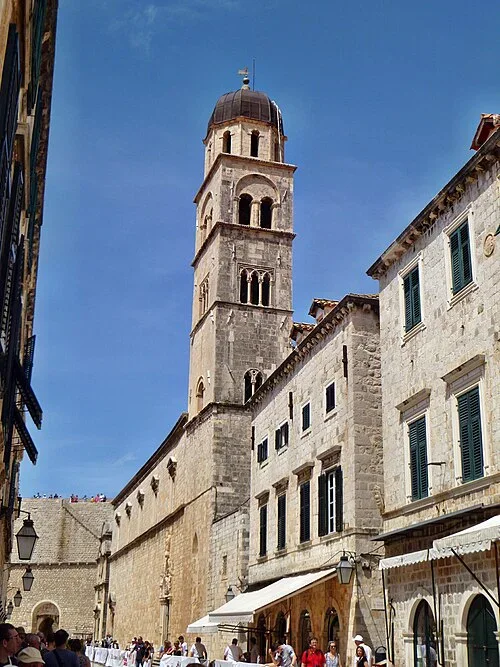 Franciscan Church and Monastery
A tall square belfry with arched bell openings and a stone cap rises above the houses and awnings of the main street. It belongs to the Franciscan church and monastery, a large complex of friary, church, library and pharmacy that fills a whole stretch of the Stradun. The Franciscans founded it in 1317. Their first friary had stood outside the walls back in the thirteenth century. The new house, built inside the walls near the Pile Gate, took centuries to finish, and parts of it were rebuilt several times. The complex carries that long building history in its stone, mixing Romanesque, Gothic, Renaissance and Baroque work. The poet Ivan Gundulić is buried in the church.
Listen in the appJerzy Strzelecki · CC BY-SA 3.0
08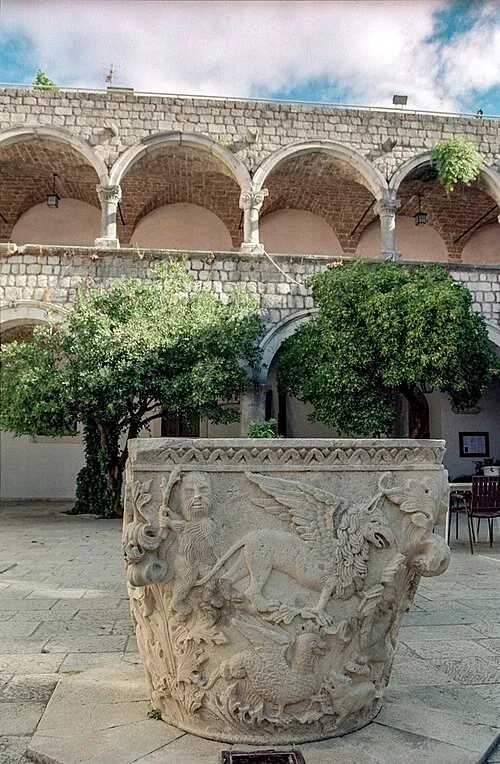 Franciscan Church and Monastery
Cloister Courtyard and Carved Well-head
Behind the church, an enclosed courtyard opens to the sky: a cloister, the quiet heart of the monastery, linking the church with the friars' living quarters. Rows of rounded arches rest on slender columns, and orange trees grow in the open court. This lower cloister was built in the Romanesque-Gothic style, with a hundred and twenty columns and massive pilasters. The master Mihoje Brajkov of Bar raised the friary in the late Romanesque manner in 1360. Every capital on the double colonnade is different, carved with geometric patterns, plants, human faces and animals. In the middle of the court stands a large carved stone well-head, its sides covered with figures: a winged creature, animals and a human figure among scrolls of leaves. A basin like this marked the working centre of a cloister court, the place where water was drawn. What the carved creatures were meant to represent is no longer known.
Listen in the appJerzy Strzelecki · CC BY-SA 3.0
09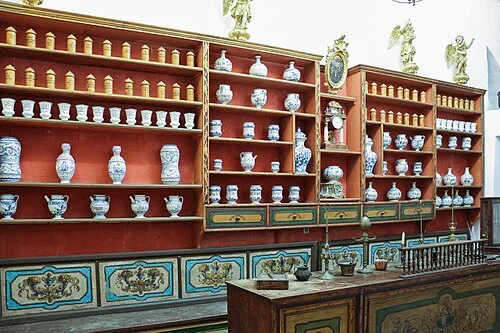 Franciscan Church and Monastery
Franciscan Monastery Pharmacy
Red-painted wooden shelves rise to the ceiling, crowded with ceramic jars in blue-and-white and plain white, above a painted counter with a clock at its centre. This is the old pharmacy of the Franciscan monastery. It goes back to 1317, and the friary's library keeps the inventory of the pharmacy's goods from that very year. The friars prepared and dispensed remedies here; jars of this kind held medicines, ointments and herbs. The friary counts it as the oldest pharmacy still working in Europe, and the third oldest in the world. Small gilt figures stand on the top shelves, and the vessels run in careful rows from tiny vials up to great storage jars.
Listen in the appBernard Gagnon · CC BY-SA 4.0
10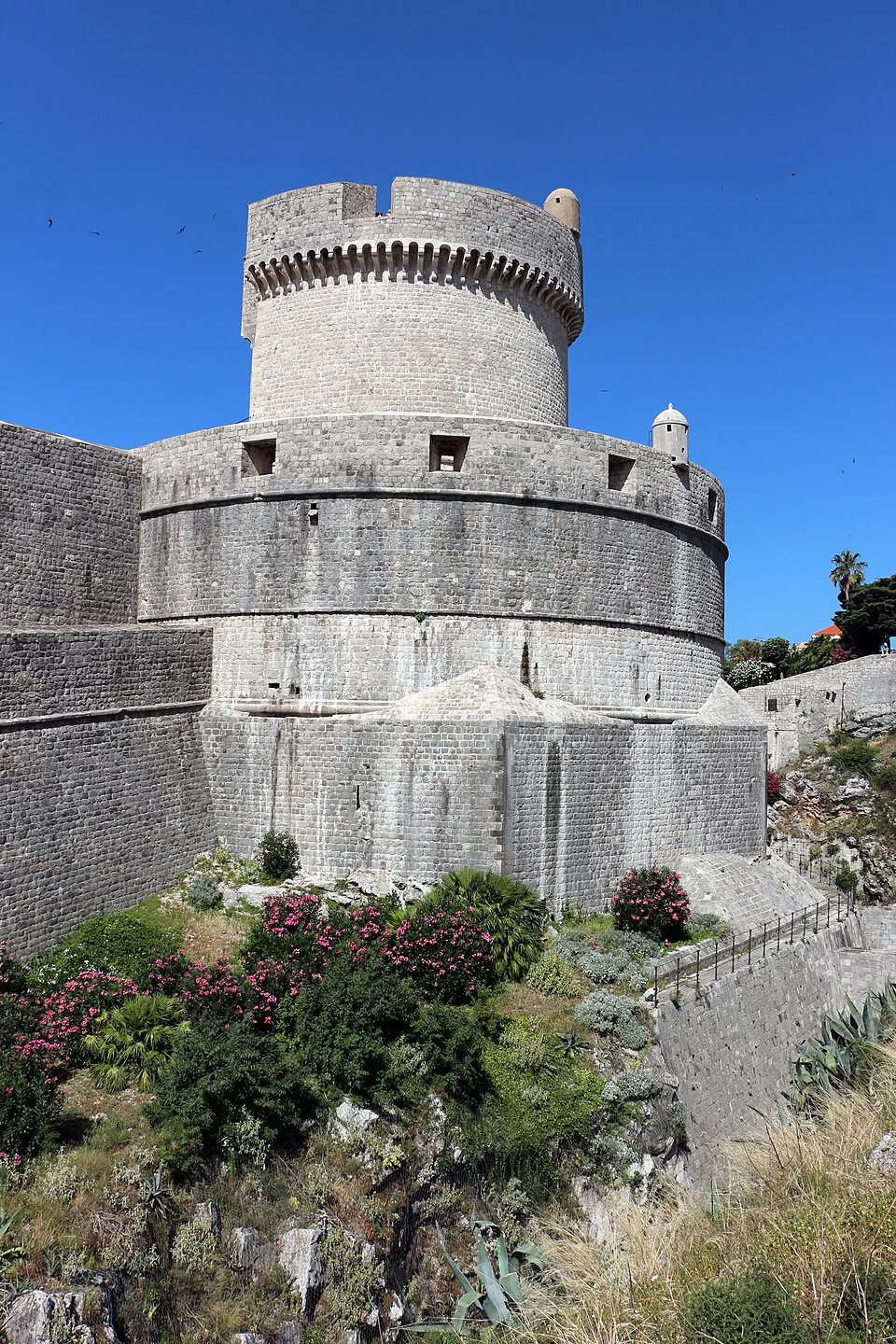 Minčeta Fortress
A huge round tower of pale stone, its crowning parapet pushed out on carved stone brackets, with walls running away on either side. This is Minčeta, a symbol of Dubrovnik and the strongest point of the landward defences, on the city's northern side. It takes its name from the noble Menčetić family, who gave the land for its building. The tower stands on a wide, solid front wall, and with its height and bulk it dominates the raised northwestern corner of the city and its walls. Work on it accelerated when Bosnia fell to Turkish rule in 1463. After the architect Michelozzo left Dubrovnik, Juraj Dalmatinac took over and gave the tower the shape it keeps today; the broad crowning parapet visible now is a later addition. The tower was finished in 1464 under Paskoje Miličević. From the top, the highest point of the city walls, the view runs to Mount Srđ on one side and the open sea on the other.
Listen in the appPhoto: Sailko · CC BY 3.0
- 11
Stradun
How the earthquake of 1667 turned a street of varied palaces into one uniform Baroque avenue.
- 12
Stradun Paving
The pale limestone paving of the Placa, laid over a marshy channel that once split two settlements.
- 13
Sponza Palace
The Republic's working palace: customs house, mint, treasury and academy, with an inscription warning against false weights.
- 14
Sponza Palace Upper Façade
The Sponza Palace's upper façade up close, and the story of the old town's shelling in the 1990s and its repair.
- 15
Clock Tower
The city's civic timekeeper since 1444, with its great bell and its bronze strikers, Maro and Baro.
- 16
Orlando's Column
A stone knight with an upright sword, the emblem of the Republic's independence and the stage for its justice.
- 17
Sculpted Hand and Sword Hilt
The knight's carved hand on the sword hilt, and the city measure taken from his forearm.
- 18
St Blaise's Church
The church of Dubrovnik's patron saint, and the legend of the night attack he is said to have revealed.
- 19
St Blaise's Church High Altar
The Baroque high altar, and the silver saint who alone survived the fire of 1706.
- 20
Dominican Church and Monastery
A fortified Dominican house of friars from 1225, built into the defences at the city's northeastern gate.
- 21
Dominican Monastery Cloister
Pointed Gothic arches and four-lobed stone openings around the monastery's quiet central court.
- 22
Dominican Monastery Altarpiece
A gilded altarpiece of the Virgin and Child with saints, made for an altar and now kept in the monastery museum.
- 23
Fort Revelin
A detached fortress of 1538, raised against Ottoman siege guns at the city's eastern approach.
- 24
Ploče Gate Outer Approach
The eastern entrance to the old town, with its stone bridge and double gates on the western pattern.
- 25
Lazzarettos of Dubrovnik
Where quarantine was born in 1377: a decree, a month of isolation, and the stone lazarettos that followed.
- 26
Kaše Breakwater
The old harbor's stone shield, built on sunken wooden caissons to break the southerly swell.
- 27
Saint John's Fortress
The fortress that closed the harbor mouth, where a chain across the water could snap a ship's keel.
- 28
Porporela Pier and Seaward View
The old town seen from the sea, and the stone line of reefs that gave the Porporela its name.
- 29
Rector's Palace
The seat of government of a republic that survived on wit, tribute and trade rather than armies.
- 30
Gothic Arcade with Carved Capitals
A vaulted arcade where stone ribs and carved leaves do the heavy lifting.
- 31
Courtyard Staircase and Wall Fountain
A palace courtyard where a grand stair, a columned gallery and a small wall fountain meet.
- 32
Palace Interior Room with Portraits
The room where the Republic's rules about power come into focus: a Rector who served for a single month.
- 33
Dubrovnik Cathedral
A cathedral façade with a king's shipwreck in its story.
- 34
Assumption Polyptych
The altarpiece above the main altar, painted around 1552 and attributed to Titian.
- 35
Head Reliquary
A domed reliquary of hammered metal, one piece among the cathedral treasury's many treasures.
- 36
Gundulić Square and Morning Market
A square of stalls, parasols and watermelon, the old town's working marketplace.
- 37
Saint Ignatius Church Façade
A Baroque church front built for the Jesuits, with a sculpture by Marino Gropelli over its door.
- 38
Saint Ignatius Church Interior Dome
A painted dome that opens onto clouds and angels above the nave.
- 39
Rupe Granary
The state granary of Dubrovnik, with fifteen great grain pits carved into the rock.
- 40
Walls of Dubrovnik
One unbroken ring of stone, nearly two kilometres long, hugging cliffs and hillside around the city.
- 41
City Walls Overlooking the Old Town
The old town from above: one unbroken field of red tiles with towers rising through it.
Stari grad Dubrovnik
Frequently asked questions
How much does the guide cost?
Free app download. Listed guide price: $3.99. Guide price shown in the app. Audio guide only. Venue admission is separate.
Can I listen without internet?
Yes. Download the guide’s audio, images, and maps in the app before your visit. Your downloaded content is then available offline.
Can I listen in my language?
This audio guide is available in 15 languages, including English.
Do I need to follow a schedule?
No. This is a self-guided experience. Choose your stops, pause whenever you like, and return to a story at your own pace.
At your own pace
Explore Stari grad Dubrovnik.
Download Stanza, then search for “Stari grad Dubrovnik”.
Free app download · Guide price shown in the app
Keep exploring
Audio guides — Croatia
Danilovgrad Municipality · 75 km
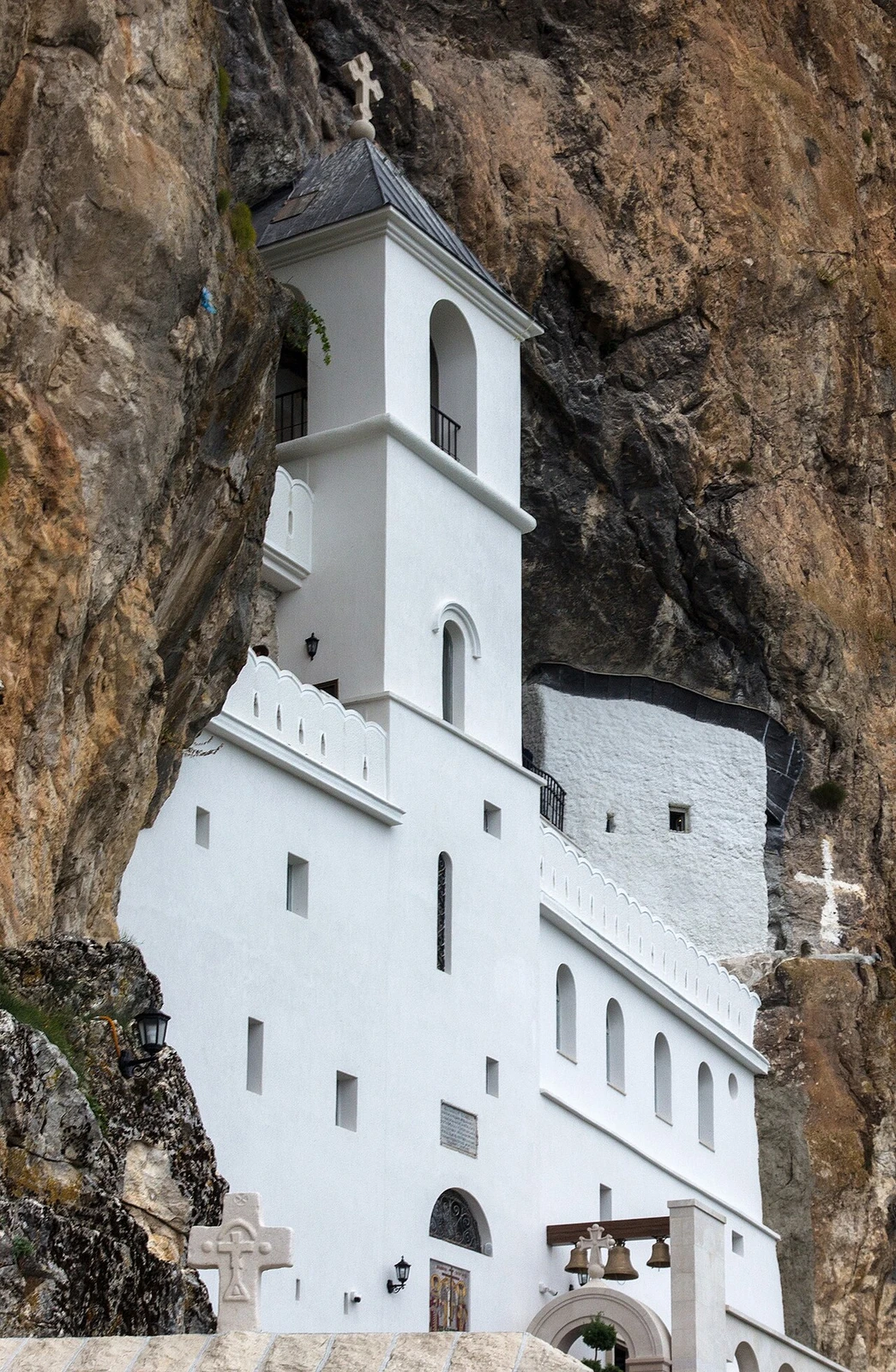
Ostrog Monastery
Content & sources
Alexey Komarov · CC BY 3.0
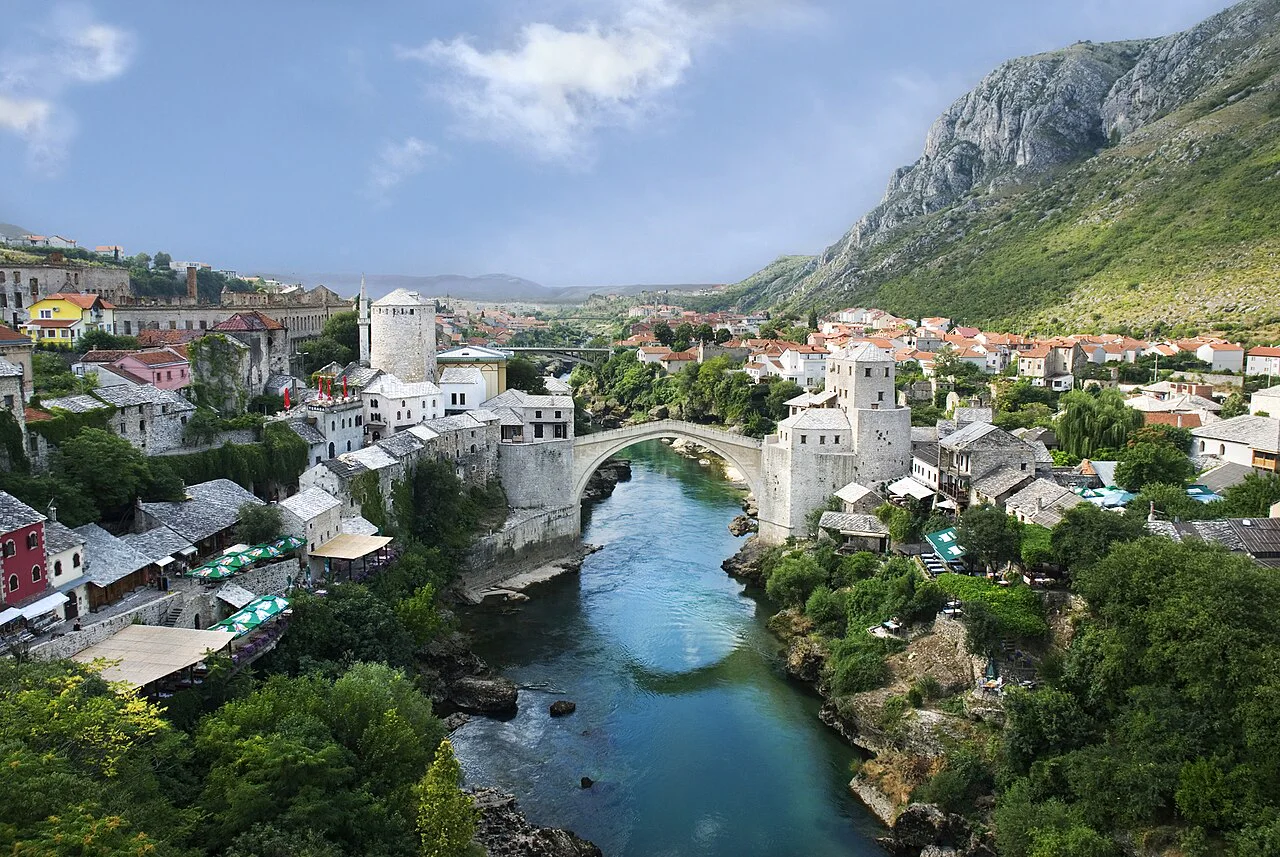
Mostar · 81 km
Stari Most
Content & sources
Ramirez · CC BY-SA 4.0
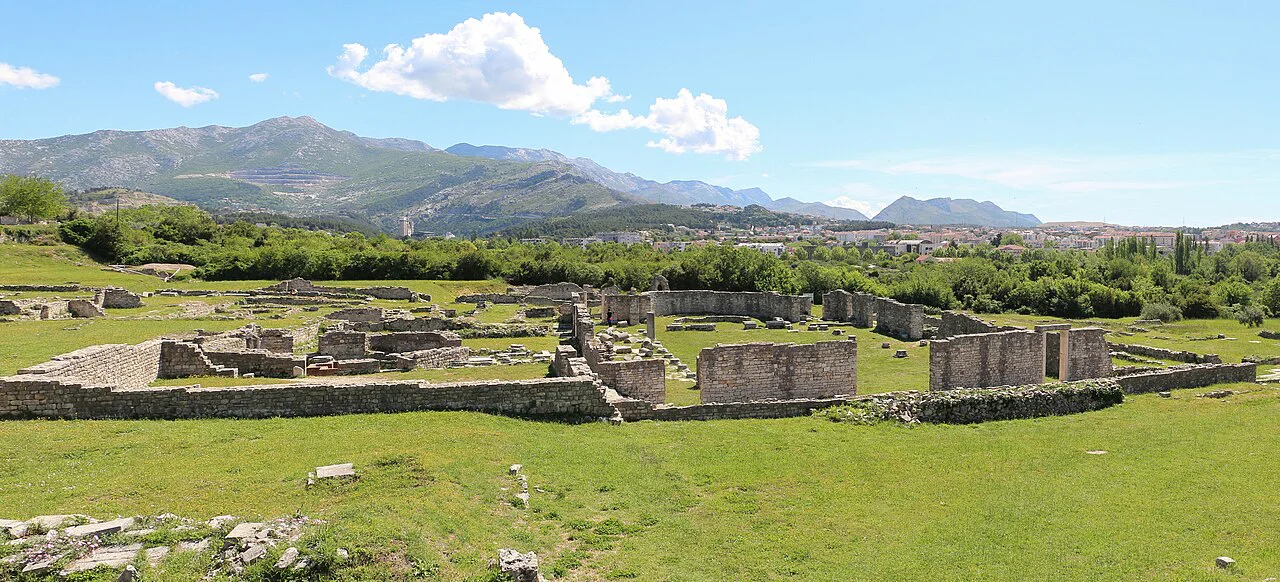
Solin
Salona
Content & sources
Bernard Gagnon · CC BY-SA 4.0
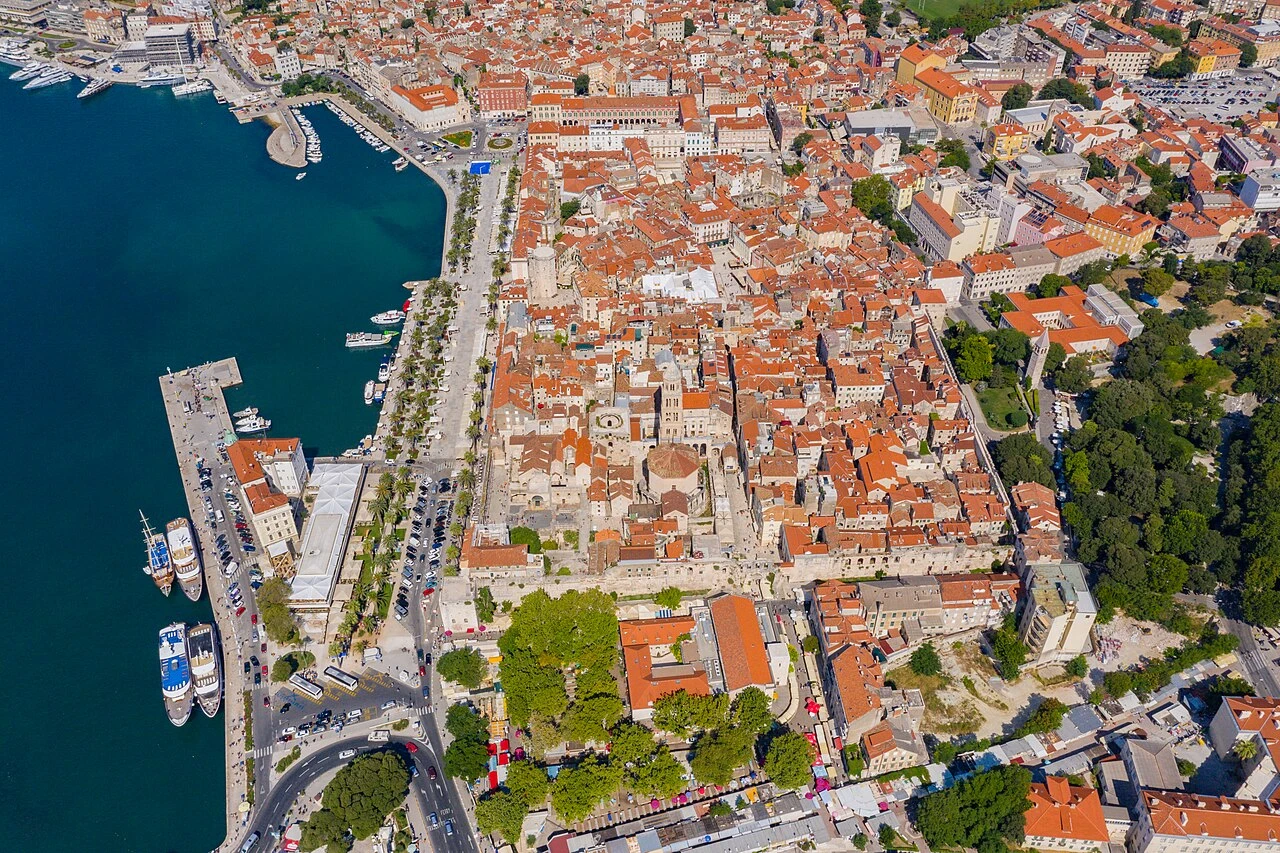
Split
Diocletian's Palace
Content & sources
Photo: Dronepicr · CC BY 2.0