Stanza · Audio guide
Zagreb Cathedral Audio Guide
A place to remember. A story to take with you.
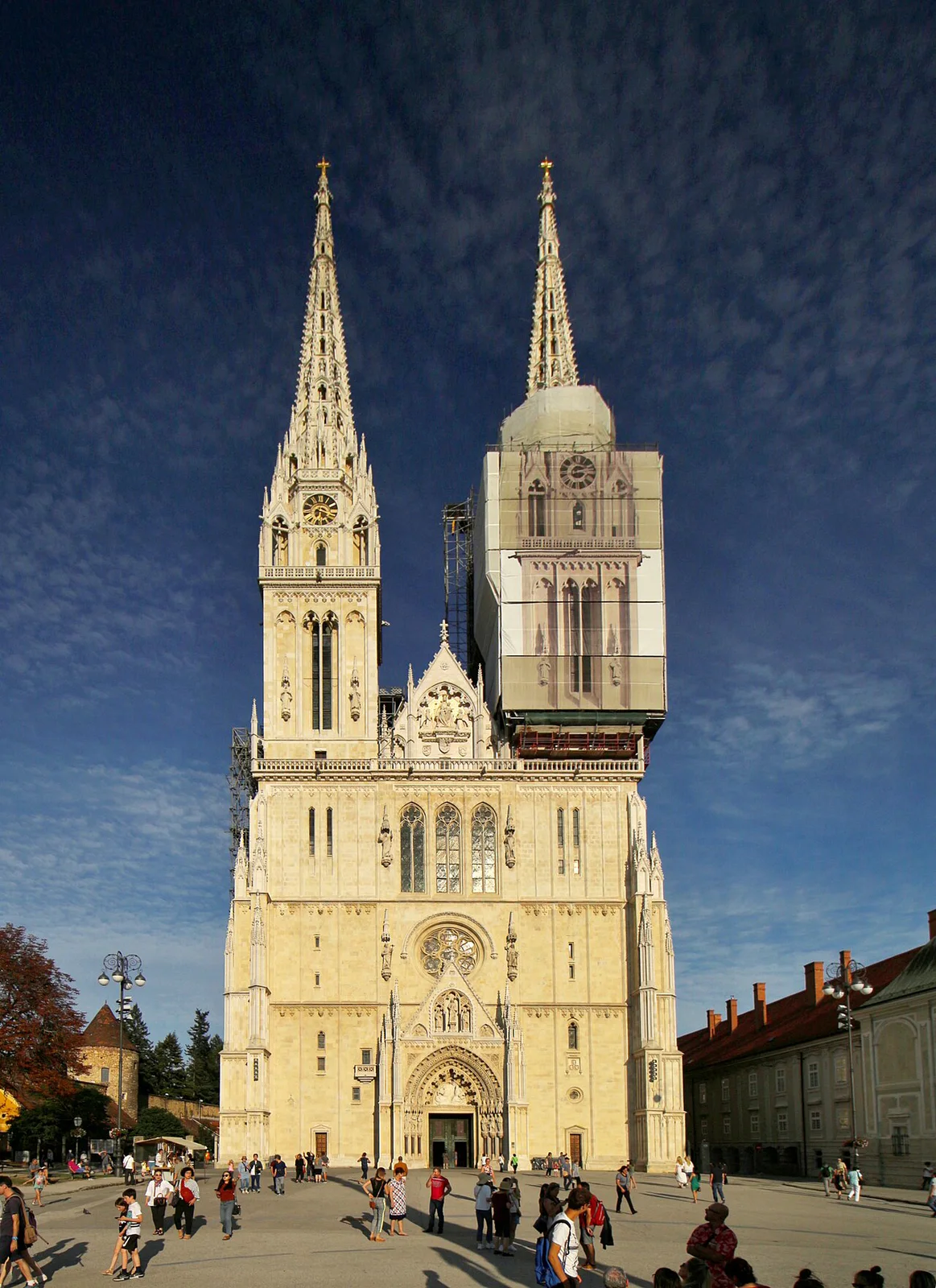
The Zagreb Cathedral is a Catholic cathedral located in Kaptol, Zagreb. It is the tallest sacral building in Croatia and the most monumental Gothic sacral building southeast of the Alps.
Download Stanza, then search for “Zagreb Cathedral”.
About the tour
One guide. Your kind of visit.
The Zagreb Cathedral is a Catholic cathedral located in Kaptol, Zagreb. It is the tallest sacral building in Croatia and the most monumental Gothic sacral building southeast of the Alps.
Ready when you are.
- 01Get the free Stanza app.
iOS & Android
- 02Find your guide.
“Zagreb Cathedral”
- 03Download before you go.
Works offline
Audio guide / 11 narrated stops
Inside the guide
Get to know a few of the stories before you go. Open a stop to read more.
01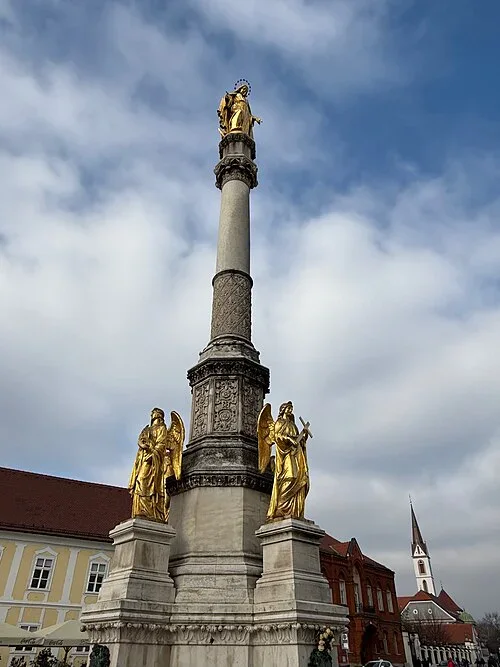 Kaptol Square and the Twin Spires
Marian Column in Kaptol Square
Welcome to Kaptol, the old bishop's quarter of Zagreb, and to the cathedral at its heart. A gilded figure of the Mother of God crowns this column, with shining angels at its base. Behind it stands the Cathedral of the Assumption of the Blessed Virgin Mary and Saints Stephen and Ladislaus. Kaptol was the bishop's own settlement, separate from Gradec, the neighbouring town of artisans. The two only merged into a single city of Zagreb in 1850. The diocese is far older. After the Croatian king Zvonimir died, the Hungarian king Ladislaus the First founded the diocese of Zagreb. His founding pulled the centre of political life from the south of Croatia towards the north. Written history of Zagreb and its cathedrals is counted from 1094. People here call the cathedral a symbol of Zagreb and of Croatia. In 2013 it entered the country's Register of Cultural Goods.
Photo: Baltabar · CC0
02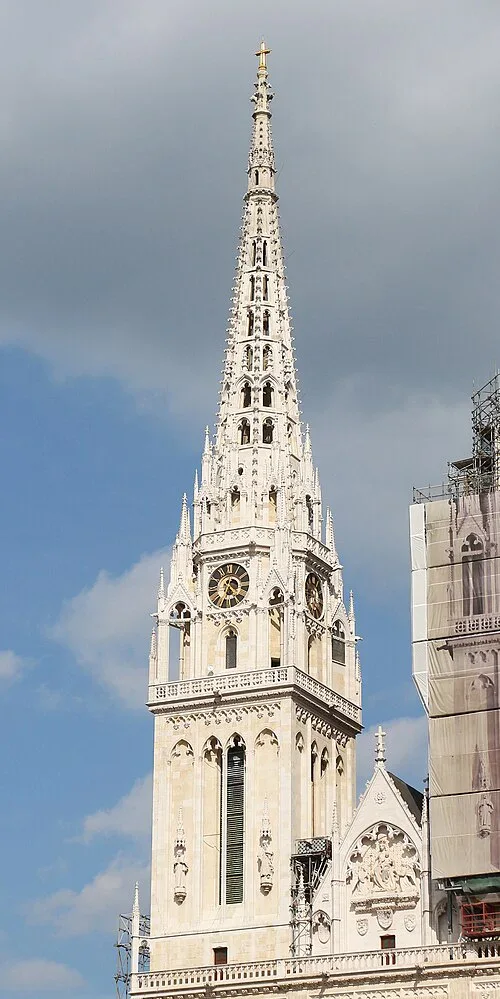 Kaptol Square and the Twin Spires
Neo-Gothic Tower and Spire
Two slender spires define Zagreb's skyline, visible from most parts of the city. They belong to the great nineteenth-century rebuilding that gave the cathedral its present Neo-Gothic face. The architect Hermann Bollé raised the tall, pointed belfries between 1889 and 1899. He worked in the German Gothic manner, which favoured hollow, needle-like towers. French Gothic builders kept their belfries cubic and lower. Before the earthquake of 2020, the northern tower rose to just over a hundred and eight metres. The southern one fell short by only four centimetres. Near the top, clock faces with Roman numerals mark the hours, and the spire climbs through open tracery to a cross.
Listen in the appBernard Gagnon · CC BY-SA 4.0
03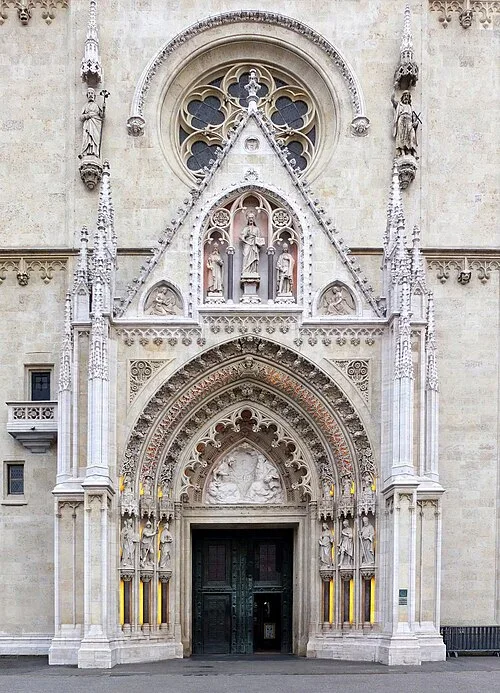 The Neo-Gothic Western Portal
Neo-Gothic Western Portal
Carved stone guards the cathedral's main entrance. Tier upon tier of pointed arches frames the doors, each filled with figures, and a great rose window opens above them. On either side stand round columns of reddish andesite, carrying statues of saints. Saint George and Saint Barbara are among them, and above each figure an angel holds a ribbon with the saint's name. In December 2007, Archbishop Cardinal Josip Bozanić blessed the restored portal. He praised the sculptors, stonemasons, builders and artists whose hands had done the work. Higher still, between the towers, a triangular gable shows the Virgin with the Child Jesus and angels. The Viennese sculptor Josef Beyer carved the group in Zagreb in 1890.
Listen in the appPhoto: Palauenc05 · CC BY-SA 4.0
04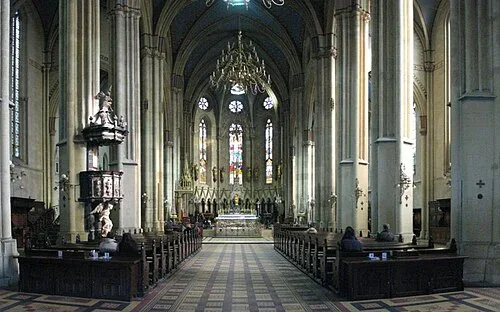 The Central Nave and Gothic Vaulting
Central Nave and Gothic Vaulting
Just after half past seven on a November morning, the ground under Zagreb shook. The year was 1880. The earthquake brought the cathedral's main nave down and left a tower damaged beyond repair. Damage across the city, it was reckoned, cost half the state's yearly budget. The rebuilding fell to Hermann Bollé, who raised the interior again in the Neo-Gothic style it keeps today. Clustered stone piers carry ribbed vaults high overhead. Writers call this the most monumental Gothic sacred building southeast of the Alps. Light falls through stained glass at the far end of the nave.
Listen in the appPhoto: Ex13 · CC BY-SA 3.0
05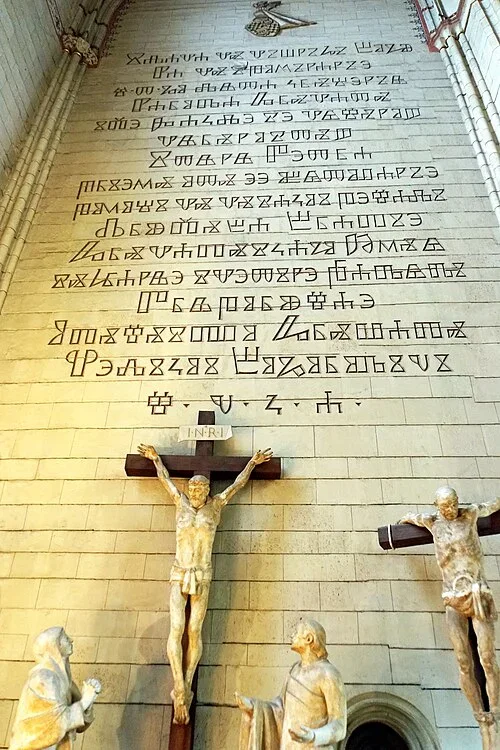 The South Aisle and Glagolitic Inscription
The 1942 Glagolitic Inscription
Rows of angular letters march across the pale stone of the south wall. They are carved in Glagolitic, an early script in which Slavic words were first written down. The inscription was cut in 1942. It marks thirteen hundred years since the baptism of the Croatian people. Its words recall the first ties between Croats and Christianity, in the days of Pope John the Fourth. A brotherhood called the Brothers of the Croatian Dragon set it in place. In the text, the people pledge fidelity to Peter's See and commend their homeland to the Mother of God. Below the letters stands a plaster copy of the twelfth Station of the Cross at the shrine of Marija Bistrica, the work of Ante Orlić.
Listen in the appDennis G. Jarvis · CC BY-SA 2.0
06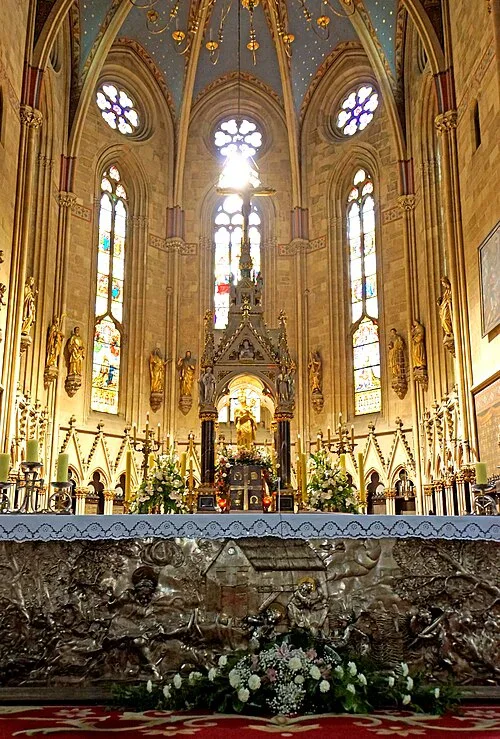 The High Altar and Medieval Sanctuary
High Altar and Medieval Apse
The sanctuary around the high altar was built after a disaster. The first true cathedral here was completed in 1217 in the Romanesque style. In 1242 the Tatars swept through Zagreb and left it heavily damaged. Bishop Timotej then rebuilt from the ground up, raising three polygonal apses in the early Gothic style. The central one is the largest, hexagonal and stretched towards the east, its vault higher than the two beside it. Today it fills almost half the eastern end of the church. Timotej also lined the apse with thirty-three stone seats for the canons. Tall lancet windows rise behind the altar, and a gold-toned retable holds a statue in its central niche.
Listen in the appDennis G. Jarvis · CC BY-SA 2.0
07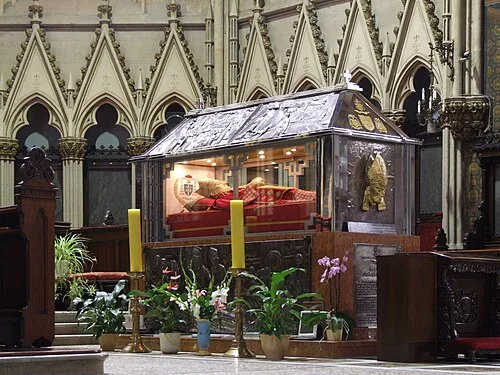 Shrine of Blessed Alojzije Stepinac
Sarcophagus of Blessed Alojzije Stepinac
A glass-sided sarcophagus marks the resting place of Alojzije Stepinac, archbishop of Zagreb. Pope Pius the Twelfth named him a cardinal on 29 November 1952. In 1998, Pope John Paul the Second declared him blessed, at the Croatian shrine of Our Lady of Bistrica. John Paul had already come to pray at the grave in 1994. The visit marked nine hundred years since the founding of the diocese. He called Stepinac the brightest figure and true man of the Church. Candles and potted plants stand before the case, left by those who come here to pray.
Listen in the appPudelek (Marcin Szala) · CC BY-SA 3.0
08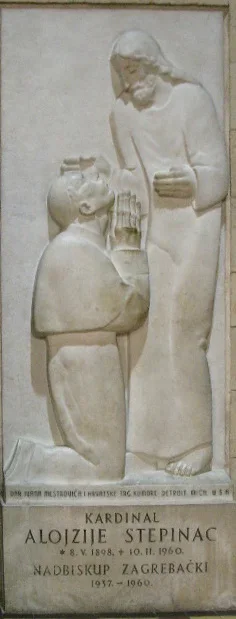 Shrine of Blessed Alojzije Stepinac
Cardinal Stepinac Relief by Ivan Meštrović
Christ stands tall in carved stone, and a bowed figure kneels before him in prayer. The Croatian sculptor Ivan Meštrović made this relief of Cardinal Alojzije Stepinac with Christ. A plaque beneath records the life in dates. Stepinac was born on 8 May 1898. He died on 10 February 1960. He had served as archbishop of Zagreb since 1937.
Listen in the appPhoto: Roberta F. · CC BY-SA 3.0
09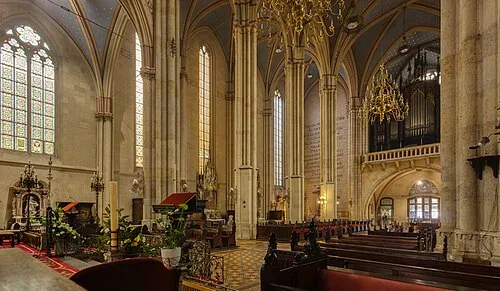 The West Choir Gallery and Walcker Organ
Organ Gallery and the Walcker Organ
Music has sounded in this cathedral for centuries. An organ was playing here by the fifteenth century. In the days of Bishop Osvald Thuz, the organ and the choir stood in the north nave. Today both sit above the main entrance, at the head of the nave. Archbishop Haulik bought the present instrument in 1855, from the Walcker firm of Ludwigsburg. The German builders delivered it with fifty-two registers and three manuals. Later rebuildings raised it to seventy-eight registers on four manuals. More than six thousand pipes feed its romantic, singing voice.
Listen in the appDiego Delso · CC BY-SA 3.0
10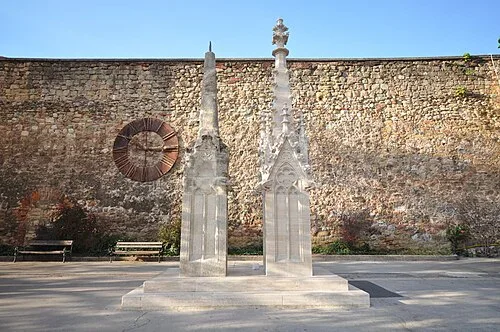 Earthquake Memorial and Fortified Kaptol Walls
Old and New Spire Monuments
Two spire-shaped stone monuments stand on a plinth against a rough wall, one with a plain point, one crowned with a carved finial. They belong to the cathedral's most recent crisis. Before dawn on 22 March 2020, an earthquake struck Zagreb. It measured magnitude five point three. The tip of the southern spire snapped off and crashed onto the roof of the Archbishop's Palace. The northern spire had leaned in the shaking, and it was taken down on 17 April that year. Reconstruction has carried on ever since.
Listen in the appJorge Láscar from Australia · CC BY 2.0
- 11
Stone Tower with Pointed Spire
The tower and walls of fortified Kaptol, raised against attack and still standing in fragments.
Zagreb Cathedral
Frequently asked questions
How much does the guide cost?
Free app download. Listed guide price: $0.99. Guide price shown in the app. Audio guide only. Venue admission is separate.
Can I listen without internet?
Yes. Download the guide’s audio, images, and maps in the app before your visit. Your downloaded content is then available offline.
Can I listen in my language?
This audio guide is available in 15 languages, including English.
Do I need to follow a schedule?
No. This is a self-guided experience. Choose your stops, pause whenever you like, and return to a story at your own pace.
At your own pace
Explore Zagreb Cathedral.
Download Stanza, then search for “Zagreb Cathedral”.
Free app download · Guide price shown in the app
Keep exploring
Audio guides — Croatia
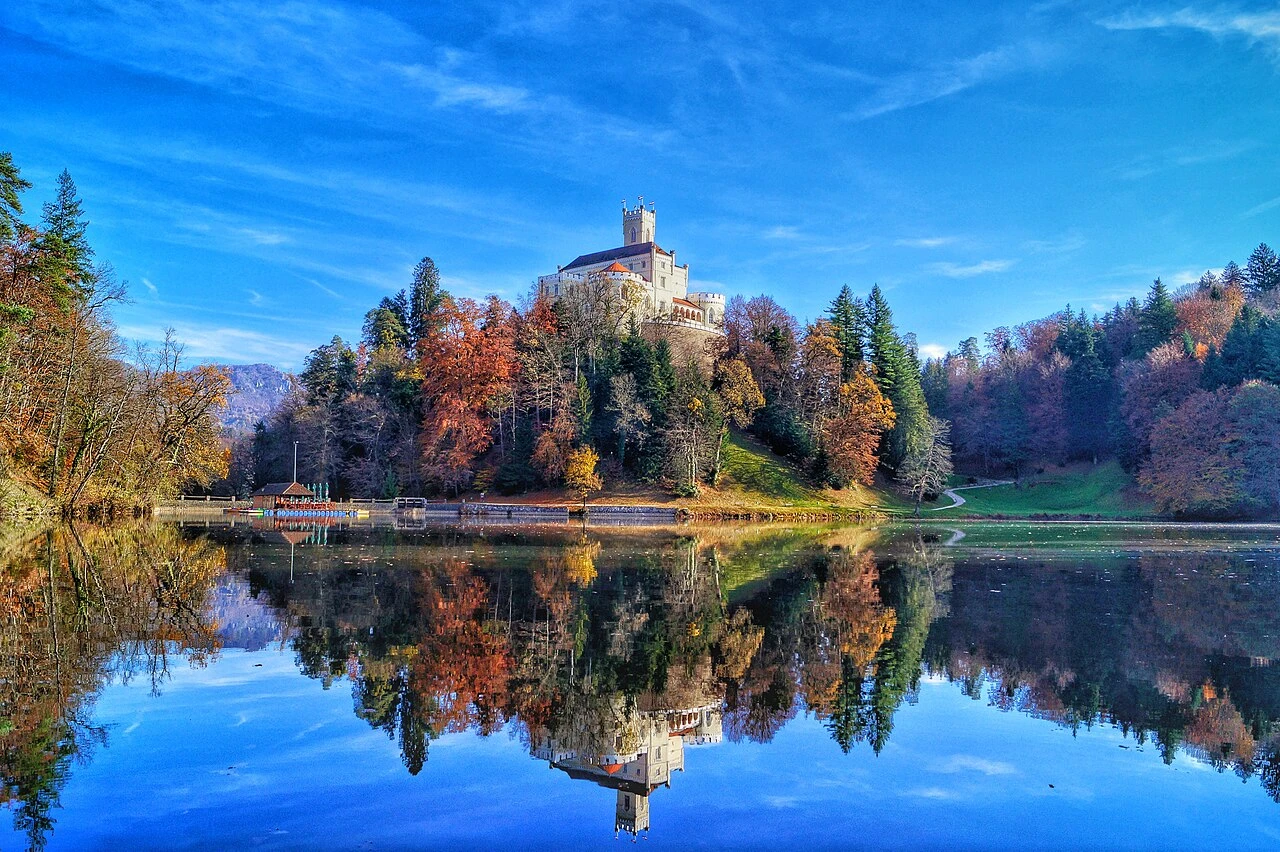
Trakošćan · 50 km
Trakošćan Castle
Content & sources
Drazen Dombaj · CC BY-SA 4.0
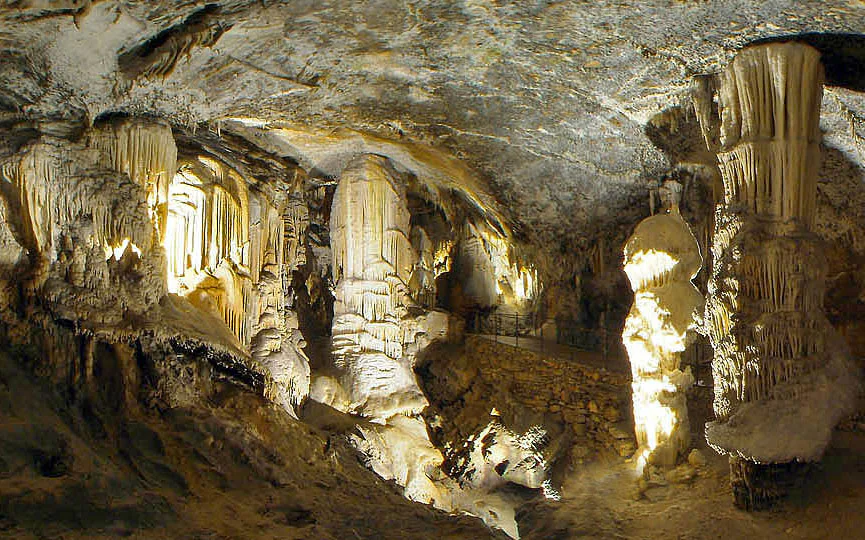
Municipality of Postojna · 138 km
Postojna Cave
Content & sources
Original uploader was Boštjan Burger (Lander) at sl.wikipedia · CC BY-SA 3.0
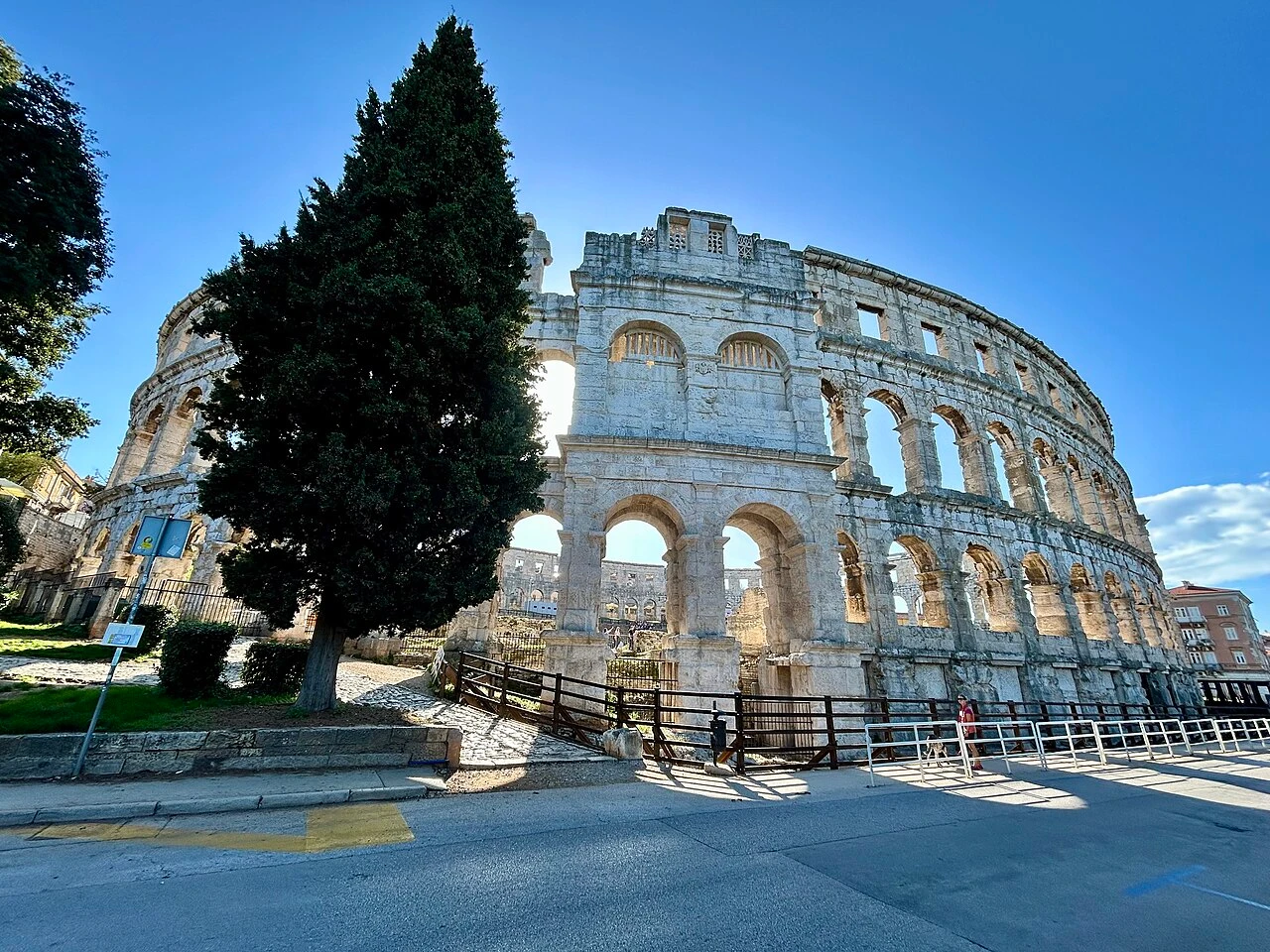
Grad Pula
Pula Arena
Content & sources
Photo: Olgierd Rudak · CC BY-SA 4.0
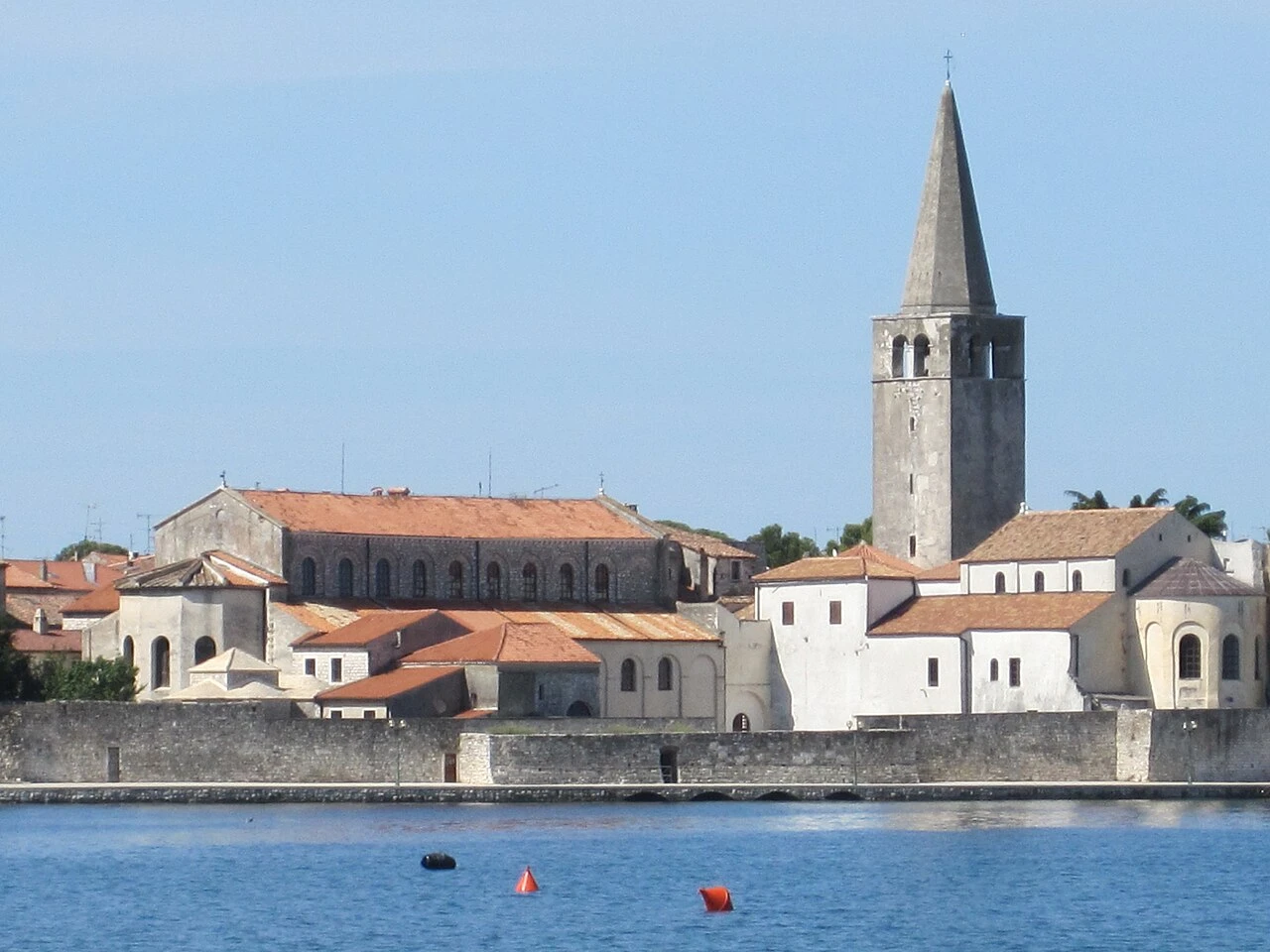
Grad Poreč
Euphrasian Basilica
Content & sources
Photo: Tiefkuehlfan · CC BY-SA 4.0