Stanza · Audio guide
Amathus Audio Guide
A place to remember. A story to take with you.
Amathus was an ancient city-kingdom of Cyprus that came under Ptolemaic rule in the 300s BC. It featured an important cult sanctuary of Aphrodite, which is thought to be the site where her cult originated.
Download Stanza, then search for “Amathus”.
About the tour
One guide. Your kind of visit.
Amathus was an ancient city-kingdom of Cyprus that came under Ptolemaic rule in the 300s BC. It featured an important cult sanctuary of Aphrodite, which is thought to be the site where her cult originated.
Ready when you are.
- 01Get the free Stanza app.
iOS & Android
- 02Find your guide.
“Amathus”
- 03Download before you go.
Works offline
Audio guide / 14 narrated stops
Inside the guide
Get to know a few of the stories before you go. Open a stop to read more.
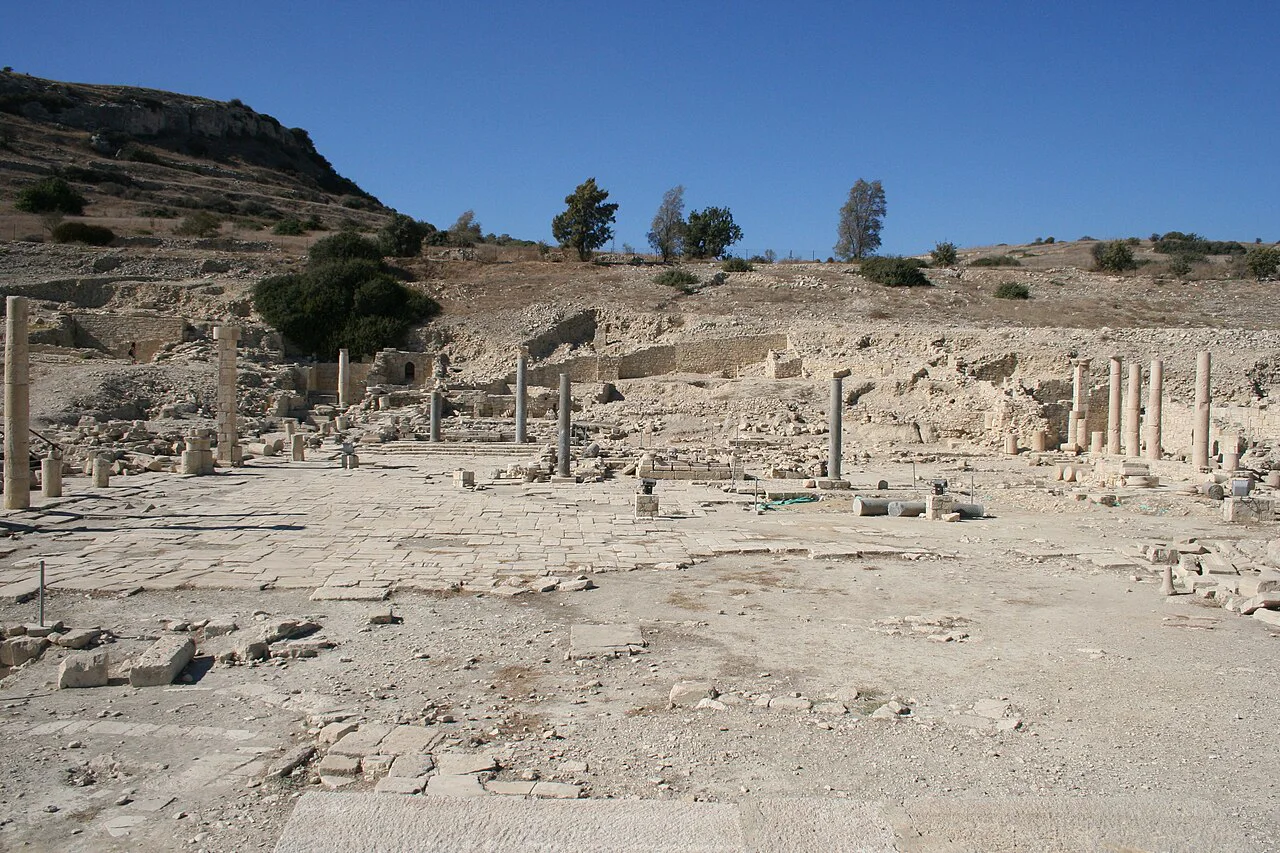
01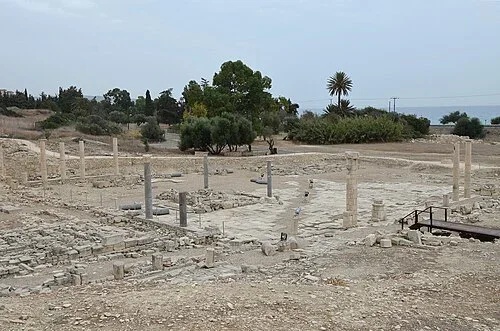 The Lower City Entrance and Roman Agora
The Agora of Amathus
Welcome to Amathus, once a kingdom in its own right on the southern coast of Cyprus. The first settlers arrived in the early Iron Age, around eleven hundred years before Christ, on coastal cliffs above a natural harbour. The city grew rich on grain, on sheep, and on copper from mines in the nearby hills. For roughly eighteen hundred years it was a living, changing place, shaped by Eteocyprian, Phoenician, Greek, Ptolemaic and Roman hands. One thing set Amathus apart from its neighbours: it long kept to the Persian side and resisted absorption into the Greek world. This paved square, the agora, was the civic heart of the later city. Under Roman rule Amathus rose in rank, becoming the capital of one of the four regions into which Cyprus was divided. The columns and paving around the square belong to that era of civic pride.
Carole Raddato from FRANKFURT, Germany · CC BY-SA 2.0
02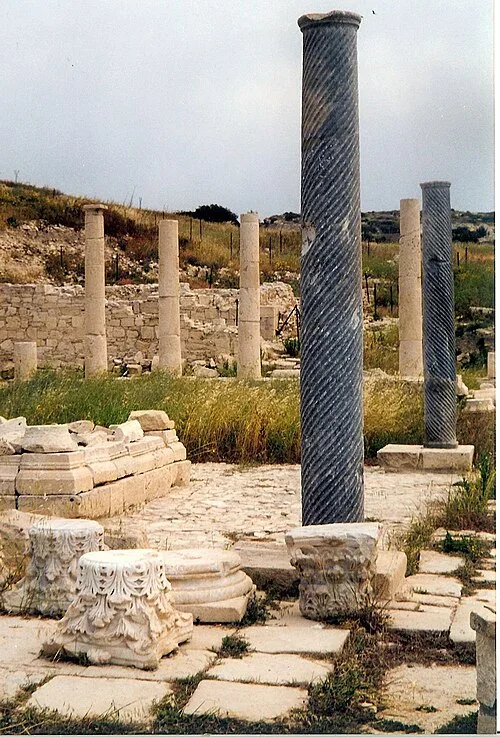 The Lower City Entrance and Roman Agora
Spiral-Fluted Marble Columns
A few columns here look nothing like the rest. Their shafts are grey marble, fluted with a spiral that twists upward like a rope. The square they adorned was paved on a huge scale, laid out in the Roman manner with colonnades around its edges. Marble like this had to be brought to Cyprus by sea, shaft by shaft. That is Roman-period display in its plainest form: a city spending on fine imported stone to dress its public square. Local limestone served for most of the building, but these spirals were the ones meant to impress.
Photo: Bayreuth2009 · CC BY 3.0
03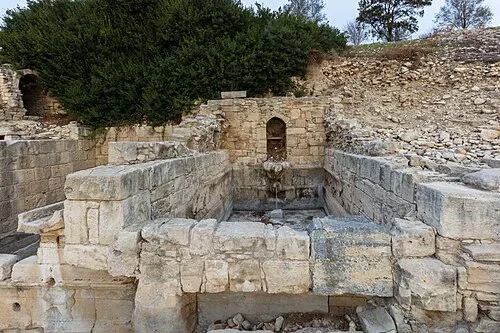 The Lower City Entrance and Roman Agora
The Nymphaeum Fountain
Set into the old stonework is a built basin, with a carved niche and spout above it. Structures like this are called nymphaea, named for the water nymphs. In a Roman city a monumental fountain did plain, vital work. It fed the public buildings nearby and gave people a place to draw water. This one stands among the public buildings of the lower city, within reach of the square and its colonnades. Whatever else changed in Amathus, the water had to keep coming.
Listen in the appDiego Delso · CC BY-SA 4.0
04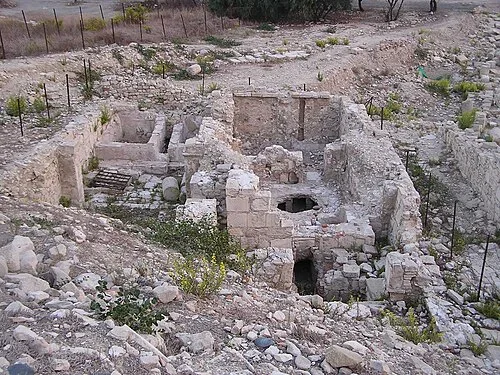 The Roman Baths and Christian Basilica
The Roman Baths
This tangle of walls is a bathhouse, and it carries an argument. Ancient lists recorded the gifts Cypriot cities sent to Argos in Greece, around the year 170 before Christ. Amathus gave forty drachmas. Kition and Salamis, by comparison, gave two hundred and eight. On paper that looks like decline, a city too poor to match its rivals. The stones tell another story. In these same years Amathus was building a bath like this one, a gymnasium, and new fortifications on the acropolis, complete with a fresh tower. Baths were costly things to run, with heated rooms and water carried and warmed. A city building all that was not fading.
Listen in the appPhoto: Olaf · Public domain
05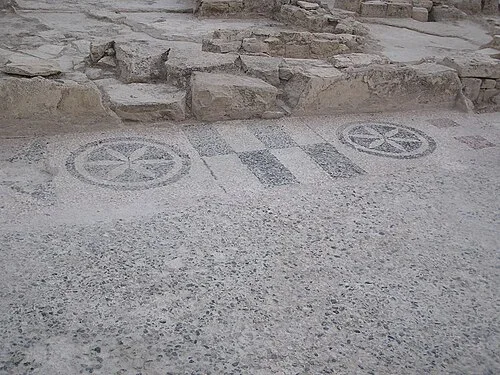 The Roman Baths and Christian Basilica
Early Christian Basilica Mosaics
In the fourth century AD Amathus gained a Christian bishop, and the city went on flourishing into the Byzantine age. Its basilica stood on the coastal side of town, its mosaic floors set with semi-precious stones. The panels here are plainer work, geometric rosettes and checkered squares in small stone cubes, but they show the mosaicists' craft at its everyday best. One of the city's bishops, Heliodorus, travelled in 451 to the Council of Chalcedon, where the churches argued out the nature of Christ. Amathus also produced a saint of its own. John the Charitable was born here in 539, became Patriarch of Alexandria, and as patriarch sent a bishop of Amathus to Jerusalem to ransom slaves.
Listen in the appPhoto: Olaf · Public domain
06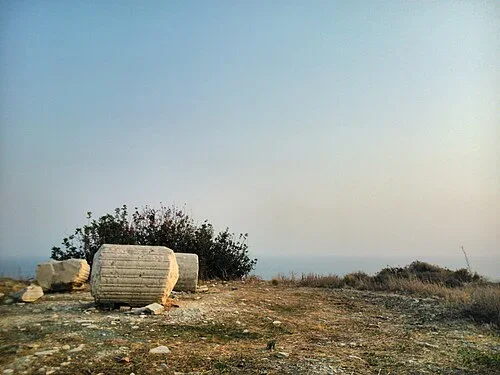 The Submerged Ancient Harbor
The city's fortune began at the water. Amathus grew up on coastal cliffs with a natural harbour below, and in the eighth century before Christ its rulers built a palace and a formal port. That port carried the city's trade with the Greeks and with the Levantines, the merchant cities of the eastern shore. The sea has since taken back the ground the harbour stood on, and its works now lie just below the surface, visible from the shore on a clear day. The broken stone drums resting near the waterline fell from the ruins above. The harbour itself is the quiet water beyond them.
Listen in the appUnknown author · Public domain
07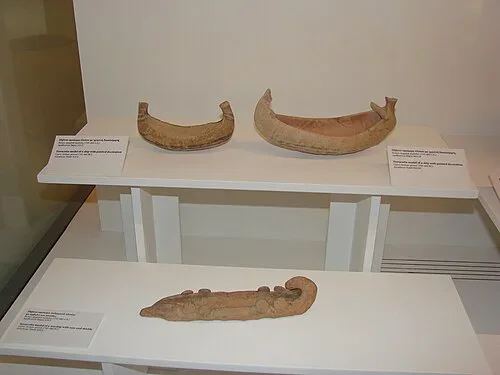 The Submerged Ancient Harbor
Terracotta Ship Models
Three little boats, handmade in clay, with curved hulls and upturned ends. Models like these are often understood as offerings, given at a shrine by sailors or their families, though their exact purpose is uncertain. What they speak to plainly is the sea. Greeks from Euboea were leaving their pottery at Amathus from the tenth century before Christ, and the port tied the city to merchants from Greece and the Levant. A place that put boats into clay knew what it lived by. Today the models sit on museum shelves rather than here by the harbour.
Listen in the appPhoto: Catlemur · CC BY-SA 4.0
08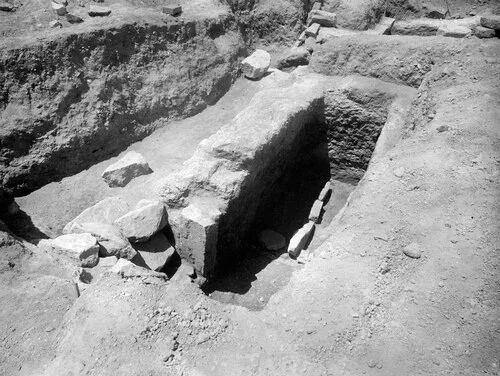 The Royal Necropolis and Eteocyprian Heritage
Royal Necropolis Tomb 14
Up the slope lies the city of the dead. The hills around Amathus are cut with shaft tombs, each entered by a dromos, a sloping passage leading down to a chamber hewn from the rock. That form is rather rare in Cyprus, and the tombs here fall into six distinct styles, told apart mostly by the shape of the passage. Tombs 1 and 2 were built with another level of care entirely, and may have been made for the richest families, perhaps the royals. Chambers were often reused, earlier burial gifts pushed into a corner to make room for the next. Tomb 14, cleared to its bare rock walls, shows the plain conditions these diggers worked in. The excavation has a history of its own. Luigi Palma di Cesnola, the first American consul in Cyprus, emptied the great tombs in the 1870s and sent finds to New York and to London. Decades later, the Swedish Cyprus Expedition cleared around twenty-five more. The Phoenician families of the city buried their infants apart from all of these, in a burial ground of their own.
Listen in the appJohn Lindros · CC0
09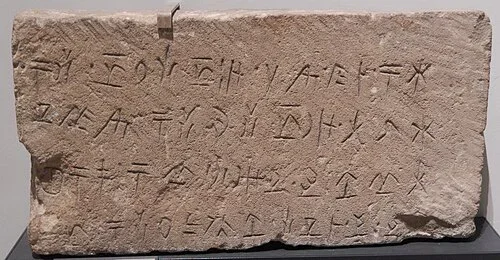 The Royal Necropolis and Eteocyprian Heritage
Eteocypriot Inscription
Amathus kept its own tongue. Antiquity said the people were natives of the island, most likely Eteocyprian, and their non-Greek language is confirmed by inscriptions cut in the Cypriot syllabary, a script whose signs stand for syllables rather than single letters. That script alone in the Aegean world survived the Bronze Age collapse and stayed in use down to the fourth century before Christ. From that century come the pedestals Androkles, the last king of Amathus, set up for his sons Orestheus and Andragoras, inscribed in both Eteocyprian and Greek. The block here carries lines of that syllabic script, the old language of the city in stone. Its apartness shaped politics too. When the Cypriot cities rose against Persia around 500 BC, Amathus refused to join the revolt. Onesilos of Salamis besieged the city and was killed. The Amathusians cut off his head and hung it above their gates. Then, the story goes, bees entered the empty head and filled it with honeycomb. An oracle told them to take it down, bury it, and sacrifice to Onesilos each year as a hero. Herodotus says they still performed these rites in his own day.
Listen in the appPhoto: BabelStone · CC BY-SA 3.0
10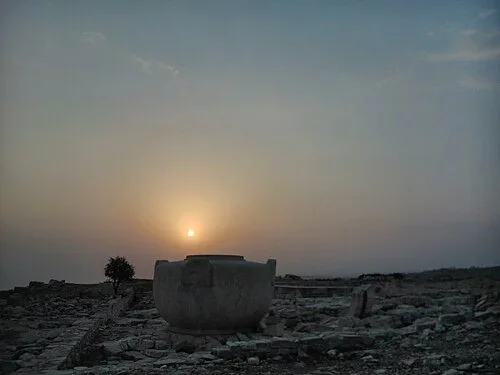 The Acropolis Terrace and Colossal Stone Vase
The Colossal Stone Vase Replica
One monument outlasted the city on the acropolis: the great stone vase. It was carved from a single block in the sixth century before Christ, and stands about 1.85 metres tall. Its weight is close to fourteen tonnes. When the ancient city vanished, what remained above ground was fragments of wall and this urn. In 1867 the original was taken to the Louvre in Paris. The vessel standing here is a copy, made to hold its place. At dusk, with the sun going down behind it, the old urn keeps its watch over the empty city.
Listen in the appUnknown author · Public domain
- 11
Bull Handle of the Amathus Vase (Louvre)
Bulls carved in stone on the handles of the great vase, Cypriot carving at its height.
- 12
Temple of Aphrodite Amathusia
Aphrodite Amathusia, a bearded Aphroditos, and the legend of Ariadne's grave.
- 13
Hathoric Capital
A woman's face crowning a column, the Eastern strand in Amathus's religion.
- 14
Lower City from the Acropolis
The last view: a city emptied by 1191, its stones carried off to Limassol and the Suez Canal.
Amathus
Frequently asked questions
How much does the guide cost?
Free app download. Listed guide price: $0.99. Guide price shown in the app. Audio guide only. Venue admission is separate.
Can I listen without internet?
Yes. Download the guide’s audio, images, and maps in the app before your visit. Your downloaded content is then available offline.
Can I listen in my language?
This audio guide is available in 15 languages, including English.
Do I need to follow a schedule?
No. This is a self-guided experience. Choose your stops, pause whenever you like, and return to a story at your own pace.
At your own pace
Explore Amathus.
Download Stanza, then search for “Amathus”.
Free app download · Guide price shown in the app
Keep exploring
Nearby audio guides
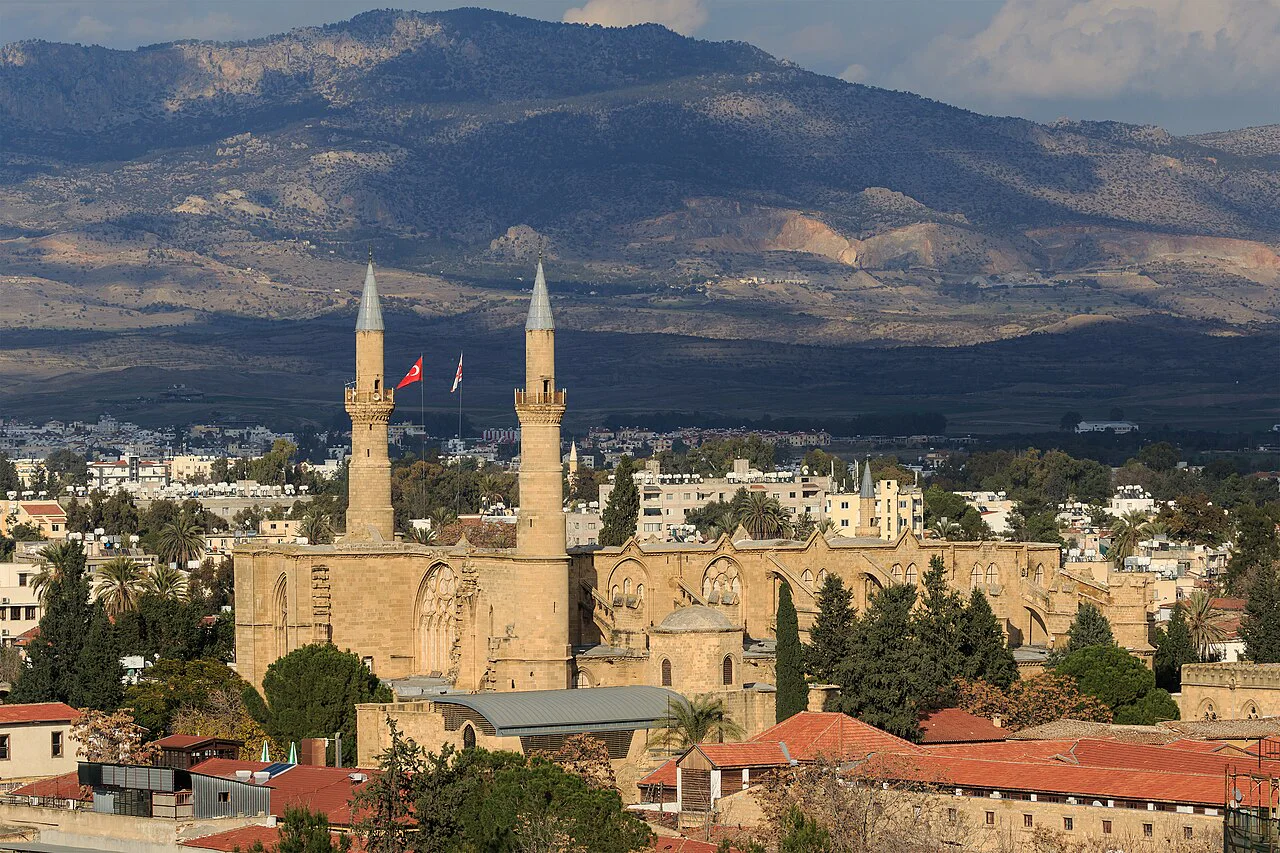
Nicosia · 55 km
Selimiye Mosque, Nicosia
Content & sources
Photo: A.Savin · FAL
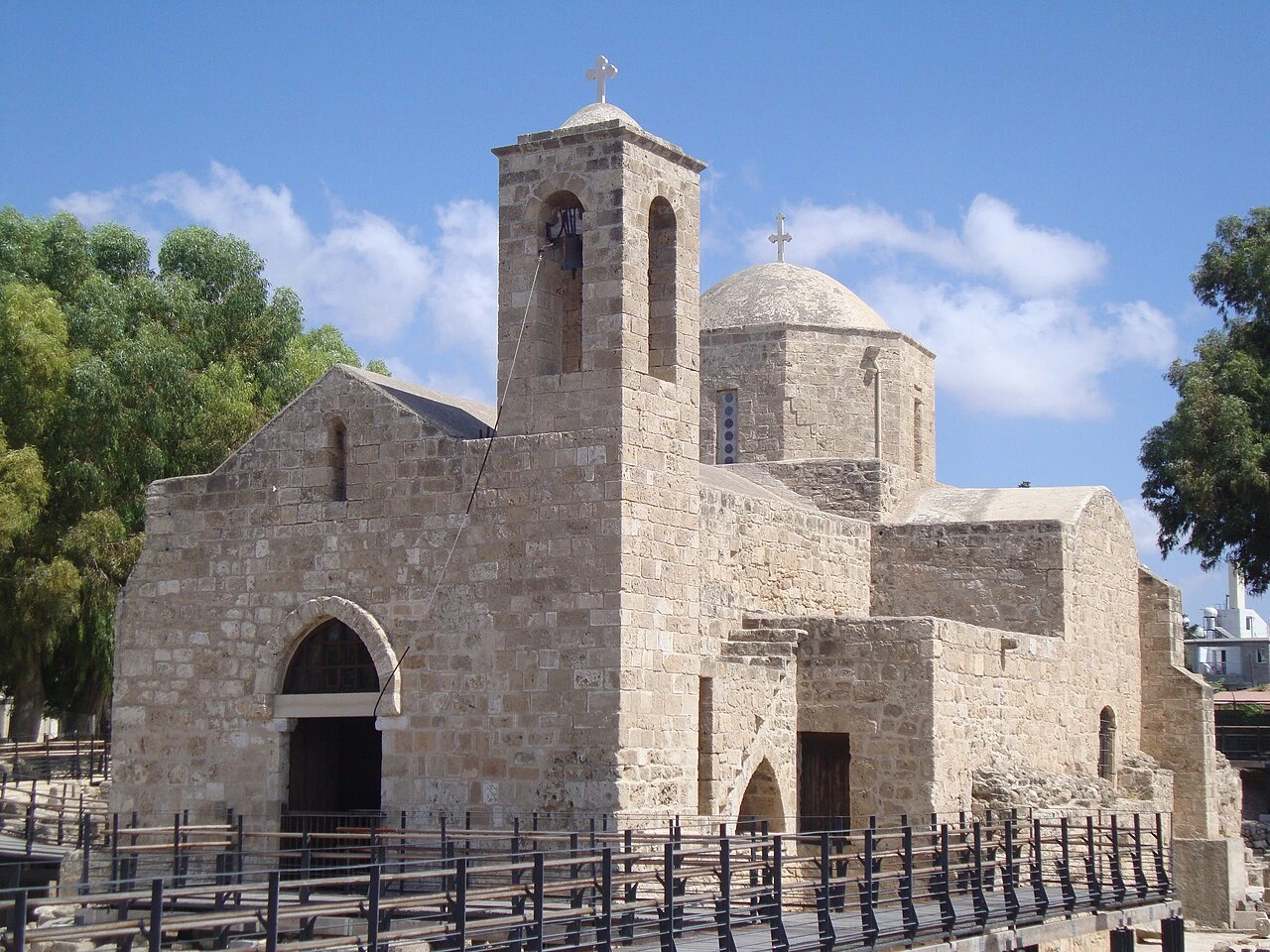
Paphos Municipality · 67 km
Chrysopolitissa Basilica
Content & sources
Photo: Роман Курносенко · CC BY-SA 3.0
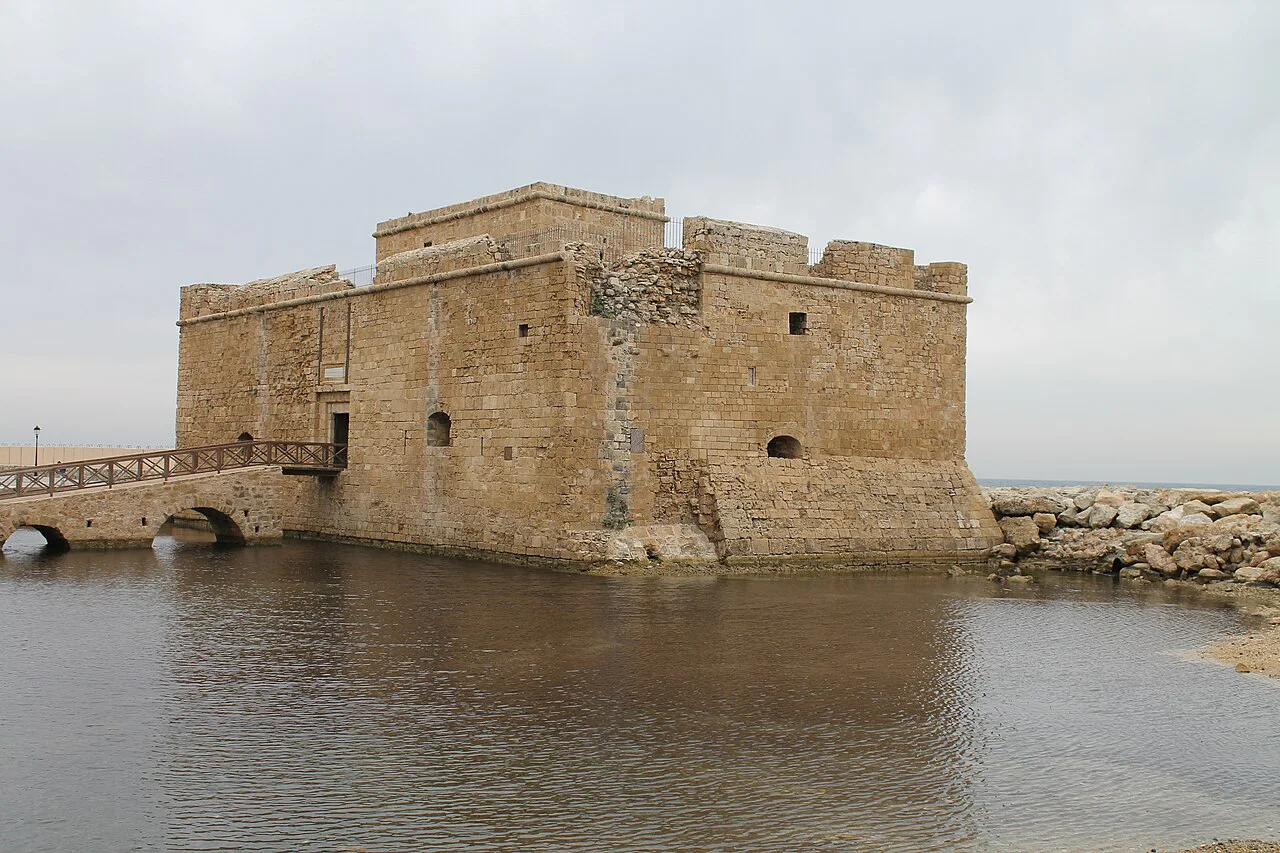
Paphos · 67 km
Paphos Castle
Content & sources
Alan Samuel from Cardiff, Wales · CC BY 2.0
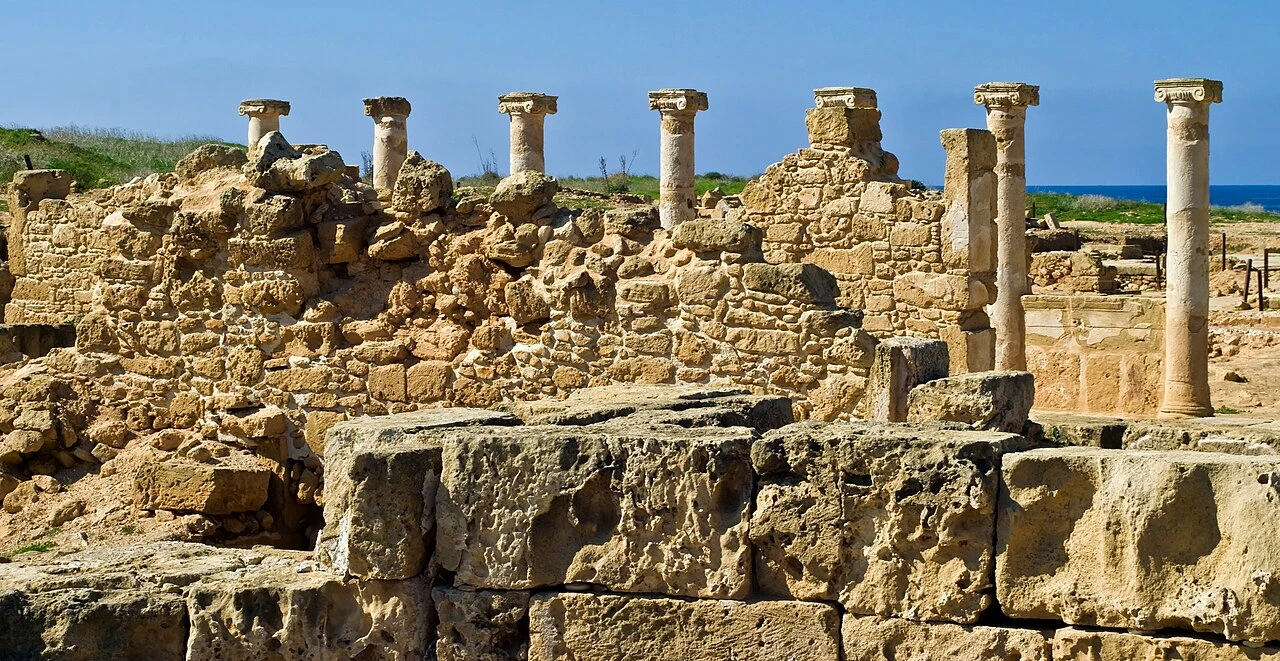
Paphos · 68 km
Paphos Archaeological Park
Content & sources
Photo: Nikodem Nijaki · CC BY-SA 3.0