Stanza · Audio guide
Chrysopolitissa Basilica Audio Guide
A place to remember. A story to take with you.
Chrysopolitissa is a significant archaeological site in Paphos containing the ruins of one of the largest early Byzantine basilicas on the island. The site is noted for its extensive and well-preserved…
Download Stanza, then search for “Chrysopolitissa Basilica”.
About the tour
One guide. Your kind of visit.
Chrysopolitissa is a significant archaeological site in Paphos containing the ruins of one of the largest early Byzantine basilicas on the island. The site is noted for its extensive and well-preserved geometric floor mosaics.
Ready when you are.
- 01Get the free Stanza app.
iOS & Android
- 02Find your guide.
“Chrysopolitissa Basilica”
- 03Download before you go.
Works offline
Audio guide / 9 narrated stops
Inside the guide
Get to know a few of the stories before you go. Open a stop to read more.
01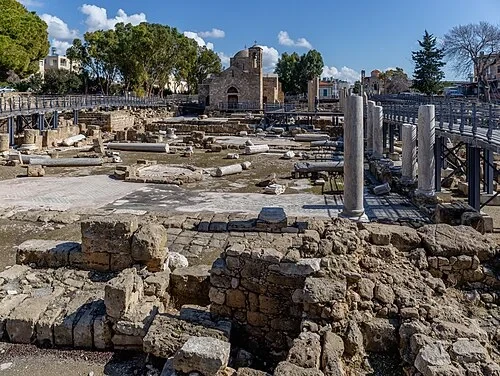 Entrance and Site Overview
The Great Basilica
Welcome to this remarkable archaeological site. This vast open-air park reveals the colossal footprint of what was once one of the largest early Christian basilicas in Cyprus. Construction on this massive sacred site began in the late fourth century AD, reflecting the growing power and reach of Christianity in the region during the Late Roman era. As you move along the network of raised wooden walkways, you can safely look down at the intricate foundations, scattered columns, and beautifully preserved floor surfaces spread out below. These elevated paths provide a clear bird's-eye view of the multi-layered ruins without disturbing the delicate archaeological remains. For about two hundred and fifty years, this complex served as a thriving hub of continuous worship and pilgrimage. Its long history finally came to an end due to a combination of devastating Arab raids in the seventh century and subsequent powerful earthquakes that eventually brought down its walls, leaving behind the rich fields of ruins we see today.
Michal Klajban · CC BY-SA 4.0
02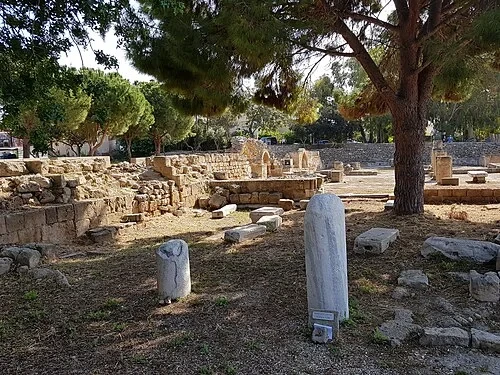 Saint Paul's Pillar
Standing in the shaded courtyard area is a short, rounded stone column known historically as Saint Paul's Pillar. According to local Christian tradition, the Apostle Paul visited Paphos in the first century AD during his first missionary journey. Legend holds that he was bound to this very pillar and scourged with thirty-nine lashes by the Roman authorities for preaching the Gospel. Despite this harsh punishment, Paul went on to convert the Roman proconsul Sergius Paulus, making Cyprus one of the first regions in the world governed by a Christian ruler. If you look closely at the column, you will notice its deeply weathered, smooth surface. This unique texture is not just the result of natural wind and rain, but is also due to the countless hands of visiting pilgrims who have touched the stone over many centuries. Today, it remains a major point of pilgrimage for Christians from all over the world who come to reflect on this foundational biblical story.
Photo: Joostik · CC BY-SA 4.0
03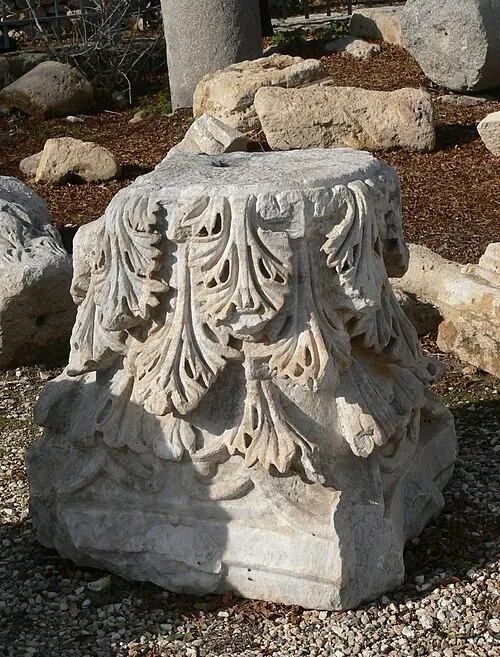 The Atrium and Baptistery
Corinthian Column Capital
This heavily carved stone block sitting on the ground is a column capital executed in the classic Corinthian style. Its surface features high-relief carvings of acanthus leaves, characterized by their stylized, curling tips and deep, shadowy recesses. In its prime, this beautifully crafted capital sat high above the ground, crowning one of the monumental columns that lined the basilica’s grand atrium. The atrium was a large, open-air forecourt positioned at the entrance of the church. In early Christian times, this space served a very specific communal and liturgical function. It was where catechumens—individuals who were learning about the faith but had not yet been baptized—were required to wait during the most sacred parts of the Eucharistic service inside. Unable to enter the main sanctuary, they gathered in this courtyard to listen and prepare for their eventual initiation into the community. Today, this fallen capital offers a close-up look at the exceptional craftsmanship that defined the fourth-century complex.
Listen in the appWolfgang Sauber · CC BY-SA 3.0
04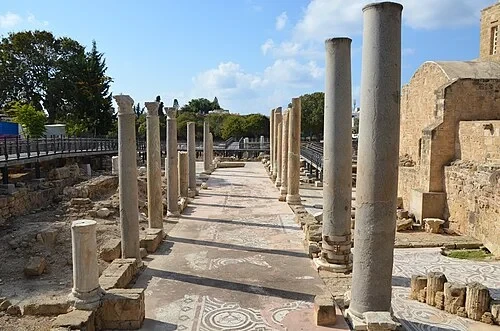 Main Nave and Seven Aisles
The Great Nave
Standing along the central path are rows of tall columns that once supported the roof of the grand nave. Unlike most standard basilicas of the era which featured three or five aisles, this original structure boasted a highly unusual seven-aisled layout. This extraordinarily wide configuration was specifically engineered to accommodate the immense crowds of pilgrims arriving in Paphos from all corners of the ancient world. If you look down the rows, you can see a noticeable variety in the colors and textures of the column shafts. Some are made of dark grey granite, while others feature lighter, striated marble. This variation reveals that the builders imported these precious stone materials from different regions across the Mediterranean, including Egypt and Greece. Shipping such heavy stone over vast distances was a monumental logistical feat, demonstrating the immense wealth and imperial backing behind the construction of this sacred site in the early Byzantine period.
Listen in the appCarole Raddato · CC BY-SA 2.0
05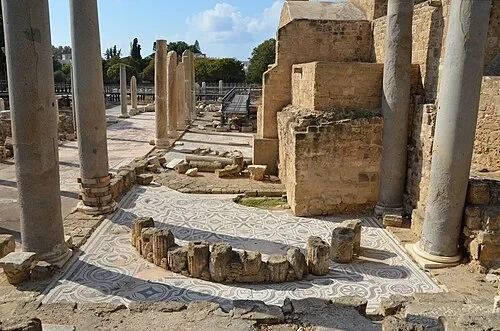 Floor Mosaic Viewing Platforms
The Ancient Apse
This curved, low wall of cut stones sits directly on top of a decorated mosaic floor, outlining the ancient apse of the basilica. In early Christian church architecture, the apse was a semi-circular recess situated at the eastern end of the building. This was the most sacred area of the church, housing the altar and the raised seating reserved strictly for the bishop and the attending clergy during religious services. A particularly fascinating feature here is how the geometric mosaic patterns run directly under and around these stone remnants. This overlapping construction indicates that the church underwent significant structural changes and renovations over the centuries. Archaeological evidence suggests these renovations peaked during the sixth century AD, a period of renewed prosperity in Cyprus. The presence of the mosaics beneath the stone seating demonstrates how the space was reconfigured and embellished over time, leaving behind a fascinating physical record of the basilica's architectural evolution.
Listen in the appCarole Raddato · CC BY-SA 2.0
06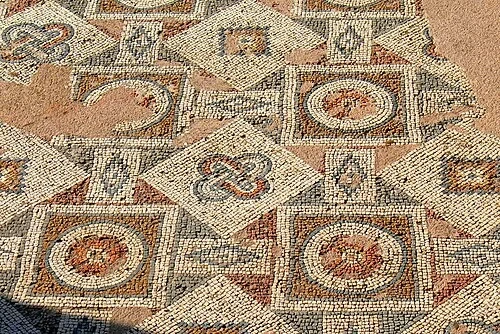 Floor Mosaic Viewing Platforms
Early Christian Mosaics
These floor mosaics display the highly detailed geometric artistry popular during the early Christian period. Look closely at the repeating patterns, which feature interlocking diamond shapes, borders, and complex knots. Among these designs, you can identify the famous Solomon's knot, an ancient motif consisting of two closed loops that are doubly interlinked. In early Christian theology, this endless, unbroken knot carried deep symbolic meaning, representing eternity, the nature of the divine, and the unity of the Christian faith. The entire composition is made up of thousands of tiny stone tiles, known as tesserae. Unlike the vibrant glass tiles used on walls, these floor mosaics are rendered in a more subtle, durable palette of earth-toned colors, including terracotta reds, deep greys, creamy whites, and golden ochres. These natural stone colors have survived remarkably well despite centuries of exposure to the elements, offering a vivid glimpse into the decorative tastes of the ancient congregation.
Listen in the appWolfgang Sauber · CC BY-SA 3.0
07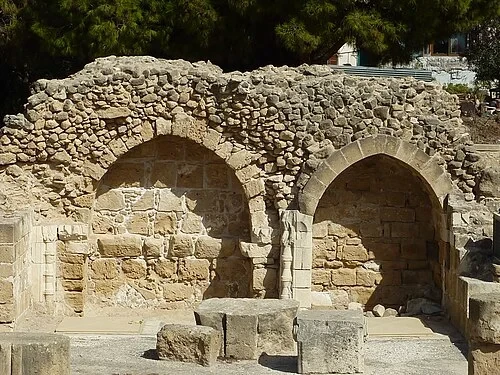 The Gothic Church Ruins
The Gothic Arches
These pointed stone arches and rough masonry walls stand in sharp contrast to the surrounding ruins. While the older parts of the site feature the rounded arches characteristic of Byzantine architecture, this section displays the sharp, elegant lines of the Western Gothic style. This architectural transition reflects a major historical shift that occurred during the Crusader era. In the thirteenth century, French Lusignan rulers controlled Cyprus, introducing Western European feudalism and Latin Christianity to the island. During this period, the Latin Church established a presence on this historic site, building a Franciscan church directly over the older, ruined Byzantine structures. The rougher stone masonry and pointed arches seen here are the physical remains of this medieval Gothic church. This layering of different architectural styles shows how the site remained a highly contested and continuously utilized space of worship as power shifted between the Eastern Byzantine and Western Crusader empires.
Listen in the appPhoto: Chris06 · CC BY-SA 4.0
08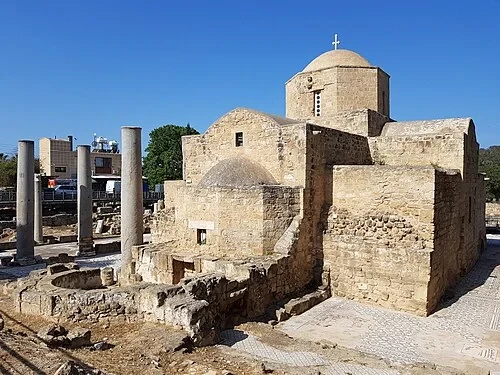 Panagia Chrysopolitissa Church
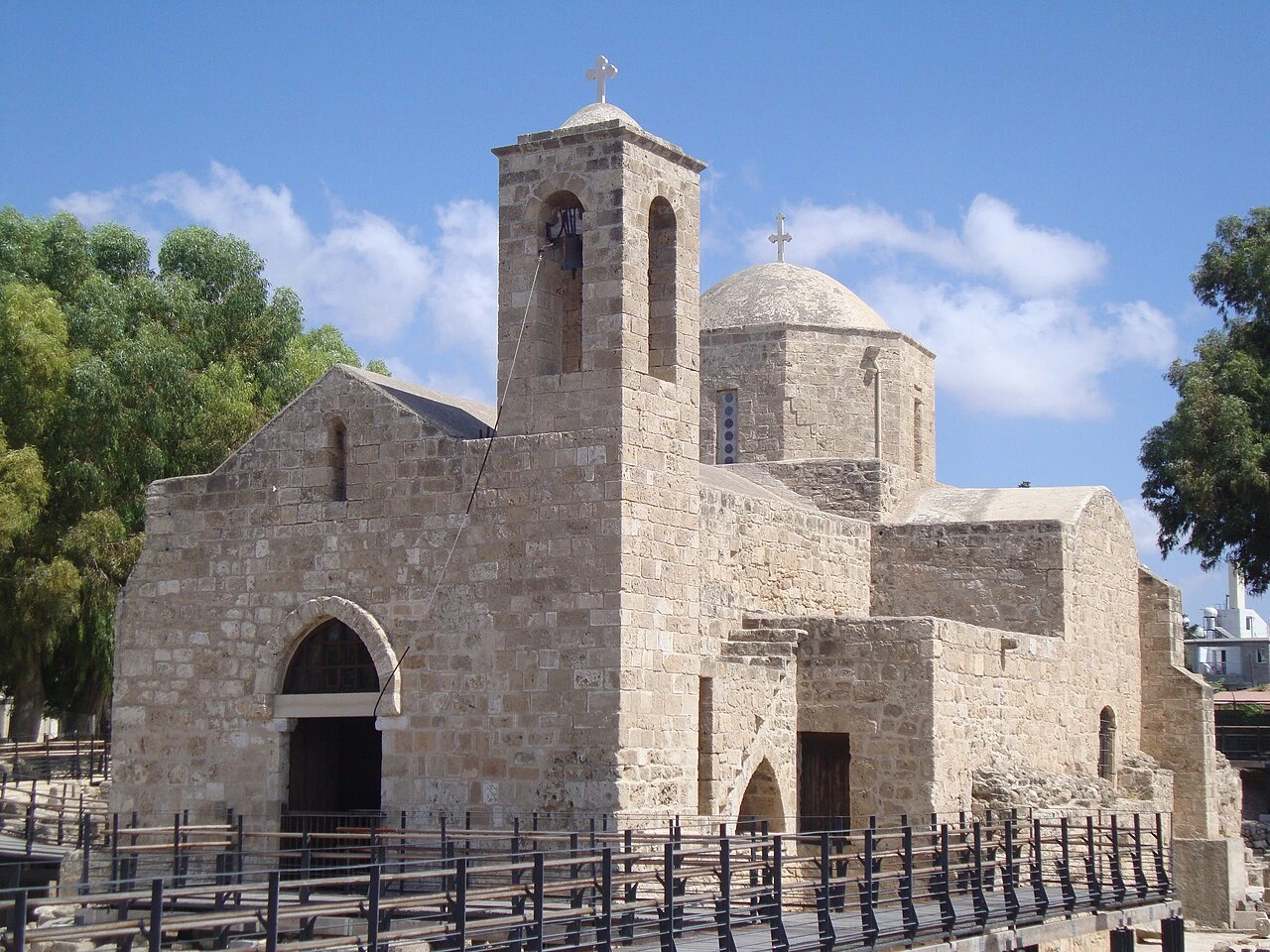
Church of Saint Kyriaki
This active stone church, known as the Church of Saint Kyriaki, stands directly in the center of the archaeological park. Built in the fifteenth century, the church features warm, golden limestone walls, a small central dome, and a simple Christian cross rising from its highest peak. Its compact, traditional Byzantine cross-in-square design offers a striking visual contrast to the sprawling footprint of the ancient fourth-century basilica that surrounds it. The church was deliberately constructed over the ruins of the older, much larger basilica after the original structure had fallen into complete disrepair. By building on this specific spot, the local community kept Christian worship alive on this sacred ground through Ottoman rule and into the modern day. Its surviving structure serves as a living connection between the ancient ruins and the active religious community that still gathers here today.
Listen in the appPhoto: Joostik · CC BY-SA 4.0
09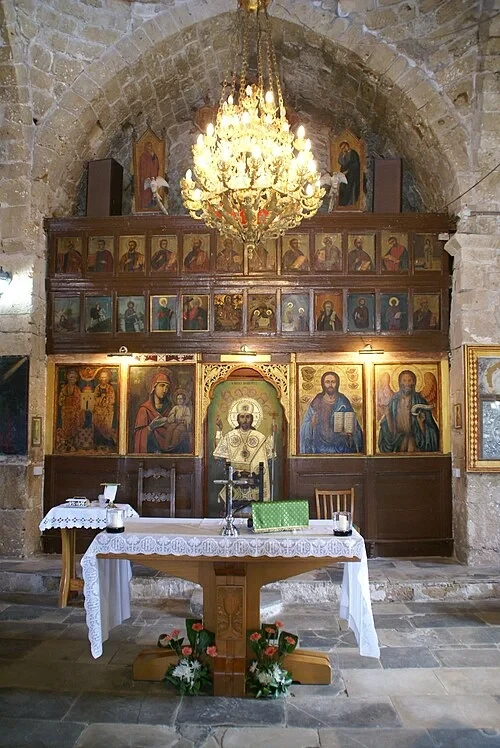 Panagia Chrysopolitissa Church
The Gilded Altar Screen
Inside the sanctuary of the Church of Saint Kyriaki, you will find a beautifully preserved interior that remains a place of active prayer. The focal point of the space is the traditional iconostasis, a dark wood altar screen decorated with detailed painted portraits of saints, prophets, and holy figures. This screen separates the nave from the sanctuary, following Eastern Orthodox liturgical traditions. Hanging from the center of the stone-vaulted ceiling is a large, ornate gold chandelier, which casts a warm glow over the ancient stone walls during evening services. Today, this small historic building serves a remarkably ecumenical purpose. Rather than being restricted to a single denomination, the church is shared by several Christian communities, hosting regular Anglican, Roman Catholic, and Greek Orthodox services throughout the week. This cooperative arrangement makes it a unique modern symbol of unity amidst the deep historical layers of the surrounding archaeological park.
Listen in the appPhoto: F.Higer · CC BY 3.0
Chrysopolitissa Basilica
Frequently asked questions
How much does the guide cost?
Free app download. Listed guide price: Free guide. Guide price shown in the app. Audio guide only. Venue admission is separate.
Can I listen without internet?
Yes. Download the guide’s audio, images, and maps in the app before your visit. Your downloaded content is then available offline.
Can I listen in my language?
This audio guide is available in 15 languages, including English.
Do I need to follow a schedule?
No. This is a self-guided experience. Choose your stops, pause whenever you like, and return to a story at your own pace.
At your own pace
Explore Chrysopolitissa Basilica.
Download Stanza, then search for “Chrysopolitissa Basilica”.
Free app download · Guide price shown in the app
Keep exploring
Nearby audio guides
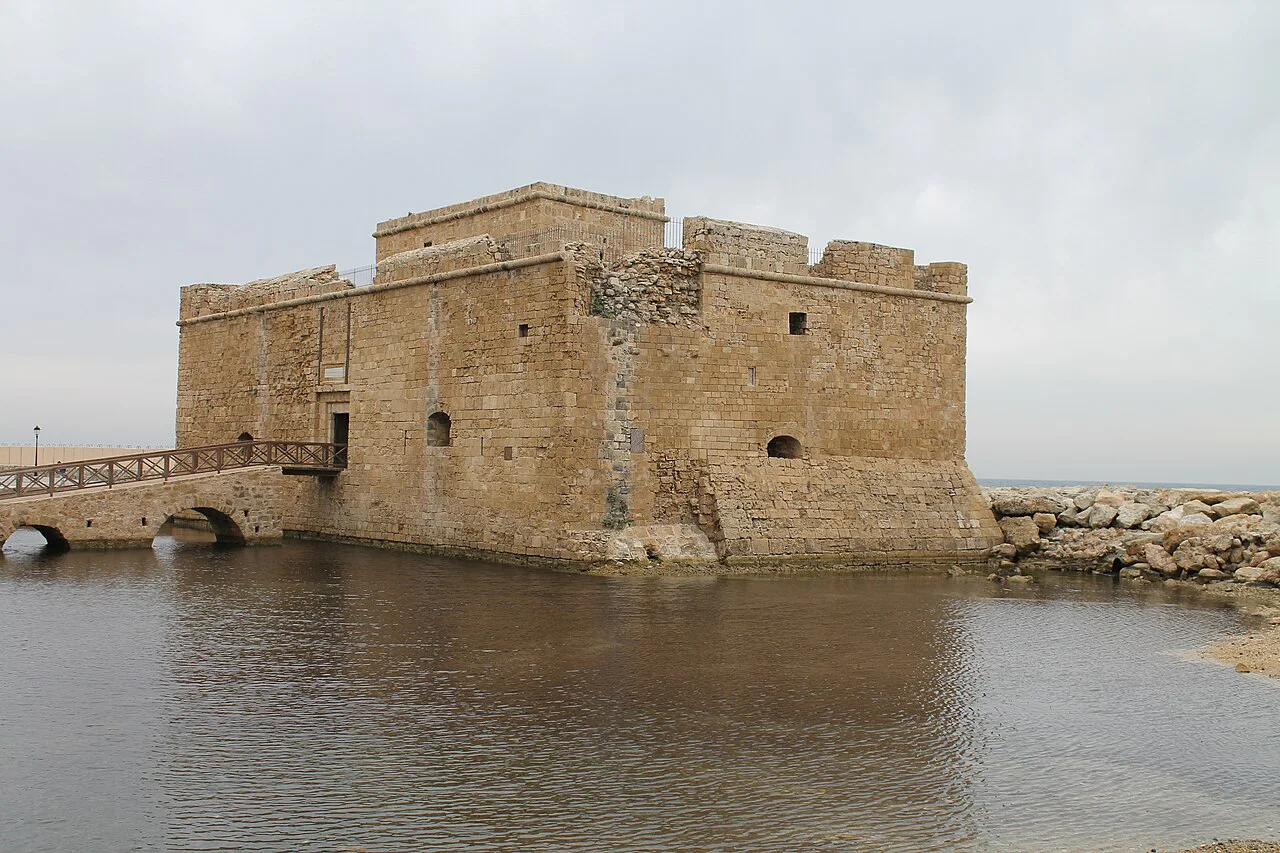
Paphos · 1 km
Paphos Castle
Content & sources
Alan Samuel from Cardiff, Wales · CC BY 2.0
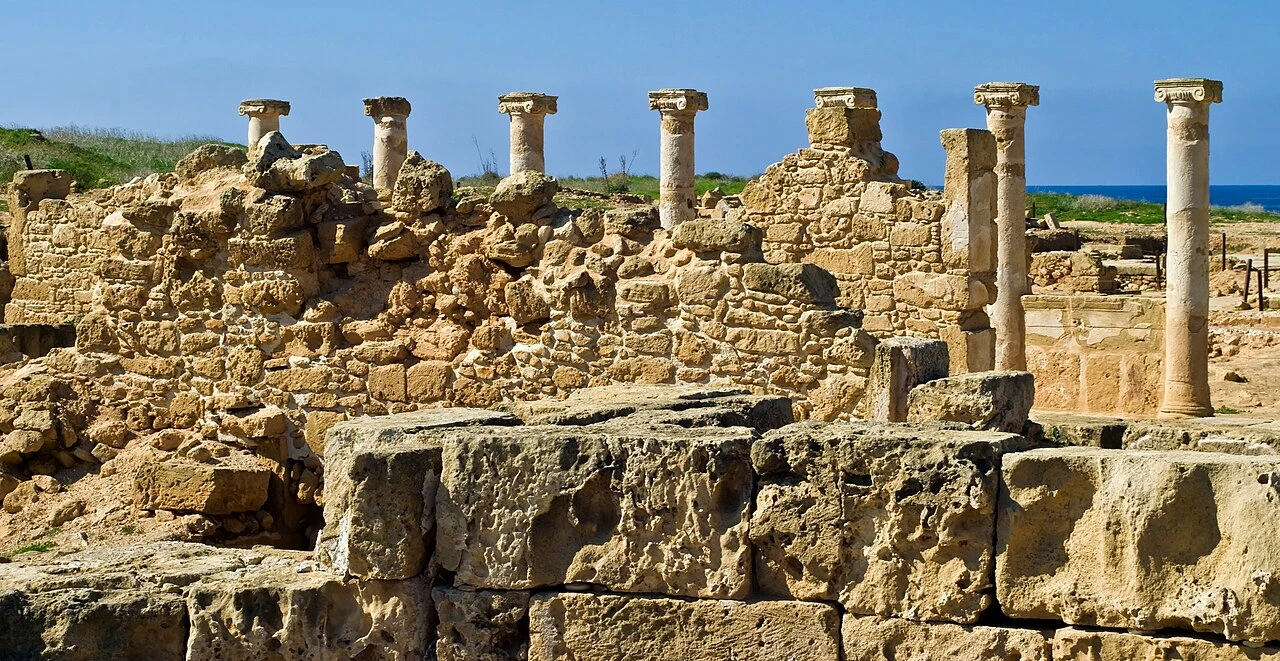
Paphos · 1 km
Paphos Archaeological Park
Content & sources
Photo: Nikodem Nijaki · CC BY-SA 3.0
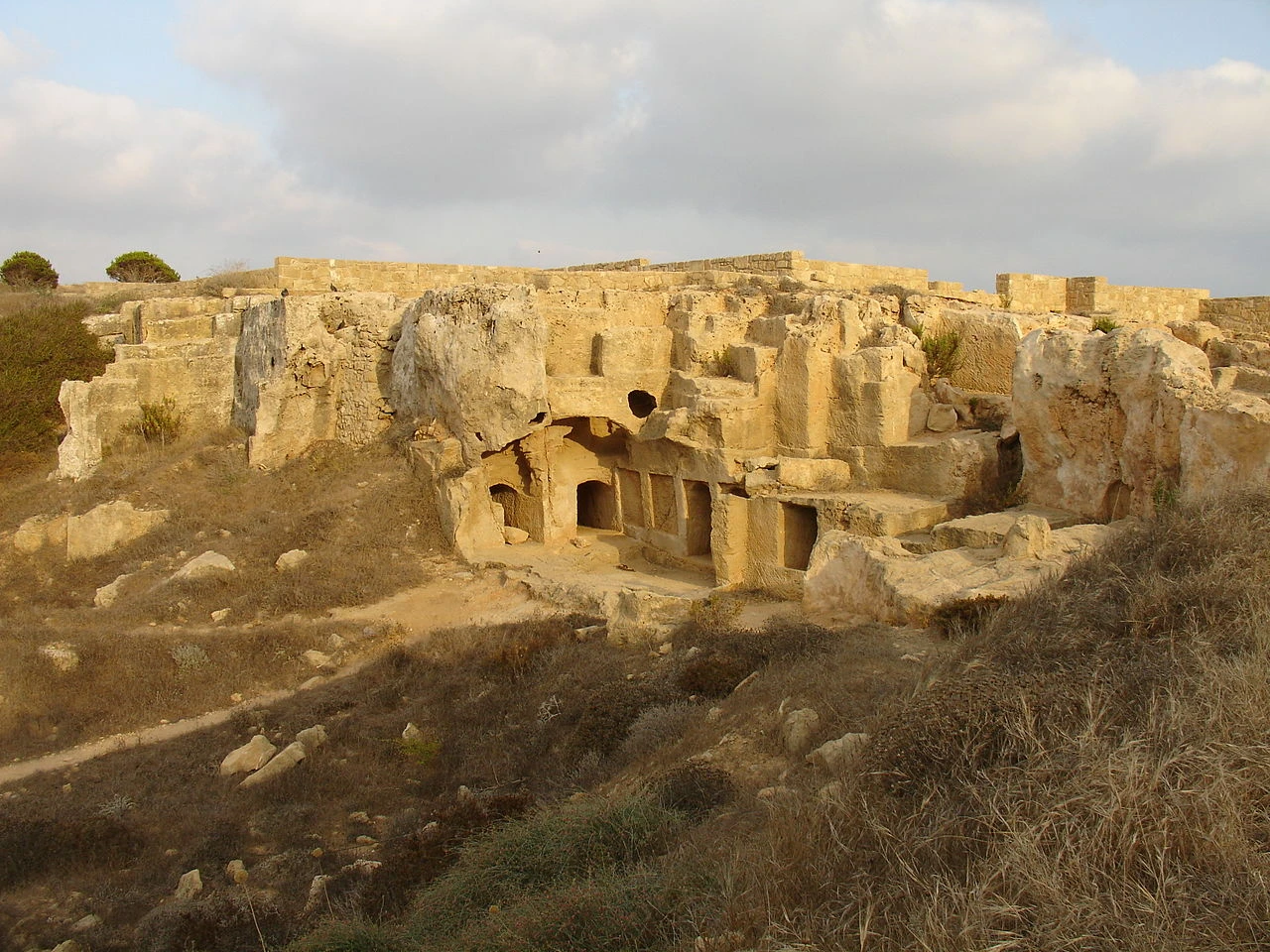
Paphos · 2 km
Tombs of the Kings
Content & sources
Mgiganteus1 at en.wikipedia · CC BY-SA 3.0
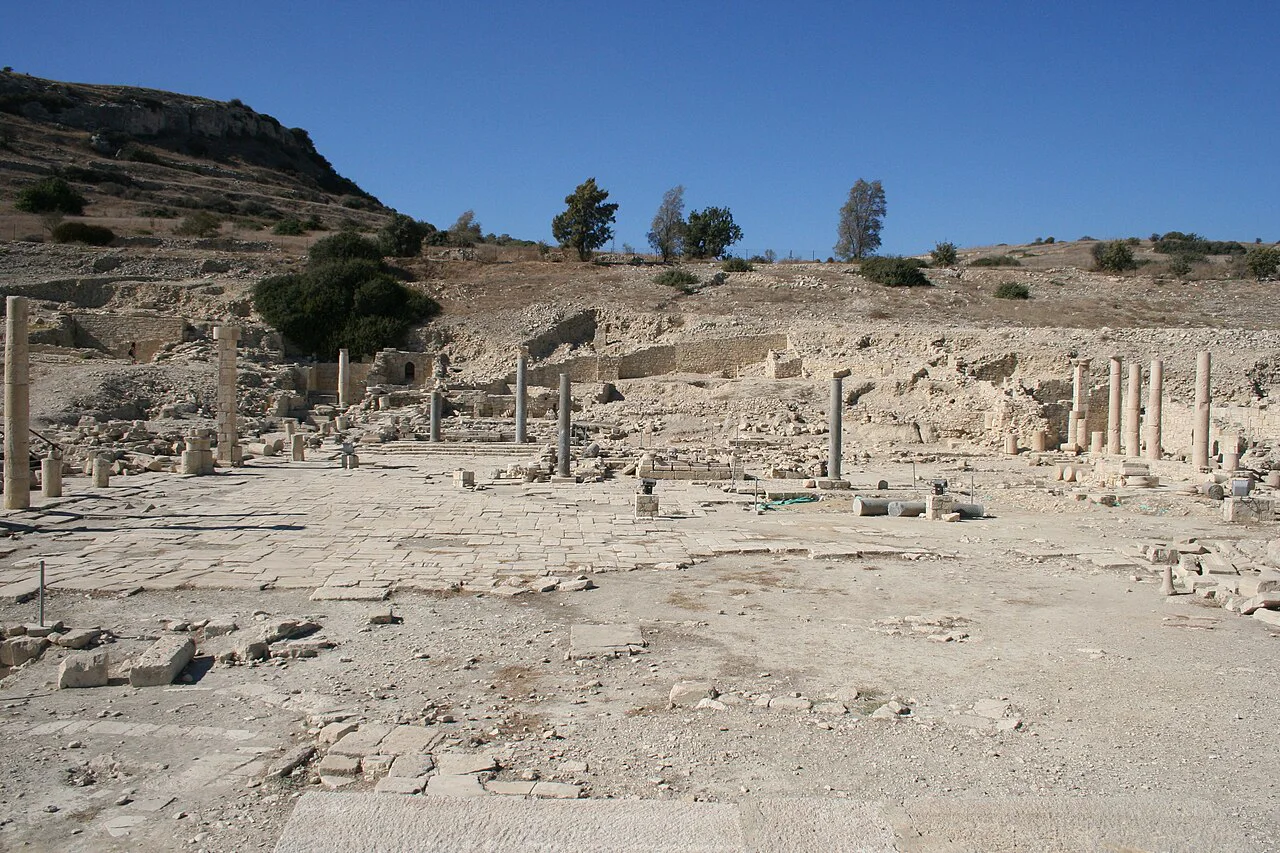
Ayios Tykhonas · 67 km
Amathus
Content & sources
de Oude Grieken · CC0