Stanza · Audio guide
Tombs of the Kings Audio Guide
A place to remember. A story to take with you.
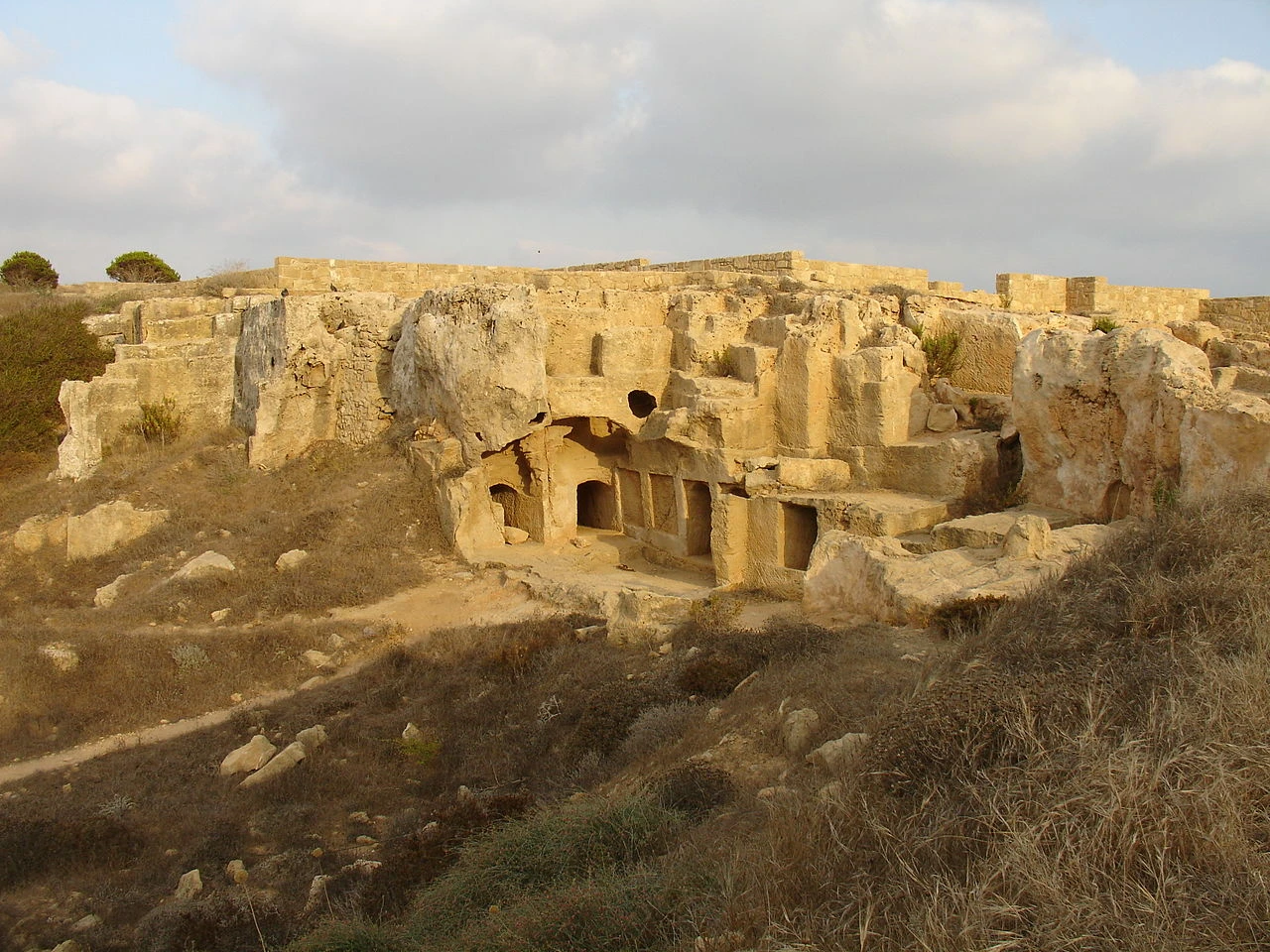
This large necropolis dates back to the 4th century BC and features well-preserved underground tombs carved directly into solid rock. It is a UNESCO World Heritage site known for its distinct Doric columns…
Download Stanza, then search for “Tombs of the Kings”.
About the tour
One guide. Your kind of visit.
This large necropolis dates back to the 4th century BC and features well-preserved underground tombs carved directly into solid rock. It is a UNESCO World Heritage site known for its distinct Doric columns and influence from Egyptian architecture.
Ready when you are.
- 01Get the free Stanza app.
iOS & Android
- 02Find your guide.
“Tombs of the Kings”
- 03Download before you go.
Works offline
Audio guide / 28 narrated stops
Inside the guide
Get to know a few of the stories before you go. Open a stop to read more.
01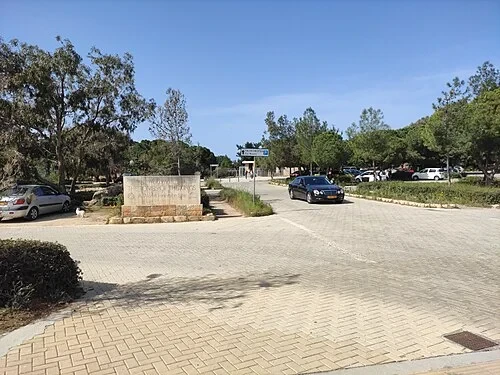 King Tombs Entrance
Entrance to the Tombs of the Kings
Welcome to one of the most significant archaeological sites in Cyprus, a sprawling ancient cemetery that spreads across a dry, sun-baked landscape near the sea. Despite the grand name, "Tombs of the Kings," no royalty was ever buried here. Instead, this necropolis served as the final resting place for high-ranking administrative officials, Ptolemaic aristocrats, and their families during the Hellenistic and Roman periods, dating back as far as the fourth century BC. The ancient builders carved these tombs directly into the solid sandstone bedrock, creating underground structures that closely mirrored the grand houses of the living to provide the dead with a familiar environment in the afterlife. The park is exposed to the Mediterranean sun, with very little natural shade, so make sure you have plenty of water and comfortable walking shoes before you set off across the rugged, sandy terrain to explore the tombs.
Fry72, Karel Frydrýšek · CC BY-SA 4.0
02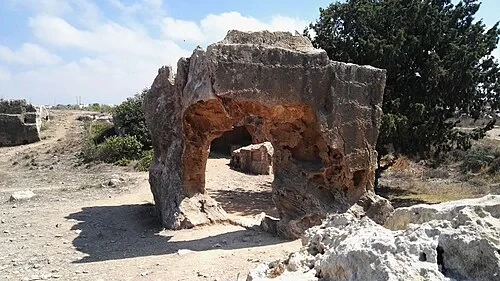 Tombs of the Kings Necropolis Overview
Shaped by Wind and Quarrymen
Over the centuries, the soft calcarenite sandstone of this ancient cemetery has been constantly weathered by salty coastal winds and winter rains. This natural erosion has slowly rounded off the sharp, precise angles originally cut by ancient tools, transforming many of the structures into organic, cave-like formations. In several areas, you can see natural archways that were formed when the heavy stone roofs of underground chambers collapsed under their own weight long ago. But nature was not the only force at work here. After the burials ceased, local stonecutters and quarrymen utilized this site for centuries as a convenient source of building material. They cut away and carried off valuable blocks of pre-worked stone to build the expanding city of Paphos, leaving behind the hollowed-out, skeleton-like landscape visible today.
Photo: Bukvoed · CC BY 4.0
03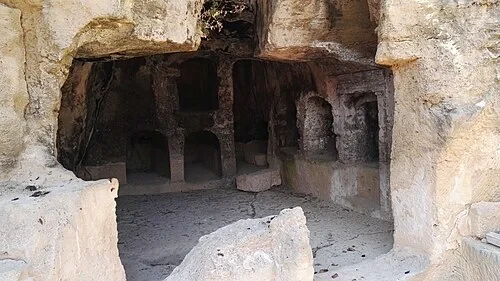 Tombs of the Kings Necropolis Overview
The Loculi: Burial Niches
Throughout these underground chambers, you will find numerous rectangular openings cut directly into the solid stone walls. Known as loculi, these niches served as the final resting places for individual bodies. According to ancient burial practices, once a wrapped body was carefully placed inside the opening, the niche was sealed shut with a stone slab. Builders then covered the slab with plaster, which was often painted with colorful decorative patterns or inscribed with the name of the deceased. Looking closely at these openings, you can see that they vary significantly in size, with some smaller niches specifically designed for children. Because these loculi were positioned along the walls and were relatively easy to access, grave robbers targeted them over the centuries, breaking the plaster seals and leaving the niches empty and exposed.
Listen in the appPhoto: Bukvoed · CC BY 4.0
04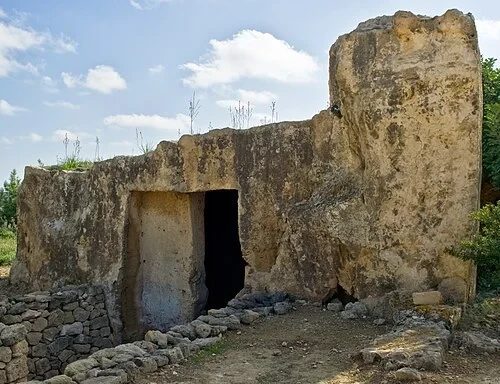 Royal Tomb 1
 at Paphos
The monumentality of this tomb entrance is the result of an incredible engineering feat, as the entire structure was carved from a single piece of solid sandstone bedrock. The tomb stands partly above ground, and ancient stonecutters painstakingly hollowed it out from the inside of the rock. The finished entrance closely resembles the domestic architecture of the Hellenistic period, featuring a heavy lintel and straight, flat door frames that look like they belong to a grand residence. When early European travelers first stumbled upon these buried ruins during the eighteenth and nineteenth centuries, they were so struck by this house-like appearance that they frequently mistook them for prehistoric dwellings or secret hideouts rather than ancient burial chambers.
Listen in the appPhoto: Nikodem Nijaki · CC BY-SA 3.0
05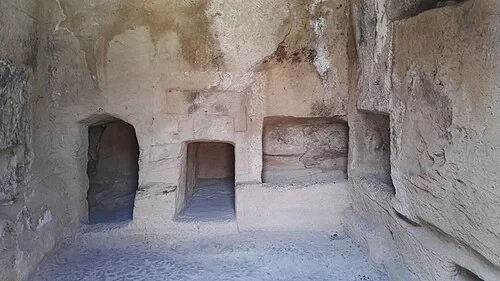 Royal Tomb 1
Burial Chambers of Tomb 1
Step inside the interior of Tomb 1 to observe the layout of the rock-cut chambers, which represent a simpler, earlier stage of development in the necropolis before the massive colonnaded courtyards were built. Rather than a grand open atrium, this tomb features a straightforward plan where individual chambers branch off from a central passage. Burial slots are carved directly into both the vertical walls and the stone floors of these rooms. These complexes were used for family burials over multiple generations, allowing wealthy households to keep their ancestors together. When new family members passed away, older bones were sometimes respectfully moved aside within the chambers to make room for new interments.
Listen in the appPhoto: Bukvoed · CC BY 4.0
06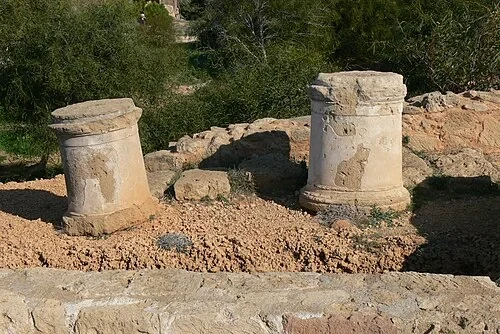 Royal Tomb 2
 at Paphos
Near the entrance of Tomb 2, these two cylindrical stone pillars standing on the gravelly ground served as ancient altars. Grieving families used them to perform funerary rituals, offer sacrifices, and pour libations like wine, honey, and oil to appease the gods of the underworld and honor the spirits of the dead. It was common practice for the living to gather at the tomb on specific anniversaries to share a ritual meal. During these gatherings, they would symbolically feed the deceased by pouring liquid offerings down through small pipes or holes that led directly into the burial chamber below.
Listen in the appWolfgang Sauber · CC BY-SA 3.0
07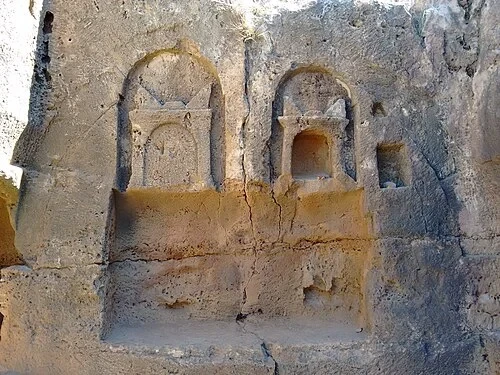 Royal Tomb 2
Carved False Portals
These decorative arches carved directly into the rock face resemble miniature temple fronts or windows. Known as "false doors" or symbolic portals, this design element was borrowed from ancient Egyptian burial customs. Greeks and Romans believed these portals served as spiritual gateways, allowing the soul of the deceased to pass freely between the world of the living and the realm of the dead. Looking closely, you can see the detailed carvings in the stone, including small columns and triangular pediments that imitate real temple architecture on a miniature scale.
Listen in the appHéctor Ochoa 'Robot8A' · CC BY-SA 4.0
08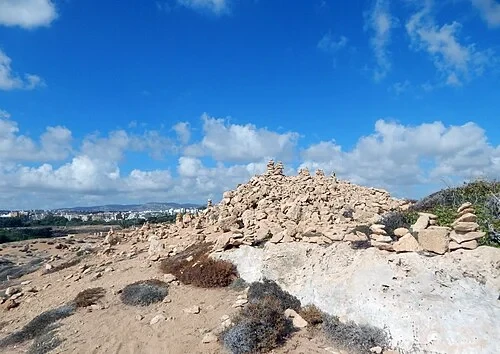 The False Cairns
False Cairns
On this high ridge overlooking the Mediterranean Sea, you will see a large pile of stones and smaller rock towers. While they resemble ancient grave markers or cairns, these structures are entirely modern additions built by visitors who pile the stones as a form of meditative practice or tourist tradition. Although they create a striking silhouette against the blue sky and sea, archaeologists strongly discourage building them. Moving the loose stones can disturb the delicate, unexcavated layers of the ancient site, potentially destroying historical evidence that still lies buried just beneath the surface.
Listen in the appPhoto: Voltmetro · CC BY-SA 4.0
09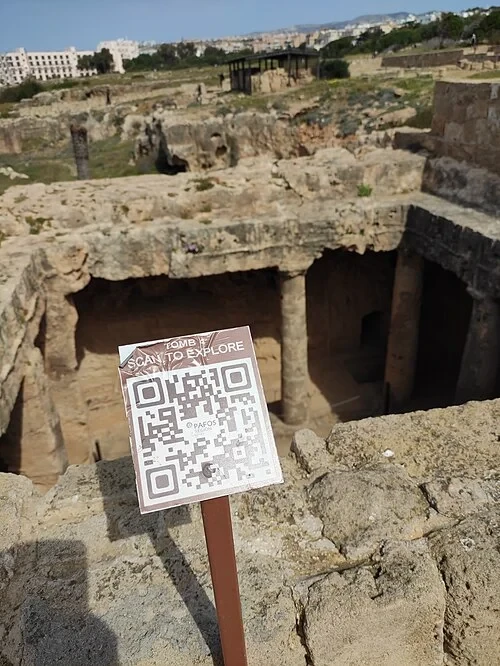 Royal Tomb 4
 at Paphos
This sign marks the entrance to Tomb 4, which is widely considered one of the most complete and grandest structures in the entire archaeological park. Below the surface lies a fully intact peristyle courtyard, featuring a central open-air atrium surrounded by colonnaded walkways. Before modern excavations began, many of these deep, rock-cut pits were completely filled with sand, debris, and wild vegetation, which hid the massive columns from view for over a millennium; at the excavation site of Tomb 5 you will hear how such pits were brought back to light. Today, the sign guides you down into this subterranean monument, which the next three stops explore.
Listen in the appFry72, Karel Frydrýšek · CC BY-SA 4.0
10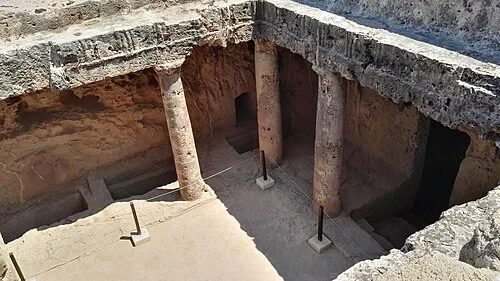 Royal Tomb 4
Doric Colonnade of Tomb 4
Look down into the subterranean courtyard of Tomb 4. As at the entrance of Tomb 1, the entire structure—including the columns, the decorative architrave, and the floor—was carved out of a single massive block of sandstone bedrock, but here on a far greater scale. From this vantage point, you can see four intact columns supporting a heavy stone lintel decorated with a traditional Doric frieze of triglyphs and metopes. To build this, workers had to carve straight down into the earth, meticulously chiseling away tons of solid stone while leaving these perfectly round, fluted columns standing in place. This subtractive method of architecture required immense planning, as any mistake made during the carving process could not be easily repaired.
Listen in the appPhoto: Bukvoed · CC BY 4.0
- 11
Tomb 4 Sunken Courtyard
Standing inside the sunken courtyard of Tomb 4 reveals the stark contrast between rough natural stone walls and beautifully finished, smooth classical columns.
- 12
Tomb 4 Underground Chambers
The dark openings branching off from Tomb 4's walkway lead to underground chambers, centered around a stone well used for ritual purification.
- 13
Royal Tomb 3 at Paphos
Looking down into the open atrium of Tomb 3 reveals the most beautifully preserved peristyle courtyard in the entire archaeological park.
- 14
Entablature of Tomb 3
The carved horizontal entablature above the columns of Tomb 3 features a detailed Doric frieze cut directly into the solid sandstone bedrock.
- 15
Colonnade Walkway of Tomb 3
From inside the colonnade of Tomb 3, you can appreciate the fluted details of columns that have stood upright for over two millennia.
- 16
Pillars and Light of Tomb 3
Natural light and deep shadows interact beautifully within the subterranean colonnade of Tomb 3, which was later reused by early Christian hermits.
- 17
Royal Tomb 5 at Paphos
Gazing down into the massive sunken courtyard of Tomb 5 reveals the largest and most imposing burial complex in the entire necropolis.
- 18
The Great Court of Tomb 5
The vast, rectangular court of Tomb 5 showcases the incredible effort required to excavate thousands of tons of solid bedrock by hand.
- 19
Pillar Walkway of Tomb 5
The rough ceiling of this shaded walkway still bears the diagonal tool marks left by ancient stonecutters thousands of years ago.
- 20
Tomb 5 Excavation Site
Viewed from above, this sprawling excavation site was rescued from centuries of accumulated sand and debris by archaeologists in the late twentieth century.
- 21
Royal Tomb 8 at Paphos
Tomb 8 features a highly unusual design where a single, free-standing block of stone was left in the center of a deep excavation pit.
- 22
The Central Block of Tomb 8
This unique, cube-like central structure reflects eastern Mediterranean architectural influences, showing how ancient Paphos absorbed diverse foreign styles.
- 23
Tomb 8 Interior Chambers
Inside the quiet chambers of Tomb 8, archaeologists discovered fragments of ancient lamps and ritual vessels left behind during funerary ceremonies.
- 24
Doric Portal Carving
This finely carved doorway features a miniature Doric frieze that mimics early Greek temple architecture, though coastal weathering threatens its preservation.
- 25
View over the Northern Tombs
The northern sector of the park offers a view of weathered ruins against the sea, reflecting the practical advantages of a coastal cemetery site.
- 26
Tomb 6 Ancient Fresco Fragment
A rare fragment of painted plaster reveals that these bare sandstone tombs were once decorated with vibrant, colorful frescoes imitating expensive marble.
- 27
Tomb 7
A deep, narrow rock-cut passage known as a dromos creates a dramatic transition between the world of the living and the silent tomb.
- 28
The Atrium of Tomb 7
The spacious atrium of Tomb 7 once served as a shaded sanctuary for local shepherds and their flocks during the medieval period.
Tombs of the Kings
Frequently asked questions
How much does the guide cost?
Free app download. Listed guide price: $3.99. Guide price shown in the app. Audio guide only. Venue admission is separate.
Can I listen without internet?
Yes. Download the guide’s audio, images, and maps in the app before your visit. Your downloaded content is then available offline.
Can I listen in my language?
This audio guide is available in 15 languages, including English.
Do I need to follow a schedule?
No. This is a self-guided experience. Choose your stops, pause whenever you like, and return to a story at your own pace.
At your own pace
Explore Tombs of the Kings.
Download Stanza, then search for “Tombs of the Kings”.
Free app download · Guide price shown in the app
Keep exploring
Nearby audio guides
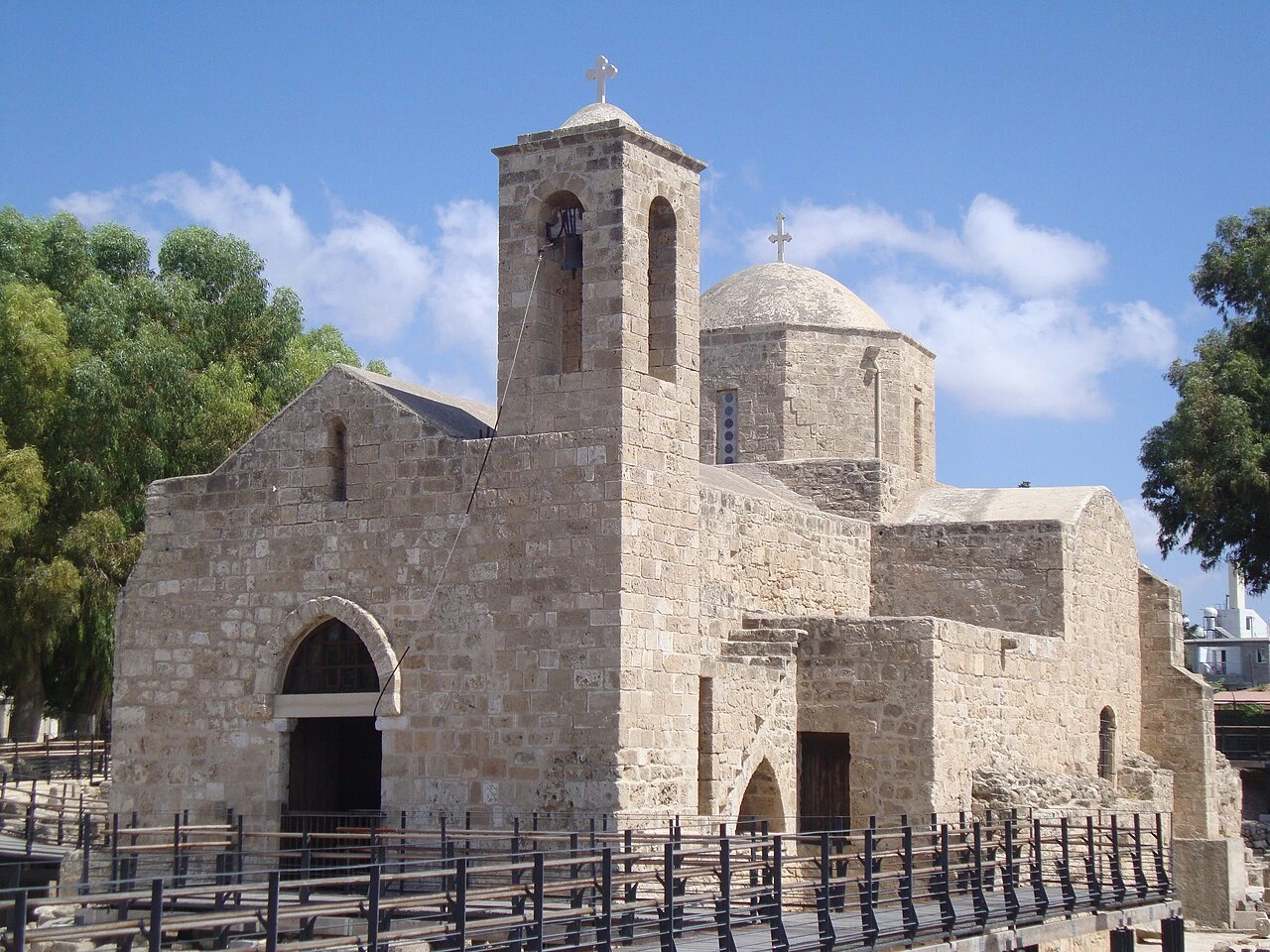
Paphos Municipality · 2 km
Chrysopolitissa Basilica
Content & sources
Photo: Роман Курносенко · CC BY-SA 3.0
Paphos · 2 km
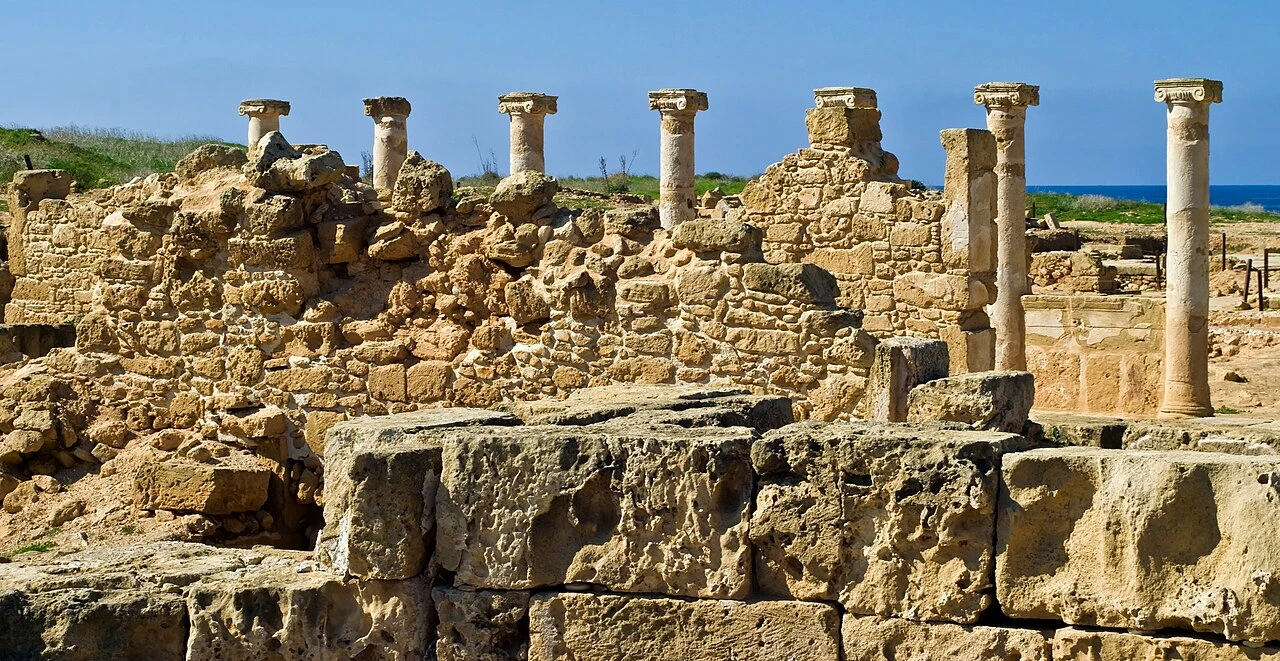
Paphos Archaeological Park
Content & sources
Photo: Nikodem Nijaki · CC BY-SA 3.0
Paphos · 3 km
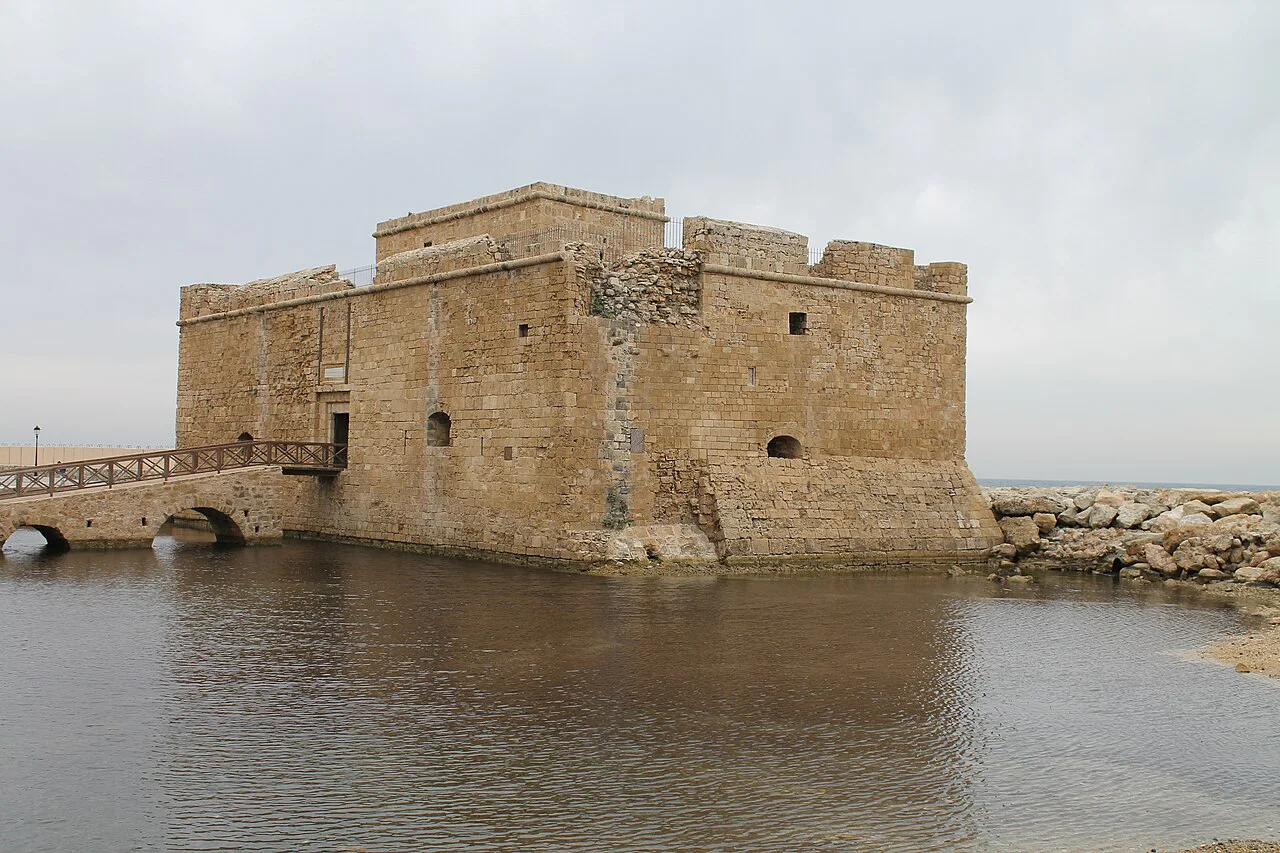
Paphos Castle
Content & sources
Alan Samuel from Cardiff, Wales · CC BY 2.0
Ayios Tykhonas · 68 km
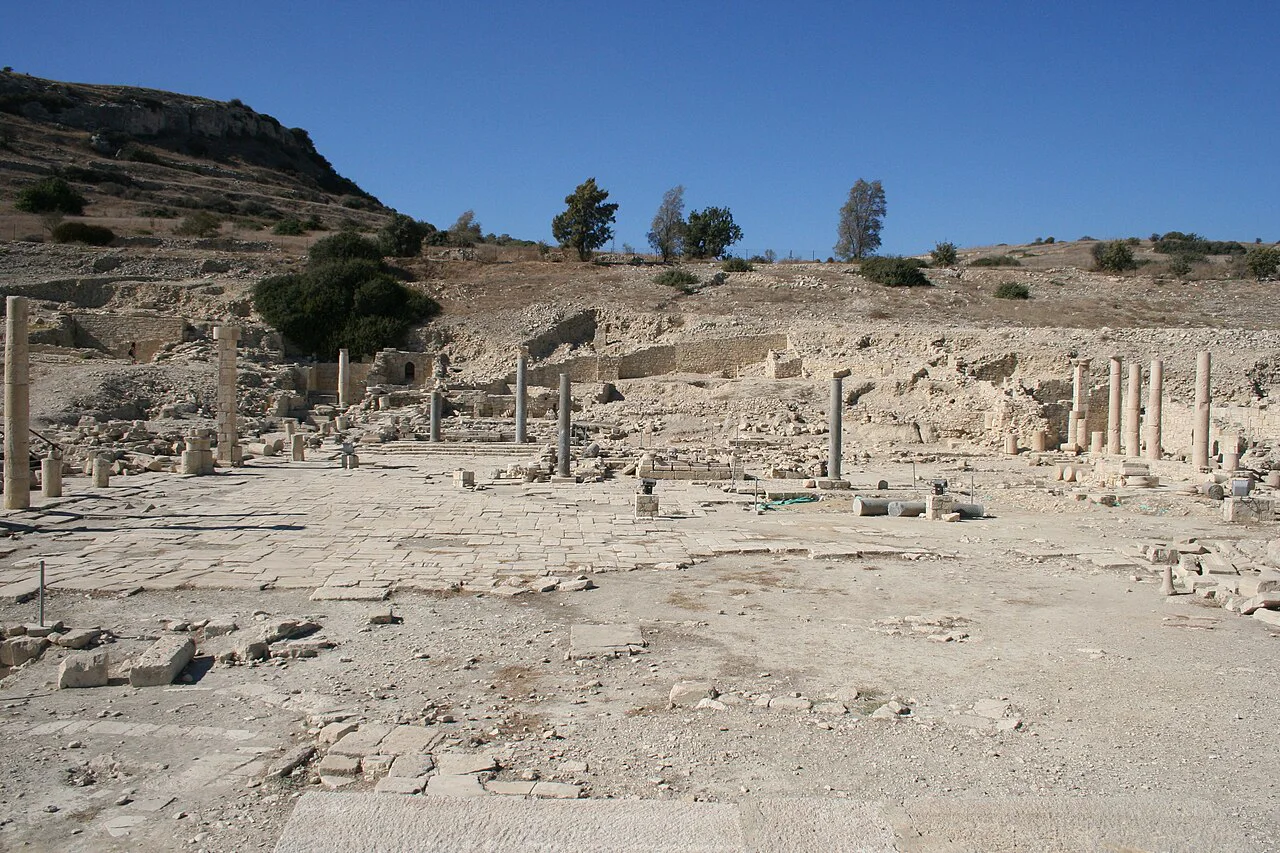
Amathus
Content & sources
de Oude Grieken · CC0