Stanza · Audio guide
Selimiye Mosque, Nicosia Audio Guide
A place to remember. A story to take with you.
The Selimiye Mosque is a former Christian cathedral that was converted into a mosque in North Nicosia. It is the largest and oldest surviving Gothic church in Cyprus.
Download Stanza, then search for “Selimiye Mosque, Nicosia”.
About the tour
One guide. Your kind of visit.
The Selimiye Mosque is a former Christian cathedral that was converted into a mosque in North Nicosia. It is the largest and oldest surviving Gothic church in Cyprus.
Ready when you are.
- 01Get the free Stanza app.
iOS & Android
- 02Find your guide.
“Selimiye Mosque, Nicosia”
- 03Download before you go.
Works offline
Audio guide / 11 narrated stops
Inside the guide
Get to know a few of the stories before you go. Open a stop to read more.
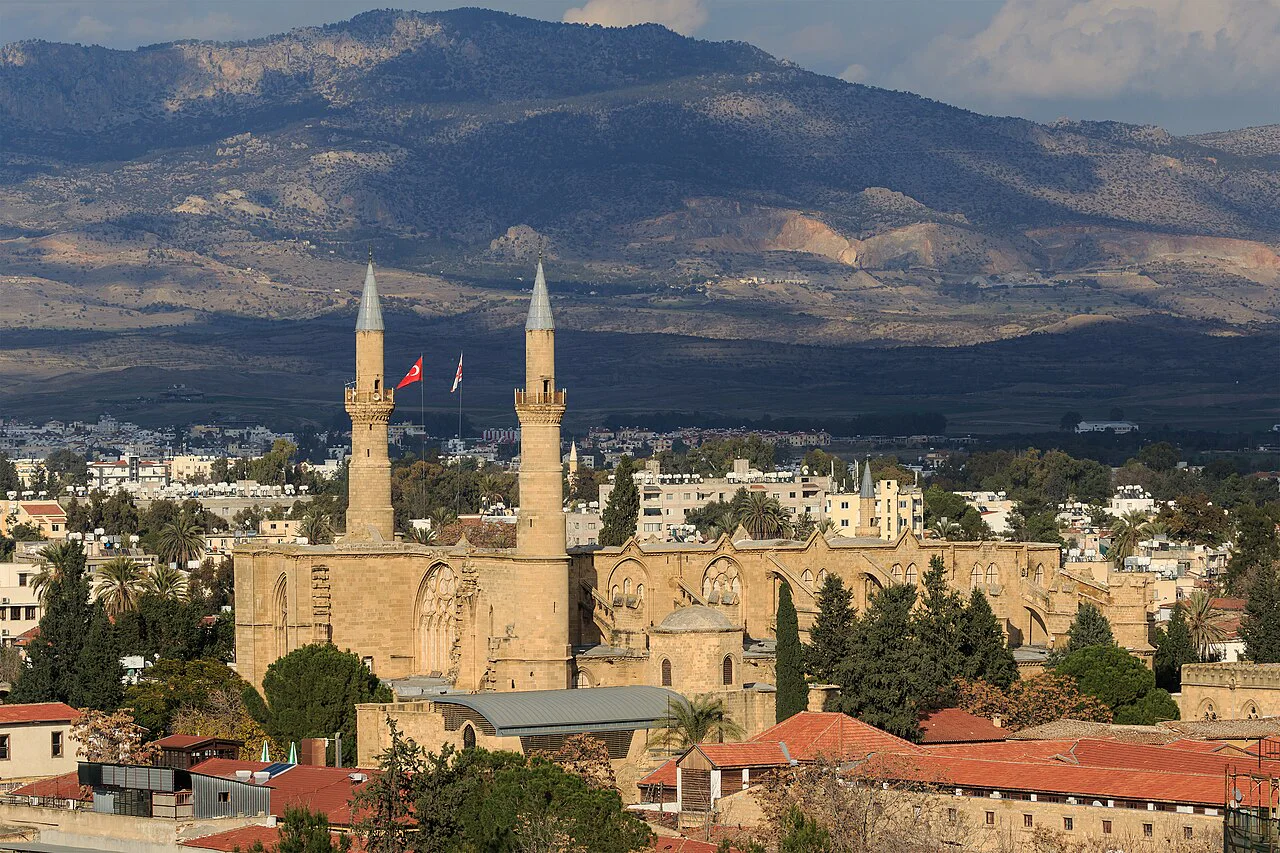
01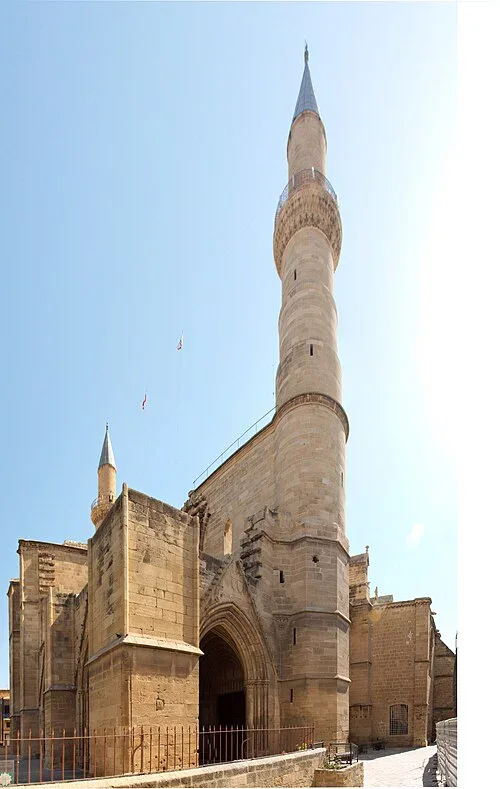 Western Plaza and the Monumental Facade
West Front and Minarets
Welcome to the Selimiye Mosque in North Nicosia, a building that has lived two lives. It began as the Cathedral of Saint Sophia, and it is still the largest and oldest surviving Gothic church in Cyprus. The foundation stone is usually dated to 1209, though accounts differ on when work began and on which archbishop began it, Thierry or Albert. Consecration came much later, in 1326. The two slender minarets rising beside the stone Gothic towers are Ottoman additions, and they give the silhouette its distinctive half-and-half character. The name Selimiye honours Sultan Selim the Second, who ruled the Ottoman empire at the time of the conquest of Cyprus; the mosque was officially renamed in 1954. It remains a working mosque, so shoes come off and modest dress is expected inside.
User:MatthiasKabel · CC BY-SA 3.0
02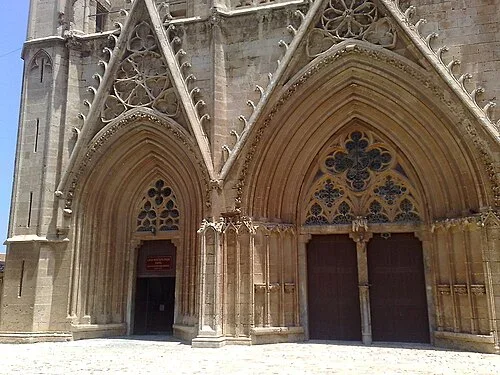 The Sculpted Western Portals and Narthex
Western Portals and Entrance
These pointed portals have seen drama. In 1359 the papal legate, Peter Thomas, assembled the Greek Orthodox bishops of Cyprus inside the cathedral. He locked them in and began preaching, with the aim of converting them. Shouting from within drew a large crowd outside, and the crowd soon became a mob determined to free the priests. The doors of the cathedral were set on fire. The king ordered the preacher rescued from the mob and the bishops freed. The legate himself was later reprimanded for the affair. The carved gables and traceried windows above the entrances belong to calmer chapters of the building's story.
UnicournuS · CC BY-SA 3.0
03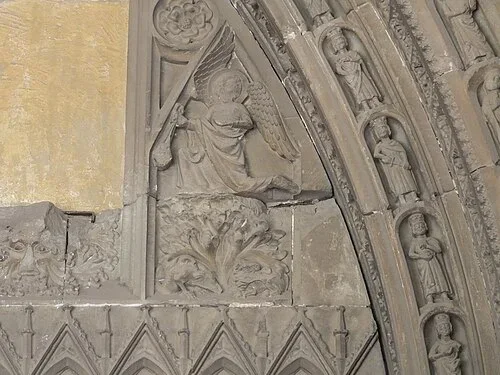 The Sculpted Western Portals and Narthex
Sculpted Portal Reliefs
High on the portal arches, a winged figure spreads carved wings above stone foliage, and rows of small standing figures line the receding arches. In 1347 the cathedral was still unfinished, and an earthquake had damaged it. The pope issued a bull calling for the building to be completed and renovated, and offered a hundred days of indulgence to anyone who helped. The effort did not achieve its aim. But the portico and the northwest tower took shape in this period, and the three gates of the western wall were embellished with carved structures. Kings, prophets, apostles and bishops were depicted in the reliefs set within three arches.
Listen in the appPhoto: Ad Meskens · CC BY-SA 4.0
04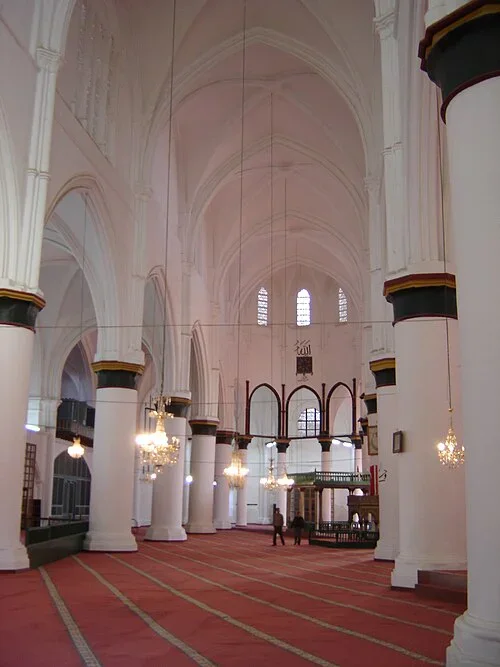 The Central Nave and High Gothic Vaults
Central Nave Looking East
In 1570 an Ottoman army laid siege to Nicosia, and for fifty days the cathedral sheltered a great number of people. When the city fell on 9 September, Francesco Contarini, the bishop of Paphos, preached the last Christian sermon in the building, asking for divine help and urging the people on. Ottoman soldiers broke the door and killed the bishop among others. Christian furniture and ornaments were smashed or thrown out, and the choir and the nave were destroyed. Then the interior was washed, made ready for prayer. On 15 September the commander Lala Mustafa Pasha attended the first Friday prayer here, and the cathedral was officially converted into a mosque.
Listen in the appPhoto: Gérard Janot · CC BY-SA 3.0
05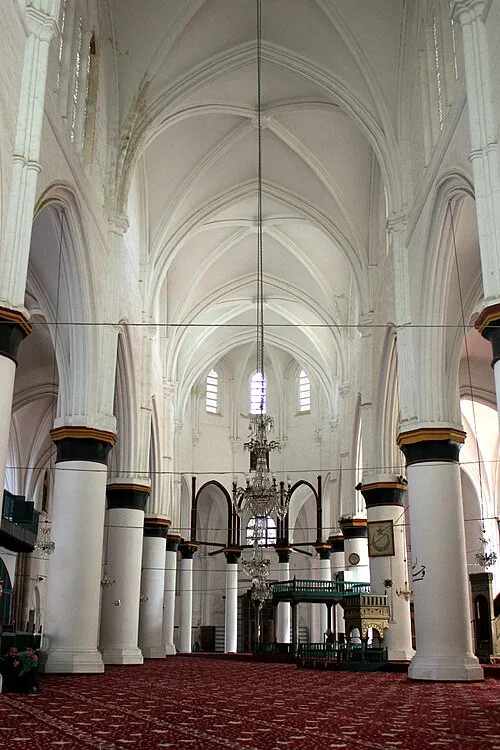 The Central Nave and High Gothic Vaults
Nave Vaults and Columns
The design of this nave came from France. The original arrangement is thought to have been modelled on Sens Cathedral. The east end follows the plan of Notre-Dame de Paris, with a walkway around the choir and no apse chapels. The transept chapels match Poitiers Cathedral, not far from Lusignan, the French home of the royal house that built this place. Construction is thought to have accelerated under Archbishop Eustorge de Montaigu, who held the see from 1217 to 1250. Slender columns with dark bands at their tops carry pointed arches, and ribbed vaults run bay after bay overhead. The interior measures 66 by 21 metres, a vast span of pale stone.
Listen in the appJulian Nyča · CC BY-SA 3.0
06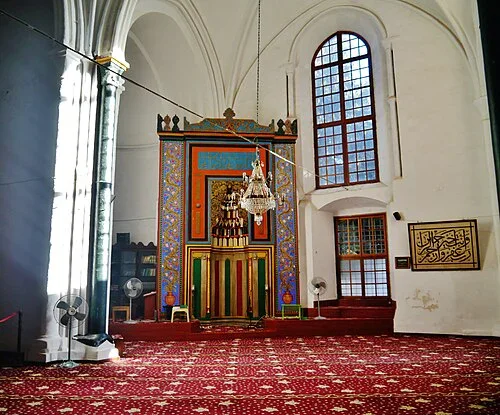 The Mihrab and Minbar Sanctuary
Mihrab Niche
The painted niche with its pointed top is the mihrab, the niche that marks the wall toward which worshippers pray. Its panels of blue, green and orange stand out against the plain Gothic arches around it, and a tall arched window lets light in beside it. The mihrab was installed in 1570, along with the minbar, the stand from which the Friday sermon is preached, in the same year the minarets rose outside. A framed panel of calligraphy hangs on the wall nearby. Before the niche stands a tiered wooden stand, one of the furnishings of the prayer hall.
Listen in the appPhoto: Zairon · CC BY-SA 4.0
07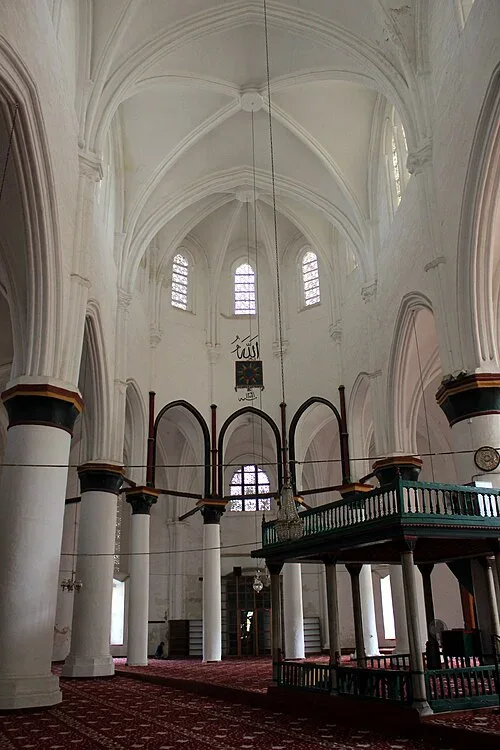 The Mihrab and Minbar Sanctuary
Sanctuary with Railed Wooden Platform
The first imam of the mosque was Moravizade Ahmet Efendi, who came from the Morea province of the Ottoman Empire. From his time on, the imams kept one custom before the Friday sermon: each climbed the stairs to the minbar leaning on a sword. The sword was one used in the conquest of Nicosia, and carrying it signified that the city had been taken by conquest. Among the furnishings of this sanctuary is a railed wooden platform, raised on posts beneath the vaults, beside the dark-painted arched frames that span the columns.
Listen in the appJulian Nyča · CC BY-SA 3.0
08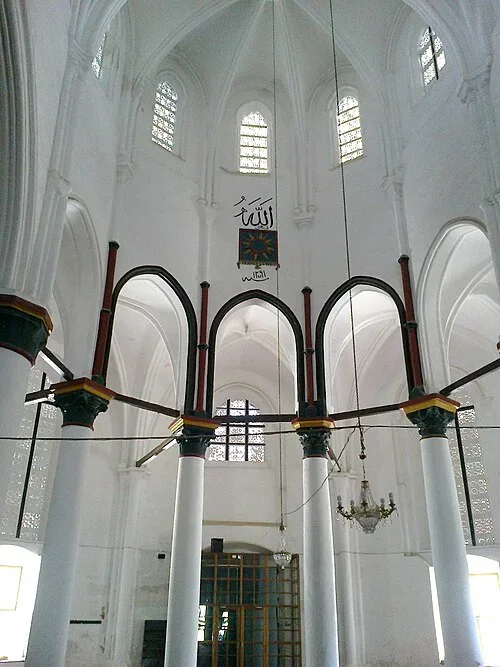 The Apse Ambulatory and Royal Choirs
Eastern Arcade and Arched Frames
Under the Lusignan dynasty this was a coronation church. Here the kings of Cyprus received their crowns. After the Genoese conquest of Famagusta, the cathedral also became the coronation church of the Lusignan kings of Jerusalem. In time a third crown followed, for the Lusignan kings of Armenia. One building, three royal titles. High on the wall of this eastern end, a calligraphic panel in Arabic now marks the building's later faith, set among the vaults and arched frames of the old choir.
Listen in the apprene boulay · CC BY-SA 3.0
09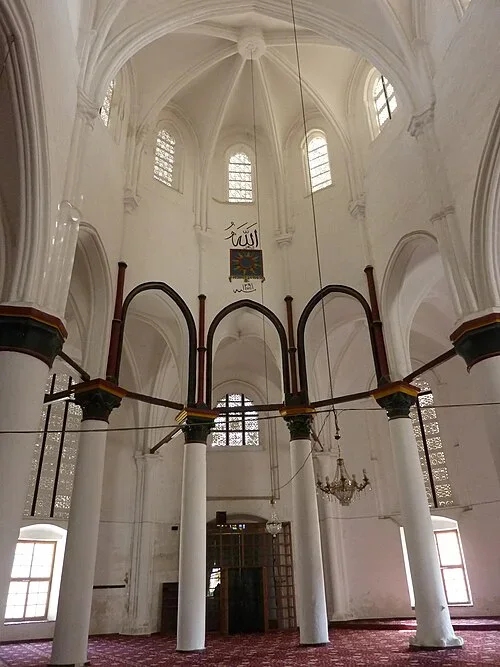 The Apse Ambulatory and Royal Choirs
Eastern Vault and Arches
An earthquake in 1491 brought part of this building down. A large part of the choir fell, and the chapel of the sacraments behind the choir was destroyed. A tomb said to belong to Hugh the Third of Cyprus was damaged, and a visiting pilgrim wrote that the king's body lay intact in its royal clothing, with golden relics beside it. The golden treasure, the pilgrim said, was taken by the Venetians. Aimery of Cyprus and Hugh the Third are among those buried inside while it was still a church. The Venetian Senate ordered the damage repaired and taxed the archbishop 250 ducats a year for the work. In 1507 the traveller Pierre Mésenge wrote that although the building had been totally demolished sixteen years before, it then looked very beautiful.
Listen in the appPhoto: Chris06 · CC BY-SA 4.0
10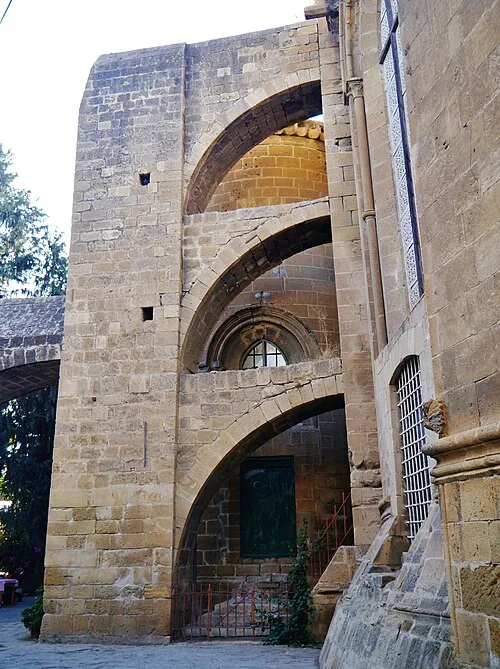 Southern Flying Buttresses and Courtyard
Southern Arched Buttresses
Gothic builders knew that high walls and vaults push outward, so they braced them with buttresses, arches of stone that carry the strain down to the ground. This building has needed that engineering more than once. Earthquakes damaged the cathedral in 1267 and again in 1303, and the quake of 1267 delayed the construction of the nave for years. Archbishop Giovanni del Conte oversaw the completion of the nave and narthex by 1319, and then the buttresses of the east end, the facade and a baptistery by 1326. Care continues in our own time. Surveys in 2019 and 2020 mapped hidden weaknesses without touching the fabric, and the recent restoration injected lime-based grout into the walls, chosen because it matches the original mortars and can be reversed if ever needed.
Listen in the appPhoto: Zairon · CC BY-SA 4.0
- 11
Domed Fountain Pavilion
Gifts, trustees and Friday crowds: the people who kept this building alive.
Selimiye Mosque, Nicosia
Frequently asked questions
How much does the guide cost?
Free app download. Listed guide price: $0.99. Guide price shown in the app. Audio guide only. Venue admission is separate.
Can I listen without internet?
Yes. Download the guide’s audio, images, and maps in the app before your visit. Your downloaded content is then available offline.
Can I listen in my language?
This audio guide is available in 15 languages, including English.
Do I need to follow a schedule?
No. This is a self-guided experience. Choose your stops, pause whenever you like, and return to a story at your own pace.
At your own pace
Explore Selimiye Mosque, Nicosia.
Download Stanza, then search for “Selimiye Mosque, Nicosia”.
Free app download · Guide price shown in the app
Keep exploring
Nearby audio guides
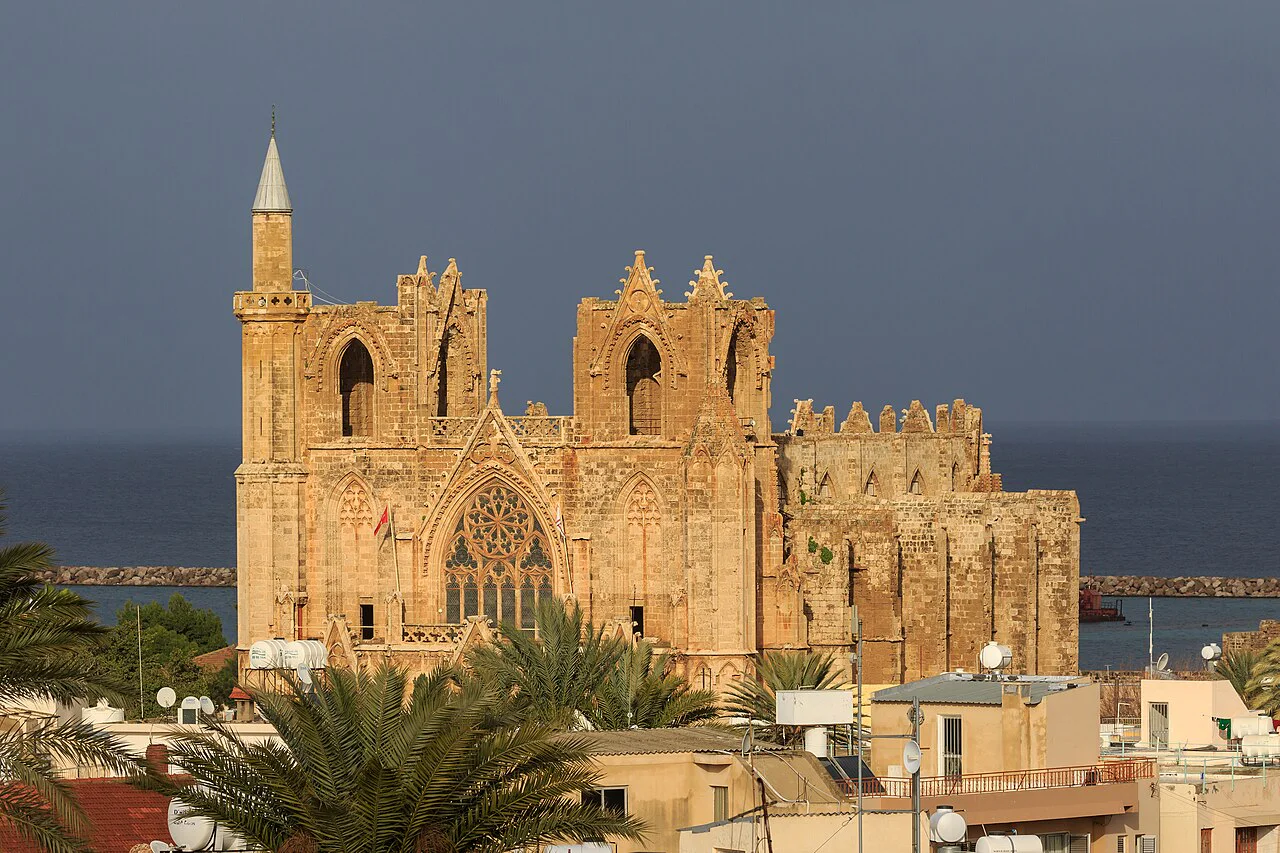
Famagusta · 53 km
Lala Mustafa Pasha Mosque
Content & sources
Photo: A.Savin · FAL
Ayios Tykhonas · 55 km
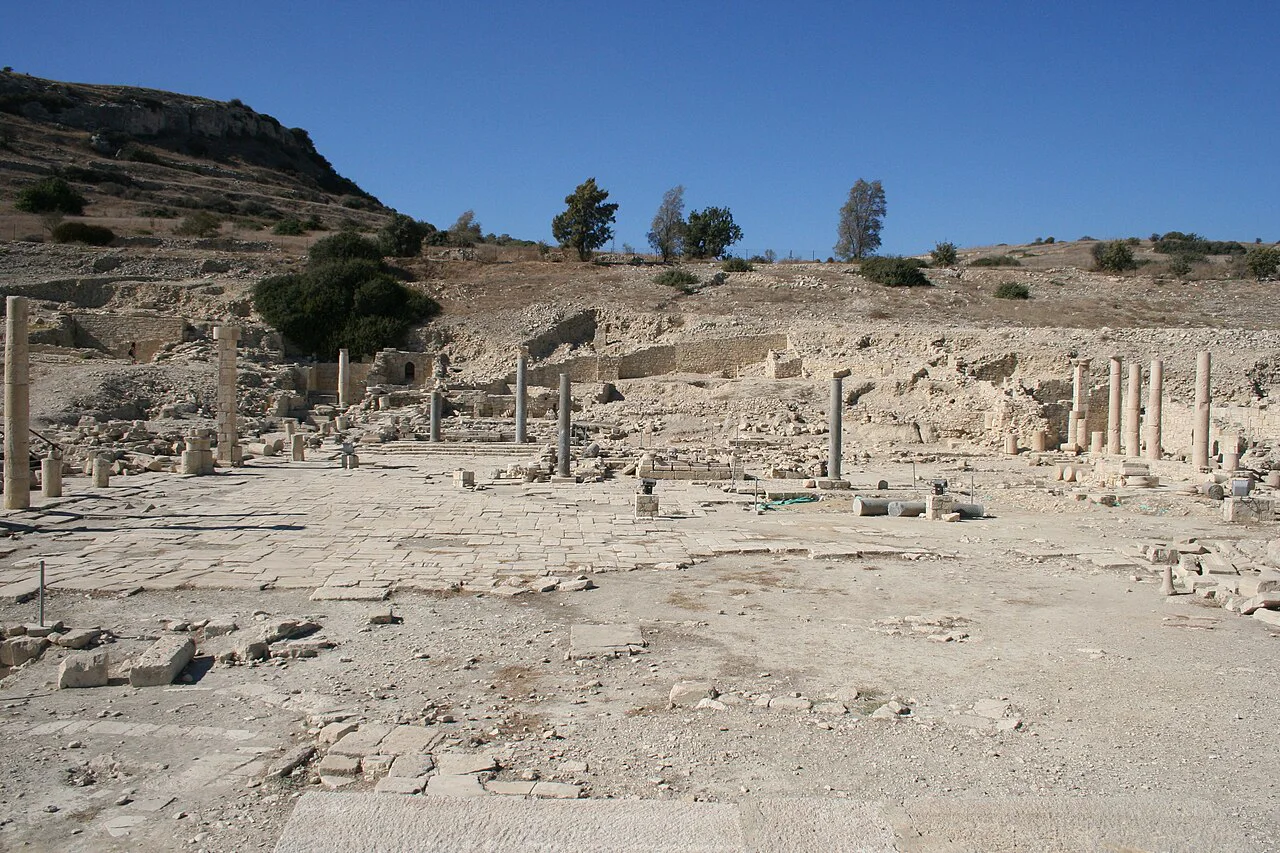
Amathus
Content & sources
de Oude Grieken · CC0
Paphos · 98 km
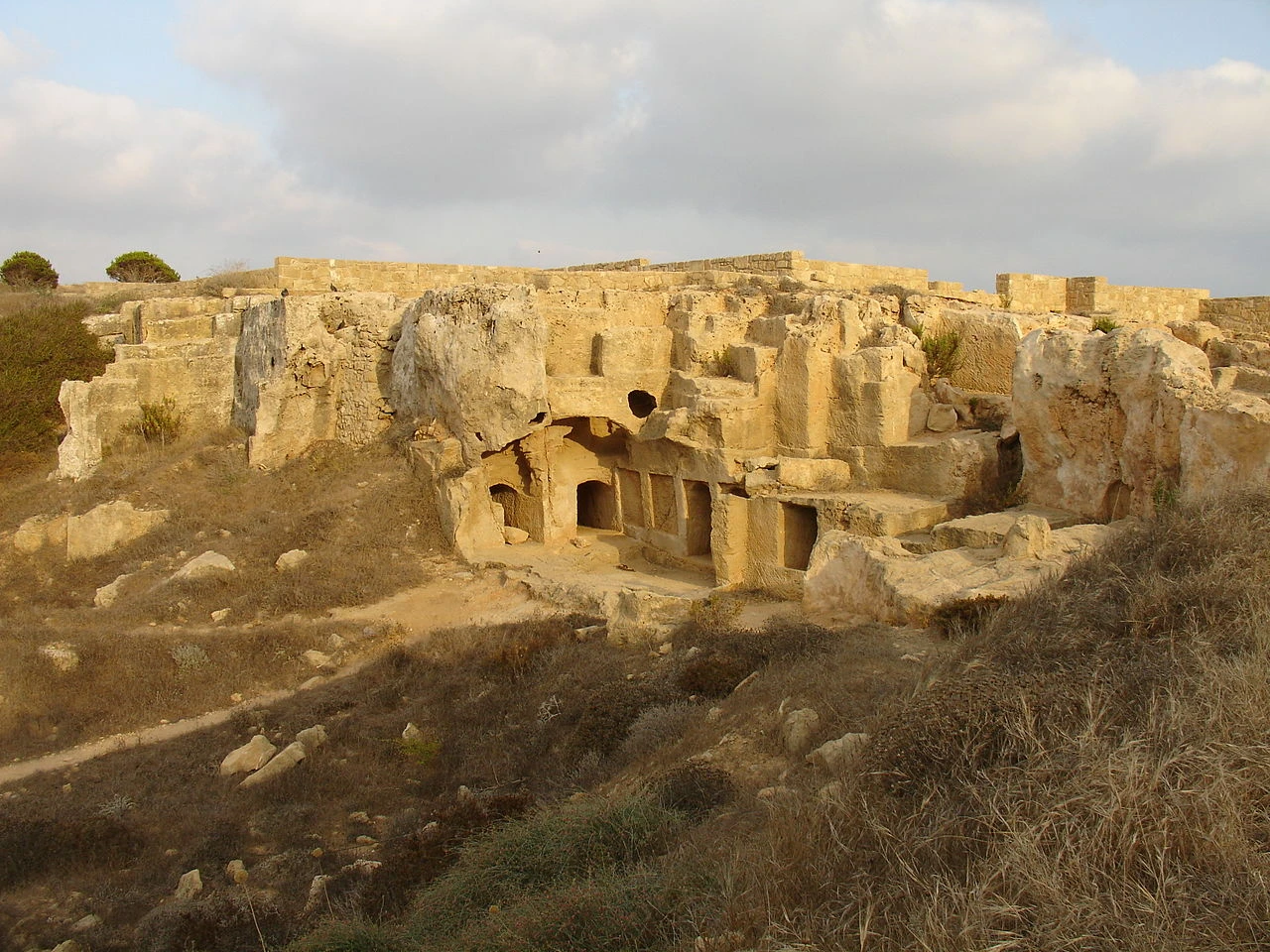
Tombs of the Kings
Content & sources
Mgiganteus1 at en.wikipedia · CC BY-SA 3.0
Paphos Municipality · 98 km
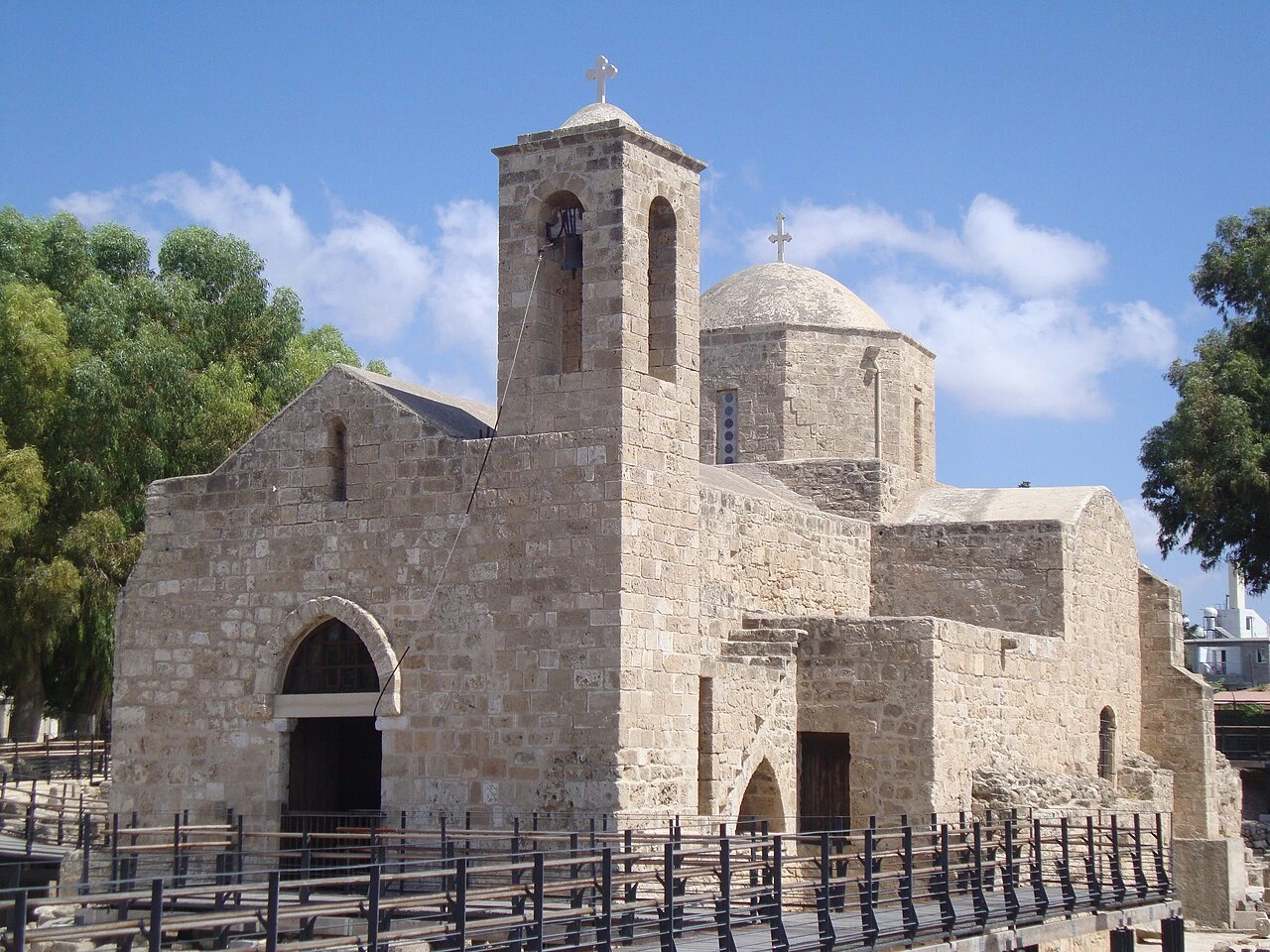
Chrysopolitissa Basilica
Content & sources
Photo: Роман Курносенко · CC BY-SA 3.0