Stanza · Audio guide
Lala Mustafa Pasha Mosque Audio Guide
A place to remember. A story to take with you.
The Lala Mustafa Pasha Mosque is the largest medieval building in Famagusta, Cyprus. It was originally known as the Cathedral of Saint Nicholas and later as the Saint Sophia Mosque.
Download Stanza, then search for “Lala Mustafa Pasha Mosque”.
About the tour
One guide. Your kind of visit.
The Lala Mustafa Pasha Mosque is the largest medieval building in Famagusta, Cyprus. It was originally known as the Cathedral of Saint Nicholas and later as the Saint Sophia Mosque.
Ready when you are.
- 01Get the free Stanza app.
iOS & Android
- 02Find your guide.
“Lala Mustafa Pasha Mosque”
- 03Download before you go.
Works offline
Audio guide / 8 narrated stops
Inside the guide
Get to know a few of the stories before you go. Open a stop to read more.
01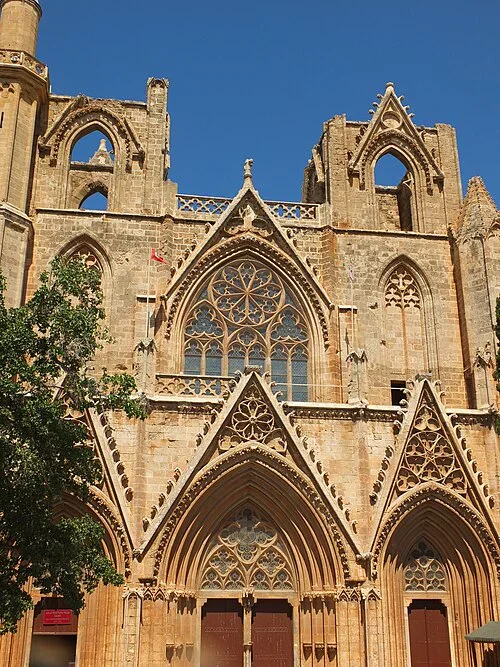 Namık Kemal Square and the West Facade
The West Facade from Namık Kemal Square
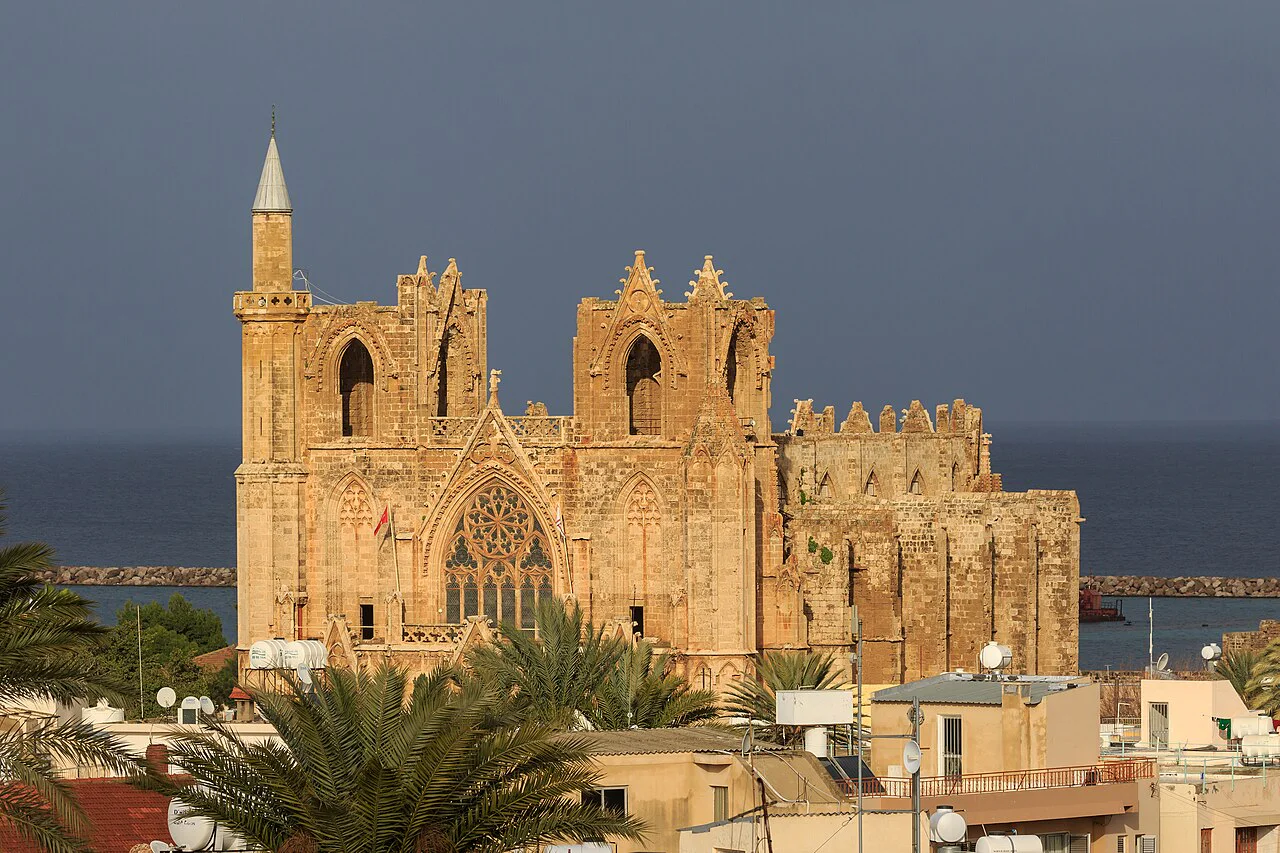
Welcome to the largest medieval building in Famagusta. It began in 1298 as the Catholic Cathedral of Saint Nicholas, and today it is the Lala Mustafa Pasha Mosque. Both names belong to one extraordinary set of stones. The style is Rayonnant Gothic, a French royal manner so rare outside France that this building has been dubbed the Reims of Cyprus. There is a simple reason a French style grew on this shore. The Lusignan dynasty ruled Cyprus from 1192 and brought the latest French taste with them, including the newest developments in Gothic building. The wide facade shows it plainly: pointed gables, traceried windows and twin towers rising over the aisles. The towers climb only partway before they stop. They were cut short long ago, and their story comes at the end of this tour. Alongside the three doors, the flat roof over the vaults is typical of Crusader architecture.
Photo: Ad Meskens · CC BY-SA 4.0
02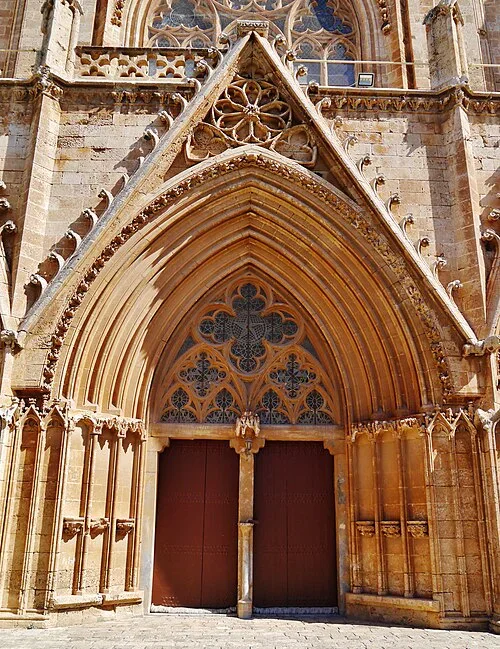 Namık Kemal Square and the West Facade
The Central Gothic Portal
The great central doorway rewards a slow look. It is one of three arched portals piercing the west facade, framed by deep mouldings and crowned with a gable of carved tracery. Work on the cathedral began in 1298. The west door was probably finished by 1311. The building was consecrated as a Catholic cathedral in 1328. The finishing touches stretched on until around 1400, a whole century of masons' labour. The pierced Gothic balustrade above the gable is a modern restoration by George H. Everett Jeffery, an early sign that this building has been carefully looked after in recent times.
Photo: Zairon · CC BY-SA 4.0
03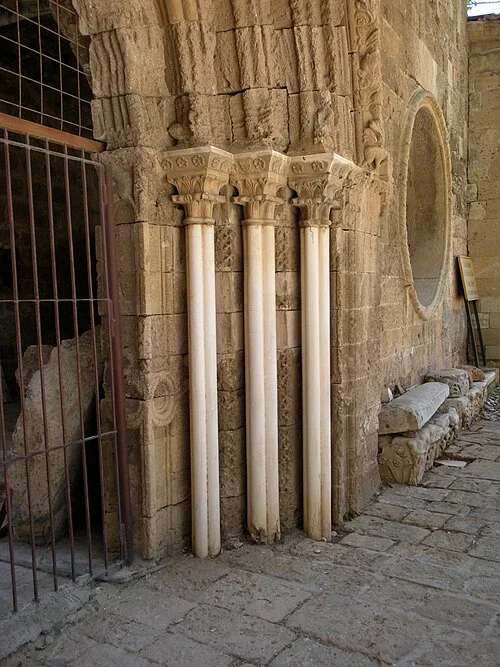 Loggia Bembo and Classical Spolia
Loggia Bembo and the Marble of Salamis
Beside the Gothic walls, a different style speaks. Sometime after 1480, under Venetian rule, a meeting chamber was added to the south-west corner of the cathedral. It is known as the Loggia Bembo, after the family whose heraldic devices appear on the abaci of the pillars and on the end of the marble seat. Some of the Bembos held prominent positions in Cyprus. The entrance is elaborately moulded, with slender pillars in marble, and its style departs considerably from the cathedral proper. The seats set on either side of the entrance are far older than the loggia itself. They are late antique fragments, probably brought from the ruins of ancient Salamis.
Listen in the appPhoto: Shirazibustan · CC BY-SA 4.0
04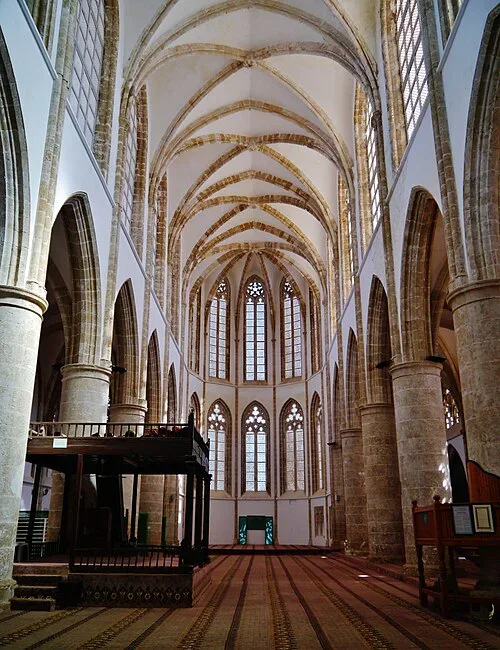 The Nave and Royal Coronations
The Nave and the Kings of Jerusalem
Inside, the space tells a political story. Tall Gothic arcades carry the vaults high overhead, and the great east windows fill the end of the nave with light. This cathedral was built for a ceremony as much as for worship. The Lusignan rulers were crowned twice. First they were crowned as kings of Cyprus, at Saint Sophia Cathedral in Nicosia. Then they came here, to Saint Nicholas in Famagusta, to be crowned as kings of Jerusalem. That was a title they held in exile, after the Crusaders lost the Holy Land. The double crowning gave this building a special role in the Crusader era. Royal processions once moved down this nave toward the east end. No one knows the exact spot where the crowning took place; the ceremony belongs to the whole building.
Listen in the appPhoto: Zairon · CC BY-SA 4.0
05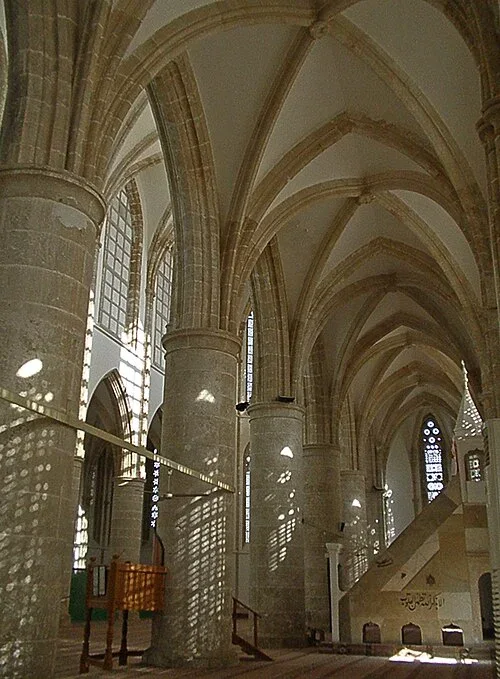 The Nave and Royal Coronations
Pillars, Vaults and Bishop Guy's Bequest
The money that raised this nave has its own story. Early in the building's life, work stalled after an unfortunate episode: the sitting bishop embezzled the building fund. The crisis was resolved by a will. Bishop Guy of Ibelin bequeathed twenty thousand bezants for the construction, and the work went on. Overhead, the vaults are built of stone.
Listen in the appAmanda Slater from Coventry, West Midlands, UK · CC BY-SA 2.0
06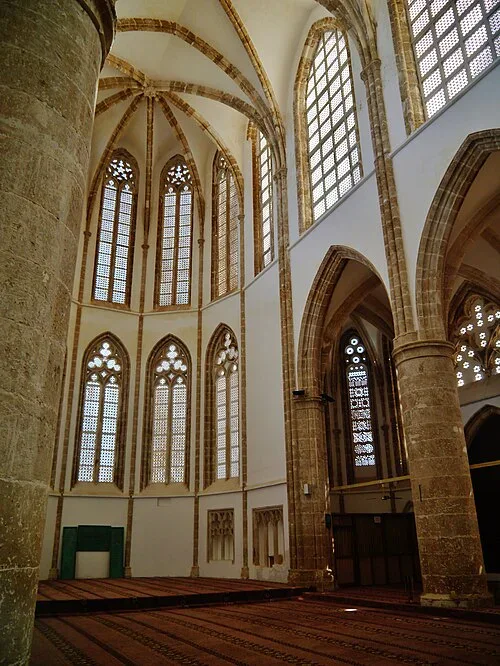 The Apse Sanctuary and Islamic Reorientation
The Apse: From Cathedral Choir to Prayer Hall
The east end of the building changed hands in more than name. In 1571 the Ottoman Empire captured Famagusta, and the cathedral was converted into a mosque. Lala Mustafa Pasha led the Ottoman forces against the Venetians in Cyprus. The transformation reached into every corner of the choir. The altar was removed. Nearly all the statuary, stained glass, frescoes and paintings were taken away or plastered over. The space was reoriented for Muslim prayer. The whitewashed walls achieve something striking: they preserve the soaring Gothic structure while stripping away every figurative trace. What had been the cathedral's choir became the heart of Muslim worship in Famagusta.
Listen in the appPhoto: Zairon · CC BY-SA 4.0
07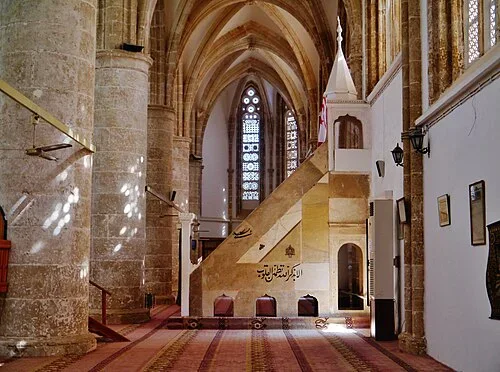 The Apse Sanctuary and Islamic Reorientation
The Aisle and the Surviving Tombs
Not everything was swept away in the conversion. Most of the medieval tombs were removed along with the other Christian fittings. Yet a few can still be identified in the north aisle, resting where the Latin dead were once buried in their own cathedral. They are quiet survivals from the building's centuries as a Catholic church. The wooden pulpit in the aisle, the minbar, belongs to the mosque's fittings; it is the preacher's pulpit.
Listen in the appPhoto: Zairon · CC BY-SA 4.0
08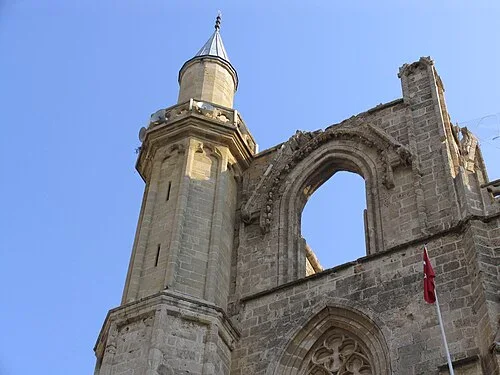 Courtyard and the Ottoman Minaret
The Minaret and the Ruined Tower
The slender minaret rising against the truncated Gothic tower carries the building's last chapter. The upper parts of the two towers suffered earthquake damage, were then battered by Ottoman bombardment in the siege of 1571, and were never repaired. After the conquest, a minaret was built over the ruined tower masonry. Its Gothic-style facing is itself a restoration, the work of George Jeffery. The building's names trace its history too. After 1571 it was known as the Saint Sophia Mosque of Mağusa. In 1954 it took its present name, honouring Lala Mustafa Pasha, the commander of the Ottoman conquest. Crusader, Venetian and Ottoman histories all rest in these stones, and after more than seven centuries the building remains an active house of worship.
Listen in the appThe original uploader was Jhabib at English Wikipedia. · CC BY-SA 2.5
Lala Mustafa Pasha Mosque
Frequently asked questions
How much does the guide cost?
Free app download. Listed guide price: $0.99. Guide price shown in the app. Audio guide only. Venue admission is separate.
Can I listen without internet?
Yes. Download the guide’s audio, images, and maps in the app before your visit. Your downloaded content is then available offline.
Can I listen in my language?
This audio guide is available in 15 languages, including English.
Do I need to follow a schedule?
No. This is a self-guided experience. Choose your stops, pause whenever you like, and return to a story at your own pace.
At your own pace
Explore Lala Mustafa Pasha Mosque.
Download Stanza, then search for “Lala Mustafa Pasha Mosque”.
Free app download · Guide price shown in the app
Keep exploring
Nearby audio guides
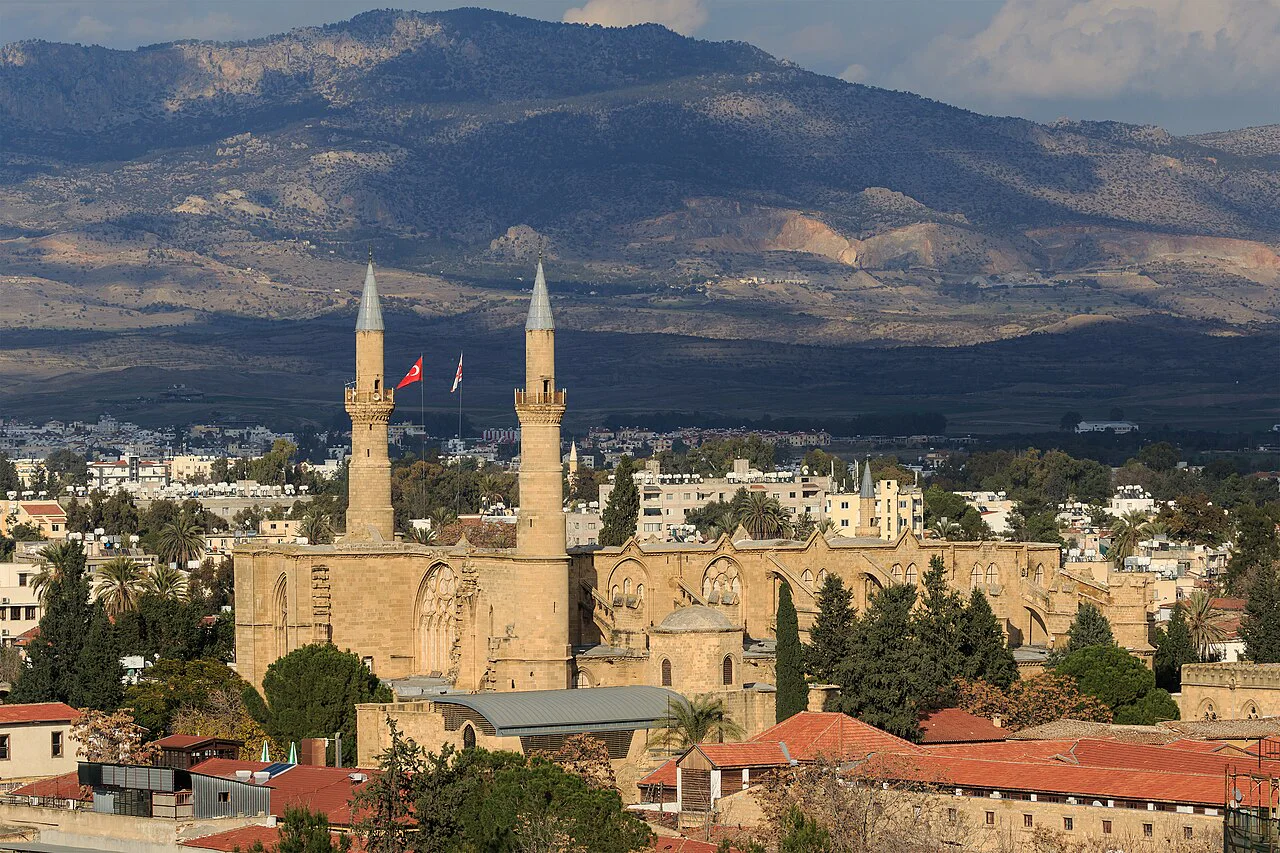
Nicosia · 53 km
Selimiye Mosque, Nicosia
Content & sources
Photo: A.Savin · FAL
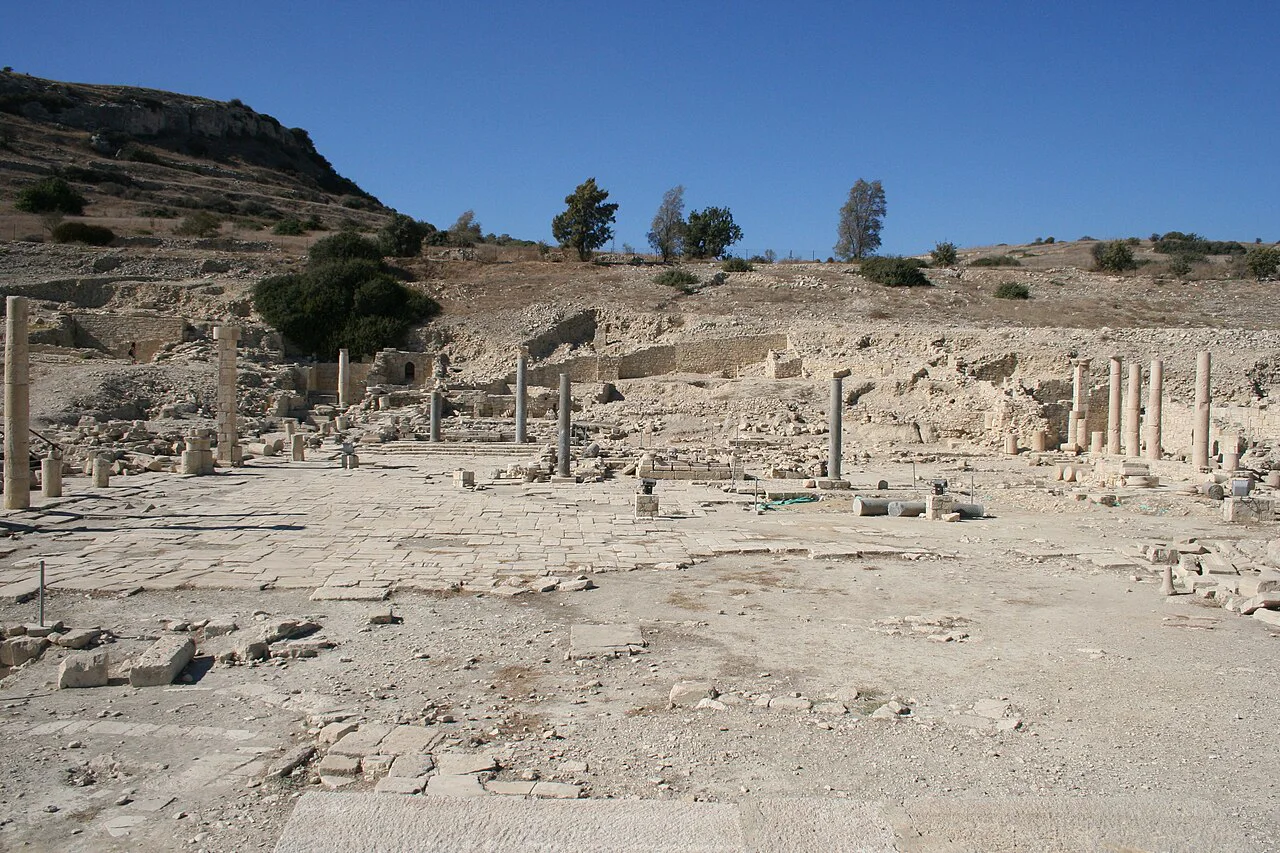
Ayios Tykhonas · 86 km
Amathus
Content & sources
de Oude Grieken · CC0
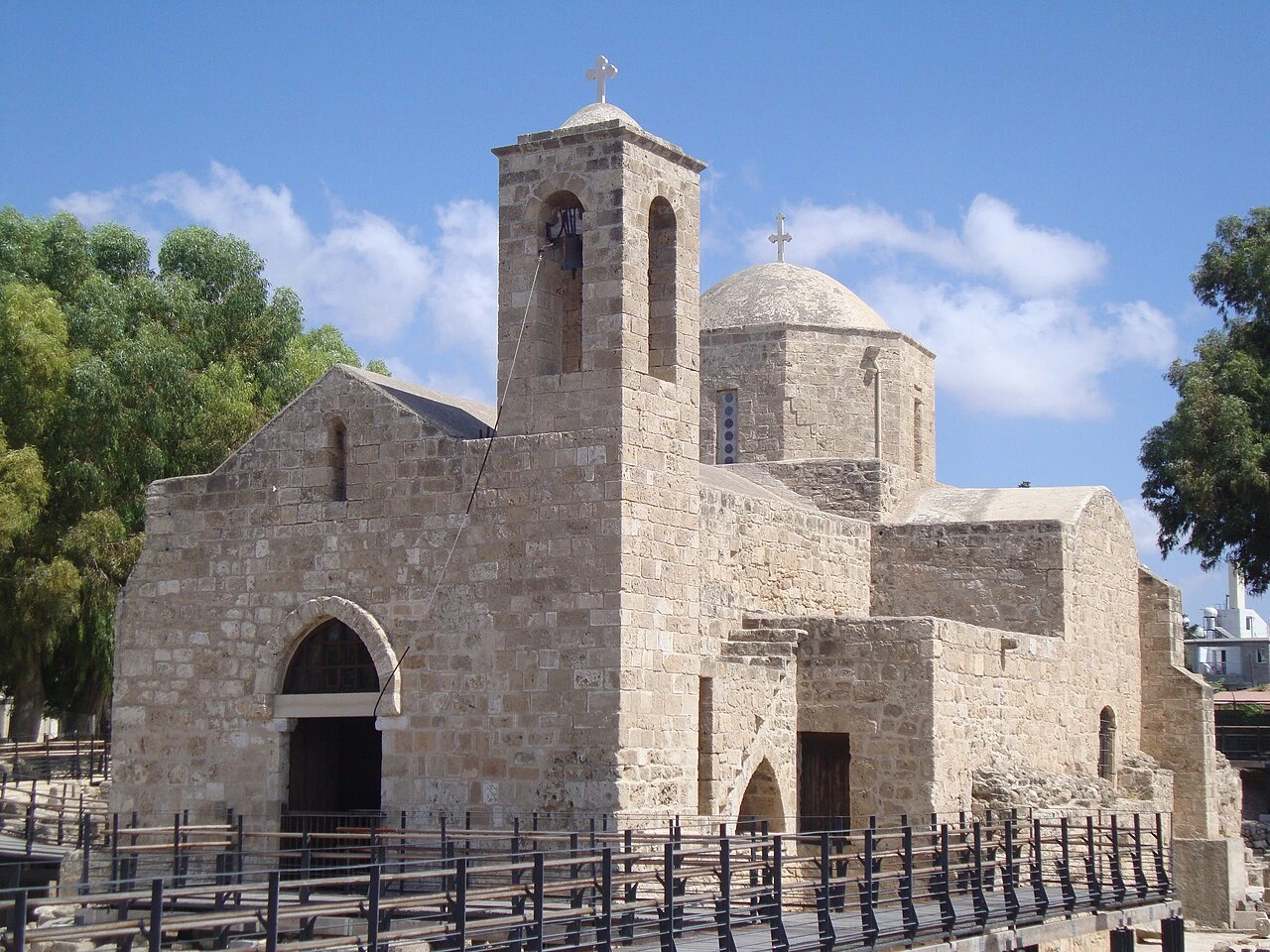
Paphos Municipality · 145 km
Chrysopolitissa Basilica
Content & sources
Photo: Роман Курносенко · CC BY-SA 3.0
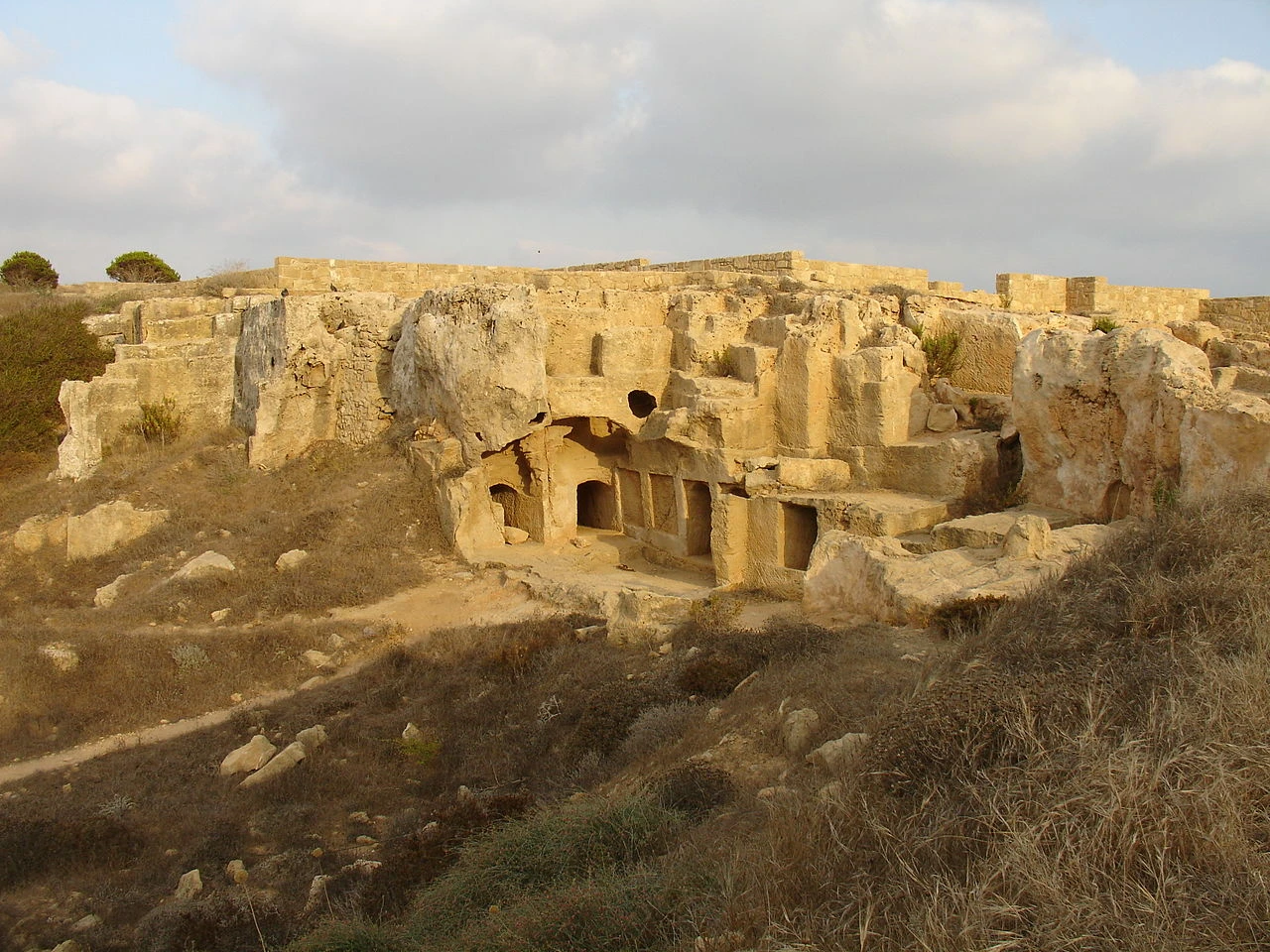
Paphos · 145 km
Tombs of the Kings
Content & sources
Mgiganteus1 at en.wikipedia · CC BY-SA 3.0