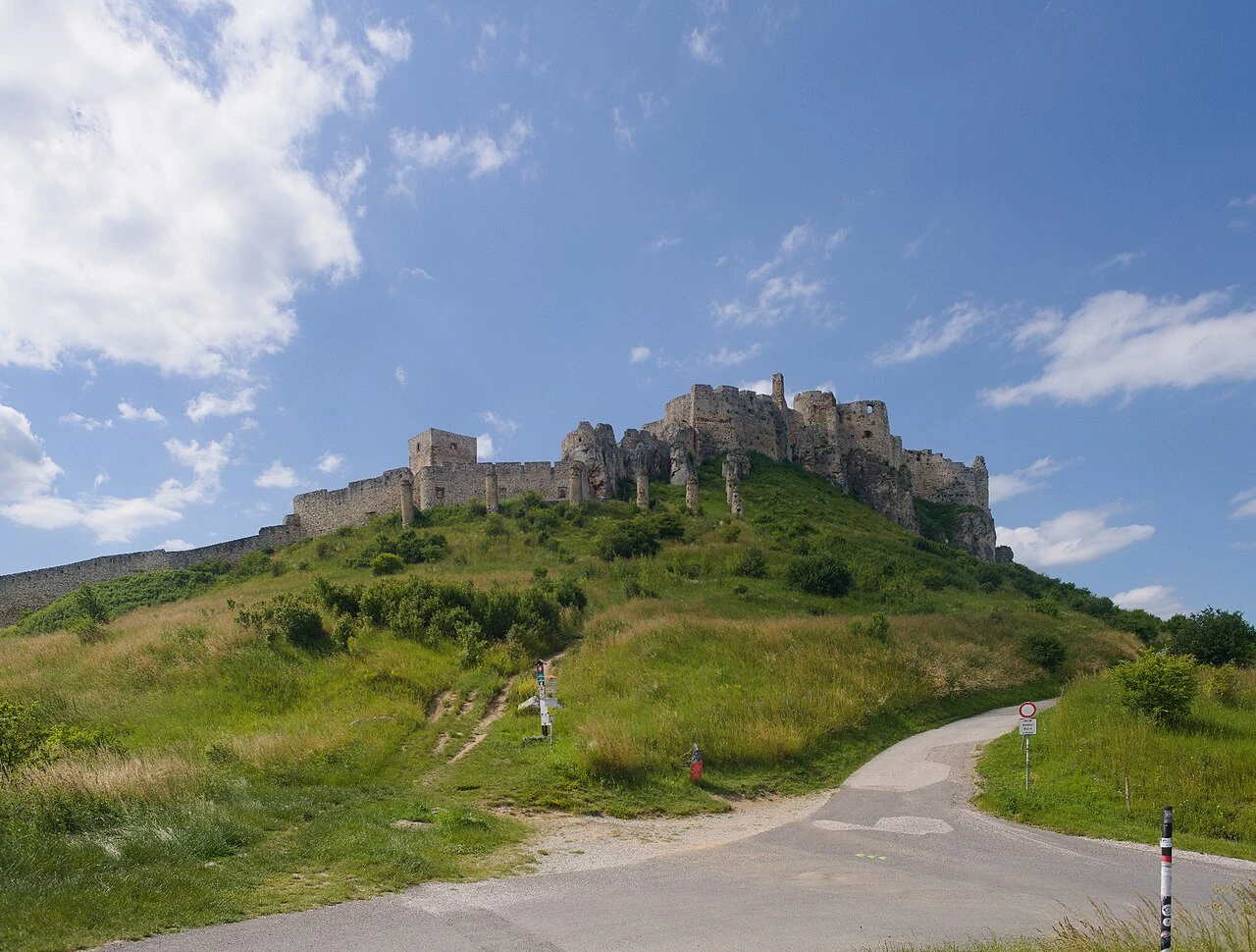
 Stanza / Audio guide
Content & sources
Stanza · Audio guide
Spišský hrad Audio Guide
A place to remember. A story to take with you.
Spiš Castle is one of the largest castle complexes in Central Europe, featuring extensive medieval ruins perched on a travertine hill. It is a UNESCO World Heritage site and a prominent example of Romanesque…
Download Stanza, then search for “Spišský hrad”.
About the tour
One guide. Your kind of visit.
Spiš Castle is one of the largest castle complexes in Central Europe, featuring extensive medieval ruins perched on a travertine hill. It is a UNESCO World Heritage site and a prominent example of Romanesque and Gothic architecture.
Ready when you are.
- 01Get the free Stanza app.
iOS & Android
- 02Find your guide.
“Spišský hrad”
- 03Download before you go.
Works offline
Audio guide / 14 narrated stops
Inside the guide
Get to know a few of the stories before you go. Open a stop to read more.
01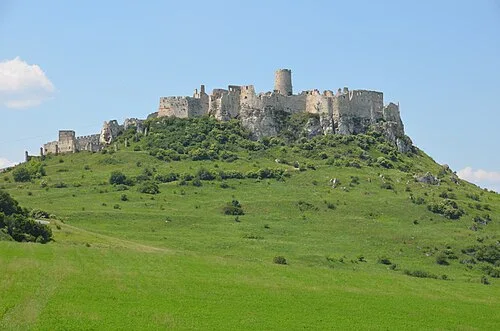 The Travertine Promontory and Outer Gatehouse
Spiš Castle on Its Travertine Hill
Welcome to Spiš Castle. The ruin stretches along the top of a pale travertine hill, a kind of limestone rock left behind by springs. The hilltop stands about two hundred metres above the land around it. Its sides fall away in near-vertical cliffs, some of them twenty, even forty metres high. That made the top hard to reach long before anyone built a wall. People noticed this early. The hill was lived on almost without a break from the fifth millennium BC until the castle fell into decay in the eighteenth century. The castle that grew here covered nearly four hectares. That puts it among the six largest castle sites in Slovakia. For centuries it was the seat of the head of Szepes county, and the political and administrative centre of the whole region.
Josep Renalias Lohen11 · CC BY-SA 3.0
02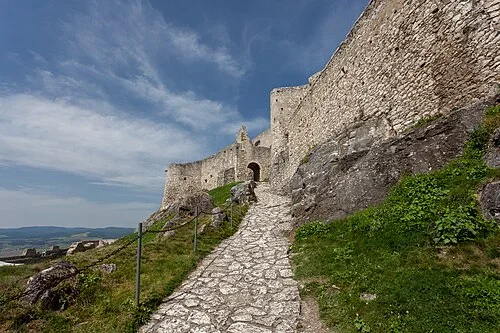 The Travertine Promontory and Outer Gatehouse
The Walled Approach Path
Stone paving climbs beside a high curtain wall towards an arched opening. This castle began as a boundary fort on the northern frontier of the Kingdom of Hungary. Around the turn of the eleventh and twelfth centuries the hill was intensively settled again, and building work followed on a remarkable scale. Some accounts date the first written mention of the castle to 1120, others to 1209. Then came the first great test. In 1241 the Mongol invasion swept through the kingdom. Spiš Castle was one of the very few fortresses that withstood it. Afterwards its defences were strengthened, though which walls were raised is not recorded.
Marco Almbauer · CC BY-SA 4.0
03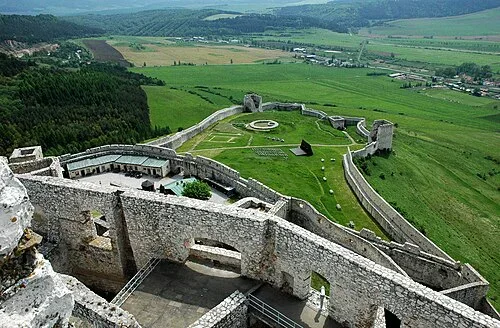 The Lower Courtyard and Jiskra's Redoubt
The Lower Courtyard from Above
From the upper walls the lower courtyard opens out below, a huge grassy enclosure ringed by long curtain walls. The castle did not always reach this far. In the fourteenth century a second settlement outside the walls was built, and the castle area roughly doubled. In the fifteenth century came more. The walls were heightened, and a third extramural settlement was added. Today part of the lower courtyard lies along a public nature trail. On it are the preserved foundations of some farm buildings from the seventeenth century, whose exact use is not known. The circle of stone set in the lawn belongs to the next part of the story.
Listen in the appJános Korom Dr. · CC BY-SA 2.0
04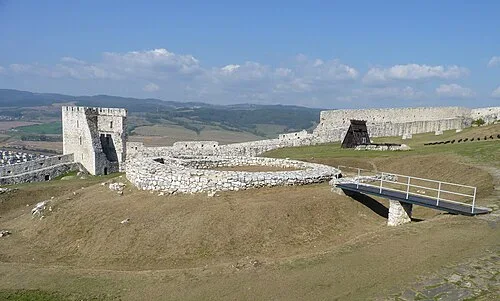 The Lower Courtyard and Jiskra's Redoubt
Jiskra's Redoubt Foundations
The circle in the grass is all that remains of a small fortress from the first half of the fifteenth century, known as Jiskra's. These are reconstructed foundations, and the outline of the moat that once ringed the building can still be traced in the ground. The story behind it is a tangle of royal politics. In October 1439 Albrecht the Second of Habsburg died without an heir. His son Ladislav was born the following February, and the boy's mother, Queen Elizabeth, needed someone to defend his claims. She called on Ján Jiskra of Brandýs, leader of the Brethren, the bratríci. Jiskra gained ground across the region and reached Spiš in 1441. With the help of the castle's own captain, Peter Baska, he took the castle. He then made Peter Aksamit its captain. Aksamit held it until 1453, when he left and the castle passed on. Much later, in the second half of the twentieth century, the castle was partly reconstructed after extensive archaeological research, work that brought traces like these back to light.
Listen in the appMichal Klajban · CC BY-SA 3.0
05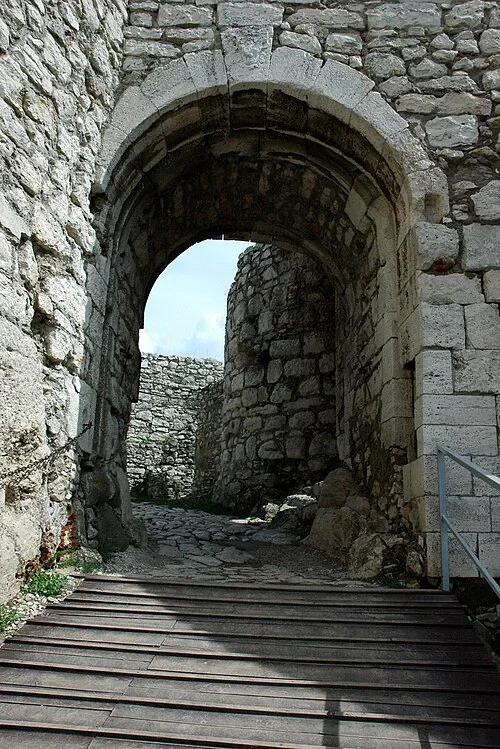 The Middle Bailey and Barbican Gate
Middle Bailey Gate Passage
The gate passage runs deep through thick stone, arched at both ends, with planks underfoot and a second opening at the far side. In the second half of the fourteenth century a new middle courtyard was created here by walling off existing space, measuring about a hundred and fifty by sixty metres. A barbican guarded its western gate. That is a fortified gateway pushed out in front of the entrance, semicircular in plan. For a time it did real defensive work. After Jiskra's army left, the courtyard lost its military purpose. Later owners found it impossible to defend, and it served only for practical, economic purposes.
Listen in the appJános Korom Dr. · CC BY-SA 2.0
06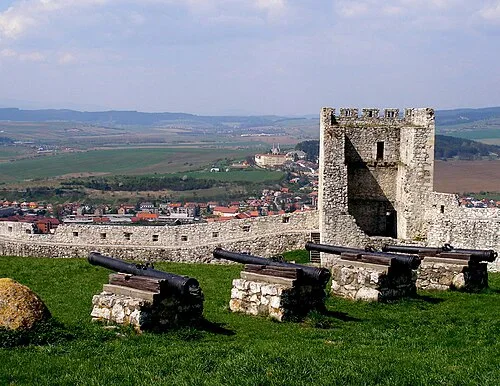 The Middle Bailey and Barbican Gate
Tower and Cannon Platform
Black cannon barrels rest on stone mounts on a grassed platform, with a crenellated tower beside them and the town spread out below. They are displays of artillery, set out for visitors. The story they sit beside belongs to the Zápolya family. The kings of Hungary owned the castle until the mid-1460s, when the Zápolyas received it, along with the hereditary title of head of Spiš county. Here, on the second of February 1487, a son was born to the palatine Stephen Zápolya and his wife Hedwig. The boy was named John, and he would later become King of Hungary. As king he held this castle against the imperial troops of Ferdinand the First. In March 1528 Ferdinand besieged it. After two weeks the garrison surrendered, and Zápolya rule here came to an end.
Listen in the appIng.Mgr.Jozef Kotulič · CC BY-SA 3.0
07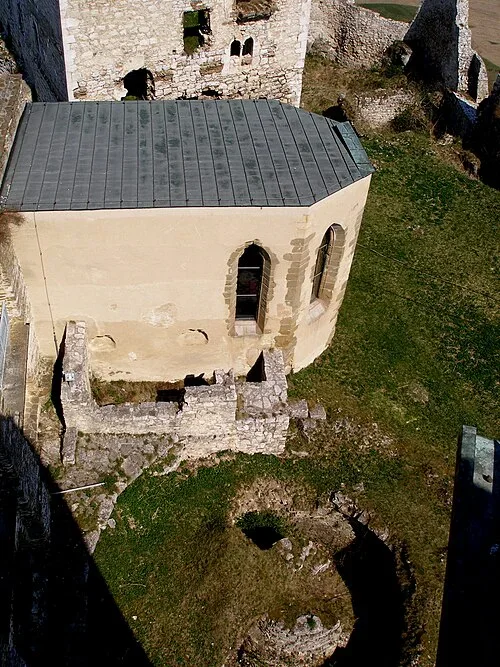 Upper Citadel and Chapel of Saint Elizabeth
Roofed Chapel from Above
A small building with a grey roof and two pointed windows stands at the edge of the upper castle, hemmed in by older ruined walls. In the great rebuilding of the fifteenth century, a late Gothic chapel was added here, around the year 1470. It is one of the later layers among walls that had already stood for two centuries and more. The roofed building with the pointed Gothic windows is understood to be that chapel. Around it the older walls stand roofless. This one building keeps its roof.
Listen in the appIng. Mgr. Jozef Kotulič · CC BY-SA 3.0
08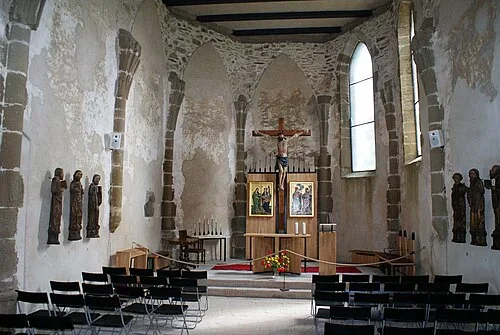 Upper Citadel and Chapel of Saint Elizabeth
Gothic Chapel of the Zápolyas
Inside, the chapel is pale and quiet. There are pointed-arched windows, carved wooden figures mounted along the walls, a crucifix above the altar with painted panels beside it, and rows of chairs on the stone floor. This was a place of worship, and it still is. The chapel's furnishings were recorded in an inventory of 1638. It listed five altars here, and many paintings and carved woodcuts besides. During restoration the chapel was given a ceiling, and part of the system supporting its vaults was rebuilt. Sacred objects are now displayed inside, and the chapel still serves its original spiritual purpose.
Listen in the appPhDr. Pavol Svetoň · CC BY-SA 4.0
09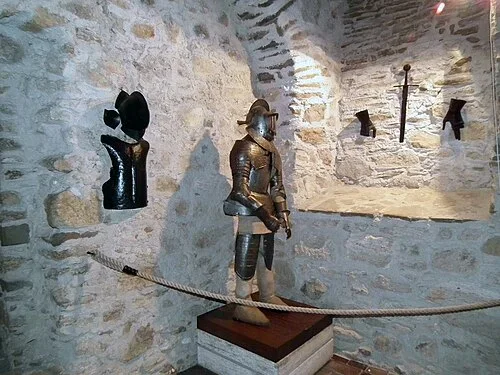 Castle Museum and Feudal Justice Exhibition
Arms and Armour Display
A full suit of armour stands on a plinth in a stone alcove, with a sword mounted on the wall behind it. These are museum pieces, part of the castle's collection of arms. The story of the castle's later owners explains where they came from. The Zápolyas had turned the upper castle into a comfortable family residence through their late Gothic changes. In the sixteenth century the castle passed to the Thurzó family, wealthy merchants whose trade abroad brought the Renaissance style into the building work. Around the turn of the sixteenth and seventeenth centuries a Renaissance arcade corridor was built, linking the western Gothic palaces with the defensive parts and the chapel. The Thurzós did not keep the castle for even a full century. Their Spiš line died out in the 1630s. Since 1985 the arcade complex has housed a historical exhibition of weapons and archaeological finds.
Listen in the appdariusz woźniak · CC BY-SA 3.0
10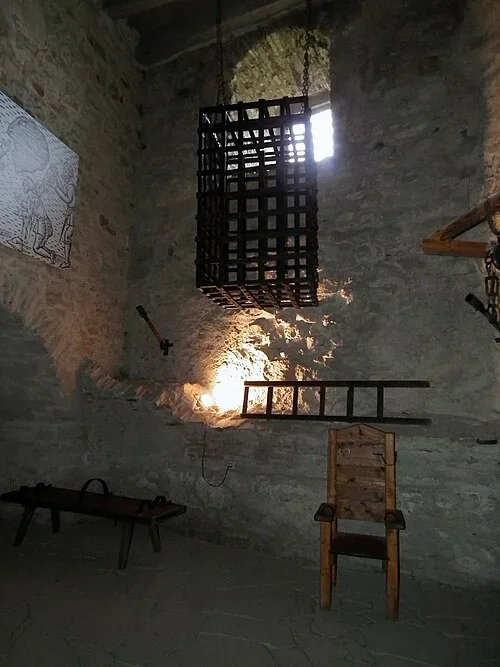 Castle Museum and Feudal Justice Exhibition
Feudal Justice Display
A cage of iron bars hangs from a chain in a bare stone room. On the wall is a ladder-like wooden frame. There is a low bench, and a tall wooden chair. These are torture devices, shown among the castle's artefacts as instruments formerly used in the castle. Feudal justice is one of the themes the museum gives particular weight to. The castle is run by the Spiš Museum at Levoča.
Listen in the appdariusz woźniak · CC BY-SA 3.0
- 11
The Ruined Tower Above the Valley
How the Csáky owners moved out, and the fire of 1780 whose cause is still a mystery.
- 12
Paired Arched Windows
A pair of carved arched windows, traces of the two-storey thirteenth-century palace and its Italian masons.
- 13
The Round Keep
The round keep at the summit, built to replace a tower destroyed soon after it was finished.
- 14
Valley View from the Ramparts
The valley panorama, and the castle's place in the UNESCO World Heritage landscape of Spiš.
Spišský hrad
Frequently asked questions
How much does the guide cost?
Free app download. Listed guide price: $1.99. Guide price shown in the app. Audio guide only. Venue admission is separate.
Can I listen without internet?
Yes. Download the guide’s audio, images, and maps in the app before your visit. Your downloaded content is then available offline.
Can I listen in my language?
This audio guide is available in 15 languages, including English.
Do I need to follow a schedule?
No. This is a self-guided experience. Choose your stops, pause whenever you like, and return to a story at your own pace.
At your own pace
Explore Spišský hrad.
Download Stanza, then search for “Spišský hrad”.
Free app download · Guide price shown in the app
Keep exploring
Nearby audio guides
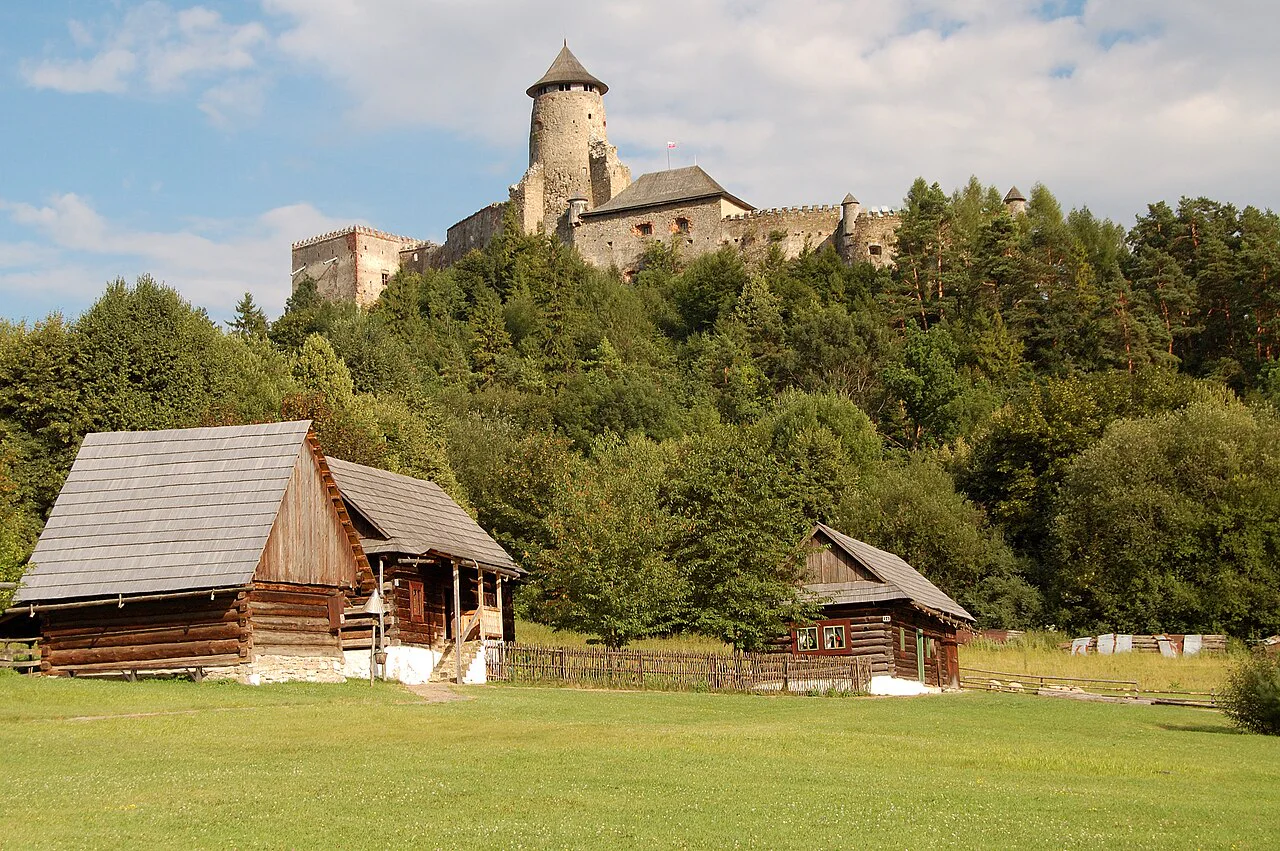
Stará Ľubovňa · 35 km
Ľubovňa Castle
Content & sources
Miro Svorc · CC BY-SA 3.0
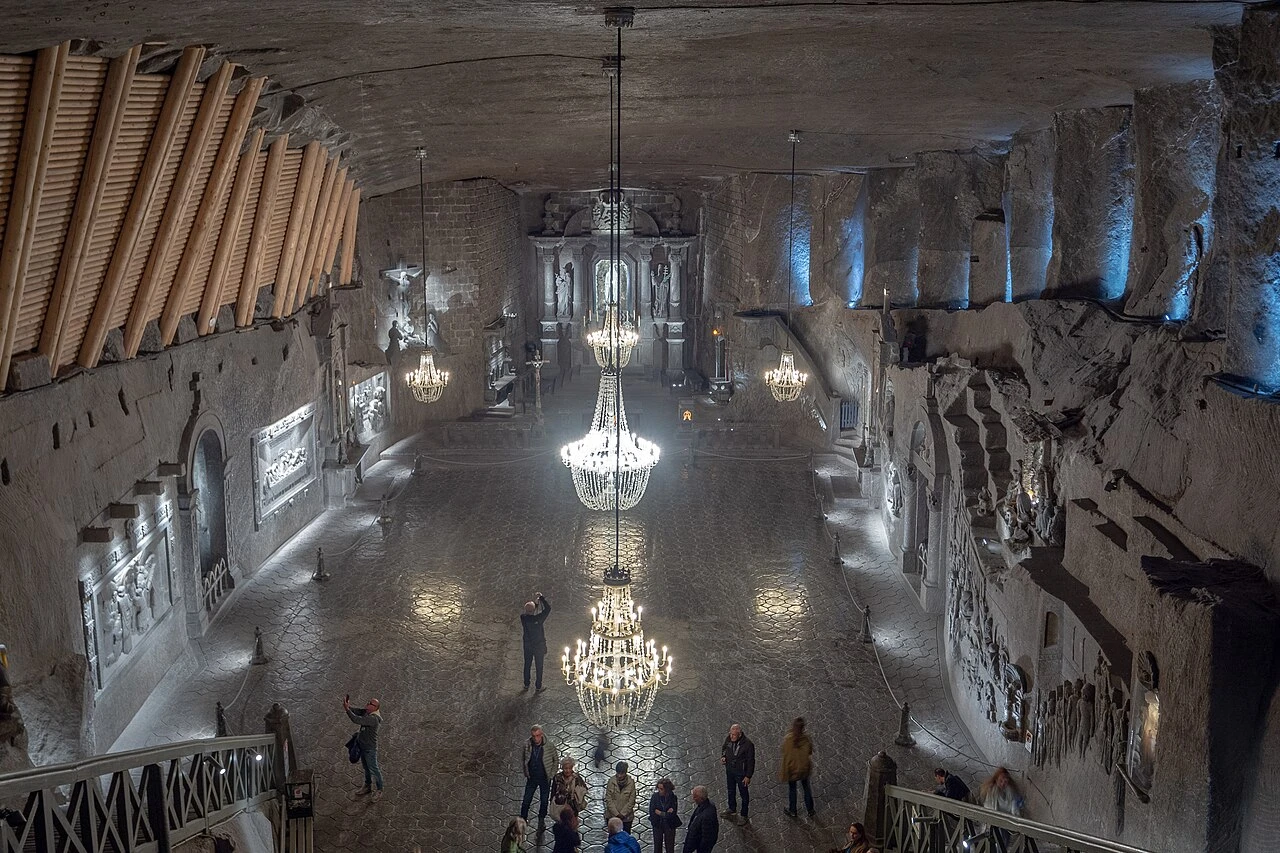
Wieliczka · 121 km
Wieliczka Salt Mine
Content & sources
Photo: C messier · CC BY-SA 4.0
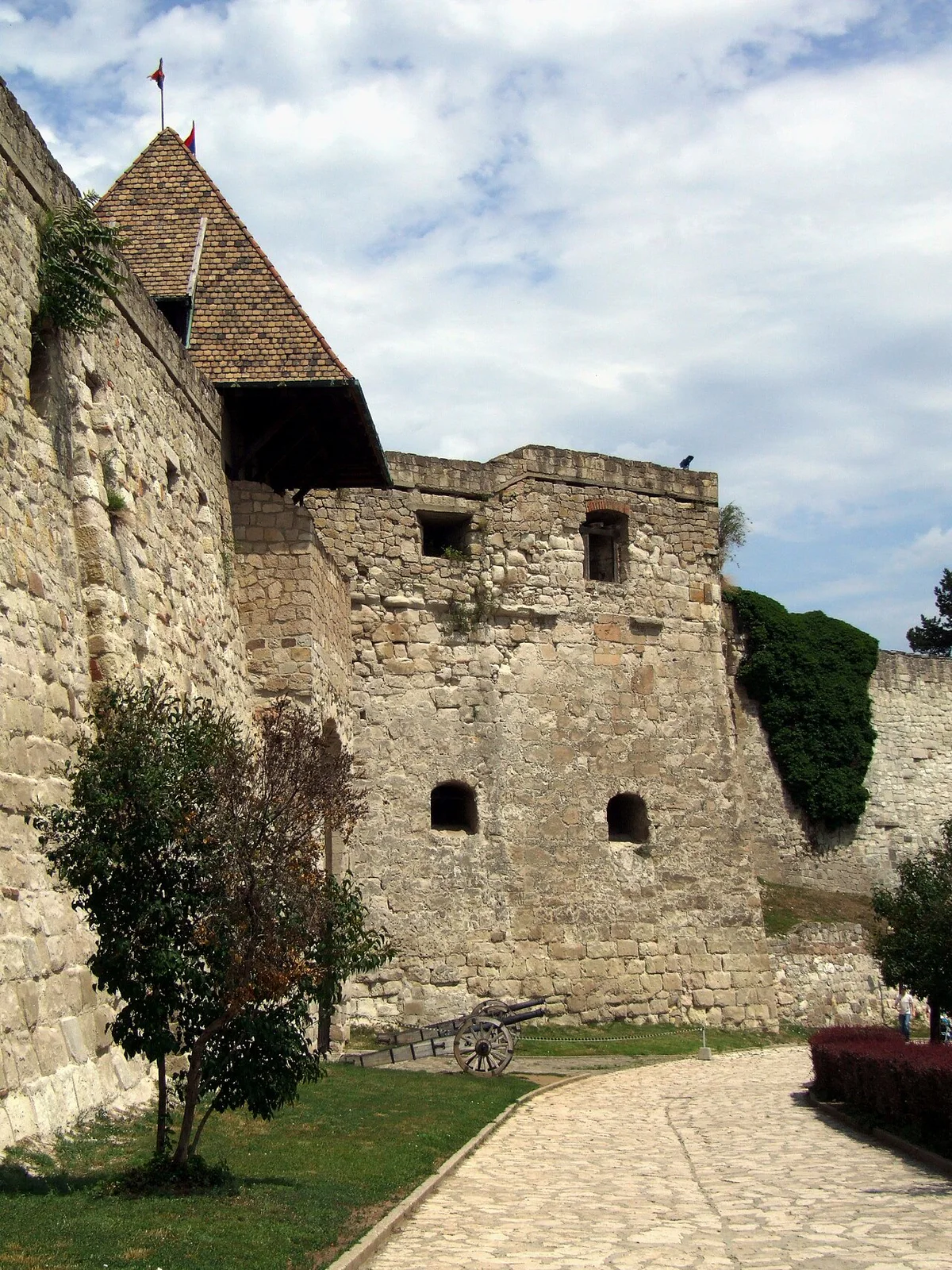
Eger · 125 km
Eger Castle
Content & sources
Pudelek (Marcin Szala) · CC BY-SA 3.0
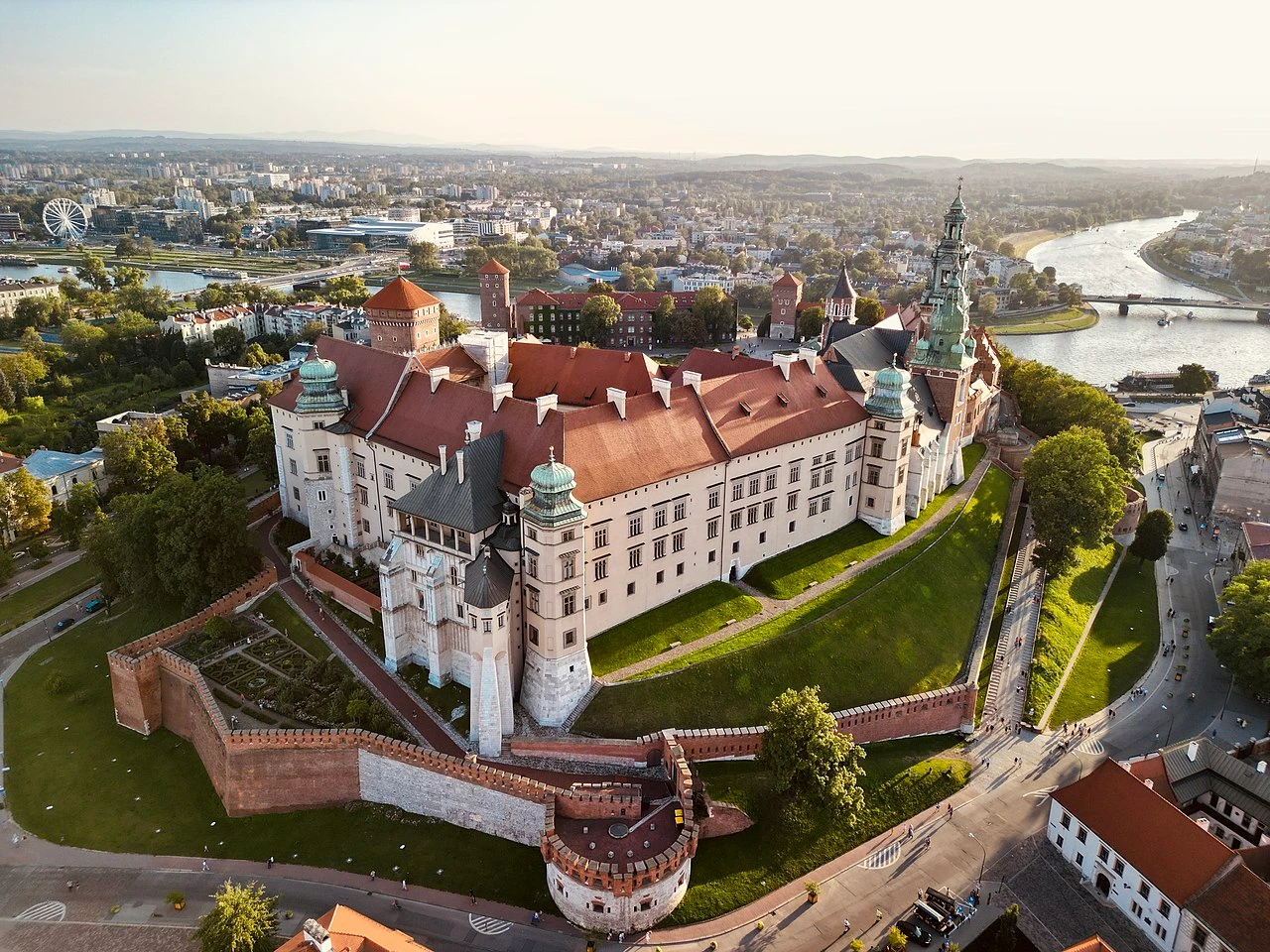
Krakow · 132 km
Wawel Royal Castle
Content & sources
Photo: Monika Towiańska · CC BY-SA 4.0