Languages
15Château d'Amboise Audio Guide
Château d'Amboise is a landmark in Amboise, France. Explore it with Stanza's GPS-triggered offline audio guide — available in 15 languages.
Quick Facts
28
Stops
15
Languages
100%
Offline
📍 Amboise, France · 47.4131°N, 0.9858°E
About Château d'Amboise
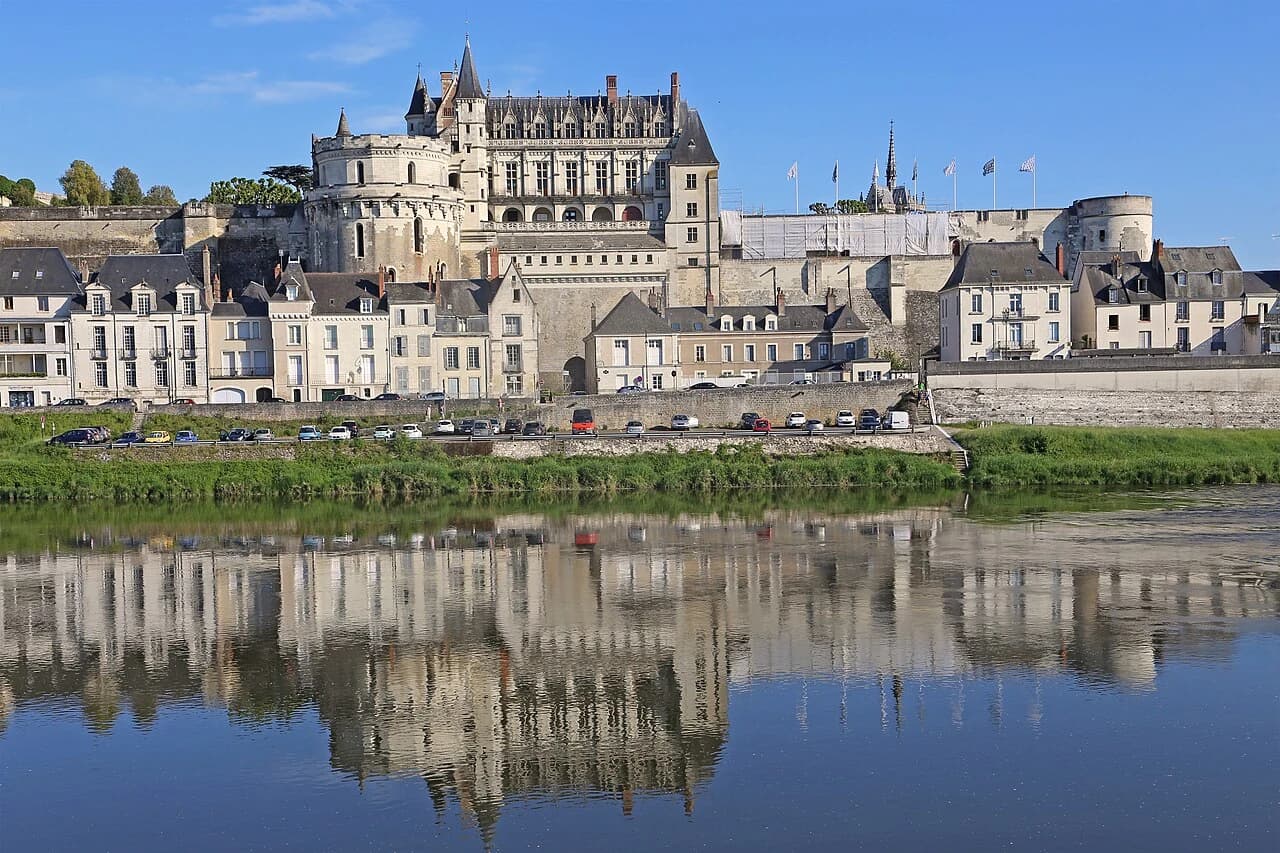
The Château d'Amboise is a historic royal château situated in the town of Amboise, France. It played a significant role in French history, serving as a residence for French kings and a cultural hub during the Renaissance.
Château d'Amboise is also known as Château at Amboise, Chateau at Amboise, château d’Amboise, chateau d'Amboise, and 1 other names in various languages.
This self-guided audio tour features 28 narrated stops organized across 8 sections. As a castle, Château d'Amboise offers a unique cultural experience in the heart of Amboise, France.
The Stanza audio guide is available in 15 languages and works entirely offline — download the complete tour including audio narration, maps, and images before your visit. As you walk through Château d'Amboise, GPS-triggered narration plays automatically at each point of interest.
Last updated:
What you will hear
The Town Below: Rue de la Concorde
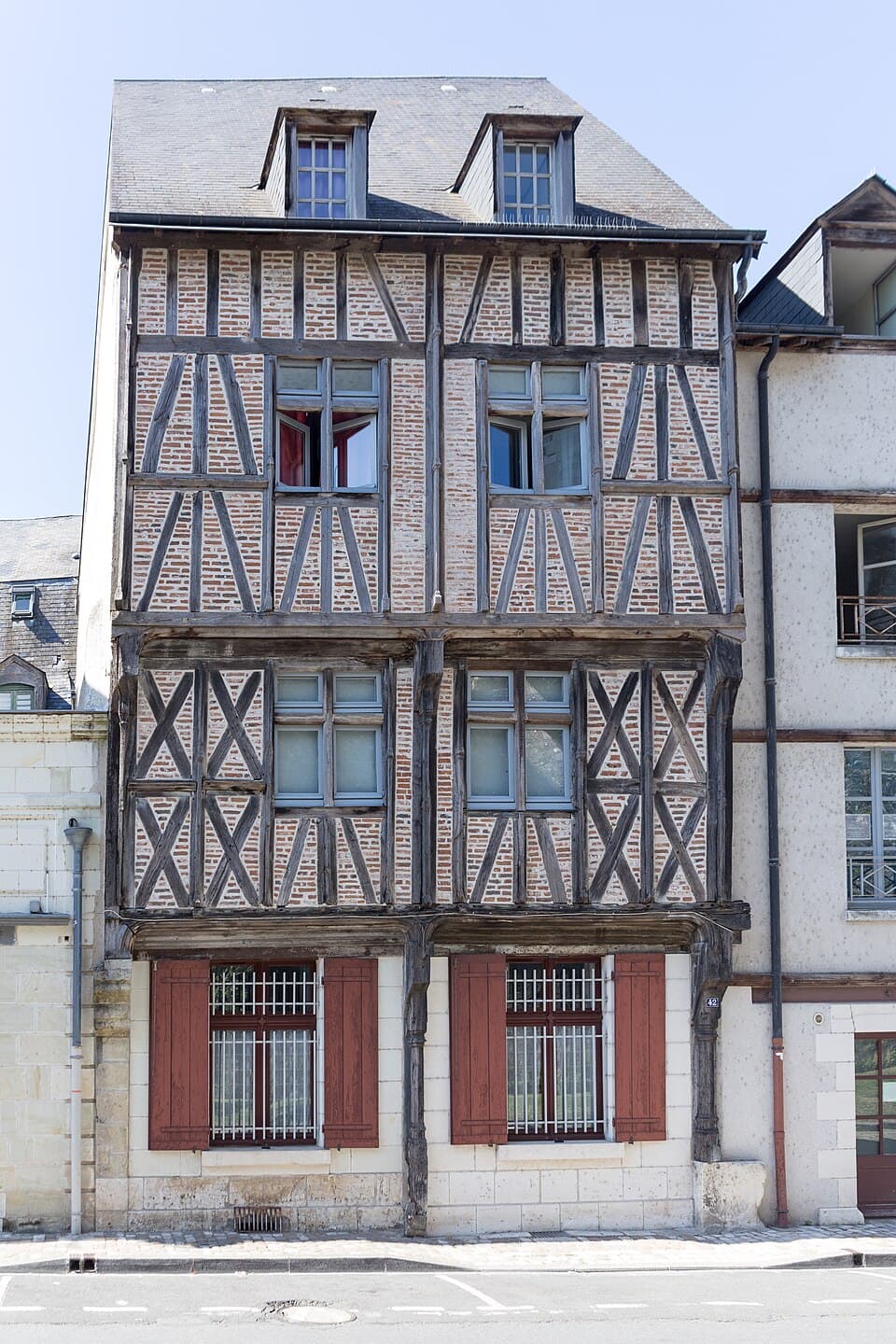
Connecting the château to the medieval town of Amboise. Features the verified street POI and a historic timber-framed house that illustrates the architectural context of the royal residence's neighbors.
The Merchant's Half-Timbered House
While the King and his court resided in magnificent tuffeau stone buildings, the majority of Amboise's citizens lived in structures like this timber-framed house. This method of construction, known as half-timbering, was the standard for domestic architecture in the 15th century. It utilized local, accessible materials rather than the expensive stone reserved for royal projects. Builders created a structural skeleton of heavy oak beams, which they then filled with a mixture of brick, clay, or plaster. These materials were not only affordable but also flexible, allowing for the slightly irregular silhouettes seen in the town today. These houses represent the middle class of the era—merchants and skilled tradespeople who supported the royal economy. Inside, these spaces were far more modest than the palace halls, often featuring low ceilings and small rooms heated by single hearths. The exposed wood on the exterior was frequently painted or treated to protect it from the elements. Seeing these buildings today provides a necessary counterpoint to the grandiosity of the château, reminding us that for every royal hall of state, there were dozens of these sturdy, functional homes sheltering the town's workforce.
The Tomb of Leonardo da Vinci
The final resting place of the Renaissance polymath. This stop covers the interior of the chapel and the solemn site where Leonardo's remains were moved after the original church's destruction.
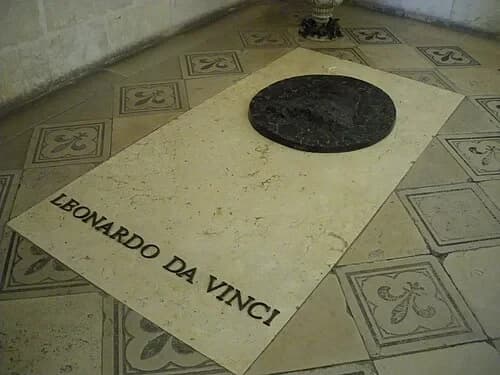
The Tomb of Leonardo da Vinci
The presence of this tomb marks Amboise as a site of global cultural importance. Leonardo da Vinci, the celebrated artist, inventor, and thinker, spent the last three years of his life just a short walk from here. King Francis I, a great admirer of the Italian master, invited him to France in 1516, providing him with a residence at the nearby manor of Clos Lucé. Leonardo died in 1519 and was originally buried in the collegiate church of Saint-Florentin, which was located within the château's grounds. However, that church was demolished in the early 19th century. During excavations in 1863, remains believed to be Leonardo's were discovered among the ruins and were later reinterred here in the Chapel of Saint Hubert. The simple floor slab you see today, marked with his name, belies the immense influence of the man it commemorates. His relocation to Amboise brought the genius of the Italian Renaissance directly into the heart of the French court, and his tomb remains a place of pilgrimage for those wishing to honor his legacy. The placement within this delicate Gothic chapel creates a bridge between French architecture and the spirit of Italian innovation.
The Great Council Hall
The Salle des États where the King held court. It is famous for its massive fireplaces featuring the emblems of the French crown and the Duchy of Brittany.
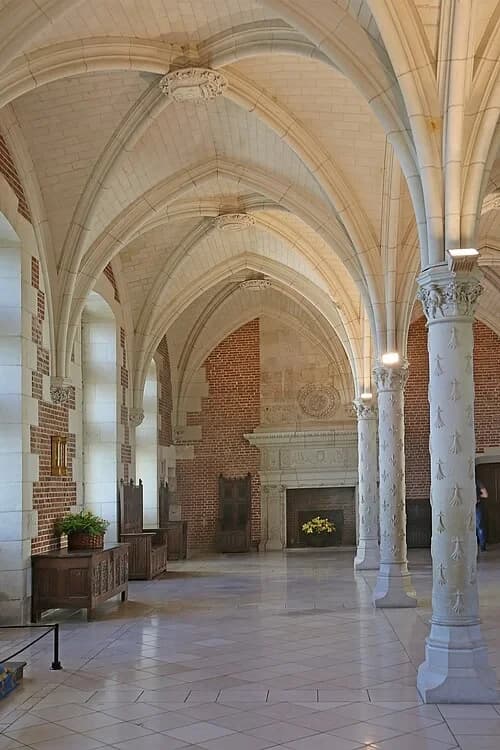
Pillars of Power
Within the expansive Great Council Hall, the architecture itself tells a story of political alliance. The pillars that run down the center of the room are not just structural supports; they are symbolic monuments. Look for the carvings of the fleur-de-lis, the traditional emblem of the French monarchy, alongside the stylized ermine tails, which represent the Duchy of Brittany. These motifs celebrate the marriage of King Charles VIII and Anne of Brittany in 1491. This union was a critical moment in French history, as it effectively brought the previously independent and powerful duchy into the royal fold. The repetition of these symbols throughout the hall served as a constant reminder to the assembled nobles of the King's expanded authority and the new, unified strength of the realm. The pillars themselves are massive, carved from local stone to support the high, vaulted ceiling. Their placement creates a formal aisle, guiding participants toward the head of the room where the King would sit. By weaving these emblems into the fabric of the council chamber, the builders ensured that every state decision made here took place under the visual sign of this powerful dynastic merger.
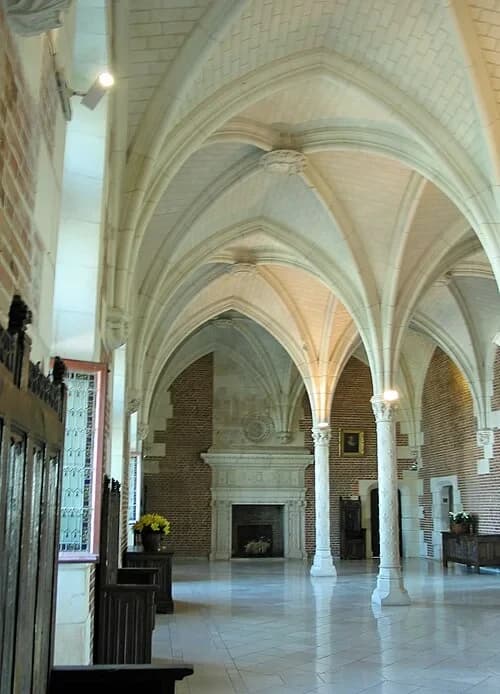
The Great Council Hall
The sheer scale of this hall, known as the Salle des États, was designed to impress and intimidate. This was where the most important administrative and judicial functions of the kingdom took place. Because of the room’s immense size, heating it during the damp Loire winters was a monumental task. You can see the massive fireplaces at either end, which would have been kept roaring with large logs to provide some measure of warmth to the assembled councilors. These hearths are not just functional; they are architectural features in their own right, reflecting the grandeur of the space. The construction of the palace was a long-term project that spanned roughly 50 years. It began under Charles VIII and continued through the reigns of Louis XII and Francis I, who finally brought the major phases to a close. Over these decades, the hall witnessed the evolution of French governance from late medieval practices toward more centralized Renaissance rule. Standing here today, one can imagine the echoes of debates and the rustle of heavy robes as the King and his court shaped the future of France within these high stone walls.
The Hall of the Drummers
Named for the musicians who accompanied royal festivities. This room serves as a transition into the more private royal apartments.
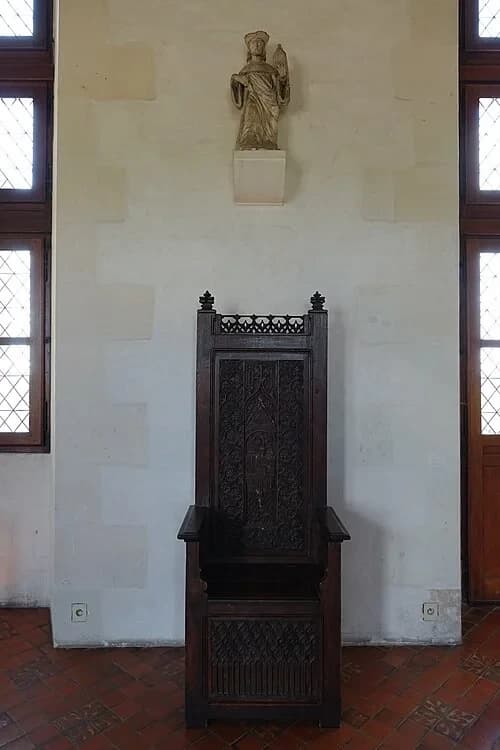
The Hall of the Drummers
This room served as a buffer and a celebration space within the palace. Musicians, specifically drummers and minstrels, would perform here during royal festivities and courtly gatherings. It marks the boundary where the grand, public life of the court began to transition into the more secluded, private realm of the king and queen. In the 15th and 16th centuries, music was an essential component of royal power, used not just for entertainment but to signal the presence and prestige of the monarch. The acoustic properties of the stone walls helped carry the rhythm of the drums throughout the surrounding corridors. Look for the high-backed wooden chair positioned against the wall, often used by officials or high-ranking guests awaiting an audience. Above it, a statue overlooks the room, contributing to the dignified yet festive atmosphere intended to impress those passing through. As you move deeper into the palace from here, the spaces become more intimate, reflecting the domestic reality of a Renaissance ruler.
The King’s Private Chamber
The Chambre Henri II, providing an intimate look at Renaissance domestic life, complete with a four-poster bed and period tapestries.
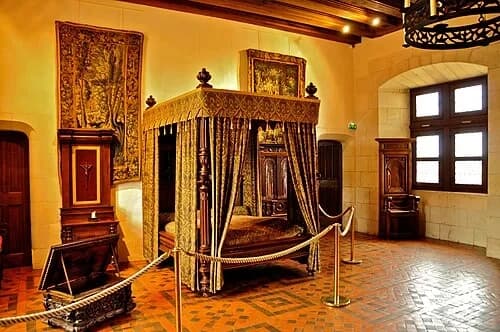
The Chamber of Henry II
Entering this room brings you into the most personal sphere of royal life. The focal point is the large four-poster bed, an essential piece of furniture that provided privacy and protection from drafts. In an era where stone walls offered little insulation, heavy curtains could be drawn around the bed to trap body heat. Surrounding the room, large tapestries cover the walls, serving a dual purpose: they added layers of insulation against the damp castle stone and acted as mobile decoration. Despite the intimate setting, the royal bedroom was rarely a place of total solitude. It was here that the king would meet with his most trusted advisors in the early morning or late evening. These small councils were where significant political maneuvering and sensitive decisions took place, away from the prying eyes and ears of the Great Council Hall. The proximity to the king's bedside was a mark of extreme favor and power. This room reminds us that for a Renaissance monarch, the line between private life and public duty was constantly blurred.
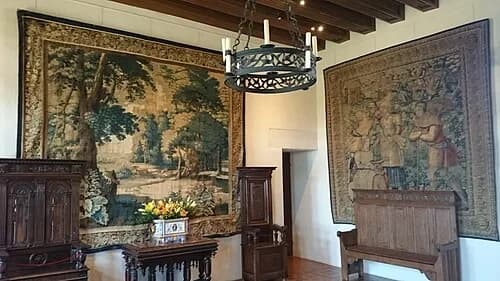
Woven Histories
The tapestries lining these walls represent one of the most expensive and prestigious art forms of the Renaissance. Crafted from thousands of individual threads, they required years of meticulous labor by skilled weavers. Beyond their beauty, they were highly functional. Stone castles were notoriously difficult to heat, and these thick woven hangings acted as essential insulation, trapping heat and dampening echoes in the cavernous rooms. Financially, a single set of high-quality tapestries could cost as much as a small fortress, making them a primary way for a monarch to display immense liquid wealth. The subjects depicted were rarely chosen by accident. By showcasing scenes from the lives of ancient Greek or Roman heroes, the King of France was subtly inviting his guests to draw comparisons between those legendary leaders and himself. These woven narratives functioned as a form of visual propaganda, reinforcing the king's right to rule through historical and mythological precedent. They allowed the court to bring its history, its warmth, and its prestige wherever it traveled, turning any bare stone room into a royal residence.
The Cavalier Towers and the Great Ramps
A MUST-SEE engineering marvel. The helical ramps allowed horses and carriages to ascend from the town level directly to the castle terrace.
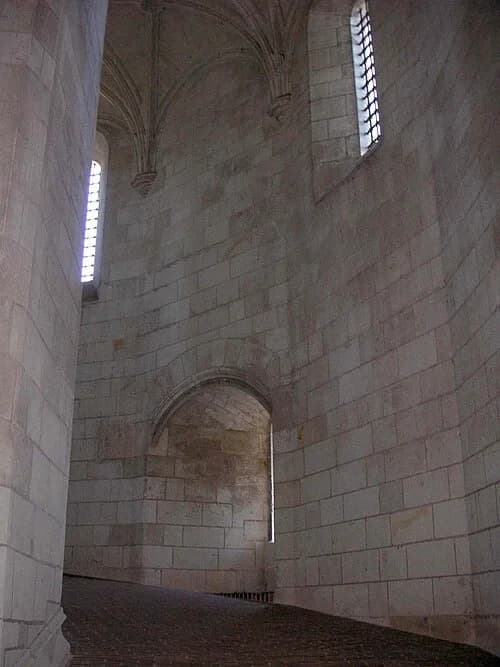
The Great Helical Ramp
Walking up this ramp, you might notice its unusual width and the gentle incline of the slope. This design was purely functional. Unlike the narrow, dizzying spiral stairs found in older fortresses, this internal ramp was built specifically to accommodate horses. The width was essential to prevent the animals from panicking in the enclosed space, providing them with enough room to maneuver without feeling trapped. It also meant that the King and his high-ranking guests could be driven in their carriages directly from the town gate below to the main residence on the terrace above. This allowed for a seamless, dignified arrival that shielded the royals from the elements and the exertion of a climb. The ramp is paved with bricks set in a pattern to provide better traction for hooves and wheels. This innovation illustrates the Renaissance focus on comfort and convenience, signaling a move away from the purely defensive mindset of the Middle Ages. The sheer scale of the ramp speaks to the ambition of the French kings, who sought to transform their fortress into a residence of unparalleled accessibility.
The Terrace of Naples and the Italian Gardens
The first Italian-style gardens in France, designed by Pacello da Mercogliano. Offers stunning panoramic views of the Loire River.
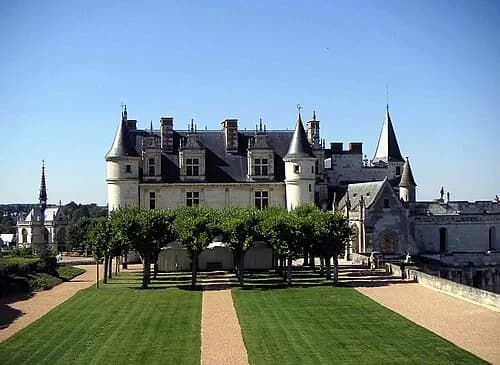
The Terrace of Naples
When King Charles VIII returned from his military campaigns in Italy, he brought back more than just stories; he brought artists and landscape architects like Pacello da Mercogliano. It was here, on this high terrace, that the first Renaissance-style gardens in France were established. Breaking away from the enclosed, utilitarian gardens of the medieval period, these grounds were designed for pleasure, symmetry, and perspective. The Terrace of Naples gets its name from the Italian influences that shaped it. A key innovation seen here is the use of the surrounding landscape as part of the garden itself. The grounds were carefully aligned so that the wide, sweeping panorama of the Loire River acted as a natural backdrop, framed by the stone walls and meticulously arranged greenery. This concept made the view an architectural element in its own right, intended to be admired as one strolled through the garden. Today, the layout has evolved, but the fundamental relationship between the elevated castle grounds and the river valley below remains the defining feature of this space, illustrating the early French fascination with Italian aesthetics.
The Garden of the Orient
A poignant memorial to the Algerian prisoners held here in the 19th century. The steles are aligned toward Mecca in memory of those who died during their captivity.
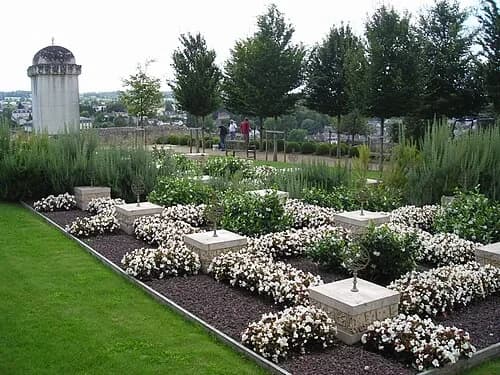
The Garden of the Orient
The stone steles you see here are the most poignant features of this memorial garden. Each one honors a member of Abd el-Kader's party who died during their captivity. A significant detail of their arrangement is that they are precisely aligned toward Mecca, the holiest city in Islam, reflecting the deep faith of those they commemorate. This alignment is a powerful gesture of respect, acknowledging the religious and cultural identity of the deceased. The garden was designed as a place of reconciliation, intended to bridge the gap between the French royal history of the château and its later role as a site of colonial imprisonment. By naming the individuals on these stones, the memorial restores a sense of identity to those who were once considered merely the suite of a captive leader. It invites visitors to consider the themes of exile, memory, and the shared history between France and Algeria. The simplicity of the stone and the greenery surrounding them provides a space where the weight of this history can be felt without the distraction of ornate decoration.
Want to hear the rest?
Download the Stanza app to unlock all 28 stops and full GPS-guided navigation.
Frequently Asked Questions
How long does the Château d'Amboise audio tour take?
The Château d'Amboise audio guide includes 28 narrated stops. Most visitors spend 45 minutes to 1.5 hours exploring the complete tour, though you can listen at your own pace and skip or revisit any stop.
Is the Château d'Amboise audio guide available in my language?
Stanza supports 15 languages: English, Spanish, French, German, Italian, Portuguese, Russian, Japanese, Chinese, Korean, Arabic, Hindi, Polish, Dutch, Hebrew. Check the guide in the app to confirm the languages currently available for this tour.
Can I use the audio guide offline at Château d'Amboise?
Yes! Download the complete Château d'Amboise tour — including all audio, maps, and images — before your visit. The Stanza app works completely offline, so you don't need WiFi or mobile data at the venue.
How much does the Château d'Amboise audio guide cost?
The Stanza app is free to download. The current listed price for the Château d'Amboise audio guide is $3.99; app-store region and currency may affect the final price.
How do I use the Stanza audio guide at Château d'Amboise?
Download the free Stanza app, search for "Château d'Amboise", and download the tour. When you arrive at the venue, the app uses GPS to detect your location and automatically plays the relevant narration as you move between points of interest — completely hands-free.
What makes the Stanza audio guide different from other Château d'Amboise tours?
Stanza offers GPS-triggered narration that plays automatically as you walk through Château d'Amboise — no need to manually select stops. The tour is available in 15 languages, works fully offline, and includes 28 expertly narrated stops with images and historical context.
What other audio guides are available near Château d'Amboise?
Stanza offers multiple audio guides in Amboise, France and nearby areas. After downloading the app, browse the map to discover all available tours near Château d'Amboise. Each guide can be downloaded for offline use.