Stanza · Audio guide
Cathédrale Notre-Dame de ChartresAudio guide
A place to remember. A story to take with you.
Notre-Dame de Chartres is a medieval Roman Rite Catholic cathedral and minor basilica located in Chartres, France. It is renowned for its well-preserved stained glass and sculptures.
Download Stanza, then search for “Cathédrale Notre-Dame de Chartres”.
About the tour
One guide. Your kind of visit.
Notre-Dame de Chartres is a medieval Roman Rite Catholic cathedral and minor basilica located in Chartres, France. It is renowned for its well-preserved stained glass and sculptures.
Ready when you are.
- 01Get the free Stanza app.
iOS & Android
- 02Find your guide.
“Cathédrale Notre-Dame de Chartres”
- 03Download before you go.
Works offline
Audio guide / 29 narrated stops
Inside the guide
Get to know a few of the stories before you go. Open a stop to read more.
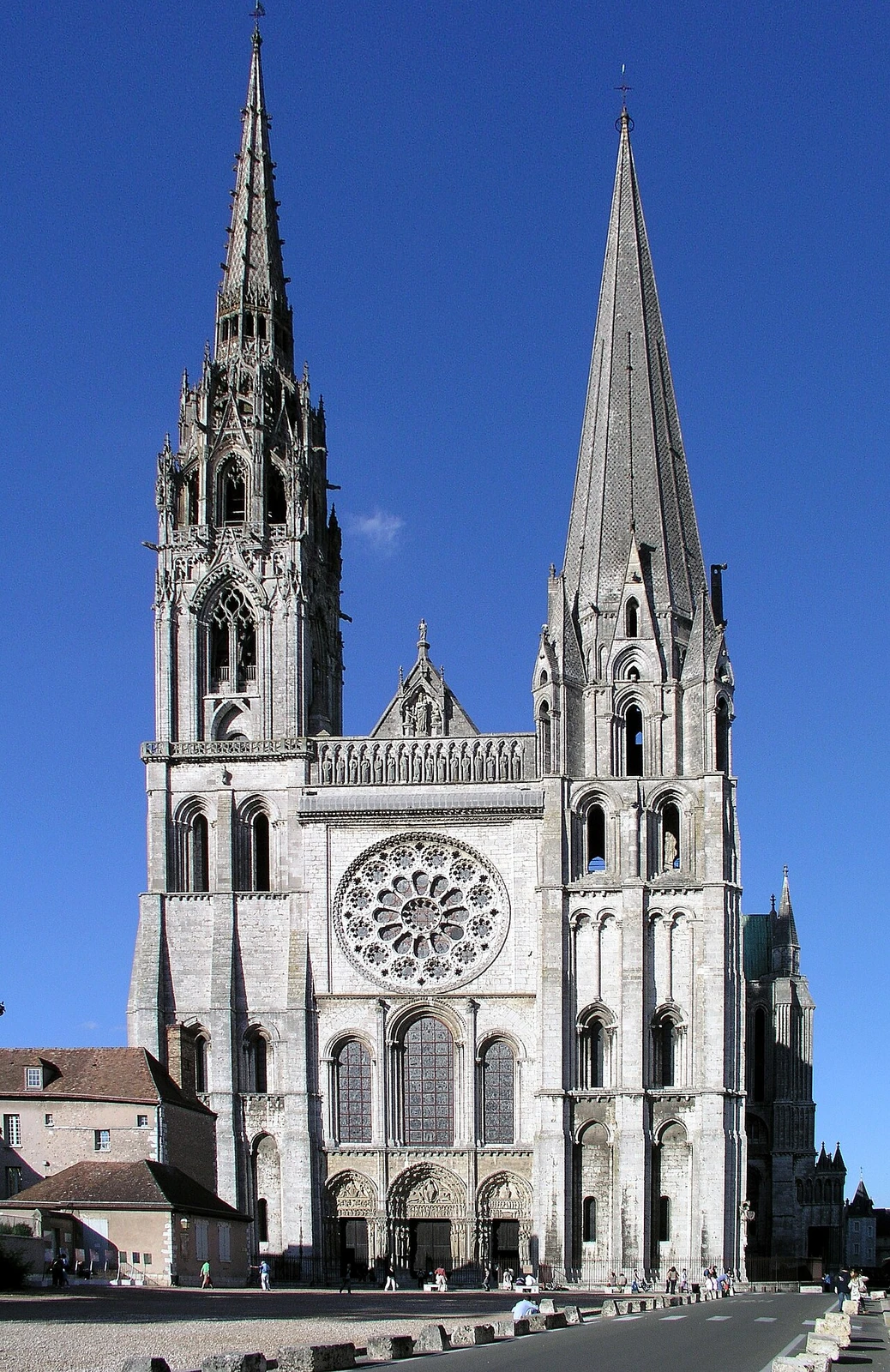
01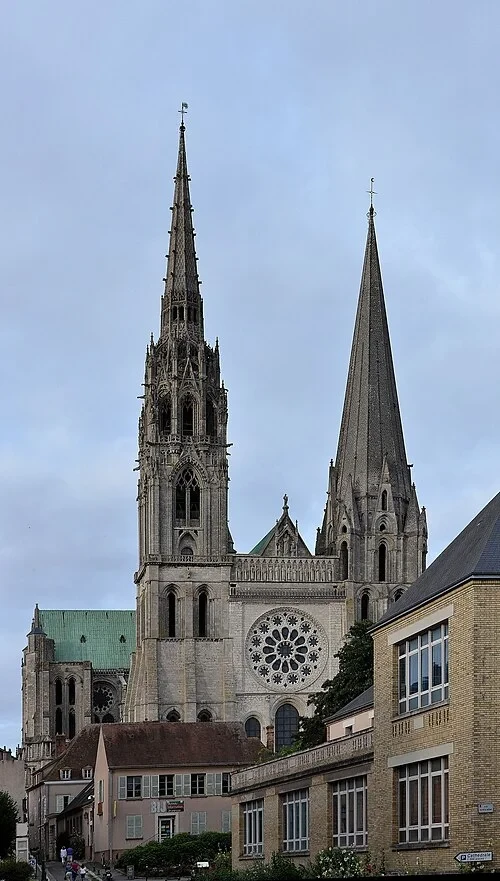 The West Facade and Asymmetrical SpiresThe West Facade
Welcome to the Cathedral of Our Lady of Chartres. Looking at this massive west facade, you are seeing the result of a remarkably fast building project for the Middle Ages. Following a devastating fire in 1194, construction on the main body of this Gothic structure was completed in just 26 years. This speed gives the cathedral a rare architectural unity. The heavy, durable stone used for the walls is called Berchères stone, sourced from a nearby quarry, which accounts for the weathered, silver-grey appearance of the facade today. While the stone is ancient, the building's survival into the modern era is thanks to American Colonel Welborn Griffith Jr. In August 1944, during the liberation of France, Allied artillery was ordered to destroy the cathedral because they feared German snipers were hiding in the towers. Griffith doubted this and personally entered the building alone to search it. He rang the cathedral bells and waved a flag to signal it was empty, successfully calling off the bombardment and saving this masterpiece for future generations. Tragically, he was killed in action later that same day in a nearby town.
Patrick from Compiègne, France · CC BY-SA 2.0
02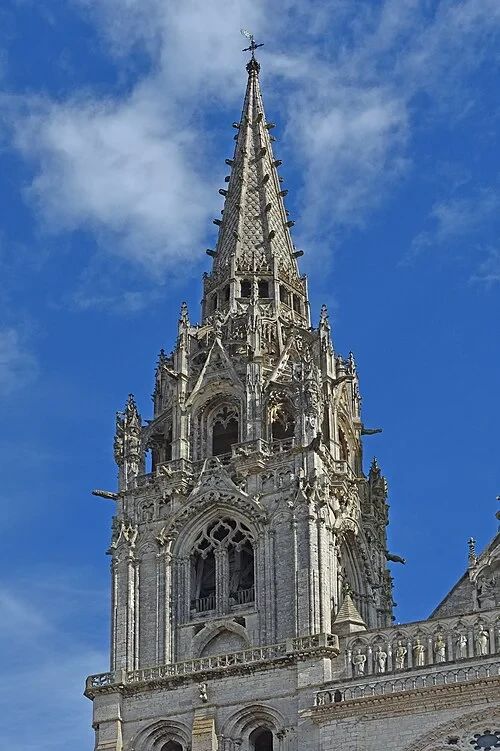 The West Facade and Asymmetrical SpiresThe North Spire
Notice the striking difference between the two towers reaching toward the clouds. The North Spire, on the left, stands 113 meters tall and is a prime example of the Flamboyant Gothic style. This spire was actually a much later addition to the facade, rebuilt in the early 16th century after a lightning strike burned down the original wooden spire covered in lead. The architect, Jean de Beauce, designed the new structure with an intense vertical energy and complex, lace-like stone carvings that create a sense of weightlessness despite the heavy material. This decorative complexity contrasts sharply with the much simpler tower next to it. Within this tower complex, you will find the 16th-century clock bell known as 'Pierre Savyet.' The spire's intricate gables, pinnacles, and openwork galleries were meant to draw the eyes upward, representing a transition from the earthly realm to the heavens. It remains one of the last major additions to the cathedral's exterior before the Renaissance changed architectural tastes across Europe.
Photo: Ludvig14 · CC BY-SA 4.0
03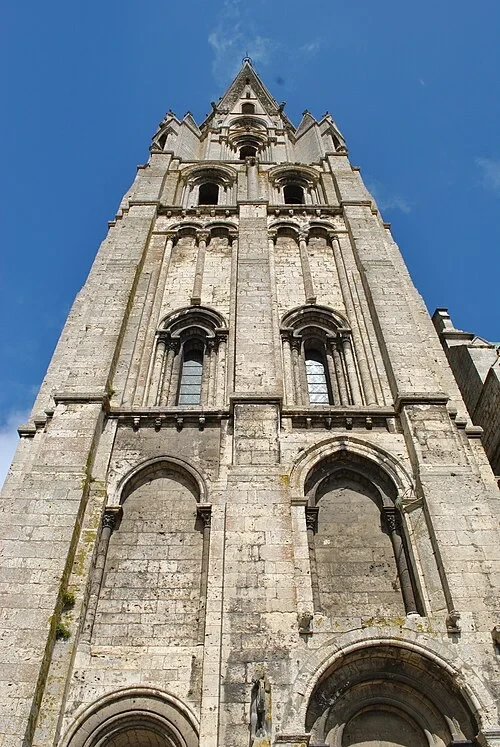 The West Facade and Asymmetrical SpiresThe South Spire
To the right of its ornate neighbor stands the South Spire, which reaches a height of 105 meters. This tower is a masterpiece of the earlier Romanesque style, dating back to the 1140s. Its form is that of a plain, unadorned stone pyramid, characterized by solid surfaces and a sense of immense stability and weight. Unlike much of the cathedral you see today, this tower survived the catastrophic fire of 1194 that leveled the rest of the old Romanesque structure. Because it was not destroyed, it provides a vital link to the earlier building's design. The lack of ornamentation on its surfaces emphasizes its clean lines and geometric purity. When viewed alongside the North Spire, the two towers create a famously asymmetrical facade that tells the story of centuries of evolving architectural fashion and the resilience of the community that rebuilt around it. This spire was considered so perfect in its proportions that it influenced the design of church towers throughout the region for generations.
Listen in the appPhoto: Johan Allard · CC BY-SA 4.0
04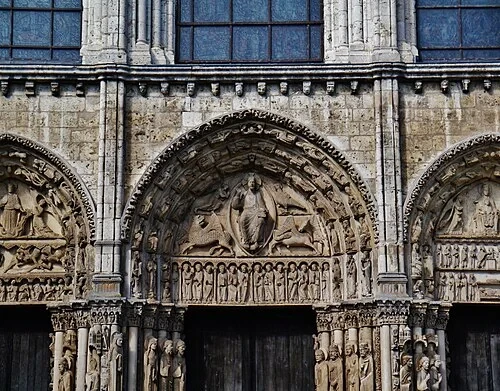 The Royal PortalThe Royal Portal
At the base of the towers sits the Royal Portal, created around 1145. This entrance is one of the few parts of the original Romanesque cathedral to survive the great fire, and it is considered a pinnacle of 12th-century European sculpture. The portal is divided into three distinct doorways, designed to be read together as a theological narrative. The left doorway represents the Ascension of Christ into heaven, the right doorway depicts his Incarnation or birth into the human world, and the center arch shows Christ in Majesty at the end of time. There are approximately 3,500 sculpted figures across the entire cathedral, and many of the most significant and early examples are located right here. These carvings marked a major shift in art history, moving away from the flatter, more abstract styles of the past toward figures that felt more three-dimensional and human. Despite their age, the figures retain a remarkable amount of detail, from the expressive faces of the elders to the intricate patterns in their clothing.
Listen in the appPhoto: Zairon · CC BY-SA 4.0
05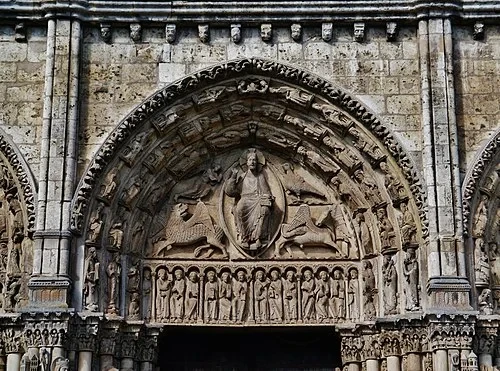 The Royal PortalChrist in Majesty
Look closely at the central archway, or tympanum, above the middle door. This scene depicts Christ in Majesty, return at the end of days to judge the world. He is shown seated on a throne, surrounded by a mandorla—the almond-shaped halo that signifies divinity. Encircling him are the four 'living creatures' that tradition associates with the four Evangelists who wrote the Gospels. You can identify the winged man representing Matthew, the eagle for John, the ox for Luke, and the lion for Mark. This arrangement was a standard iconographic pattern in medieval art, but the execution here at Chartres is special. While the figures still possess some of the rigid, stiff qualities found in earlier Romanesque work, they exhibit a new level of human expression and dignity. Notice how the figures seem to emerge from the stone, showing the artists were beginning to experiment with deeper carving and more naturalistic forms. Below the main scene, the twelve apostles are depicted, serving as the foundational support for the heavenly vision above them.
Listen in the appPhoto: Zairon · CC BY-SA 4.0
06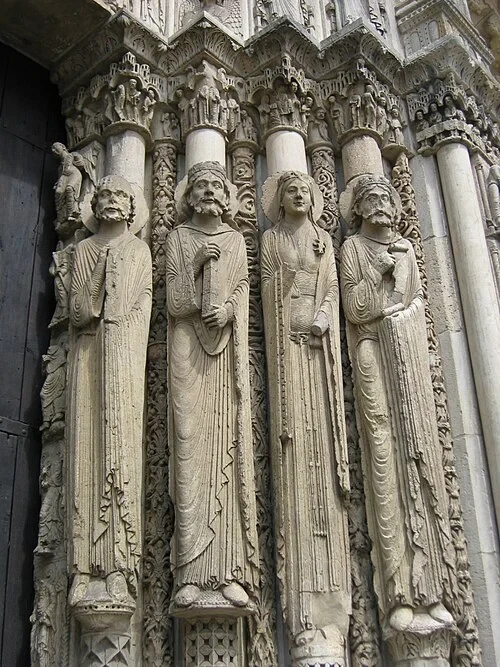 The Royal PortalKings and Queens of Israel
Flanking the doorways are these remarkable statue-columns, which represent kings, queens, and prophets from the Old Testament. They are famous for their incredibly elongated, vertical bodies, which were designed to mirror the shape of the architectural columns they are attached to. This fusion of sculpture and architecture suggests that these biblical figures serve as both the spiritual and physical foundations of the church building. Pay attention to their faces; they possess serene, detached expressions that were intended to convey a sense of heavenly calm rather than human emotion. The level of detail in their clothing is extraordinary, with stone carved to look like fine, pleated fabric and intricate borders. These figures act as ancestors to Christ, linking the ancient stories of the Old Testament to the new Christian era represented by the doors themselves. The way the drapery falls in stiff, rhythmic lines is a hallmark of the transition into the Gothic style, where artists sought to balance symbolic representation with a growing interest in how real fabric and bodies behaved in space.
Listen in the appUrban · Public domain
07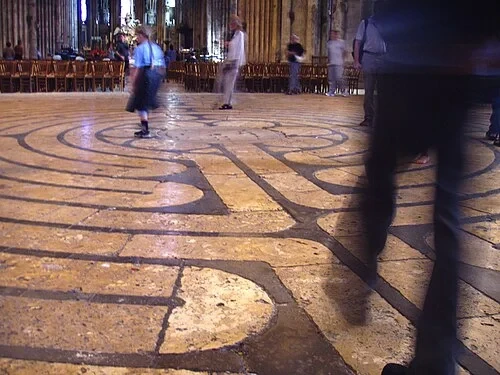 The Nave and LabyrinthThe Chartres Cathedral Labyrinth
In the center of the nave, you will find a circular black and white stone pattern set into the floor. This is the labyrinth, one of the most famous and well-preserved examples from the medieval period. In an era when a physical journey to Jerusalem was dangerous or impossible for many, walking this path served as a symbolic pilgrimage. The path is roughly 261 meters long and winds through eleven concentric circles, eventually leading to a central rosette. Historically, some pilgrims would complete the entire journey on their knees as an act of penance or devotion. Unlike a maze, there are no dead ends or tricks; there is only one path that leads to the center and back out. This design represents the long, winding path of the human soul toward spiritual fulfillment. For much of the week, the labyrinth is covered by chairs for services, but it is typically revealed on Fridays so that modern pilgrims and visitors can experience walking the ancient path. It remains a powerful link to the medieval spiritual life that once filled this vast stone space.
Listen in the appPhoto: Maksim · CC BY-SA 3.0
08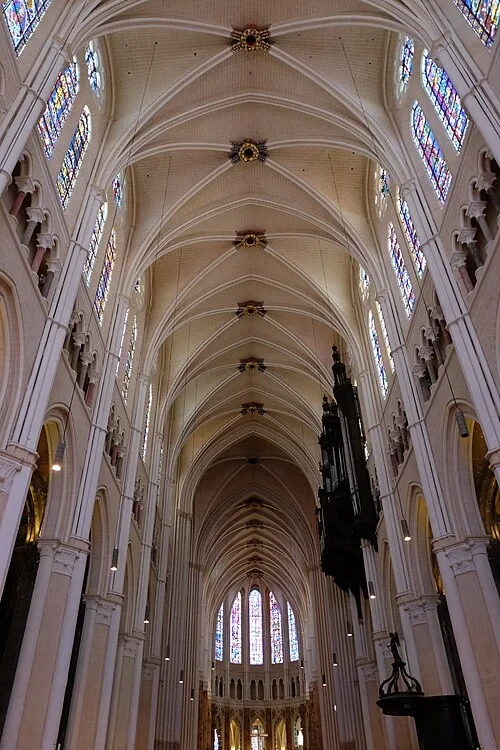 The Nave and LabyrinthThe Nave and Vaulting
Direct your attention upward to the ceiling of the nave, which rises to a height of 37.5 meters. At 16.4 meters across, this is one of the widest naves in France, creating an immense sense of interior space. This harmony was the work of an anonymous architect often called the 'Master of Chartres,' who established these groundbreaking proportions. One of the defining characteristics of this space is the light—or the lack of it. The interior was intentionally kept somewhat dark, a design choice meant to allow the colored light from the stained glass to glow with maximum intensity against the stone walls. The ceiling itself is held up by quadripartite rib vaults, an engineering innovation that allowed the weight of the roof to be channeled into specific points, rather than pushing out along the entire length of the wall. This allowed for the massive windows that define the cathedral's character. As you stand here, the combination of the soaring height and the filtered, colorful light is meant to create a space that feels separated from the ordinary world outside.
Listen in the appJulien Chatelain from Paris, France · CC BY-SA 2.0
09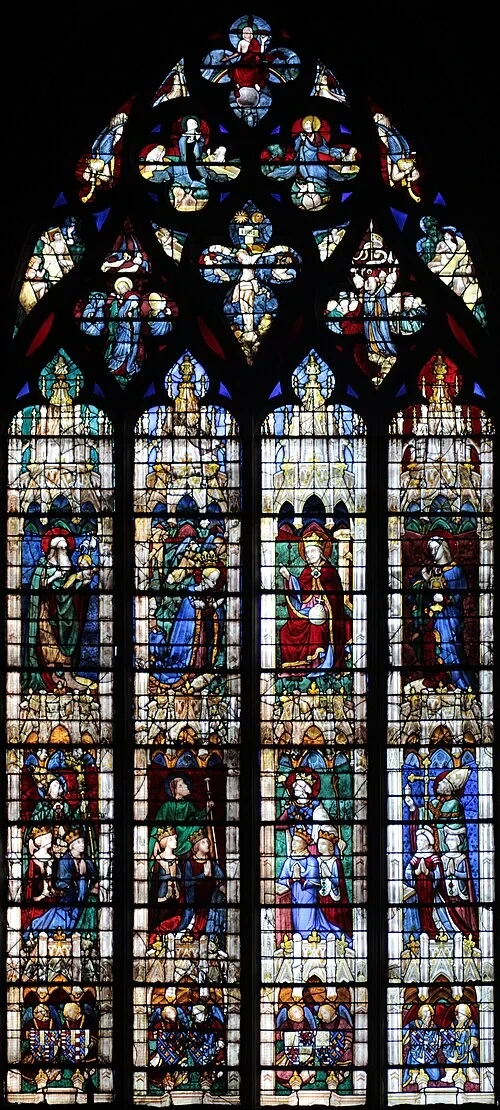 The South Aisle and Vendôme ChapelThe Stained-Glass Window of the Vendôme Chapel (Bay 40)
Chartres is home to one of the most complete collections of original medieval stained glass in the world. There are 176 windows in total, covering over 2,600 square meters. Most of what you see is original work from the 12th and 13th centuries, which is incredibly rare. The glass has survived centuries of turmoil, including the iconoclasm of the French Revolution and the heavy bombing of both World Wars. During these conflicts, the glass was painstakingly removed pane by pane and stored in deep vaults or rural locations for safety. This preservation allows us to see the colors almost exactly as they appeared to medieval visitors. The windows were not just decoration; they were intended to be read like books. In an era when most of the population was illiterate, these vibrant panels told stories from the Bible, the lives of saints, and even the history of the local guilds that funded them. The windows transformed the interior of the cathedral into a glowing classroom of light and color that changed throughout the day as the sun moved.
Listen in the appMichelet-密是力 (talk) · Public domain
10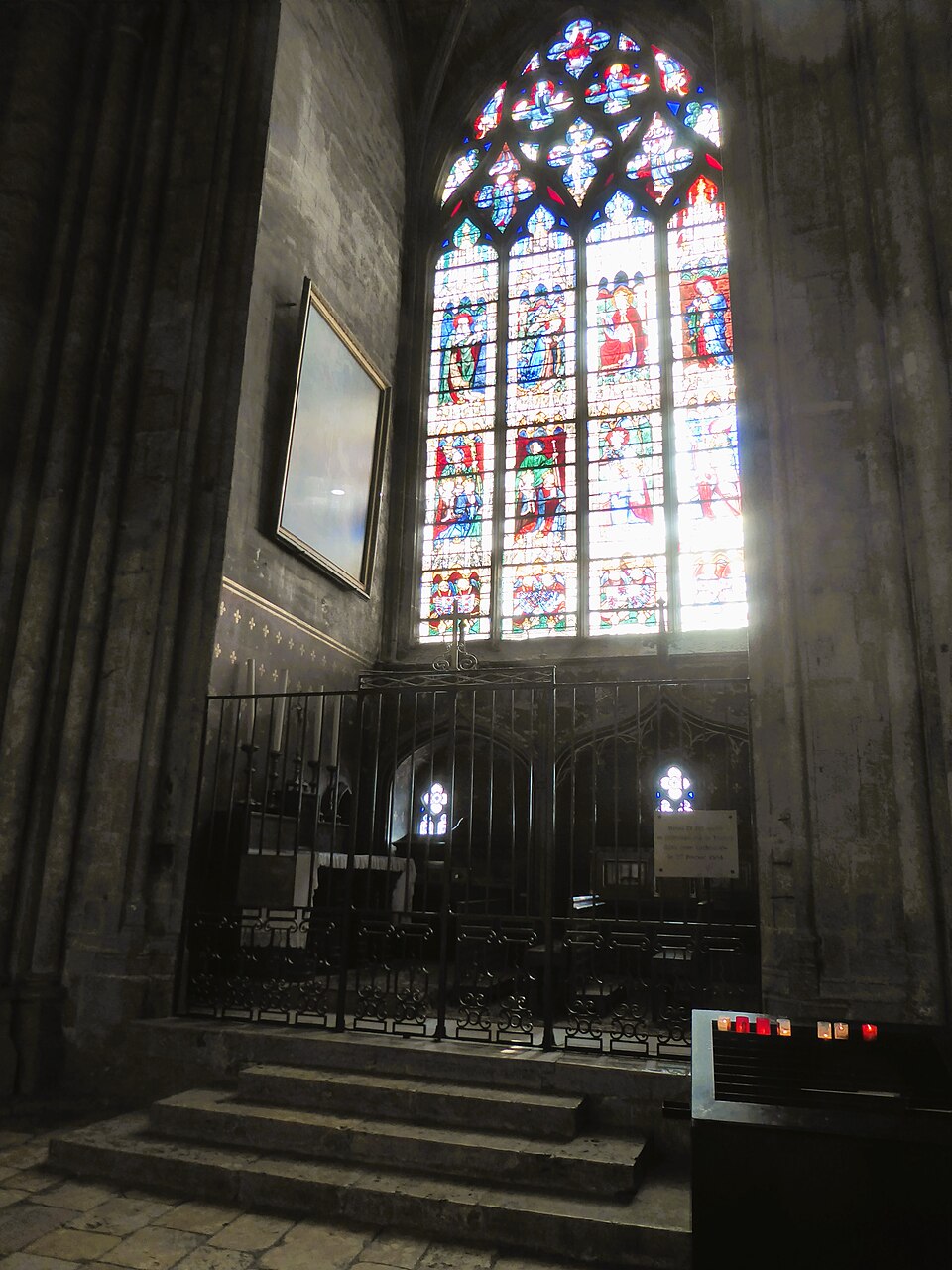 The South Aisle and Vendôme ChapelThe Vendôme Chapel
While the main body of the cathedral was built quickly in the 13th century, additions continued for hundreds of years. The Vendôme Chapel was built between 1417 and 1420, making it a much later addition in the Flamboyant Gothic style. If you look at the stained glass in this chapel, you will notice a significant contrast with the earlier medieval windows. The 15th-century glass uses different techniques, such as silver stain, which allowed artists to paint on the glass with more precision and detail. The color palette here is also much lighter, featuring more clear glass and pale tones compared to the dense, saturated 'Chartres Blue' and deep reds of the earlier 13th-century windows. This change reflects a shift in architectural taste toward brighter interiors and more realistic, painterly depictions in glass. The chapel shows how the cathedral functioned as a living building, with each era leaving its mark through new styles of decoration and construction while still respecting the original Gothic framework that surrounds it.
Listen in the appPhoto: Le Passant · CC BY-SA 4.0
Cathédrale Notre-Dame de Chartres
Frequently asked questions
How much does the guide cost?
Free app download. Listed guide price: $1.99. Guide price shown in the app. Audio guide only. Venue admission is separate.
Can I listen without internet?
Yes. Download the guide’s audio, images, and maps in the app before your visit. Your downloaded content is then available offline.
Can I listen in my language?
Stanza supports 15 languages. Check the app for the languages available for this guide.
Do I need to follow a schedule?
No. This is a self-guided experience. Choose your stops, pause whenever you like, and return to a story at your own pace.
At your own pace
Explore Cathédrale Notre-Dame de Chartres.
Download Stanza, then search for “Cathédrale Notre-Dame de Chartres”.
Free app download · Guide price shown in the app
Keep exploring
Nearby audio guides
Nîmes
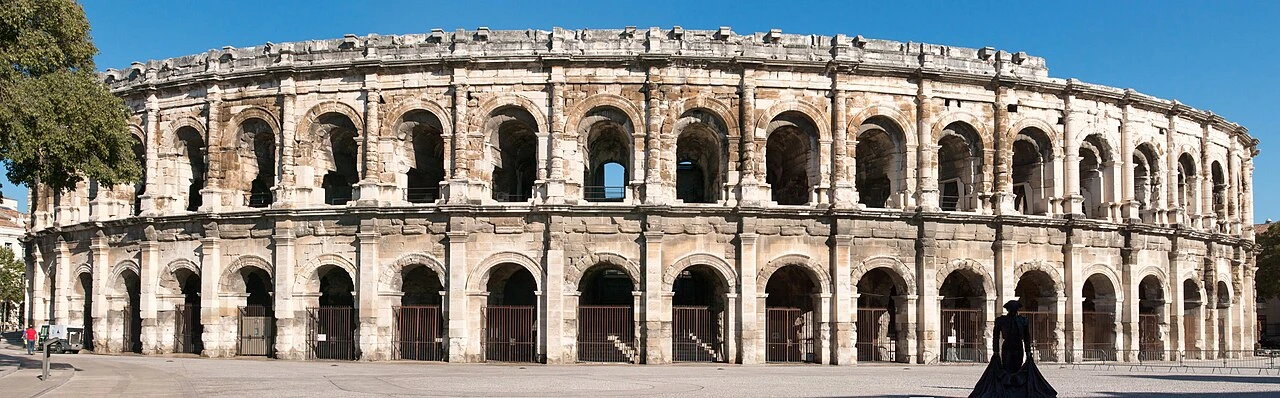
Amphitheater of Nîmes
Content & sources
Daniel VILLAFRUELA. · CC BY-SA 3.0
Paris
Arc de Triomphe de l'Étoile
Content & sources
Jiuguang Wang · CC BY-SA 2.0
Paris
Basilique du Sacré-Cœur de Montmartre
Content & sources
Tonchino · CC BY-SA 3.0
Saint-Denis
Basilique royale de Saint-Denis
Content & sources
Photo: Chabe01 · CC BY-SA 4.0