Stanza · Audio guide
Cathédrale Saint-Pierre de Beauvais Audio Guide
A place to remember. A story to take with you.
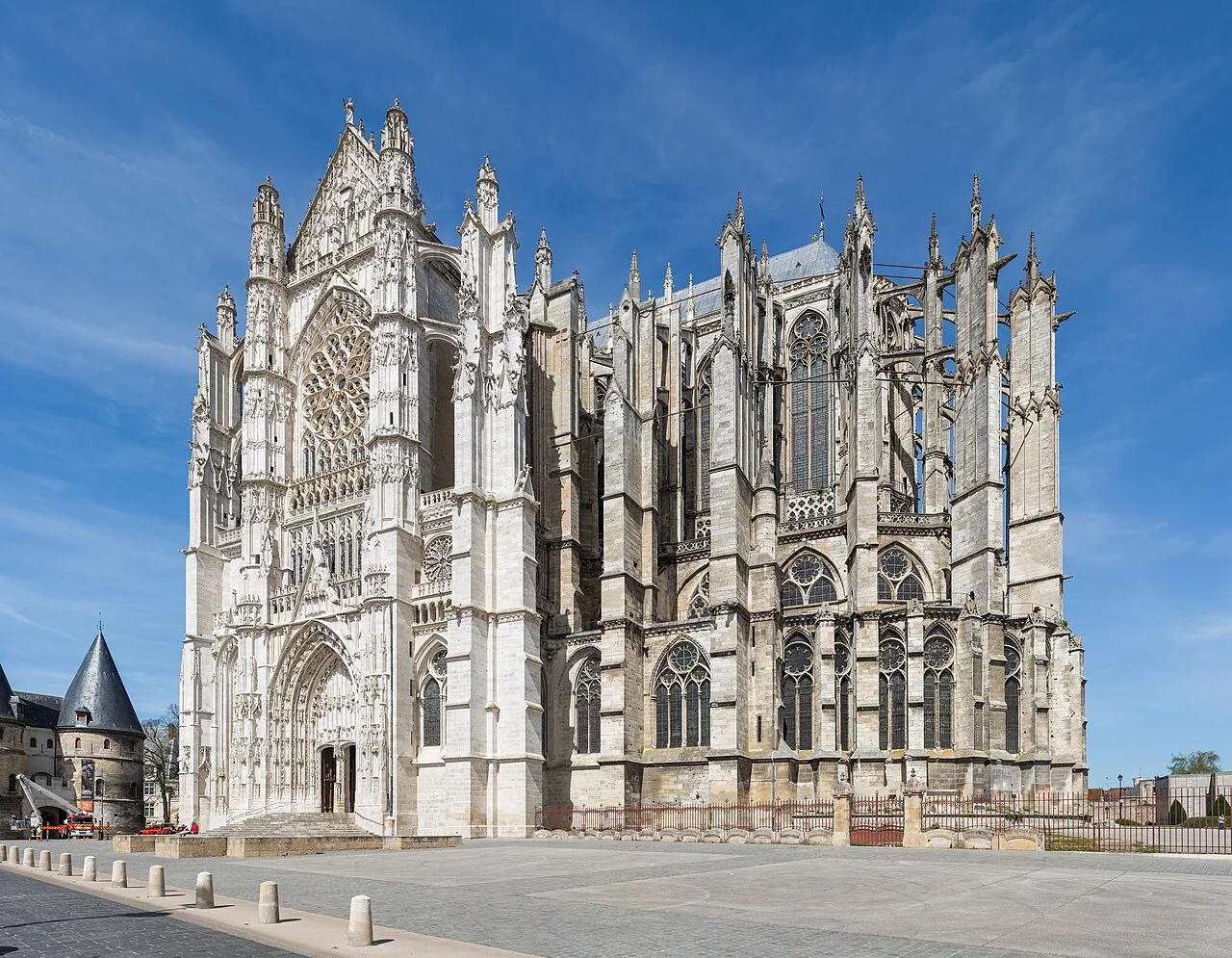
Beauvais Cathedral is a Catholic cathedral located in the town of Beauvais, France. It serves as the seat of the Bishop of Beauvais, Noyon and Senlis and has been listed as a national monument since 1840.
Download Stanza, then search for “Cathédrale Saint-Pierre de Beauvais”.
About the tour
One guide. Your kind of visit.
Beauvais Cathedral is a Catholic cathedral located in the town of Beauvais, France. It serves as the seat of the Bishop of Beauvais, Noyon and Senlis and has been listed as a national monument since 1840.
Ready when you are.
- 01Get the free Stanza app.
iOS & Android
- 02Find your guide.
“Cathédrale Saint-Pierre de Beauvais”
- 03Download before you go.
Works offline
Audio guide / 11 narrated stops
Inside the guide
Get to know a few of the stories before you go. Open a stop to read more.
01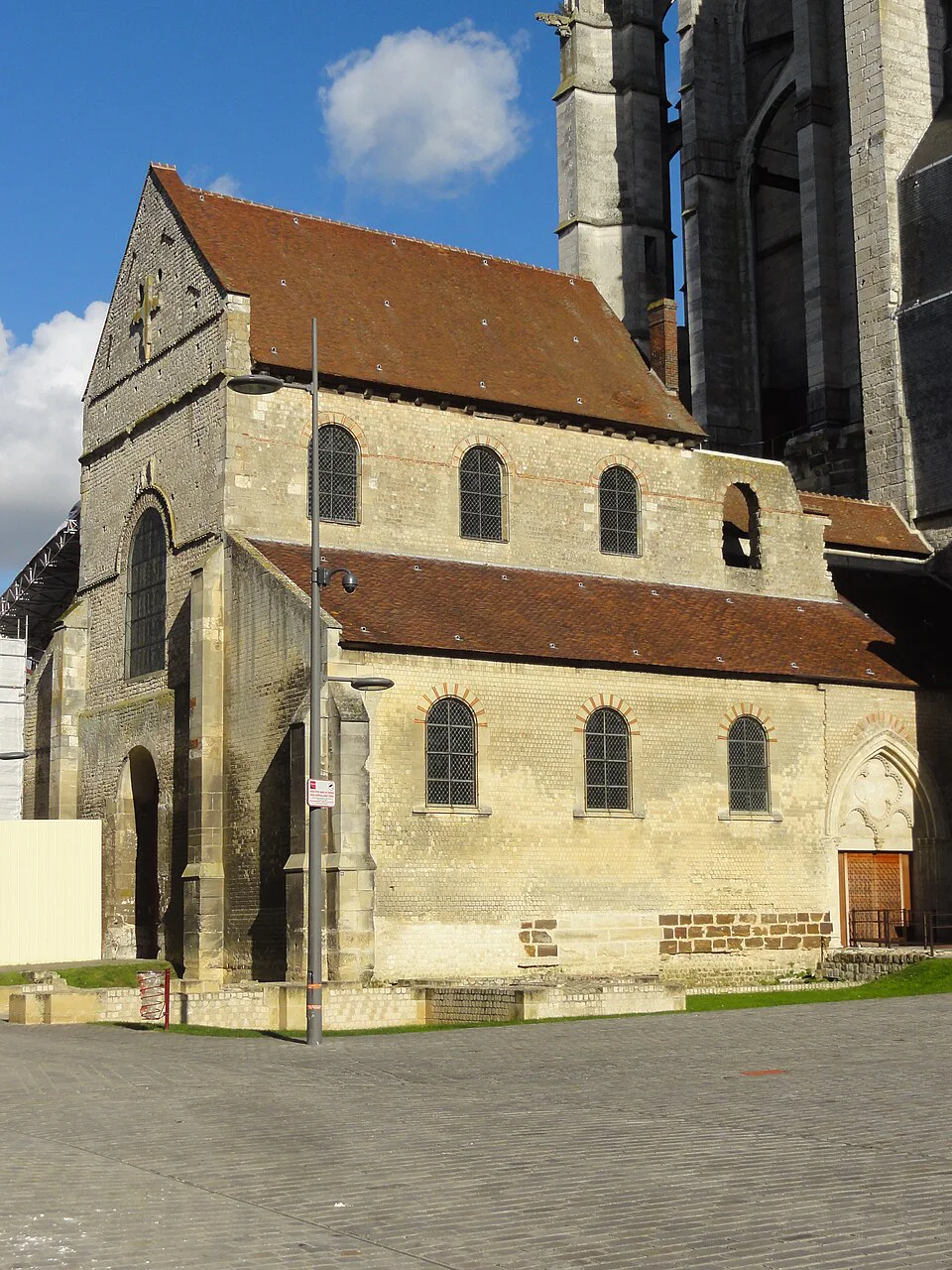 The Basse-Œuvre and the Unfinished Nave
The Basse-Œuvre: The Church Beneath the Cathedral
Welcome to the cathedral of Saint-Pierre de Beauvais, seat of the Bishop of Beauvais and one of the strangest buildings in France. Here is the puzzle in a single view: a low, plain church of the tenth century stands in front of towering Gothic stonework. That older church is called the Basse-Œuvre, the Lower Work. It is the last remnant of the Romanesque cathedral that stood here before the Gothic one. And it occupies exactly the ground where the new cathedral's nave was meant to rise. The Gothic project began in 1225, and the builders aimed higher than anyone in Europe. But the nave was never built. In 1600, after a short burst of funding, work stopped for good, once the first arch alone was in place. The old church was simply left where it stood.
Pierre Poschadel · CC BY-SA 3.0
02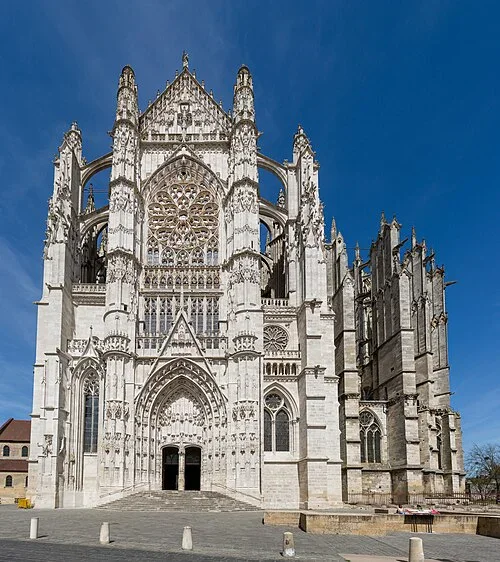 The South Portal and Flamboyant Facade
The South Facade: Ambition in Stone
The masons of Saint-Pierre set out to build the largest Gothic cathedral in France, ahead of Amiens and Notre-Dame de Paris. This south front shows the confidence of that plan. Its late Gothic style, known as Flamboyant, flares with carved pinnacles, openwork gables and traceried stonework. The choir finished in 1272 was then deliberately pushed higher still. Under Bishop Guillaume de Grez, an extra four metres and nine-tenths were added, to make it the highest-vaulted cathedral in Europe. The daring went further. The buttresses were made thinner than safety would suggest, so that more light could pour through the windows. That calculated risk is what gives this facade its airy grace, and it is also what made the whole structure fragile.
Photo: Diliff · CC BY-SA 3.0
03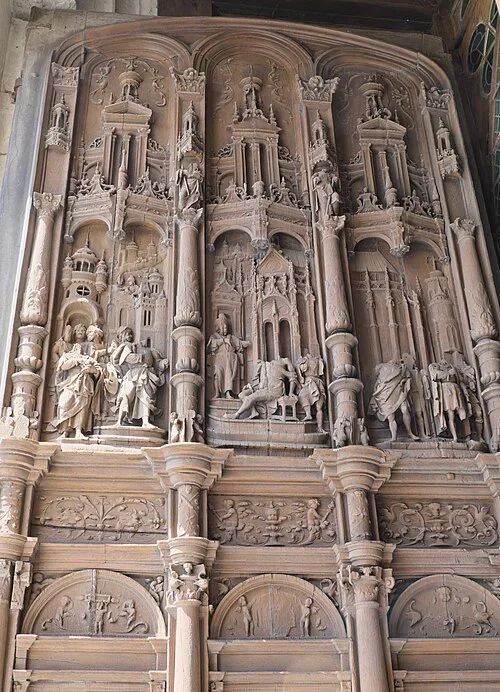 The South Portal and Flamboyant Facade
The Carved Doors of the South Portal
These wooden doors are the work of Jean Le Pot, a master craftsman of Beauvais, and they rank among the masterpieces of Renaissance carving in France. The panels tell two stories from the Acts of the Apostles. On the left leaf, Saint Peter heals a cripple at the gate of the Temple in Jerusalem. On the right, the conversion of Saint Paul on the road to Damascus. Higher up, a scene the Acts relate in detail: Paul, fleeing enemies in Damascus, is lowered from the city walls hidden in a basket by two friends. Then came the French Revolution. Sans-culottes decapitated the statues of the doorways and looted the cathedral's interior. The fleurs-de-lys carved on the inner face of these doors were slashed with blades. For a time the building served as a Temple of Reason, until the nineteenth century returned it to the church.
Listen in the appPhoto: GFreihalter · CC BY-SA 4.0
04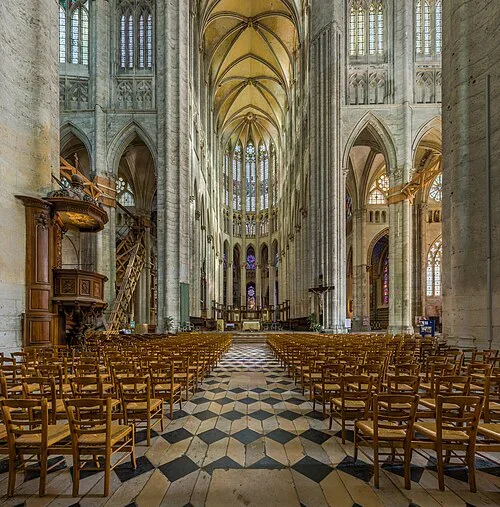 The Choir and the Record-Breaking Vault
Inside the Choir: The Bishop-Counts' Masterpiece
The man who started all this was Milon de Nanteuil, who was both Bishop of Beauvais and its count. In 1225, right after the third fire in the old Romanesque basilica, he chose to build a new cathedral a little further east. His own family paid for the work. The choir was finished in 1272, but in two separate campaigns. Between 1232 and 1238 the money ran out, because Milon's successors were locked in a struggle with King Louis the Ninth. The pause left its mark. The two halves of the choir sit on a slightly shifted axis, and the style changes between them, so a careful eye can still read the funding crisis in the stonework. Later, the architect and restorer Eugène Viollet-le-Duc gave the choir its most famous compliment. He called it the Parthenon of French Gothic.
Listen in the appPhoto: Diliff · CC BY-SA 3.0
05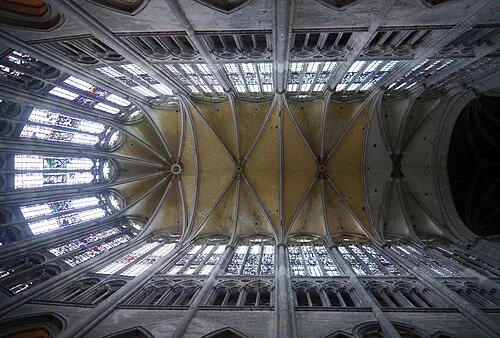 The Choir and the Record-Breaking Vault
Looking Up: The Highest Gothic Vault in the World
Forty-eight and a half metres from floor to the crown of the vault. Amiens, its great rival built at the same time, reached only about forty-two. But the record came at a price. In November 1284, barely twelve years after the choir was finished, a storm brought down part of the high vaults. Today the collapse is blamed on resonant vibrations: the wind set the daringly thin structure shaking at its own frequency, until the vaulting gave way. The builders rebuilt at the same dizzying height, but with more pillars to share the load. Where each bay had once been crossed by four ribs, it now carries six, and that alternating pattern is what fills the view above. The repairs dragged on until about 1347. Then the great plague came, followed by the Hundred Years' War, and the works stopped.
Listen in the appPhoto: Zairon · CC BY-SA 4.0
06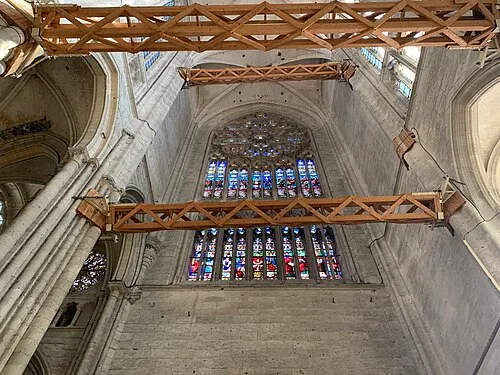 The Transept Crossing and Emergency Braces
The Braced Transept: The Price of Height
The great timber trusses stretched across this space are the visible price of height. From 1569, a tower of 153 metres rose over the crossing, and for four years Beauvais Cathedral was the tallest human construction in the world. It stood without the nave's western support, which was never built. On Ascension Day 1573, the tower and the crossing vaults collapsed, and that phase of work ended for good. The rescue effort has continued for centuries. Iron tie rods were strung between the flying buttresses, probably in the eighteenth century, though nobody knows exactly when. In the 1960s they were taken out, on the belief they were unnecessary. The wind's oscillations grew stronger, and the choir partly pulled away from the transept, so steel rods went back in. Since the 1990s, four large wood-and-steel trusses brace the north transept, and a heavy brace rises from the floor at forty-five degrees to hold the pillars beneath the record vault. A restoration begun in 2022, roof first and then the removal of the interior supports, is still under way.
Listen in the appPhoto: Chabe01 · CC BY-SA 4.0
07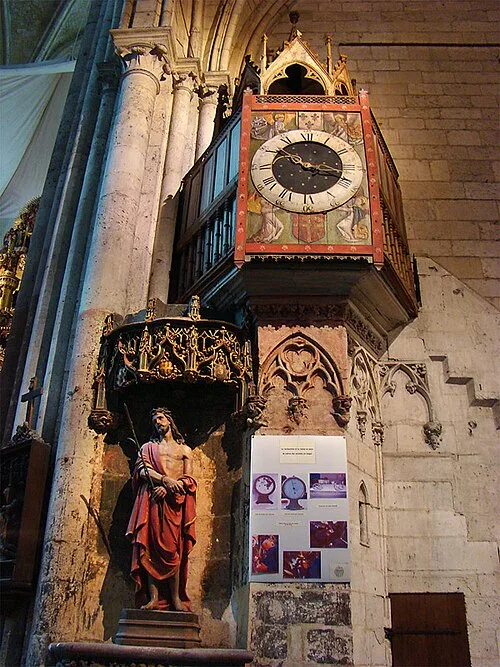 The 14th-Century Medieval Chiming Clock
The Medieval Clock of Beauvais
Against this pillar hangs a clock that was already old when the tower collapsed. It was finished in 1305 and paid for by a canon of the cathedral chapter, Etienne Musique, who died in 1323 or 1324. His name, Musique, suits the man who gave the church its voice of bells. The clock was repaired for the first time in 1387, and it has kept working ever since. It is said to be the oldest medieval chiming clock in Europe still in working order, and possibly the oldest fully preserved and functioning mechanical clock in Europe. It stands in the Chapel of Sainte-Thérèse, against the sacristy wall on the north side of the ambulatory, not far from its enormous nineteenth-century descendant.
Listen in the appPhoto: Tango7174 · CC BY-SA 4.0
08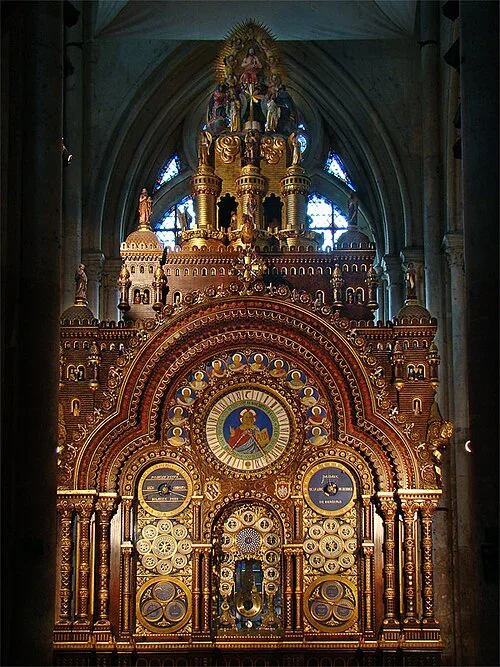 The Monumental Astronomical Clock
The Astronomical Clock and the Last Judgment
Auguste-Lucien Vérité spent three years building this marvel, from 1865 to 1868, and it was placed in the cathedral in 1876, in the Chapel of the Holy Sacrament in the north transept arm. The case follows plans drawn by Father Piérart, in a romano-byzantine style, and it rises twelve metres high. Inside and out, it holds around ninety thousand parts of steel and brass, driven by one main motor and fourteen secondary ones. Fifty-three enamel dials track the hours, the tides, the planets and more, fifty-two of them on the facade alone. And at the top, as the crowning scene shows, sixty-eight automata come to life for the Last Judgment. A sound-and-light show lasting twenty-five minutes, spoken in five languages, explains how the whole machine works.
Listen in the appPhoto: Tango7174 · CC BY-SA 4.0
09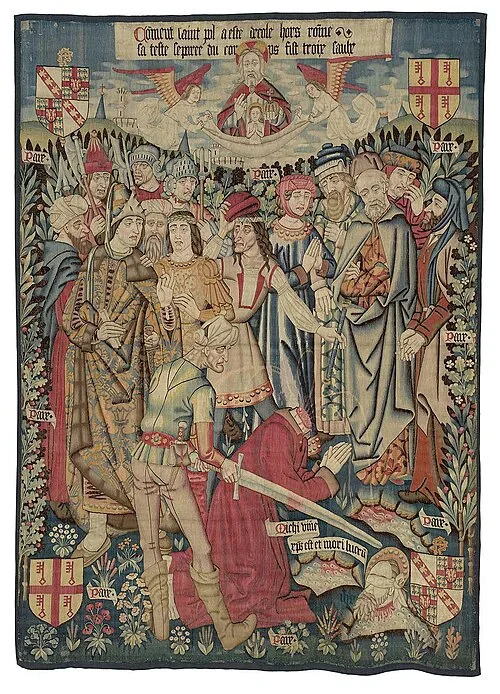 The Ambulatory, Tapestries, and Chapels
Tapestry: The Life of Saint Peter
Wool, silk and threads wrapped in metal, woven scene by scene: this is one of the choir tapestries of the Life of Saint Peter. The full set had eleven pieces, and six survive. In 1461 the Bishop of Beauvais, Guillaume de Hellande, gave them to the cathedral. His coat of arms is woven into the border, a donor's signature in thread. The figures speak through banderoles, the little inscribed banners unfurling above their heads. This particular hanging shows the martyrdom of Saint Paul, which has struck writers as odd for a series named for Saint Peter's life, and no one has fully settled why. The weaving belongs to a city with a long artistic memory. From 1491, the Leprince family of Beauvais, one of the great dynasties of French stained glass, was at work on the cathedral's own windows.
Listen in the appPhoto: PKM · Public domain
10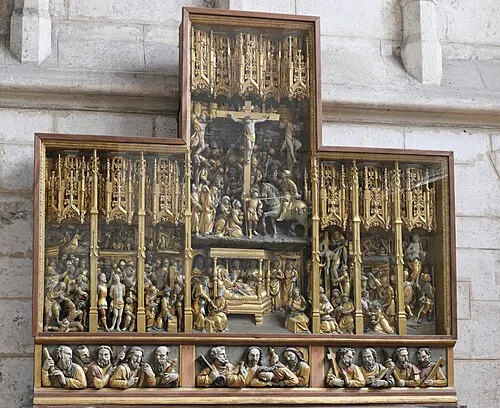 The Ambulatory, Tapestries, and Chapels
The Golden Passion Retable
Crowded around the Crucifixion, dozens of small gilded figures pack every panel of this retable, telling the Passion of Christ in carved and painted scenes. It was made between 1571 and 1573 by Nicolas Nitart, a painter of Beauvais, working with the sculptor Nicolas Le Prince. It did not begin its life here. It comes from the church of Notre-Dame de Marissel, and painted shutters that once folded over it have since vanished. In 1862 it still hung at Marissel. It was restored in 1964, and since 1966 it has been kept on deposit in the cathedral, among the remarkable sculptures that survived the building's troubled centuries.
Listen in the appPhoto: GFreihalter · CC BY-SA 4.0
- 11
The Cloister: Where the Tour Ends
The quiet court of the chapter house, where the story of Beauvais comes to rest.
Cathédrale Saint-Pierre de Beauvais
Frequently asked questions
How much does the guide cost?
Free app download. Listed guide price: $0.99. Guide price shown in the app. Audio guide only. Venue admission is separate.
Can I listen without internet?
Yes. Download the guide’s audio, images, and maps in the app before your visit. Your downloaded content is then available offline.
Can I listen in my language?
This audio guide is available in 15 languages, including English.
Do I need to follow a schedule?
No. This is a self-guided experience. Choose your stops, pause whenever you like, and return to a story at your own pace.
At your own pace
Explore Cathédrale Saint-Pierre de Beauvais.
Download Stanza, then search for “Cathédrale Saint-Pierre de Beauvais”.
Free app download · Guide price shown in the app
Keep exploring
Nearby audio guides
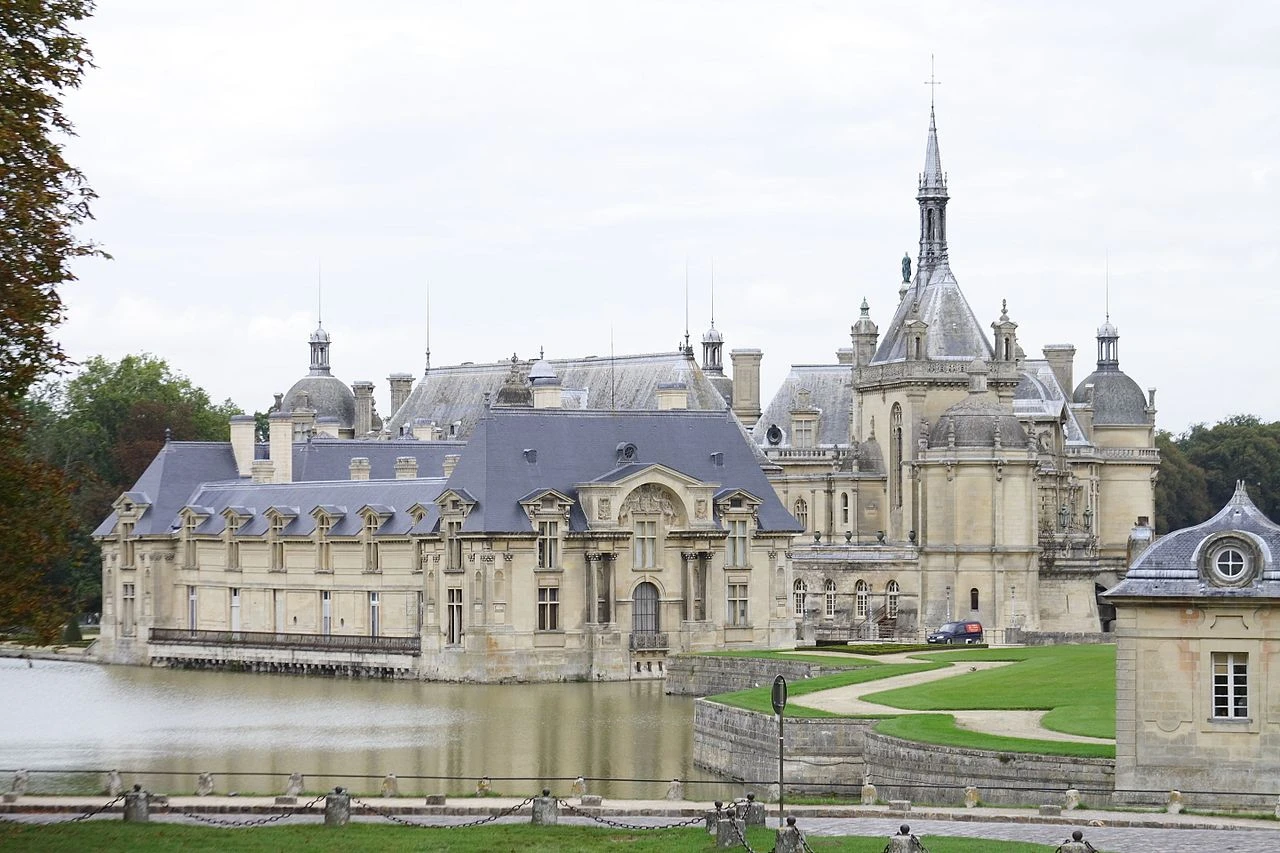
Chantilly · 40 km
Château de Chantilly
Content & sources
Photo: Ignis · CC BY-SA 3.0
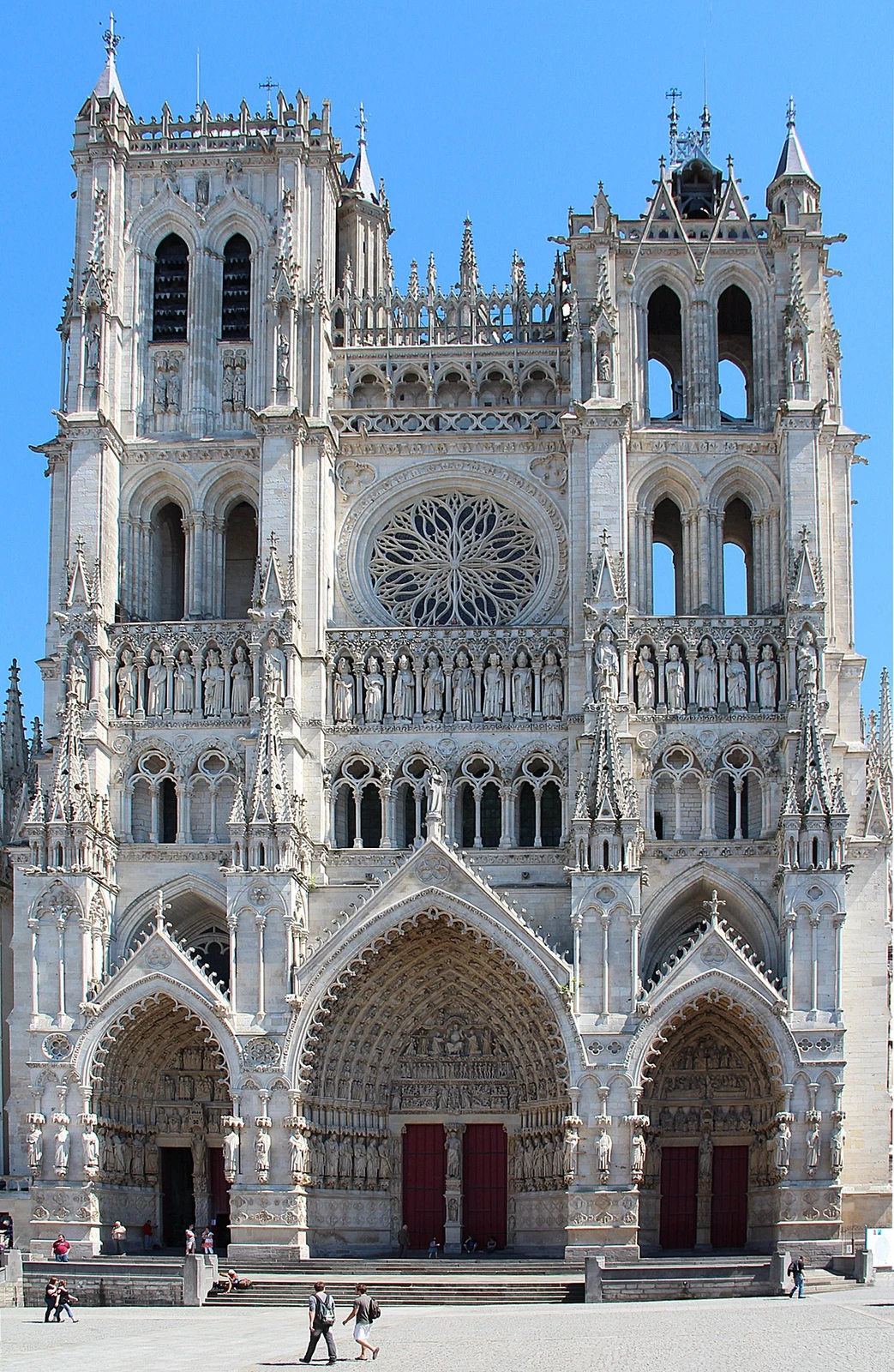
Amiens · 54 km
Amiens Cathedral
Content & sources
Photo: Jean-Pol GRANDMONT · CC BY 3.0
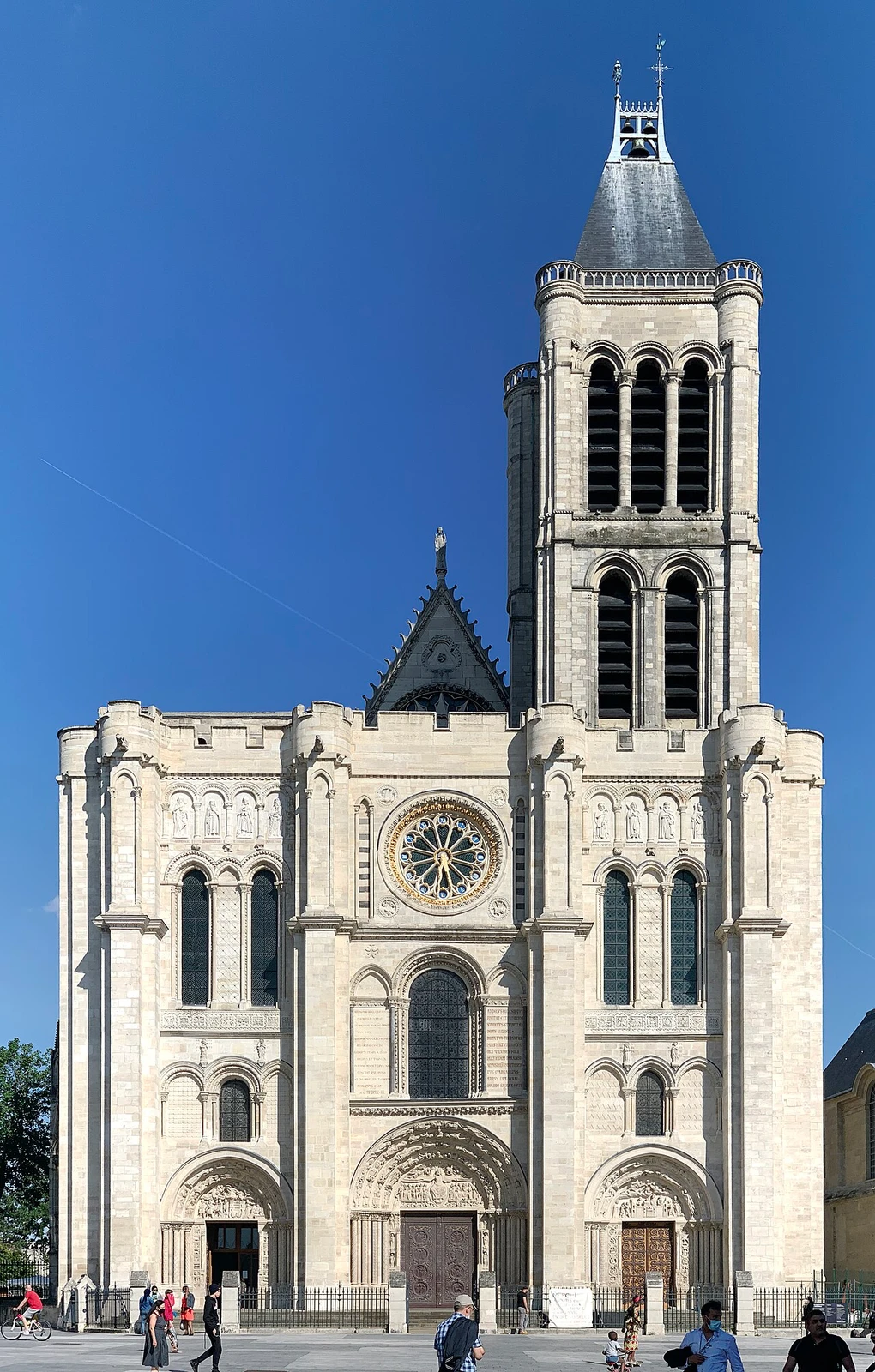
Saint-Denis · 59 km
Basilica of Saint-Denis
Content & sources
Photo: Chabe01 · CC BY-SA 4.0
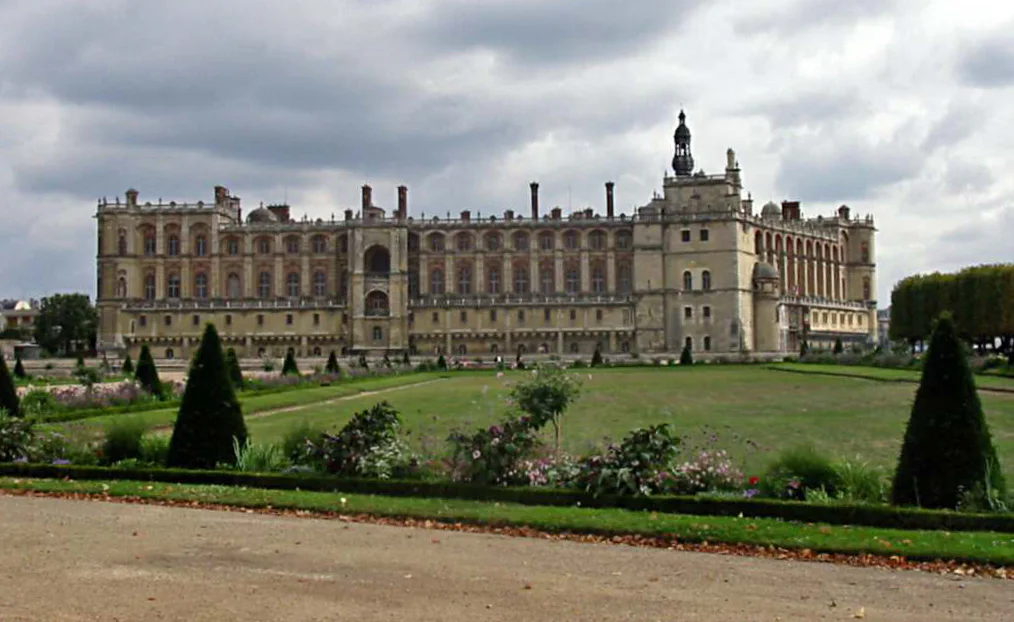
Saint-Germain-en-Laye · 59 km
Château de Saint-Germain-en-Laye
Content & sources
Photo: Sir Gawain · CC BY-SA 3.0