Stanza · Audio guide
Château de ChantillyAudio guide
A place to remember. A story to take with you.
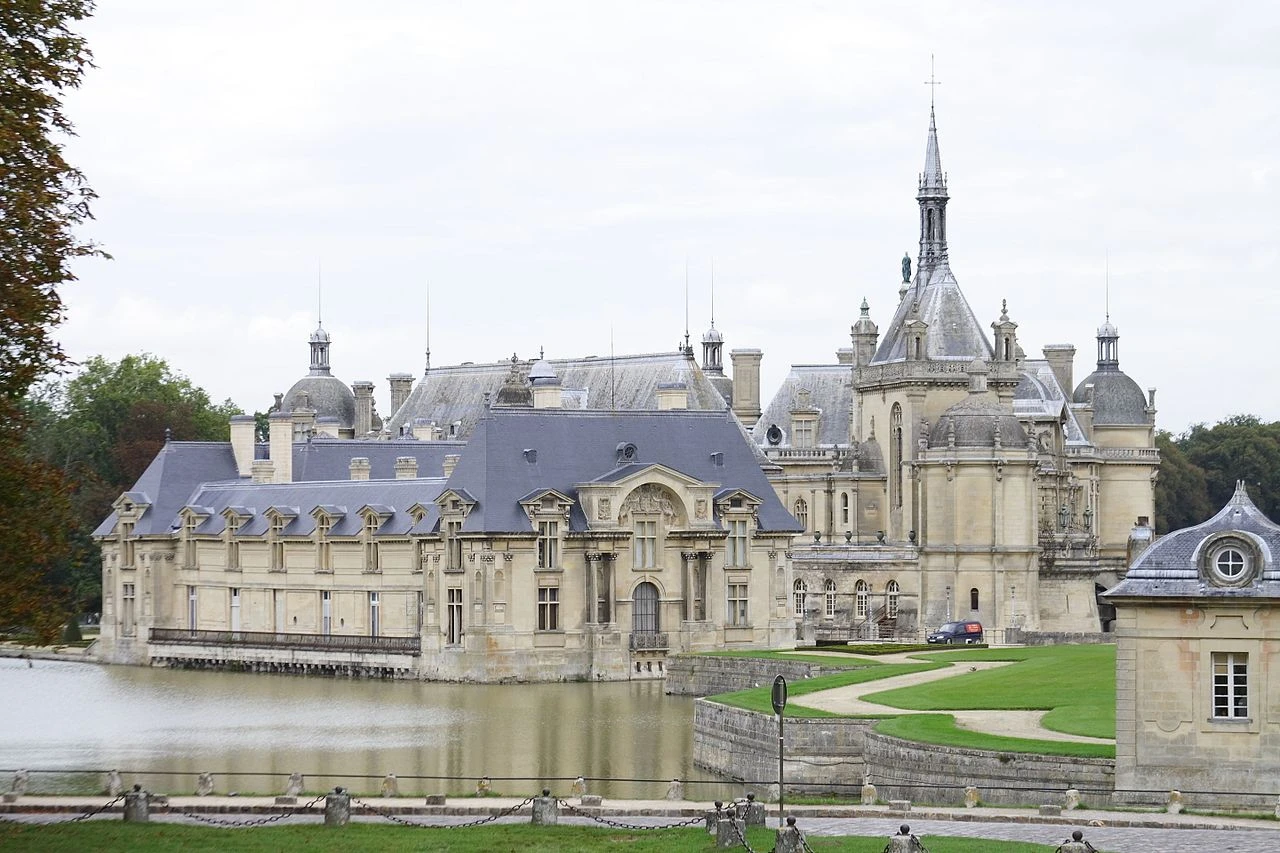
An opulent historic château located in Chantilly, featuring a significant art collection, the Musée Condé, and expansive formal gardens. It is also home to the Great Stables and the Living Museum of the Horse.
Download Stanza, then search for “Château de Chantilly”.
About the tour
One guide. Your kind of visit.
An opulent historic château located in Chantilly, featuring a significant art collection, the Musée Condé, and expansive formal gardens. It is also home to the Great Stables and the Living Museum of the Horse.
Ready when you are.
- 01Get the free Stanza app.
iOS & Android
- 02Find your guide.
“Château de Chantilly”
- 03Download before you go.
Works offline
Audio guide / 17 narrated stops
Inside the guide
Get to know a few of the stories before you go. Open a stop to read more.
01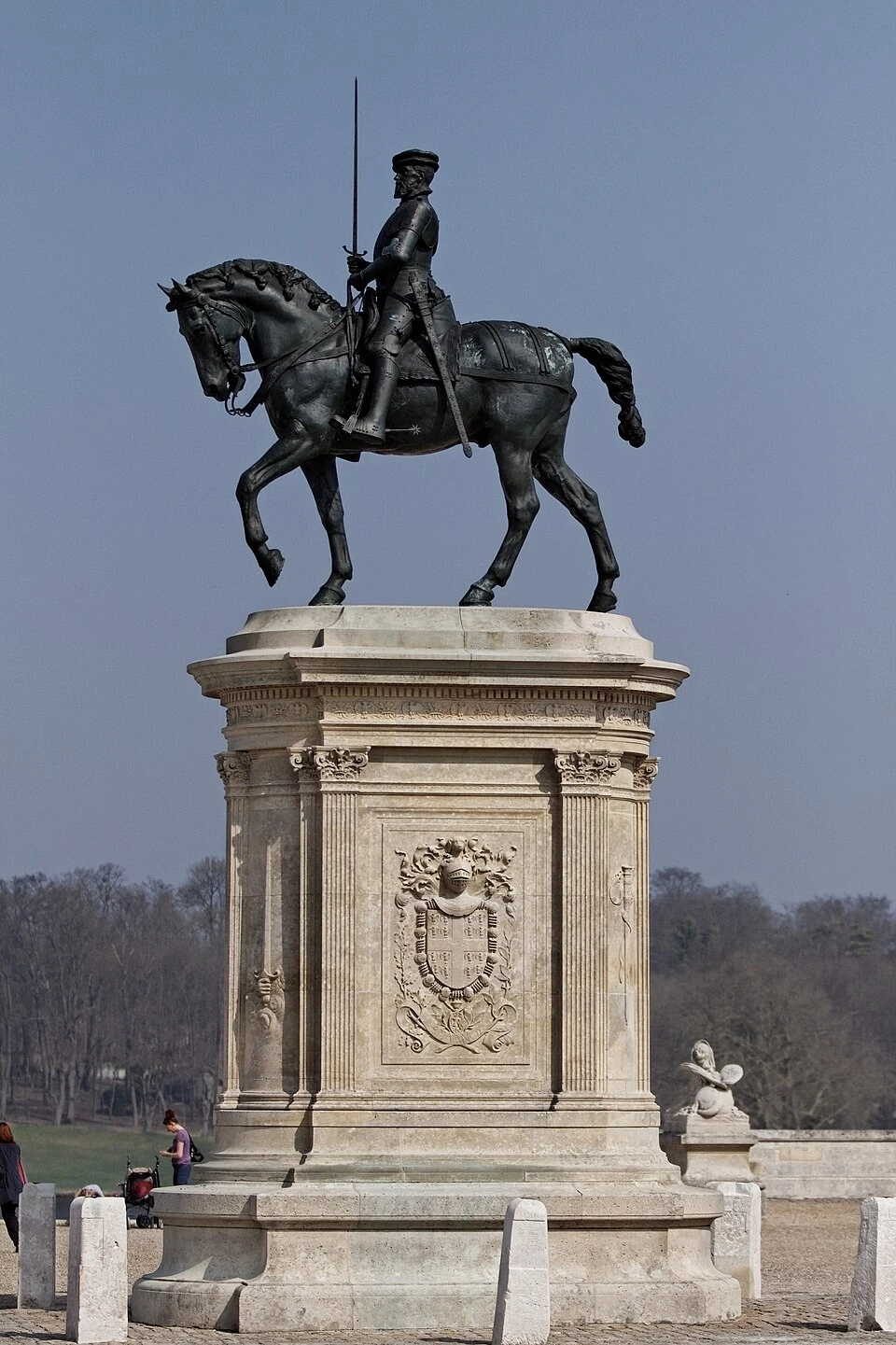 The Main Esplanade and Equestrian StatueStatue of Anne de Montmorency
High on the terrace, this monumental statue commemorates Anne de Montmorency, one of the most powerful military and political figures in French history. Serving as the Grand Connétable of France under five successive kings, he was responsible for transforming the medieval fortress of Chantilly into a splendid Renaissance palace. The sculpture depicts him in full armor, riding confidently while holding his baton of command, a symbol of his supreme military authority. During the upheaval of the French Revolution, the original monument was melted down for ammunition. The replacement you see today was created by the French sculptor Paul Dubois and erected in 1886. The stone pedestal features classical architectural mouldings and a carved coat of arms beneath the horse's raised hoof.
Photo: Thesupermat · CC BY-SA 3.0
02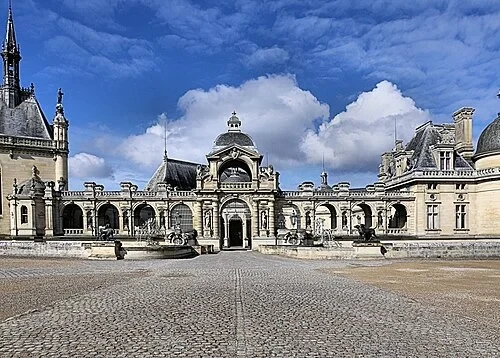 The Main Esplanade and Equestrian StatueThe Grand Entry Gate
Crossing the stone bridge over the ancient moat brings you directly to the grand entry gate. This monumental portal tells a story of survival and dramatic resurrection. While the original medieval fortress dates back to 1386, most of that structure was razed during the French Revolution, leaving only the smaller wing, known as the Petit Château, intact. The imposing facade standing before you today is the result of a massive nineteenth-century rebuilding project. Between 1876 and 1882, architect Honoré Daumet designed this historicist reconstruction, which was funded entirely by the incredibly wealthy Henri d'Orléans, the Duke of Aumale. Look up to appreciate the soaring central spires and the highly decorative grand dome rising above the main entrance portal, which mimic the opulent French Renaissance style. The entrance marks the transition from the external moat to the grand courtyard.
Photo: Montval · CC BY-SA 4.0
03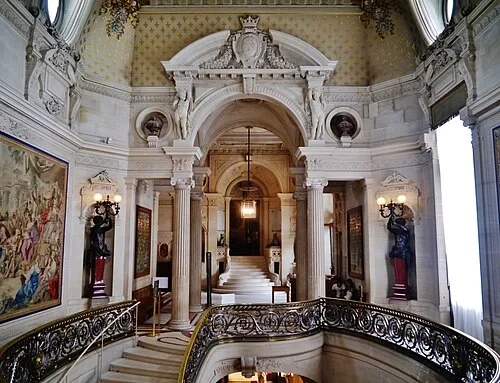 The Vestibule of Honor and Grand StaircaseThe Vestibule of Honor
Neoclassical architectural elegance fills this grand hall, defined by soaring stone arches, robust columns, and an intricate patterned floor. Today a place of quiet dignity, these very halls echoed with absolute panic in April of 1671. During a lavish three-day banquet hosted by the Prince of Condé for King Louis XIV, the master of ceremonies, François Vatel, was under immense pressure to deliver a flawless experience. When the crucial morning fish delivery failed to arrive on time, Vatel succumbed to sheer panic and despair over the potential disgrace. Believing his professional reputation was permanently ruined, he took his own life. The fish delivery arrived shortly after his death, and the banquet continued under a different master of ceremonies. The neoclassical columns and grand arches of this hall stand as silent witnesses to this dramatic chapter of the estate's history.
Listen in the appPhoto: Zairon · CC BY-SA 4.0
04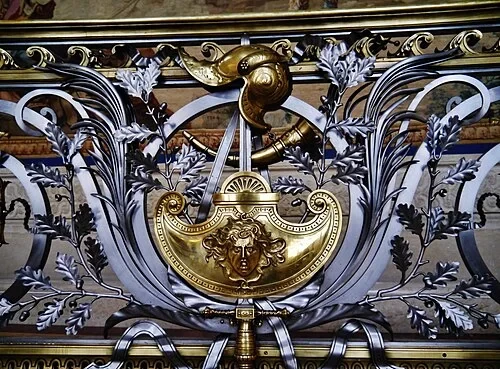 The Vestibule of Honor and Grand StaircaseThe Grand Staircase Railing
Swirling metalwork forms the magnificent balustrade of the main staircase, showcasing exceptional craftsmanship and detail. Architect Honoré Daumet designed this grand staircase during the nineteenth-century reconstruction of the castle, drawing direct inspiration from the historic metalwork found at the Palace of Versailles. Looking closely at the individual panels, you can spot a series of intricate classical motifs, including defensive helmets, decorative shields, stylized oak leaves, and the striking face of Medusa positioned at the very center of the design. The dark, polished ironwork stands out in sharp relief against the pale, smooth stone of the steps and the surrounding walls. This powerful contrast emphasizes the dramatic curves and classical imagery of the railing, winding its way upward toward the private state apartments.
Listen in the appPhoto: Zairon · CC BY-SA 4.0
05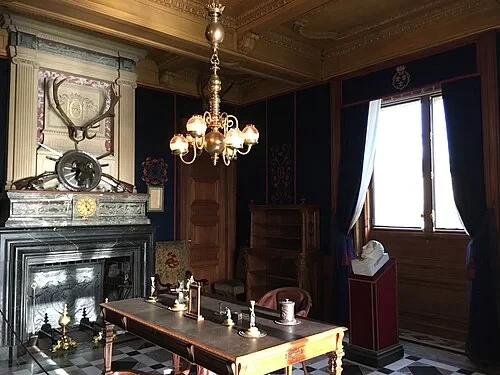 The Petit Château and Private ApartmentsThe Marble Chamber
Designed by the renowned architect Jean Bullant in 1551, this chamber is located within the Petit Château, the oldest surviving wing of the entire estate. The space served as a private office where the Duke of Aumale conducted intimate political meetings and pursued his scholarly research. A large fireplace dominates one wall, decorated with deer antlers and hunting swords that reflect the long-standing association between the estate and the surrounding forest. Dark wood paneling and deep blue window drapes frame the room, while a distinctive black-and-white chess-patterned tiled floor runs underfoot. A gilded chandelier hangs from the painted ceiling, illuminating the writing desk and bookshelves. This private space hosted the duke’s political meetings and scholarly work, providing a quiet sanctuary away from the main public galleries.
Listen in the appPhoto: Mel22 · CC BY-SA 4.0
06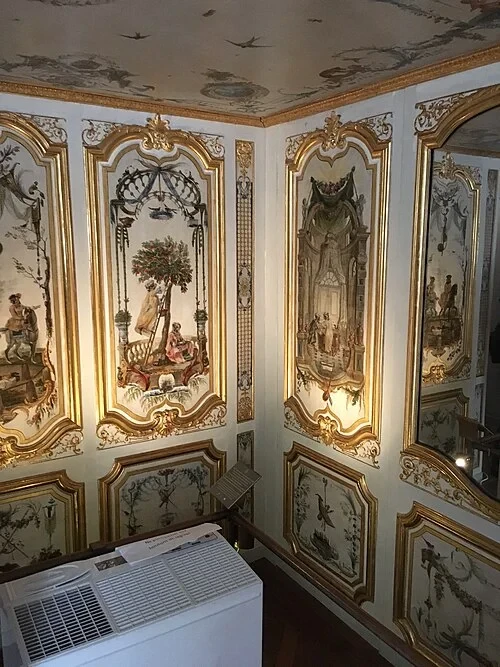 The Petit Château and Private ApartmentsThe Small Monkey Room
Gilded framing surrounds a series of painted panels where monkeys dressed in powdered wigs, elegant silk coats, and dresses mimic the behavior of human nobility. This playful decor represents the eighteenth-century artistic trend of Singeries, or monkey rooms, which became a sensation among wealthy European aristocrats. The style emerged from the broader fashion for Chinoiserie, which integrated exotic, imaginative, and often humorous motifs into private residences. Among the various whimsical scenes painted on the walls, you can spot a small monkey dressed as a gardener, carefully holding a watering can near a painted tree. These detailed illustrations served both as playful entertainment and as a gentle, lighthearted parody of contemporary high society, turning an intimate private salon into a theatrical experience for visiting guests.
Listen in the appPhoto: Mel22 · CC BY-SA 4.0
07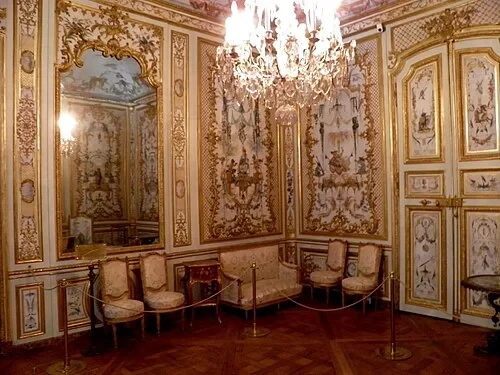 The Grande SingerieThe Grand Monkey Room
Completed in 1737 by the artist Christophe Huet, this larger salon is known as the Grande Singerie, or the Grand Monkey Room. The extensive wall paintings functioned as a clever, satirical mirror reflecting the behavior of French high society. Rather than displaying grand historical battles, the panels depict monkeys engaged in typical aristocratic activities such as hunting, flirting, dancing, and even practicing alchemy. This lighthearted imagery offered a subtle, humorous critique of the ridiculous excesses of the contemporary nobility. Tall mirrors are placed opposite the windows, reflecting natural light and bouncing it across the extensive gilded carvings and painted panels. The combination of rich gold leaf, detailed brushwork, and bright mirrors creates a lively, sparkling atmosphere that illuminated evening gatherings inside this grand reception space.
Listen in the appPhoto: Mel22 · CC BY-SA 3.0
08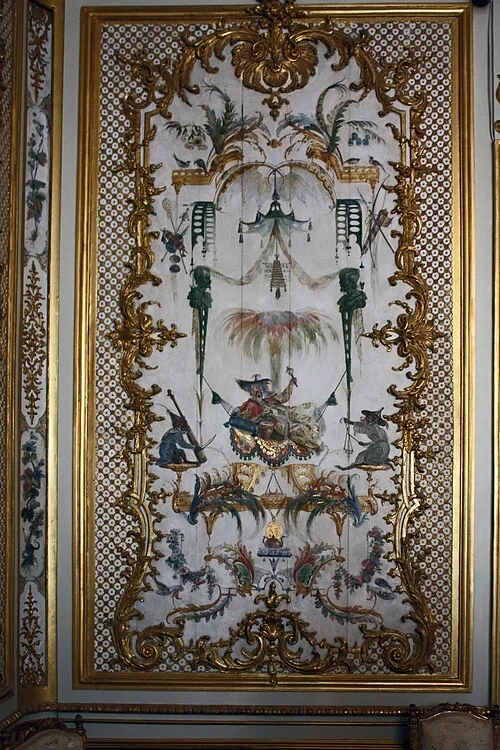 The Grande SingerieAllegory of Music Panel
Hanging in a decorative hammock at the center of this detailed wall panel, a monkey musician enthusiastically plays a drum. This playful scene represents the Allegory of Music, part of the extensive singerie decorations within the castle's private apartments. The central monkey is dressed in exotic, Turkish-style clothing, while smaller monkey attendants assist by holding sheet music and balancing a scale nearby. The delicate pastel background of the panel makes the whimsical, gravity-defying scrolls and floral garlands that frame the scene stand out clearly. Every detail, from the monkey's expressive face to the ornate tassels hanging from the hammock, showcases the lighthearted humor and decorative sophistication that defined the Rococo style during the early eighteenth century. This panel captures the aristocratic desire for playful, imaginative escapism within the comfort of their homes.
Listen in the appDaniel Villafruela. · CC BY-SA 3.0
09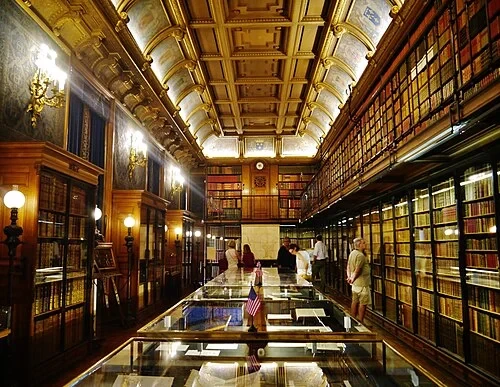 The Cabinet des LivresThe Library Gallery
Two soaring tiers of solid oak bookshelves rise from floor to ceiling, lining this spectacular late nineteenth-century Reading Room. Designed to house the Duke of Aumale’s legendary collection of books, this space is a haven for bibliophiles and scholars alike. The Duke was an avid collector of written history, and his legacy here includes over fifteen hundred precious medieval manuscripts. In the lower glass display cases, you can see rare printed books dating back to the very invention of the printing press, including several incredibly scarce early editions. A narrow wrought-iron balcony runs along the upper level, allowing access to the highest shelves under a decorated, vaulted ceiling. The lower cases display rare printed books dating back to the invention of the printing press, underneath a narrow wrought-iron balcony running along the upper level.
Listen in the appPhoto: Zairon · CC BY-SA 4.0
10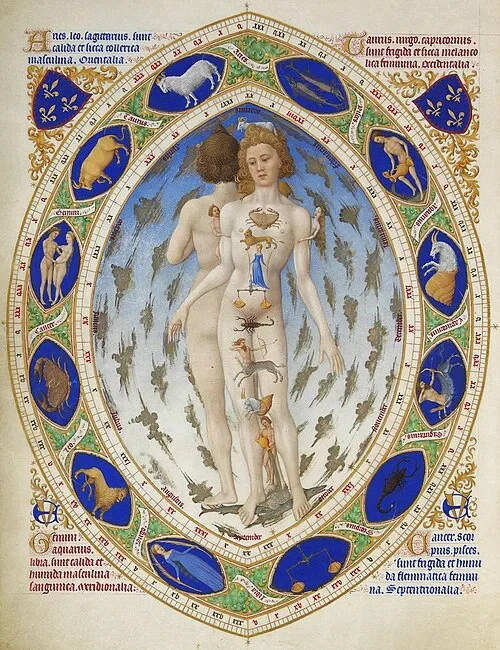 The Cabinet des LivresThe Anatomical Man
Created between 1411 and 1416, this famous illustration known as the Anatomical Man belongs to the 'Très Riches Heures du Duc de Berry', widely considered one of the finest surviving examples of a medieval manuscript. The drawing depicts a central human figure overlaid with various creatures representing the signs of the zodiac. This layout visualizes the medieval scientific and medical belief in a direct correlation between astronomical signs and the parts of the human body they were thought to govern, such as Aries ruling the head and Pisces ruling the feet. The surrounding oval border contains highly detailed text and charts that outline the astronomical coordinates and calendar dates for each zodiac sign. The delicate paint, vibrant blues, and meticulous handwriting illustrate the advanced artistic talent and complex cosmological theories of the fifteenth century.
Listen in the appLimbourg brothers · Public domain
Château de Chantilly
Frequently asked questions
How much does the guide cost?
Free app download. Listed guide price: $3.99. Guide price shown in the app. Audio guide only. Venue admission is separate.
Can I listen without internet?
Yes. Download the guide’s audio, images, and maps in the app before your visit. Your downloaded content is then available offline.
Can I listen in my language?
Stanza supports 15 languages. Check the app for the languages available for this guide.
Do I need to follow a schedule?
No. This is a self-guided experience. Choose your stops, pause whenever you like, and return to a story at your own pace.
At your own pace
Explore Château de Chantilly.
Download Stanza, then search for “Château de Chantilly”.
Free app download · Guide price shown in the app
Keep exploring
Nearby audio guides
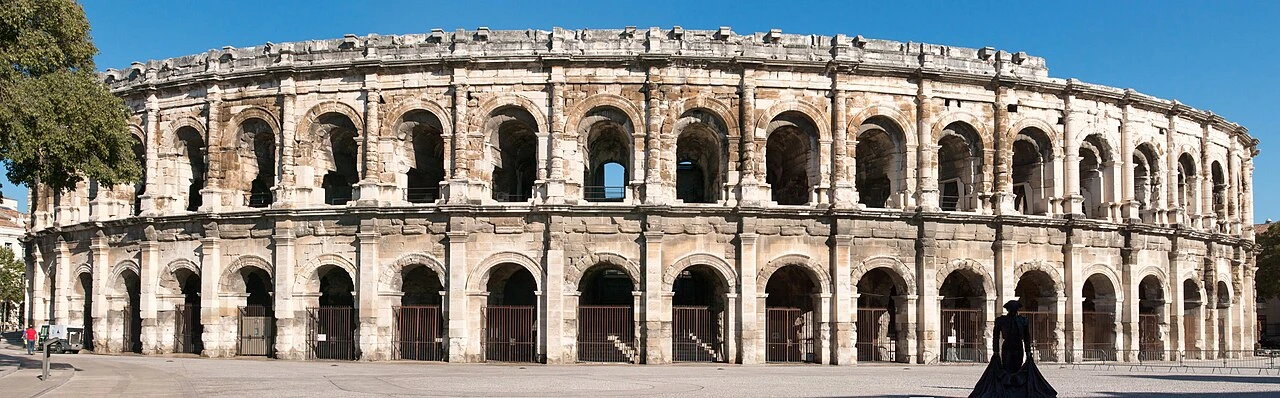
Nîmes
Amphitheater of Nîmes
Content & sources
Daniel VILLAFRUELA. · CC BY-SA 3.0
Paris
Arc de Triomphe de l'Étoile
Content & sources
Jiuguang Wang · CC BY-SA 2.0
Paris
Basilique du Sacré-Cœur de Montmartre
Content & sources
Tonchino · CC BY-SA 3.0
Saint-Denis
Basilique royale de Saint-Denis
Content & sources
Photo: Chabe01 · CC BY-SA 4.0