Stanza · Audio guide
Château de Saint-Germain-en-Laye Audio Guide
A place to remember. A story to take with you.
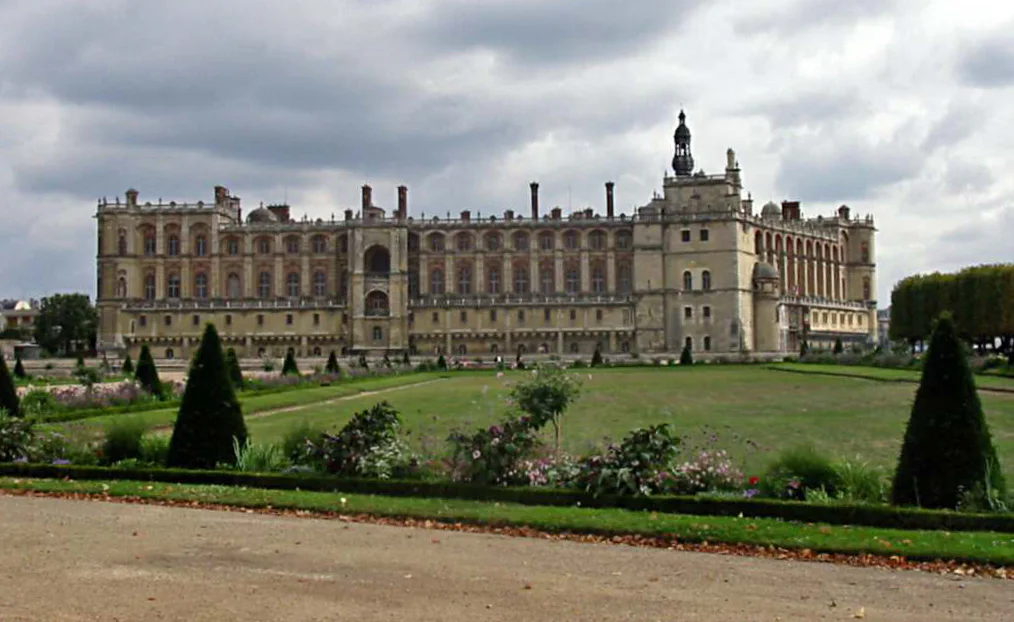
The Château de Saint-Germain-en-Laye is a former royal palace located in the commune of Saint-Germain-en-Laye. Today, the building houses the Musée d'Archéologie nationale.
Download Stanza, then search for “Château de Saint-Germain-en-Laye”.
About the tour
One guide. Your kind of visit.
The Château de Saint-Germain-en-Laye is a former royal palace located in the commune of Saint-Germain-en-Laye. Today, the building houses the Musée d'Archéologie nationale.
Ready when you are.
- 01Get the free Stanza app.
iOS & Android
- 02Find your guide.
“Château de Saint-Germain-en-Laye”
- 03Download before you go.
Works offline
Audio guide / 14 narrated stops
Inside the guide
Get to know a few of the stories before you go. Open a stop to read more.
01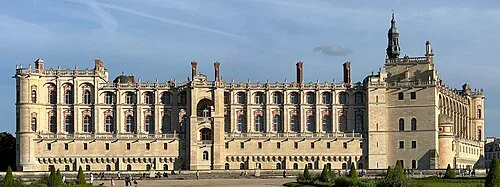 Castle Moat and Main Gateway
Château Vieux: The Exterior Facade
A royal palace has stood on this ridge west of Paris for nine centuries. The Château de Saint-Germain-en-Laye lies about nineteen kilometres from the capital, and before Versailles drew the court away, this was where the kings of France loved best to stay. Louis VI built the first castle here in 1124. Francis I made the place his favourite residence, and married Claude of France in its chapel in 1514. Across the dry moat, the long facade of brick and stone is the Renaissance palace his reign created. It also owns one famous story. On the tenth of July 1547, a political rivalry was settled by a legal duel on this esplanade. Guy Chabot, baron de Jarnac, faced François de Vivonne, lord de la Chasteigneraie. Against all odds, Jarnac won, with a swift blow behind the knee. Vivonne died the next day. The strike passed into the language: a coup de Jarnac is still a cunning, unexpected blow.
Photo: Chabe01 · CC BY-SA 4.0
02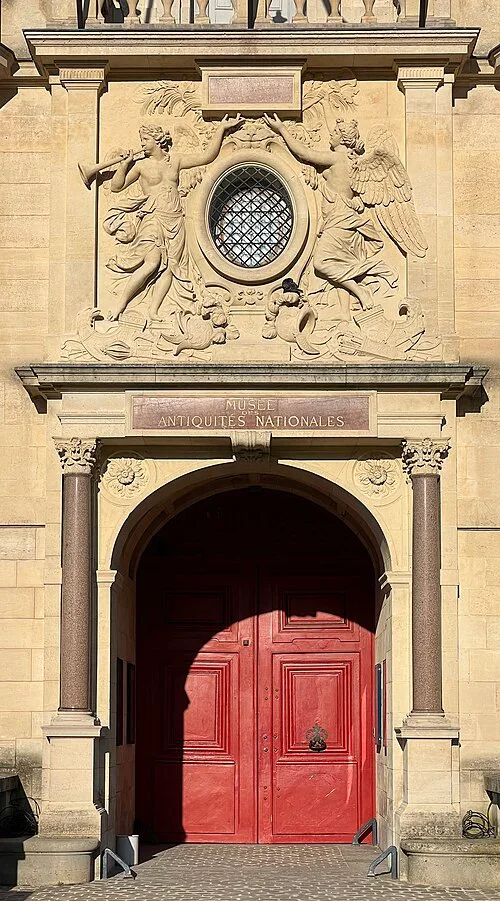 Castle Moat and Main Gateway
Entrance Portal, Musée des Antiquités Nationales
Carved over the tall red doors runs the museum's name: Musée des Antiquités Nationales. Above it, two sculpted figures reach out toward an oval window at the crown of the Renaissance portal. This was a royal residence for centuries; then the army moved in, and Napoleon I made the château a training school for his cavalry officers. In 1862 an imperial decree created a museum here, dedicated at first to Celtic and Gallo-Roman antiquities. The same year, the building was listed as a historic monument. Napoleon III entrusted the restoration to Eugène Millet, a pupil of Viollet-le-Duc, who set about returning the palace to its Renaissance state. On the eighteenth of May 1867, the emperor opened the first rooms in person. The museum has since taken a new name, the National Museum of Archaeology, but the lettering over the door keeps the older title.
Photo: Chabe01 · CC BY-SA 4.0
03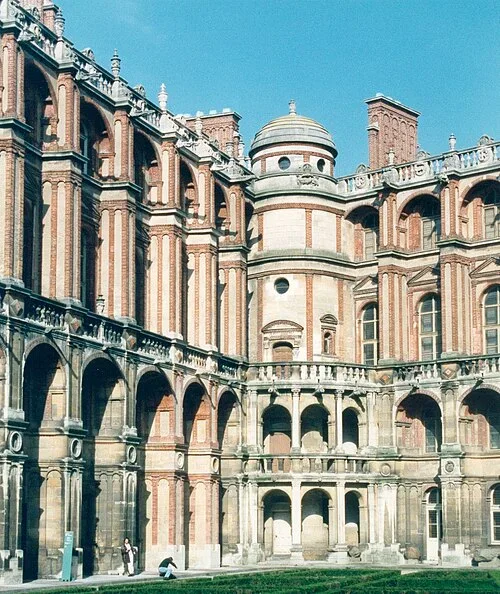 Central Renaissance Courtyard
The Renaissance Courtyard
Four sides of brick and stone enclose an irregular courtyard, and both the walls and their shape tell of destruction and rebirth. In August 1346, during the Hundred Years' War, the castle was taken, pillaged and burned. The raiders came with Edward the Black Prince, son of the English king, who was then holding nearby Poissy. Only Saint Louis's chapel and one stone dwelling tower survived the flames. Charles V rebuilt on the old foundations a generation later. The great transformation came in 1539, when Francis I commissioned the architect Pierre Chambiges to rebuild the château in the Renaissance style. Chambiges kept the footprint of the medieval fortress, which is why the courtyard runs trapezoidal rather than square. The brick-and-stone facades on all four sides are his work, and so is the staircase tower rising in one corner. Restored in the nineteenth century, they are the walls that stand today.
Listen in the appPatrick Giraud, original uploader was Calips at fr.wikipedia · CC BY-SA 1.0
04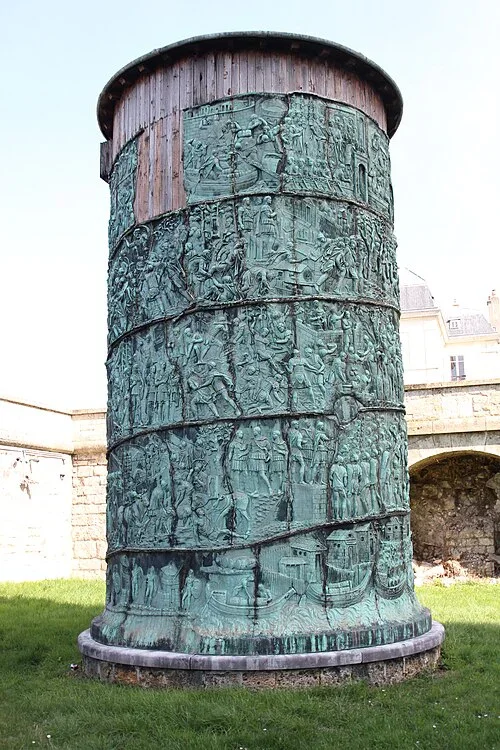 Central Renaissance Courtyard
The Electrotype Cast of Trajan's Column
Standing in the outer court is a full-height reproduction of Trajan's Column, the great pillar that still rises over ancient Rome. Its long spiral of carved scenes, telling the story of the emperor's wars, has been copied relief by relief in copper. The technique is electrotyping: electricity deposits copper, layer by layer, onto a mould taken from the original. In the nineteenth century, museums across Europe used it to bring distant monuments within reach. Thanks to casts like this one, the new national museum could study the whole pageant of Roman relief carving without leaving France. The green patina on the copper has deepened with age, as it does on the bronzes inside.
Listen in the appPhoto: Lionel Allorge · CC BY-SA 3.0
05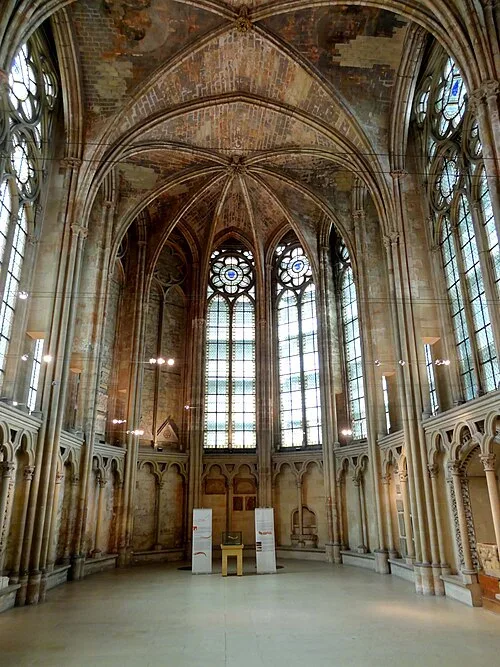 Chapelle Saint-Louis (Sainte-Chapelle)
Sainte-Chapelle: View to the East
A charter of 1238 gives the first mention of a chapel at the royal castle, and this is it. Louis IX, the king the French call Saint Louis, had just built it and instituted a regular religious service inside. He gave the commission to his favourite architect, Pierre de Montreuil. The interior shows the formula the two of them invented: a single nave ending in an angled chevet, with tall glass windows cutting through almost the whole of the walls. Deep buttresses stand outside to take the strain, so the inside is open, with no internal supports at all. The vaults rest on slender columns set between the bays. Metal was built into the stonework to hold it together, a technique the age called pierre armée, armed stone. A few years later, Montreuil adapted the same formula for the great Sainte-Chapelle in Paris, built between 1240 and 1248. This chapel came first.
Listen in the appPierre Poschadel · CC BY-SA 4.0
06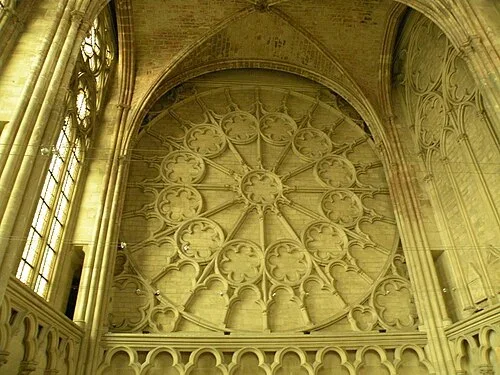 Chapelle Saint-Louis (Sainte-Chapelle)
The West Rose Window
The great stone rose on the west wall spreads its wheel of tracery across the end of the chapel. The Gothic style it belongs to was called rayonnant, radiant, after roses like this one whose stone spokes radiate from the centre. Light was the whole point: the name speaks of rays of stained glass letting the light of God pass to the clergy, and then to the faithful. The chapel was built as a sainte-chapelle, a holy chapel, raised to house a relic of the Crown of Thorns or of the True Cross. Here, in 1238, Baldwin II, the emperor of Constantinople, presented the Crown of Thorns to Saint Louis. The relic was always destined for the grander chapel soon to rise in Paris, which was consecrated only in April 1248.
Listen in the appPhoto: Chatsam · CC BY-SA 3.0
07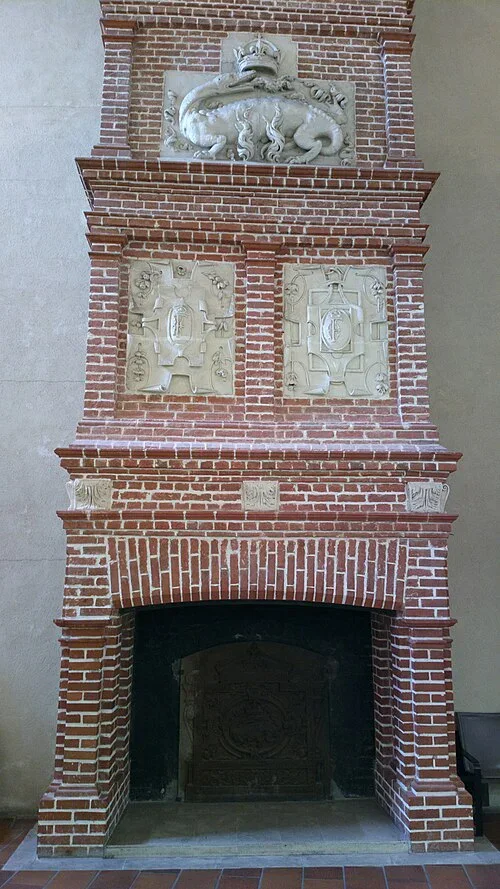 Renaissance Ballroom and State Rooms
The Salle de Bal Fireplace
This monumental fireplace of brick and stone carries a carved salamander above the mantel, the emblem of Francis I, the king who rebuilt this château. It warms the Salle de Bal, the ballroom in the west wing, left unfinished when Francis I died. His son Henri II inaugurated the hall on the nineteenth of May 1549, with a grand banquet celebrating the baptism of his own son. At more than five hundred square metres, it was reckoned the largest hall in the kingdom. A century later, Louis XIV gave it a second career. He turned the ballroom into the Salle des Comédies and equipped it with formidable stage machinery. More than a hundred and forty performances of every kind were staged here, and it was on this floor that Lully's music and Molière's comedies had their hours of glory.
Listen in the appPhoto: Sigoise · CC BY-SA 3.0
08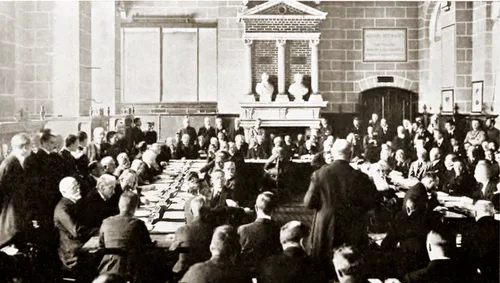 Renaissance Ballroom and State Rooms
The Treaty of Saint-Germain-en-Laye, 1919
On the tenth of September 1919, the Treaty of Saint-Germain-en-Laye was signed at the château. It formally ended hostilities between the Allies of the Great War and Austria, and the conference filled one of the great halls, delegates seated along tables running the length of the room. More than two centuries earlier, the palace had held another royal court. After the Glorious Revolution drove him from his throne in 1688, Louis XIV gave the château to the exiled James II of England. The dispossessed king kept his court here for thirteen years, until his death in 1701. His daughter Louise-Marie Stuart was born in exile here in 1692. A community of Jacobites, the Stuarts' loyal supporters, stayed on in the building long after him. The last of them left in 1793, when the Revolution swept the court away.
Listen in the appUnknown author · Public domain
09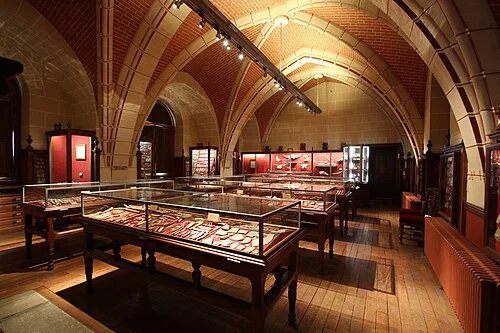 National Archaeology Museum Galleries
The Salle Piette
Behind these brick-vaulted ceilings, the old fortress now shelters the museum's prehistoric collections. The Salle Piette is one of the premier galleries for the deep human past of France. The museum founded here in the nineteenth century was meant to tell the story of the country's antiquities from the earliest times onward, and the rooms beyond do exactly that. Three objects nearby carry the story on its own terms: a carved ivory face from the Ice Age, a cone of hammered gold, and a seated bronze god. Each in its own way opened a window on the people who lived in this land long before the kings.
Listen in the appPhoto: Lionel Allorge · CC BY-SA 3.0
10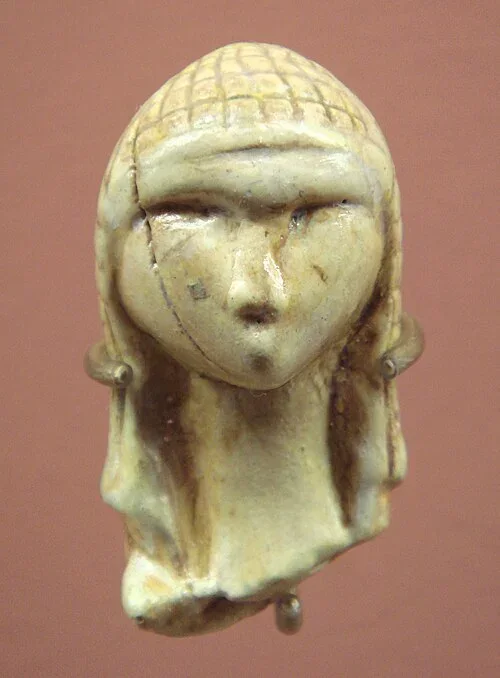 National Archaeology Museum Galleries
The Venus de Brassempouy
A small head of ivory, with a face that seems to look straight out of the Ice Age. This is the Venus de Brassempouy, named for the place where it was found, and one of the most celebrated pieces of the prehistoric galleries. The carver gave the figure a hood or headdress, drawn in fine grid lines like woven strands, and left the face itself smooth and calm. The nose and brow are modelled with striking delicacy for a work of the Upper Paleolithic. Everything else in these galleries is younger than this face. The carver who made it belonged to a world of hunters at the end of the last great cold, working by firelight with stone tools.
Listen in the appPHGCOM · Public domain
- 11
The Avanton Gold Cone
A cone of hammered gold, covered in stamped ornament, whose purpose nobody knows.
- 12
The God of Bouray
A cross-legged bronze figure with glass eyes, where the Celtic and Roman worlds meet.
- 13
The Château Roofs and Parterre Gardens
The parterres laid out for Henry IV, among the gardens that introduced the Italian garden style to France.
- 14
The Grande Terrasse
Le Nôtre's two-point-four-kilometre stone terrace, built for Louis XIV's view over the Seine to Paris.
Château de Saint-Germain-en-Laye
Frequently asked questions
How much does the guide cost?
Free app download. Listed guide price: $1.99. Guide price shown in the app. Audio guide only. Venue admission is separate.
Can I listen without internet?
Yes. Download the guide’s audio, images, and maps in the app before your visit. Your downloaded content is then available offline.
Can I listen in my language?
This audio guide is available in 15 languages, including English.
Do I need to follow a schedule?
No. This is a self-guided experience. Choose your stops, pause whenever you like, and return to a story at your own pace.
At your own pace
Explore Château de Saint-Germain-en-Laye.
Download Stanza, then search for “Château de Saint-Germain-en-Laye”.
Free app download · Guide price shown in the app
Keep exploring
Nearby audio guides
11 km
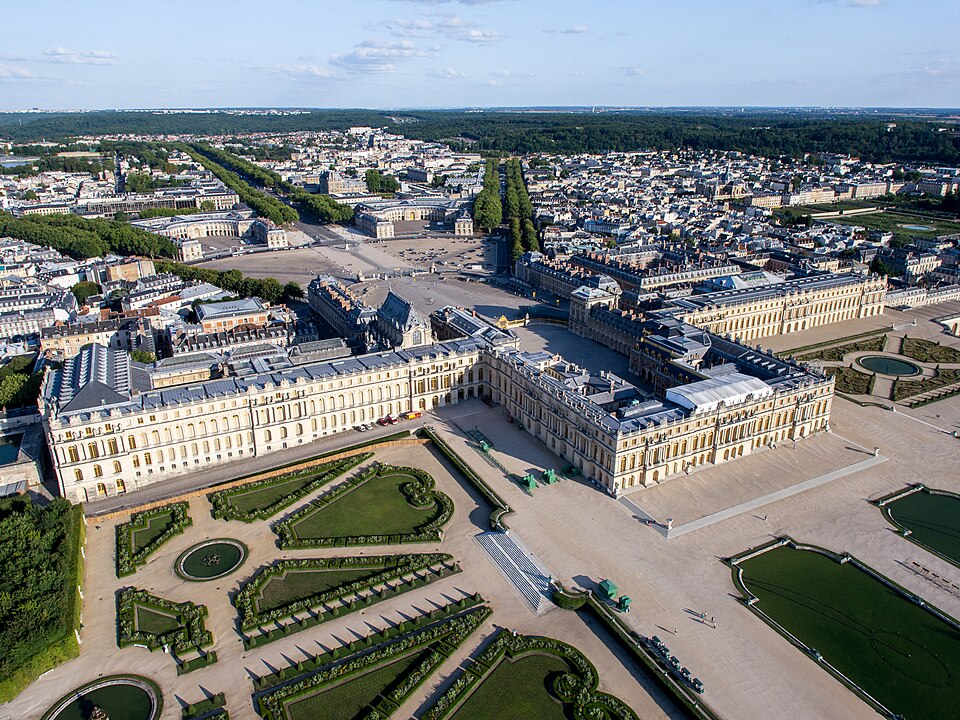
Château de Versailles
Content & sources
ToucanWings · CC BY-SA 3.0
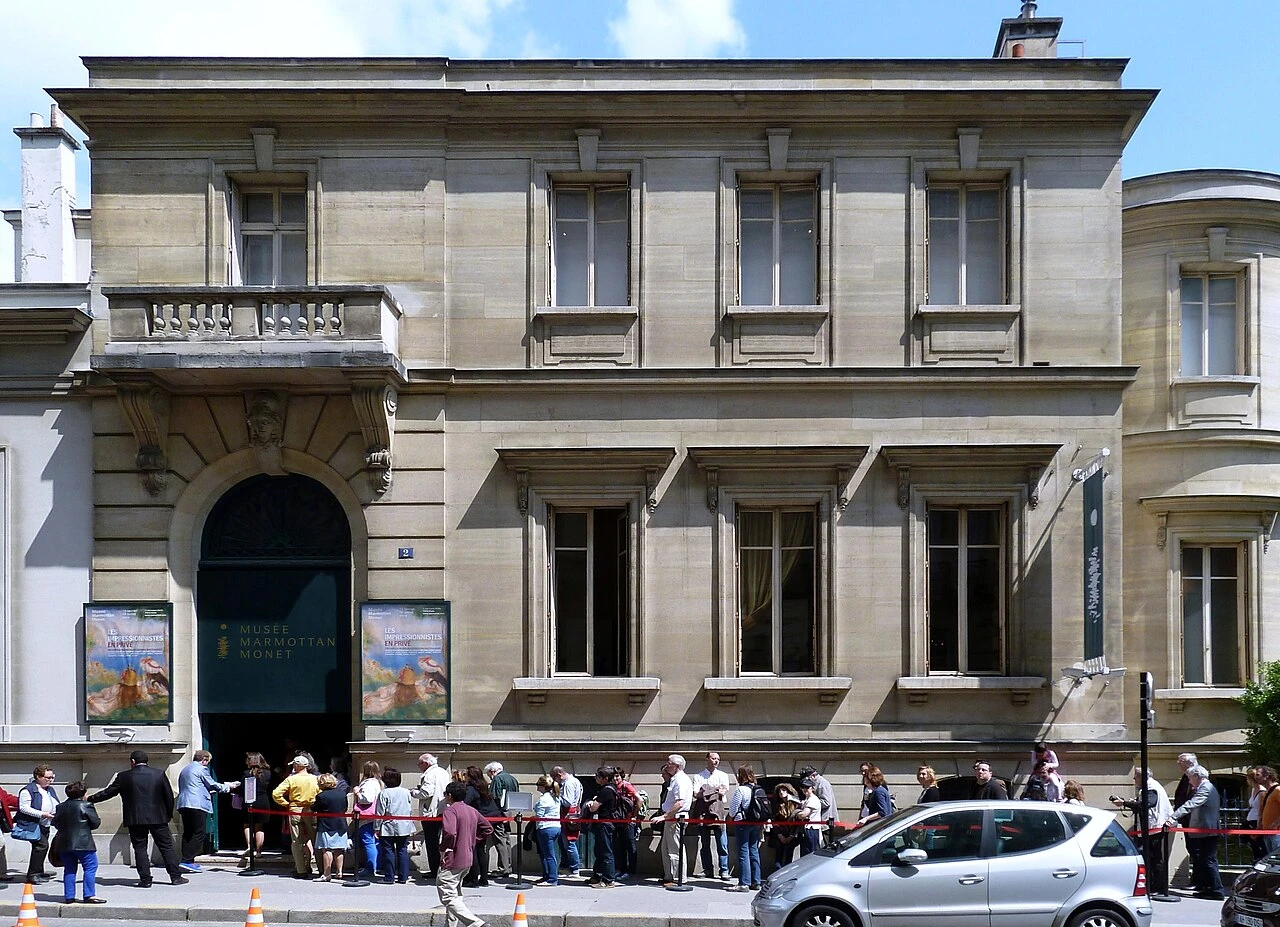
Paris · 13 km
Musée Marmottan Monet
Content & sources
PIERRE ANDRE LECLERCQ · CC BY-SA 4.0
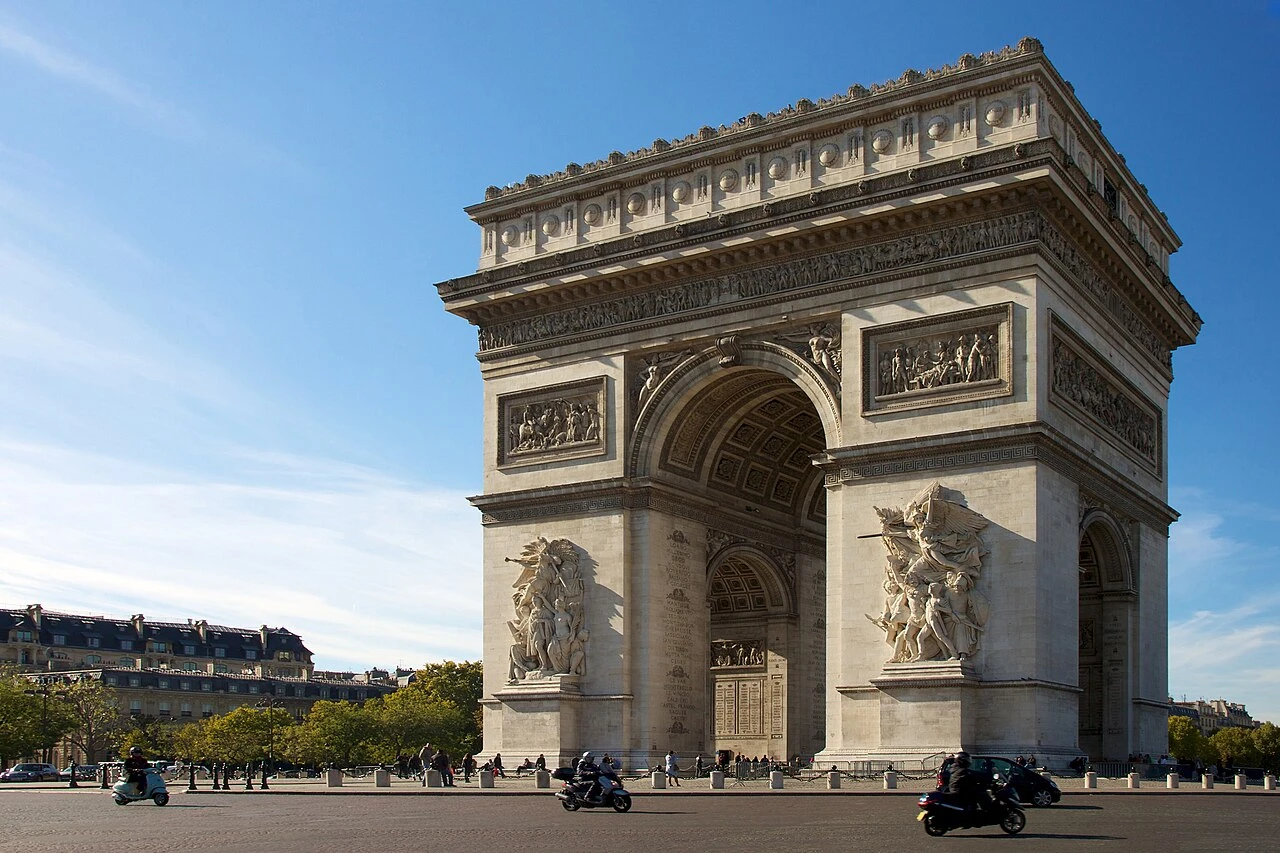
Paris · 15 km
Arc de Triomphe
Content & sources
Jiuguang Wang · CC BY-SA 2.0
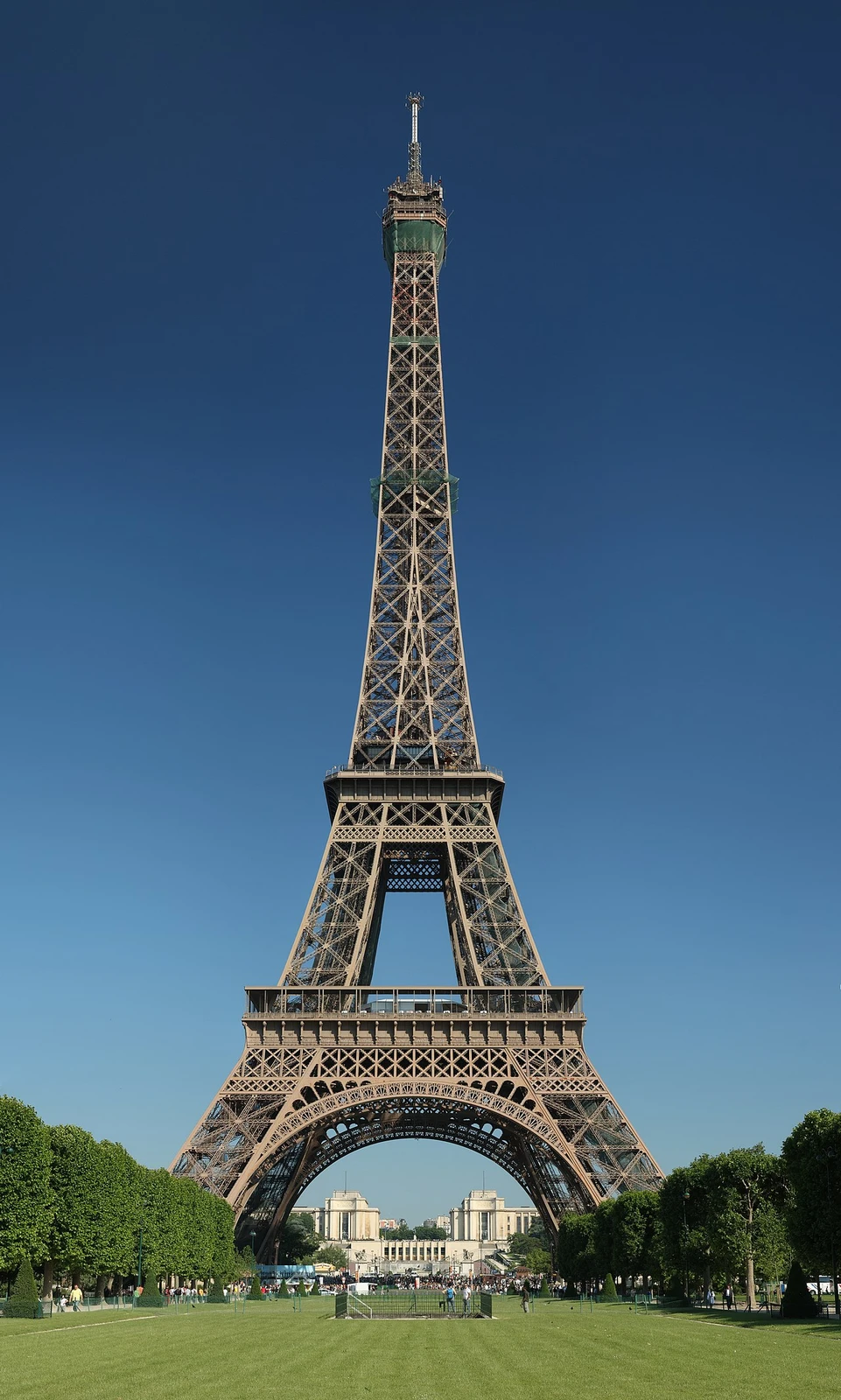
Paris · 15 km
Eiffel Tower
Content & sources
Benh LIEU SONG · Public domain
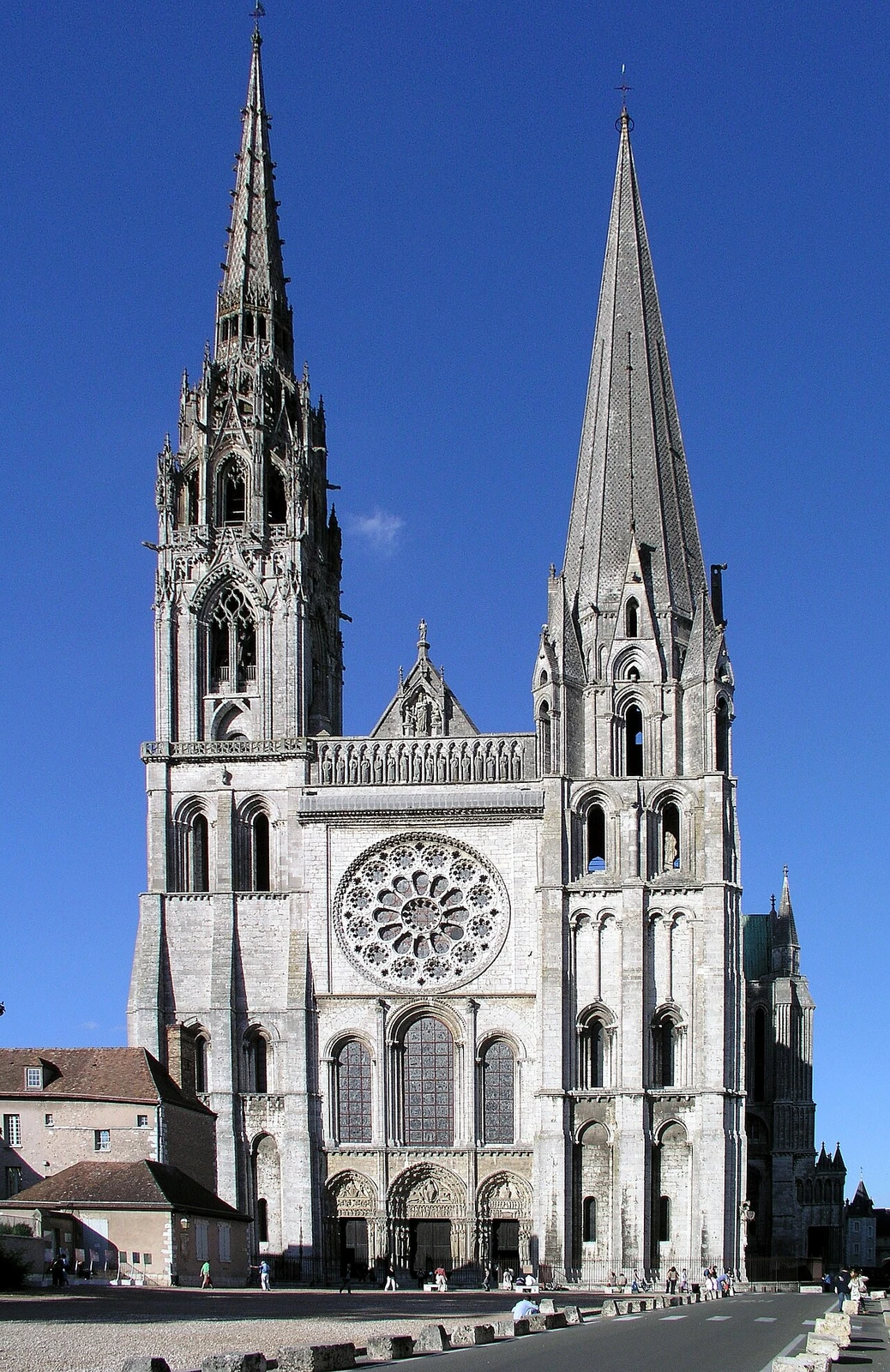
Chartres · 67 km
Chartres Cathedral
Content & sources
BT · Public domain