Languages
15Château de Chambord Audio Guide
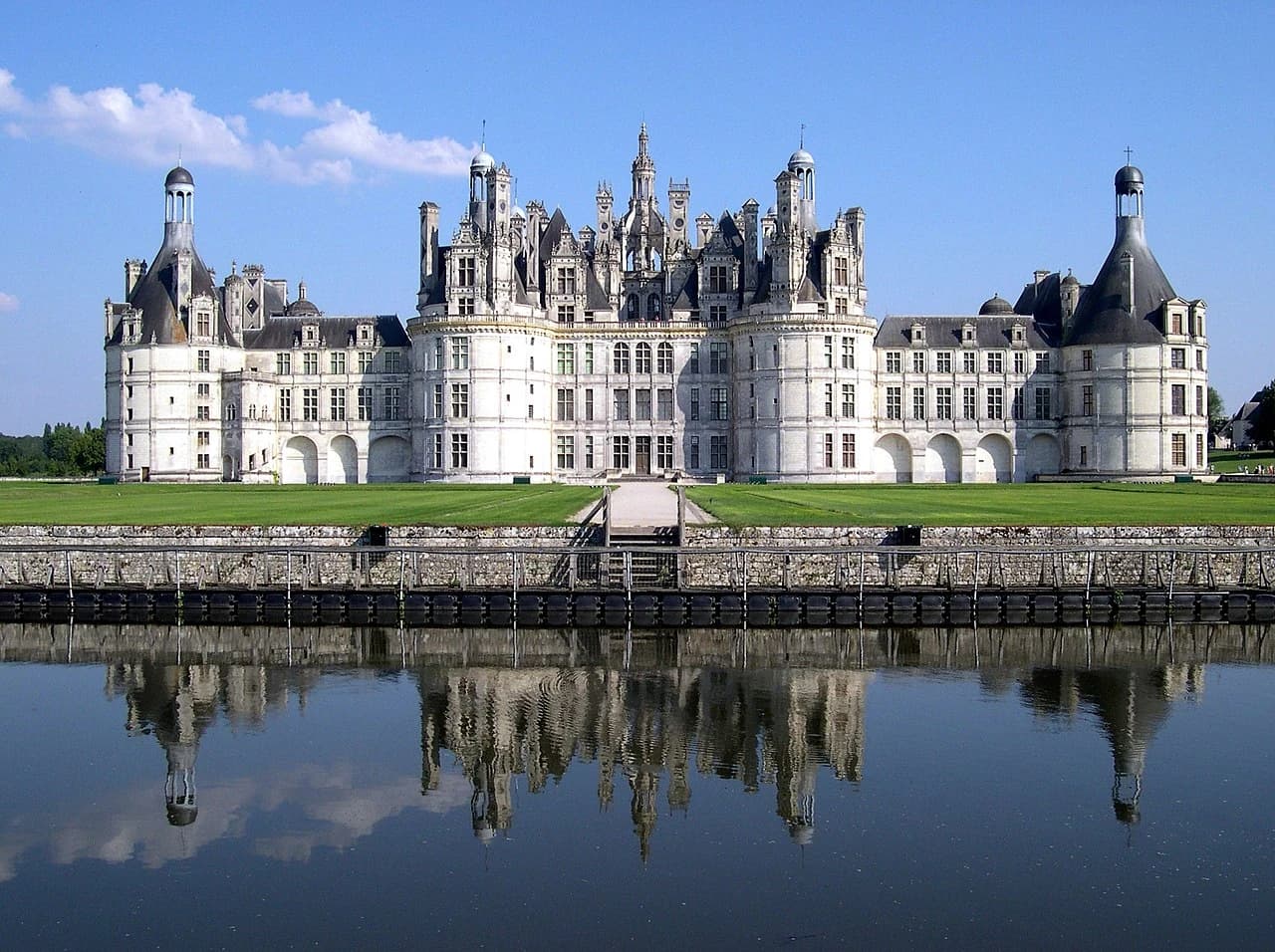
Château de Chambord is a landmark in Chambord, France. Explore it with Stanza's GPS-triggered offline audio guide — available in 15 languages.
Quick Facts
27
Stops
15
Languages
100%
Offline
📍 Chambord, France · 47.6161°N, 1.5172°E
About Château de Chambord
The Château de Chambord is a grand French Renaissance castle located in the Loire Valley. It is renowned for its distinctive French Renaissance architecture, blending traditional French medieval forms with classical Renaissance structures.
Château de Chambord is also known as château de Chambord, Chambord Castle, castle of Chambord, Chambord, and 2 other names in various languages.
This self-guided audio tour features 27 narrated stops organized across 6 sections, including The Royal Courtyard, The Double-Helix Staircase, The King’s Wing and Oratory, The State Apartments and Bourbon Gallery, The Vaulted Halls of the Salamander, The Roof Terraces: A Miniature City. As a castle, Château de Chambord offers a unique cultural experience in the heart of Chambord, France.
The Stanza audio guide is available in 15 languages and works entirely offline — download the complete tour including audio narration, maps, and images before your visit. As you walk through Château de Chambord, GPS-triggered narration plays automatically at each point of interest.
Last updated:
What you will hear
The Royal Courtyard
Entering the heart of the fortress-palace to see the transition from exterior defense to Renaissance luxury.
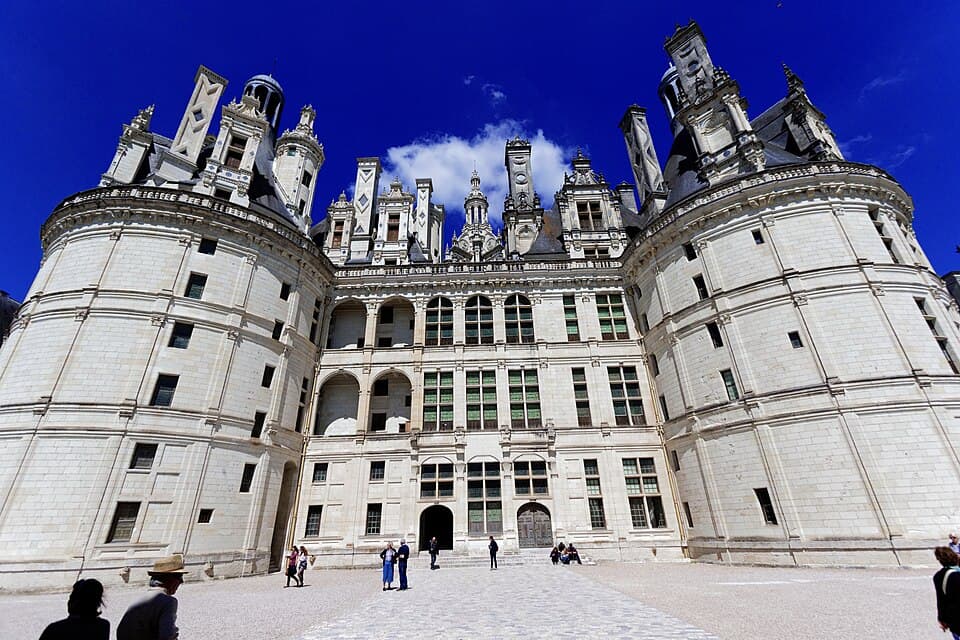
The Grand Courtyard
From within the Grand Courtyard, the organizational logic of Chambord becomes clear. The central keep is built on a Greek-cross floor plan, featuring four large halls that branch out from a central point. This layout was highly modern for its time and is believed to have been influenced by the architectural theories of Leonardo da Vinci. The legendary Italian polymath lived nearby at the Clos Lucé during the final years of his life, and his conversations with Francis I likely shaped the experimental nature of this building. The courtyard serves as the connective tissue for the various wings of the palace. To one side lies the King’s wing, which housed the royal apartments, and to the other is the Chapel wing, symbolizing the union of secular and divine power. The central keep stands as the heart of the structure, where the most important guests were received. By looking around, you can see how the different sections of the château harmonize, creating a balanced and symmetrical environment. This space allowed the court to move between religious services, political meetings, and private quarters, all while remaining enclosed within the magnificent stone walls of the keep.
The Double-Helix Staircase
Exploring the architectural centerpiece attributed to Leonardo da Vinci, where two people can pass without meeting.
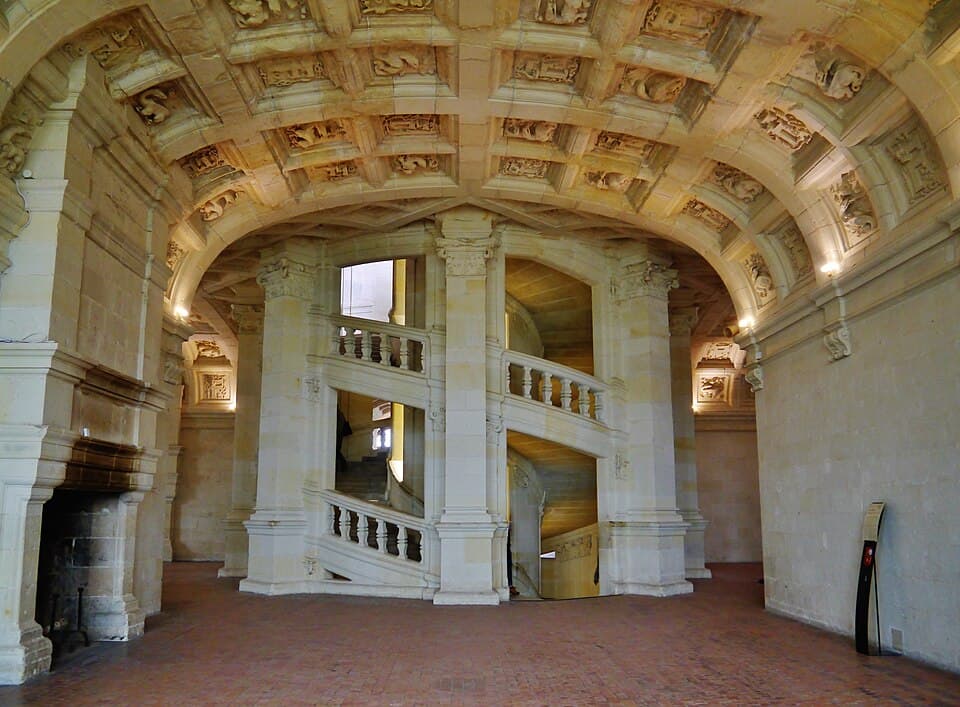
The Double-Helix Staircase
You are now standing before the architectural climax of Chambord's interior: the double-helix staircase. Rising through the very center of the keep, this structure is widely attributed to the genius of Leonardo da Vinci. Its design is as clever as it is beautiful. The staircase consists of two interlocking spiral flights that wind around a single central core. This means that one person can ascend while another descends at the exact same time, catching glimpses of each other through the interior openings, but their paths will never actually cross. This engineering feat served both a practical and a theatrical purpose. It allowed for efficient movement in a building that often hosted hundreds of people, but it also added a layer of Renaissance playfulness and mystery to the palace. Imagine the members of the court, dressed in their finest silks, navigating these stone spirals during a royal visit. The staircase is not just a way to move between floors; it is a centerpiece that demonstrates the era’s obsession with geometry, perspective, and the mastery of space. It remains one of the most studied and admired pieces of Renaissance engineering in the world.
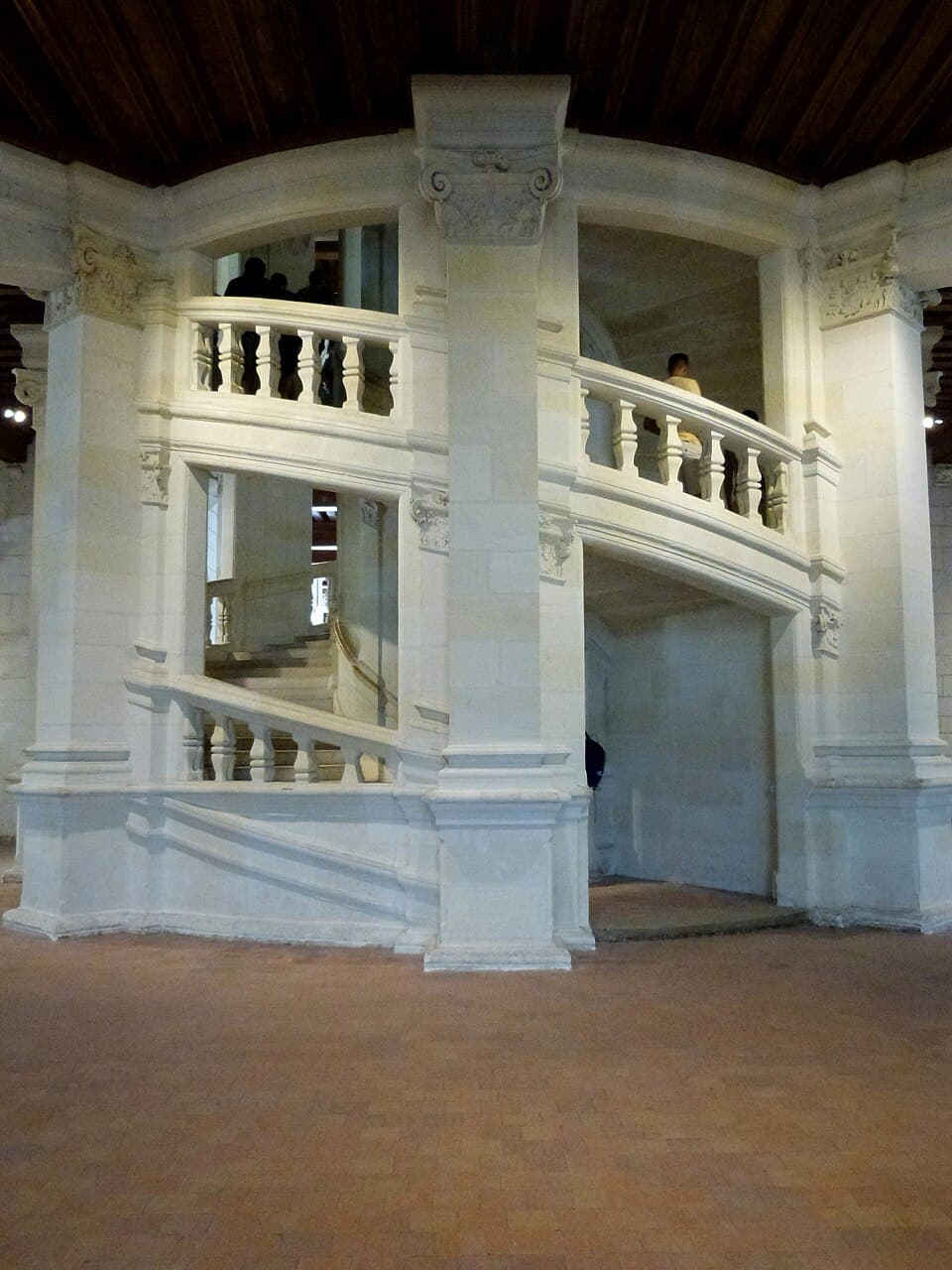
The Interlocking Flights
As you stand on one of the flights of the double-helix staircase, take a moment to look through the stone windows into the opposite flight. This perspective highlights the human connection designed into the architecture. In the 16th century, the court was a place of constant observation and discreet movement. This staircase allowed for a kind of architectural drama where one could see and be seen without the necessity of a direct encounter. It was the perfect stage for the social games of the Renaissance elite. While this central staircase is the undisputed masterpiece of the château, it is just one part of a much larger network. There are actually 84 staircases throughout Chambord, ranging from grand ceremonial stairs to small, hidden passages for servants and private movements. However, none match the sophistication of this central double-spiral. The intricate masonry you see here was carved with incredible precision to ensure that the two flights remained perfectly synchronized as they climbed toward the roof. The openings not only provide light but also create a sense of lightness in what is otherwise a massive stone structure, turning a functional element into a work of art.
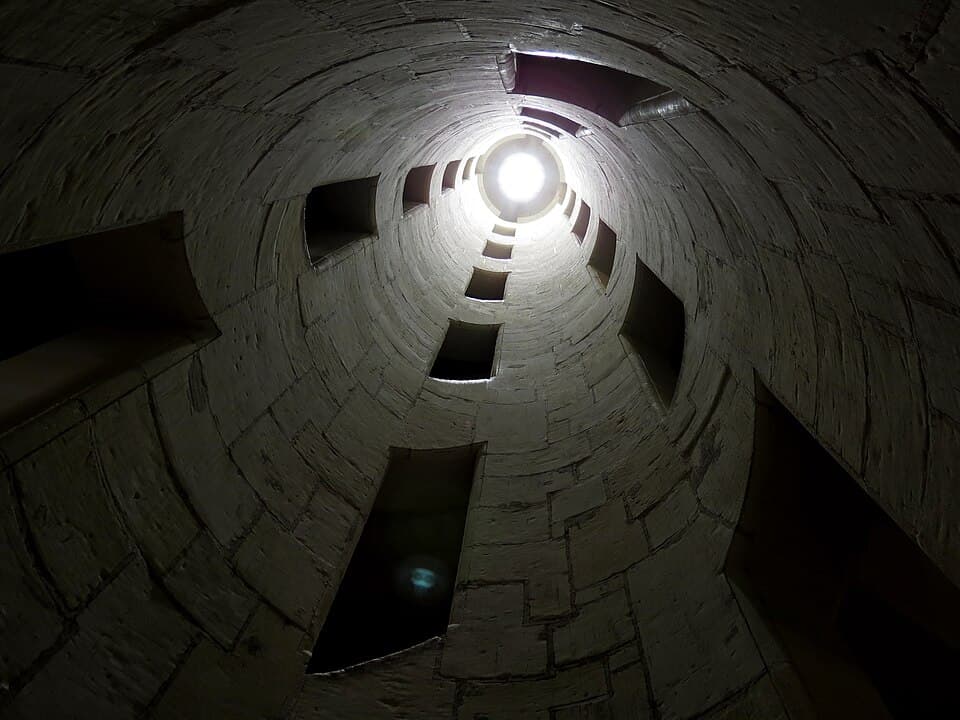
The Central Core View
If you look up through the hollow central core of the staircase, you can see the structural backbone of the entire building. This central pillar acts as a vertical axis, reaching all the way from the ground floor toward the roofline. The design allows light to travel down from the lantern tower far above, illuminating the interior of the staircase which would otherwise be shrouded in shadows. This use of natural light was a hallmark of Renaissance design, emphasizing clarity and openness. This central pillar is more than just an aesthetic choice; it is a vital structural component that supports the weight of the surrounding stone steps. As you gaze upward, you can see the repetitive geometry of the stairs spiraling toward the sky. The light filtered from the lantern tower creates a shifting pattern of shadows throughout the day, highlighting the texture of the stone and the precision of the carvings. This view provides a unique perspective on the verticality of the château, reminding us that every element of this building was carefully calculated to draw the eye upward, toward the heavens and the magnificent roofline that awaited the King and his guests.
The King’s Wing and Oratory
The private quarters of Francis I, reflecting the nomadic life of the 16th-century French court.
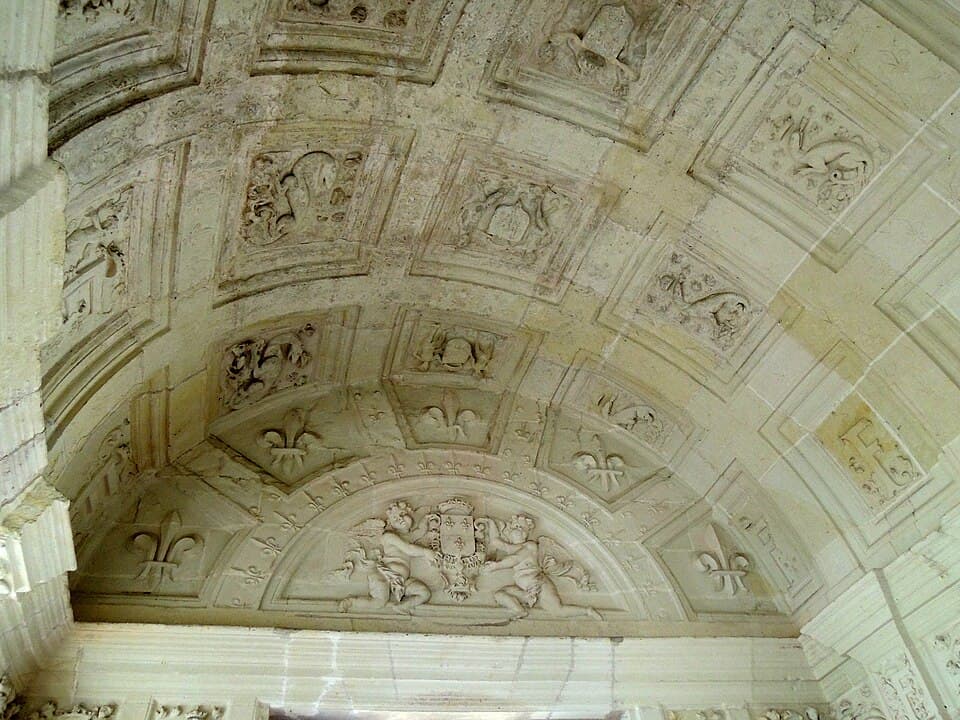
The Oratory Vault
In the private oratory of Francis I, the stonemasonry takes on a more delicate and intimate character. This was a space for personal reflection and prayer, and the decorations reflect the dual nature of the King’s identity as both a secular ruler and a Christian monarch. As you look at the vaulted ceiling, you can see the transition from the King's personal 'F' monogram to various religious motifs. The craftsmanship here is exceptional, showing the clear influence of Italian decorative styles on French stone workers. The coffered ceiling is a masterwork of Renaissance symmetry. Each square is carved with precision, creating a rhythmic pattern that draws the eye across the vault. This style of decoration was popularized in Italy and brought to France by the artisans the King admired so much. The oratory stands as a quiet reminder of the individual behind the grand public persona of the King. While the rest of the château was built for spectacle and the entertainment of hundreds, this room was scaled for the person, where the fine details of the carvings could be appreciated up close in the soft light filtering through the windows.
The State Apartments and Bourbon Gallery
Focusing on the 17th and 18th-century modifications, including the influence of Louis XIV and the Bourbon dynasty.
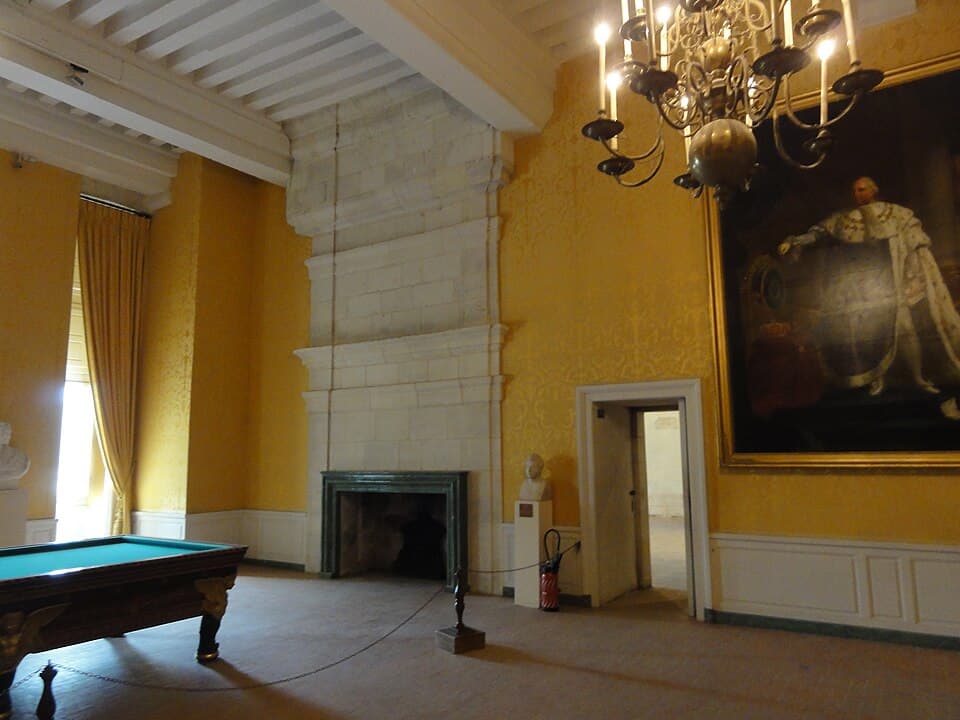
The Bourbon Billiard Room
Fast-forwarding to the 18th century, we find ourselves in a space that reflects a different era of royal life. By this time, the massive, drafty rooms of the original Renaissance design were seen as increasingly uncomfortable. Later royals, including those from the Bourbon dynasty, sought to modernize the interior to suit the tastes of their time. In this room, you can see the introduction of parquet floors and lowered ceilings, which were designed to trap heat and create a more intimate atmosphere. The presence of a billiard table highlights the shift from the rugged hunting culture of the 16th century to the refined indoor pastimes of the Enlightenment. However, one element remains a constant reminder of the building’s original scale: the massive fireplace. There are 282 fireplaces in Chambord, and they were essential for making the stone palace habitable during the colder months. Even with these 18th-century additions, the sheer volume of the château remained a challenge to heat. This room represents the ongoing struggle of successive generations to adapt Francis I’s grand architectural dream into a functional, comfortable living space for a modernizing court.

Full-Length Portrait of Louis XIV
Jean Nocret · 1668 · canvas, oil paint
This portrait features King Louis XIV, famously known as the Sun King. While Francis I began the construction of Chambord, it was Louis XIV who finally saw many of its major components to completion more than 150 years later. Under his reign, the chapel and the royal apartments were finally finished, ensuring the château regained its status as a premier royal destination. Louis XIV had a deep appreciation for the grandeur of Chambord and used it as a magnificent backdrop for his own courtly displays. The Sun King brought a new level of theatricality to the estate. He used the château for grand events, including hosting the famous playwright Molière, whose troupe performed plays here for the King and his guests. For Louis XIV, Chambord was not just a hunting lodge, but a symbol of the continuity and endurance of the French monarchy. By completing the work of his predecessor, he linked himself to the glorious Renaissance past while establishing his own legacy of absolute power. His influence is still visible in the more classical, refined touches found in the sections of the palace that were finalized during the 17th century.
The Vaulted Halls of the Salamander
The second-floor galleries featuring over 300 carvings of the King's royal emblem.
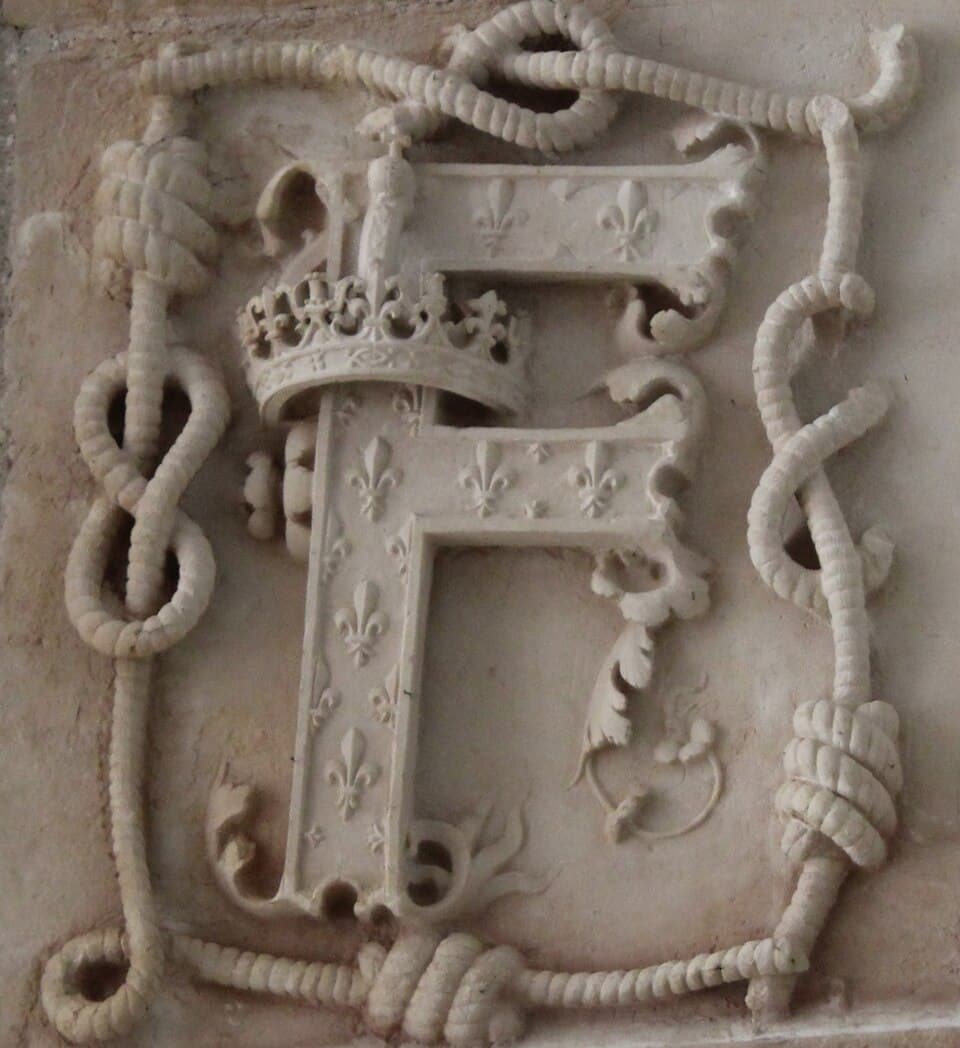
The King’s Monogram
Notice the recurring 'F' monogram carved into the stone, often framed by royal crowns and the fleur-de-lis, the classic symbol of the French monarchy. This is the personal signature of King Francis I, and it is found throughout the château to ensure his presence is felt in every corner of the building. The material used for these intricate carvings is tuffeau stone, a soft, fine-grained white limestone native to the Loire Valley. Tuffeau was a favorite among Renaissance architects because its malleable nature allowed stonemasons to achieve an incredible level of detail, almost as if they were working with wood rather than stone. However, while tuffeau was easy to carve into these delicate monograms and patterns, it is a remarkably fragile material. Over the centuries, the soft stone has been susceptible to erosion from the wind and rain, requiring extensive and ongoing conservation efforts to keep the King's monogram sharp and legible. As you observe the carvings, look closely at the texture of the stone; its creamy, porous surface captures the light in a way that gives the walls a soft, glowing quality. This monogram is more than just a decoration; it is a symbol of the king’s desire to leave an indelible mark on the landscape of France, using the very soil of the region to immortalize his name.
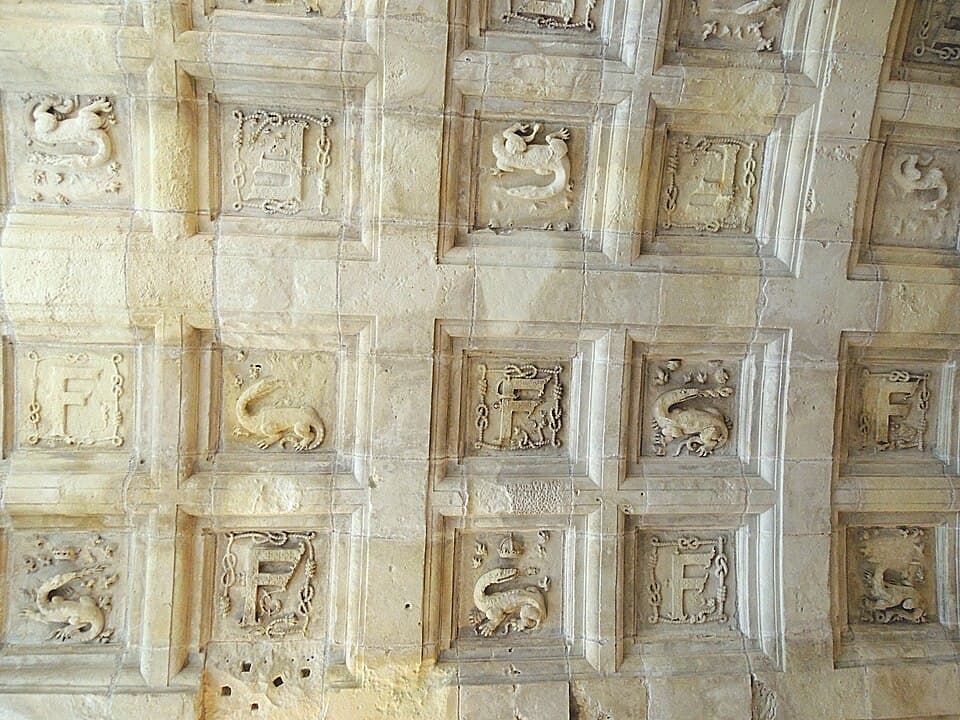
The Vaulted Galleries
As you walk through the vaulted galleries on the second floor, take a moment to look upward. The ceilings here are a masterclass in Renaissance decorative arts. The château boasts over 800 uniquely sculpted stone capitals, and the vaulted galleries are where this repetitive beauty is most evident. The ceilings are organized in a coffered grid pattern, a design choice that creates a sense of order and rhythm across the vast halls. Each section of the grid is filled with intricate carvings designed to draw the eye toward the King's personal emblems. You will see a constant interplay of the letter 'F' for Francis I and his signature salamander. This repetition was a powerful tool of political communication, ensuring that no matter where a guest looked, they were reminded of the King's presence and authority. The soft white limestone used for these carvings, known as tuffeau, allowed the stonemasons to achieve a high level of detail, though it is a fragile material that requires constant care. These galleries were once the social heart of the keep, where courtiers would stroll and converse, surrounded by the most sophisticated artistic expressions of the 16th century.
The Roof Terraces: A Miniature City
The famous rooftop skyline, featuring a dense forest of ornate chimneys and the central lantern tower.
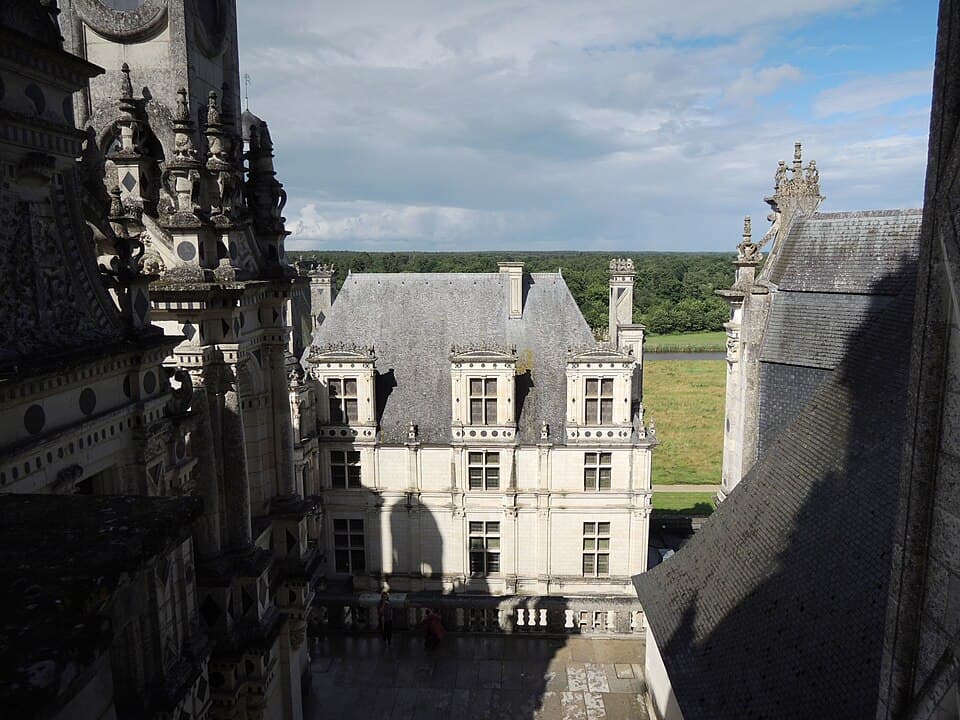
View of the Hunting Grounds
From this height, the true scale of the Chambord estate becomes clear. What you see stretching to the horizon is a massive forest covering 50 square kilometers, making it the largest enclosed park in Europe. To protect the king's game and mark the boundaries of royal land, the entire area is surrounded by a 32-kilometer-long stone wall. To put that in perspective, the wall is roughly the same length as the ring road that surrounds the city of Paris today. This vast territory was the primary reason for the château's existence; it was first and foremost a hunting lodge. Even today, the forest remains a wild and protected environment, home to significant populations of wild boar and red deer, much as it was in the time of Francis I. The park serves as a time capsule of the 16th-century landscape, preserved by the royal obsession with the hunt. The strategic layout of the forest, with its long, straight avenues cut through the trees, was designed to allow hunters to chase game efficiently while providing the king with clear lines of sight. As you gaze out over the greenery, imagine the spectacle of a royal hunting party, with hundreds of horses, dogs, and attendants streaming into the woods. This view reminds us that as grand as the building is, it was only one part of a much larger, carefully managed ecosystem designed for the pleasure of the king.
Want to hear the rest?
Download the Stanza app to unlock all 27 stops and full GPS-guided navigation.
Frequently Asked Questions
How long does the Château de Chambord audio tour take?
The Château de Chambord audio guide includes 27 narrated stops. Most visitors spend 45 minutes to 1.5 hours exploring the complete tour, though you can listen at your own pace and skip or revisit any stop.
Is the Château de Chambord audio guide available in my language?
Stanza supports 15 languages: English, Spanish, French, German, Italian, Portuguese, Russian, Japanese, Chinese, Korean, Arabic, Hindi, Polish, Dutch, Hebrew. Check the guide in the app to confirm the languages currently available for this tour.
Can I use the audio guide offline at Château de Chambord?
Yes! Download the complete Château de Chambord tour — including all audio, maps, and images — before your visit. The Stanza app works completely offline, so you don't need WiFi or mobile data at the venue.
How much does the Château de Chambord audio guide cost?
The Stanza app is free to download. The current listed price for the Château de Chambord audio guide is $3.99; app-store region and currency may affect the final price.
How do I use the Stanza audio guide at Château de Chambord?
Download the free Stanza app, search for "Château de Chambord", and download the tour. When you arrive at the venue, the app uses GPS to detect your location and automatically plays the relevant narration as you move between points of interest — completely hands-free.
What makes the Stanza audio guide different from other Château de Chambord tours?
Stanza offers GPS-triggered narration that plays automatically as you walk through Château de Chambord — no need to manually select stops. The tour is available in 15 languages, works fully offline, and includes 27 expertly narrated stops with images and historical context.
What other audio guides are available near Château de Chambord?
Stanza offers multiple audio guides in Chambord, France and nearby areas. After downloading the app, browse the map to discover all available tours near Château de Chambord. Each guide can be downloaded for offline use.