Languages
15Château de Chenonceau Audio Guide
Château de Chenonceau is a landmark in Chenonceaux, France. Explore it with Stanza's GPS-triggered offline audio guide — available in 15 languages.
Quick Facts
20
Stops
15
Languages
100%
Offline
📍 Chenonceaux, France · 47.3250°N, 1.0706°E
About Château de Chenonceau
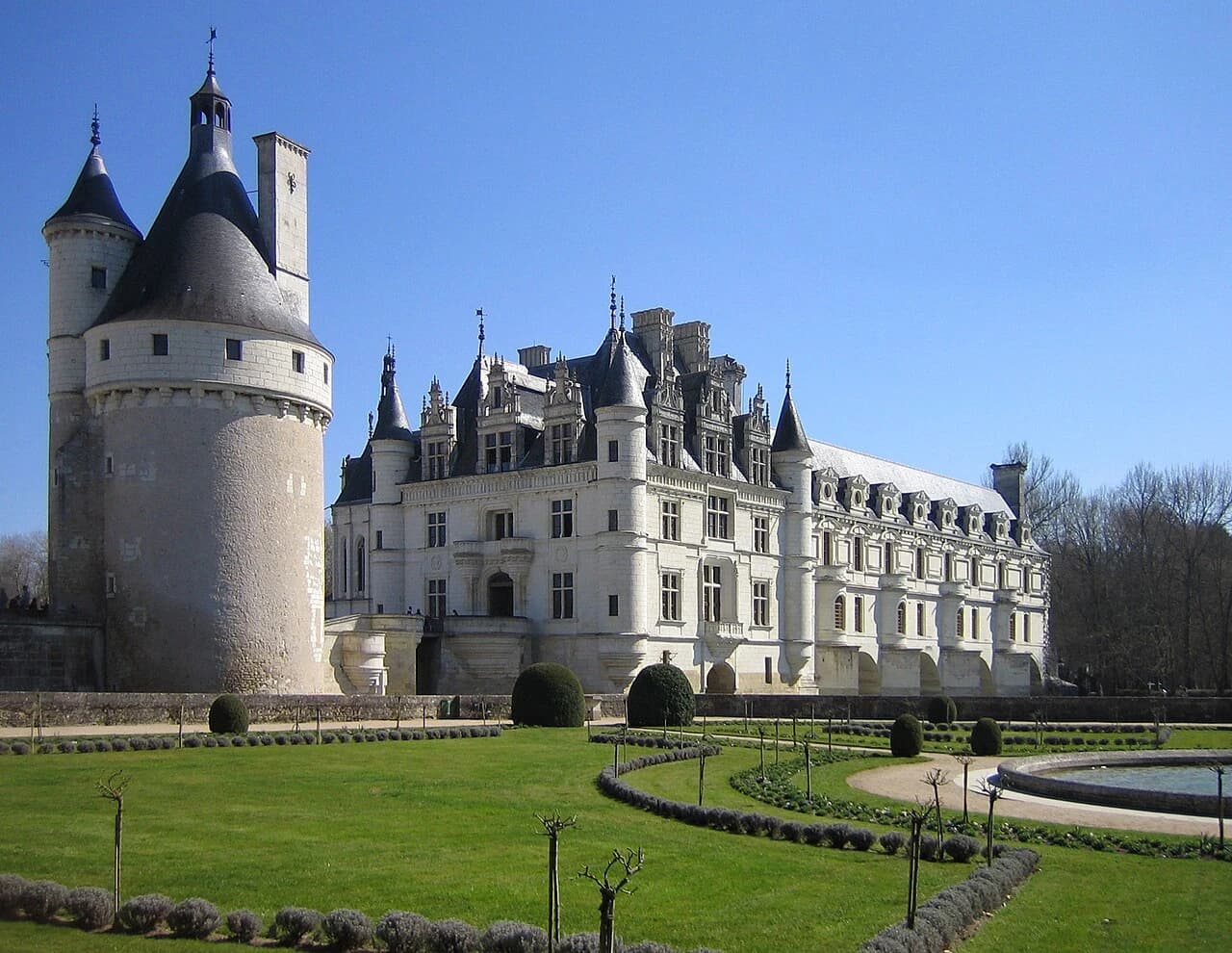
Château de Chenonceau is a historic French château spanning the River Cher in the Loire Valley. This elegant Renaissance castle is renowned for its distinctive architecture and rich history.
Château de Chenonceau is also known as Chateau de Chenonceau, Chenonceaux, château de Chenonceaux, chateau de Chenonceau, and 2 other names in various languages.
This self-guided audio tour features 20 narrated stops organized across 7 sections. As a castle, Château de Chenonceau offers a unique cultural experience in the heart of Chenonceaux, France.
The Stanza audio guide is available in 15 languages and works entirely offline — download the complete tour including audio narration, maps, and images before your visit. As you walk through Château de Chenonceau, GPS-triggered narration plays automatically at each point of interest.
Last updated:
What you will hear
The Guard Room and Founder's Legacy
Entering the main house, we encounter the legacy of Katherine Briçonnet, who oversaw the construction of the current Renaissance-style château starting in 1513.

Woman Wearing a Collar
Michiel Jansz. van Mierevelt · 1630 · oil paint
This portrait captures the woman responsible for the earliest phase of the current palace. Katherine Briçonnet was far more than just the wife of a wealthy financier; she was the active overseer of construction beginning in 1513. Because her husband, Thomas Bohier, was frequently away at war in Italy, Katherine was the one on-site, making critical decisions about the design and progress of the works. It was under her direction that the castle began its transition from a ruin to the innovative structure that appears to float on the water. Her influence established a precedent that would hold true for centuries: women were the primary architects, designers, and protectors of this estate. From overseeing the placement of the first stones to managing the household's complex logistics, Katherine laid the foundation for the 'Château des Dames.' The clothing she wears in this painting, particularly the distinctive white collar, reflects the fashion and status of a high-ranking woman of the French Renaissance. Her legacy is visible in the orientation of the building, which was designed to maximize light and views of the surrounding gardens and the river.
The Chapel
The chapel is a sanctuary of royal history, featuring a balcony from which the queens would attend mass, and it survived the Revolution thanks to its bridge-like function.
The Palace on the Water
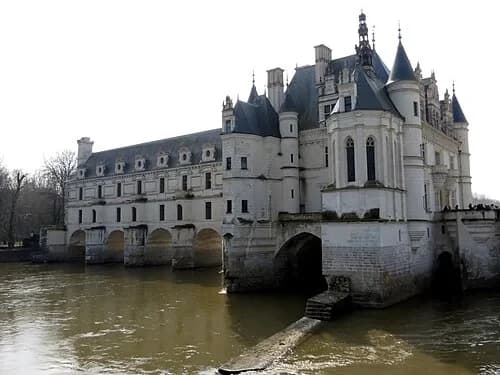
The view of the palace stretching across the water is one of the most recognizable sights in France. This architectural feat was accomplished by building directly onto the stone foundations of an old fortified mill that once stood here. The bridge that supports the gallery was designed by the renowned architect Philibert de l'Orme, a master of the French Renaissance style. Transforming the site from a medieval ruin into this sophisticated bridge-palace was not a quick process; it required approximately 63 years of intermittent construction and vision across different generations of owners. The design cleverly integrates the natural flow of the River Cher into the layout of the home. By utilizing the existing mill foundations, the builders were able to create a structure that defied traditional land-based castle design. This innovation allowed for a unique floor plan where water flows beneath the living spaces, providing both a scenic backdrop and a natural defensive barrier. The arches of the bridge are built to withstand the pressure of the river’s current, a testament to the engineering skills of the 16th century that allowed a residence to become a literal crossing point for the river.
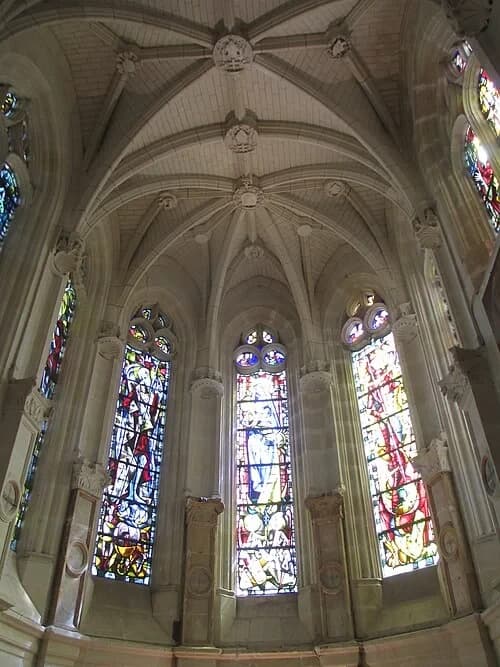
The Royal Chapel
Stepping into the Royal Chapel, eyes are immediately drawn upward to the delicate stone vaulting of the ceiling. The light entering the space is filtered through a series of stained glass windows, which were originally created in the 16th century. High above the floor, the royal balcony is visible. This private gallery allowed the queens of France to attend mass with a clear view of the altar while remaining physically separated from the rest of the congregation. The chapel’s survival is a remarkable story in itself. During the French Revolution, many religious sites were looted or destroyed by anti-clerical mobs. To protect this sacred space, the castle’s owner at the time, Louise Dupin, came up with a creative solution. She filled the room with wood and other domestic items, hiding its religious function and making it appear as a simple storage area. Her quick thinking prevented the destruction of the intricate carvings and the historic glass. The quiet atmosphere of the chapel today belies the turbulent history it has witnessed, from royal ceremonies to the threat of revolutionary fervor. The coat of arms visible in the stained glass still marks the presence of the castle's former masters.
Salon François Ier
This room showcases the height of Renaissance luxury, housing some of the castle's most famous masterpieces, including Van Loo's 'Three Graces'.
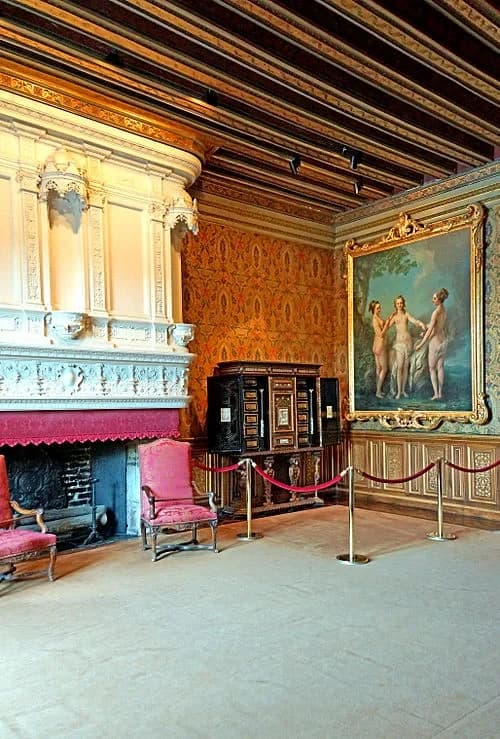
Salon of Francis I
This room was intended to be a showpiece of royal power and sophistication. The most striking feature is the massive white fireplace, which is adorned with intricate stone carvings. If you look closely at the upper section of the fireplace, you can find the personal emblems of the French monarchy. The salamander represents King Francis I, a creature believed in folklore to be able to live through fire. Beside it, you can spot the ermine, the symbol of his wife, Claude of France. These symbols served as a permanent reminder of the castle's royal connections. Above, the ornate wood-beamed ceiling is another example of 16th-century craftsmanship, painted with patterns that complement the rich tapestries hanging on the walls. These heavy fabrics were not just for decoration; they played a vital role in insulating the large stone rooms against the winter cold. The contrast between the carved stone of the fireplace and the soft textures of the tapestries creates the opulent atmosphere typical of a Renaissance palace. This salon served as a formal reception space where the 'Ladies of the Castle' would host diplomats, artists, and kings. The furniture here represents the height of Renaissance luxury.

The Three Graces, Traditionally Assumed to Be the Nesle Sisters
Шарль Андре Ван Лоо · 1765 · canvas, oil paint
Among the many artworks in the castle's collection, this painting stands out for its connection to the court of Louis XV. The three figures shown here are the Mailly-Nesle sisters, who each held the position of official mistress to the King at different times. Painted in the Rococo style, the work emphasizes soft lighting, graceful poses, and a delicate color palette. This aesthetic was a significant departure from the more rigid and formal styles of the previous century. The inclusion of such a piece reflects how the interior design of Chenonceau evolved during the 18th century, influenced by the ideals of the Enlightenment. During this era, the castle became a hub for intellectuals and artists, and the decor shifted to favor elegance and conversational intimacy. The painting is not just a portrait but a representation of the social and political dynamics of the French court, where favor and influence were often tied to familial connections. It provides a visual link to a later chapter in the castle's history, when it moved away from its origins as a defensive fortress toward becoming a place of refined leisure and high-level social maneuvering. The sisters' pale complexions and pearls are typical of 18th-century noble portraiture.
The Basement Kitchens
Built directly into the massive stone piers of the bridge, these kitchens feature a unique boat landing for deliveries from the river.
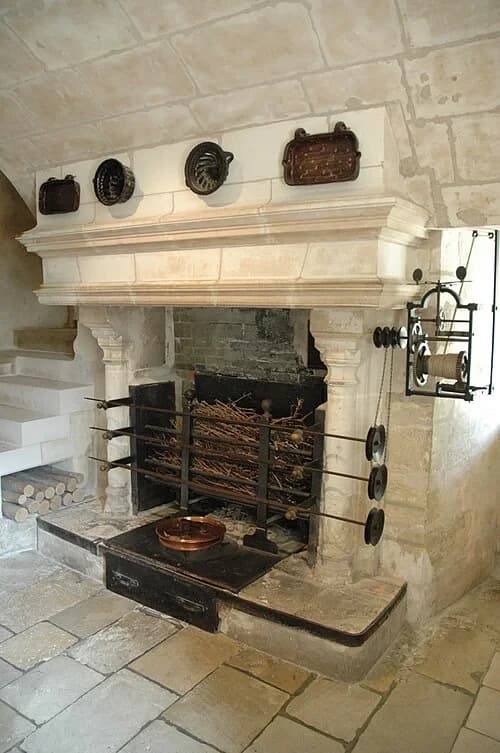
The Bridge Kitchens
The engineering of the castle extends even to its service areas. These kitchens are built directly into the massive stone piers that support the bridge over the River Cher. This location was highly practical; a hatch in the floor allowed for a boat landing where supplies could be lifted directly from the river into the pantry. This meant that fresh produce and fish could be delivered without ever needing to cross the main drawbridge. Inside, you can see the heavy copper cookware that has been meticulously maintained by the estate's staff for centuries. The fireplace is equipped with a sophisticated mechanical rotisserie system, which was used to roast large cuts of meat for the noble table. The thick stone walls of the piers helped to regulate the temperature, keeping the pantry cool while the ovens were in use. This space provides a glimpse into the daily labor required to sustain a royal household. The proximity to the water not only facilitated deliveries but also provided an easy way to dispose of waste. The tiled floor and vaulted ceiling were designed for durability and ease of cleaning in a busy work environment.
The Mourning Chamber of Louise de Lorraine
Following the assassination of Henry III, his widow Louise retired here in 1589, decorating her room in black and silver to reflect her eternal mourning.
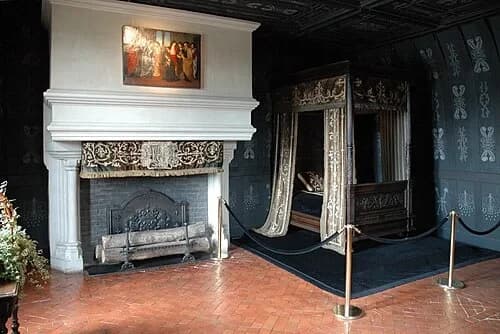
The White Queen's Room
This room offers a stark contrast to the opulent reception halls elsewhere in the palace. The atmosphere here is intentionally somber and dark. If you look closely at the walls and the ceiling, you will see they are decorated with symbols of grief: silver tears, skulls, and crossbones. This was the private sanctuary of Louise de Lorraine, the widow of King Henry III. Following her husband's assassination in 1589, Louise retired to Chenonceau and spent the rest of her life in deep mourning. According to royal etiquette of the time, white was the color of mourning for the queens of France, which earned her the nickname 'The White Queen.' She abandoned the vibrant social life of the court, choosing instead a life of prayer and quiet contemplation within these walls. The decor served as a constant visual reminder of her loss and her devotion to her late husband's memory. This room represents the personal side of the castle's history, showing how the 'Ladies of Chenonceau' used the space not just for power, but as a place for personal refuge and the expression of profound sorrow. The dark paneling absorbs the light, heightening the room’s reflective character.
The Rival Gardens
The landscapes of Diane de Poitiers and Catherine de’ Medici face each other across the water, representing their legendary struggle for control of the castle.
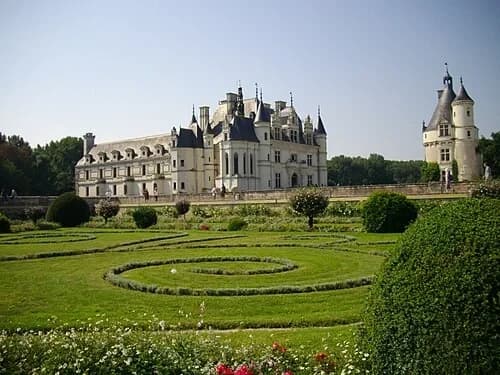
Garden of Diane de Poitiers
These expansive grounds, covering twelve thousand square meters, reflect the ambition of Diane de Poitiers. One of the most striking features is the massive stone terrace upon which the garden sits. Diane ordered these walls built to raise the planting beds above the natural level of the River Cher, protecting her meticulously planned greenery from the river's frequent and destructive floods. The layout is a masterpiece of Renaissance geometry, featuring triangular and rectangular plots bordered by low, neatly clipped hedges. Within these shapes, thousands of rosebushes and diverse floral arrangements create a vibrant tapestry that changes with the seasons. Historically, this was the site of lavish court festivities where Diane demonstrated her status. Two intersecting paths divide the space into four large sections, leading the eye toward the water and back toward the palace. This garden was not just for aesthetics; it was a statement of control over the unpredictable elements of nature, a bold claim of ownership over a landscape that was once a simple riverside marsh. As you look across the level landscape, notice how the architectural structure of the garden mirrors the orderly design of the castle itself.
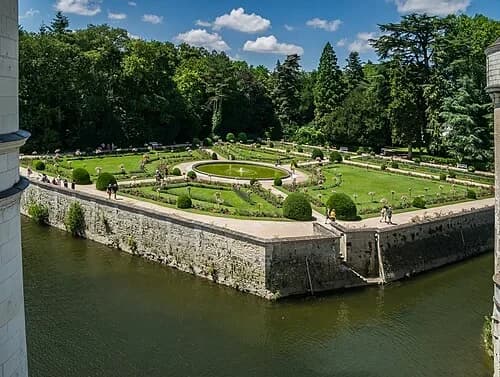
Garden of Catherine de' Medici
Positioned on the western side of the castle, this garden offers a distinct shift in atmosphere compared to the larger terrace across the water. Catherine de’ Medici commissioned this space specifically to rival the work of her predecessor, Diane de Poitiers. At the heart of the design is a graceful circular basin with a central fountain, a hallmark of the Italian Renaissance gardens Catherine grew up with in Florence. Unlike the rigid straight lines of Diane's garden, the paths here curve gracefully, leading visitors through a more enclosed and private landscape. The garden is framed by climbing roses and boxwood hedges, creating a sense of being in an outdoor room. From this vantage point, you have one of the finest views of the castle’s western facade, where the intricate carvings and turreted roofs are perfectly framed by the greenery. Over five thousand plants are meticulously tended here every year, maintaining the lush appearance that the Queen Mother demanded. By building this garden, Catherine did not just add beauty to the estate; she reclaimed the narrative of Chenonceau, ensuring her own cultural preferences and power were permanently etched into the very soil of the riverbank.
Madame Dupin’s Legacy
The tour concludes with the story of Louise Dupin, the Enlightenment hostess who famously saved the castle from destruction during the French Revolution.

Portrait of Madame Dupin
Jean-Marc Nattier · 1733 · canvas, oil paint
Louise Dupin was a woman of immense intellect who hosted many of the era's greatest thinkers, including Jean-Jacques Rousseau. However, her greatest legacy is the preservation of the castle itself. In the late 18th century, as the French Revolution swept across the country, mobs targeted grand palaces as symbols of the aristocracy. When the revolutionary fires reached Chenonceau, Madame Dupin faced the threat head-on. She did not appeal to the mob's sense of history or art; instead, she argued from a position of cold, hard utility. She pointed out that the gallery bridge spanning the Cher was the only crossing for miles in either direction. If the castle were destroyed, local farmers and merchants would lose their most vital trade route, causing economic ruin for the very people the revolution claimed to represent. Her logical argument worked, and the castle was spared while others in the region were looted or torn down. Louise Dupin remained so beloved by the local community that she was allowed to live out her days in the palace. She is buried in the woods on the estate, and her tomb serves as a quiet reminder of the woman whose pragmatism ensured that this architectural treasure survived.
Want to hear the rest?
Download the Stanza app to unlock all 20 stops and full GPS-guided navigation.
Frequently Asked Questions
How long does the Château de Chenonceau audio tour take?
The Château de Chenonceau audio guide includes 20 narrated stops. Most visitors spend 45 minutes to 1.5 hours exploring the complete tour, though you can listen at your own pace and skip or revisit any stop.
Is the Château de Chenonceau audio guide available in my language?
Stanza supports 15 languages: English, Spanish, French, German, Italian, Portuguese, Russian, Japanese, Chinese, Korean, Arabic, Hindi, Polish, Dutch, Hebrew. Check the guide in the app to confirm the languages currently available for this tour.
Can I use the audio guide offline at Château de Chenonceau?
Yes! Download the complete Château de Chenonceau tour — including all audio, maps, and images — before your visit. The Stanza app works completely offline, so you don't need WiFi or mobile data at the venue.
How much does the Château de Chenonceau audio guide cost?
The Stanza app is free to download. The current listed price for the Château de Chenonceau audio guide is $2.99; app-store region and currency may affect the final price.
How do I use the Stanza audio guide at Château de Chenonceau?
Download the free Stanza app, search for "Château de Chenonceau", and download the tour. When you arrive at the venue, the app uses GPS to detect your location and automatically plays the relevant narration as you move between points of interest — completely hands-free.
What makes the Stanza audio guide different from other Château de Chenonceau tours?
Stanza offers GPS-triggered narration that plays automatically as you walk through Château de Chenonceau — no need to manually select stops. The tour is available in 15 languages, works fully offline, and includes 20 expertly narrated stops with images and historical context.
What other audio guides are available near Château de Chenonceau?
Stanza offers multiple audio guides in Chenonceaux, France and nearby areas. After downloading the app, browse the map to discover all available tours near Château de Chenonceau. Each guide can be downloaded for offline use.