Stanza · Audio guide
Château d'IfAudio guide
A place to remember. A story to take with you.
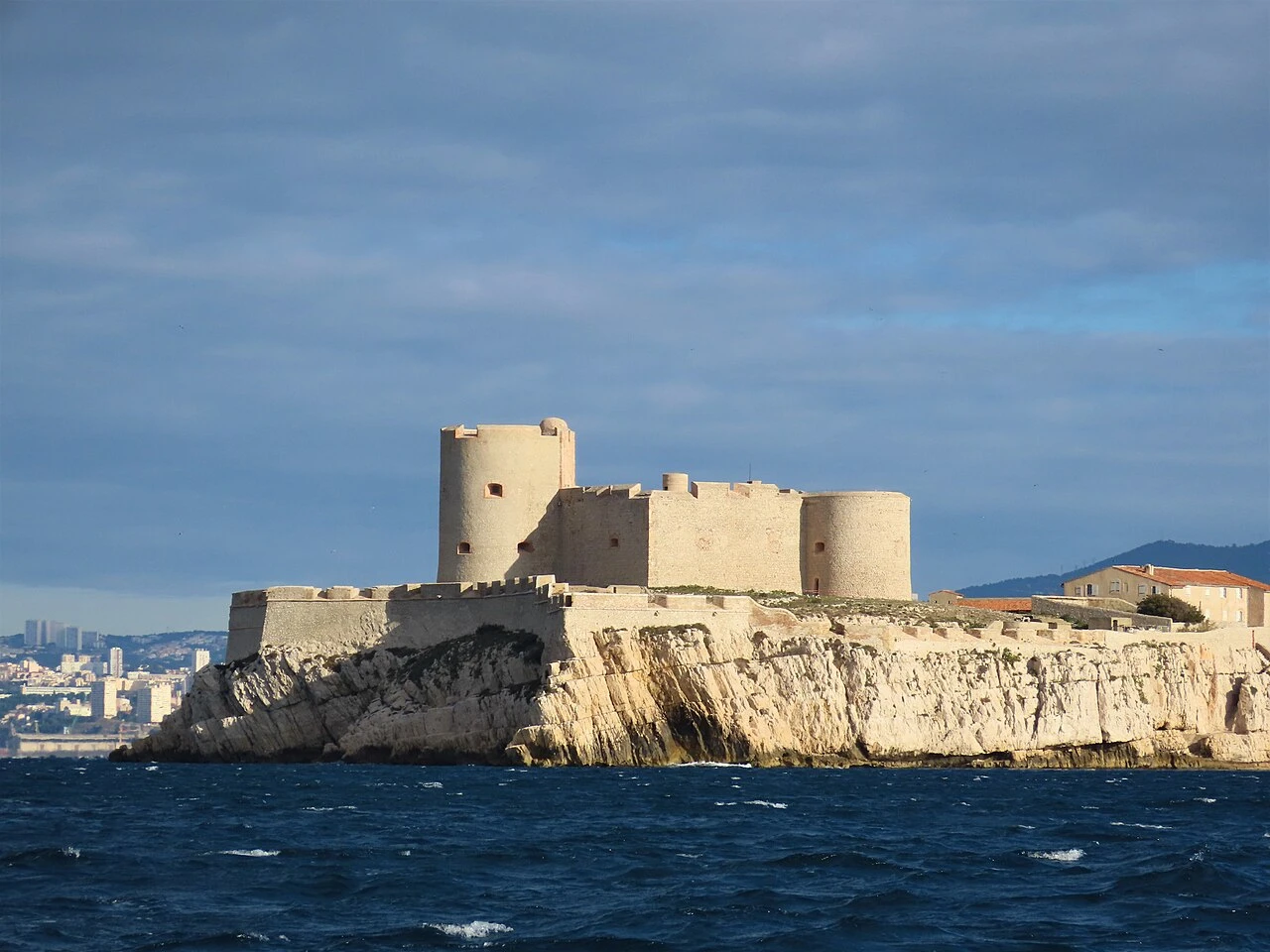
A historic fortress located on the island of If in the Mediterranean Sea, famous for being the primary setting of Alexandre Dumas's novel The Count of Monte Cristo. It served as a state prison from the 16th…
Download Stanza, then search for “Château d'If”.
About the tour
One guide. Your kind of visit.
A historic fortress located on the island of If in the Mediterranean Sea, famous for being the primary setting of Alexandre Dumas's novel The Count of Monte Cristo. It served as a state prison from the 16th until the 19th century.
Ready when you are.
- 01Get the free Stanza app.
iOS & Android
- 02Find your guide.
“Château d'If”
- 03Download before you go.
Works offline
Audio guide / 11 narrated stops
Inside the guide
Get to know a few of the stories before you go. Open a stop to read more.
01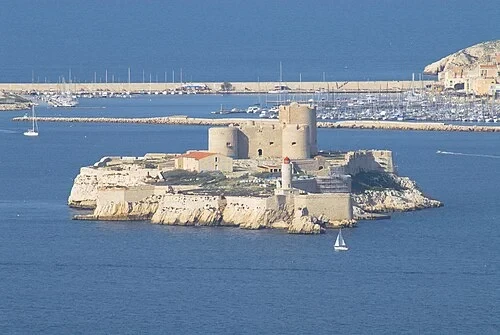 Island Jetty and ArrivalThe Island Fortress
Welcome to the legendary island fortress of Château d'If. Covering a mere three hectares, this isolated limestone rock in the Frioul archipelago was chosen for its strategic but highly hostile position. The surrounding waters are notorious for their exceptionally strong, hazardous currents, which turned the surrounding sea into an impenetrable barrier. This fearsome reputation earned the island a dark nickname: the Alcatraz of Marseille, as anyone attempting to swim to the mainland faced almost certain drowning. For centuries, the island remained a symbol of isolation and despair, keeping prisoners securely cut off from the world they once knew. Today, the grim reputation of this rocky outcrop has faded into historical intrigue, and the island now welcomes nearly one hundred thousand visitors each year who travel by boat to explore its ancient stone walls and peer into its infamous past.
Jan Drewes (www.jandrewes.de) · CC BY-SA 2.5
02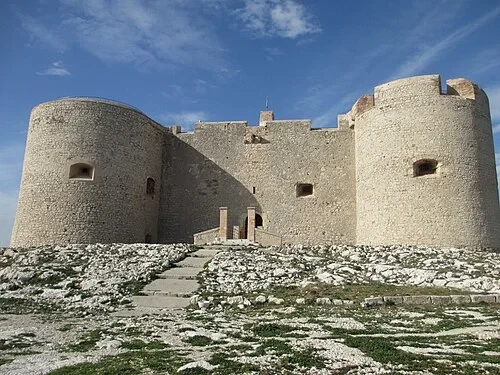 Main Entrance and FortificationsThe Main Entrance
King Francis I commissioned the construction of this formidable fortress to secure Marseille's harbor from naval aggression, while simultaneously keeping a watchful eye on the city's notoriously rebellious population. Ground was first broken in April 1529, and construction progressed rapidly, finishing approximately two years later in 1531. The resulting design features a massive, square central keep measuring twenty-eight meters on each side, flanked by two towering circular bastions that provided protective crossfire along the outer walls. Building materials were sourced directly from the island's own local limestone deposits, supplemented by heavier stone shipped over from the mainland. The entrance portal itself sits nestled between these high, curving walls, presenting a daunting barrier to any medieval attacker. Over the centuries, these walls proved highly effective, serving less as a coastal defense against foreign navies and more as a psychological deterrent to the restless citizens on the mainland.
Photo: Fredy LECLERCQ · CC BY-SA 4.0
03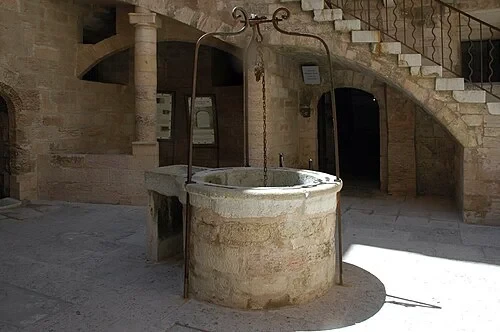 Inner Courtyard and WellThe Courtyard Well
Life on this remote limestone outcrop presented severe logistical challenges, the most critical of which was the complete lack of natural freshwater. To solve this problem, builders constructed a central stone well head in the middle of the courtyard to serve as the opening for a large subterranean rainwater cistern. Every drop of rain that fell onto the fortress roofs and courtyard paving was carefully channeled below ground to be stored for later use. Because no freshwater springs existed on the island, the daily survival of guards, officers, and prisoners alike hinged entirely on this collected rainwater. Looking closely at the well, you can see the simple, functional iron support arch arching over the mouth, once used to suspend buckets. The limestone paving stones surrounding the well head are heavily worn and smoothed, reflecting the countless footsteps of thirsty inmates and garrison soldiers who gathered here daily to draw their meager water rations.
Listen in the appPhoto: DimiTalen · CC0
04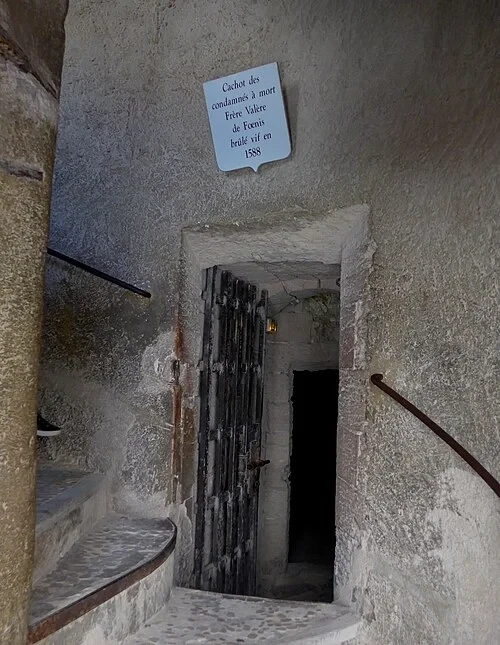 Ground Floor Communal DungeonsDungeon of the Condemned
Social hierarchy in early modern France extended even into the depths of the prison system. In the ground-floor dungeons of the fortress, the poorest inmates were packed together in dark, damp, and suffocatingly crowded rooms with virtually no ventilation. A low, dark stone archway leads into one of the most infamous of these lightless chambers, sealed by a heavy wooden door fitted with stout iron grilles. Above the doorway hangs a small plaque that details a grim piece of the cell's history. It commemorates Brother Valère de Foenis, a condemned prisoner who was held in these bleak quarters before being burned alive in 1588. Unlike wealthy prisoners, who could purchase better treatment, the destitute inmates in these lower cells were left to rot in cold silence, sleeping on damp straw with only the sea air passing through the high, barred slits to break the monotony of their confinement.
Listen in the appPhoto: Celeda · CC BY-SA 4.0
05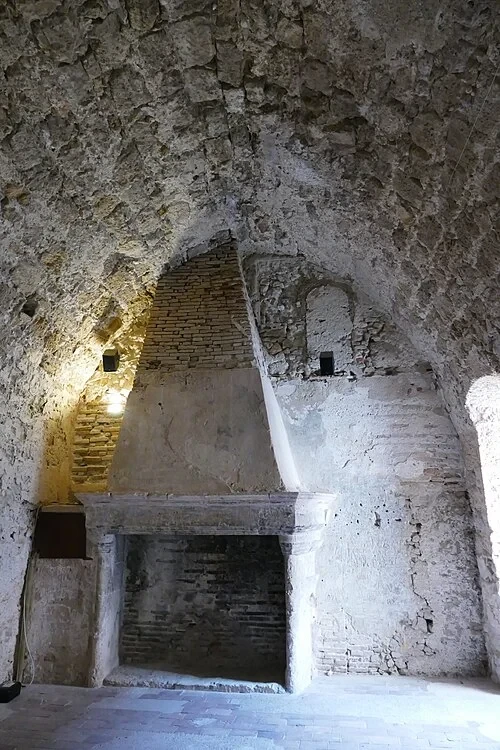 First Floor 'Pistole' CellsThe Private Cell
Prisoners with financial means experienced a completely different reality than those confined to the damp dungeons below. In these upper-story private cells, known as pistoles, wealthy inmates could rent private quarters by paying a regular fee to the prison governor. This financial transaction secured them access to amenities that made their captivity far more bearable. These chambers feature large, brick-lined fireplaces to ward off the damp sea chill, as well as finished brick tile floors instead of cold, bare stone. Deep window niches cut into the thick walls allowed plenty of natural light and fresh air to fill the room during the day. Wealthy captives could also pay for better food, furniture, books, and even a private servant to attend to their daily needs. This stark contrast turned imprisonment here into a business transaction, where the quality of one's stay was determined entirely by the depth of one's pockets.
Listen in the appThis illustration was made by Peter Potrowl. Please credit this with : © Peter Potrowl in the immediate vicinity of the image. A link to my website sitemai.eu would be much appreciated but isn't mandatory. An email to Peter Potrowl would be appreciated too. Do not copy this image illegally by ignoring the terms of the license below, as it is not in the public domain. If you would like special permission to use, license, or purchase the image please contact me Peter Potrowl to negotiate terms. More free pictures in my website. Donations are accepted here and here. · CC BY-SA 4.0
06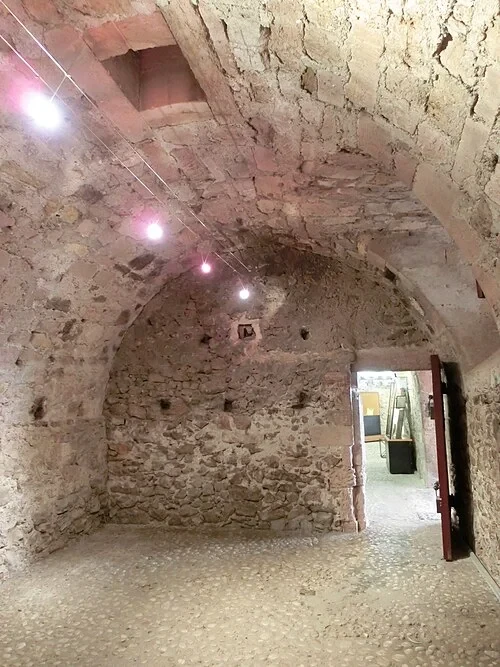 The Cell of Edmond DantèsThe Cell of Edmond Dantès
Alexandre Dumas published his classic adventure novel, "The Count of Monte Cristo", in the mid-nineteenth century, forever linking the Château d'If with the fictional characters of Edmond Dantès and the Abbé Faria. The book was a global phenomenon, and soon, crowds of literary tourists began arriving at the island, demanding to see the exact locations of the characters' confinement. To satisfy these passionate visitors, the entrepreneurial prison staff carved a low, rectangular hole directly into the base of the stone wall in this room. This manufactured tunnel was designed to mimic the secret passageway Faria dug to reach Dantès's cell in the novel. Today, the hole remains a physical testament to the power of Dumas's imagination, proving that sometimes, public demand is strong enough to physically alter historical structures to match the stories written about them.
Listen in the appAsk Nine · CC0
07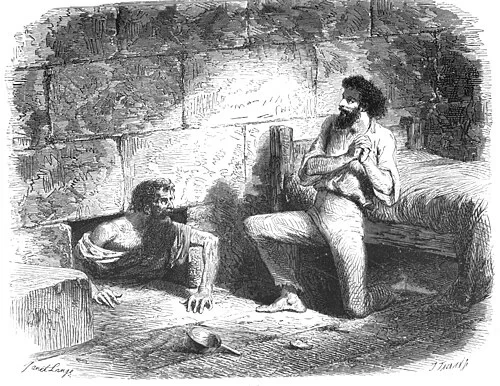 The Cell of Edmond DantèsIllustration of the Tunnel Escape
French artist Janet-Lange created this detailed mid-nineteenth-century engraving to illustrate the dramatic first meeting between Edmond Dantès and the Abbé Faria. The artwork depicts the elderly Faria emerging from a low, rough-hewn stone tunnel, crawling directly into the cell of a startled Dantès, who sits on his simple straw bed. Every element of the scene, from the textured stone walls to the dramatic lighting, emphasizes the isolation and determination of the two captives. This image, widely distributed in illustrated editions of Dumas's masterpiece, captured the public imagination so thoroughly that it became the defining visual representation of the prison's interior. Over time, the immense popularity of the novel and illustrations like this one permanently transformed how the public perceived the island fortress, ultimately blurring the line between real military history and beloved fiction in the minds of visitors worldwide.
Listen in the appunknown illustrators · Public domain
08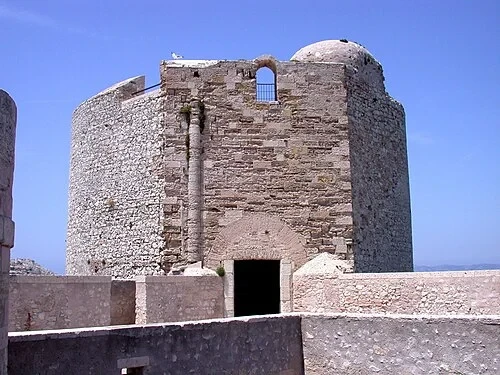 Notre-Dame-des-Passions Chapel and WatchtowerThe Watchtower
Perched high on the upper deck of the fortress, this distinctive cylindrical tower served a dual purpose for the island's permanent garrison. It functioned primarily as an elevated watchtower, providing sentries with an unobstructed view of the surrounding sea to spot incoming ships or potential security breaches. Inside, the tower also housed the small chapel of Notre-Dame-des-Passions, offering a place of prayer for the guards stationed on this isolated outpost. The exterior walls reveal a rich architectural history, showing a patchwork mix of rough stone block masonry interspersed with smoother, arched brickwork around the entrance door. This variation in building materials is the result of centuries of repairs, modifications, and structural reinforcement required to keep the building standing against the salty, wind-battered elements of the Mediterranean. It remains a striking example of the utilitarian military architecture that defined the island's long history.
Listen in the appPhoto: Wpopp · CC BY-SA 3.0
09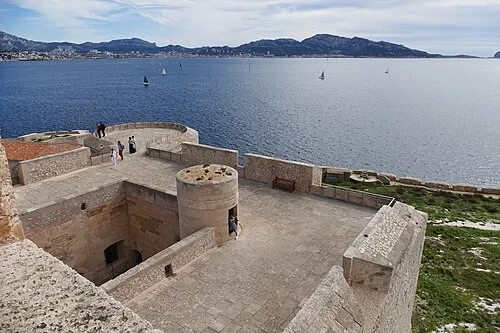 Upper Terrace and Artillery PlatformsThe Upper Terrace
From the wide, windswept stone terrace, sentries once kept watch over the shipping lanes leading into Marseille. Today, visitors stand here to take in the vast vistas of the open blue sea and the faint outline of the bustling city skyline on the horizon. For the prisoners held captive below, however, this panoramic view was a form of severe psychological torture. The city of Marseille, with its promises of freedom, family, and normal life, was clearly visible just a few miles across the water, tantalizingly close yet completely out of reach. The fast-moving, treacherous currents swirling around the island's rocky cliffs ensured that any attempt to swim to the mainland would be suicidal. This visual proximity to freedom, paired with the absolute physical impossibility of reaching it, underscored the absolute isolation of the fortress, turning the beautiful Mediterranean landscape into a cruel, mocking reminder of their captivity.
Listen in the appThis illustration was made by Peter Potrowl. Please credit this with : © Peter Potrowl in the immediate vicinity of the image. A link to my website sitemai.eu would be much appreciated but isn't mandatory. An email to Peter Potrowl would be appreciated too. Do not copy this image illegally by ignoring the terms of the license below, as it is not in the public domain. If you would like special permission to use, license, or purchase the image please contact me Peter Potrowl to negotiate terms. More free pictures in my website. Donations are accepted here and here. · CC BY-SA 4.0
10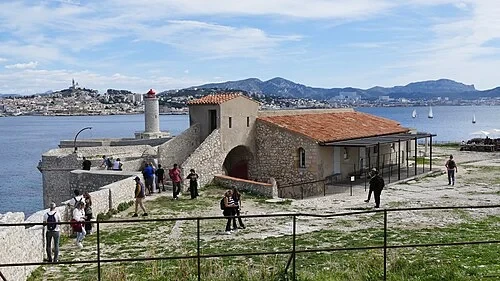 Vauban Barracks and LighthouseThe Vauban Barracks
In 1701, the famous French military engineer Sébastien Le Prestre de Vauban visited the island and sharply criticized its outdated sixteenth-century defensive designs. Recognizing the need for modernization, Vauban planned extensive upgrades to make the fortress more resilient against contemporary artillery. Part of this redesign included constructing these low, sturdy stone barracks to comfortably house a permanent military garrison on the island. The simple, robust architecture of the barracks was built to withstand both enemy fire and the harsh, salty sea air. In the background of this area, a nineteenth-century lighthouse rises above the ramparts, distinguished by its bright red cap. Together, these structures reflect the island's continuous evolution from an active military stronghold to a vital navigational aid, ensuring that the French state maintained both military and maritime control over the waters of Marseille for generations.
Listen in the appThis illustration was made by Peter Potrowl. Please credit this with : © Peter Potrowl in the immediate vicinity of the image. A link to my website sitemai.eu would be much appreciated but isn't mandatory. An email to Peter Potrowl would be appreciated too. Do not copy this image illegally by ignoring the terms of the license below, as it is not in the public domain. If you would like special permission to use, license, or purchase the image please contact me Peter Potrowl to negotiate terms. More free pictures in my website. Donations are accepted here and here. · CC BY-SA 4.0
Château d'If
Frequently asked questions
How much does the guide cost?
Free app download. Listed guide price: $3.99. Guide price shown in the app. Audio guide only. Venue admission is separate.
Can I listen without internet?
Yes. Download the guide’s audio, images, and maps in the app before your visit. Your downloaded content is then available offline.
Can I listen in my language?
Stanza supports 15 languages. Check the app for the languages available for this guide.
Do I need to follow a schedule?
No. This is a self-guided experience. Choose your stops, pause whenever you like, and return to a story at your own pace.
At your own pace
Explore Château d'If.
Download Stanza, then search for “Château d'If”.
Free app download · Guide price shown in the app
Keep exploring
Nearby audio guides
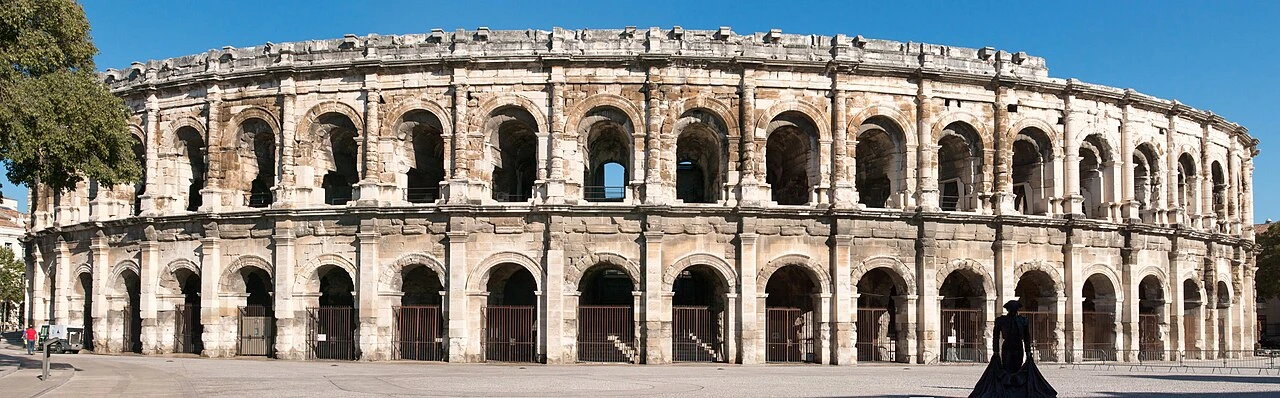
Nîmes
Amphitheater of Nîmes
Content & sources
Daniel VILLAFRUELA. · CC BY-SA 3.0
Paris
Arc de Triomphe de l'Étoile
Content & sources
Jiuguang Wang · CC BY-SA 2.0
Paris
Basilique du Sacré-Cœur de Montmartre
Content & sources
Tonchino · CC BY-SA 3.0
Saint-Denis
Basilique royale de Saint-Denis
Content & sources
Photo: Chabe01 · CC BY-SA 4.0