Stanza · Audio guide
Sainte-ChapelleAudio guide
A place to remember. A story to take with you.
Sainte-Chapelle is a royal chapel located within the historic Palais de la Cité in Paris. It is celebrated worldwide for its breathtaking 13th-century stained glass windows.
Download Stanza, then search for “Sainte-Chapelle”.
About the tour
One guide. Your kind of visit.
Sainte-Chapelle is a royal chapel located within the historic Palais de la Cité in Paris. It is celebrated worldwide for its breathtaking 13th-century stained glass windows.
Ready when you are.
- 01Get the free Stanza app.
iOS & Android
- 02Find your guide.
“Sainte-Chapelle”
- 03Download before you go.
Works offline
Audio guide / 22 narrated stops
Inside the guide
Get to know a few of the stories before you go. Open a stop to read more.
01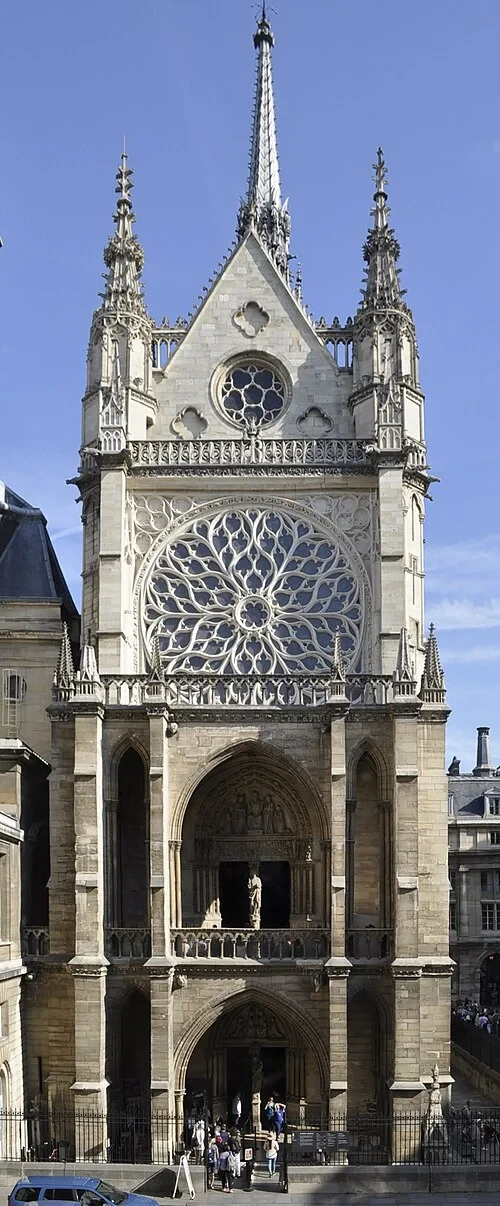 Arrival at the Royal PalaceThe West Facade
Welcome to one of the most remarkable examples of Gothic architecture in the world. Standing here on the West Facade, you are looking at what was designed to be a "stone and glass shrine." Commissioned by King Louis IX, this chapel was built in the mid-13th century with a singular, grand purpose: to house the Crown of Thorns and other holy relics of the Passion. The building rises to an impressive height of 42.5 meters to the roofline, a verticality that was intended to draw the eye and the spirit toward heaven. This architectural feat was part of a larger vision to transform Paris into a "New Jerusalem," making it the spiritual center of the Western world. From this vantage point, you can clearly see the massive Rose Window centered above the entrance porch. While its intricate stone tracery is impressive from the outside, it serves as a mere prelude to the spectacular display of light we will encounter once we step inside. Notice the two distinct levels; the lower porch leads to the chapel for the palace staff, while the upper level was reserved for the royal family and the display of the relics. As we move forward, consider the immense cost and effort required to raise such a monumental structure in just a few short years.
Photo: Tiraden · CC BY-SA 4.0
02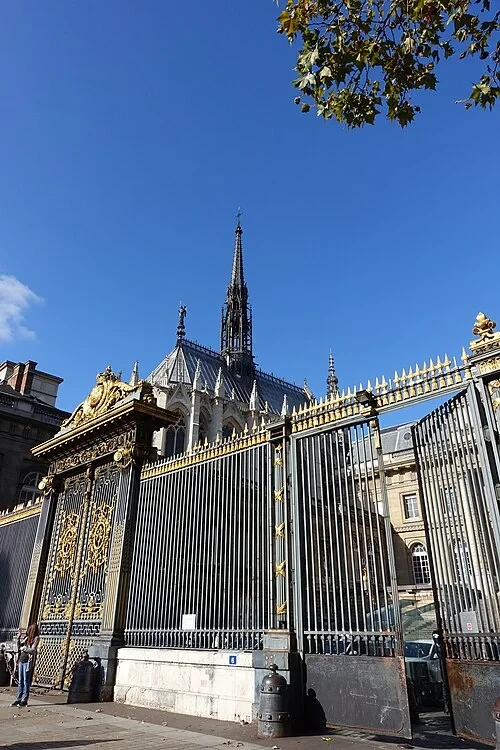 Arrival at the Royal PalaceThe Palace Gates
As you stand before these striking gold-tipped gates, you are at the threshold of the Palais de la Cité. This historic site was once the ancient seat of French royal power, serving as the residence for kings from the 10th through the 14th centuries. While much of the surrounding palace complex has been transformed over the hundreds of years since its founding�evolving into administrative and judicial offices�the Sainte-Chapelle remains essentially unchanged. It serves as the enduring spiritual heart of this vast complex. From this courtyard perspective, notice how the chapel's slender spire dominates the sky, reaching far above the surrounding buildings. This visual dominance was intentional, signaling the supreme importance of the chapel's contents to anyone approaching the palace. Despite the changing world around it, the chapel stands as a permanent witness to the era when the French monarchy intertwined its identity with divine right and the protection of the most sacred symbols of the faith. These gates represent the boundary between the public sphere of the city and the private, sacred world of the royal household, a world we are about to explore in more detail.
Guilhem Vellut from Paris, France · CC BY 2.0
03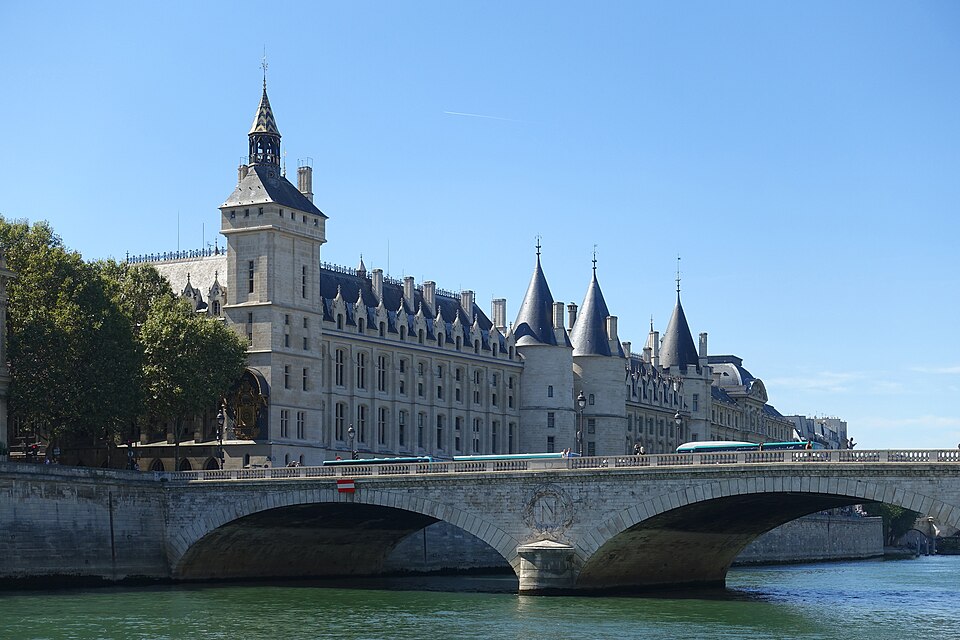 Arrival at the Royal PalaceThe Clock Tower
Looking beyond the chapel, you can see the broader reach of the palace complex, which includes the formidable walls of the Conciergerie visible in the background. This entire area on the Île de la Cité has been the locus of power in Paris for over a millennium. Long before the Gothic arches of the Sainte-Chapelle were raised, this was the site of the very first royal palace in the city, dating all the way back to the Merovingian kings of the early Middle Ages. The clock tower you see is a 14th-century addition to this royal legacy. It stands as a symbol of the transition from the purely spiritual focus of the early medieval period to the more structured, administrative governance of the later French monarchy. This geographic context is crucial for understanding the Sainte-Chapelle; it wasn't a standalone cathedral for the public, but rather a private, high-security royal sanctuary nestled within the most protected and powerful square mile of the kingdom. This surrounding architecture provides a stark, stony contrast to the delicate "palace of glass" we will find inside, highlighting the unique dual nature of this site as both a fortress of law and a temple of light.
Listen in the appGuilhem Vellut from Paris, France · CC BY 2.0
04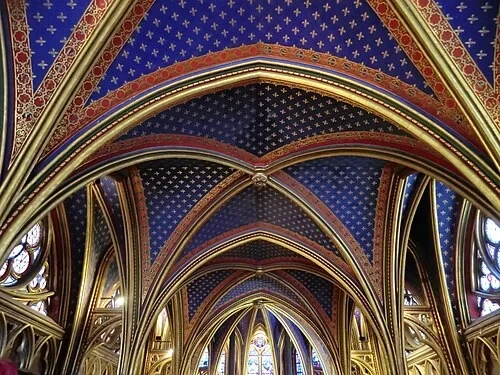 The Lower Chapel: A Sanctuary for the CourtThe Lower Chapel Vaults
Stepping inside the lower chapel, the atmosphere changes instantly. Unlike the soaring heights of the main chapel above, this space is remarkably intimate, with a ceiling height of only about 6.6 meters. These low, sturdy vaults were designed to support the immense weight of the upper chapel while providing a place of worship for the king's household, including palace staff and soldiers. Look up at the "starry sky" effect of the blue vaults, richly decorated with golden patterns. The walls and pillars are covered in vibrant red and gold decorations, creating a warm, jewel-like environment. Although this level lacked the expansive glass of the upper floor, the master builders used intense color and intricate patterning to ensure that even the staff's sanctuary felt like a heavenly space. The contrast you feel here is intentional; the physical compression of this room prepares you for the literal and spiritual "opening up" that occurs when you ascend to the royal level. This space served as the structural foundation for the glory above, reflecting a world where every level of society had its designated place in the presence of the divine.
Listen in the appPhoto: Zairon · CC BY-SA 4.0
05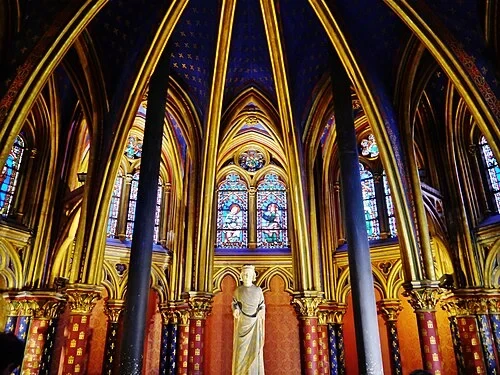 The Lower Chapel: A Sanctuary for the CourtStatue of the Virgin Mary
At the focal point of the lower chapel's apse stands this figure of the Virgin Mary, to whom this entire lower level is dedicated. Surrounding her are slender, elegant columns that branch out into the vaulting above, creating a sense of delicate structure even within these lower heights. The vibrant paint you see throughout this space�the deep reds, brilliant blues, and shining golds�is the result of a meticulous restoration in the 19th century. This restoration aimed to bring back the "polychrome" or multicolored aesthetic that was so central to medieval architecture but had faded or been painted over through the centuries. Even in this smaller, more utilitarian space, the combination of intricate carving and bold color achieves a "jewelry-box" effect. It reflects the 13th-century belief that sacred spaces should be as beautiful as possible to reflect the glory of the divine. Notice how the statue is integrated into the architecture, acting as a spiritual anchor for the palace staff who gathered here. The presence of the Virgin Mary in this lower sanctuary provided a maternal, protective figure for those who served the king�s household.
Listen in the appPhoto: Zairon · CC BY-SA 4.0
06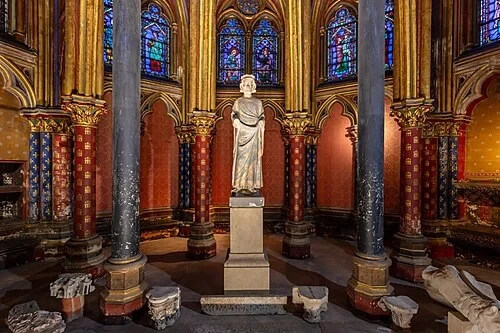 The Lower Chapel: A Sanctuary for the CourtSanctuary of the Palace Staff
The design of the Sainte-Chapelle is a physical manifestation of the strict social hierarchy of the 13th-century French court. While the king worshipped in the light-filled upper chapel, this lower sanctuary served his extensive household, including staff and soldiers. The intense polychrome decoration�meaning multicolored�on the pillars and the floor is designed to mimic the original styles of the 1200s. These patterns were carefully reconstructed during 19th-century restoration efforts to preserve the authentic medieval atmosphere that had been lost over time. The floor tiles, with their repeated geometric and heraldic motifs, complement the painted walls to create an immersive environment. By decorating the staff's chapel so lavishly, the monarchy demonstrated its immense wealth and piety to everyone in its service. It ensured that even those on the lower rungs of the palace hierarchy were surrounded by symbols of royal and divine authority, making the entire building a cohesive statement of faith and power. This floor level acts as a vibrant prelude to the even more spectacular decorations waiting on the royal level above.
Listen in the appDiego Delso · CC BY-SA 4.0
07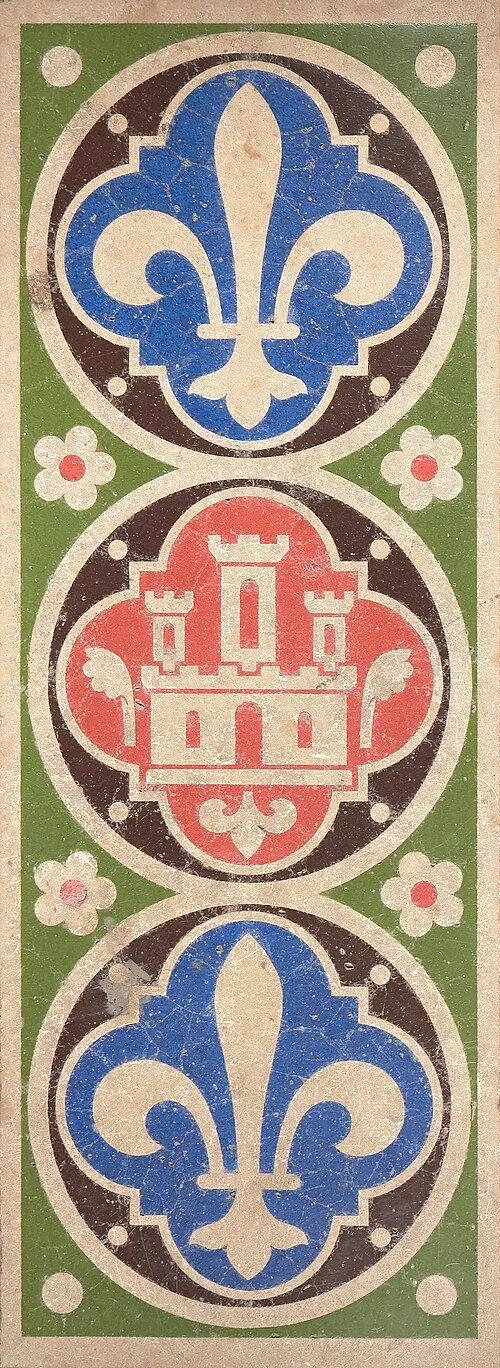 The Lower Chapel: A Sanctuary for the CourtFloor Tile with Castile Castle and Fleur-de-lis Motif
As you look down at the floor, you will see a repeating pattern of decorative motifs that tell a story of royal lineage. Two symbols dominate: the fleur-de-lis and the stylized castle. The fleur-de-lis is the long-standing emblem of the French monarchy, representing the purity and divine right of the kings of France. The castle motif represents the Kingdom of Castile, a tribute to King Louis IX's mother, Blanche of Castile, who served as regent during his youth and remained a powerful influence on his reign. These tiles are not merely decorative; they are a visual signature. They remind every visitor that they are standing within a private royal household's chapel. In the Middle Ages, heraldry was a primary way of communicating status and family history to a largely illiterate population. By walking upon these symbols, one was constantly reminded of the fusion between the French crown and the holy relics the building was constructed to protect. This floor decoration anchors the entire chapel in the specific personal and political identity of the Capetian dynasty.
Listen in the appBenjamin Gavaudo · Public domain
08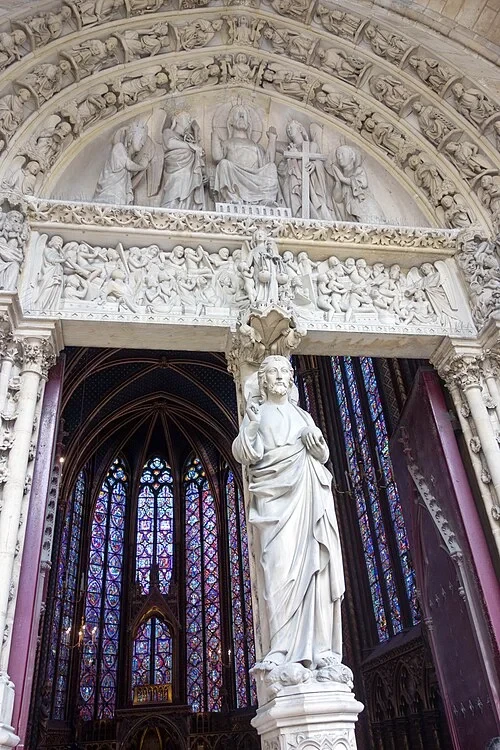 The Ascent to the Upper ChapelThe Portal of Christ
You are standing at the portal that marks the transition from the lower chapel to the upper levels of the sanctuary. Notice the central figure of Christ on the trumeau�the vertical pillar in the center of the doorway. He is depicted in a traditional pose of blessing, welcoming those who enter. Above the door, the elaborate carvings in the semi-circular tympanum tell biblical stories, often focusing on the Last Judgment, a common theme for church entrances meant to inspire reflection before worship. This portal serves as a symbolic gatehouse. Beyond it lies a narrow spiral staircase that leads upward. This physical ascent is meant to be a sensory journey. You move from the solid, relatively dark, and earth-bound atmosphere of the lower chapel toward what is often described as an "explosion of light" in the royal chapel above. The heavy stone and vibrant paint of this entrance provide the perfect psychological and visual contrast for the glass-walled wonder that awaits you at the top of the stairs. Take a moment to appreciate the intricate craftsmanship here before we emerge into the radiant space designed for the king himself.
Listen in the appKent Wang from London, United Kingdom · CC BY-SA 2.0
09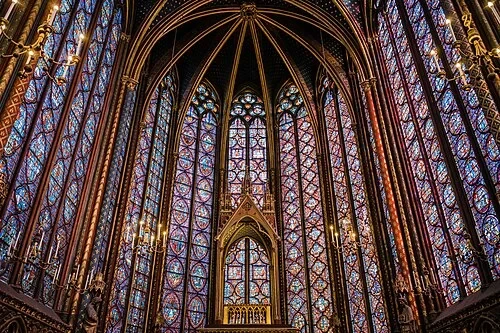 The Walls of LightThe Walls of Light
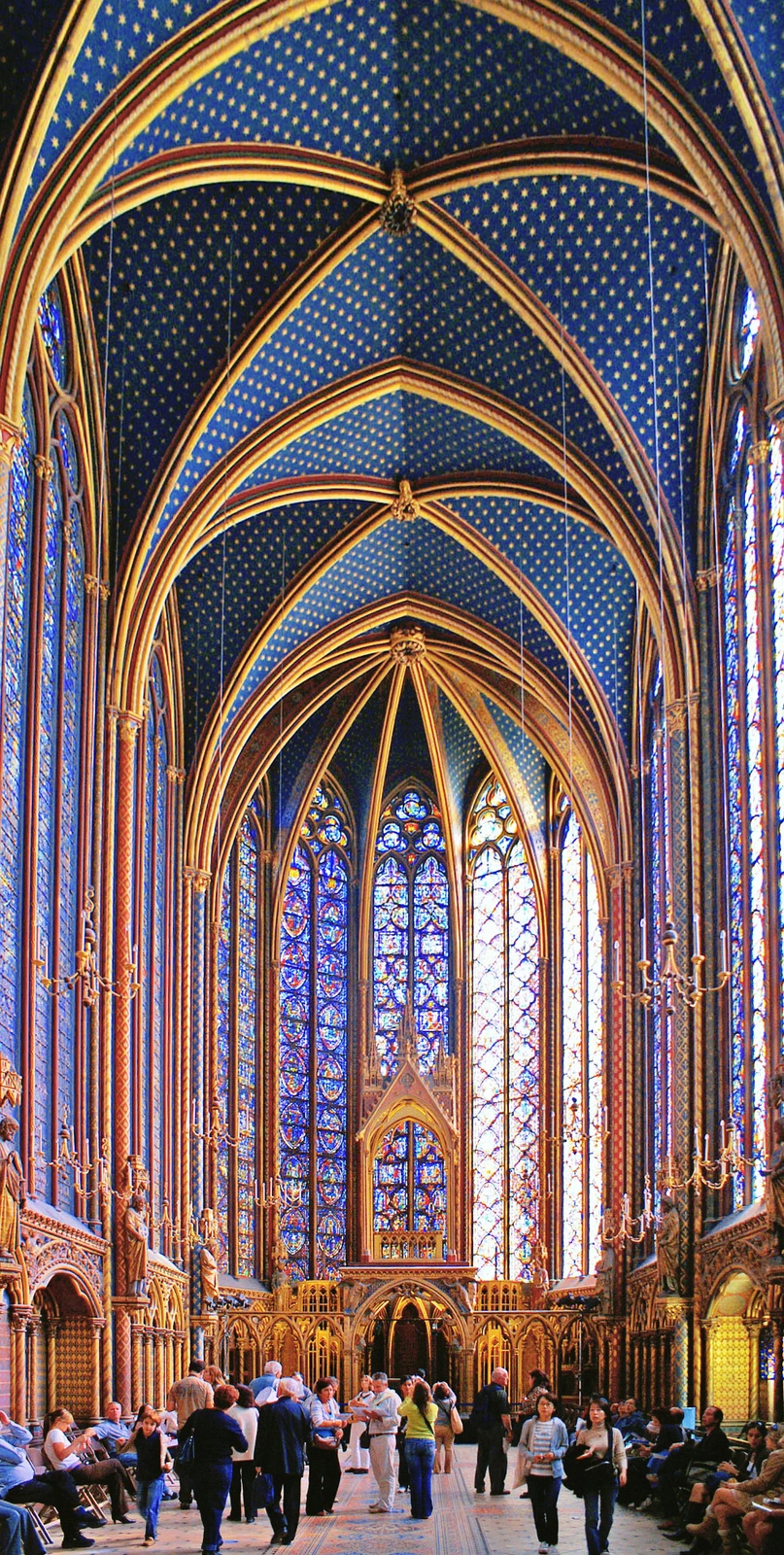
This is the moment most visitors wait for�the breathtaking climax of the Sainte-Chapelle experience. As you enter the upper chapel, the immediate visual impact is overwhelming. The solid stone walls you expect in a building this old have almost entirely disappeared, replaced by 15 massive stained-glass windows, each reaching a height of 15 meters. This is the absolute pinnacle of the "Rayonnant" Gothic style, a term derived from the French word for "radiant." The goal of this architectural movement was to minimize structural stone and maximize light. In the 13th-century mind, light was not just a physical phenomenon but a direct manifestation of the divine. By standing here, you are literally bathed in a "wall of light." The windows act as translucent boundaries between the earthly realm and the heavenly one, creating an atmosphere that feels weightless and ethereal. It is an engineering marvel that turns a massive stone building into a delicate, glowing cage of glass. Spend a moment letting your eyes adjust to this extraordinary display before we begin to look closer at the stories told within the panes.
Listen in the appPhoto: Oldmanisold · CC BY-SA 4.0
10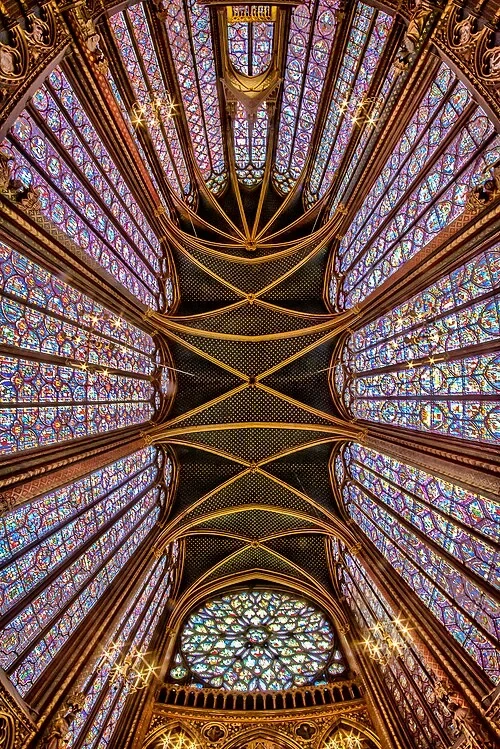 The Walls of LightThe Celestial Vault
Tilt your head back and look straight up at the ceiling, which soars to a height of 20.5 meters. At first glance, this "celestial vault" seems to float miraculously over the glass walls below, defying gravity. However, the fact that this building still stands after seven centuries is due to a hidden engineering masterpiece. To hold this "glass cage" together against the massive outward pressure exerted by the heavy roof, the medieval builders incorporated two secret belts of iron chains into the masonry. These chains act like a hidden skeleton, providing the tension necessary to keep the thin stone pillars from buckling outward under the weight of the vaults. Without this innovative use of iron reinforcement, the delicate balance of the Rayonnant Gothic style would have been impossible to maintain, and the walls would have collapsed long ago. The vaults themselves are painted deep blue and adorned with gold stars, continuing the "New Jerusalem" theme and making the ceiling appear like a literal gateway to the heavens above. It is a perfect marriage of high-medieval technology and spiritual aspiration.
Listen in the appPhoto: Denfr · CC BY-SA 4.0
Sainte-Chapelle
Frequently asked questions
How much does the guide cost?
Free app download. Listed guide price: $0.99. Guide price shown in the app. Audio guide only. Venue admission is separate.
Can I listen without internet?
Yes. Download the guide’s audio, images, and maps in the app before your visit. Your downloaded content is then available offline.
Can I listen in my language?
Stanza supports 15 languages. Check the app for the languages available for this guide.
Do I need to follow a schedule?
No. This is a self-guided experience. Choose your stops, pause whenever you like, and return to a story at your own pace.
At your own pace
Explore Sainte-Chapelle.
Download Stanza, then search for “Sainte-Chapelle”.
Free app download · Guide price shown in the app
Keep exploring
Nearby audio guides
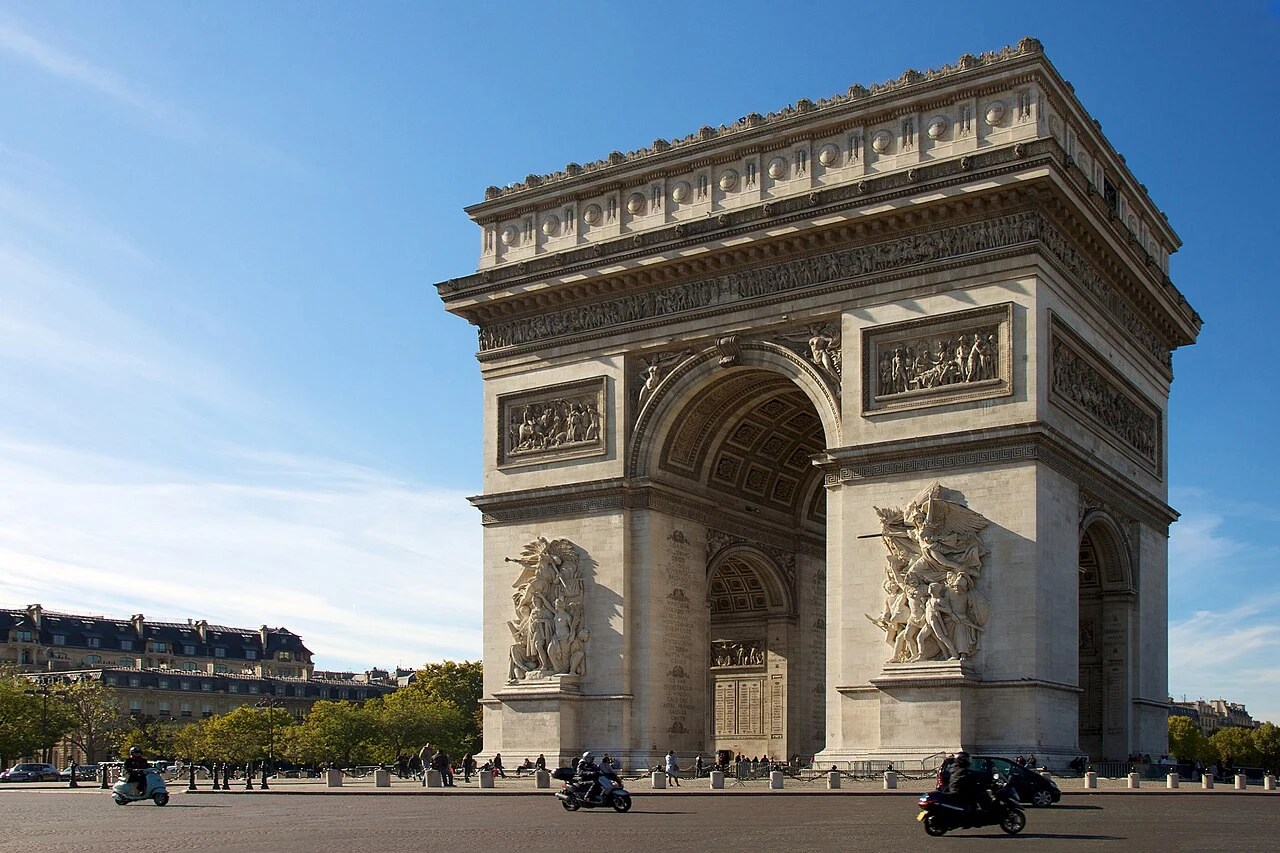
Paris
Arc de Triomphe de l'Étoile
Content & sources
Jiuguang Wang · CC BY-SA 2.0
Paris
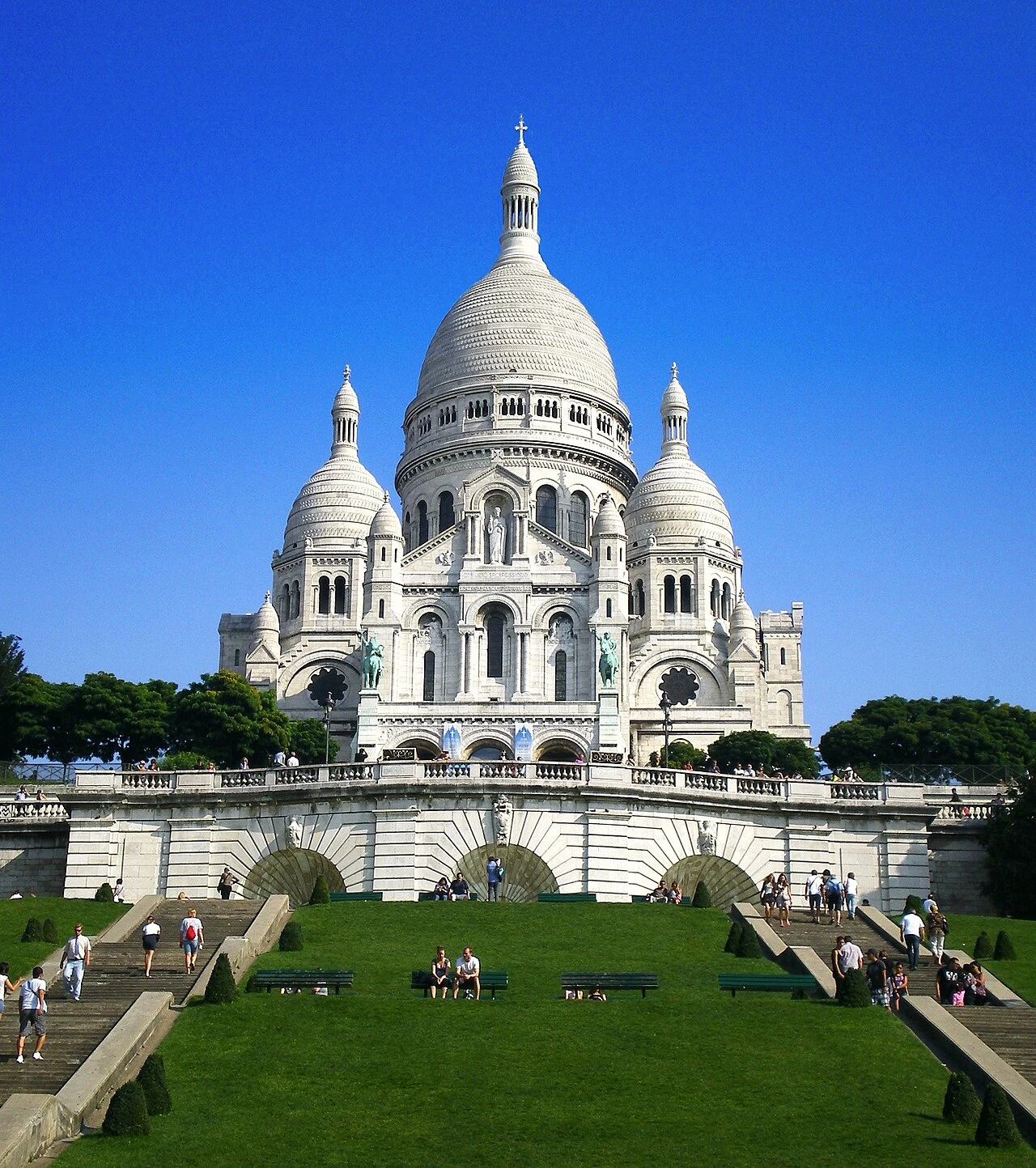
Basilique du Sacré-Cœur de Montmartre
Content & sources
Tonchino · CC BY-SA 3.0
Paris
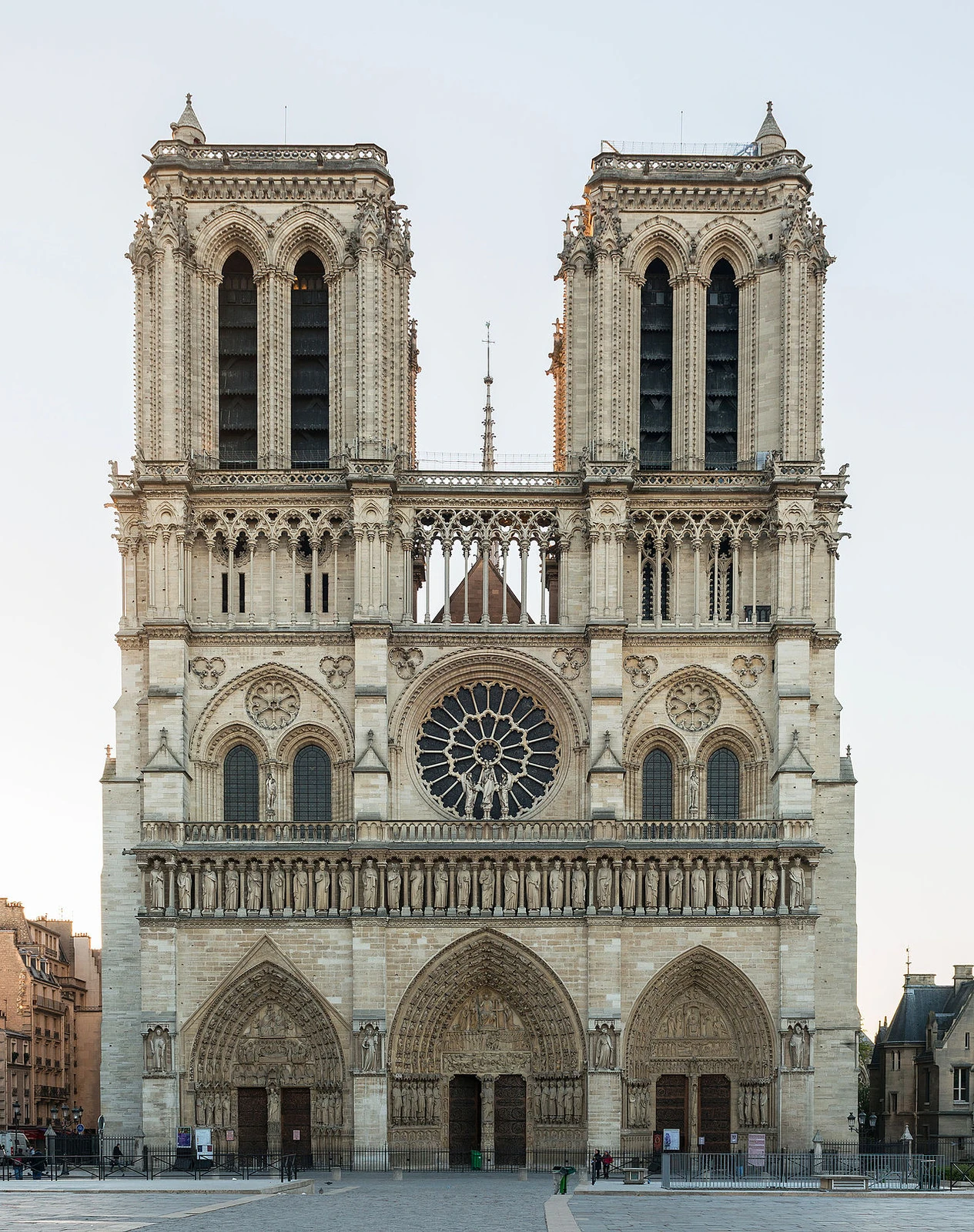
Cathédrale Notre-Dame de Paris
Content & sources
DXR · CC BY-SA 3.0
Paris
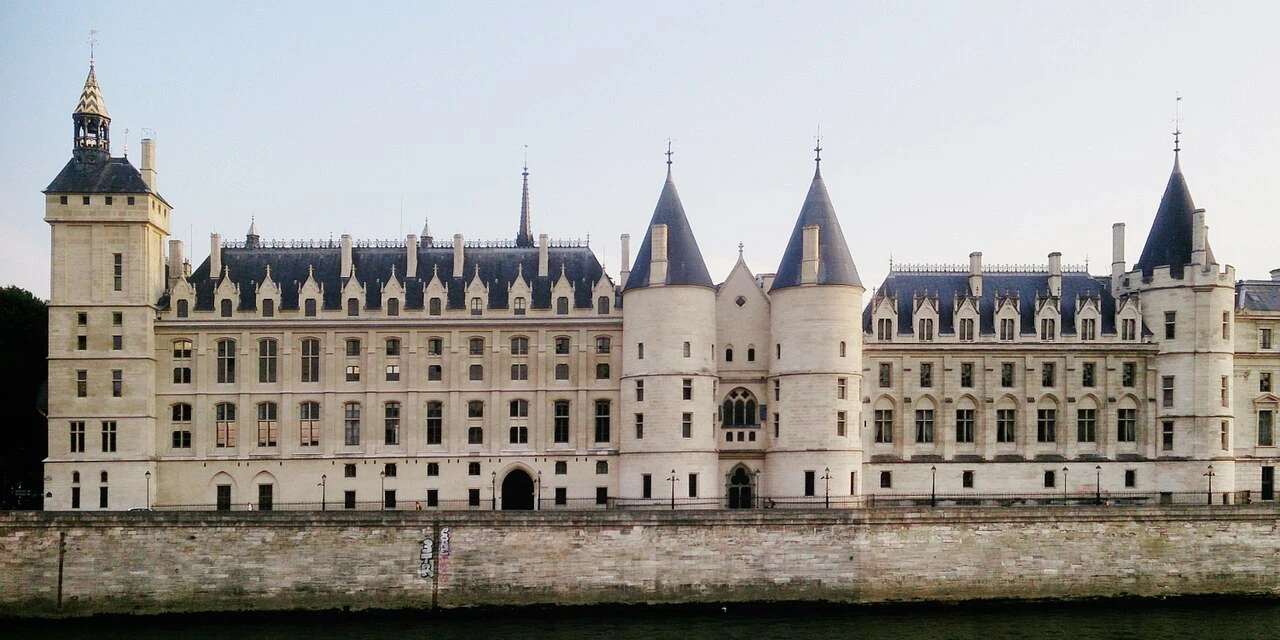
Conciergerie
Content & sources
Photo: Xandru · CC BY-SA 4.0