Stanza · Audio guide
Alte Nationalgalerie Audio Guide
A place to remember. A story to take with you.
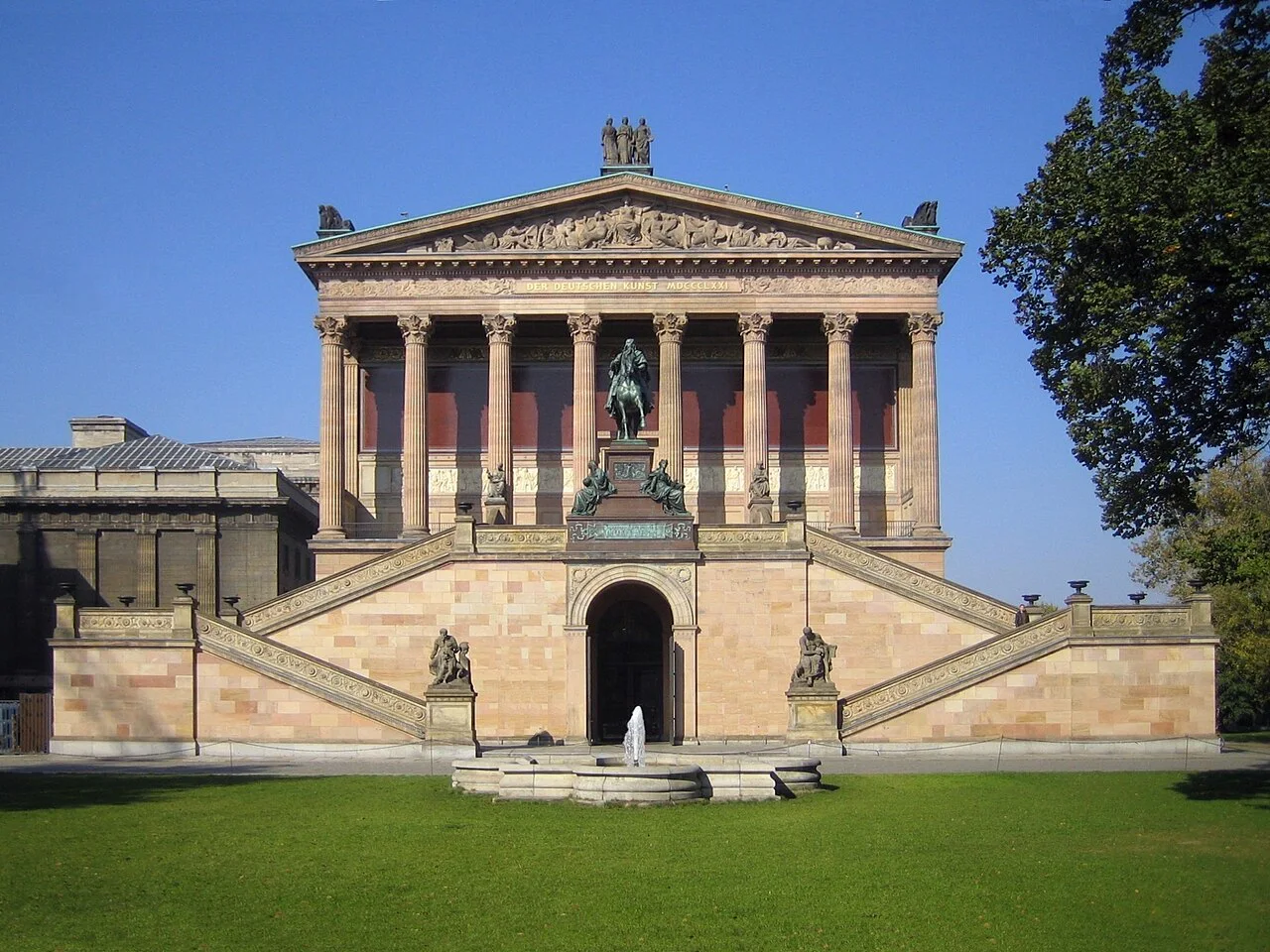
The Alte Nationalgalerie is a listed building on the Museum Island in Berlin that houses paintings and sculptures of the 19th century. It is part of a UNESCO World Heritage site recognized for its…
Download Stanza, then search for “Alte Nationalgalerie”.
About the tour
One guide. Your kind of visit.
The Alte Nationalgalerie is a listed building on the Museum Island in Berlin that houses paintings and sculptures of the 19th century. It is part of a UNESCO World Heritage site recognized for its architecture and its role in the development of 19th-century museums.
The Alte Nationalgalerie guide tells the stories of 123 artworks, including The Thinker (Auguste Rodin, Fonderie Hébrard), Isle of the Dead (Arnold Böcklin), The Monk by the Sea (Caspar David Friedrich), In the Conservatory (Édouard Manet), In the Summer (Pierre-Auguste Renoir), The Abbey in the Oakwood (Caspar David Friedrich), The Age of Bronze (Auguste Rodin), and Woman at a Window (Caspar David Friedrich). Every artwork is free to hear in the Stanza app until 1 January.
Ready when you are.
- 01Get the free Stanza app.
iOS & Android
- 02Find your guide.
“Alte Nationalgalerie”
- 03Download before you go.
Works offline
Audio guide / 123 artworks
Inside the guide
Get to know a few of the stories before you go. Open a stop to read more.
01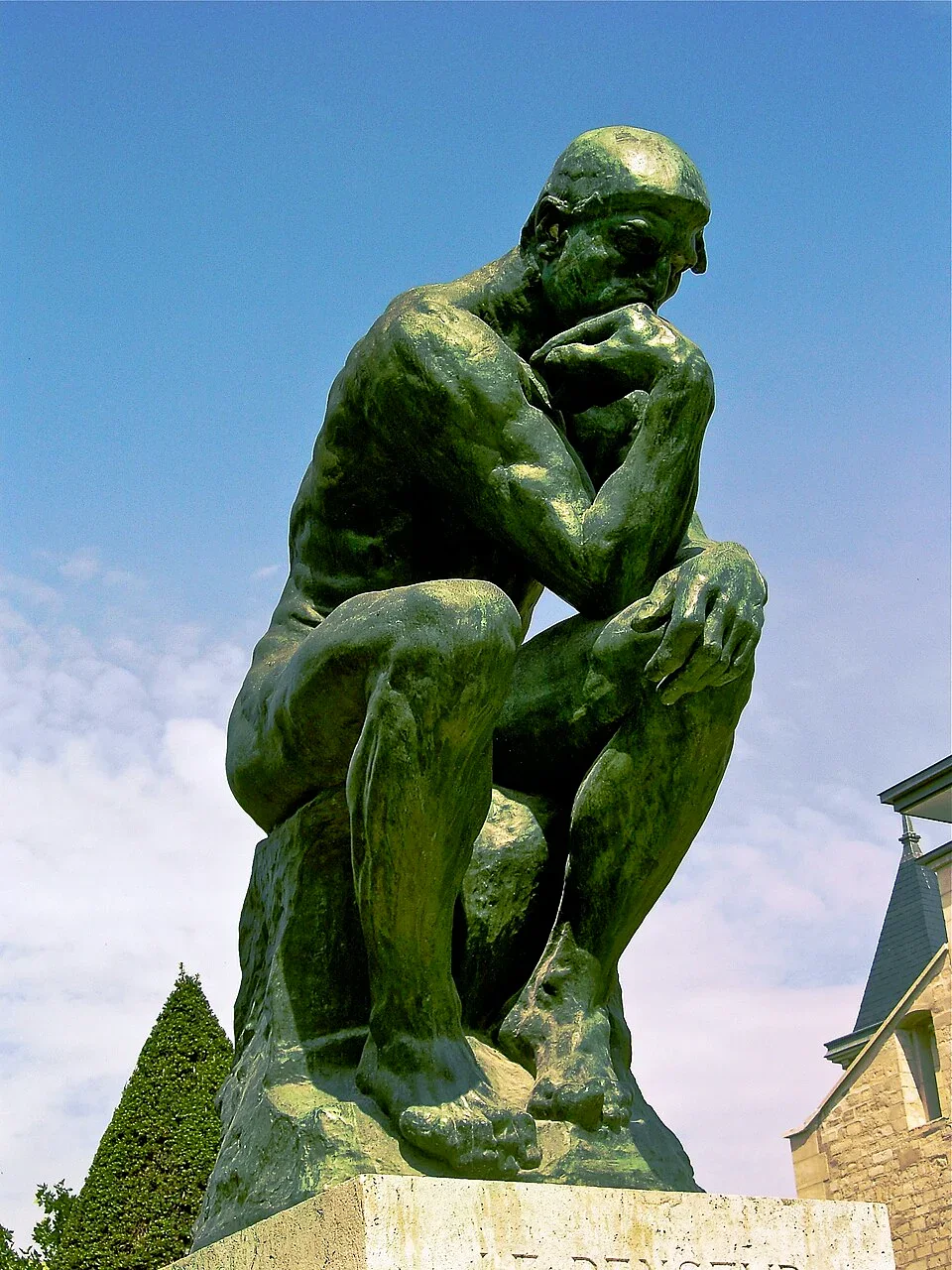
The Thinker
A man sits on a large rock, naked and muscular, leaning forward. His right elbow rests on his left thigh, and the back of his right hand holds up his chin. His whole body is drawn tight around the act of thought. But he was not made to sit alone. Rodin made him for a doorway called the Gates of Hell, built around Dante's Divine Comedy. The commission began in 1880, and the figure sat at the center, above the doorway, larger than most of the others. It was a project that occupied Rodin until the end of his life. He was first called The Poet, and he may be Dante himself, thinking over the great poem he wrote. The name we know came later, from the workers at the foundry. They thought the pose recalled a statue by Michelangelo of Lorenzo de' Medici, a figure that was itself called The Thinker. The body, though, belonged to a real man. Jean Baud was a French prizefighter and wrestler who appeared mostly in the red light district.
Listen in the appAndrewHorne (talk) · Public domain
02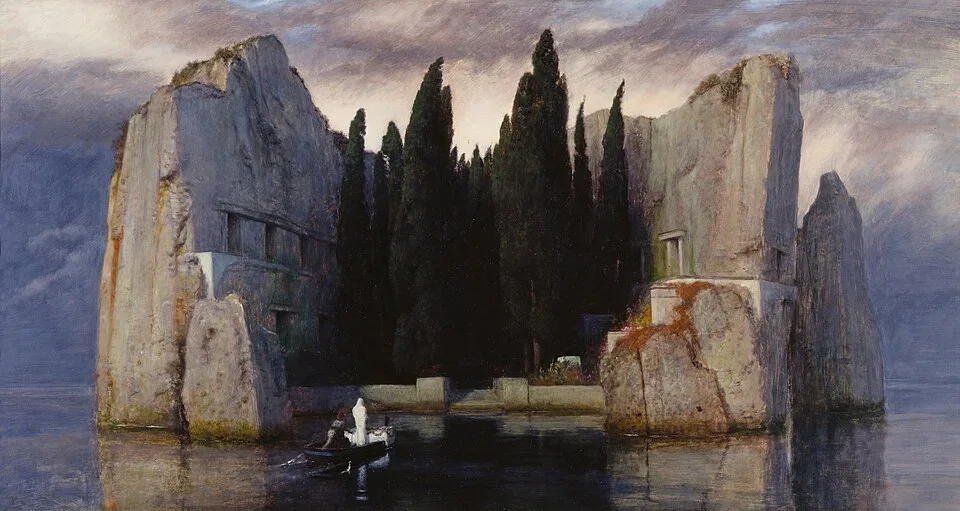
Isle of the Dead
Notice, in the rock on the right, a burial chamber marked with two small letters. They are A and B, the painter's own initials. He began putting them there with this version, signing his name into a tomb. Death was never far from him. Eight of his fourteen children died. His infant daughter Maria was buried in the English Cemetery. It lay close to his studio in Florence, where he painted the first three versions of this island. He offered no public explanation, only calling it a dream, so still that one knock would make you jump. Into that hush a boat is arriving. It carries a figure dressed all in white and, just ahead of it, what looks like a white coffin. At the center, dense dark cypresses rise above the rock, the trees long linked with graves and mourning.
Listen in the appArnold Böcklin · Public domain
03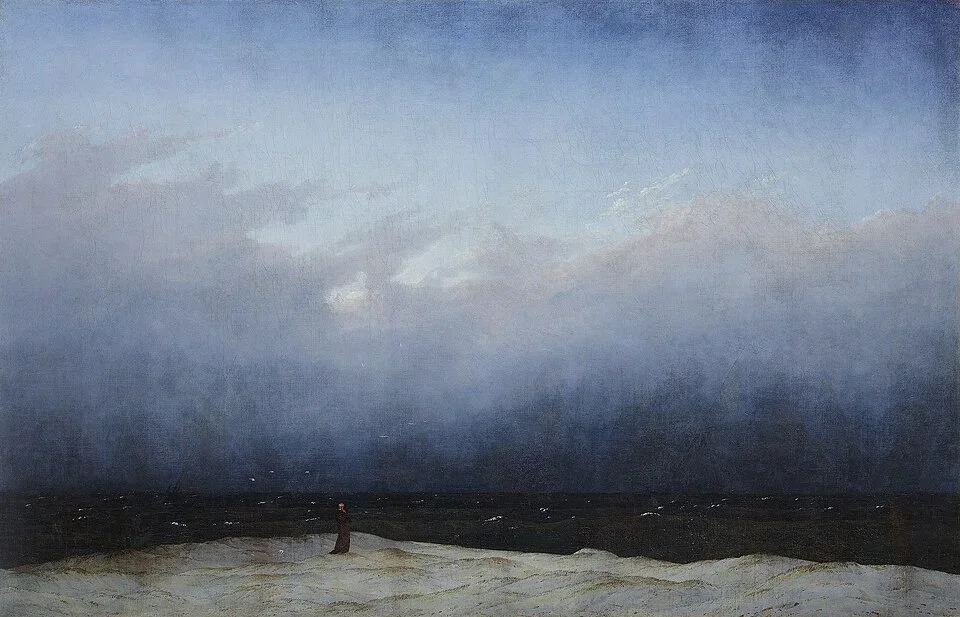
The Monk by the Sea
Nobody can say for sure just who the small figure is, or even where he stands. He has turned almost completely away from us. Most people call him a monk, a figure in a long garment. He stands at the tip of a strip of pale shore rising to the left. You cannot tell whether he is on a high rock or a gentle slope. He is the only upright thing in the picture. Below him lie a dark band of sea, a low horizon, and a sky that fills most of the canvas. Every other line runs out toward the edges. All that emptiness was made, not found. Friedrich built it in his studio from sketches drawn outdoors, choosing which pieces to keep. He first painted two small sailing ships, then painted them over. He kept changing the sky right up to the exhibition, but the spare arrangement never changed. When a woman who knew him saw it in 1809, it troubled her. She wrote of no wind, no moon, no ship, only a few gulls that made the loneliness worse. Heinrich von Kleist wrote that it felt as if your eyelids had been cut away. Yet the Prussian royal collection bought it, and the stir made his name. He had first put the image into words in a letter in February 1809.
Listen in the appCaspar David Friedrich · Public domain
04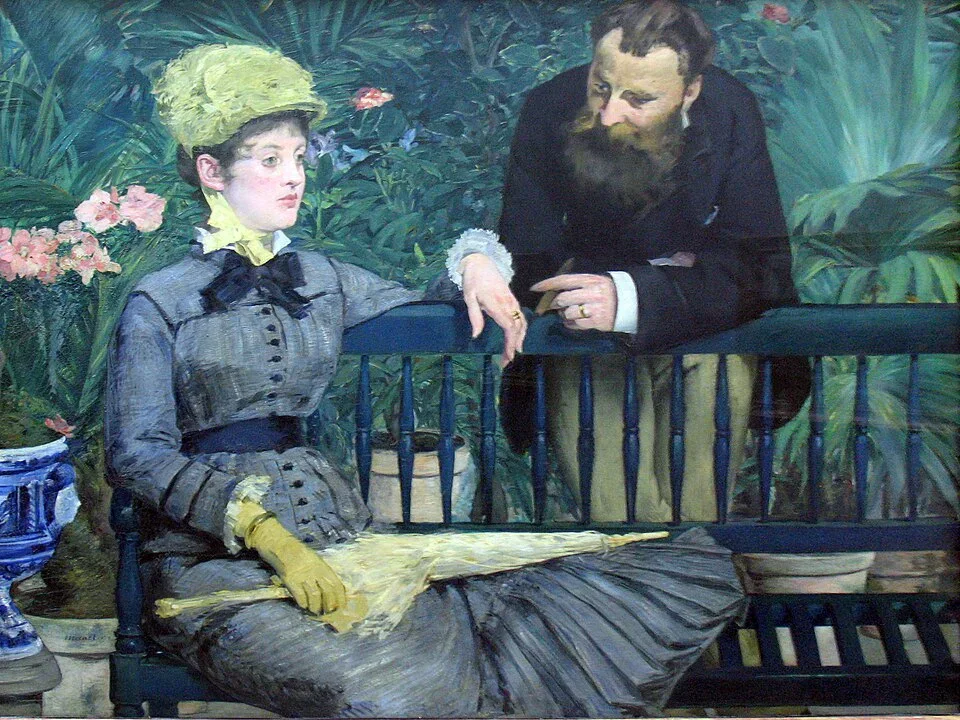
In the Conservatory
Are these two people close, or far apart? She sits on a bench, dressed in colour. He stands behind the bench in dark clothes, leaning forward with his forearms on its back. The upright slats stand between them. Their rings say they are married. Their hands are almost touching, the nearest sign of closeness. Her left hand lies bare on the bench. His fingers hold a cigar that looks unlit, and one finger points toward her. But his eyes go past her to the floor, and hers go nowhere in particular. They never meet. The two were Manet's friends, a couple who ran a clothing shop. The sittings lasted months, and he kept telling them to talk and laugh and move, so they would look alive. It seems to have done little good. When the picture went on show in Paris in 1879, people disagreed about what passed between them. It spent the end of the war hidden for safety in a mine in Merkers, and American soldiers were photographed with it there.
Listen in the appÉdouard Manet · Public domain
05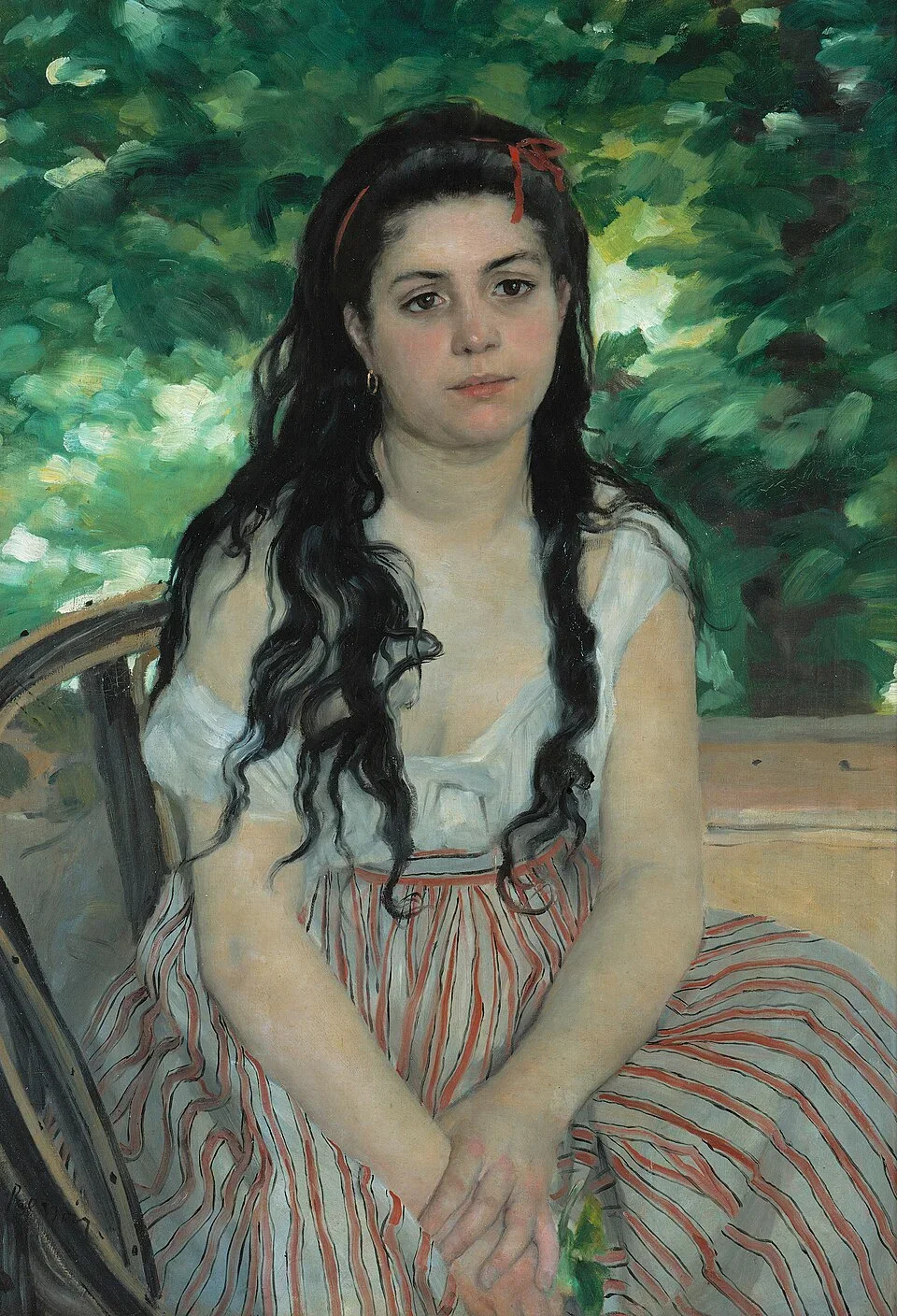
In the Summer
One strap of her white bodice has slipped down her right arm, leaving a deep neckline. Her eyes go past you, off to the right. The foliage behind her is only rough strokes of colour, with little white patches where sunlight shows through. In her right hand she holds a few green leaves, perhaps from the tree behind her. She is Lise Tréhot, about twenty, the companion of a painter. A portrait of her with a parasol had just brought him his first real success at the Paris Salon. Here she has been painted again, more casually. Renoir sent this one to the Salon in 1869 and added the word study to the title, so he could leave the background sketched. A proper Salon picture was expected to be finished all over. This one was not. Then it left his hands. The critic Théodore Duret bought it from a dealer, the collector François Depeaux had it next, and it was auctioned in 1906. It came here in 1907, paid for with money Mathilde Kappel had given. What we still cannot say is who bought it from him first.
Listen in the appPierre-Auguste Renoir · Public domain
06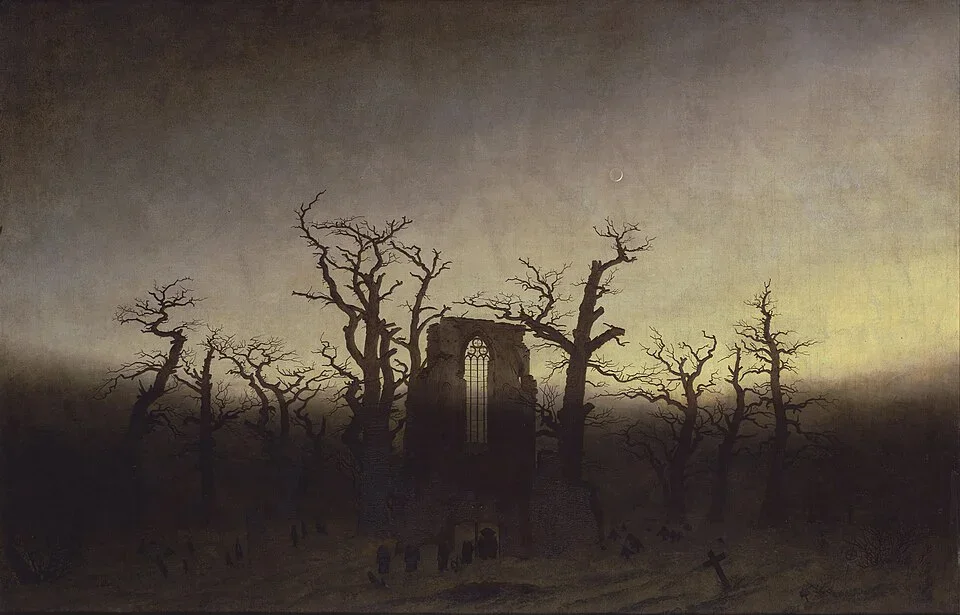
The Abbey in the Oakwood
High in the ruined church window, in the fine stone pattern, there is a small bird. Most people walk straight past it. There is no glass left in that window. Below, monks carry a coffin toward the open gate of a ruined Gothic church. Only two candles light their way. A grave has been dug fresh in the snow, with a few crosses barely showing. The lower third of the picture lies in darkness. Only the tops of the leafless oaks and the high part of the ruins catch the setting sun. There is a waxing crescent moon in the sky. Friedrich based the ruin on Eldena Abbey, destroyed by Swedish soldiers in the Thirty Years War, who later used its bricks to build fortifications. He set that old ruin against his own time, when French troops occupying Greifswald used its churches as barracks. So the funeral stands for Germany's hopes being buried. Yet the evening light and that growing moon promise life after death. He showed the picture with another, the Monk by the Sea, in Berlin in 1810. The king bought them both, and the purchase made him famous. He had asked that this one hang beneath the other.
Listen in the appCaspar David Friedrich · Public domain
07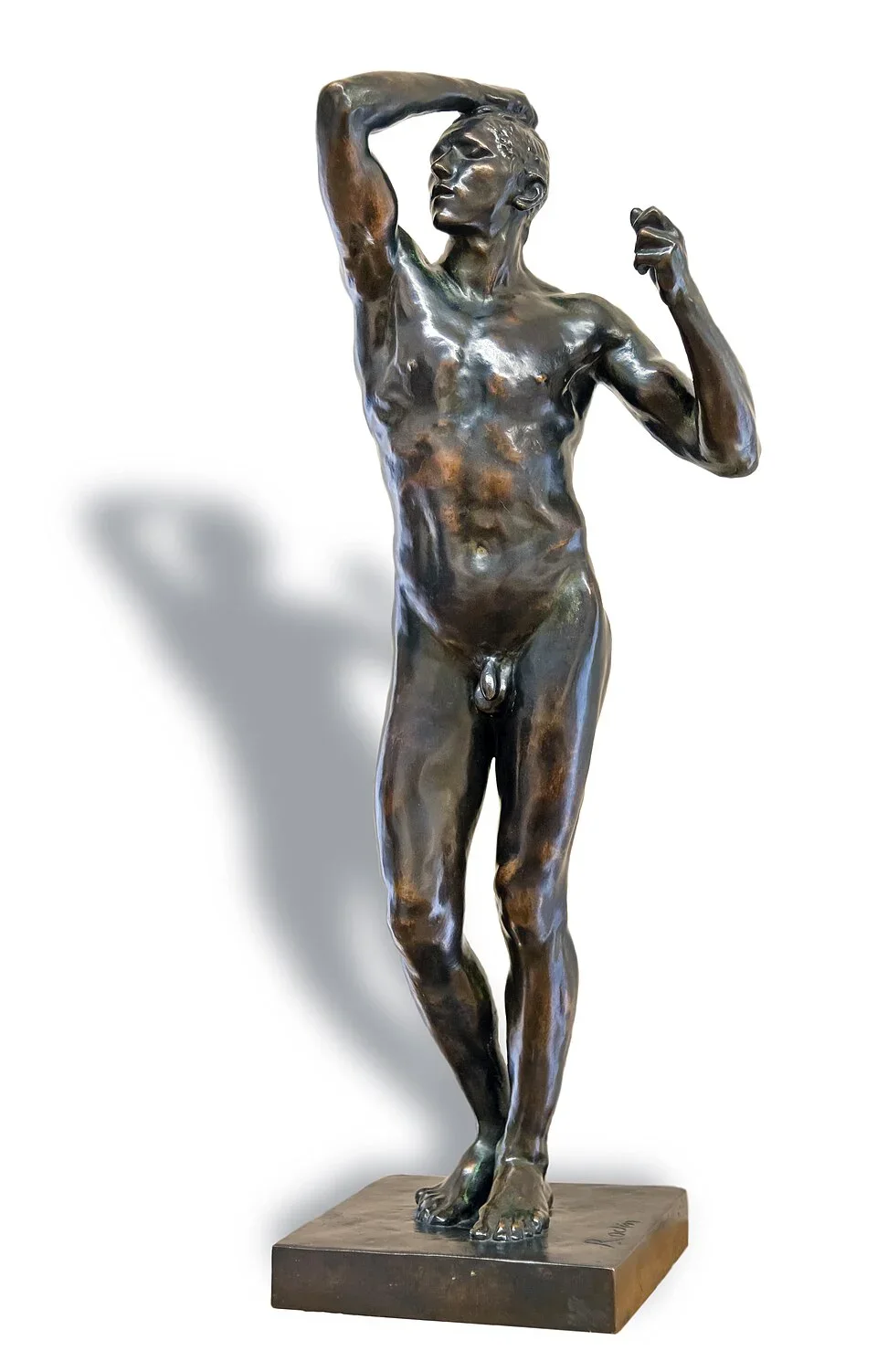
The Age of Bronze
Nobody could say who this man was. When Rodin first showed the figure, one critic complained he had forgotten to explain the subject. Another decided it was a man about to take his own life. The figure had once held a spear, and with it he was a defeated warrior, his hand at a wound on his head. Rodin took the spear away before showing him, and the story went with it. What is left is the body alone. The weight has shifted to one side, the lips are relaxed, the head sits on the shoulders, and one elbow rises above the head. The body suggests suffering but names no one. What unsettled people was how real he looked, and some accused the sculptor of casting it straight from a living man. The accusation only drew a crowd, eager to judge for themselves, and the work became his first success. Rodin had not cast it at all. He had asked a young Belgian soldier to pose, and kept photographs of him in that pose. The professional models he tried could not give him the natural poses he wanted.
Listen in the appDidier Descouens · Public domain
08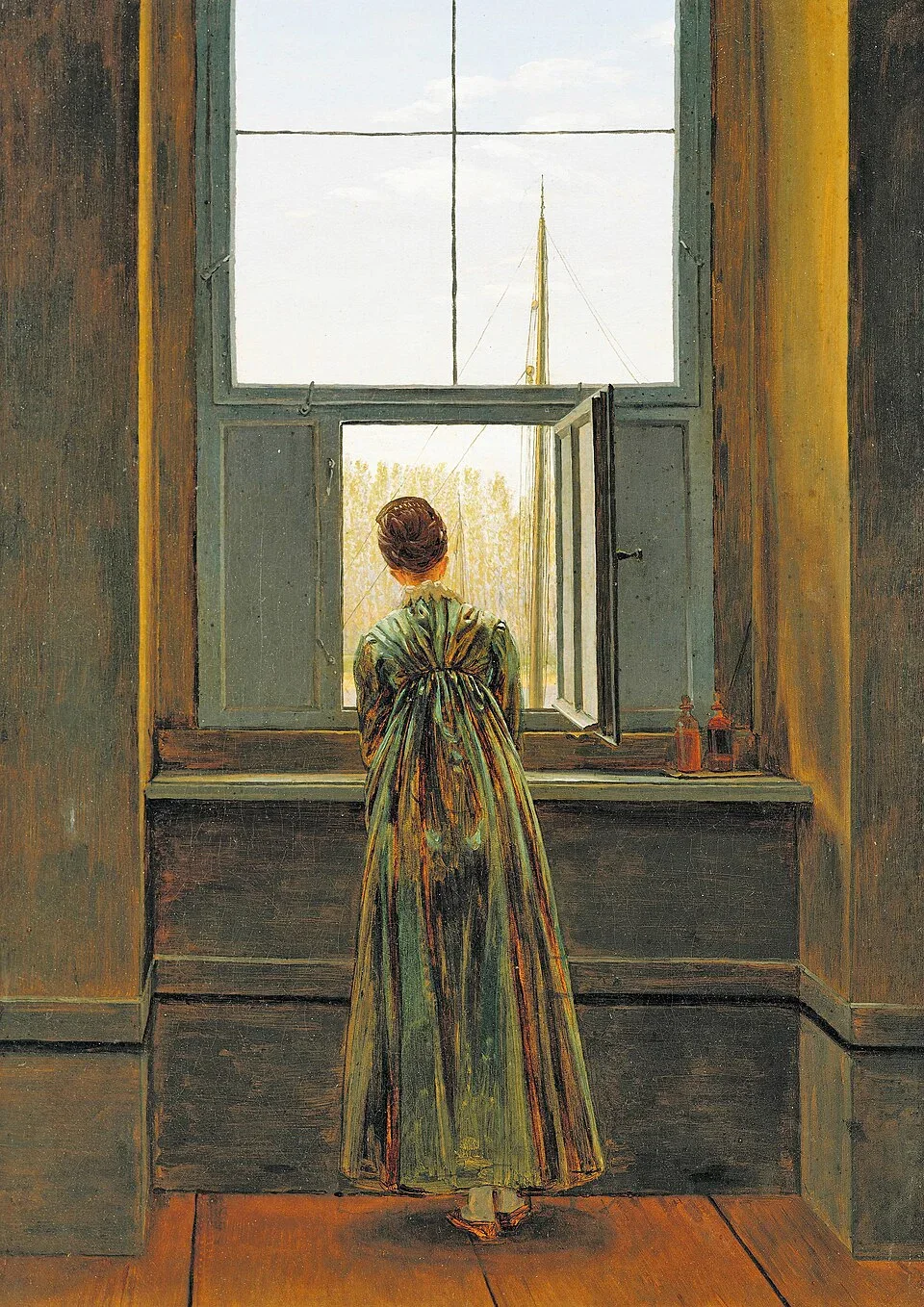
Woman at a Window
Friedrich painted this from life, in his own studio in Dresden. On the narrow window sill to the woman's right stand two bottles, and a thin rod behind them that might be a brush. This is one of the few times he painted the natural world more or less as it looked. The woman is his wife Caroline. She stands with her back to us, which puts us where she was, looking out over the Elbe. Beyond the window are the masts of two sailing boats and a row of tall poplars along the far shore. But the view was arranged, not simply copied. He painted the nearest boat and the poplars far closer to the window than they really were. That closeness is not realistic. Above her head, the window pane forms a cross. It reads as a Christian sign, standing between the room she is in and the world beyond the glass.
Listen in the appCaspar David Friedrich · Public domain
09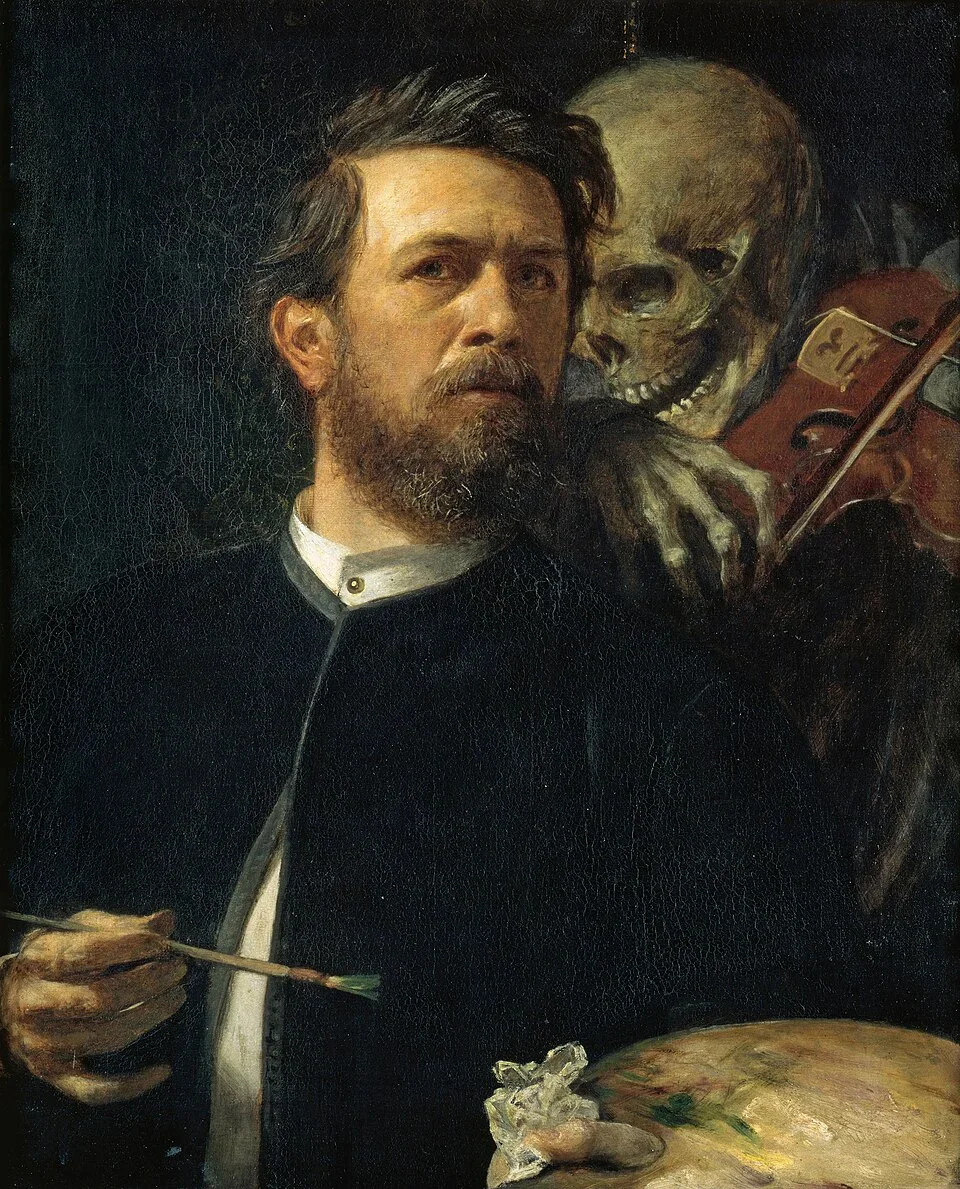
Self-Portrait with Death Playing the Fiddle
He wanted to paint his own face. The brush and palette are in his hands. But his gaze slides past you, as though into the distance, and his head is turned. What holds him is the figure close behind his left shoulder, coming out of the black background. It is Death, and Death is playing a violin. That violin has a single string. The three higher strings have snapped, and only the lowest one is left, the G. Played alone, it gives a strange, penetrating sound, like a bell. The three broken strings bring to mind the Three Fates, who spin the thread of a life, wind it, and cut it. If that last string breaks, the thread is cut for good. The idea was not entirely his own. Böcklin took it from an earlier portrait of an English nobleman named Brian Tuke. In his own day it was taken for a Holbein. There, a skeleton stands behind the sitter and points to an hourglass. Here, Death leans in with a fiddle. What he meant by the picture is still not known.
Listen in the appArnold Böcklin · Public domain
10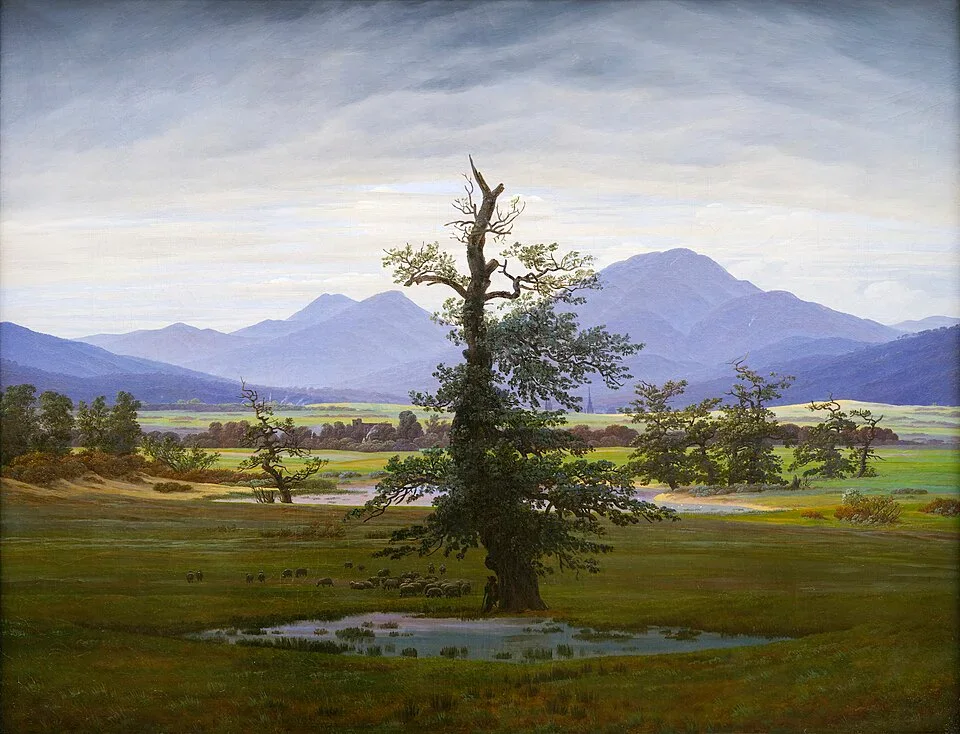
Solitary Tree
You could stand here a long while and never guess that this landscape was put together, not seen in one place. At first it reads as ordinary countryside. But the oak plays tricks with distance. It looks close, until you take in the tiny shepherd leaning against its trunk. Then the tree suddenly seems far off, and enormous. A small pond lies in the meadow with no path leading to it. Villages and church spires sit tucked into a valley, pressed in by the mountains and the sky above. Near and far keep trading places here, and you cannot settle which is which. Friedrich built the whole scene from at least six separate studies, made between 1806 and 1810.
Listen in the appPhoto: Shonagon · Public domain
- 11
The Watzmann
Caspar David Friedrich · 1824–1825
- 12
Frederick the Great Playing the Flute at Sanssouci
Adolph von Menzel · 1850–1852
- 13
White Lilacs in a Glass Vase
Édouard Manet · c. 1882
- 14
The Iron Rolling Mill (Modern Cyclopes)
Adolph von Menzel · 1872–1875
- 15
Moonrise over the Sea
Caspar David Friedrich · 1822
- 16
Princesses Monument
Johann Gottfried Schadow · 1795–1797
- 17
The Meeting of Frederick II and Joseph II in Neisse in 1769
Adolph von Menzel · 1855–1857
- 18
The Port of Greifswald
Caspar David Friedrich · 1818–1820
- 19
Two Men by the Sea
Caspar David Friedrich · 1817
- 20
Snowy cottage
Caspar David Friedrich · 1827
- 21
Slave market
Horace Vernet · 1836
- 22
Man and Woman contemplating the moon
Caspar David Friedrich · 1820–1824
- 23
The Berlin-Potsdam Railway
Adolph von Menzel · 1847
- 24
Caspar David Friedrich in his Studio
Georg Friedrich Kersting · 1812–1819
- 25
St. Germain l'Auxerrois
Claude Monet · 1867
- 26
Houses at Argenteuil
Claude Monet · 1873
- 27
Women Plucking Geese
Max Liebermann · 1872
- 28
Children's Afternoon at Wargemont
Pierre-Auguste Renoir · 1884
- 29
The Balcony Room
Adolph von Menzel · 1845
- 30
Departure of King Wilhelm I for the Army, July 31, 1870
Adolph von Menzel · 1871
- 31
Summer
Claude Monet · 1874
- 32
View of Vétheuil
Claude Monet · 1880
- 33
The Hussite Sermon
Karl Friedrich Lessing · 1835–1836
- 34
Villa in Hilversum
Max Liebermann · 1900–1901
- 35
Roger freeing Angelica
Arnold Böcklin · 1871–1874
- 36
The House at Rueil
Édouard Manet · 1882
- 37
Conversation
Edgar Degas · c. 1882
- 38
Falcon Attacking a Pigeon
Adolph von Menzel · c. 1844
- 39
Flying kites
Carl Spitzweg · 1880–1885
- 40
Gothic Cathedral by the Water
Karl Friedrich Schinkel · 1813
- 41
Parade in Potsdam in 1817
Franz Krüger · 1849
- 42
The reading room
Johann Peter Hasenclever · 1843
- 43
Portrait of Pauline Hübner, née Bendemann
Julius Hübner · 1829
- 44
Medieval City on a River
Karl Friedrich Schinkel · 1815
- 45
Franz Liszt Fantasizing at the Piano
Josef Danhauser · 1840
- 46
Parade on Opernplatz in 1822
Franz Krüger · 1830
- 47
The Chess Game
Johann Erdmann Hummel · 1818–1819
- 48
Ricordo di Tivoli
Anselm Feuerbach · 1866–1867
- 49
Prometheus Bound and the Oceanids
Eduard Müller · 1872–1879
- 50
Cromwell in the Battle of Naseby in 1645
Charles Landseer · 1851
- 51
Equestrian statue of Frederick William IV
Gustav Bläser, Alexander Calandrelli · 1875–1886
- 52
Hercules and the Nemean Lion
Max Klein · 1878–1879
- 53
Tilla Durieux as Circe
Franz von Stuck · c. 1912
- 54
View into the Heyday of Greece
August Ahlborn, Karl Friedrich Schinkel · 1836
- 55
The Neustadt-Eberswalde Rolling Mill
Carl Blechen · 1830–1834
- 56
Portrait of Heinrike Dannecker
Gottlieb Schick · 1802
- 57
The Rowers
Hans von Marées · 1873
- 58
Self-portrait
Sabine Lepsius · 1885
- 59
The Train of Death
Gustav Spangenberg · 1875–1876
- 60
Don Quichotte reading in his armchair
Adolf Schrödter · 1834
- 61
Dornröschen
Louis Sussmann-Hellborn
- 62
The Painter Franz Pforr
Johann Friedrich Overbeck · 1810
- 63
Saint Sebastian
Johann Friedrich Overbeck · c. 1813–1816
- 64
The Implorer
Camille Claudel · 1892–1905
- 65
The Warrior and His Child
Theodor Hildebrandt · 1832
- 66
Studio Wall
Adolph von Menzel · 1852
- 67
Girl Playing the Lute
Unknown Artist · 1909–1913
- 68
Girl Playing the Lyre
Unknown Artist · 1909–1913
- 69
Knight's castle
Karl Friedrich Lessing · 1828
- 70
Stephens Home at Leiden
Max Liebermann · 1889–1890
- 71
Casino Borghese in Practica
Jacob Philipp Hackert · 1780
- 72
Wine tasting
Johann Peter Hasenclever · 1843
- 73
Hus before the Stake
Karl Friedrich Lessing · 1850
- 74
Der Weimarer Musenhof. Schiller in Tiefurt dem Hof vorlesend
Theobald von Oer · 1860
- 75
Tower Ruins with Dragon
Carl Blechen · 1827
- 76
Maja
Anders Zorn · 1900
- 77
The Selling of Joseph
Johann Friedrich Overbeck · 1817
- 78
The Blinded Samson
Lovis Corinth · 1912
- 79
Portrait of Jenny Lind
Eduard Magnus · 1846
- 80
Portrait of the Mother of Captain von Stierle-Holzmeister
Ferdinand Georg Waldmüller · 1819
- 81
The Rugard on Rügen
Karl Friedrich Schinkel · 1821
- 82
Hebe
Antonio Canova · 1796
- 83
In the Troops' Quarters before Paris
Anton von Werner · 1894
- 84
Fredrick II at the Battle of Hochkirch
Adolph von Menzel · 1850–1856
- 85
Turkish Street Scene
Osman Hamdi Bey · 1888
- 86
King Frederick II's Roundtable at Sanssouci
Adolph von Menzel · 19th century
- 87
After School
Ferdinand Georg Waldmüller · 1840s
- 88
Finis Poloniae
Dietrich Monten · 1832
- 89
Early Spring in Vienna Forest
Ferdinand Georg Waldmüller · 1864
- 90
Visit to the Prison
Theodor Leopold Weller · 1835
- 91
Lesser Ury - Nollendorfplatz by night - 1925
Lesser Ury · 1925
- 92
Consultation (A Worrisome Child)
Hugo von Habermann · 1886
- 93
The Riesengebirge Mountains
Caspar David Friedrich · 1830–1835
- 94
Portrait of the Brothers Jacob and Wilhelm Grimm
Elisabeth Baumann · 1855
- 95
Prater Landscape
Ferdinand Georg Waldmüller · 1830s
- 96
Gothic Church on a Rock by the Sea
Karl Friedrich Schinkel · 1815
- 97
Exhibition of the Century
Peter Behrens · 1906
- 98
Morning
Karl Friedrich Schinkel · 1813
- 99
Fog in the Elbe Valley
Caspar David Friedrich · 1821
- 100
The Oaktree in the Snow
Caspar David Friedrich · 1829
- 101
Don Quixote and Sancho Panza
Honoré Daumier · 1866–1868
- 102
Miriam
Anselm Feuerbach · 1862
- 103
The painters Karl Friedrich Lessing, Carl Sohn and Theodor Hildebrandt
Julius Hübner · 1839
- 104
Weeping at the Cross
Arnold Böcklin · 1871–1874
- 105
Moonlight on the Friedrichskanal in Old Berlin
Adolph von Menzel · c. 1856
- 106
The Interior of the Palm House
Carl Blechen · 1832
- 107
The Symposium
Anselm Feuerbach · 1873
- 108
The Granite Bowl at the Lustgarten, Berlin
Johann Erdmann Hummel · c. 1831
- 109
Sea Surf (the Sound)
Arnold Böcklin · 1883
- 110
Prince Augustus of Prussia
Franz Krüger · c. 1817
- 111
Outpost Duty
Georg Friedrich Kersting · 1815
- 112
Pauline Runge with her two-year-old-son
Philipp Otto Runge · 1807
- 113
Forest path overlooking a church
Carl Blechen · 1834
- 114
Pilgrim in a Rocky Valley
Carl Gustav Carus · c. 1820
- 115
The Battlefield at Marathon
Carl Rottmann · c. 1849
- 116
Stormclouds over the Castle Tower in Dresden
Johan Christian Dahl · c. 1825
- 117
Farewell at Dawn
Moritz von Schwind · 1859
- 118
Paul, Maria, and Filomena von Putzer
Friedrich Wasmann · 1870
- 119
The Allegiance of the Silesian Diet before Frederick II in Breslau
Adolph von Menzel · 1855
- 120
Stormy Weather over the Roman Campagna
Carl Blechen · 1829
- 121
Knight before the Charcoal Burner's Hut
Karl Philipp Fohr · 1816
- 122
Workshop of the Gropius Brothers
Eduard Gaertner · 1830
- 123
Waterfalls at Subiaco
Joseph Anton Koch · 1813
Alte Nationalgalerie
Frequently asked questions
How much does the guide cost?
Free app download. Free until 1 January. Listed guide price: $1.99. Audio guide only. Venue admission is separate.
Can I listen without internet?
Yes. Download the guide’s audio, images, and maps in the app before your visit. Your downloaded content is then available offline.
Can I listen in my language?
In English for now. More languages soon.
Do I need to follow a schedule?
No. This is a self-guided experience. Choose your stops, pause whenever you like, and return to a story at your own pace.
Which artworks are in the Alte Nationalgalerie audio guide?
123 artworks, including The Thinker (Auguste Rodin, Fonderie Hébrard), Isle of the Dead (Arnold Böcklin), The Monk by the Sea (Caspar David Friedrich), In the Conservatory (Édouard Manet), In the Summer (Pierre-Auguste Renoir), The Abbey in the Oakwood (Caspar David Friedrich), The Age of Bronze (Auguste Rodin), and Woman at a Window (Caspar David Friedrich). The full list is on this page.
Is this the museum’s official audio guide?
No. Stanza is an independent audio guide app and is not affiliated with Alte Nationalgalerie. Museum admission is separate.
At your own pace
Explore Alte Nationalgalerie.
Download Stanza, then search for “Alte Nationalgalerie”.
Free app download · Guide price shown in the app
Keep exploring
Nearby audio guides
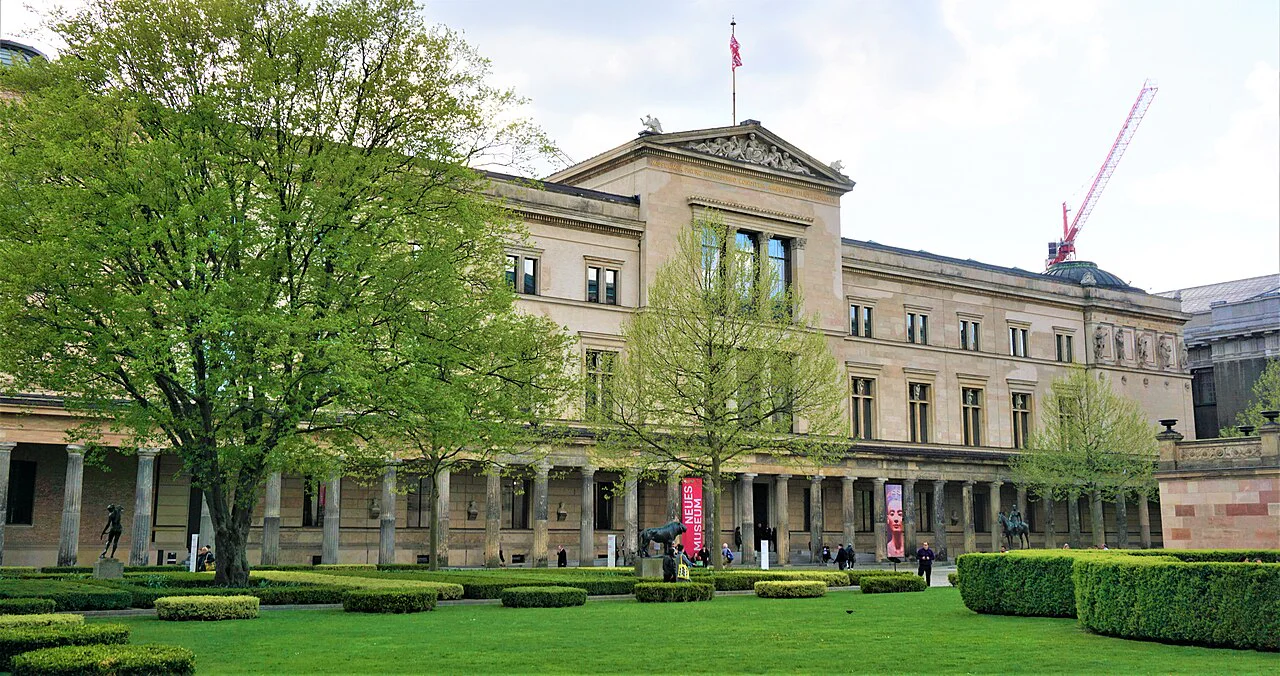
Berlin · 1 km
Neues Museum
Content & sources
Photo: Joyofmuseums · CC BY-SA 4.0
Berlin · 1 km
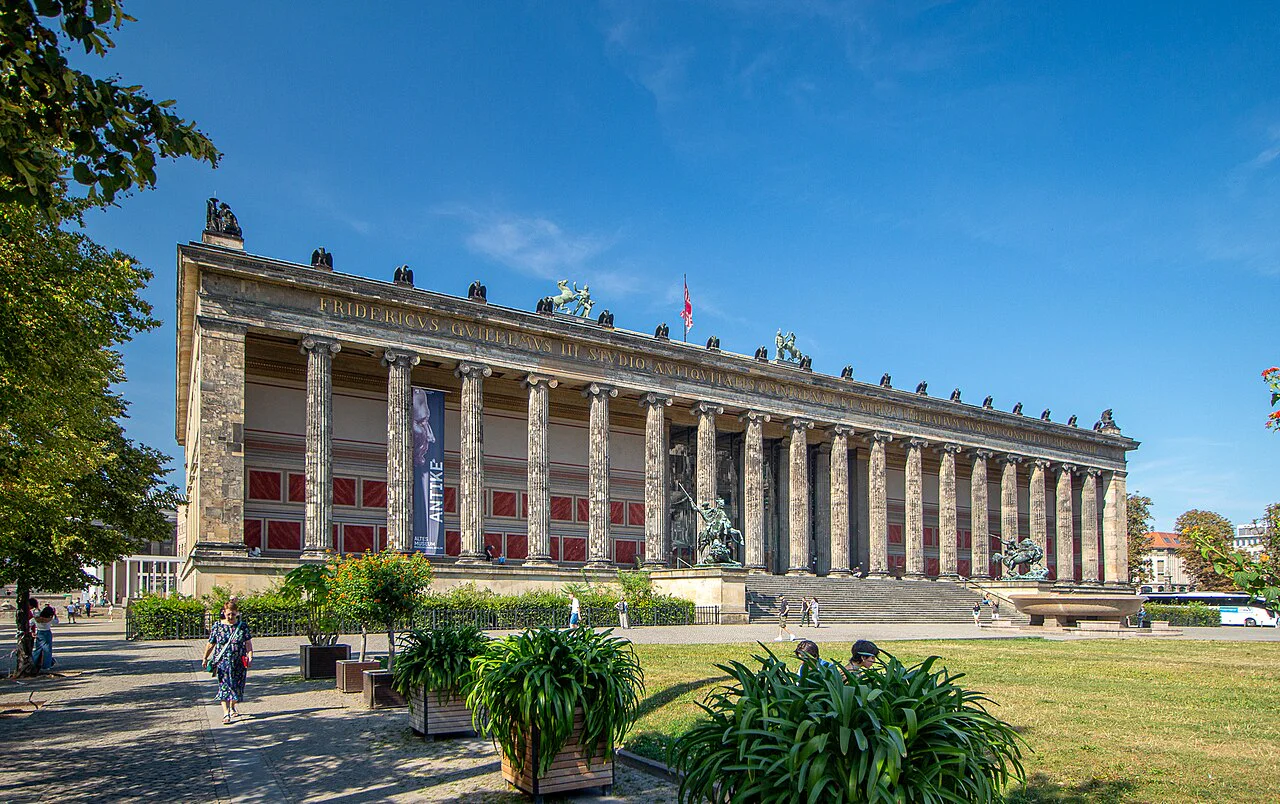
Altes Museum
Content & sources
Vit · CC BY-SA 4.0
Berlin · 1 km
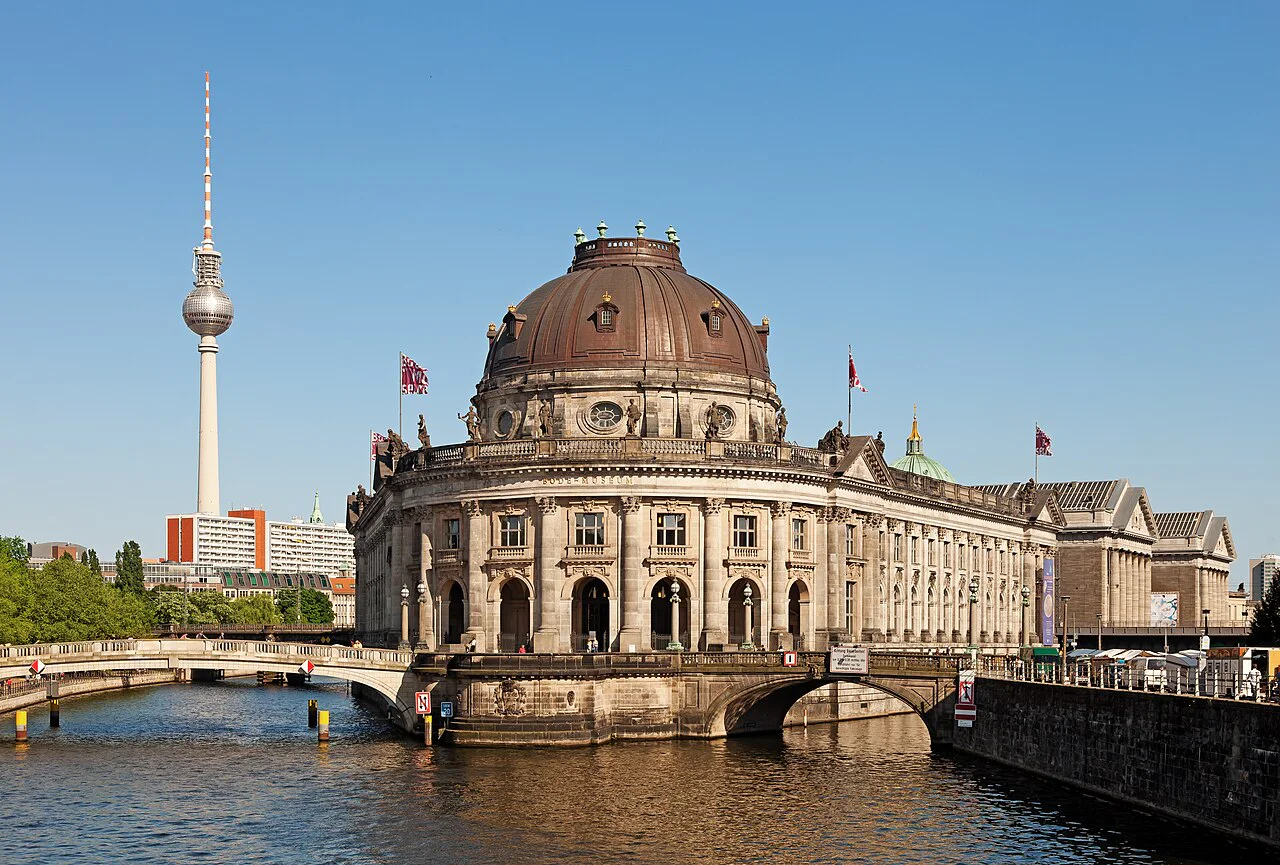
Bode-Museum
Content & sources
Thomas Wolf, www.foto-tw.de · CC BY-SA 3.0
Berlin · 1 km
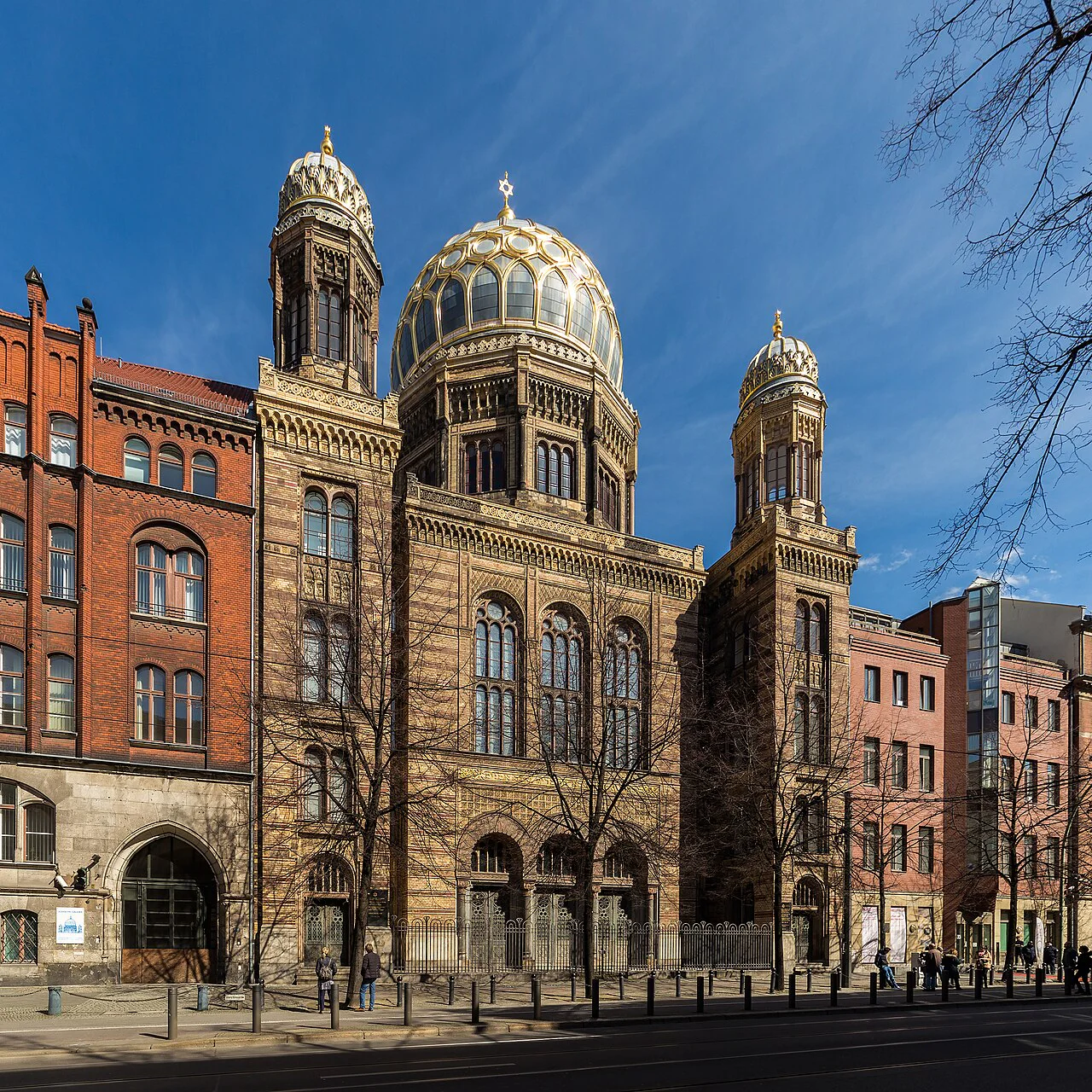
Neue Synagoge
Content & sources
Ansgar Koreng · CC BY 3.0 de
Berlin · 2 km
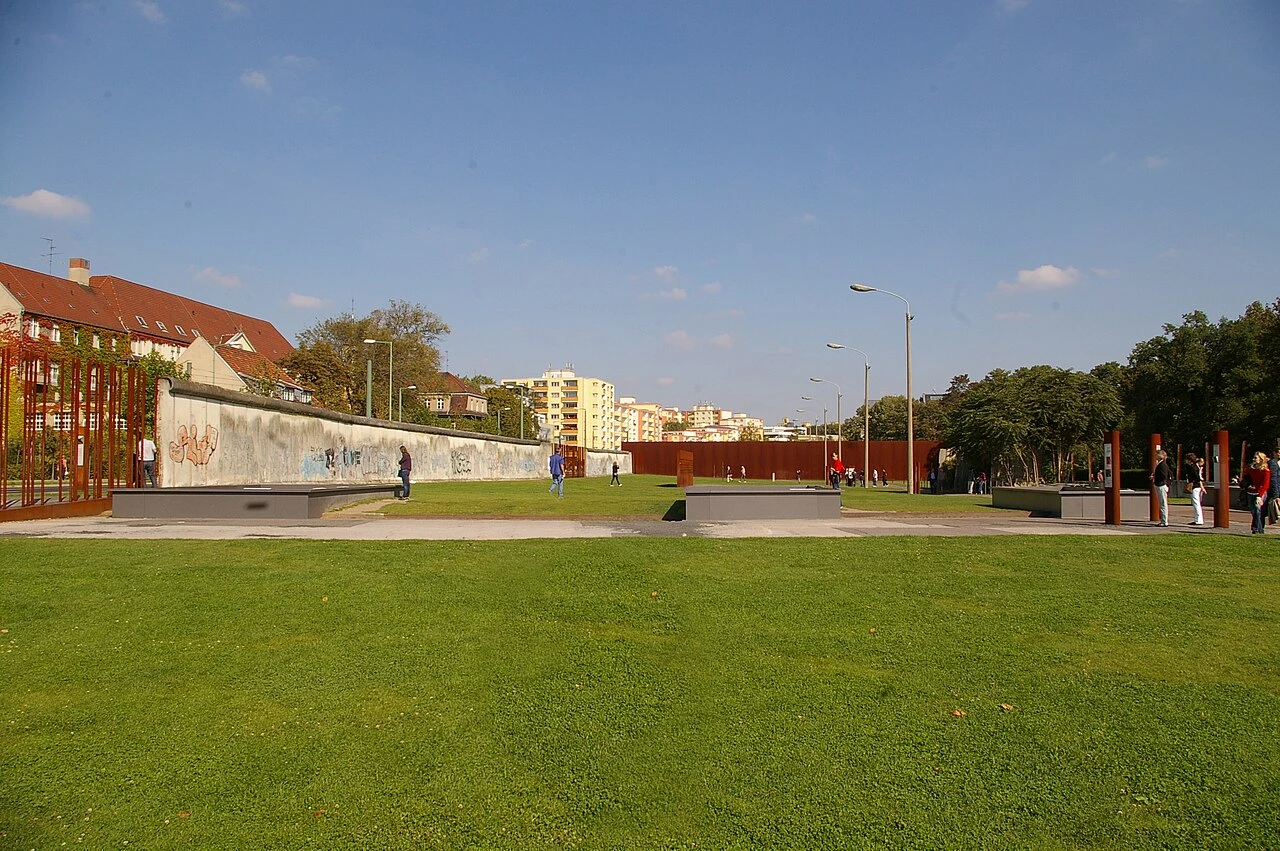
Gedenkstätte Berliner Mauer
Content & sources
N-Lange.de · CC BY-SA 3.0
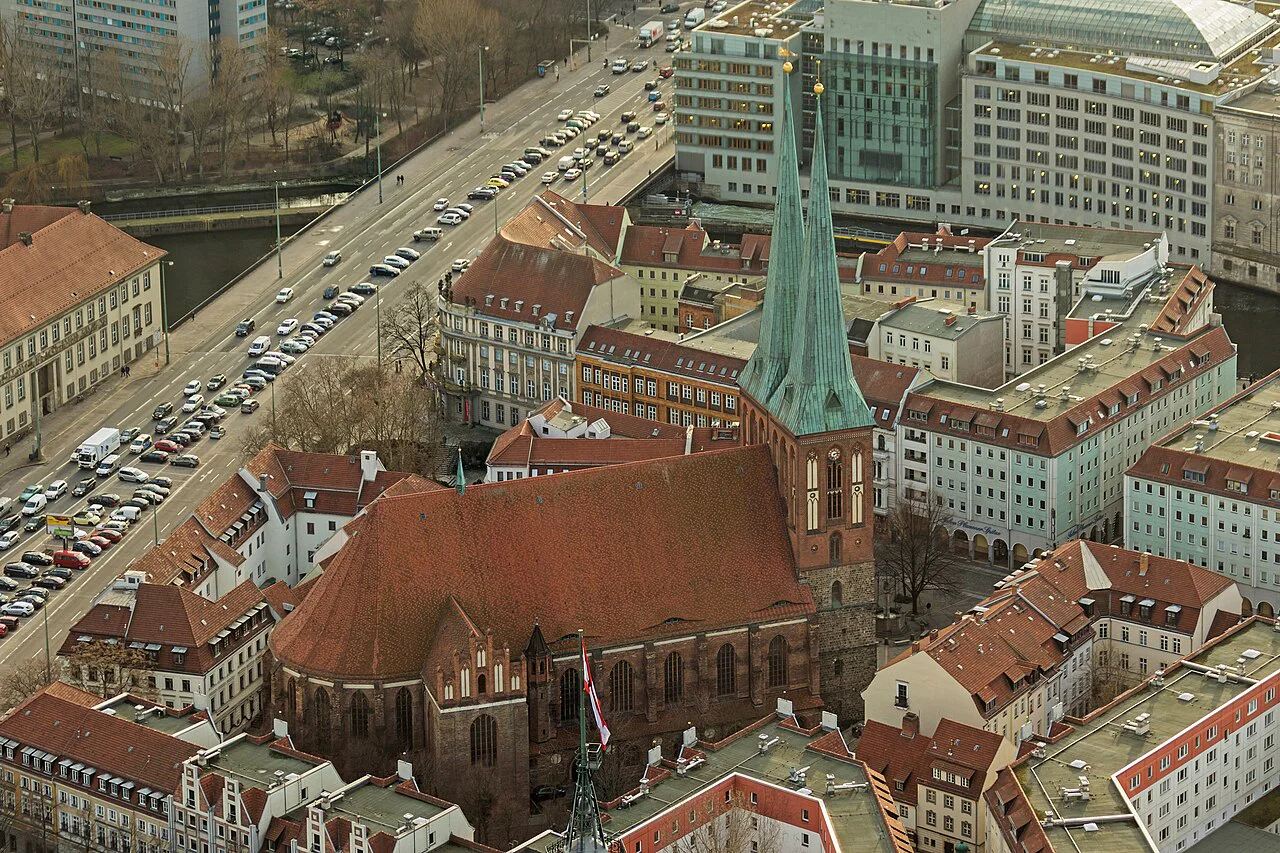
Berlin · 1 km
Nikolaikirche
Content & sources
Photo: A.Savin · CC BY-SA 3.0
Art museums
More art museum audio guides
Berlin · 34 artworks
Neues Museum
Content & sources
Photo: Joyofmuseums · CC BY-SA 4.0
Berlin · 47 artworks
Altes Museum
Content & sources
Vit · CC BY-SA 4.0
Berlin · 38 artworks
Bode-Museum
Content & sources
Thomas Wolf, www.foto-tw.de · CC BY-SA 3.0
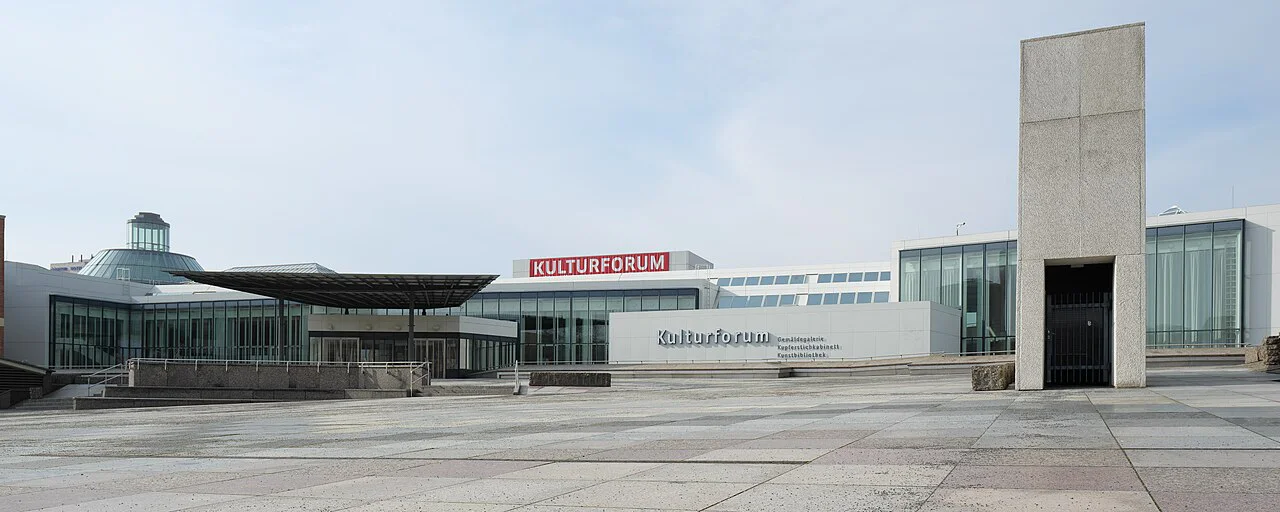
Berlin · 218 artworks
Gemäldegalerie, Berlin
Content & sources
Photo: Membeth · CC0
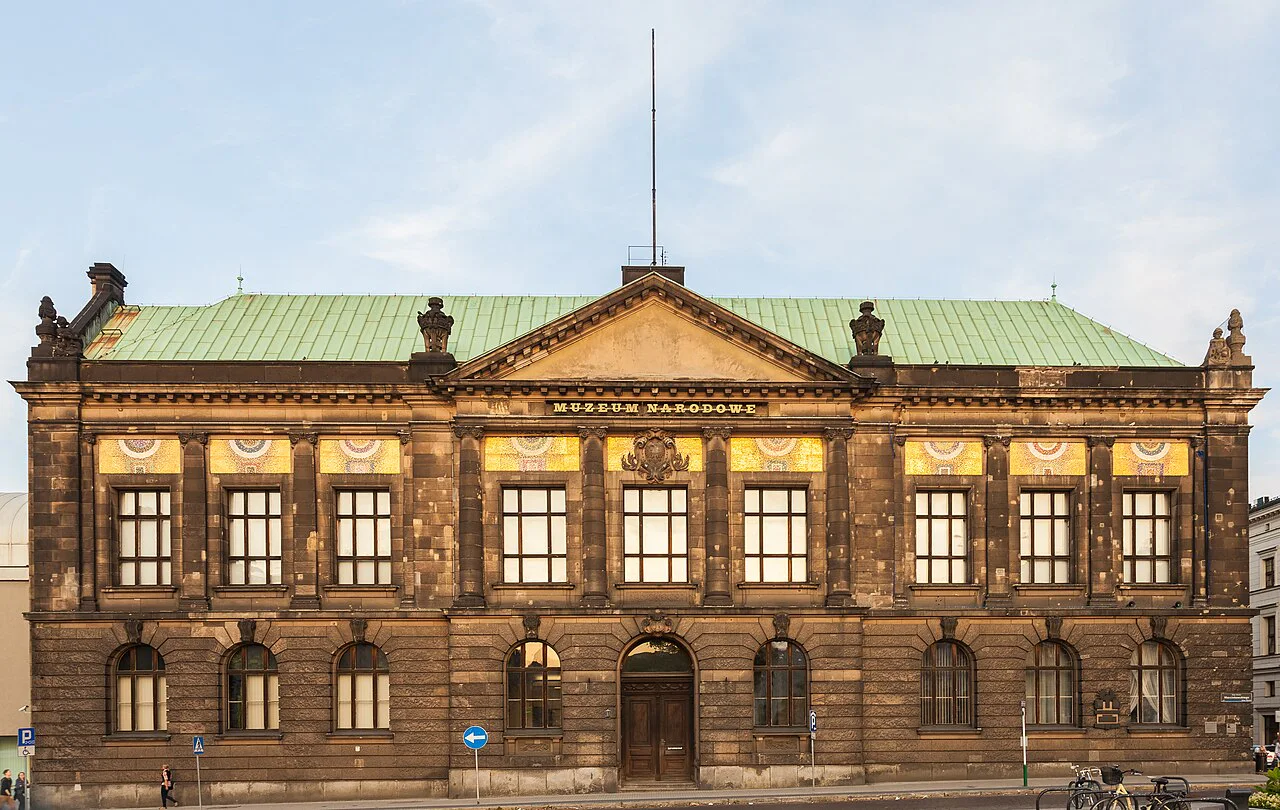
Poznań · 28 artworks
Muzeum Narodowe w Poznaniu
Content & sources
Diego Delso · CC BY-SA 4.0
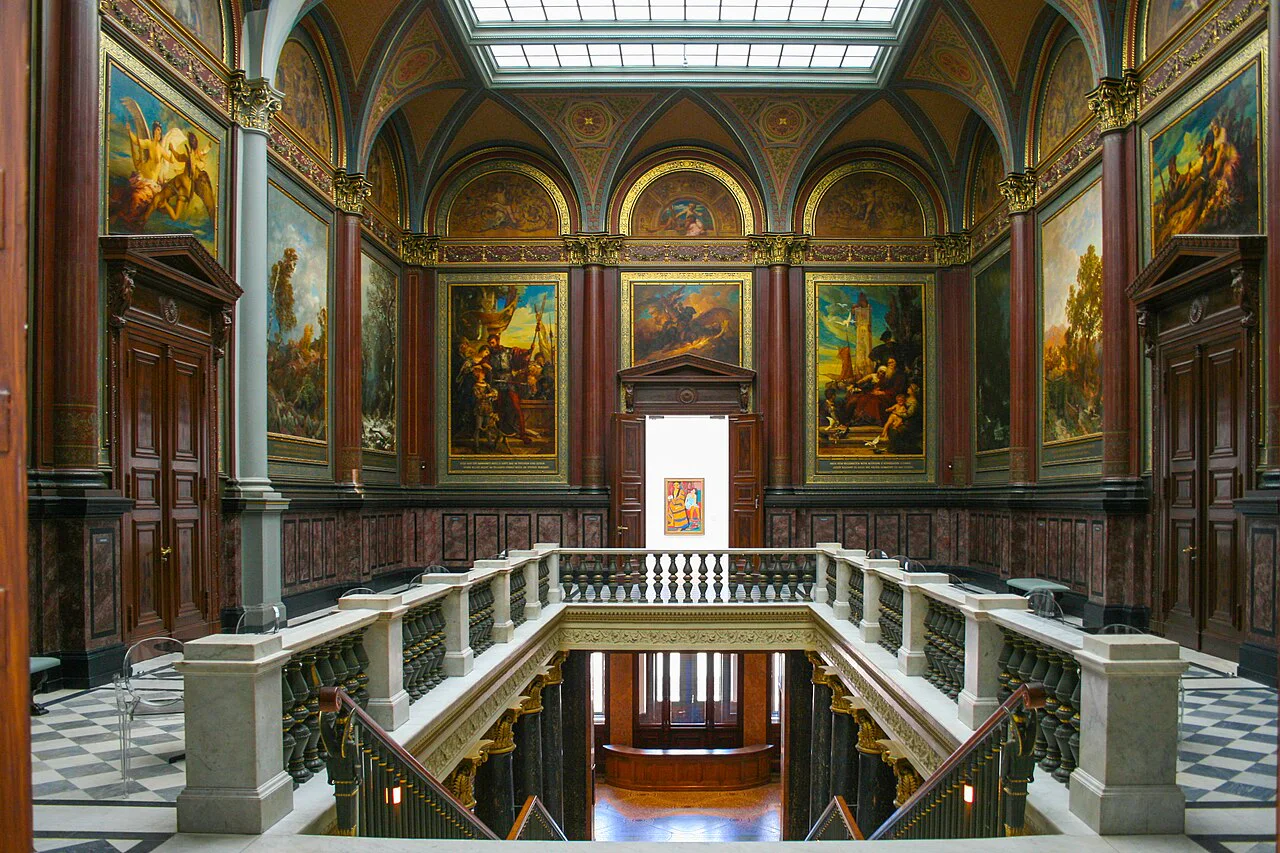
Hamburg · 64 artworks
Hamburger Kunsthalle
Content & sources
Photo: Daniela Kloth · GFDL 1.2