Stanza · Audio guide
Ζάκρος Audio Guide
A place to remember. A story to take with you.
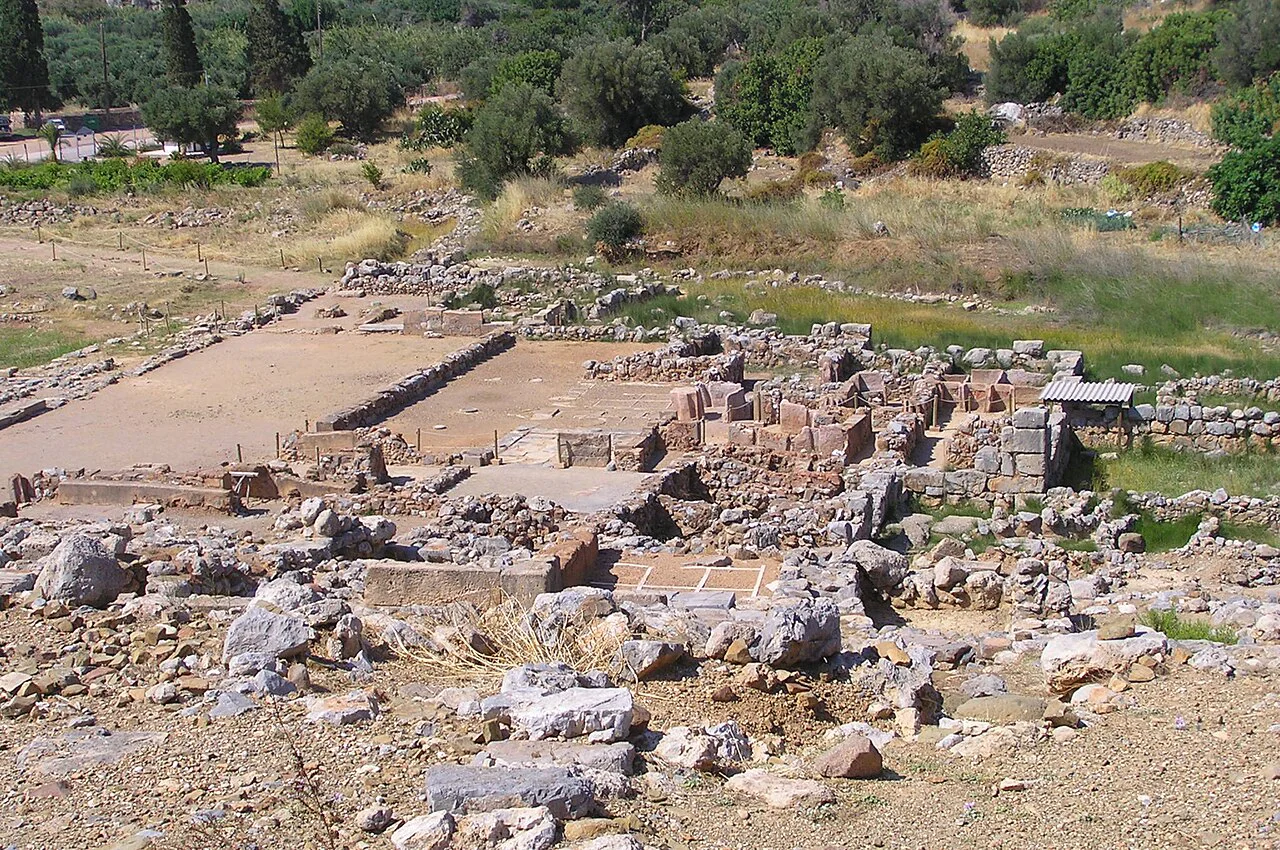
Zakros is a Minoan archaeological site located on the eastern coast of Crete in Greece. It is considered one of the six Minoan palaces and served as an important commercial hub for trade.
Download Stanza, then search for “Ζάκρος”.
About the tour
One guide. Your kind of visit.
Zakros is a Minoan archaeological site located on the eastern coast of Crete in Greece. It is considered one of the six Minoan palaces and served as an important commercial hub for trade.
Ready when you are.
- 01Get the free Stanza app.
iOS & Android
- 02Find your guide.
“Ζάκρος”
- 03Download before you go.
Works offline
Audio guide / 13 narrated stops
Inside the guide
Get to know a few of the stories before you go. Open a stop to read more.
01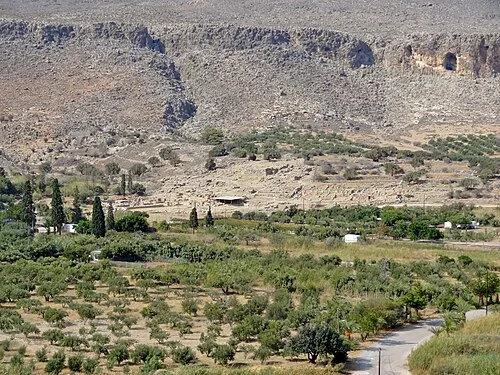 The Valley Approach and the Gorge of the Dead
Zakros Below the Cliffs
Zakros is a Minoan archaeological site on the eastern coast of Crete, in the prefecture of Lasithi. The ruins are sometimes divided into two parts. Upper Zakros sits higher on the hillside, and Kato Zakros lies near the sea. Zakros is regarded as one of the six Minoan palaces. In 2025 UNESCO made it a World Heritage Site, as part of the Minoan Palatial Centres. Above the valley, rugged cliffs rise in pale bands. High on the right, a dark opening sits in the rock face. A ravine runs through both the upper and lower parts of the site. Archaeologists usually call it a gorge, but it is better known as the Ravine of the Dead. Its name comes from the many burials in caves along its walls.
Listen in the appOlaf Tausch · CC BY 3.0
02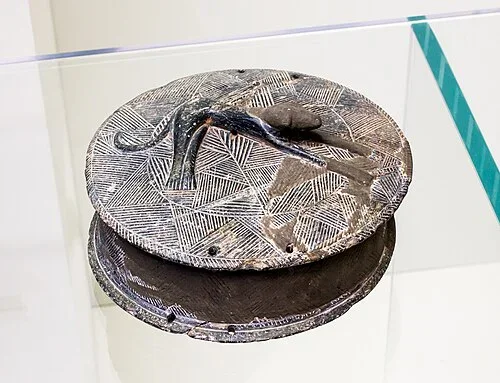 The Valley Approach and the Gorge of the Dead
Incised Lidded Pyxis in a Museum Case
A pyxis is a small container with a lid, and this one still has its lid. Many finds from Zakros are kept in museums away from the site. The Heraklion Archaeological Museum, on Crete, holds many of them. Some pieces that the Cretan government gave to the British archaeologist Hogarth are now at the Ashmolean Museum. The lid is a flat disc covered in lines that fan out from the middle. Patches of fine hatching fill the gaps between them. A dark handle curves across the top of the lid. The glass case around it throws reflections across the surface. This pyxis is attributed to the Ravine of the Dead.
Photo: ArchaiOptix · CC BY-SA 4.0
03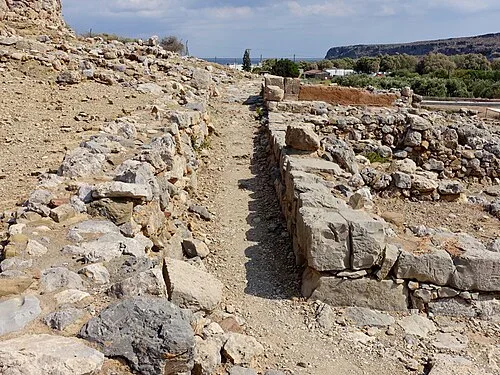 The Harbor Road and Eastern Trade Gateway
Stone-Lined Lane Toward the Sea
A road once ran from the harbour at Kato Zakros up to the palace. It was built in the Protopalatial period, the early palace era, and it was paved with slabs. Gutters ran along its sides. It led to the palace's northeast gate. The road is about three metres wide. That width, and the lack of wheel wear, suggest goods went on pack animals rather than carts. The town around the palace was laid out with a grid of paved streets. The lane in this stretch has stone walls on either side, though its surface looks like packed earth today. At the far end, the sea shows between the trees.
Listen in the appOlaf Tausch · CC BY 3.0
04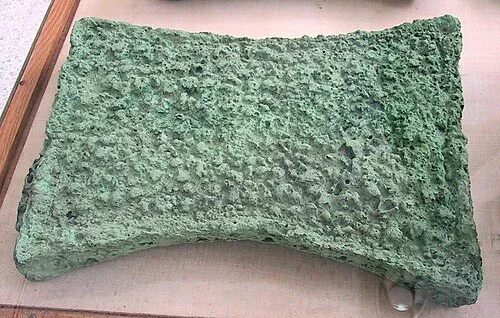 The Harbor Road and Eastern Trade Gateway
Copper Ingot from Zakros
A protected harbour and a strategic position made Zakros an important commercial hub for trade to the east. This copper ingot is a thick, flat slab. Its surface is pitted and rough, with a green tint. Ingots of this kind are called oxhide ingots, after their shape, which looks like a stretched ox hide. Copper oxhide ingots dated to the Late Minoan IA period were found at Zakros. Two bowls from Egypt, of the Early Dynastic period, were found in the palace's store for ritual objects. It is thought they came through the wide trade in objects robbed from Egyptian tombs at that time. Another Egyptian jar, made of stone with a bridge-shaped spout, had been altered locally.
Listen in the appChris 73 · CC BY-SA 3.0
05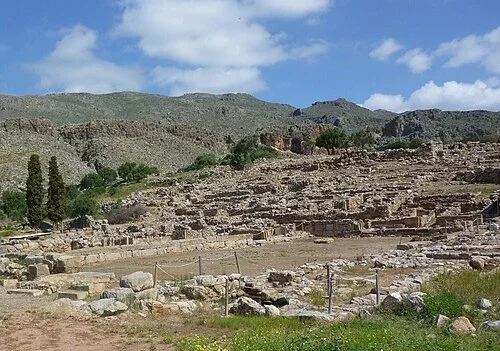 The Central Courtyard and Ashlar Facades
The Central Courtyard
The palace at Zakros was an administrative centre with about one hundred and fifty rooms. It had two large paved courtyards, one in the middle and one to the west. Minoan palaces were usually built around open courts, with rooms grouped round them. The central court is open ground today, edged by low wall foundations. In 1901, Hogarth worked mainly in the central area of the settlement, at a place called Ayios Antonios, but the palace itself stayed undiscovered. His finds included bronze tools, pottery and loom weights. In 1961, Nikolaos Platon resumed the excavation and found the palace itself. Platon's work at the site continued until his death in 1992.
Listen in the appPhoto: Michel-georges bernard · CC BY-SA 3.0
06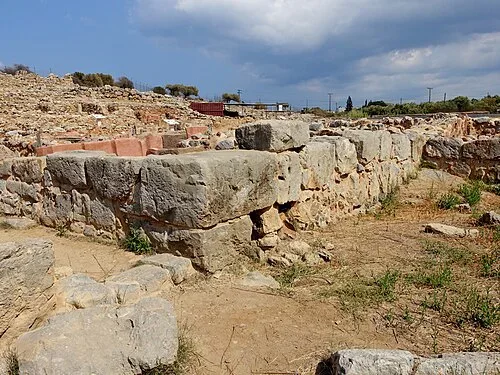 The Central Courtyard and Ashlar Facades
Large Cut-Stone Wall Courses
Monumental building at Zakros happened in two main phases. The Old Palace was built late in the Middle Minoan period. A large earthquake is thought to have destroyed it around 1700 BC. The New Palace followed. Other estimates start the Old Palace around 1900 BC. They also date a rebuilding of the palace to around 1600 BC. The wall in this stretch is made of large squared blocks, laid in level rows over smaller stones. Its stonework alone cannot say which phase it belongs to. Another large earthquake is thought to have destroyed the New Palace around 1450 BC. Only limited activity went on after that, and it ended around 1200 BC.
Listen in the appOlaf Tausch · CC BY 3.0
07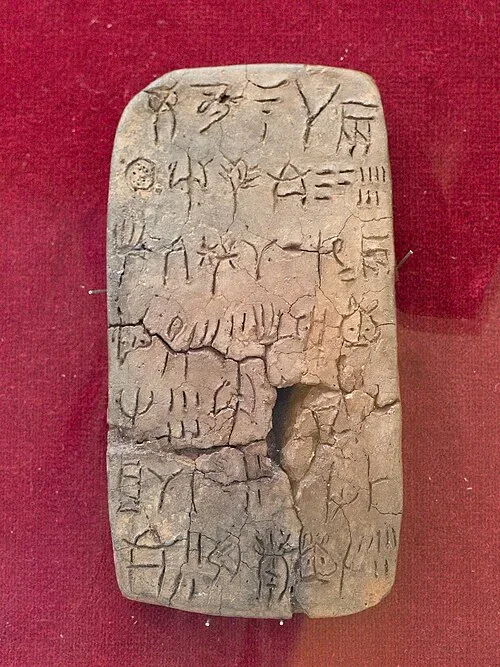 The Palace Archive and Royal Treasury
Linear A Clay Tablet
No one has yet deciphered Linear A, the script used on Minoan Crete. Only Haghia Triada has yielded more of it than Zakros. In all, Zakros has produced five hundred and ninety-one pieces. Thirty-one of them are tablets. The other five hundred and sixty are sealed pieces. This tablet is made of clay, with rows of signs cut into its face. A crack runs across the lower half and cuts through several of the rows. Because the script is still unread, scholars study the shapes of the signs, their order and their patterns.
Listen in the appPhoto: Zde · CC BY-SA 4.0
08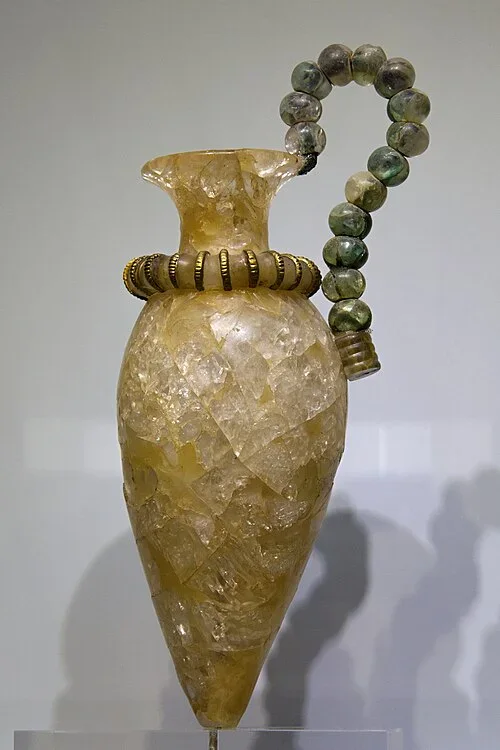 The Palace Archive and Royal Treasury
The Rock-Crystal Rhyton
Rock crystal is a clear form of quartz, and it is the material of this vessel. The body is pale and almost see-through, with a golden tint, and its surface breaks into many angular facets. A band of golden-looking rings circles the neck. A looped handle, strung with green beads, runs from the neck down to the base. It is known as a rhyton, a vessel used to pour liquid offerings, and it is now in the Heraklion Archaeological Museum. The vessel is said to date from the early fifteenth century BC.
Listen in the appPhoto: Zde · CC BY-SA 4.0
09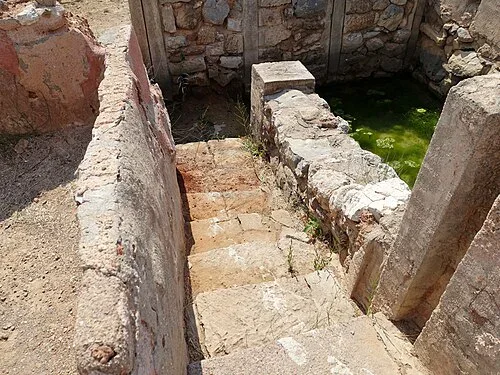 The Lustral Basin and Ceremonial Shrines
Stepped Approach to a Stone Water Basin
Stone steps run between two walls toward a basin of green water. The steps are worn, and the walls beside them are rough stone. Minoan palaces sometimes had basins like this, called lustral basins, for ritual washing or purification. The palace at Zakros had underground cisterns and lustral basins, probably used for religious or ceremonial purposes. It was a religious centre as well as a trading one, and its halls for ceremonies stood under the same roof as its workshops and storerooms. Before excavation the palace was almost untouched, and that is why it tells so much about how the Minoans lived and worshipped.
Listen in the appOlaf Tausch · CC BY 3.0
10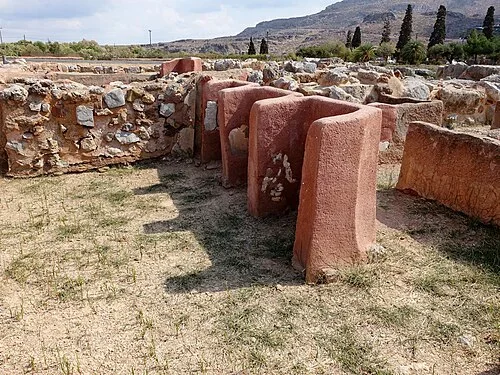 The Lustral Basin and Ceremonial Shrines
Row of Red-Plastered Piers
Some Minoan halls had several doorways, with upright piers set between them. Such a hall is called a polythyron, a name meaning many doors. This row of piers has rounded edges, and several of them still keep their red-brown face. Beyond the palace, the town climbed the hill to the northeast. In 1901 the archaeologist Hogarth dug twelve houses there. In the stone cellar of one of them lay a small hoard of bronze implements, including two axe heads and three lances.
Listen in the appOlaf Tausch · CC BY 3.0
- 11
Clay-Rimmed Opening Beside Walls
A reddish clay ring set in the ground, and a Linear A note on a jar rim counting thirty-two units of wine.
- 12
Stone-Edged Pool
A clear stone-edged pool, and the Middle Minoan tombs an irrigation project uncovered at Pezoules Kephala.
- 13
A Harbour Town and a Moving Sea
Low curving walls with mountains behind and the sea beyond them.
Ζάκρος
Frequently asked questions
How much does the guide cost?
Free app download. Listed guide price: $0.99. Guide price shown in the app. Audio guide only. Venue admission is separate.
Can I listen without internet?
Yes. Download the guide’s audio, images, and maps in the app before your visit. Your downloaded content is then available offline.
Can I listen in my language?
This audio guide is available in 15 languages, including English.
Do I need to follow a schedule?
No. This is a self-guided experience. Choose your stops, pause whenever you like, and return to a story at your own pace.
At your own pace
Explore Ζάκρος.
Download Stanza, then search for “Ζάκρος”.
Free app download · Guide price shown in the app
Keep exploring
Nearby audio guides
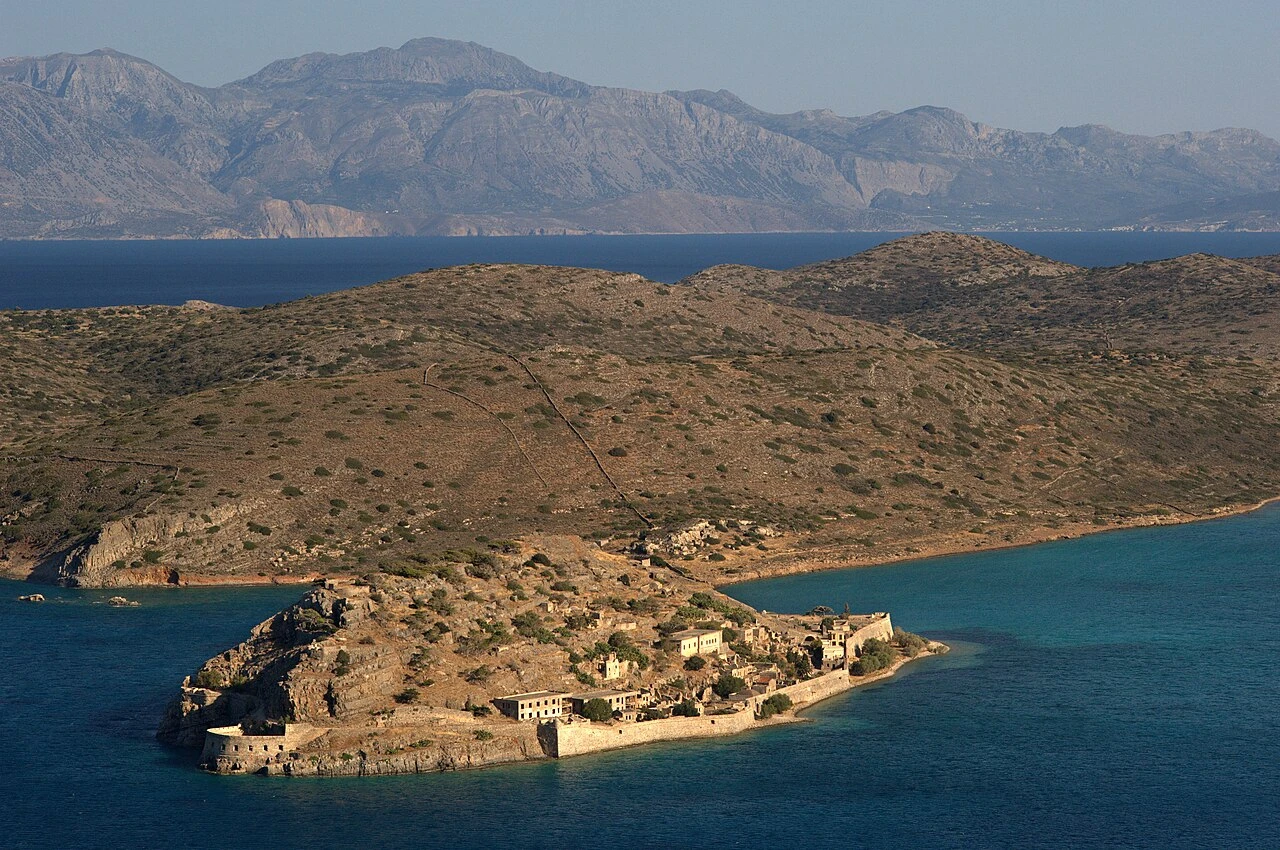
Agios Nikolaos Municipal Unit · 52 km
Spinalonga
Content & sources
Photo: Ggia · CC BY-SA 3.0
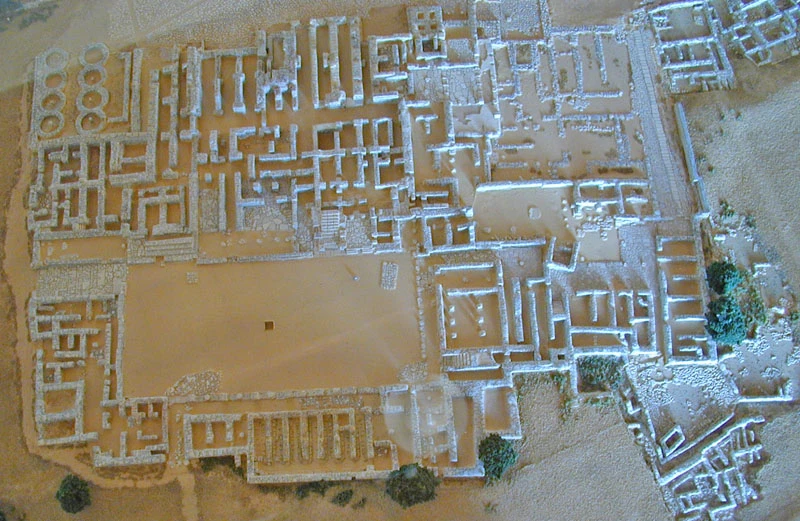
Malia · 73 km
Palace of Malia
Content & sources
No machine-readable author provided. Marsyas assumed (based on copyright claims). · CC BY 2.5
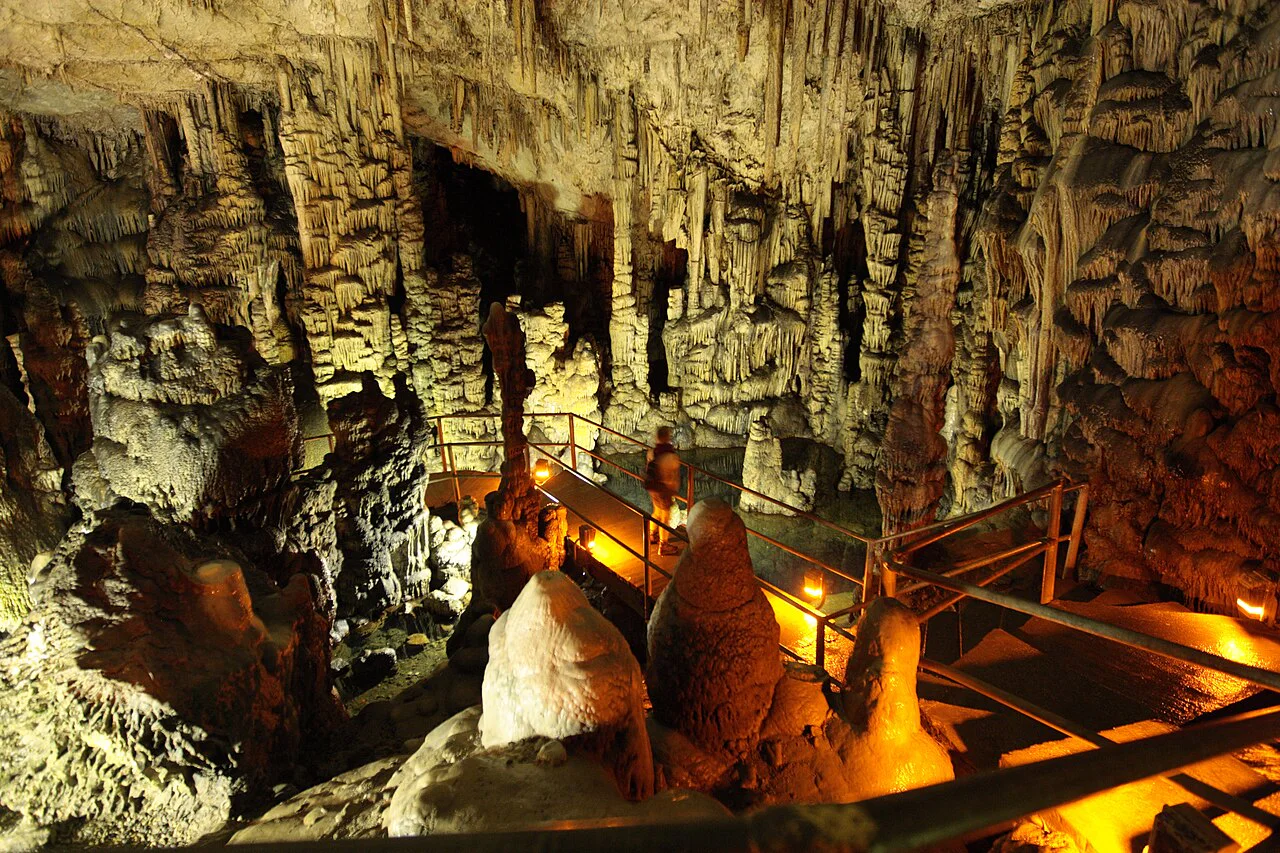
Psichro · 75 km
Δικταίο Άντρο
Content & sources
Jerzy Strzelecki · CC BY-SA 3.0
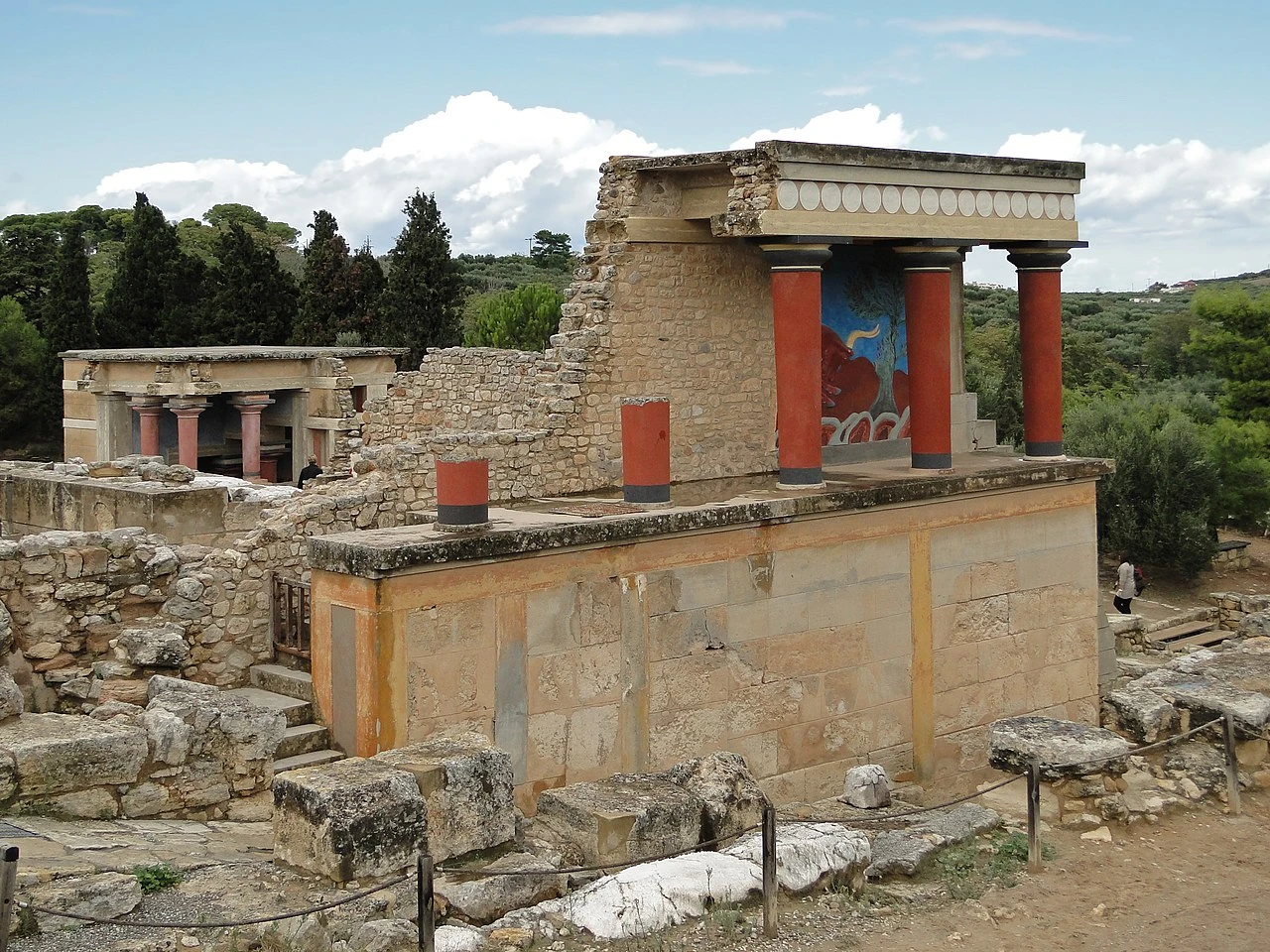
Heraklion · 102 km
Knossos
Content & sources
Bernard Gagnon · CC BY-SA 3.0