Stanza · Audio guide
Μονή του Αγίου Ιωάννου του Θεολόγου Audio Guide
A place to remember. A story to take with you.
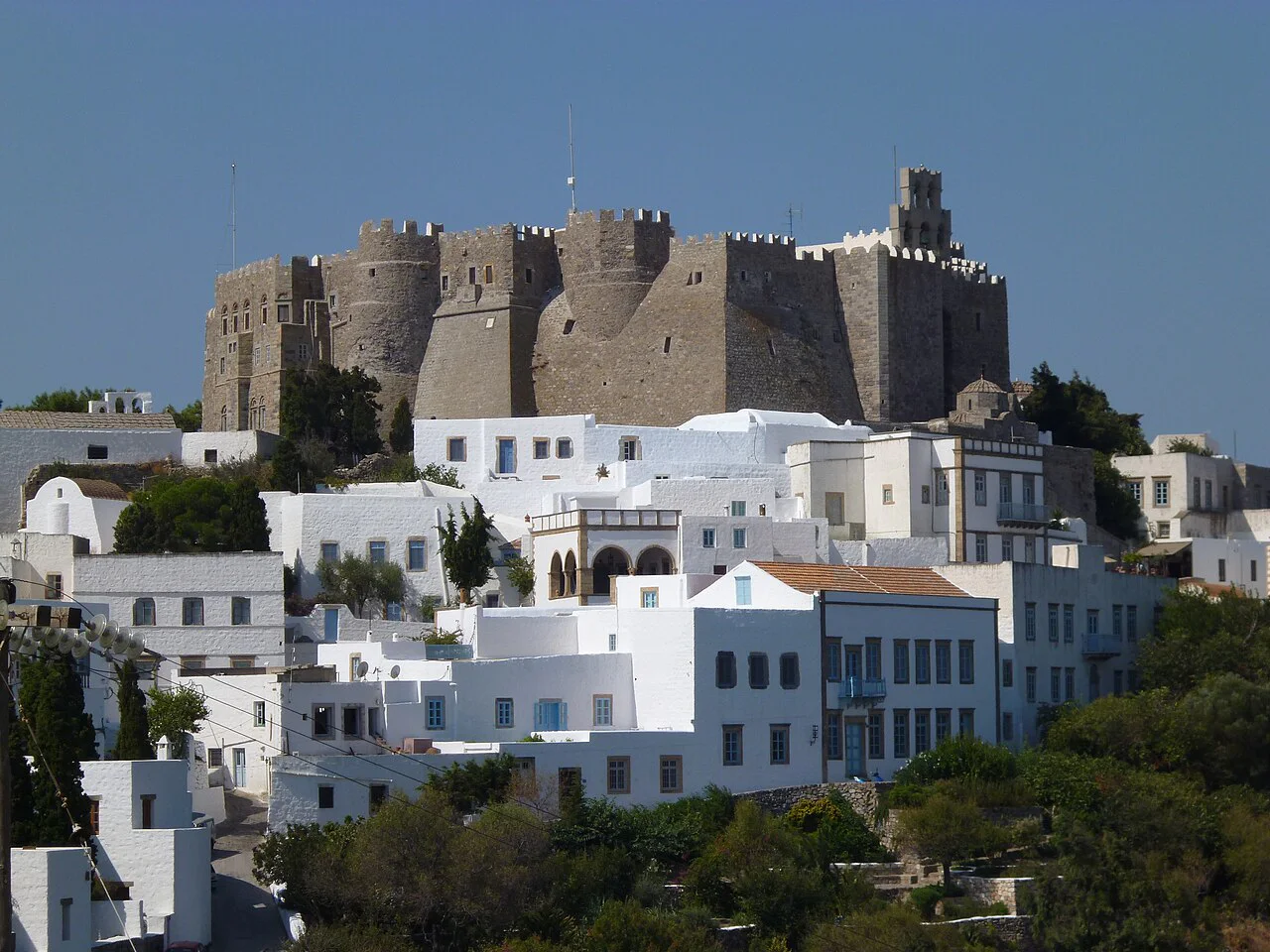
The Monastery of Saint John the Theologian is a Greek Orthodox monastery founded in 1088 in Chora on the island of Patmos. It is a UNESCO World Heritage Site recognized for its sacred significance…
Download Stanza, then search for “Μονή του Αγίου Ιωάννου του Θεολόγου”.
About the tour
One guide. Your kind of visit.
The Monastery of Saint John the Theologian is a Greek Orthodox monastery founded in 1088 in Chora on the island of Patmos. It is a UNESCO World Heritage Site recognized for its sacred significance, architectural evolution, and preservation of early Christian customs.
Ready when you are.
- 01Get the free Stanza app.
iOS & Android
- 02Find your guide.
“Μονή του Αγίου Ιωάννου του Θεολόγου”
- 03Download before you go.
Works offline
Audio guide / 14 narrated stops
Inside the guide
Get to know a few of the stories before you go. Open a stop to read more.
01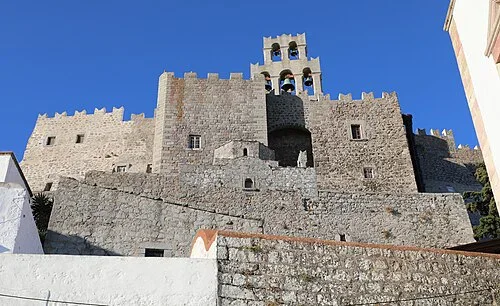 Fortified Outer Battlements & North Gatehouse
The Fortified Outer Walls
Welcome to the Monastery of Saint John the Theologian on Patmos. This tour leads from the outer walls through the gates, the church, the chapels, the treasury and the library, and ends with a view over the white town. A thousand years ago, a monk chose a bare hill on a small Greek island and built a castle to pray in. In 1088 the Byzantine emperor Alexios the First Komnenos granted the island of Patmos to the monk Christodoulos. The main buildings were largely finished about three years later. Christodoulos gave the monastery the shape seen here: not an open cloister but a fortress, with massive stone curtain walls and battlements crowning the hill. The Aegean in his day was dangerous water. Pirate raids were a constant danger, and Seljuk forces were pressing from the east, so the monks built high, thick and closed. The walls have needed care ever since. After an earthquake in 1646 the monks braced them with great sloping scarps. More scarp work followed in 1677. Still more came in 1700.
Francesco Bini · CC BY-SA 4.0
02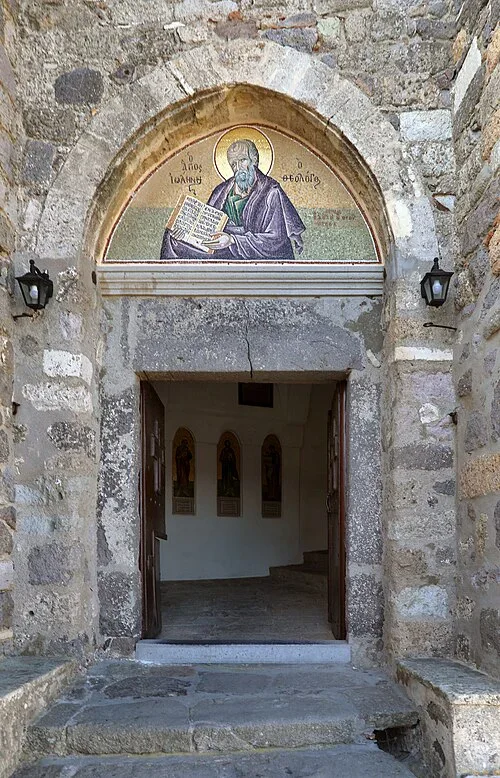 Fortified Outer Battlements & North Gatehouse
The North Gatehouse and Mosaic of Saint John
Above the entrance arch, a mosaic shows a bearded saint bent over a book, writing. He is John, the author of the Book of Revelation. According to that text, John lived exiled on Patmos when the visions of the apocalypse came to him, and the monastery took his name. Pilgrims have been climbing to it since the day it was founded. The founding itself began with a flight. Christodoulos led a monastic community on Mount Latros in Asia Minor, until Seljuk attacks pushed him out. He went to Constantinople to plead for a new home, and found an ally in the emperor's devout mother, Anna Dalassene. The grant came as a chrysobull, an imperial decree sealed in gold. The monastery keeps that document to this day. Centuries of travelers heard stranger things at this gate. The Frenchman Pierre Belon reported one in the sixteenth century. The Englishman Aaron Hill repeated it in 1709. Both wrote that monks showed a mummified hand said to belong to Saint John, its fingernails still growing.
Listen in the appFrancesco Bini · CC BY-SA 4.0
03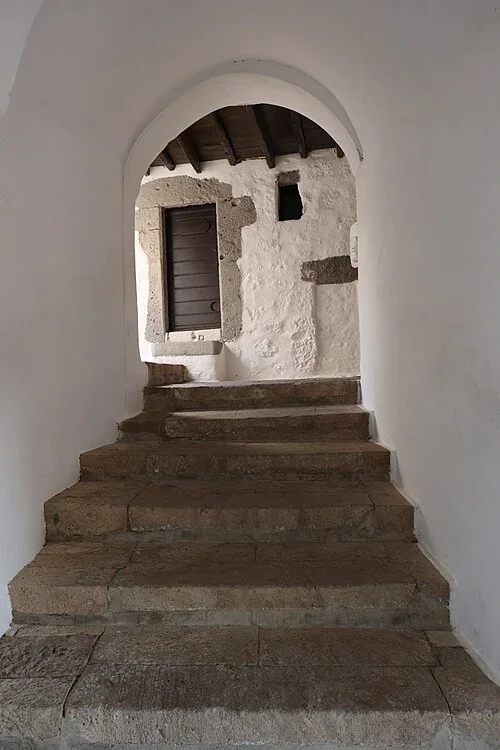 Vaulted Entry Corridor (Diavatiko)
The Vaulted Entry Ramp (Diavatiko)
The way in was built to be slow. This vaulted passage climbs in narrow stone steps, with the walls pressing close and the roof curving overhead. Anyone approaching the inner compound had to do it in single file, exposed the whole way, with no room to run or to force a door. Here the fortress works exactly as its builder intended. The monks kept thinking about security long after the walls rose. In 1609 a common assembly of monks and townspeople decided to demolish the houses that pressed against the monastery walls. The reason recorded was safety, for the monastery and for the island's town alike.
Listen in the appFrancesco Bini · CC BY-SA 4.0
04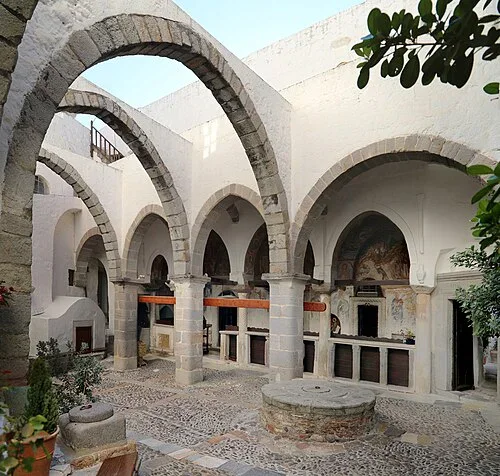 The Central Courtyard
Every fortress-monastery needs a heart, and this irregular courtyard is it. Whitewashed arcades on uneven stone pillars ring the space, doorways to chapels opening between them, monastic cells and service rooms gathered behind. A stone wellhead stands at the center, and the floor is paved in pebbles set in patterns. Life here was organized around the church the whole complex serves, with prayer, meals and work folding into the rhythm of the day. The arcades grew over time, as needs changed. The two-storied arcade on the south side went up in 1698, adding an upper gallery to the courtyard's edge. Chapels accumulated around the perimeter as well, each one a fresh act of devotion.
Listen in the appFrancesco Bini · CC BY-SA 4.0
05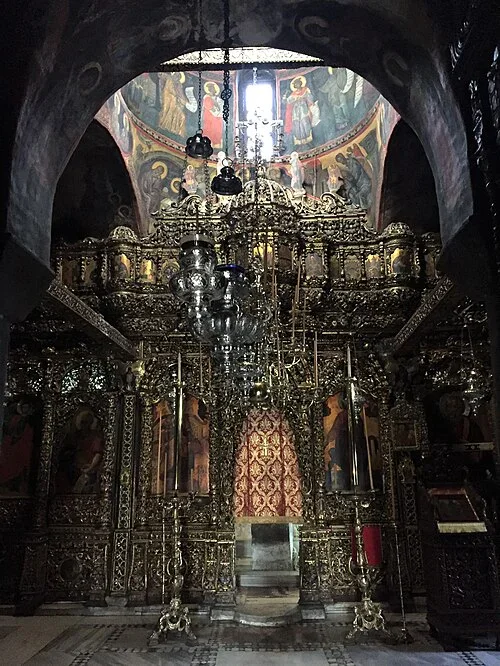 The Katholikon (Main Church & Narthex)
The Katholikon
The Katholikon is the reason for everything around it. Built in the eleventh century, it is the oldest fabric of the monastery, together with the refectory, and it follows the classic Byzantine plan: a domed, cross-in-square church, its vaults rising over a compact square of space. Inside, the eye goes first to the gilded iconostasis, the screen of icons and carved gold separating the nave from the sanctuary, gleaming even in the dim light. Painted figures look down from the vaults above. Underfoot, the floor is laid in opus sectile, marble cut and fitted into elaborate patterns. This is what the fortress was built to protect: unbroken Orthodox worship, from the foundation to the present day. Ceremonies of early Christian origin are still practiced here, in the tradition the first monks knew.
Listen in the appPhoto: PLBechly · CC BY-SA 4.0
06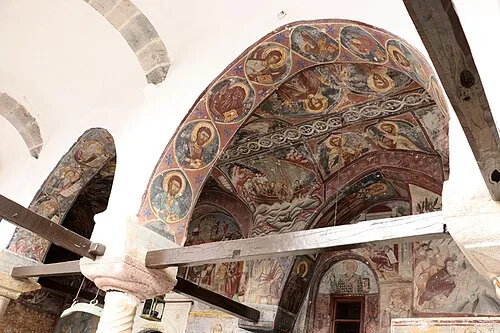 The Katholikon (Main Church & Narthex)
The Esonarthex Vault with Saints
The painting overhead tells its own story about time. The vault of the esonarthex, the inner entrance porch of the church, carries roundels of saints and narrative scenes, painted around the year 1600. But it is only the latest layer. The Katholikon was perhaps already decorated with wall paintings by the middle of the twelfth century. Almost nothing of that earliest work survives. What remains are painted ornaments on the pilasters beside the south door, the one leading to the chapel of the Virgin, and on another door to the north, which was later blocked up. Each century added its own painters to the walls, so the church became a record of its own history, layer over layer, with the oldest pages nearly gone.
Listen in the appFrancesco Bini · CC BY-SA 4.0
07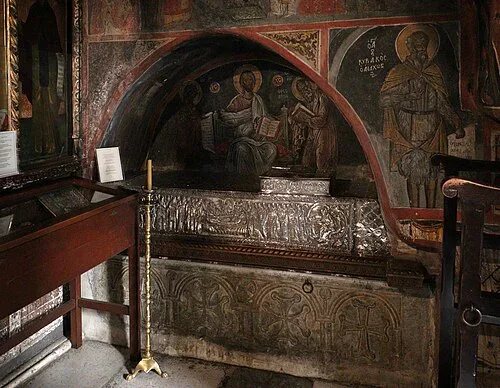 Chapel of Saint Christodoulos
The monastery honors the man who built it, in a chapel of his own within the main church. Osios Christodoulos founded monasteries on the island of Kos before he secured Patmos. He was buried in the narthex of the church, and here his stone sarcophagus rests, and the community built its identity around him as its founding saint. On the sarcophagus stands a silver reliquary, worked in 1796, a late flourish of devotion for an eleventh-century founder. Pilgrims come to venerate him here, close to the walls he raised. It is a quiet ending for a restless man, who crossed the Aegean looking for safety and found it on this bare island.
Listen in the appFrancesco Bini · CC BY-SA 4.0
08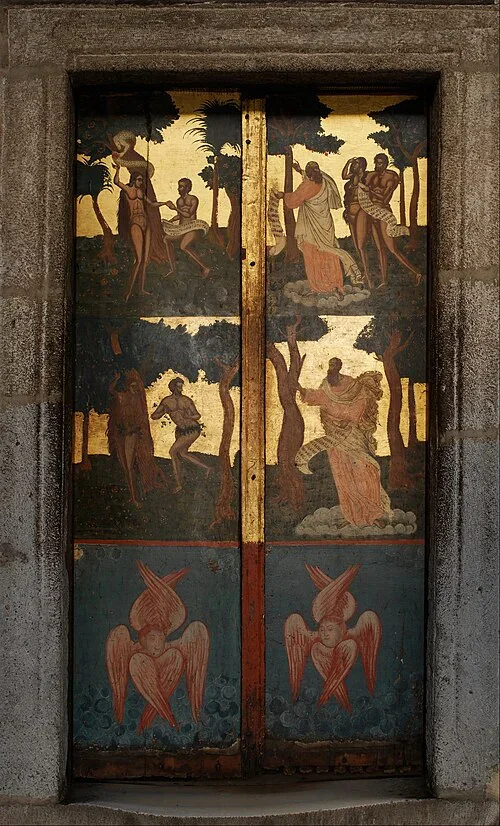 Chapel of the Virgin (Panagia)
The Painted Door of the Chapel of the Virgin
The chapel of the Virgin keeps some of the oldest painting in the monastery, and its doors are a work of art in themselves. The wooden doors are carved and painted on a gold ground, in panels stacked one above the other. At the top, Adam and Eve appear in the garden, and beside them robed prophetic figures unroll their scrolls. More scenes unfold among the trees below, and at the bottom two six-winged seraphim spread their wings against a blue ground. The chapel itself is a treasury of painting, its walls holding rare fresco fragments, some painted as early as the twelfth century. The doors show how later workshops enriched an older space, adding post-Byzantine color to a medieval chapel.
Listen in the appUnknown author · Public domain
09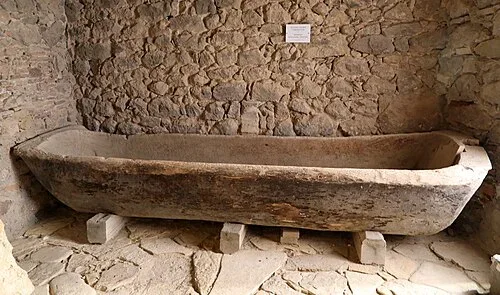 The Monastic Refectory (Trapeza)
The Eleventh-Century Bread Trough
A fortress has to feed itself, especially under siege. This great stone trough, hollowed for making bread, dates to the eleventh century, the monastery's first generations. It is a plain, practical thing, but it carries the whole logic of the place: monks equipped to live independently inside the walls, whatever came from the sea. The refectory, the dining hall where the community shared its common meals, belongs to the same earliest building campaign. A visitor in the eighteenth century praised the bread the monks kneaded here.
Listen in the appFrancesco Bini · CC BY-SA 4.0
10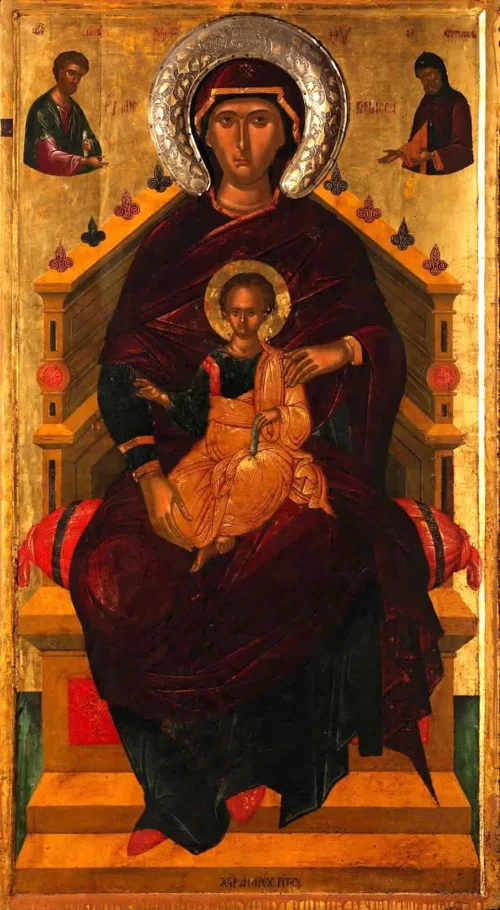 Monastery Treasury & Icon Gallery
The Virgin Pantanassa by Andreas Ritzos
Among the treasury's paintings hangs an icon more than five feet tall. It is the Virgin Pantanassa, the Queen of All, enthroned with the Christ child, painted in egg tempera and gold leaf by Andreas Ritzos. Ritzos worked on Crete in the fifteenth century, a leading figure of the Cretan Renaissance, blending Byzantine tradition with Venetian style. He signed his works in both Greek and Latin, and here his signature runs along the steps of the throne: the hand of Andreas Ritzos. The two busts in the upper corners reveal where the panel was meant to hang. They are Saint John the Theologian and Osios Christodoulos, the monastery's own saints, marking it as a commission for the main church's icon screen. A Greek inscription above the Virgin asks a blessing for Neophytos, Archbishop of Karpathos, a donor from Patmos. The treasury guards other treasures too, among them relics revered for centuries, including the skull of Saint Thomas the Apostle.
Listen in the appAndreas Ritzos · CC BY-SA 4.0
- 11
Thomas Bathas: Vision of the Apocalypse
A giant 1596 icon of Saint John's vision, the image at the core of Patmos' sacred identity.
- 12
The Old Library
A library that survived intact since the eleventh century, its imperial decrees, and the monk who asked about Voltaire.
- 13
Ninth-Century Book of Job Manuscript
A ninth-century illuminated Book of Job, older than the monastery and perhaps from the founder's own homeland.
- 14
Chora and the Monastery from Above
The white town wrapped around the fortress, a living community of monks, and world recognition in 1999.
Μονή του Αγίου Ιωάννου του Θεολόγου
Frequently asked questions
How much does the guide cost?
Free app download. Listed guide price: $0.99. Guide price shown in the app. Audio guide only. Venue admission is separate.
Can I listen without internet?
Yes. Download the guide’s audio, images, and maps in the app before your visit. Your downloaded content is then available offline.
Can I listen in my language?
This audio guide is available in 15 languages, including English.
Do I need to follow a schedule?
No. This is a self-guided experience. Choose your stops, pause whenever you like, and return to a story at your own pace.
At your own pace
Explore Μονή του Αγίου Ιωάννου του Θεολόγου.
Download Stanza, then search for “Μονή του Αγίου Ιωάννου του Θεολόγου”.
Free app download · Guide price shown in the app
Keep exploring
Nearby audio guides
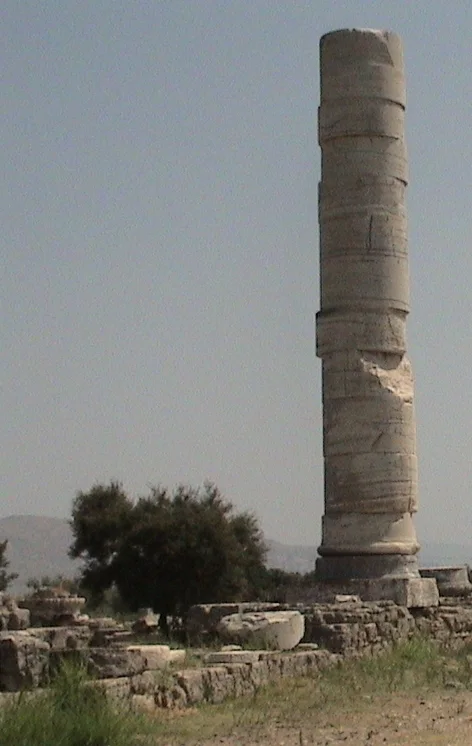
Municipal Unit of Pythagoreio · 50 km
Ηραίο Σάμου
Content & sources
Photo: FocalPoint · CC BY 2.5
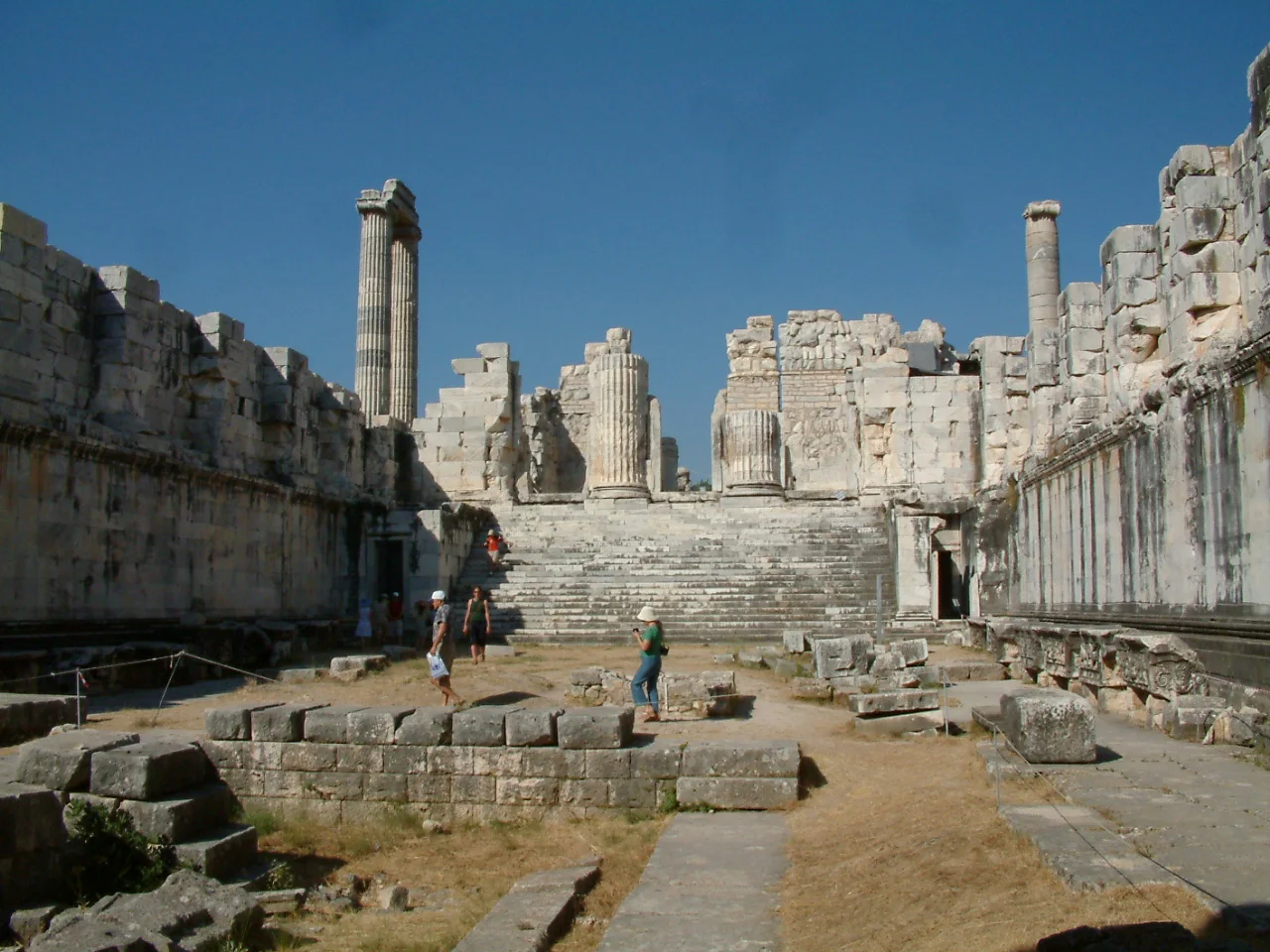
Didim · 63 km
Didyma
Content & sources
Photo: Radomil · CC BY-SA 3.0
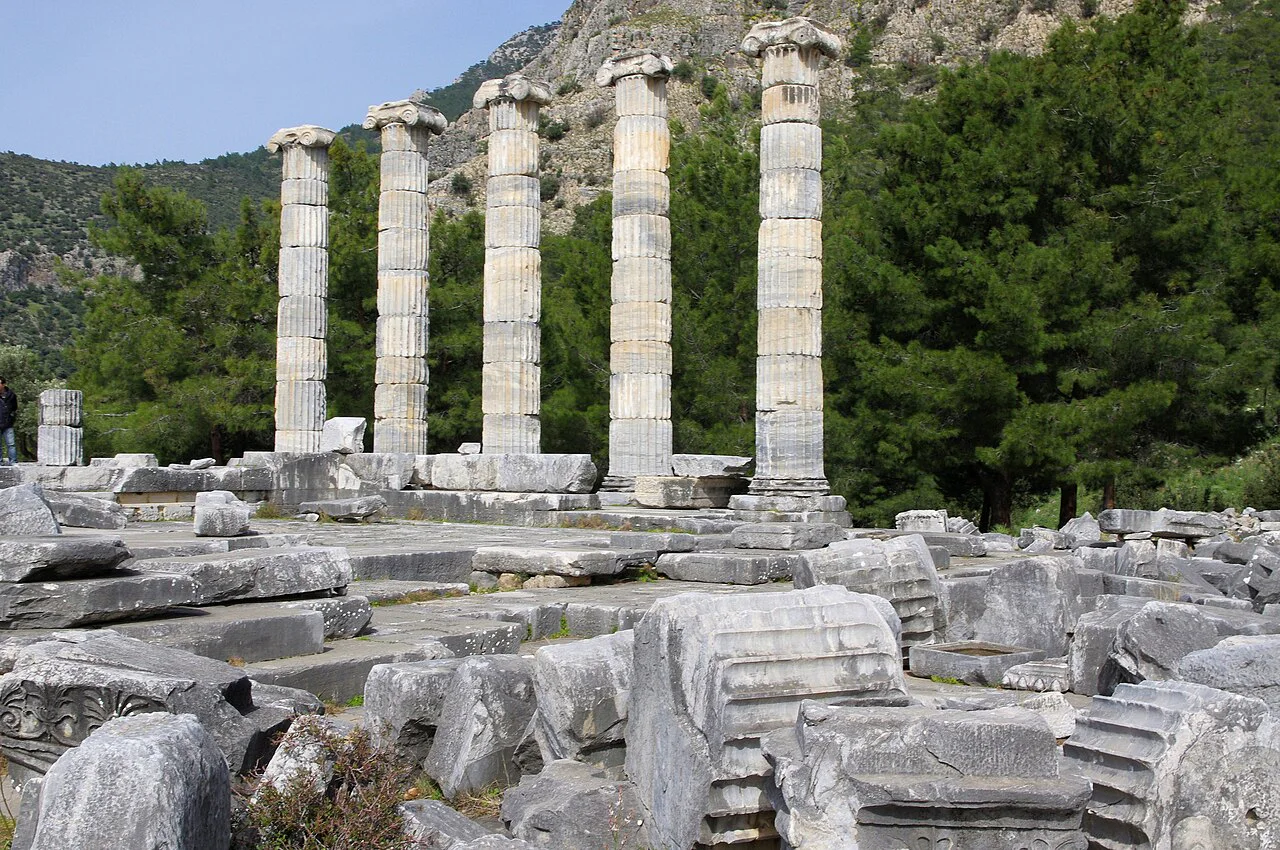
Söke · 77 km
Priene
Content & sources
Ken and Nyetta · CC BY 2.0
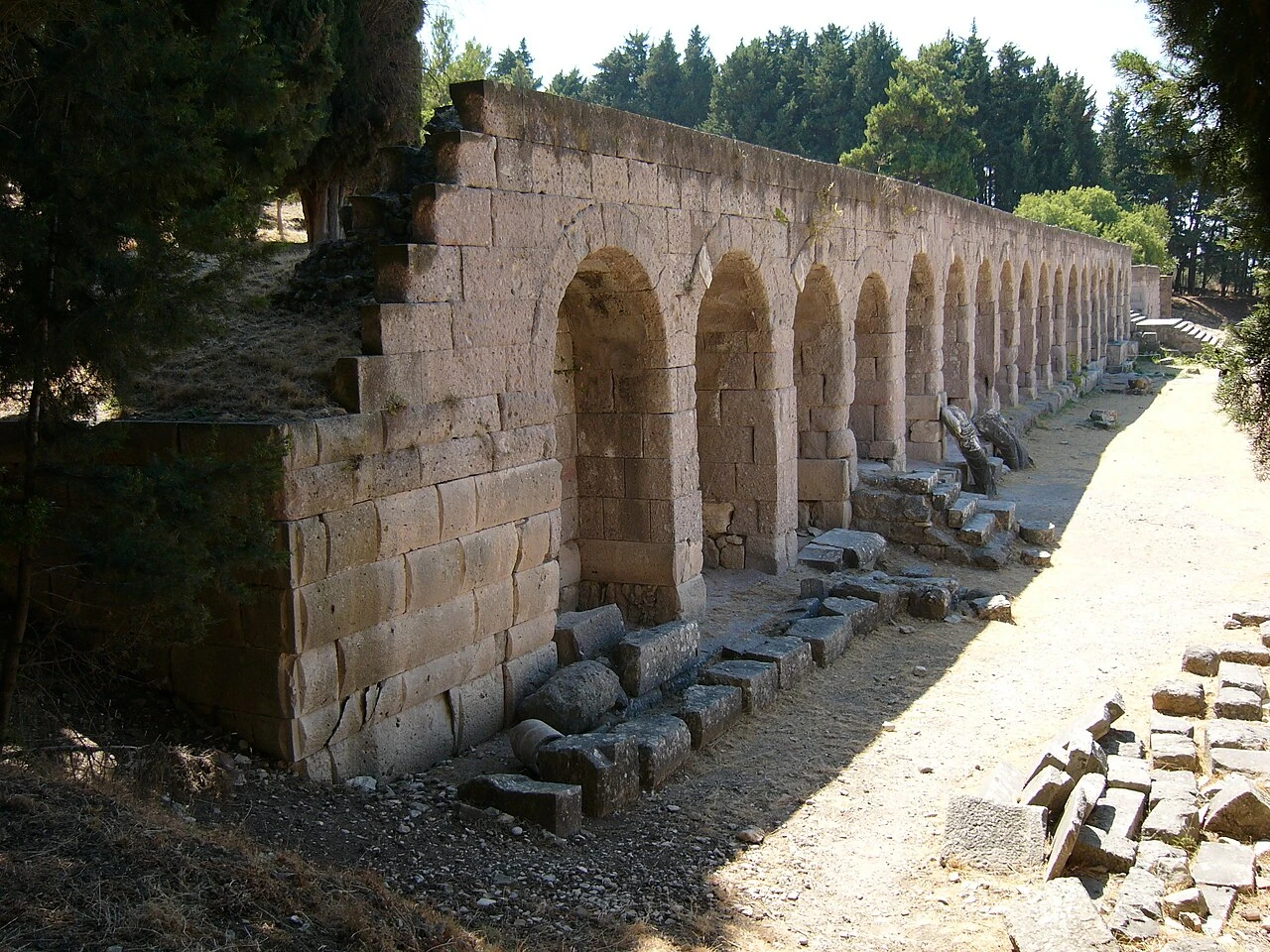
Kos · 79 km
Asclepeion of Kos
Content & sources
Photo: Cup of coffee · CC BY-SA 3.0