Languages
15Ασκληπιείο Κω Audio Guide
Ασκληπιείο Κω is an archaeological site in Kos, Greece. Explore it with Stanza's guided offline audio tour — narrated in 15 languages.
Quick Facts
12
Stops
15
Languages
100%
Offline
📍 Kos, Greece · 36.8758°N, 27.2570°E
About Ασκληπιείο Κω
The Asclepeion of Kos is a significant ancient healing sanctuary and medical school dedicated to the god Asclepius. It remains one of the most important archaeological sites in the Dodecanese islands.
This self-guided audio tour features 12 narrated stops organized across 5 sections, including Exedra, Temple of Apollo, Great Altar of Asclepius, Ionic Temple of Asklepios, Great Temple of Asklepieion. As a archaeological site, Ασκληπιείο Κω offers a unique cultural experience in the heart of Kos, Greece.
The Stanza audio guide is available in 15 languages and works entirely offline — download the complete tour including audio narration, maps, and images before your visit. As you walk through Ασκληπιείο Κω, GPS-triggered narration plays automatically at each point of interest.
Last updated:
What you will hear
Exedra
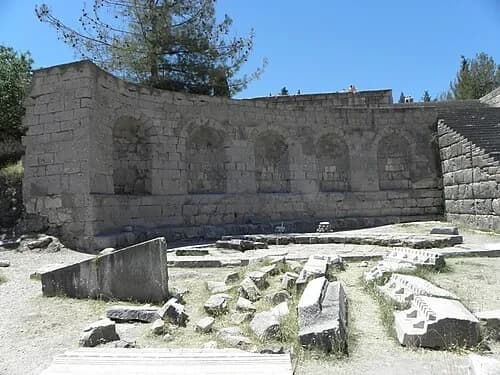
A semicircular stone seating area with niches that once held statues of gods and notable physicians.
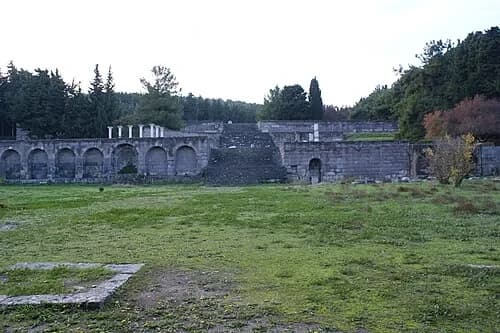
Exedra
This long terrace once featured a functional layout designed to accommodate the heavy traffic of pilgrims and patients. The wall with its row of arched niches formed part of a stoa, or covered walkway, which protected visitors from the Mediterranean sun. These arches weren't just architectural flourishes; they likely served as small shops or storage spaces for the herbal medicines, oils, and supplies needed to manage such a vast sanctuary. Hundreds of pilgrims would have stayed in tents or modest rooms along this level while awaiting their turn for treatment. At the center of the terrace, a grand staircase begins the 'sacred ascent.' With every step upward, the journey shifted from the practical and physical needs of the lower level toward a more spiritual and refined experience. The transition was intended to elevate the mind, preparing it for the divine encounters promised on the terraces above. These arches stand as a reminder of the complex logistics required to support thousands of visitors seeking health and hope.
The Semicircular Bench
This semicircular stone seat, known as an 'Exedra,' provided a space for medical lectures and quiet contemplation. In ancient times, the five arched niches built into the back wall were filled with statues of the deities of health, such as Hygieia and Panacea. It is possible that portraits of famous Kos physicians, including Hippocrates, also stood here, creating a literal 'Hall of Fame' for the medical profession. Students and patients would gather here to listen to physicians discuss the latest findings in clinical observation and hygiene. Today, this remains one of the best-preserved sections of the terrace wall. You can see how the curved stone blocks were expertly joined to create a comfortable, acoustic space for public speaking. It served as an intellectual bridge between the bustling lower terrace and the more solemn religious temples located on the levels directly above. The seat remains a testament to the importance of education and philosophical inquiry in the ancient Greek medical tradition.
Temple of Apollo
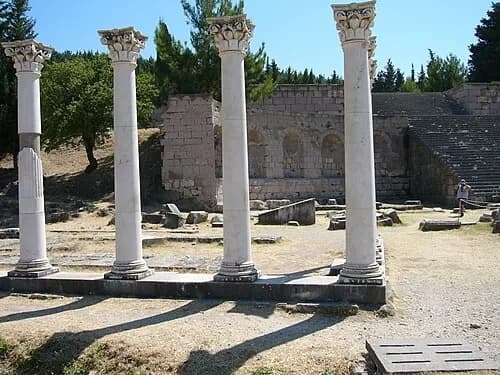
The beautifully restored Corinthian columns belong to this temple dedicated to Apollo, the father of Asklepios.
Temple of Apollo
These elegant columns mark the site of the Temple of Apollo, the father of the god of healing, Asklepios. A surprising fact about this structure is that these columns were actually re-erected by Italian archaeologists during their excavations in the 1930s. If you look closely, you can see a distinct visual difference between the original, weathered marble segments and the smooth, white stone used for the modern restoration. The temple followed the Corinthian style, identifiable by the intricate leafy carvings that crown the pillars. For the ancient visitor, this temple was a reminder that the art of healing was a divine gift passed down from Apollo, the sun god, to his son. By honoring the father first, patients acknowledged the cosmic source of life and health. The light-colored stone of the temple would have gleamed against the dark green of the surrounding trees, creating a striking focal point for those ascending the hill toward the higher sanctuaries.
Corinthian Capital Detail
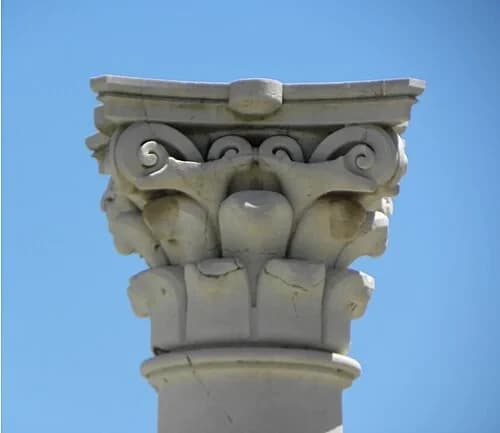
The craftsmanship on this column capital represents the peak of ancient decorative stone carving. The design is modeled after the acanthus plant, a thorny-leaved shrub that grew wild across the Greek countryside. At the corners, you can see 'volutes,' or scroll-like shapes, tucked behind the stylized leaves. This specific style is the Corinthian order, the most ornate of the three classic Greek architectural styles. It became a favorite of the Roman architects who renovated the sanctuary in later centuries. This detail illustrates how the site evolved from its simple Greek beginnings into a place of Roman luxury and prestige. The sharp, crisp lines of the carving, even after centuries of exposure to the elements, demonstrate the remarkable precision of ancient stonemasons. They transformed heavy stone into delicate organic forms, reflecting the harmony between nature and the divine architecture that characterized the entire sanctuary. Every leaf and scroll was carved by hand, showing the dedication required to honor the gods of healing.
Great Altar of Asclepius
The religious focal point where sacrifices and offerings were made to the god of medicine.
Altar
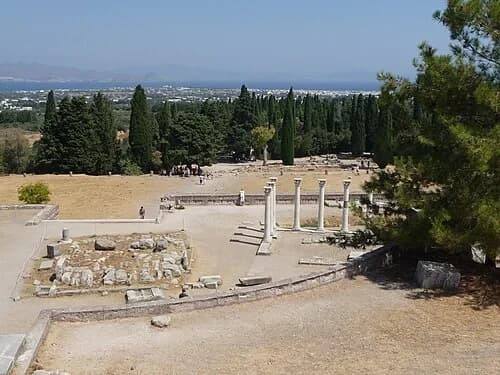
Looking down from this vantage point, you see the entire complex unfolding toward the Aegean Sea. The location of the Asklepieion was a deliberate choice by the followers of Hippocrates, who believed that the environment itself was a form of medicine. This hill was selected for its 'clean air,' cooled by the Etesian winds, and its proximity to the cypress groves sacred to the gods. The terraces organize the site into a hierarchy: the bottom level addressed human physical needs, the middle level honored ancestors and secondary gods, and the very top was reserved for the primary deity. This layout guided the patient through a progressive healing experience. On a clear day, the view across the water to the Turkish coast became part of the therapy. Watching the sea and the distant horizon helped calm the mind, a necessary step before the final stage of spiritual healing could take place at the summit. The natural beauty was never just a backdrop; it was a central tool in the healer’s arsenal.
The Great Altar
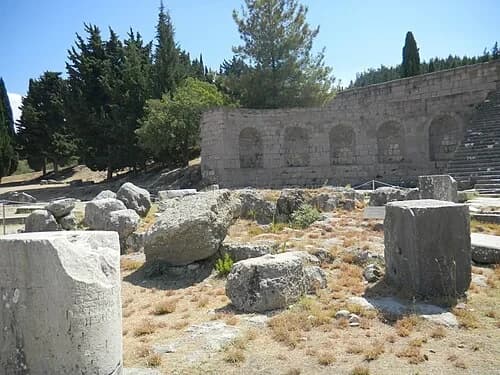
The scattered stone blocks visible here mark the location of the Great Altar, which functioned as the religious heart of the sanctuary. Every morning, rituals took place where animals were sacrificed and offerings were burned to win the favor of the gods. Before any patient could consult with a doctor, they were expected to prove their devotion through these public acts of piety. Smoke from the altar would have filled this entire terrace, creating a dramatic and mystical atmosphere that impressed upon visitors the power of the divine. On some of the larger stones, you might find faint inscriptions that have survived the centuries. These often recorded the names of wealthy donors who contributed funds to maintain the sacred spot or build new features for the site. These fragments are all that remain of a structure that once dominated the terrace, serving as a constant reminder of the spiritual contract between the people and their gods. Ritual sacrifice and medical practice were inseparable in this ancient world.
Ionic Temple of Asklepios
The oldest temple on the site, built in the Ionic style during the 4th century BC.
Ionic Temple of Asclepius
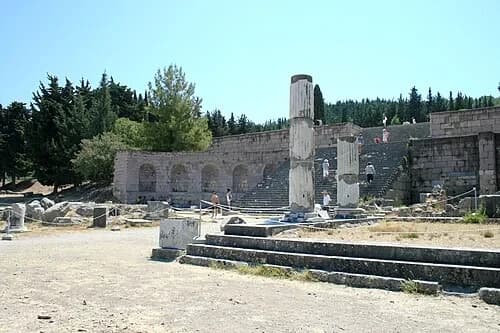
On the second terrace stand two slender columns that belong to the oldest temple on the site, dedicated to Asklepios in the 4th century BC. This structure was far more than a place for prayer; the temple basement served as a secure treasury. Here, the sanctuary’s wealth and the detailed medical records of successful cures were kept under lock and key. The architecture is Ionic, characterized by more graceful and slender lines compared to the massive Doric style found on the level above. This temple is where the cult of the god of medicine truly established its roots on the island of Kos. It represents the early era of the sanctuary when the fame of the local physicians began to spread across the Mediterranean. While the higher temples were grander in scale, this smaller building remained the historic core of the site, marking the ground where the first official sanctuary was consecrated to the healer god. Its simple elegance speaks to the foundational years of the medical center.
Anatomy of a Column
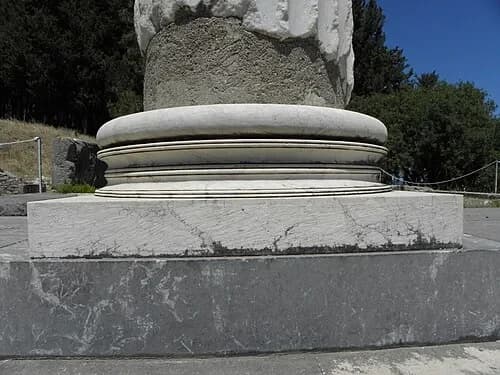
The base of this column offers a rare opportunity to see the internal engineering of ancient architecture. These pillars are not carved from single massive blocks; instead, they are composed of several 'drums' or stacked stone cylinders. To keep these pieces perfectly aligned, ancient builders placed a wooden or lead peg in a square hole at the center of each drum. In an earthquake-prone region like Kos, this design provided a hidden safety feature, allowing the columns to shift slightly during a tremor without immediately collapsing or snapping. Supporting the entire stack is the square base, known as a 'plinth,' which distributed the enormous weight of the stone and the roof above it across the temple's foundation. The weathered surface of the lower drum contrasts with the more finished texture of the base, revealing the different layers of stone and the toll taken by centuries of wind and rain on the hillside. This technique allowed massive structures to remain standing in a volatile tectonic landscape.
Great Temple of Asklepieion
The grandest structure of the site, a massive Doric temple on the upper terrace that dominated the landscape.
Great Temple of the Asclepieion
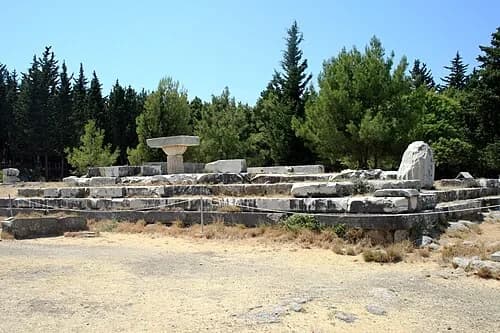
This massive stone platform on the third and highest terrace supported the Great Temple of the Asclepieion. As a colossal Doric structure, it was the absolute pinnacle of the site, visible to ships miles away at sea. By the time patients reached this final level, they had typically undergone days of fasting and rigorous purification rituals. This temple was the climax of the healing journey, where the most sacred rites were performed. Unfortunately, the structure was not destroyed by the slow passage of time, but by a catastrophic earthquake in the 6th century AD. The sheer thickness and weight of these foundation blocks provide a sense of the immense marble temple that once rose above them. From this summit, the god of healing looked out over his domain, overseeing both the suffering and the recovery of the thousands who climbed these terraces in search of a miracle. The massive footprint alone suggests the scale of the Doric colonnade that once crowned this hill.
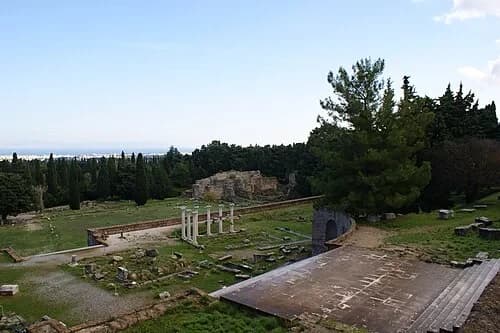
View of the Upper Sanctuary
Standing at the edge of the highest terrace, the entire complex reveals its function as a machine for healing. This exclusive upper level housed the 'Abaton,' a holy sleep chamber where the final stage of the cure occurred. Patients would sleep on the ground here, hoping that Asklepios would appear in their dreams to offer a specific medical remedy or a divine touch. From this vantage point, you can see how the three terraces work in unison: the physical body was tended at the bottom, the mind was educated in the middle, and the soul was healed at the top. The entire site is precisely aligned to face the city of Kos and its harbor, creating a direct visual link between the sacred sanctuary and the daily life of the islanders. This orientation ensured that the site remained a central part of the community's identity, a place where the divine and the human world met on the hillside. The view from here marks the end of the pilgrim's long journey toward health.
Want to hear the rest?
Download the Stanza app to unlock all 12 stops and the complete guided audio tour.
Frequently Asked Questions
How long does the Ασκληπιείο Κω audio tour take?
The Ασκληπιείο Κω audio guide includes 12 narrated stops. Most visitors spend 45 minutes to 1.5 hours exploring the complete tour, though you can listen at your own pace and skip or revisit any stop.
Is the Ασκληπιείο Κω audio guide available in my language?
Stanza supports 15 languages: English, Spanish, French, German, Italian, Portuguese, Russian, Japanese, Chinese, Korean, Arabic, Hindi, Polish, Dutch, Hebrew. Check the guide in the app to confirm the languages currently available for this tour.
Can I use the audio guide offline at Ασκληπιείο Κω?
Yes! Download the complete Ασκληπιείο Κω tour — including all audio, maps, and images — before your visit. The Stanza app works completely offline, so you don't need WiFi or mobile data at the venue.
How much does the Ασκληπιείο Κω audio guide cost?
The Stanza app is free to download. Free and paid audio guides are available; current prices are shown in the app.
How do I use the Stanza audio guide at Ασκληπιείο Κω?
Download the free Stanza app, search for "Ασκληπιείο Κω", and download the tour. When you arrive at the venue, the app uses GPS to detect your location and automatically plays the relevant narration as you move between points of interest — completely hands-free.
What makes the Stanza audio guide different from other Ασκληπιείο Κω tours?
Stanza offers GPS-triggered narration that plays automatically as you walk through Ασκληπιείο Κω — no need to manually select stops. The tour is available in 15 languages, works fully offline, and includes 12 expertly narrated stops with images and historical context.
What other audio guides are available near Ασκληπιείο Κω?
Stanza offers multiple audio guides in Kos, Greece and nearby areas. After downloading the app, browse the map to discover all available tours near Ασκληπιείο Κω. Each guide can be downloaded for offline use.