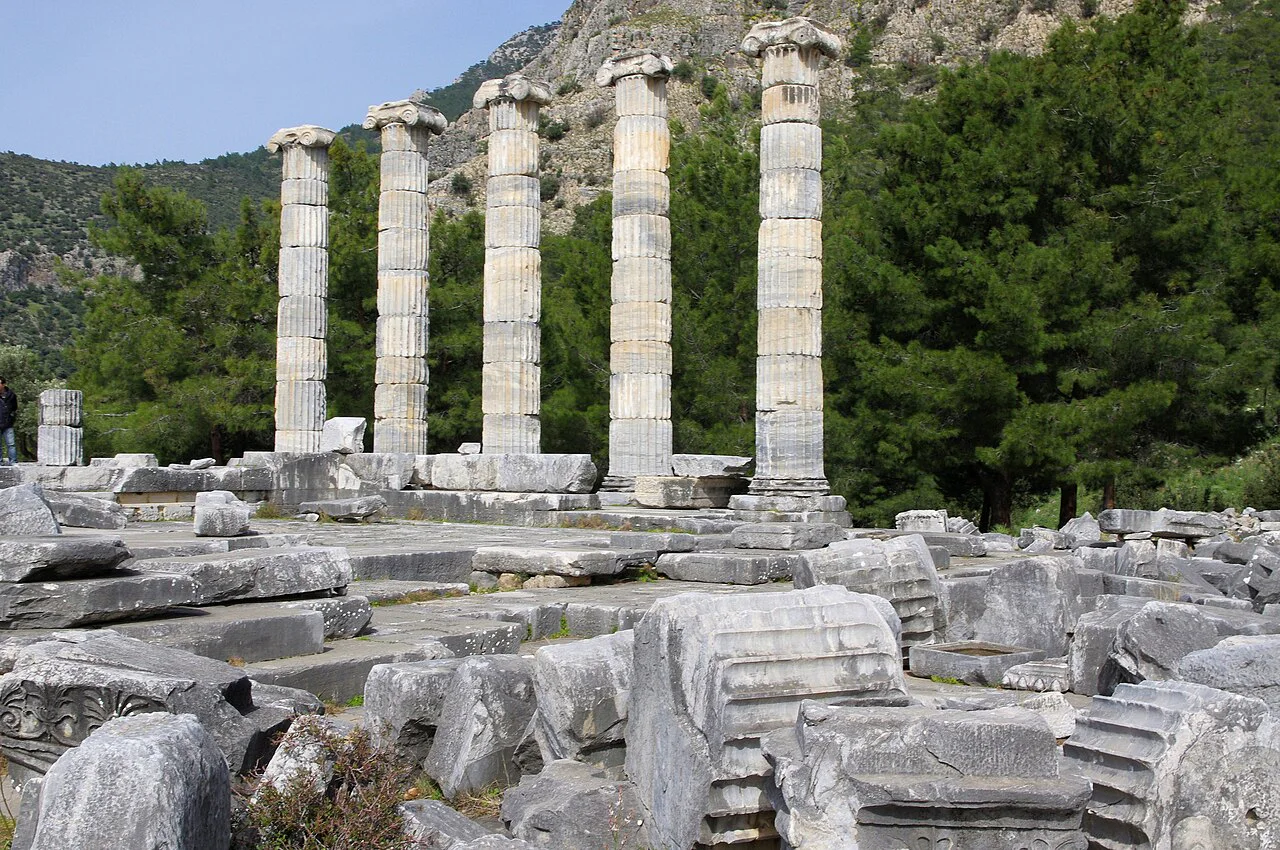
Stanza · Audio guide
Priene Audio Guide
A place to remember. A story to take with you.
Priene was an ancient Greek city of Ionia located on steep slopes and terraces in modern-day Turkey. Due to siltation from the Maeander River, the former coastal city is now an inland archaeological site.
Download Stanza, then search for “Priene”.
About the tour
One guide. Your kind of visit.
Priene was an ancient Greek city of Ionia located on steep slopes and terraces in modern-day Turkey. Due to siltation from the Maeander River, the former coastal city is now an inland archaeological site.
Ready when you are.
- 01Get the free Stanza app.
iOS & Android
- 02Find your guide.
“Priene”
- 03Download before you go.
Works offline
Audio guide / 33 narrated stops
Inside the guide
Get to know a few of the stories before you go. Open a stop to read more.
01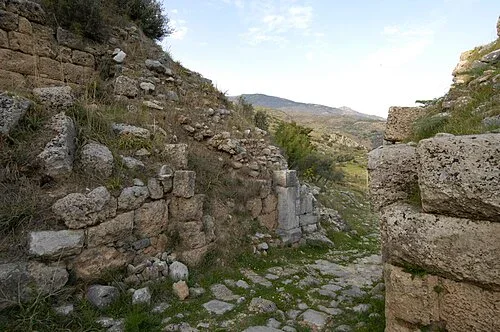 East Gate
 of Priene
A Greek city called Priene once stood here, a member of the Ionian League. Around 350 BCE it was rebuilt from scratch on the steep slopes of Mount Mycale. The plan came from Mausolus, the Carian satrap of the Persian Empire, who wanted a model city with a permanent deep-water port. Construction had already begun when the Macedonians took the region, and Alexander the Great personally took over the project. He and Mausolus meant Priene to be a model city for the Greek world. It stayed small, with perhaps four to five thousand inhabitants, and never held much political importance. Much of the city was built of marble quarried on Mycale itself, with wood for roofs and floors. These heavy Hellenistic walls and the paved road beyond them were the city's front door.
Photo: Dosseman · CC BY-SA 4.0
02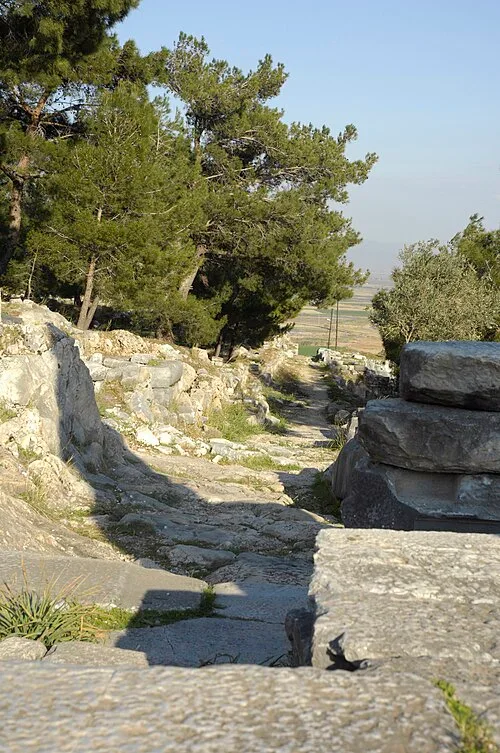 East Gate
Paved Street into the City
Priene was built for walking uphill. Its six main streets run east and west, each about six metres wide, and narrower lanes cross them at right angles. The surfaces were paved in stone from the mountain's own quarries. Water came from springs and streams on Mycale, carried in by aqueduct to cisterns, then piped or channelled onward to houses and fountains. A system of channels drained the whole sloping grid. Both the water supply and the sewers can still be traced on the ground here. Beyond the stone, the land falls away to a broad flat plain, which is now a checkerboard of farm fields.
Photo: Dosseman · CC BY-SA 4.0
03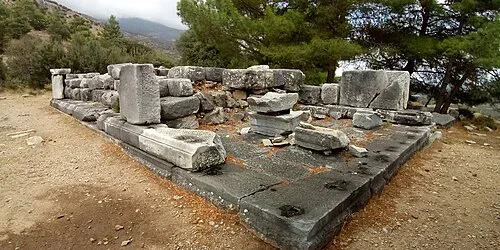 Sanctuary of the Egyptian Gods
Not every god worshipped in Priene was Greek. Among the city's temples, archaeologists revealed a sanctuary of the Egyptian gods Isis, Serapis and Anubis. These cults travelled west from Egypt as the Hellenistic world grew connected, and Greek cities adopted them alongside their own ancient worship. So a Prieneian could honour Athena on the high terrace, sacrifice to Demeter, and also pray to an Egyptian goddess in the same city. The precinct here is an open platform of stone blocks and fallen masonry, humbler than the great marble temples. It is the clearest sign of how cosmopolitan this small Ionian town had become.
Listen in the appChristopher de Lisle · CC BY-SA 4.0
04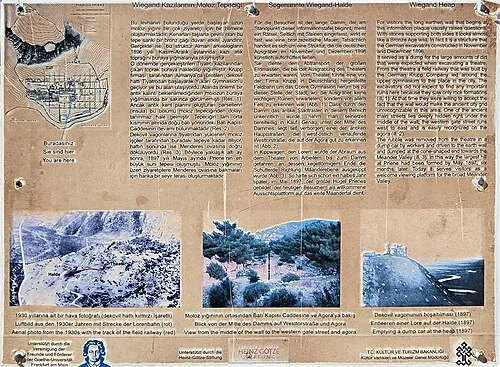 Wiegand Spoil Heap
 Viewpoint
This mound is made of earth dug out of Priene. Theodor Wiegand excavated the city between 1895 and 1899 for the Berlin Museum, and the spoil was heaped up here. It now happens to be one of the best viewpoints over the valley. And the valley is the point. The Maeander River carries sediment down from its valley and dumps it at its mouth, so the shoreline crept steadily westward. Priene began as a port with two harbours on the sea. Geoarchaeological research suggests it lost its open connection to the sea around the first century BCE. Its merchants probably moved to Miletus ahead of most residents. By 300 CE the whole Bay of Miletus, except Lake Bafa, had silted in. A port city ended up many kilometres from the water.
Listen in the appPhoto: Rigorius · CC BY-SA 4.0
05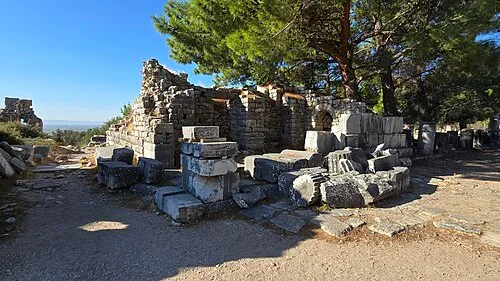 Sanctuary of Asclepius
Asclepius was the Greek god of medicine, and sanctuaries in his honour drew the sick from all over the Greek world. Priene had one of its own, a sacred precinct set just east of the agora. The precinct's remains are rough and broken today, blocks of grey stone heaped among pine trees. In its day the sanctuary of Asclepius belonged to the city's religious district, one of four districts that a visitor could count in the city's plan.
Listen in the appPhoto: Rigorius · CC BY-SA 4.0
06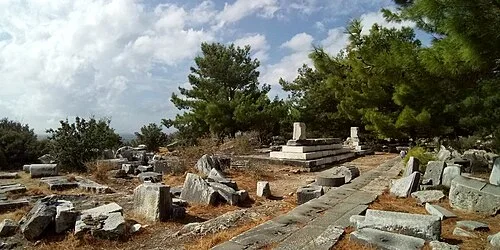 Sanctuary of Asclepius
Asclepius Sanctuary Terrace
This precinct feels almost rural, a scatter of masonry on a quiet terrace with a long view. That is a clue to how Priene's plan worked. The city was built on terraces cut into the slope, and the grand monuments took the best of them: the temple of Athena high on the west side, the theatre, the agora, the council chamber. Smaller sanctuaries settled into the terraces left over between them. A modest precinct like this one still kept its altar and its place in the religious life of the grid. The plan assigned every terrace a purpose, sacred or civic or domestic.
Listen in the appChristopher de Lisle · CC BY-SA 4.0
07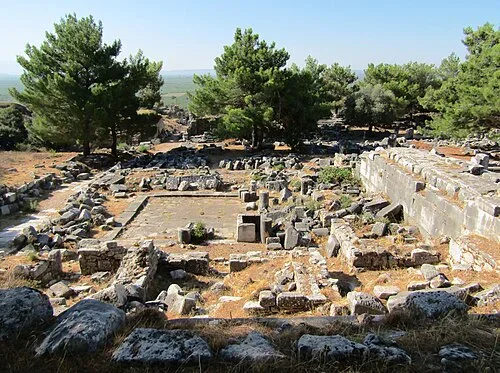 Prytaneion
Priene ran itself as a democracy, and this building housed part of its executive. The official head of state was a prytane, elected periodically together with more specialised magistrates. He and his colleagues conducted the city's day-to-day business from here. The building stood north of the agora, next to the council chamber, forming the political district of the city's four districts. Inside, the Prytaneion probably kept the city's sacred hearth, the symbolic centre of civic life. All decrees in Priene were issued in the name of the Prieneian people, and the officials here carried out what that people decided.
Listen in the appPhoto: O.Mustafin · CC0
08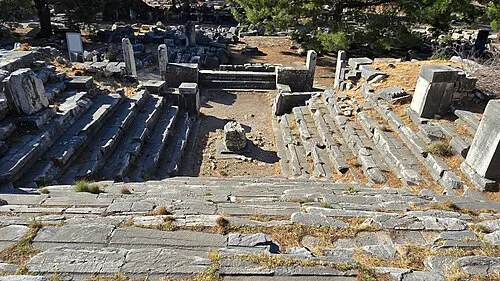 Bouleuterion
 (Council Chamber)
The day-to-day legislative work fell to the boule, the city council, which met here. The room takes the form of a small theatre, with steep tiers of stone seats rising around a central altar, and it once had a wooden roof. It is counted among the best-preserved council chambers of the Hellenistic world. The mechanism was simpler than that of Athens, whose population was far larger, but the principle was the same: an elected council doing the daily work of governing.
Listen in the appPhoto: Rigorius · CC BY-SA 4.0
09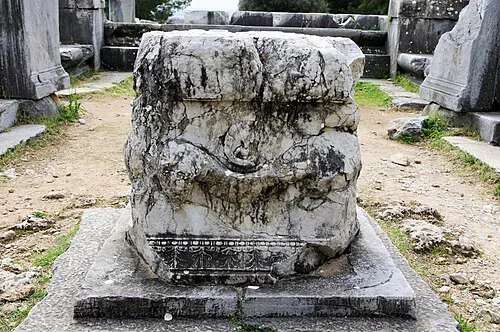 Bouleuterion
Altar of the Bouleuterion
At the centre of the council chamber stands this carved marble altar, and it explains how meetings here began. In Greek civic practice, business opened under religious ritual, with an offering to the gods before debate could start. The altar's weathered sides still carry carved figures and bands of ornament, though time has softened the detail. So politics and religion shared the same floor. The councilors took their seats on the tiers around it, and the first act of any session was an act of worship at this block of stone.
Listen in the appKen and Nyetta · CC BY 2.0
10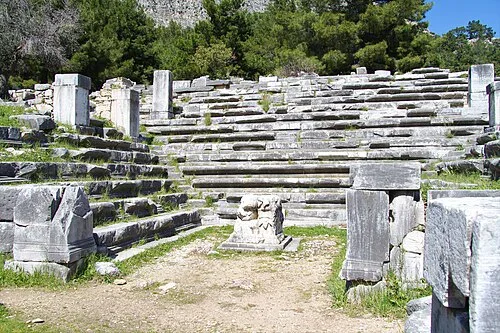 Bouleuterion
 Seating Tiers
The council that sat on these tiers handled daily business, but major decisions went to a wider body. An assembly of citizens met periodically in Priene to rule on the big questions placed before it. Not everyone shared in it. In the countryside lived the pedieis, the plainsmen, who were not Prieneians. Their property rights and tax duties were defined by law, but they had no voice in this chamber. They are perhaps an inheritance from the days when Priene stood in the valley, before the city moved to this mountainside.
Listen in the appPhoto: Rabe! · CC BY-SA 4.0
- 11
Upper Gymnasium and Roman Baths
Where Priene's sons trained body and mind, later fitted out with Roman baths.
- 12
Bishop's Church
A Byzantine basilica rose over the old city's remains, proof that Priene kept living long after its harbor was gone.
- 13
Nave of the Bishop's Church
Down the marble nave of the Bishop's Church, along the paving where the congregation once stood.
- 14
Synthronon of the Basilica
Curved stone tiers in the apse, built to seat the clergy of a Byzantine bishop's church.
- 15
Greek Theatre of Priene
A Greek theatre that kept its Hellenistic character despite Roman-era changes, so its original shape can still be read.
- 16
Marble Throne of Honour
A carved marble throne in the front row, with claw feet, reserved for the honored few.
- 17
Hellenistic Stage (Skene)
The theatre's stage building and its columned front, Hellenistic in character despite Roman-era changes.
- 18
Sanctuary of Demeter and Kore
A sanctuary of Demeter and Kore on the slopes below the acropolis, and the city's oldest legend.
- 19
Altar Slab at the Demeter Sanctuary
A small carved altar slab among the sanctuary's walls, a trace of worship at household scale.
- 20
Acropolis of Priene
The sheer cliff of Mount Mycale, rising to about 380 meters above the sea, over a city terraced up its slopes.
- 21
Propylon of the Athena Sanctuary
The monumental gateway and stairway by which worshippers entered the precinct of Athena Polias.
- 22
Temple of Athena Polias
The Temple of Athena Polias, designed by Pytheos, the architect of one of the Seven Wonders.
- 23
Temple Columns and the Orophernes Treasure
Silver coins of a Cappadocian prince, buried under the statue of Athena and found in 1870.
- 24
Dedication Inscription of Alexander the Great
The carved block that records Alexander the Great paying for the temple of Athena, on one condition.
- 25
Sacred Hall (North Stoa of the Agora)
The double-aisled hall that sheltered the agora's north side, and the wealthy citizens who paid for buildings like it.
- 26
Stairway by the Sacred Hall
One carved stone in the stairway, bearing a menorah, a shofar and a cross side by side.
- 27
Agora of Priene
The grid-plan masterpiece: eighty equal blocks on a steep slope, and the agora at their commercial heart.
- 28
South Wall of the Agora
The retaining wall that held back the hillside and made a level public square possible.
- 29
Lower Gymnasium
The stadium and gymnasium quarter at the lowest point inside the walls.
- 30
Priene Synagogue
A private house in an ordinary block, converted into a synagogue with a niche for the Torah scrolls.
- 31
Synagogue in Its Residential Block
The synagogue's low walls, tucked invisibly into an everyday housing block.
- 32
Alexandreion (Alexander's House Shrine)
Alexander's edict of 334 BCE, carved on the temple, and the house later made into a shrine to him.
- 33
West Gate and the Road to the Harbor
The western end of the walls, guarding the road that ran down to Priene's harbours on the sea.
Priene
Frequently asked questions
How much does the guide cost?
Free app download. Listed guide price: $3.99. Guide price shown in the app. Audio guide only. Venue admission is separate.
Can I listen without internet?
Yes. Download the guide’s audio, images, and maps in the app before your visit. Your downloaded content is then available offline.
Can I listen in my language?
This audio guide is available in 15 languages, including English.
Do I need to follow a schedule?
No. This is a self-guided experience. Choose your stops, pause whenever you like, and return to a story at your own pace.
At your own pace
Explore Priene.
Download Stanza, then search for “Priene”.
Free app download · Guide price shown in the app
Keep exploring
Nearby audio guides
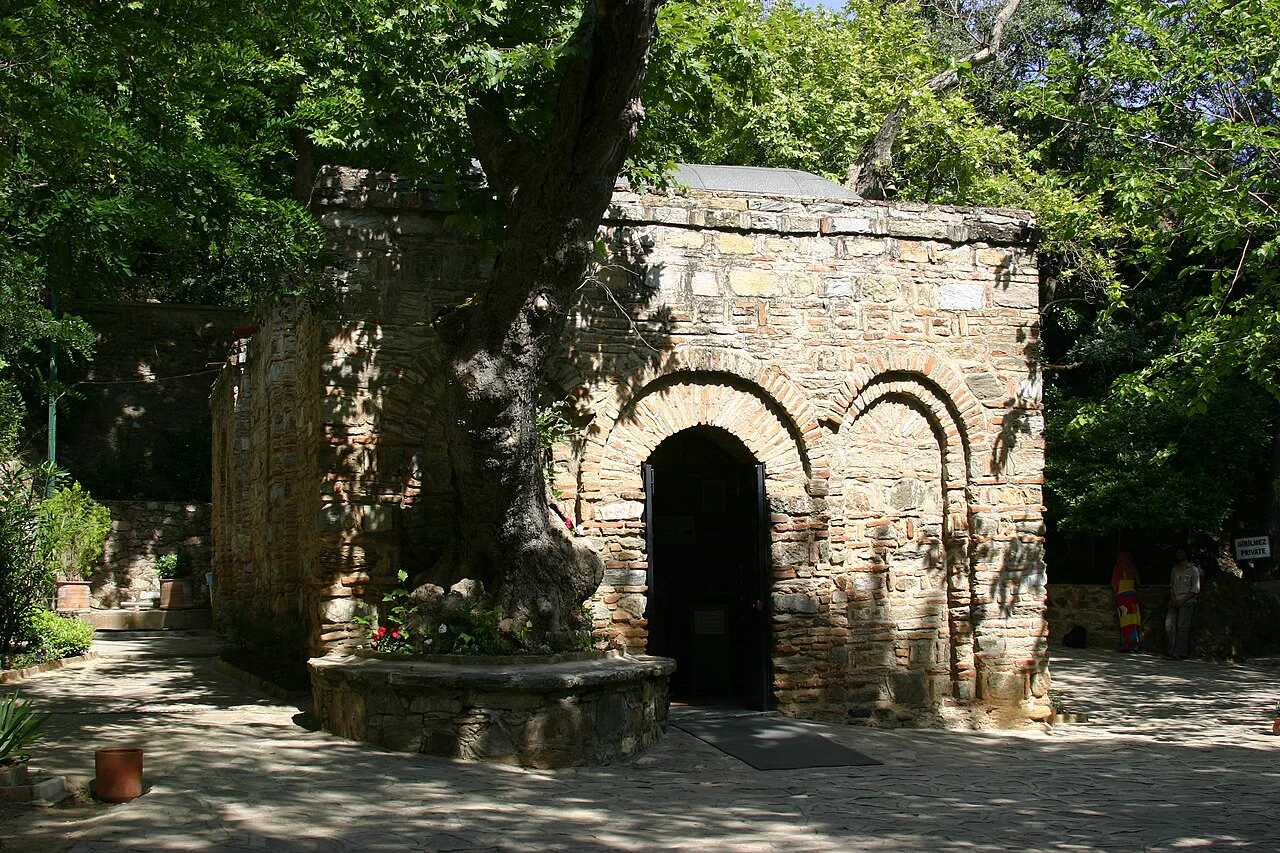
Selçuk · 28 km
Meryem Ana Evi
Content & sources
No machine-readable author provided. Mfryc assumed (based on copyright claims). · CC BY-SA 2.5
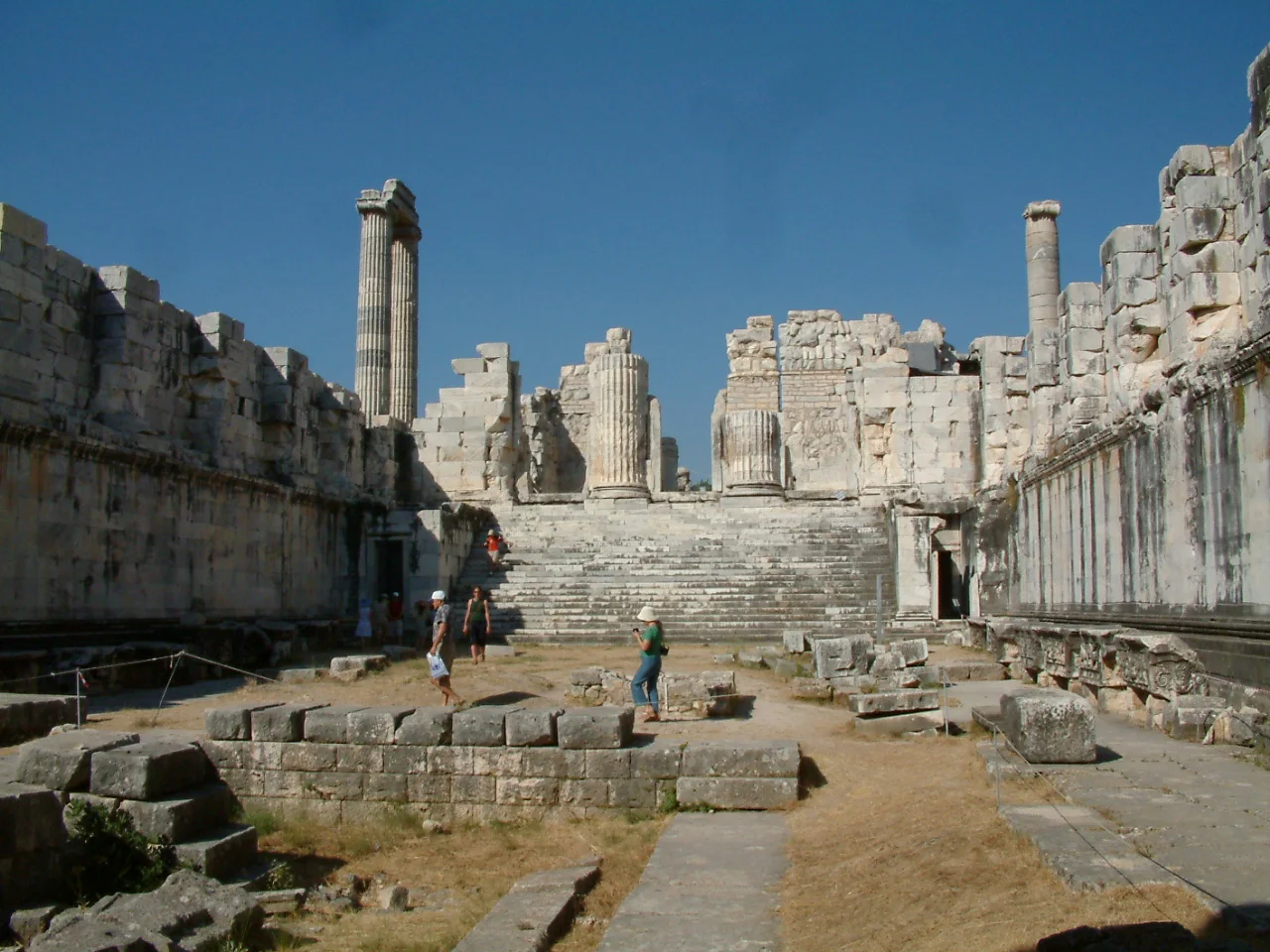
Didim · 31 km
Didyma
Content & sources
Photo: Radomil · CC BY-SA 3.0
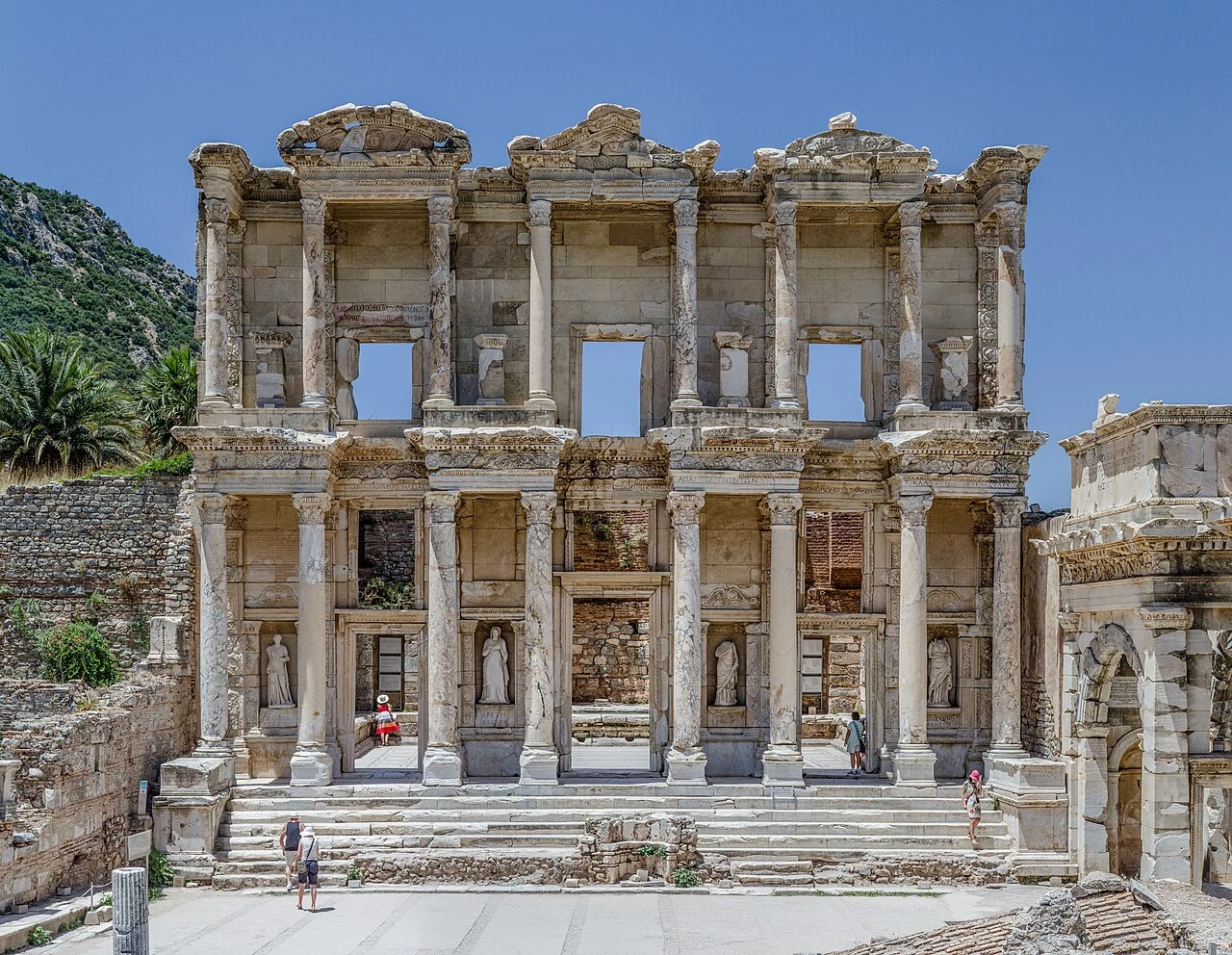
Selçuk · 31 km
Ephesus
Content & sources
Benh LIEU SONG · CC BY-SA 3.0
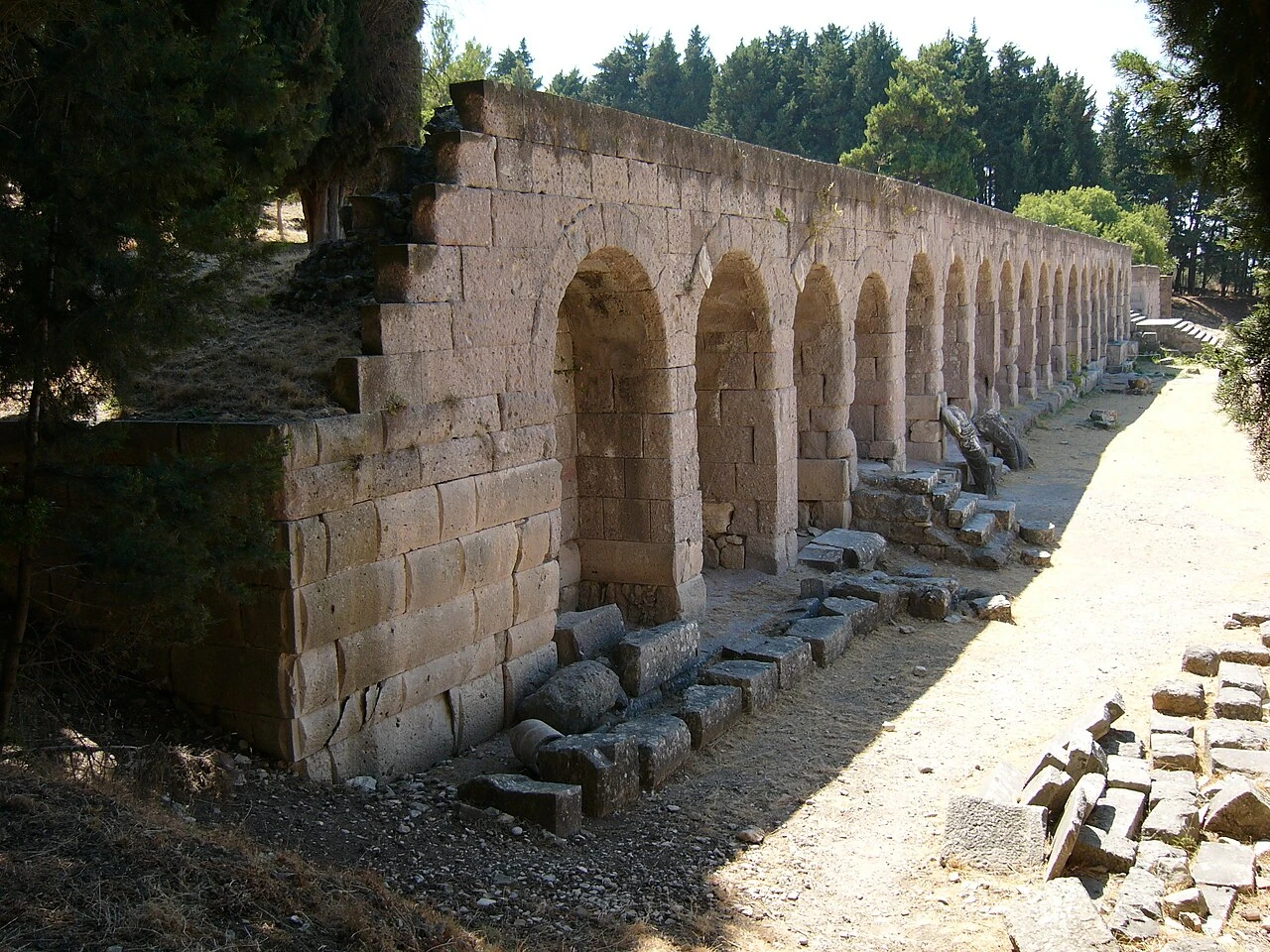
Kos · 87 km
Asclepeion of Kos
Content & sources
Photo: Cup of coffee · CC BY-SA 3.0