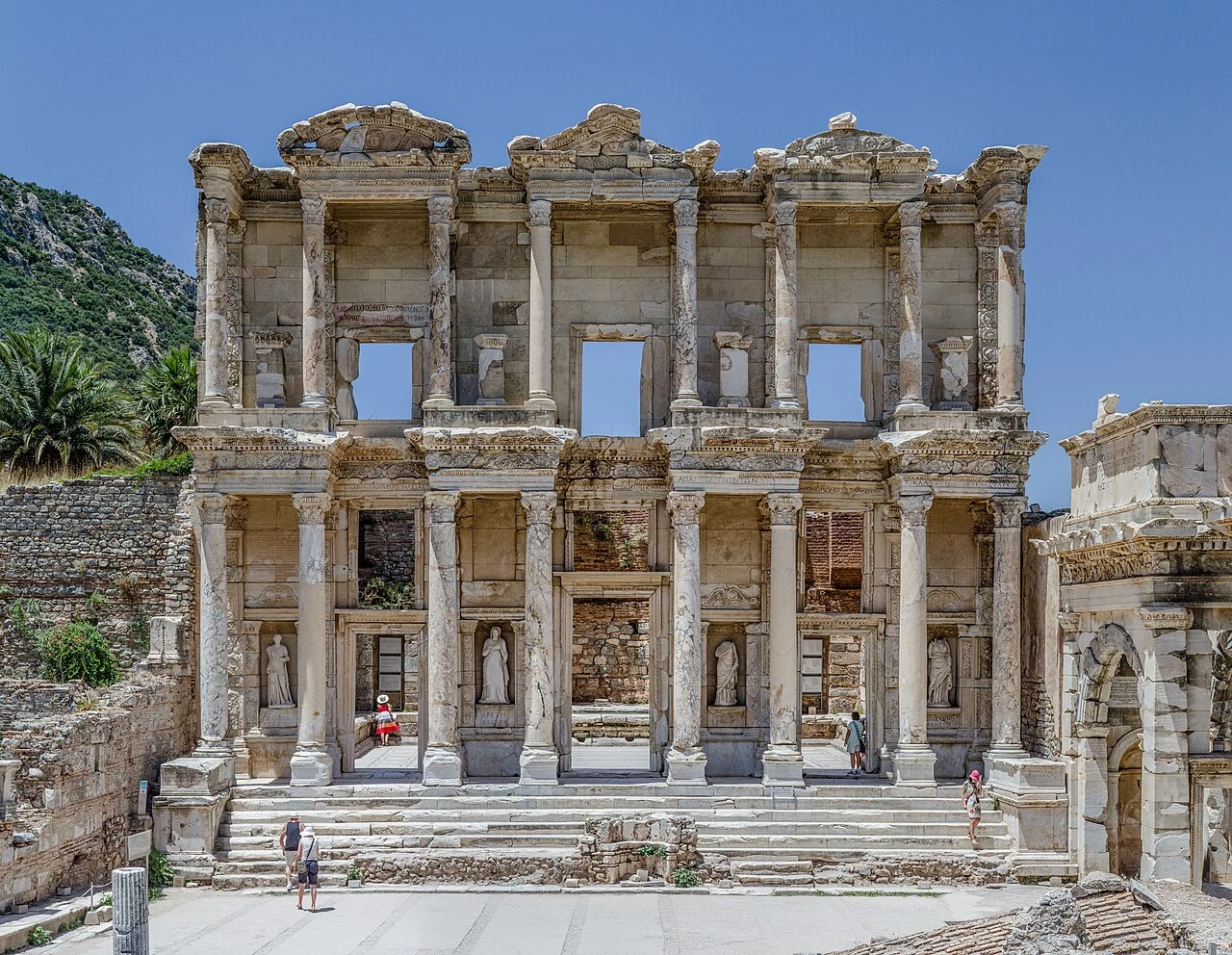
Stanza · Audio guide
Ephesus Audio Guide
A place to remember. A story to take with you.
Ephesus was an ancient Greek city in Anatolia, now part of modern-day Turkey. It is a significant archaeological site and a popular tourist attraction, known for its well-preserved ruins.
Download Stanza, then search for “Ephesus”.
About the tour
One guide. Your kind of visit.
Ephesus was an ancient Greek city in Anatolia, now part of modern-day Turkey. It is a significant archaeological site and a popular tourist attraction, known for its well-preserved ruins.
Ready when you are.
- 01Get the free Stanza app.
iOS & Android
- 02Find your guide.
“Ephesus”
- 03Download before you go.
Works offline
Audio guide / 44 narrated stops
Inside the guide
Get to know a few of the stories before you go. Open a stop to read more.
01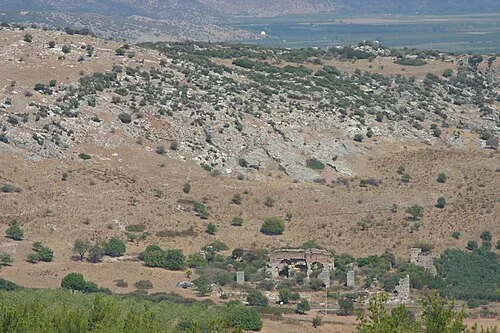 East Gymnasium and Baths
East Gymnasium: Gateway to Ephesus
Ancient Ephesus was a Greek city on the coast of Ionia, in what is now Turkey near the town of Selçuk. Attic and Ionian colonists founded it in the tenth century BC, on the site of Apasa, a capital of the Bronze Age kingdom of Arzawa. It joined the Ionian League, a fellowship of twelve Greek cities, and came under Roman control in 129 BC. Later it grew into one of the largest cities of Roman Asia Minor. By the fifteenth century it stood completely abandoned. What survives makes it one of the best-preserved classical cities of the Mediterranean, with marble streets, luxury houses, early Christian sites, and a theatre that held about twenty-four thousand people. The ruins here belong to a vast bath-gymnasium complex of the second century AD, raised near the Magnesian Gate at the city's eastern entrance. Arriving travellers bathed, exercised and studied here before going in, because in Roman times the gymnasium was the school. The ruins run downhill from this upper gate, and their arches still rise above the scrub-covered hillside.
José Luiz · CC BY-SA 3.0
02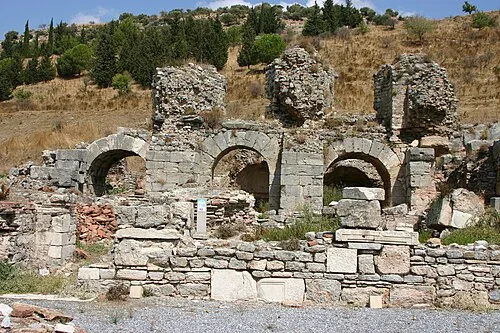 Baths on the State Agora
 (Baths of Varius)
These brick arches and vaults belonged to the bathhouse by the State Agora, known today as the Baths of Varius, which served Ephesus's civic centre. Roman baths were feats of engineering. A wood furnace sent hot gases through the empty space beneath the floors, a system called the hypocaust, and the heat rose into the rooms above. Bathers moved from cold rooms to warm ones to the hot rooms, and back again. The layered brick arches carried the heavy floors and vaults over those heating channels. Bathing was a daily civic routine, and for the officials and administrators who worked around the agora, this was their bathhouse. The arches visible here are the skeleton of that machinery, stripped of its floors.
José Luiz · CC BY-SA 3.0
03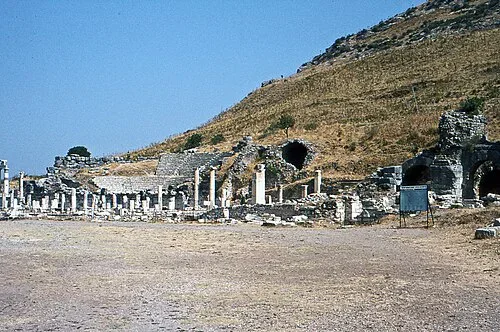 State Agora of Ephesus
State Agora: Seat of Roman Power
In 27 BC the emperor Augustus made Ephesus the capital of the province of proconsular Asia, taking the honour from Pergamum. The city became the seat of the governor of western Asia Minor. The geographer Strabo wrote that Ephesus was second in importance and size only to Rome. This broad open square, framed by colonnaded halls, was where that power sat. Provincial administration was conducted here, the cult of the emperor was honoured here, and courts held their trials within sight of these stoas. The city governed itself as well, through its own council, which met close by in a small roofed theatre.
Listen in the appDaniel VILLAFRUELA. · CC BY-SA 3.0
04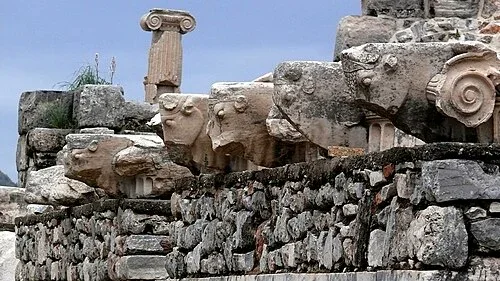 State Agora of Ephesus
Bull-Head Capitals of the Basilica Stoa
The carved bull heads belong to the Basilica Stoa, the portico along the north side of the State Agora. Each capital carries a sculpted bull's head, with the volutes of an Ionic capital curling above it. Shaping a heavy block of stone into horns, ears and muzzle took real skill, and it was spent on architectural ornament. In the imperial building programme, even the columns holding up a walkway were dressed as sculpture.
Listen in the appKlaus Walter · CC BY-SA 3.0 de
05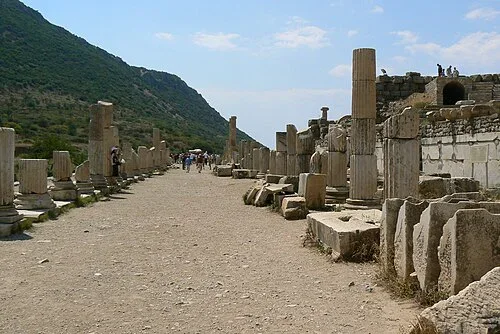 Basilica Stoa
: Showcase of the Marble City
The Basilica Stoa itself was a covered portico about a hundred and sixty metres long. Its double row of columns created a wide, shaded hall where citizens could do business out of the sun and rain. Buildings like this did not come from public budgets alone. Wealthy Ephesians paid for monumental architecture as a gift to the city, and their names went up on the stone in return. Under Roman peace, that competition in generosity turned Ephesus into a city of marble. The bull-head capitals you have just seen were among the finest ornament on the portico.
Listen in the appPhoto: Rita1234 · CC BY-SA 3.0
06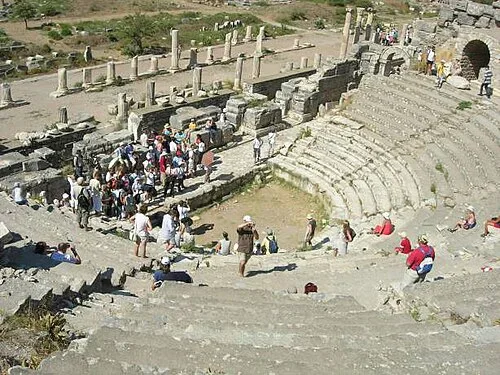 Bouleuterion (Odeon)
Bouleuterion: Senate and Song
Publius Vedius Antoninus and his wife built this small roofed theatre around 150 AD. It seated about fifteen hundred people on twenty-two stepped tiers around a semicircular floor, with entrances at both sides. The city's senate, the boule, met here, and the same room hosted concerts and poetry readings. Government and culture shared one building, and red granite pillars decorated the upper gallery. The city's Great Theatre held many thousands more, but that was for the whole populace. The council's business needed a room, not an arena.
Listen in the appPhoto: Mykenik~commonswiki · Public domain
07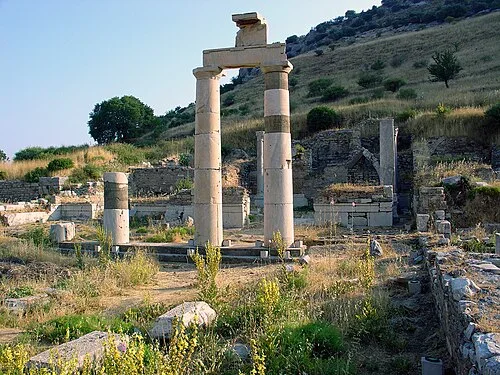 Prytaneion
: The Sacred Hearth
Two tall columns rise again over the ruins of the Prytaneion, Ephesus's town hall. Inside burned the sacred hearth of Hestia, goddess of the hearth, and the flame was never allowed to go out. As long as it burned, the city itself was seen as alive. The prytaneis, the magistrates who handled the city's daily business, were responsible for keeping it fed. The building's chief officer acted much like a mayor, and his first duty was that flame. Statues of gods and emperors lined the hall, and the great marble statues of Artemis now in the Ephesus museum were found here. Adjoining buildings housed the city's official guests.
Listen in the appM. Steskal · CC BY-SA 3.0
08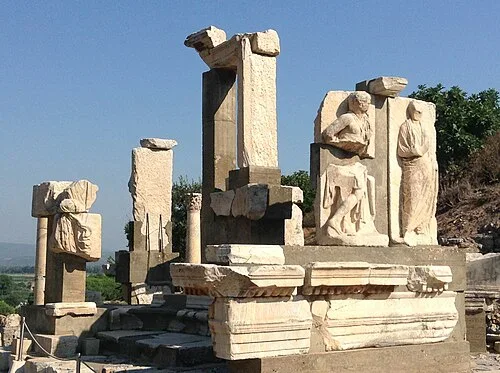 Memmius Monument
: Sulla's Grandson
This monument honoured Gaius Memmius, grandson of the dictator Sulla, and through him the Roman takeover of Ephesus. The city had come under Roman control in 129 BC. In 88 BC Ephesus welcomed the forces of Mithridates, king of Pontus, as he drove the Romans out of the province. From Ephesus, Mithridates ordered the killing of Roman citizens across Asia; some eighty thousand died, and statues of Roman residents were destroyed too. When Sulla defeated Mithridates in 86 BC, Ephesus returned to Roman rule under a heavy indemnity and years of back taxes. The monument on this spot celebrated the family that stood for the reconquest, and advertised the connection to every passer-by.
Listen in the appRatomir Wilkowski RODZIMOWIERCA.PL · CC BY 3.0
09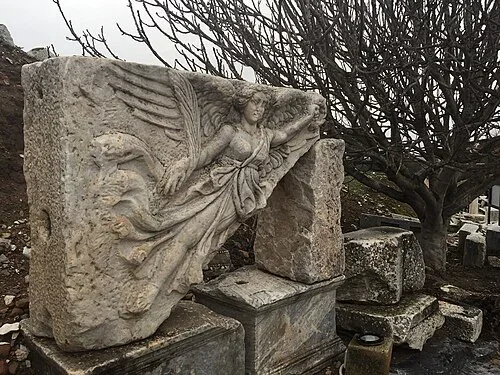 Relief of Nike
A winged woman sweeps forward in carved marble, wreath in one hand, palm branch in the other. She is Nike, goddess of victory. The relief was never a free-standing statue; it worked as a corner bracket on the Hercules Gate, its shape cut to fit where two blocks met. Even a structural bracket on a city gate could carry the image of victory.
Listen in the appRay Swi-hymn from Sijhih-Taipei, Taiwan · CC BY-SA 2.0
10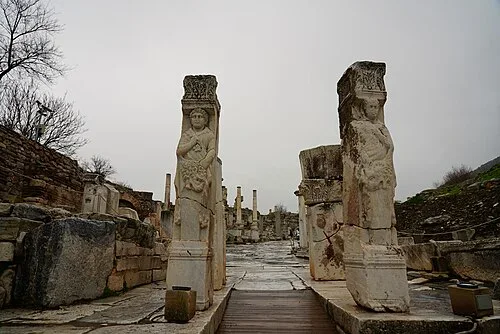 Hercules Gate
Two pillars carved with Hercules wearing the skin of the Nemean lion stand facing each other across Curetes Street. Between them, the fourth-century gate they supported narrowed the passage. That pinch was the point: wheeled vehicles could not force through, so the street beyond became pedestrian-only. The upper city around the State Agora was reserved for people on foot, and this gate drew the line. Hercules, the hero of strength, stood guard on both sides.
Listen in the appRay Swi-hymn from Sijhih-Taipei, Taiwan · CC BY-SA 2.0
- 11
Curetes Street: The Marble Avenue
Ephesus's marble processional avenue, lined with shops, fountains and monuments bought by the ambitious.
- 12
Nymphaeum Traiani: Water in the City
A two-storey fountain of about 104 AD, where the city's water flowed from beneath a statue of Trajan.
- 13
Temple of Hadrian: The Founder's Frieze
The elegant temple of Hadrian, and the frieze that tells how a fish and a boar founded Ephesus.
- 14
Medusa Relief on the Temple of Hadrian
A grim carved face under the temple's arch, read as Medusa and as protection against evil.
- 15
Scholastikia Baths
A bath complex rebuilt late in the fourth century by a Christian benefactor, out of salvaged Roman marble.
- 16
Roman Latrines
Marble bench seating over running water: how a Roman public toilet worked, and why Ephesians used it in company.
- 17
Terrace Houses: How the Wealthy Lived
Six luxury villas on three terraces, lived in from the first century BC into the seventh AD.
- 18
Inside the Protective Shelter
How a steel canopy and raised walkways keep the painted houses alive for visitors.
- 19
Frescoed Vault in the Terrace Houses
Paint that climbed from the walls over the vaults: the decorated ceilings of the rich.
- 20
A Vaulted Room Under Excavation
A grand brick-vaulted room, still half in the hands of the excavators.
- 21
Library of Celsus
A son's monument to his father: a tomb, a library of twelve thousand scrolls, and a facade built to impress.
- 22
Behind the Facade: The Library Rebuilt
The plain brick body behind the marble face, and the careful reassembly of the facade itself.
- 23
Sophia: Wisdom Personified
Wisdom carved in marble: the four virtues who guard the library's entrance.
- 24
Episteme: Knowledge Personified
Headless but named: Knowledge, inscribed at the library door.
- 25
Arete: Virtue Personified
Virtue in veiled marble, standing beside the doorway every visitor passed through.
- 26
Gate of Mazaeus and Mithridates
Two freedmen, one emperor, and a triple-arched gate raised at their own expense.
- 27
Tetragonos Agora: The Marketplace
The square market where the Mediterranean came to trade: silks, spices, food, and people.
- 28
Marble Street
The marble road from library to theatre, with a sewer running beneath it.
- 29
The Carved Footprint
A carved footprint, a heart, and a woman: the pavement sign sailors have followed for generations, or a puzzle.
- 30
Great Theatre: Stage of a Riot
Twenty-four thousand seats, gladiators, and the riot that filled the bowl when Paul's preaching hit the silversmiths' trade.
- 31
Arcadiane: The Road to the Sea
The marble road that once carried a harbour city's arrivals, and the silt that shut the sea out.
- 32
Church of Mary: Council of 431
The hall-turned-basilica where the bishops of 431 proclaimed Mary Theotokos.
- 33
Baptistry of the Church of Mary
A carved cross in stone, marking a Roman commercial hall reborn for baptism.
- 34
Baptistry Font
The sunken stone basin where the Church of Mary's converts were baptized.
- 35
Apse of the Early Christian Basilica
The curved apse added when a Roman hall became a Christian basilica.
- 36
Cave of the Seven Sleepers
The legend of seven youths who slept through three centuries, and the real cemetery that grew around their cave.
- 37
Inside the Grotto
Brick vaults and rock-cut tombs inside the grotto of the Seven Sleepers.
- 38
The Artemision: Wonder of the World
An engraver's dream of the Temple of Artemis, set against the size the ancient writers gave it.
- 39
Where the Wonder Stood
One column in a marsh, the Croesus rope legend, and what the British Museum dig carried away.
- 40
Basilica of Saint John: The Apostle's Hill
The apostle who died in peace at Ephesus, and Justinian's basilica raised over his grave.
- 41
The Grave of the Apostle
The grave chamber at the centre of the basilica, and the pilgrims it drew.
- 42
The Baptistery Monument
A miniature temple front in the baptistery, its cross replacing the old gods in carved stone.
- 43
The Synthronon: Seats of the Clergy
The tiered benches where a Byzantine bishop and his clergy sat through the liturgy.
- 44
Columns of Hagios Theologos
Cross-carved capitals and the name Hagios Theologos, the thread that kept Ephesus's name alive.
Ephesus
Frequently asked questions
How much does the guide cost?
Free app download. Listed guide price: $0.99. Guide price shown in the app. Audio guide only. Venue admission is separate.
Can I listen without internet?
Yes. Download the guide’s audio, images, and maps in the app before your visit. Your downloaded content is then available offline.
Can I listen in my language?
This audio guide is available in 15 languages, including English.
Do I need to follow a schedule?
No. This is a self-guided experience. Choose your stops, pause whenever you like, and return to a story at your own pace.
At your own pace
Explore Ephesus.
Download Stanza, then search for “Ephesus”.
Free app download · Guide price shown in the app
Keep exploring
Nearby audio guides
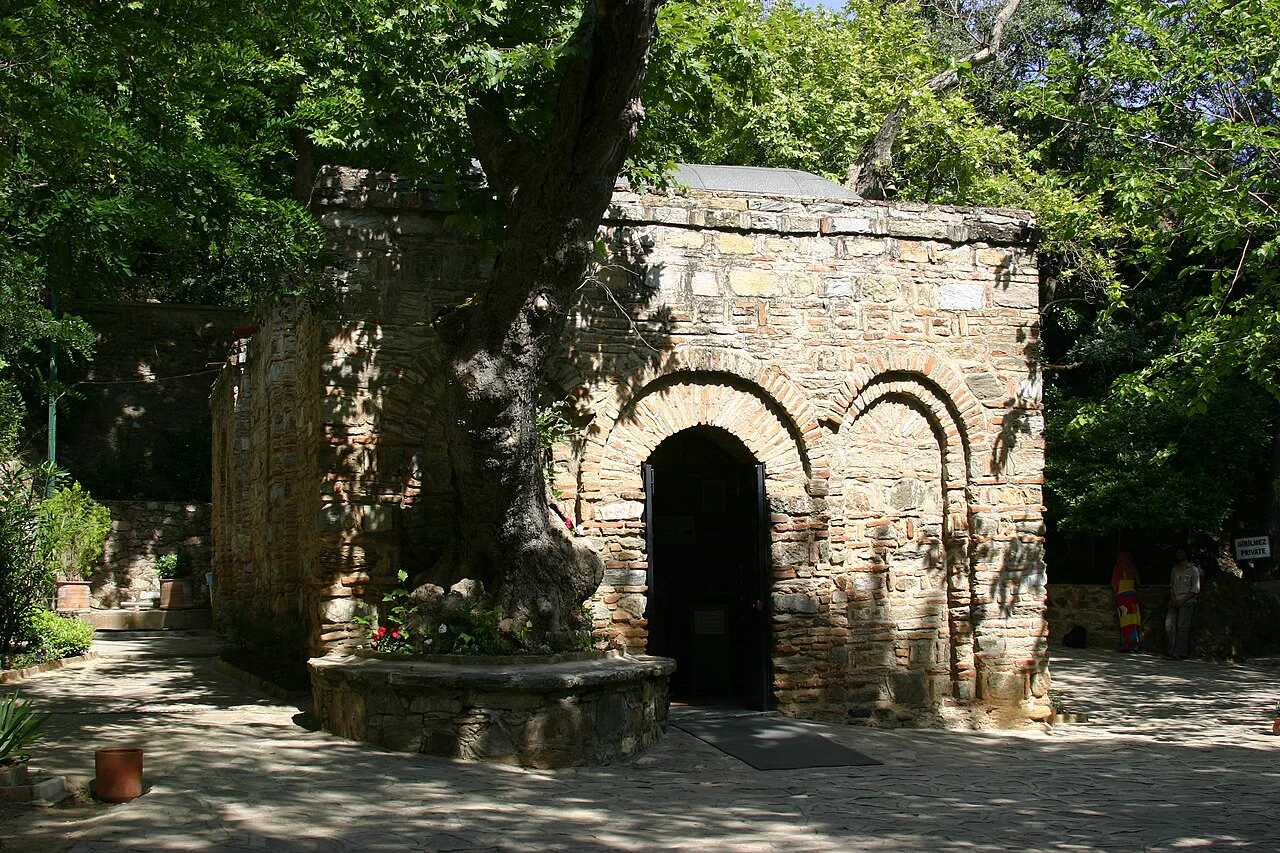
Selçuk · 3 km
Meryem Ana Evi
Content & sources
No machine-readable author provided. Mfryc assumed (based on copyright claims). · CC BY-SA 2.5
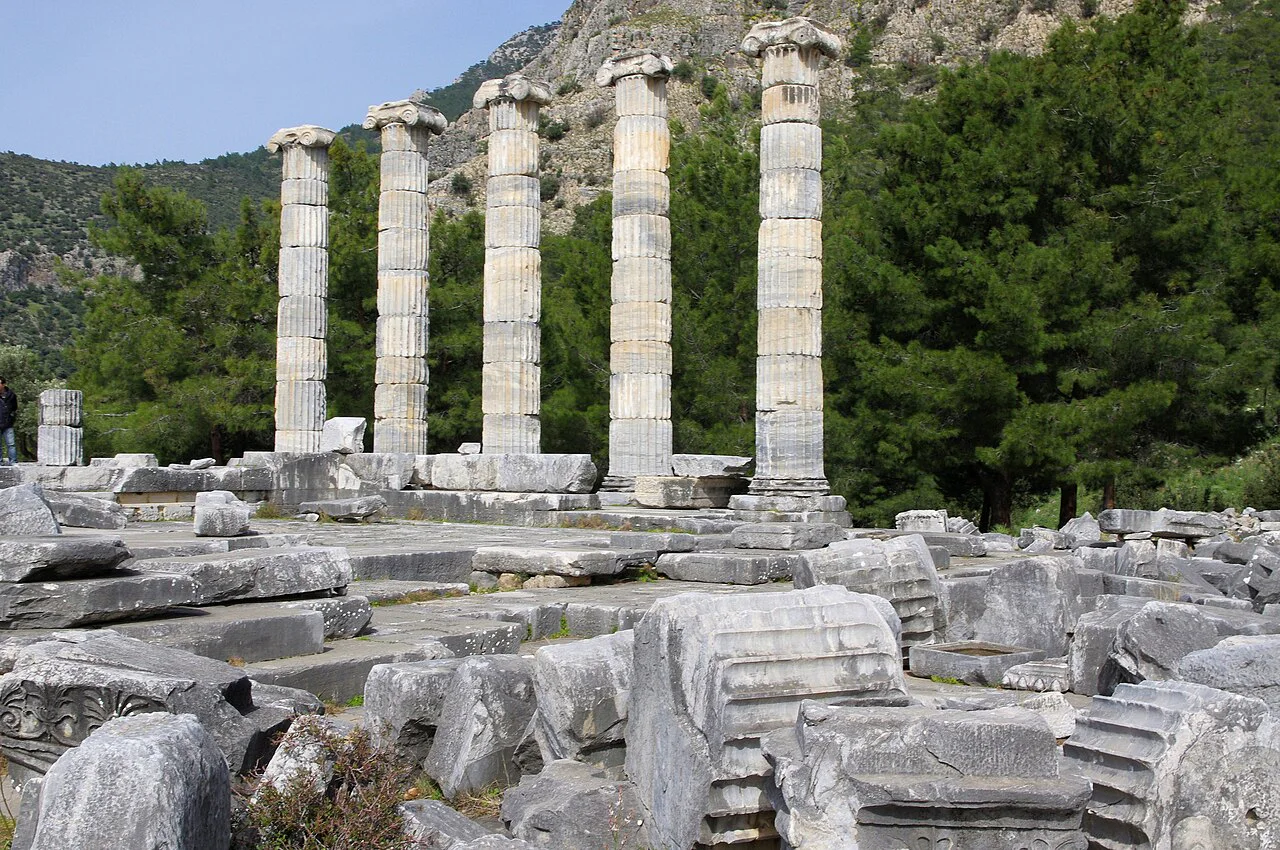
Söke · 31 km
Priene
Content & sources
Ken and Nyetta · CC BY 2.0
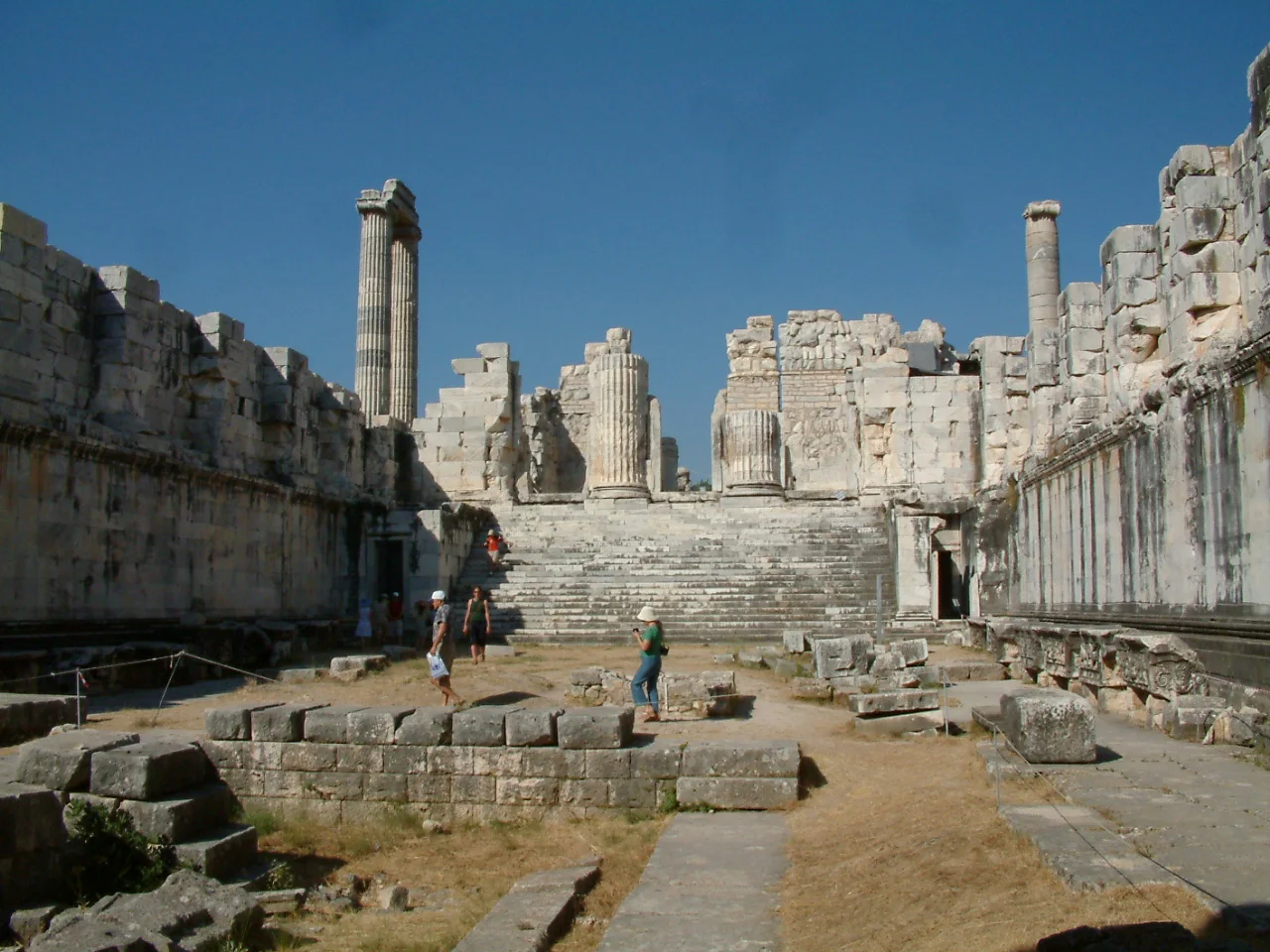
Didim · 62 km
Didyma
Content & sources
Photo: Radomil · CC BY-SA 3.0
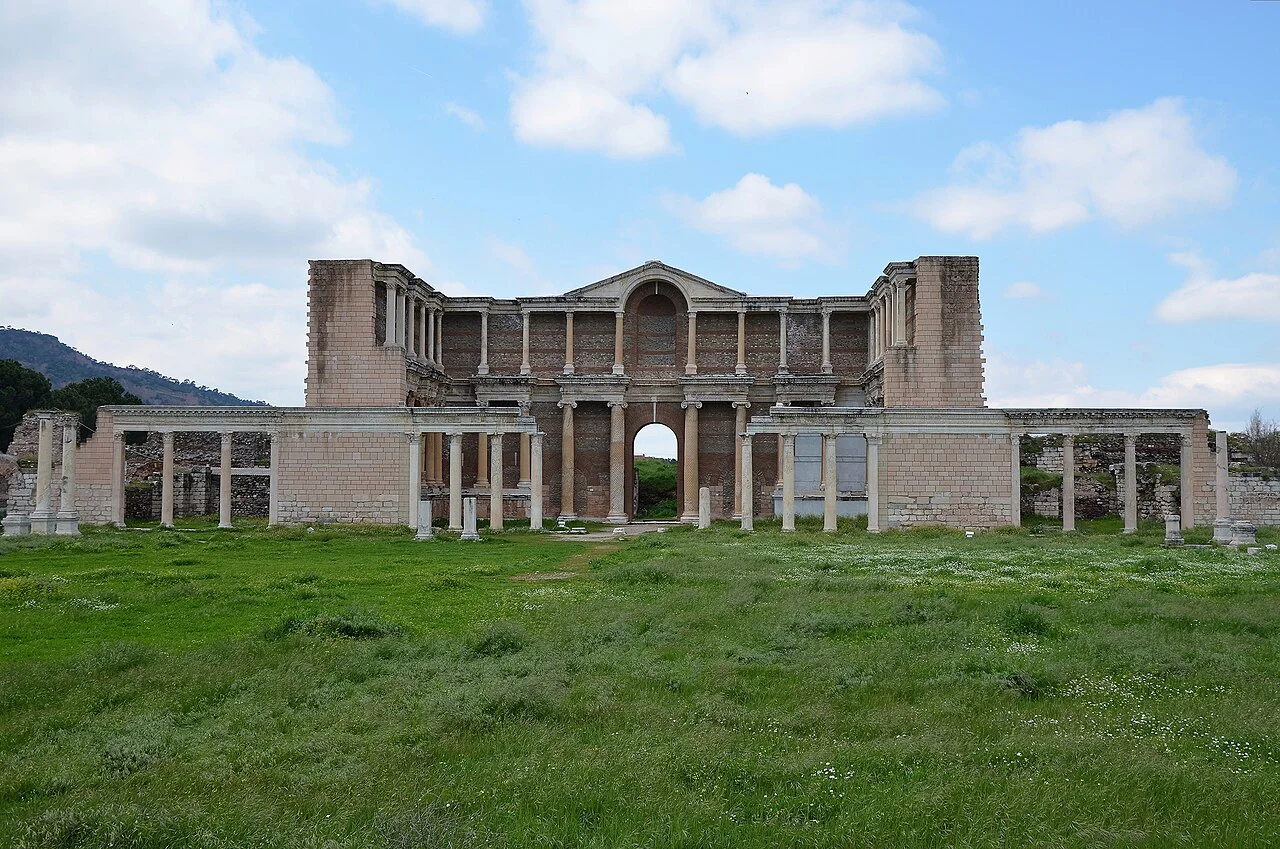
Salihli · 86 km
Sardis
Content & sources
Carole Raddato from FRANKFURT, Germany · CC BY-SA 2.0