 Stanza / Audio guide
Content & sources
Stanza · Audio guide
Sardis Audio Guide
A place to remember. A story to take with you.
Sardis was the capital of the Lydian Empire and later served as a major center of Hellenistic and Byzantine culture. Today, it is an active archaeological site located near the town of Sart in Turkey.
Download Stanza, then search for “Sardis”.
About the tour
One guide. Your kind of visit.
Sardis was the capital of the Lydian Empire and later served as a major center of Hellenistic and Byzantine culture. Today, it is an active archaeological site located near the town of Sart in Turkey.
Ready when you are.
- 01Get the free Stanza app.
iOS & Android
- 02Find your guide.
“Sardis”
- 03Download before you go.
Works offline
Audio guide / 14 narrated stops
Inside the guide
Get to know a few of the stories before you go. Open a stop to read more.
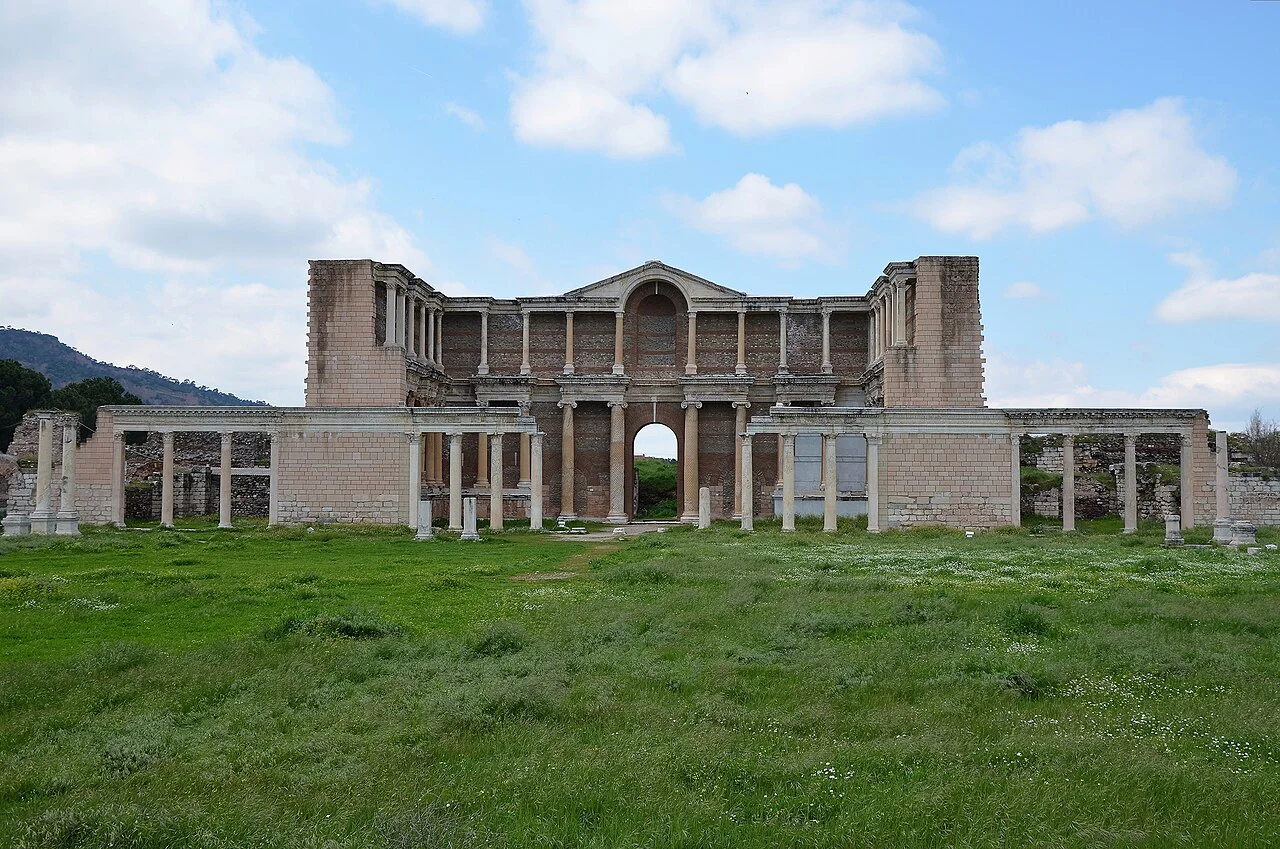
01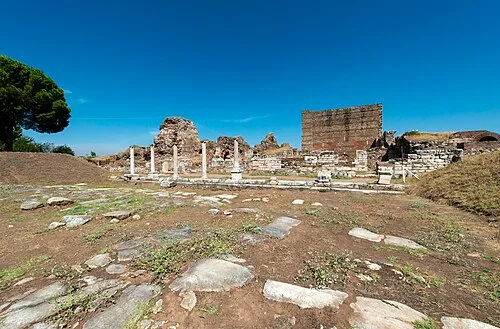 The Roman Colonnaded Avenue
Arrival on the Roman Colonnaded Avenue
Welcome to Sardis, a city occupied for at least three and a half thousand years. Over that span it swung between a wealthy city of international importance and a scattering of modest hamlets. It was the capital of the Lydian Empire, then the seat of a Persian satrapy, and later a major center of Hellenistic and Byzantine culture. In 2025, UNESCO listed Sardis and the Lydian burial mounds of Bin Tepe as a World Heritage site. The lower sector holds the bath-gymnasium complex, the synagogue and the Byzantine shops. The other sector holds the sanctuary of Artemis, with the acropolis ridge rising behind it. The columns of this colonnaded avenue carried traffic through the Roman city, and they make a good place to start.
Egisto Sani from Viareggio, Italia · CC BY-SA 2.0
02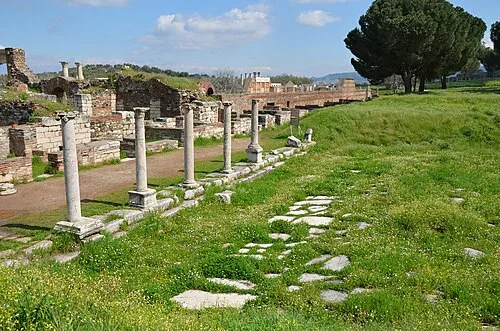 The Roman Colonnaded Avenue
The Marble-Paved Main Street
Sardis passed to Rome in 129 BC and prospered as part of the province of Asia. The city received three neocorate honors, a mark of high civic standing. Then in 17 AD a devastating earthquake struck. Emperor Tiberius answered with ten million sesterces and a temporary tax exemption to help the city recover. The marble paving and covered porticoes belong to the rebuilt, prosperous metropolis. A street like this was the backbone of a Roman provincial city, its colonnades shading people moving between shops and public buildings. Marble blocks underfoot were an expensive choice for a main road, and this city could afford it.
Carole Raddato from FRANKFURT, Germany · CC BY-SA 2.0
03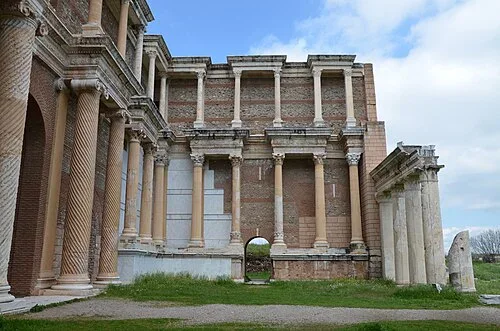 Bath-Gymnasium Complex & Marble Court
The Bath-Gymnasium Complex
The bath-gymnasium complex was probably completed in the late second or early third century AD. Buildings of this kind joined two traditions: a Greek gymnasium for exercise and learning, and a Roman bath with its sequence of hot, warm and cold rooms. Such complexes were the civic heart of a Roman city, built for daily bathing, exercise and social life rather than for any single ceremony. The facade rose in two stories, its columns and niches framing the entrance. For a city of Sardis's rank, this was where ordinary civic activity happened, day after day.
Listen in the appCarole Raddato from FRANKFURT, Germany · CC BY-SA 2.0
04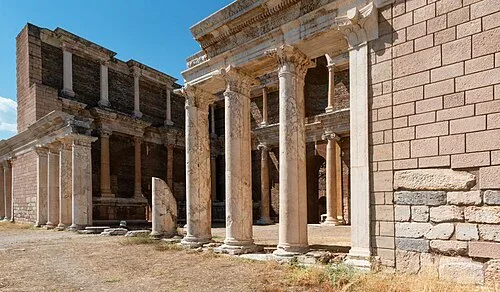 Bath-Gymnasium Complex & Marble Court
The Screen Colonnade and the Marble Court
The courtyard inside is the Marble Court, its two-story marble front rising around you. Much of what stands here was put back up by archaeologists. The work belongs to the Archaeological Exploration of Sardis, founded in 1958 by G.M.A. Hanfmann, a professor of fine arts at Harvard, and Henry Detweiler, dean of the architecture school at Cornell. Their teams excavated widely across the city and region, and they excavated and restored this whole bath-gymnasium complex. The carved columns and cornices of the Screen Colonnade give a sense of the scale of that effort.
Listen in the appEgisto Sani from Viareggio, Italia · CC BY-SA 2.0
05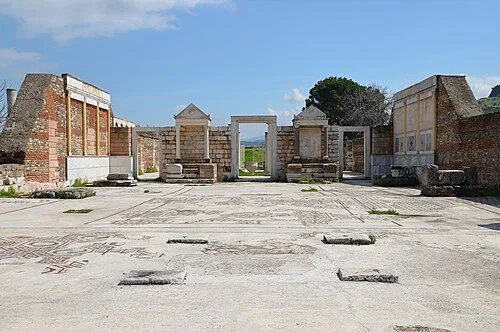 The Monumental Sardis Synagogue
The Sardis Synagogue
In the 1960s, excavators identified a substantial assembly hall in the northwestern part of the city as a synagogue. The building carries inscriptions, menorahs and other artifacts that establish its use as a synagogue from the fourth to the sixth century. It counts among the largest ancient Jewish assembly halls known from the Mediterranean world. The community's roots ran deep. The Hellenistic king Antiochos III settled Jews at Sardis, and their community continued for much of late antiquity. Excavations in the surrounding residential and commercial streets turned up further evidence of Jewish life in the city.
Listen in the appCarole Raddato from FRANKFURT, Germany · CC BY-SA 2.0
06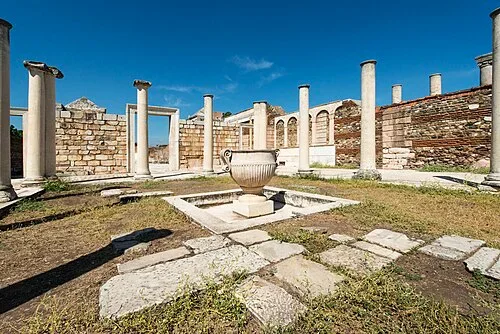 The Monumental Sardis Synagogue
The Synagogue Forecourt
The forecourt formed the formal entrance into the great hall. Columns ringed an open court, and a marble urn standing over a basin served as its central fountain feature. Buildings in the Roman world often announced their importance at the threshold, and this one presented itself with full civic monumentality. The gathering itself happened beyond, in the hall at the end of the sequence.
Listen in the appEgisto Sani from Viareggio, Italia · CC BY-SA 2.0
07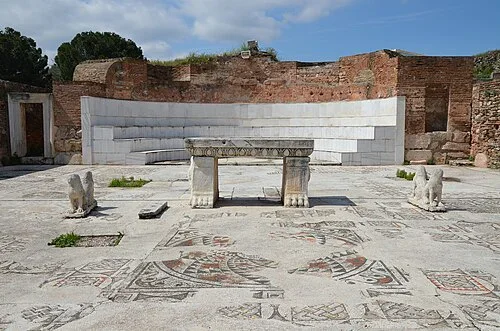 The Monumental Sardis Synagogue
Inside the Assembly Hall
The main hall held the community's gatherings, and its decoration shows the wealth behind them. Mosaic floors cover the space, with patterns and inscriptions set among them. Menorahs appear alongside the inscriptions, marking the building's purpose openly. At the far end, a marble reading table stands before an apse, flanked by carved lions, with a semicircular seating platform behind it. The picture that emerges is of an affluent Jewish community, fully at home in a major Roman city of late antiquity.
Listen in the appCarole Raddato from FRANKFURT, Germany · CC BY-SA 2.0
08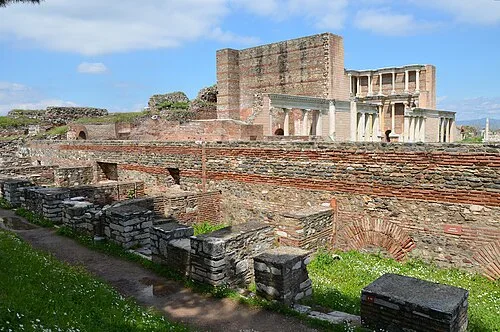 The Byzantine Shops Street
The Byzantine Shops
Trade kept paying long after the Roman heyday. A row of small shops was built against the southern side of the gymnasium, and commerce and its organization remained a source of great wealth. When Constantinople became the capital of the East, a new road system connected the provinces with the capital, and Sardis lay rather apart from the great lines of communication. The city began to decline in the 600s. In 615, during the Byzantine-Sasanian war, the Persian commander Shahin sacked it on his invasion of Asia Minor. The Byzantines eventually won that war, but the damage to Sardis was never fully repaired. That was the end of the great city phase.
Listen in the appCarole Raddato from FRANKFURT, Germany · CC BY-SA 2.0
09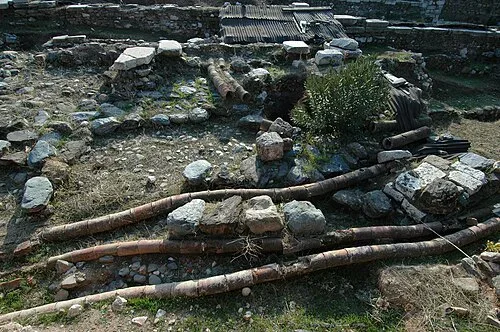 Lydian Sector & Invention of Coinage
The Lydian City and the Pactolus Workshops
In the seventh century BC Sardis became the Lydian capital, and from here kings such as Croesus ruled an empire reaching as far as the Halys River in the east. The city covered 108 hectares including its extramural areas, protected by walls twenty meters thick. The acropolis mountainside was terraced with white ashlar masonry to tame its irregular slopes. By the Pactolus Stream, archaeologists found work installations where alluvial metals were processed, refining electrum into pure gold and silver. That industry along the stream was the industrial base of Lydian wealth. Travelers could pick the site out from a distance by three enormous burial tumuli at Bin Tepe.
Listen in the appCNG Coins · CC BY-SA 3.0
10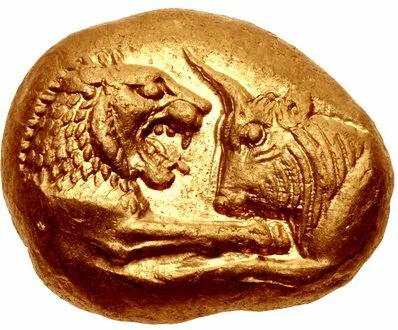 Lydian Sector & Invention of Coinage
The Coin of Croesus
This small gold coin changed how the world paid. It is a stater of Croesus, struck at the Sardes mint, and among the first standardized gold coins ever made. The refining work along the Pactolus made it possible, turning raw electrum into gold of dependable purity. Ancient writers had their own explanation for the stream's riches. The story goes that King Midas washed his golden curse into the Pactolus, leaving its sands glittering with electrum. Croesus did not outlive his coinage by long. Cyrus the Great defeated him around 547 BC, and the Persians sacked Sardis after a brief siege. The destruction is vividly preserved in the ground. Skeletons of Lydian soldiers were found among the debris, one with a snapped forearm bone, likely a failed parry against the blow that killed him.
Listen in the appCNG Coins · CC BY-SA 3.0
- 11
The Temple of Artemis
Alexander's conquest made Sardis Greek, and the great Ionic temple of Artemis is its monument.
- 12
The Temple Precinct and the Acropolis Beyond
A colossal marble head of Empress Faustina, found in the temple precinct, now in the British Museum.
- 13
The Chapel in the Sanctuary
Sardis among the Seven Churches of Revelation, and a brick chapel built inside the pagan temple.
- 14
The Unconquerable Citadel
The mountain citadel that antiquity called the strongest fortified place in the world, and the sieges that failed against it.
Sardis
Frequently asked questions
How much does the guide cost?
Free app download. Listed guide price: $1.99. Guide price shown in the app. Audio guide only. Venue admission is separate.
Can I listen without internet?
Yes. Download the guide’s audio, images, and maps in the app before your visit. Your downloaded content is then available offline.
Can I listen in my language?
This audio guide is available in 15 languages, including English.
Do I need to follow a schedule?
No. This is a self-guided experience. Choose your stops, pause whenever you like, and return to a story at your own pace.
At your own pace
Explore Sardis.
Download Stanza, then search for “Sardis”.
Free app download · Guide price shown in the app
Keep exploring
Nearby audio guides
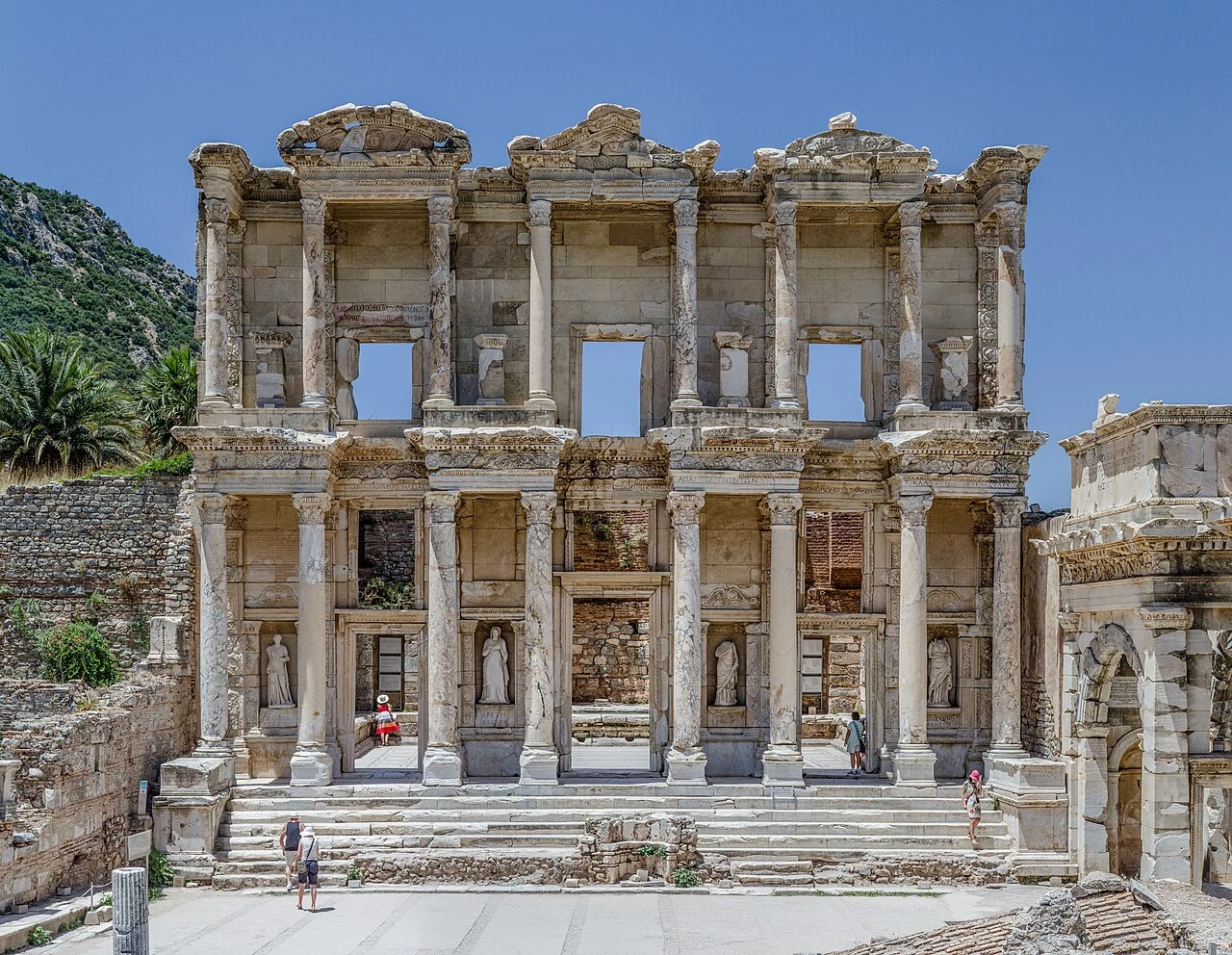
Selçuk · 86 km
Ephesus
Content & sources
Benh LIEU SONG · CC BY-SA 3.0
Selçuk · 89 km
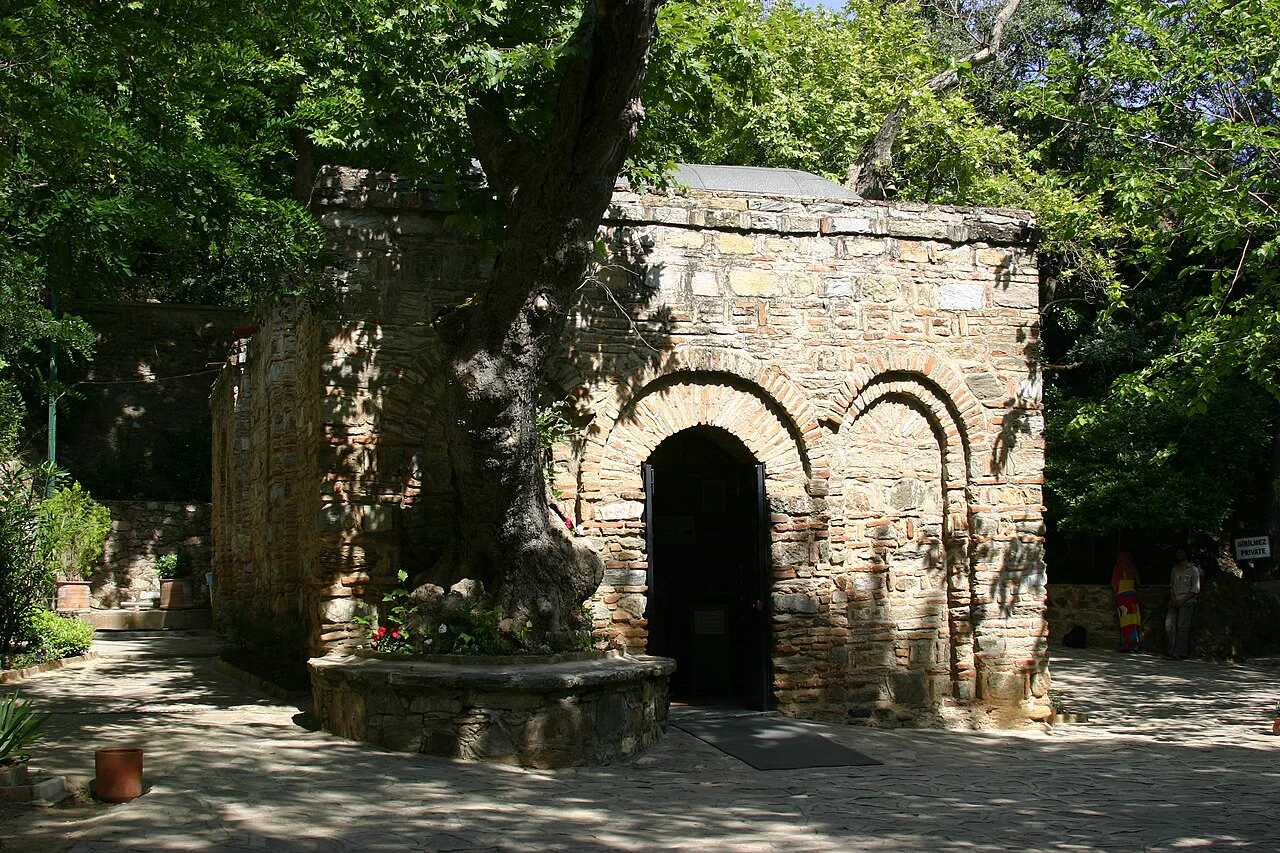
Meryem Ana Evi
Content & sources
No machine-readable author provided. Mfryc assumed (based on copyright claims). · CC BY-SA 2.5
Bergama · 102 km
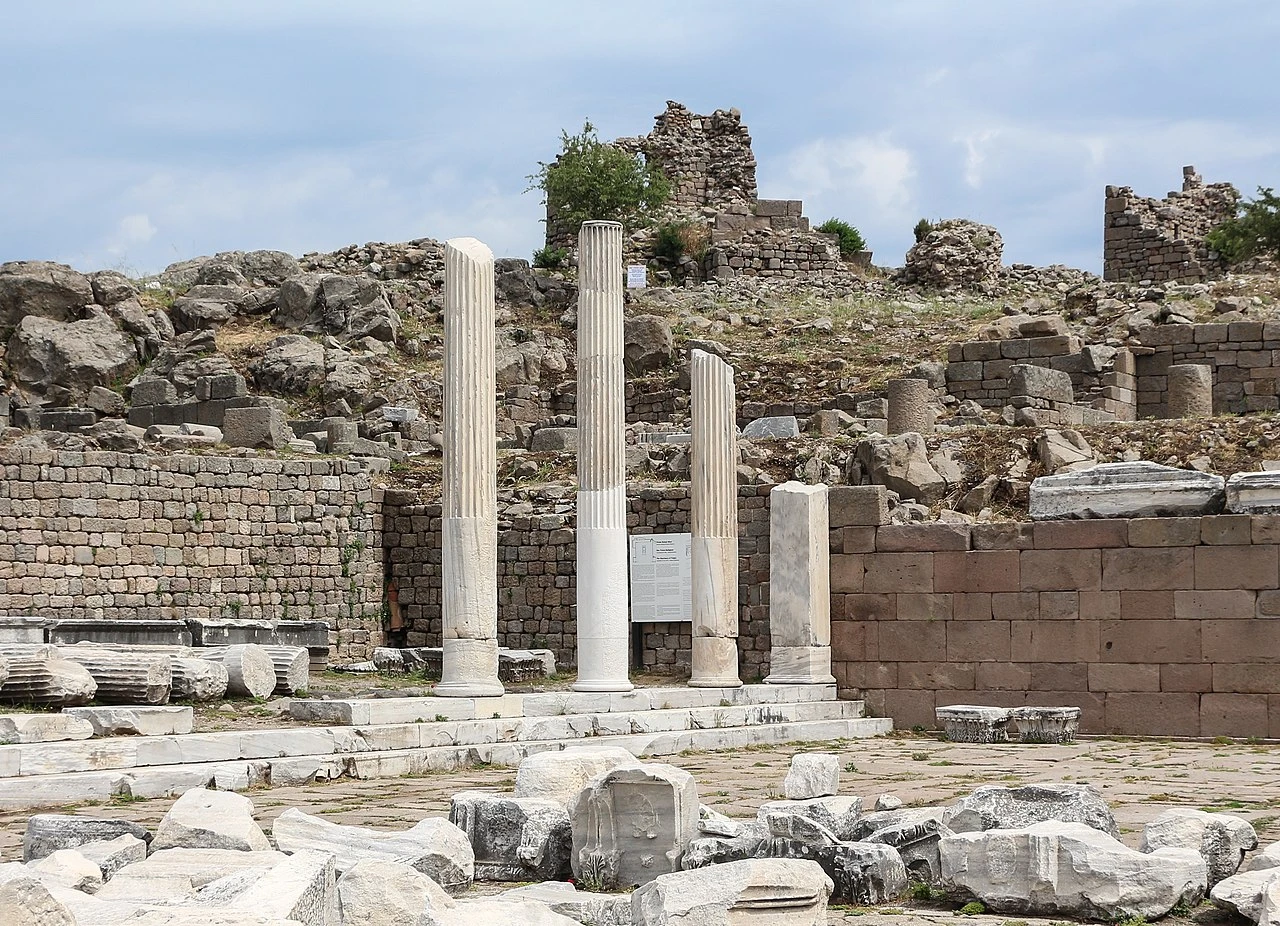
Pergamon
Content & sources
Bernard Gagnon · CC BY-SA 3.0
Geyre · 105 km
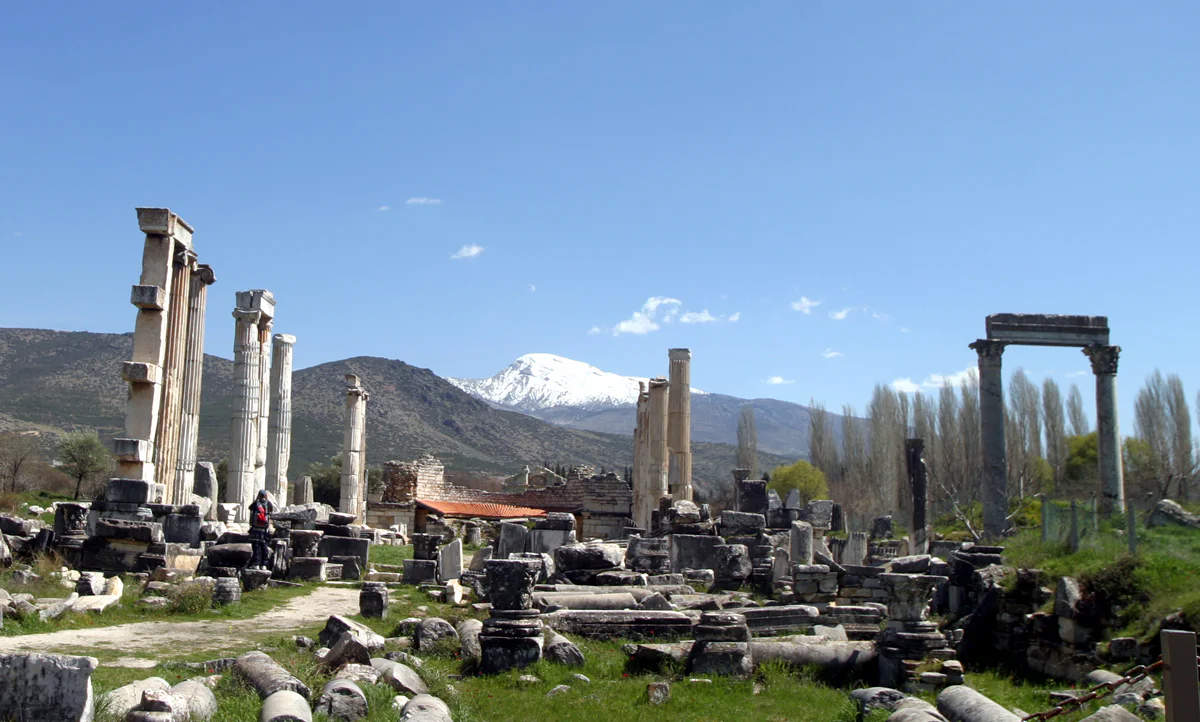
Afrodisias
Content & sources
Brocken Inaglory · CC BY-SA 4.0