Stanza · Audio guide
Afrodisias Audio Guide
A place to remember. A story to take with you.
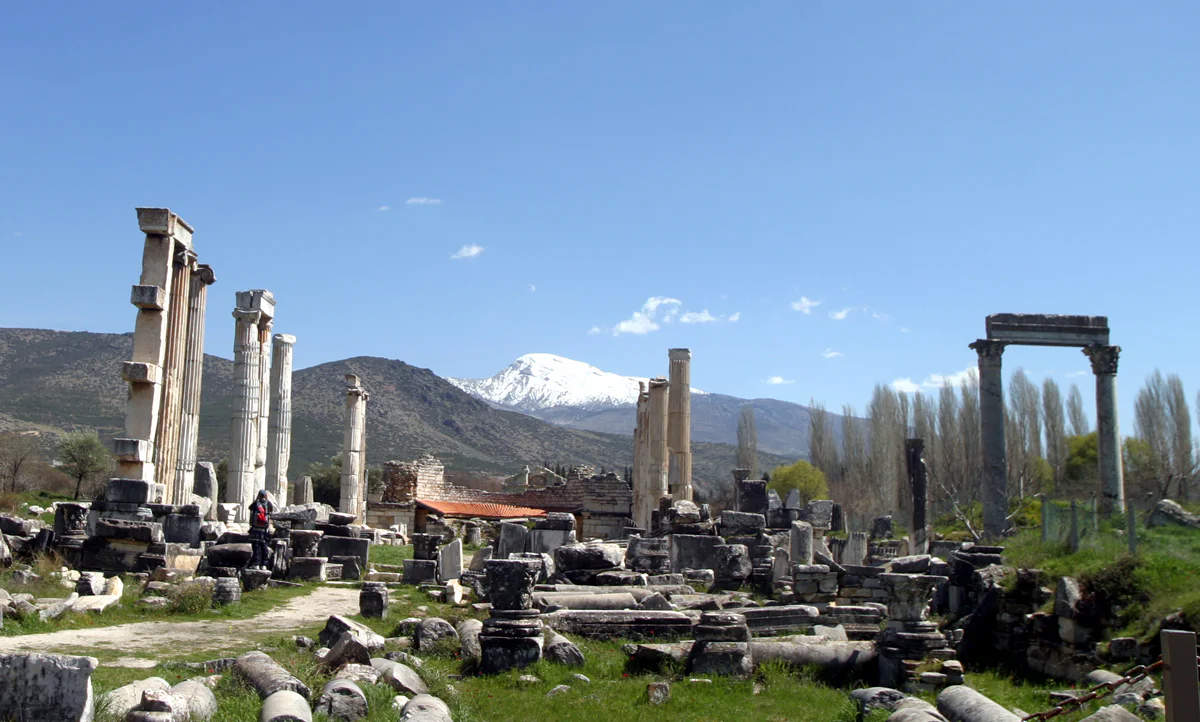
Aphrodisias was a Hellenistic Greek city in the historic Caria cultural region of western Asia Minor. It is located near the modern village of Geyre in Turkey.
Download Stanza, then search for “Afrodisias”.
About the tour
One guide. Your kind of visit.
Aphrodisias was a Hellenistic Greek city in the historic Caria cultural region of western Asia Minor. It is located near the modern village of Geyre in Turkey.
Ready when you are.
- 01Get the free Stanza app.
iOS & Android
- 02Find your guide.
“Afrodisias”
- 03Download before you go.
Works offline
Audio guide / 25 narrated stops
Inside the guide
Get to know a few of the stories before you go. Open a stop to read more.
01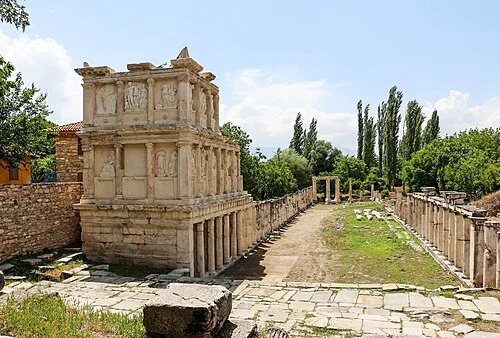 Sebasteion of Aphrodisias
Sebasteion at Aphrodisias
Sebasteion means sanctuary of the emperors. Sebastos is the Greek word for Augustus, the first Roman emperor. This ritual complex included a three-story building, its facades rebuilt today from the fallen marble. A first-century inscription on its gateway records who it belonged to. It was dedicated, the stone says, To Aphrodite, the Divine Augusti and the People. One line, three parties: the city's ancestral goddess, the emperors, and the citizens themselves. That pairing was shrewd politics. The imperial family, the Julio-Claudians, claimed descent from Venus, the Roman Aphrodite. So the goddess worshipped here was, in a sense, ancestor of the emperors honored beside her. A relief from the south portico shows the city itself, personified, making sacrifice before the cult image of Aphrodite. The local elite who built and ran this place bound their goddess to imperial power. It flattered Rome, and it secured their own standing at home.
Bernard Gagnon · CC BY-SA 3.0
02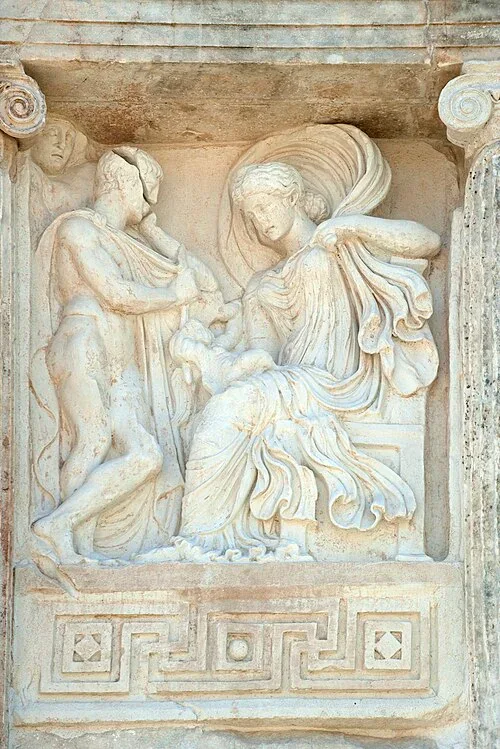 Sebasteion of Aphrodisias
Sebasteion Relief Panel
The facades of the Sebasteion were covered in carved panels like this one, filled with mythological figures. What made them famous is the carving itself. The figures stand almost free of the background, modeled in deep, naturalistic high relief. The marble is the city's own, a fine white stone quarried close by. Aphrodisias had a large and productive school of sculptors, and work of this quality came easily to them. Gods and heroes were cut across the whole building in the same confident style. The sculptors worked the stone almost as if it were soft, letting drapery swirl and bodies twist forward out of the slab. It is the kind of carving usually associated with freestanding statues, applied here to architecture.
Photo: Dosseman · CC BY-SA 4.0
03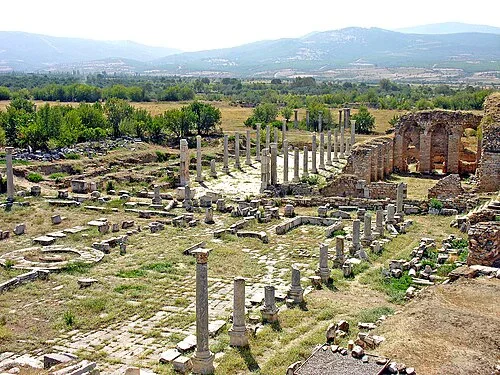 Tetrastoon of Aphrodisias
Aphrodisias was a Greek city in Caria, in western Asia Minor, named for Aphrodite, the goddess of love. It grew up around her sanctuary, which held her unique cult image. Under Rome it prospered and became the provincial capital of Caria, famous above all for marble. White and blue-grey stone was cut from the slopes nearby, and its sculptors became renowned across the Roman world. This colonnaded square, the Tetrastoon, was one of the city's central hubs. Its column-lined spaces linked the theatre, the baths and the South Agora, moving crowds between spectacle, bathing and commerce. In late antiquity the city turned Christian, and its pagan name was eventually shed. A severe earthquake in the early seventh century broke that long prosperity. The city never recovered, shrinking to a small fortified settlement. What survived makes it one of the best-preserved Roman-era sites in Asia Minor.
Listen in the appDennis G. Jarvis · CC BY-SA 2.0
04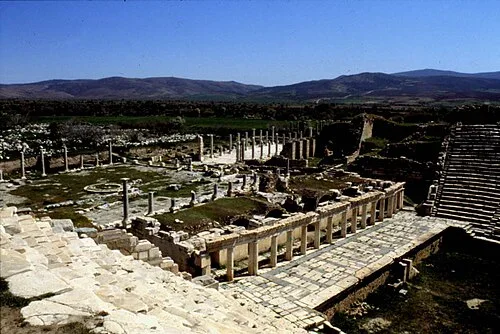 Aphrodisias Theater Baths
Bathing was a daily routine across the Roman world, not a luxury but a habit, and cities built bathhouses the way modern towns build cafés. This one went up in the second century AD, right beside the theatre. The placement tells its own story. Spectators coming in for a performance, or leaving one, could combine the spectacle with a bath in a single visit. You can see how tightly the two buildings were knit together, the colonnaded theatre district running straight into the bath complex. For citizens and for visitors drawn by the games, this was the amenity that made an afternoon complete. It is a small window onto how the city worked: entertainment, water and social life, all within a few steps of each other.
Listen in the appPhoto: MM · CC BY-SA 3.0
05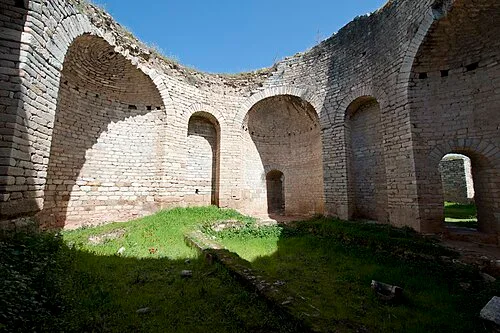 Aphrodisias Theater Baths
Theater Baths - Vaulted Hall
These surviving vaults show the engineering underneath every Roman bath. Bathhouses needed vast roofed rooms able to hold heat and steam, and the Roman answer was the vault: a curved ceiling of brick or stone that carries its own weight down the walls. The arched recesses opening off this chamber follow the same logic, an arch being simply a vault stood on end. Heated rooms sat over or beside passages where hot air circulated through the walls and floors. This kind of construction was standard practice across the empire, and the brick here has outlasted everything else around it.
Listen in the appPhoto: Dosseman · CC BY-SA 4.0
06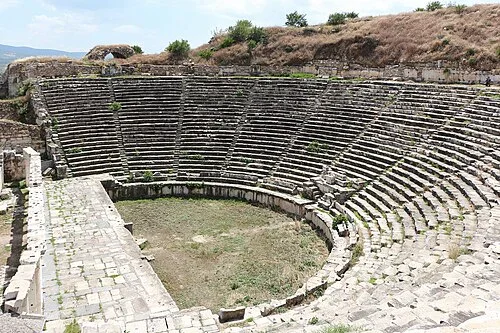 Roman Theatre of Aphrodisias
The story of this theatre begins with a local Greek named Gaius Julius Zoilos. He was enslaved, and he passed into the household of Julius Caesar himself. Caesar's heir, Octavian, set him free. Zoilos came home a freedman, carrying prestige and rich rewards for his service. He then made a shrewd call: he steered Aphrodisias to back Octavian in his power struggle against Mark Antony. The bet paid off. Octavian's lasting favor came in the form of financial privileges, and on them the city prospered. Zoilos directed his own wealth into the civic center, funding its building programme, and this theatre was among the works he paid for in the first century BC. The auditorium seen here, carved into the hillside in the Greek manner and adapted by the Romans, is the monument his money raised.
Listen in the appBernard Gagnon · CC BY-SA 3.0
07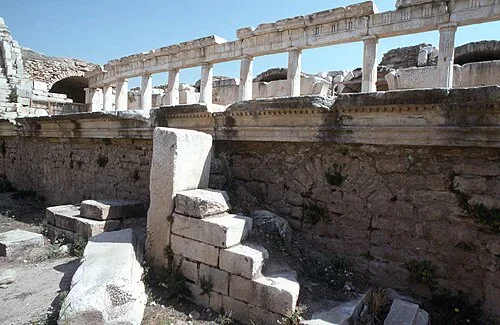 Roman Theatre of Aphrodisias
Theatre Stage Front (Scaenae Frons)
The stage building rose behind the orchestra as a permanent backdrop, a tall front of columns framing the actors. It belonged to the theatre that the freedman Zoilos helped pay for, part of the building programme he funded in the city's centre. For centuries it served the city's festivals and performances. Then, in the seventh century, a severe earthquake left the theatre badly damaged, and the events once staged here moved to the stadium, part of which was converted to take them. A small fortified settlement grew up on the site of the ancient theatre. The stage that had once framed the city's entertainments ended up inside the walls of its last stronghold.
Listen in the appPhoto: Dosseman · CC BY-SA 4.0
08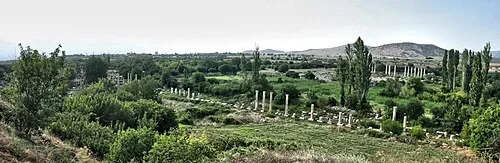 South Agora of Aphrodisias
This was the South Agora, the great open square at the heart of public life. Porticoes of Ionic columns enclosed it, giving shade for politics, business and gossip. Many full-length statues were unearthed in this region of the city, a sign of how wealthy and decorated the square once was. Then nature struck back. Aphrodisias sits in an earthquake zone, and severe tremors in the fourth century did heavy damage. One of those earthquakes altered the water table, leaving parts of the town prone to flooding. The city responded with emergency plumbing, installed to drain the water away, and evidence of those works is still visible. A square built for commerce and ceremony had become a place that needed defending from the ground beneath it.
Listen in the appMustafa Ajlan Abudak · Public domain
09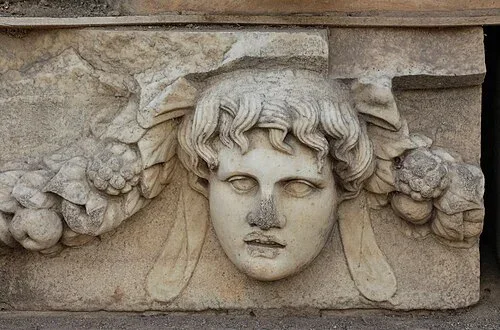 South Agora of Aphrodisias
Portico of Tiberius - Mask and Garland Frieze
A carved theatrical mask hangs from a swag of marble garland, one block of the frieze that ran along the portico of the South Agora. It is a reminder of how profusely ordinary civic space was ornamented here. Sculpture at Aphrodisias was not confined to temples and tombs. It ran along the streets people walked every day. The city's sarcophagi were regularly decorated with festoons like this garland, and its sculptors produced what are described as peopled scrolls: figures of people, birds and animals entwined in acanthus leaves. The mask itself nods to the theatre, a face frozen mid-performance in permanent stone. A visitor two thousand years ago would have passed carving like this without slowing down. Here, it was simply the street furniture of a marble city.
Listen in the appBernard Gagnon · CC BY-SA 3.0
10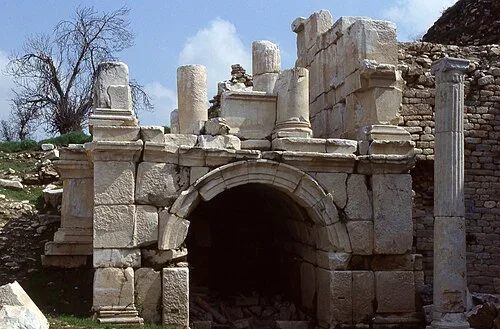 Agora Pool and Gate Complex
Agora Gate Complex
At the eastern end of the South Agora, the square's grand pool terminated in architecture. A monumental gateway with a great arch closed the vista, framing the water feature that gave the whole square its splendor. Public squares across the Roman world used water this way, as a mirror and a stage, and a monumental gate turned a simple arrival into a ceremony. The complex seen here stands as excavated, its masonry re-assembled from the fallen blocks. An arch like this did more than decorate. It marked the threshold, the moment where the long colonnaded walk along the pool ended and the city's business began.
Listen in the appMark Landon · CC BY 4.0
- 11
Hadrianic Baths
The flagship bathhouse raised in honor of Emperor Hadrian's visit.
- 12
Odeion (Bouleuterion)
The roofed hall where the city council met, and where the city sang.
- 13
Bouleuterion Marble Seats
Council seats carved with lion paws, by sculptors who could not help themselves.
- 14
Bishop's Palace Pavement
A close-up of cut-marble flooring in many colors, the kind of finish a grand late Roman residence carried.
- 15
Bishop's Palace
The grand residence that became the seat of the Christian bishop, the new authority of the Byzantine city.
- 16
Sanctuary of Aphrodite
The temple of Aphrodite that became a pagan rallying point, was dismantled by imperial order, and turned into a church.
- 17
Aphrodisias Stadium
Probably the best-preserved stadium of its kind in the Mediterranean, built to hold tens of thousands for the games.
- 18
Stadium Seat Inscriptions
Carved marks on a stadium seat, a rare direct trace of the crowd that filled the rows.
- 19
Tetrapylon of Aphrodisias
The marble gateway of around AD 200, and the modern story of how the lost city came back to light.
- 20
Aphrodisias Museum
Why one small Carian city filled the Roman world with marble: its quarries, its school, and its exports.
- 21
Zoilos Monument Frieze
The frieze a freedman built to immortalize himself in the city he enriched.
- 22
Aphrodite of Aphrodisias (Cult Statue)
The best-preserved image of the city's own goddess, a local Carian deity in a columnar tunic.
- 23
The Three Graces (Charites)
The Three Graces, Aphrodite's closest attendants, carved in the city's own marble.
- 24
Achilles and Penthesilea Relief
Achilles catching the dying Amazon queen, the Aphrodisian school at its most virtuosic.
- 25
Statue of Flavius Palmatus
A named late Roman dignitary, and the human face of everything the city's marble world produced.
Afrodisias
Frequently asked questions
How much does the guide cost?
Free app download. Listed guide price: $3.99. Guide price shown in the app. Audio guide only. Venue admission is separate.
Can I listen without internet?
Yes. Download the guide’s audio, images, and maps in the app before your visit. Your downloaded content is then available offline.
Can I listen in my language?
This audio guide is available in 15 languages, including English.
Do I need to follow a schedule?
No. This is a self-guided experience. Choose your stops, pause whenever you like, and return to a story at your own pace.
At your own pace
Explore Afrodisias.
Download Stanza, then search for “Afrodisias”.
Free app download · Guide price shown in the app
Keep exploring
Nearby audio guides
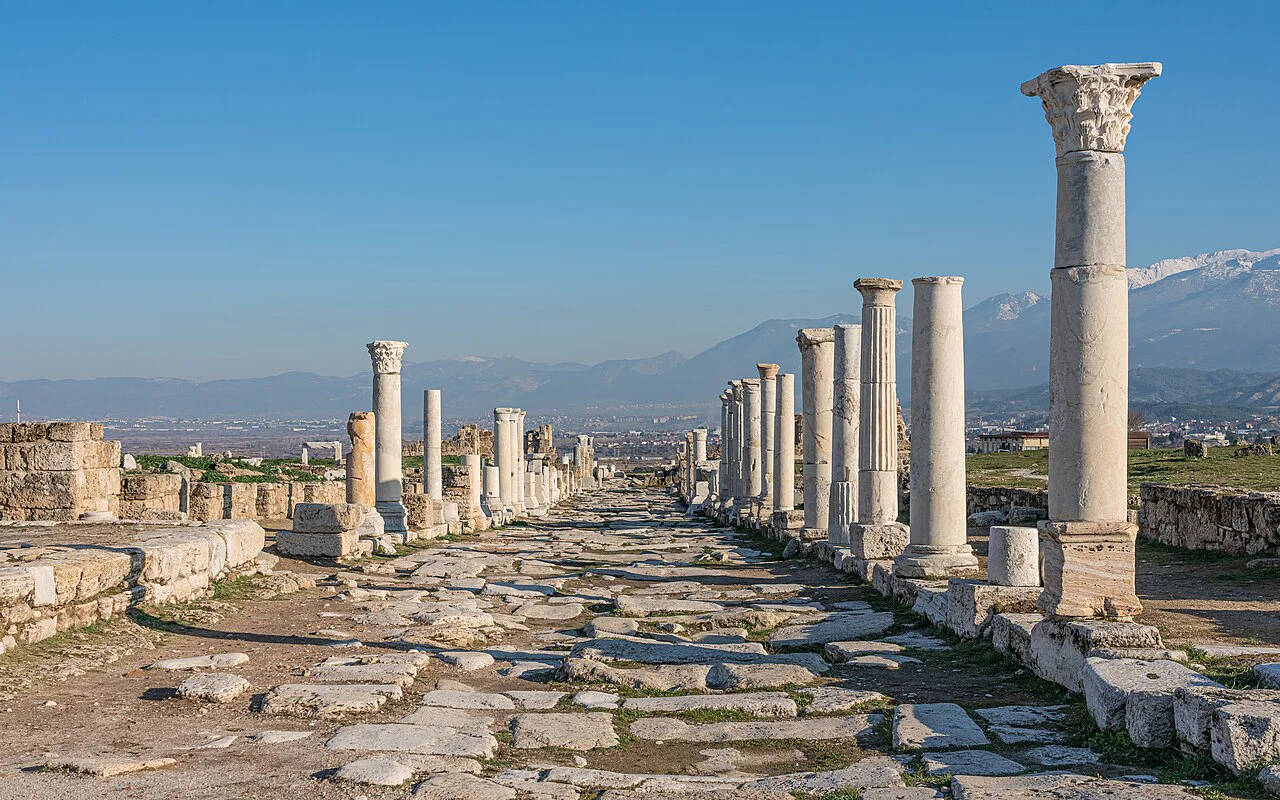
Merkezefendi · 37 km
Laodikya
Content & sources
Photo: A.Savin · FAL
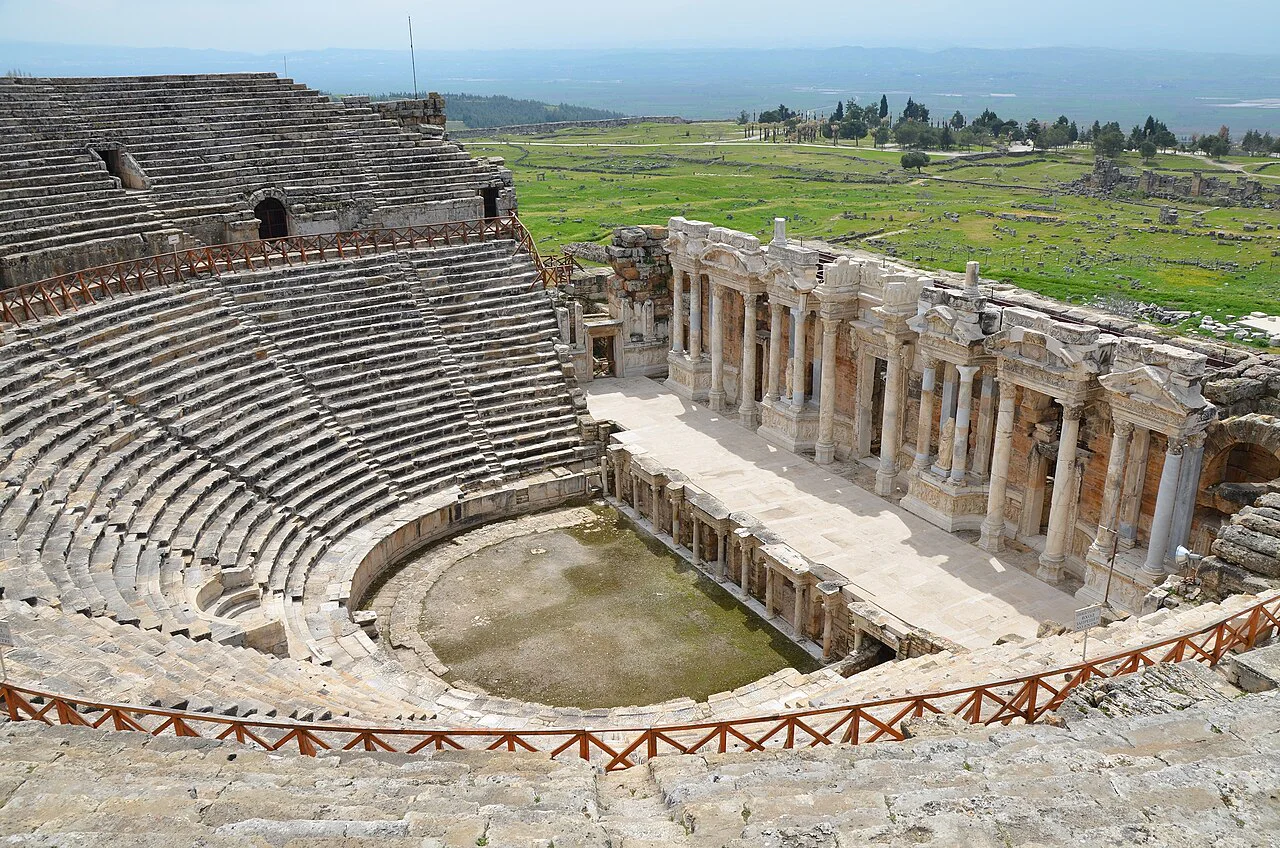
Pamukkale district · 43 km
Hierapolis
Content & sources
Carole Raddato · CC BY-SA 2.0
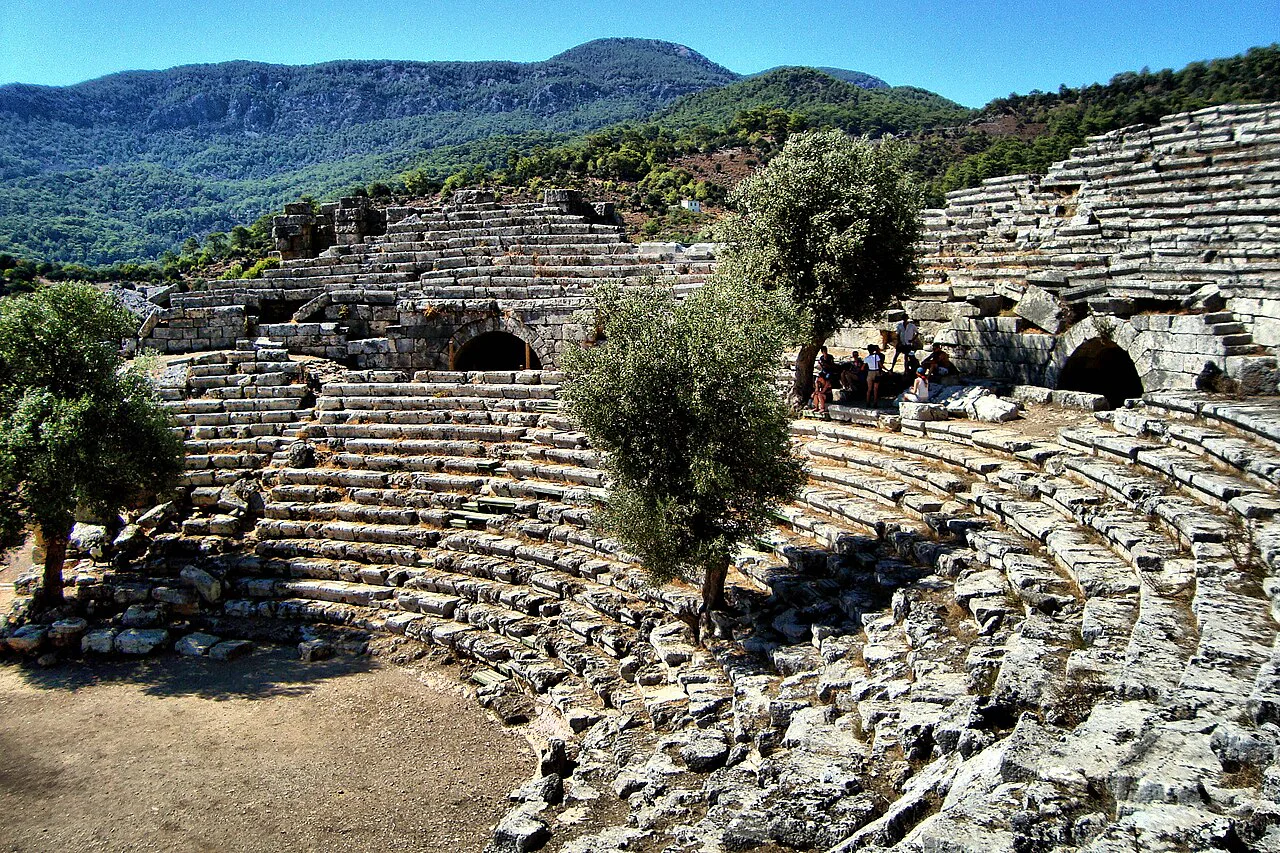
Dalyan · 98 km
Kaunos
Content & sources
HALUK COMERTEL · CC BY 3.0
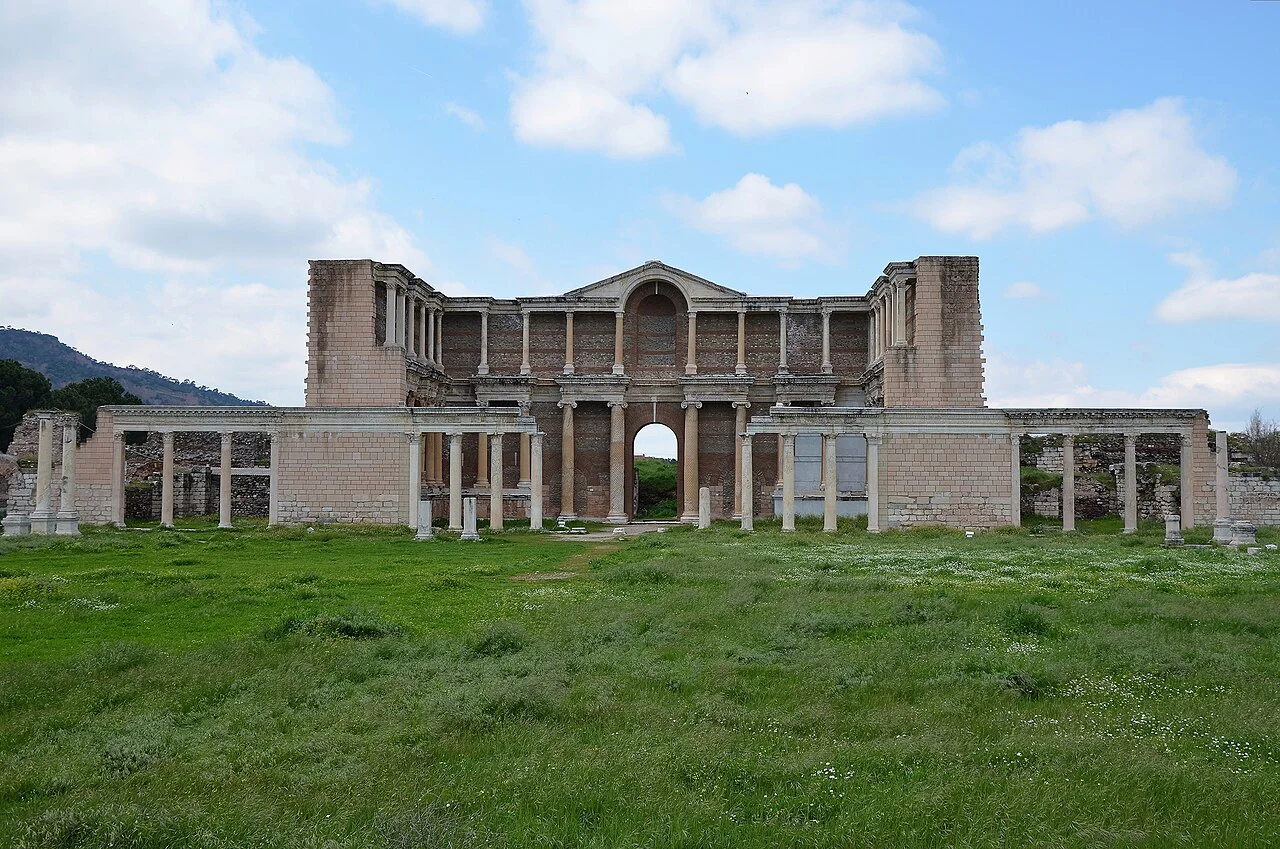
Salihli · 105 km
Sardis
Content & sources
Carole Raddato from FRANKFURT, Germany · CC BY-SA 2.0