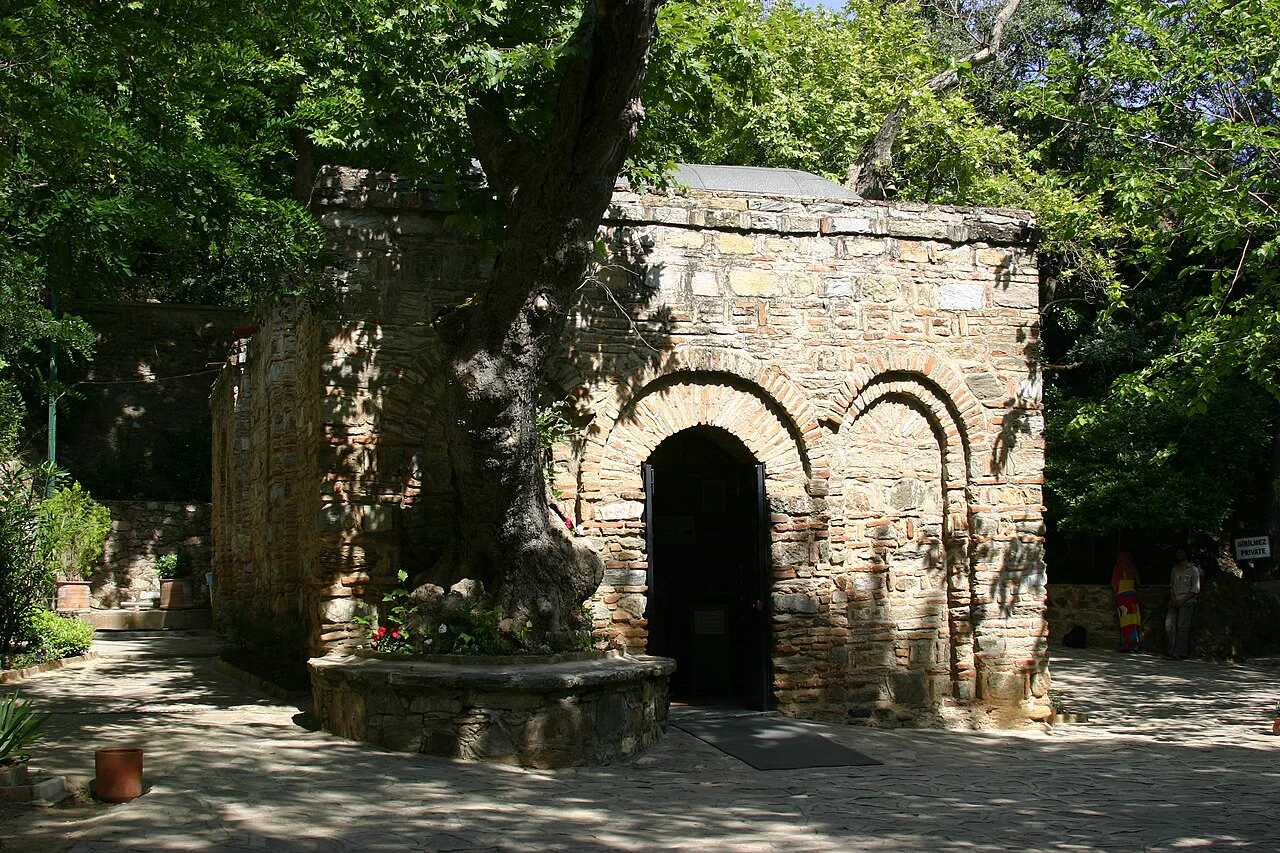
 Stanza / Audio guide
Stanza · Audio guide
Meryem Ana Evi Audio Guide
A place to remember. A story to take with you.
The House of the Virgin Mary is a Catholic shrine located on Mt. Koressos in Turkey. It is situated in the vicinity of Ephesus, 7 kilometres from Selçuk.
Download Stanza, then search for “Meryem Ana Evi”.
About the tour
One guide. Your kind of visit.
The House of the Virgin Mary is a Catholic shrine located on Mt. Koressos in Turkey. It is situated in the vicinity of Ephesus, 7 kilometres from Selçuk.
Ready when you are.
- 01Get the free Stanza app.
iOS & Android
- 02Find your guide.
“Meryem Ana Evi”
- 03Download before you go.
Works offline
Audio guide / 7 narrated stops
Inside the guide
Get to know a few of the stories before you go. Open a stop to read more.
01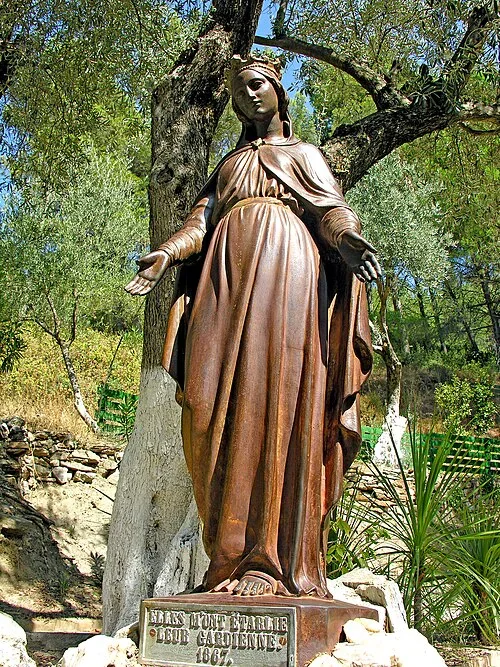 Park Approach and Statue of the Virgin Mary
The Bronze Statue at the Park Approach
Welcome to Meryem Ana Evi, Mother Mary's House, a small Catholic shrine on Mount Nightingale in western Turkey. The bronze statue of Mary stands along the wooded approach, her hands open in welcome, a crown on her head and a French inscription on the base calling her the guardian of those who set her here. The shrine lies about seven kilometres from Selçuk, on a mountain above the ruins of ancient Ephesus. The belief that draws pilgrims here comes from the Gospel of John. As Christ hung on the cross, he asked the Apostle John to take his mother into his home. Tradition holds that John did exactly that, bringing Mary to this secluded refuge near Ephesus, where she spent the rest of her life. The Catholic Church has never ruled on whether she truly lived here. Even so, the tradition took root, and it has drawn visitors to this quiet hillside for a very long time.
Dennis G. Jarvis · CC BY-SA 2.0
02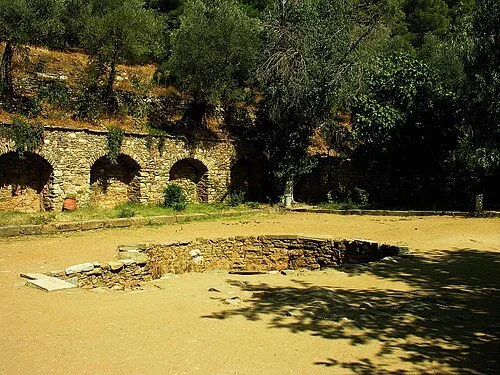 The Ancient Keyhole Baptismal Basin
The Keyhole Baptismal Basin
Beside the path, an excavated basin holds the unmistakable shape of a keyhole. It sits in front of a retaining wall built with a row of arched niches. The pool is larger than the baptismal font at the basilica in Ephesus, down in the valley. It is thought that an early community of Christians may have lived here, or baptized converts here, hidden away to escape the nearby Romans. That seclusion remains a scholarly supposition, not a settled fact. Either way, the basin shows that this mountain sheltered Christian life long before the chapel above became a place of pilgrimage.
Dennis G. Jarvis · CC BY-SA 2.0
03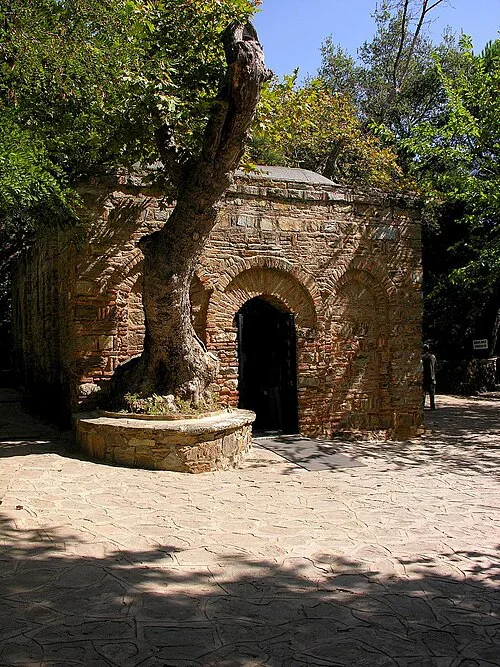 Chapel Exterior and the Red Restoration Line
The Chapel in the Woods: A House Found by a Vision
A bedridden nun in Germany described this house without ever seeing it. Anne Catherine Emmerich, an Augustinian of the farming town of Dülmen, reported visions recounting the life of Mary, including the house near Ephesus where she lived her final days. The writer Clemens Brentano stayed in Dülmen for five years to transcribe her visions day by day. A book drawn from his notes was published in Munich in 1852, long after her death. Her account placed Mary's dwelling on a hill above Ephesus, with details of the roads, the slopes and an uneven plateau near the top. In 1881 a French priest, Abbé Julien Gouyet, followed her descriptions and found a small stone building on the mountain overlooking the ruins. Few people took him seriously. A decade later, urged by Sister Marie de Mandat-Grancey, two Lazarist missionaries from Smyrna searched the mountain again. Fathers Poulin and Jung rediscovered the ruin on July 29, 1891. What surprised them was this: the four-walled, roofless building had never been forgotten. The villagers of Şirince, some seventeen kilometres away, descended from the early Christians of Ephesus, had long venerated the spot. They called it Panaya Kapulu, the Doorway to the Virgin, and climbed up every August the fifteenth, the date the Christian world keeps for Mary's Assumption. Those who keep the tradition hold that the oldest preserved stones date back to the Apostolic Age. Whether this was truly Mary's house is a harder question. The tradition linking her to Ephesus arose in the twelfth century and competes with an older Jerusalem tradition, which many consider the stronger evidence. When experts later examined Brentano's papers, they found apocryphal biblical sources, maps and travel guides that could have shaped Emmerich's narrations.
Listen in the appDennis G. Jarvis · CC BY-SA 2.0
04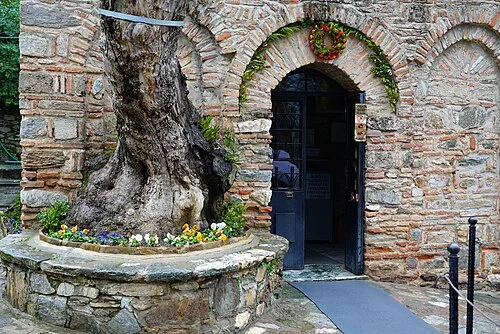 Chapel Exterior and the Red Restoration Line
The Entrance and the Red Restoration Line
The walls around the arched entrance tell the building's story in stone. Rough, ancient courses sit below neater brick and mortar laid in more recent centuries. A line painted in red runs along the walls, marking where the original structure ends and the restoration begins. It is a plain act of archaeological honesty: nothing rebuilt here pretends to be old. The restoration owes most to one woman. Sister Marie de Mandat-Grancey was named Foundress of Mary's House by the Catholic Church. From 1891 until her death she drove the acquisition, restoration and preservation of the house and the mountain around it. She died in 1915. The red line is the key to reading these walls: stone above it or below it tells you at a glance what is ancient and what is rebuilt.
Listen in the appRay Swi-hymn from Sijhih-Taipei, Taiwan · CC BY-SA 2.0
05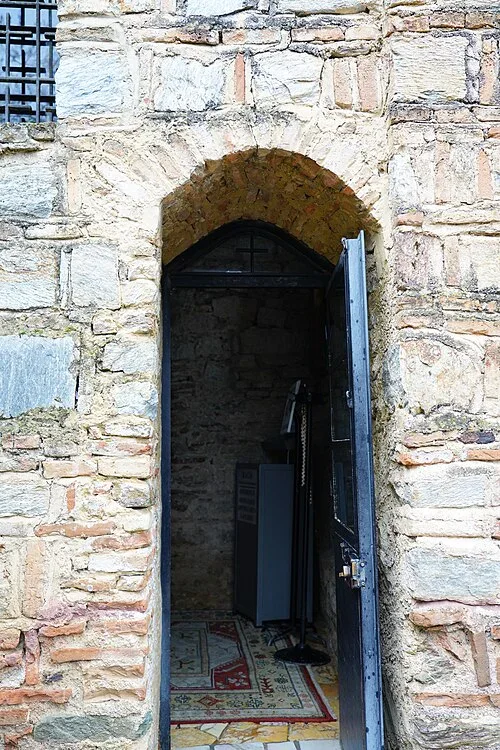 The Chapel Sanctuary and Mary's Chamber
Entering the Chapel
The doorway opens onto a single large room, modest in every proportion. An altar stands there, with a large statue of the Virgin Mary prominently displayed at its centre. Pilgrims pass through in quiet single file. Small as it is, the shrine has been honoured at the highest level of the Church. Pope Leo XIII blessed the first pilgrimage in 1896. In 1951, after the dogma of the Assumption was defined, Pope Pius XII raised the house to the status of a Holy Place, a privilege Pope John XXIII later made permanent. Popes have come in person as well: Paul VI, John Paul II and Benedict XVI have each visited the shrine.
Listen in the appRay Swi-hymn from Sijhih-Taipei, Taiwan · CC BY-SA 2.0
06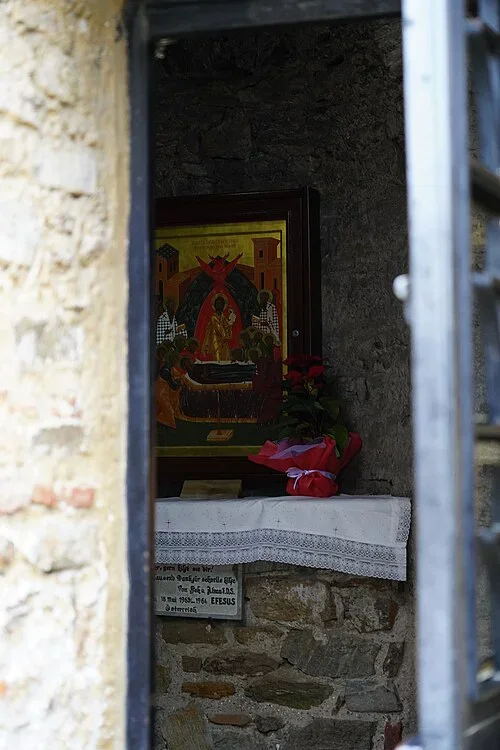 The Chapel Sanctuary and Mary's Chamber
Mary's Bedroom and the Mountain Spring
To the right of the sanctuary lies a smaller room, the chamber tradition reveres as the place where Mary slept and rested. A framed icon hangs in the alcove, with fresh flowers and a white altar cloth below it. The room's own story is water. Marian tradition holds that running water once flowed through this small room like a canal, feeding the drinking fountain outside the building. Pilgrims collect that spring water below the terrace, and some believe it has powers of healing or fertility. No one has tied the channel story to a visible trace in this room, but the fountain outside remains part of every visit.
Listen in the appRay Swi-hymn from Sijhih-Taipei, Taiwan · CC BY-SA 2.0
07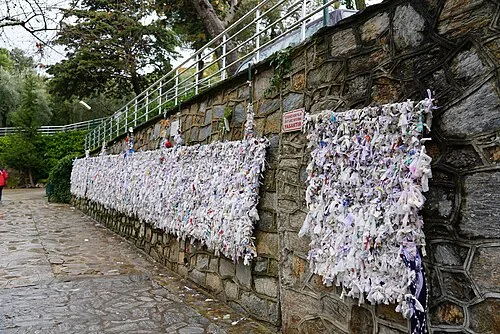 Lower Terrace and the Wishing Wall
The Wishing Wall
A long stone wall on the lower terrace is draped in white. Paper and cloth petitions cover it, tied on by pilgrims one by one, each carrying a personal intention. This wishing wall belongs to a shrine that is rare in one respect: Christians and Muslims pray here side by side. Muslims venerate the site as the place where Maryam, mother of the prophet Jesus, spent her final years. That shared devotion was raised during the drafting of Nostra Aetate, the Second Vatican Council document on other religions, when Archbishop Pietro Sfair of the Maronite rite held up the House of Mary as a matter of common interest between Christians and Muslims. The living ritual has never lapsed. Every year on August the fifteenth, a liturgical ceremony here commemorates the Assumption of Mary, and pilgrims still tie their intentions to the wall day after day. A humble stone house, four walls and a roof, drawing the prayers of the world.
Listen in the appRay Swi-hymn from Sijhih-Taipei, Taiwan · CC BY-SA 2.0
Meryem Ana Evi
Frequently asked questions
How much does the guide cost?
Free app download. Listed guide price: $0.99. Guide price shown in the app. Audio guide only. Venue admission is separate.
Can I listen without internet?
Yes. Download the guide’s audio, images, and maps in the app before your visit. Your downloaded content is then available offline.
Can I listen in my language?
This audio guide is available in 15 languages, including English.
Do I need to follow a schedule?
No. This is a self-guided experience. Choose your stops, pause whenever you like, and return to a story at your own pace.
At your own pace
Explore Meryem Ana Evi.
Download Stanza, then search for “Meryem Ana Evi”.
Free app download · Guide price shown in the app
Keep exploring
Nearby audio guides
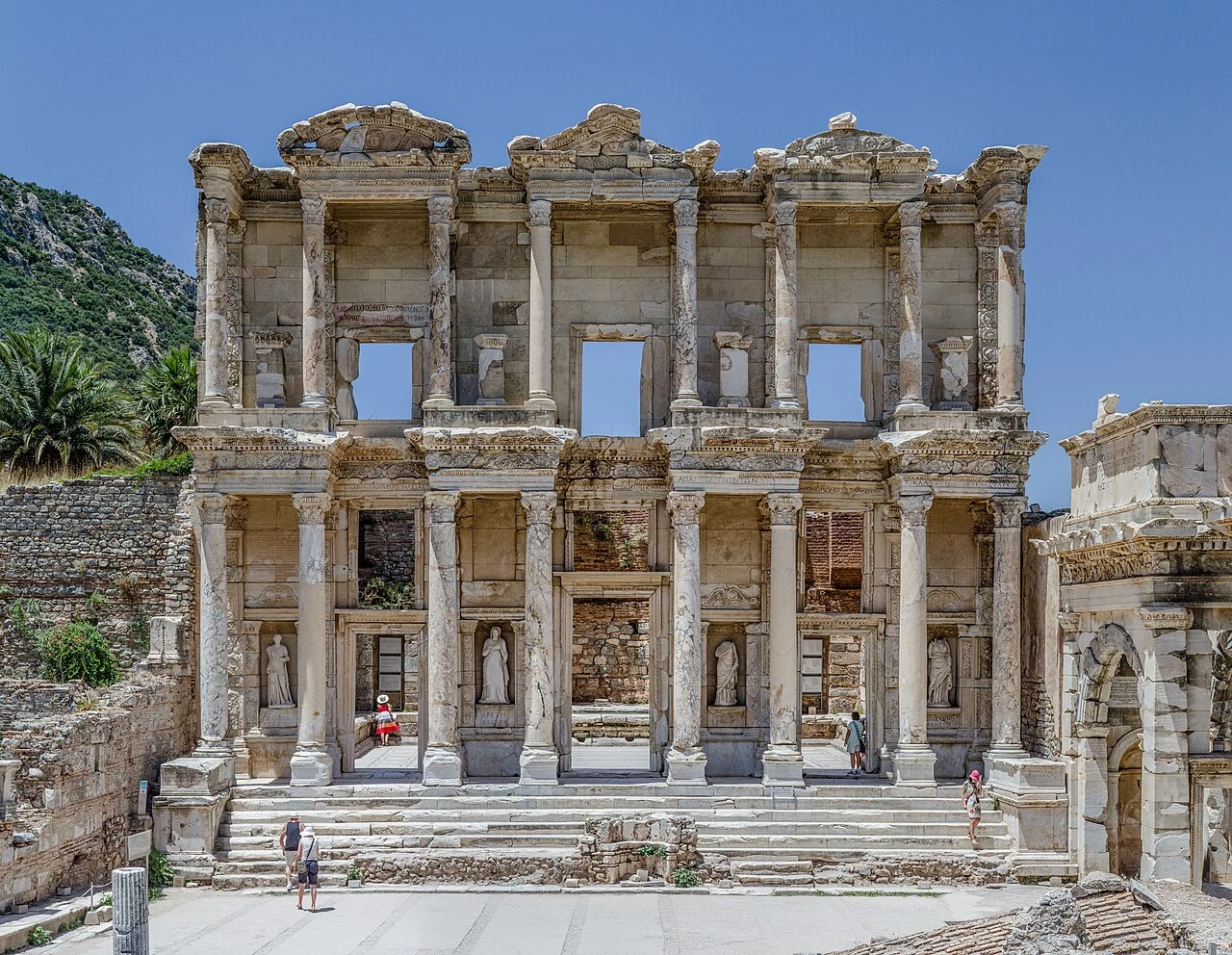
Selçuk · 3 km
Ephesus
Content & sources
Benh LIEU SONG · CC BY-SA 3.0
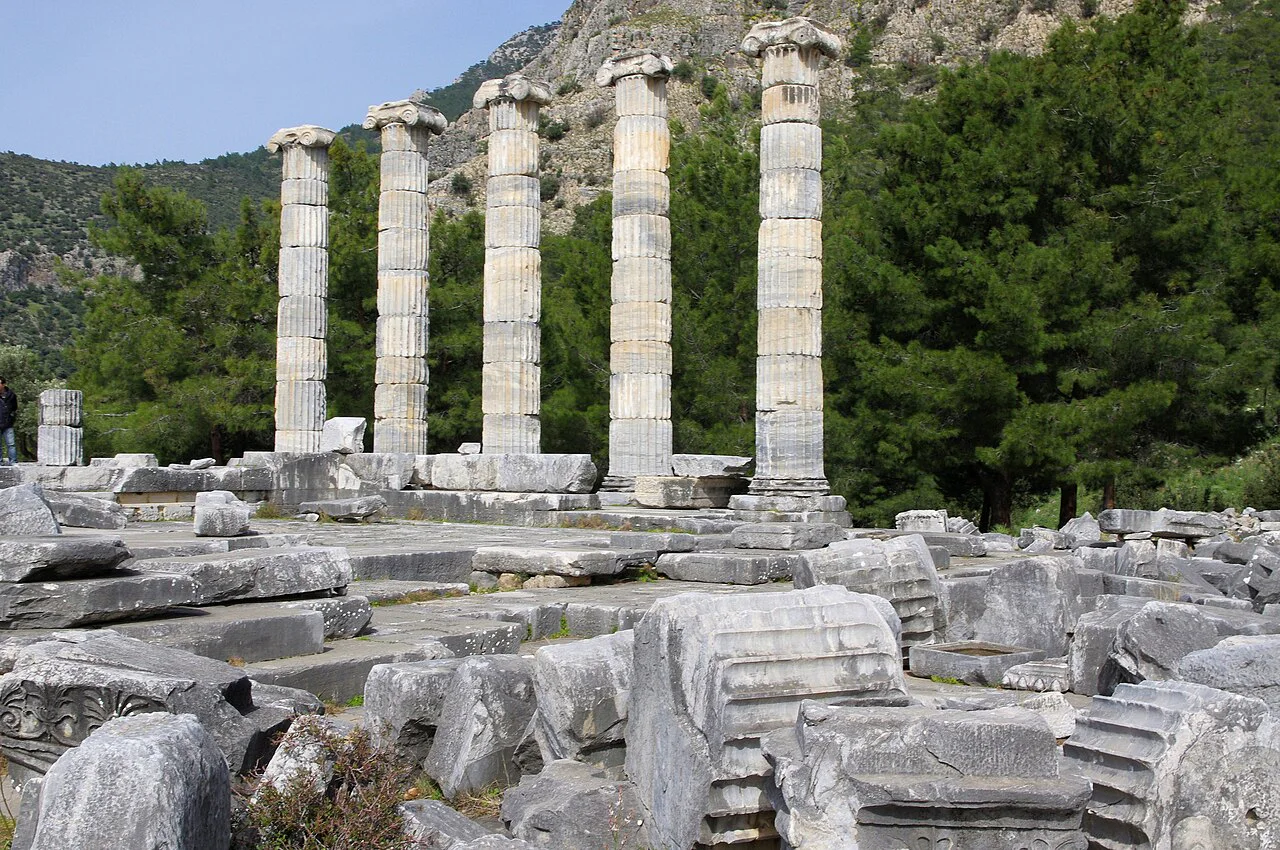
Söke · 28 km
Priene
Content & sources
Ken and Nyetta · CC BY 2.0
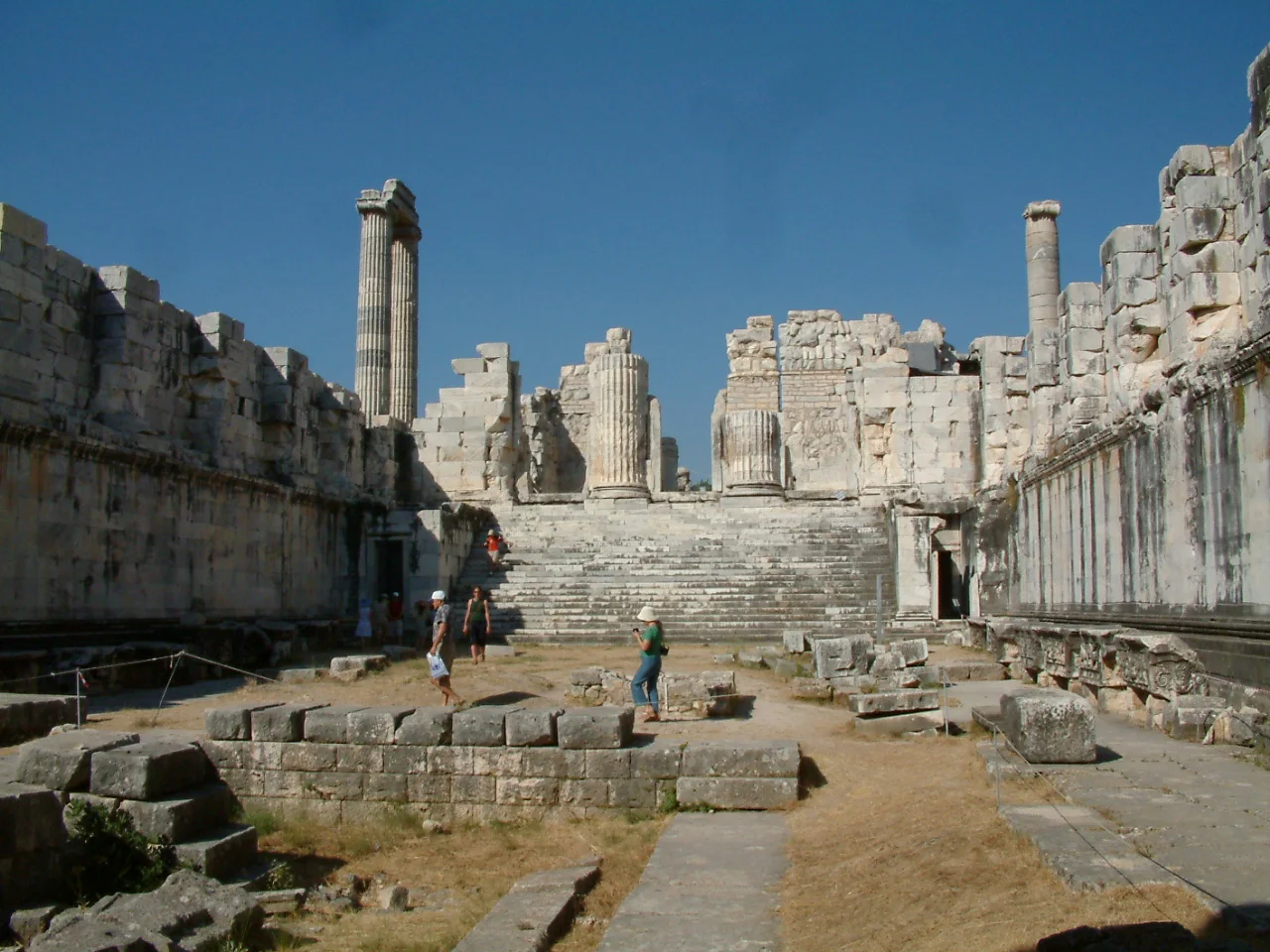
Didim · 59 km
Didyma
Content & sources
Photo: Radomil · CC BY-SA 3.0
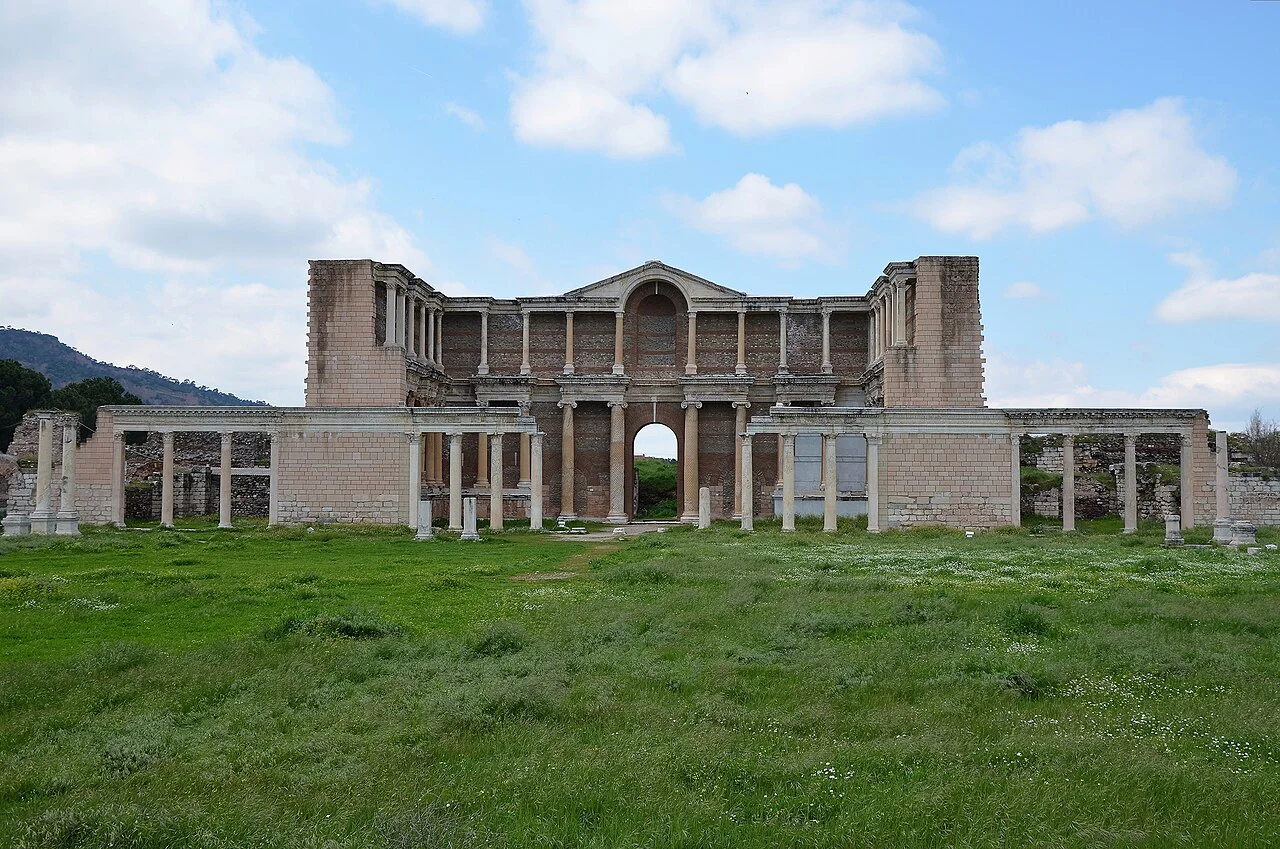
Salihli · 89 km
Sardis
Content & sources
Carole Raddato from FRANKFURT, Germany · CC BY-SA 2.0