Stanza · Audio guide
Knidos Audio Guide
A place to remember. A story to take with you.
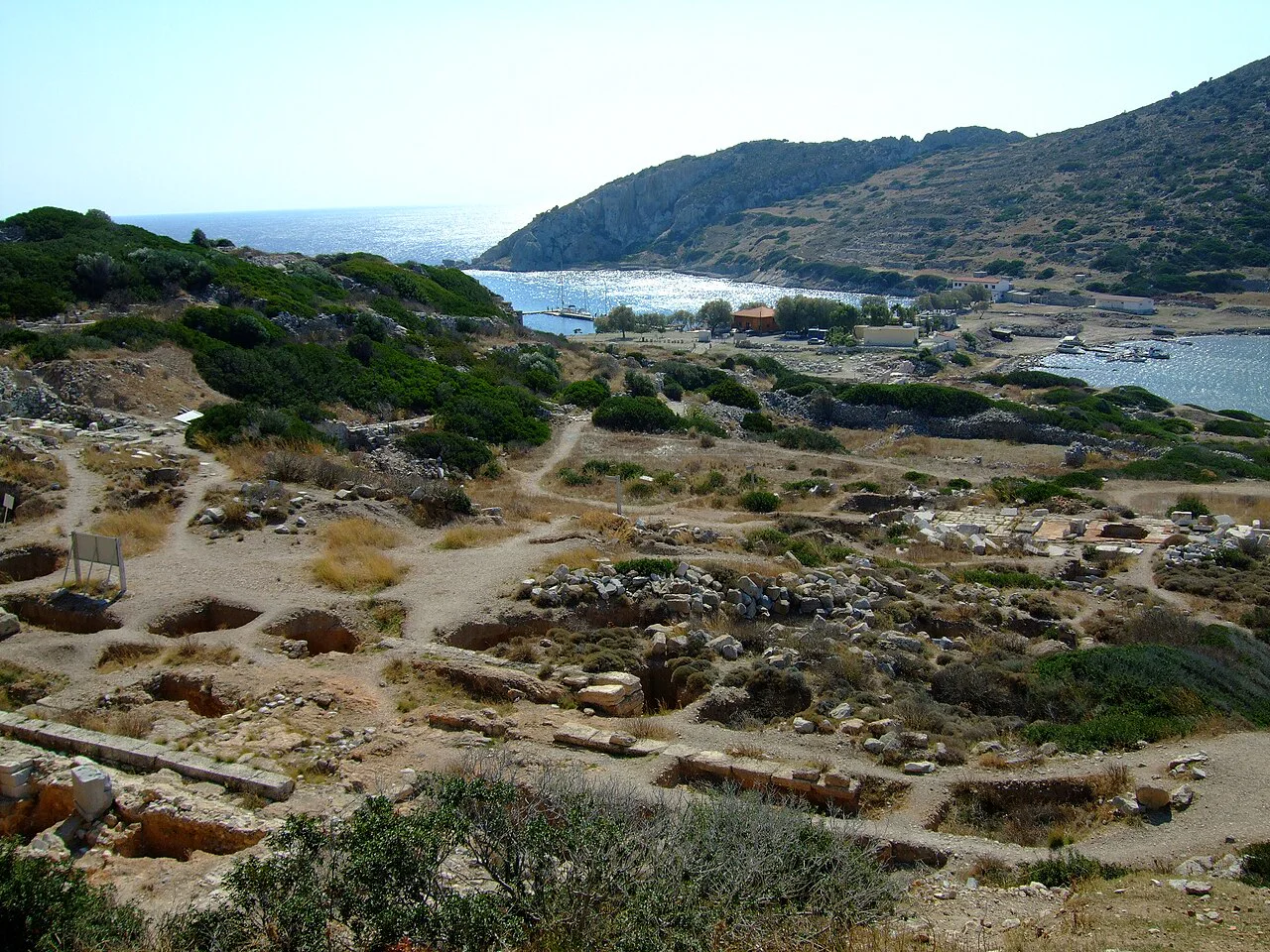
Knidos was a Greek city in ancient Caria and part of the Dorian Hexapolis in south-western Asia Minor. It was situated on the Datça peninsula in modern-day Turkey.
Download Stanza, then search for “Knidos”.
About the tour
One guide. Your kind of visit.
Knidos was a Greek city in ancient Caria and part of the Dorian Hexapolis in south-western Asia Minor. It was situated on the Datça peninsula in modern-day Turkey.
Ready when you are.
- 01Get the free Stanza app.
iOS & Android
- 02Find your guide.
“Knidos”
- 03Download before you go.
Works offline
Audio guide / 14 narrated stops
Inside the guide
Get to know a few of the stories before you go. Open a stop to read more.
01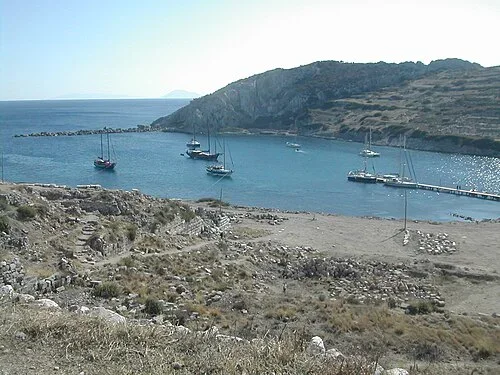 The Commercial Harbor and Ancient Moles
The Commercial Harbor
Welcome to Knidos, a Greek city that grew rich on the sea. It stood on the Datça peninsula, on the southern shore of what is now the Gulf of Gökova in southwest Turkey. Together with Halicarnassus, Kos and three cities of Rhodes, it belonged to the Dorian Hexapolis, a league of six Dorian cities. Its position was made for trade, and the Knidians grew so wealthy that they sent out colonies of their own, to the island of Lipara and to a city in the Adriatic. The town was built partly on the mainland and partly on Triopion island, and between them lay two harbors. The larger, southern one is the broad blue basin in this view, where trading ships moored under the hills. Much of this city's story, from its theaters to its famous statue, follows from ships and the money they brought.
Photo: Thérèse Gaigé · CC BY-SA 3.0
02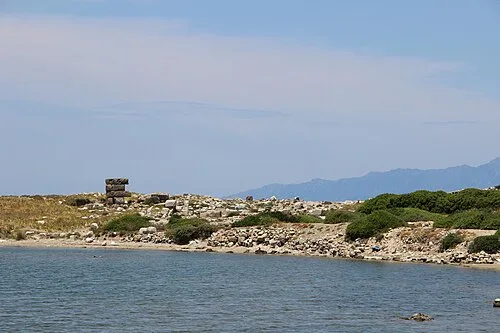 The Commercial Harbor and Ancient Moles
The Ancient Breakwater
The harbor did not shelter the ships on its own. The ancient builders closed the bay off with two strongly built moles, long breakwaters reaching out into the sea. They were raised so that vessels could lie safe whatever the wind was doing. What is remarkable is how much of them survives: they are still in good part entire, a rare survival among ancient harbor works. The low stony line running out into the water is their work, holding the same curve it held for merchant captains two thousand years ago.
Vadim Indeikin · CC BY-SA 3.0
03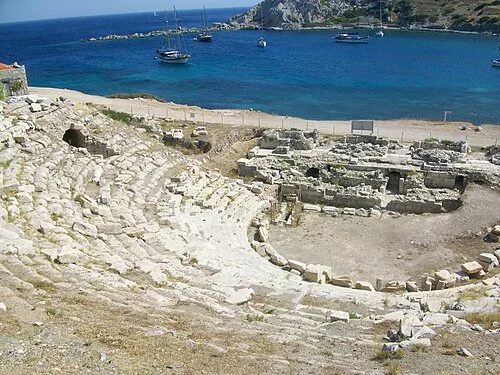 The Lower Theater
The Small Theater Above the Harbor
Knidos had two theaters, and this is the smaller one. It held about five thousand people and sat close to the commercial harbor, its seating tiers carved into the hillside. From the upper rows the audience looked straight out over the stage to the ships in the bay, so a performance here played against the harbor itself. This was where the city gathered, for plays and for public meetings. The other theater, up on the acropolis, was a far larger one of some twenty thousand seats. It has not survived, because its stones and marbles were carried off by ship in the nineteenth century. This one, by the water, is what remains of Knidian public life.
Listen in the appAnnahme der Existenz · CC BY-SA 2.0
04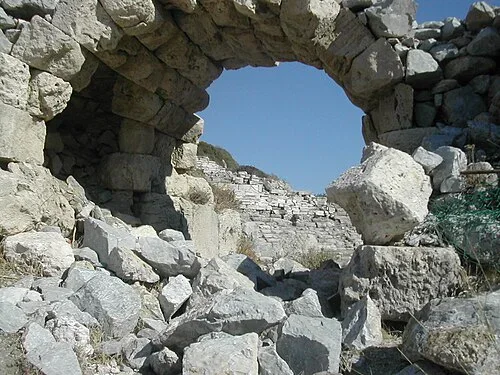 The Lower Theater
Theater Entrance Passage
The theater worked because of passages like this one. A high arch of rough stone blocks opens onto a vaulted corridor, and through corridors like it the crowds poured in and out. Five thousand spectators cannot all climb the same path, so Greek theaters of this size were threaded with arched entrances that split the audience and led each section up to its own rows. The arch you see here is one of the surviving doorways into that system, its stones tumbled but its curve still holding. It gives a rare close view of how the building was put together, block by block, to move a whole city through a hillside.
Listen in the appPhoto: Thérèse Gaigé · CC BY-SA 3.0
05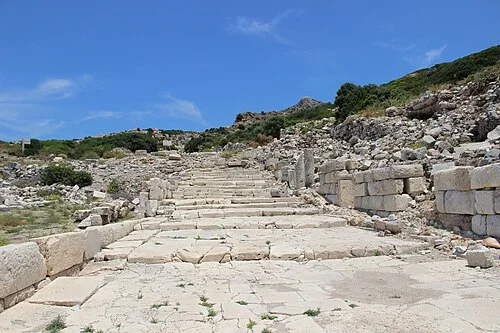 Harbor Street and the Stoa of Sostratus
Harbor Street
Knidos was laid out on a grid plan, the kind of town design associated with the architect Hippodamus. Seven steep streets ran north to south, cutting straight across the slope, and because of the hill many of them were built partly as stairways. This one was called Harbor Street, because it began at the small warship harbor. Its first seventy-five metres were excavated between 2000 and 2006. Along the eastern side the diggers uncovered a row of seven rooms, square in plan, their floors rising about half a metre from one to the next so that they stepped up the slope in time with the street. From their layout and position along the road, the excavators read them as a row of shops, probably built as part of the fourth-century BC grid plan. A shopping street, then, running from the water straight into the heart of the city.
Listen in the appVadim Indeikin · CC BY-SA 3.0
06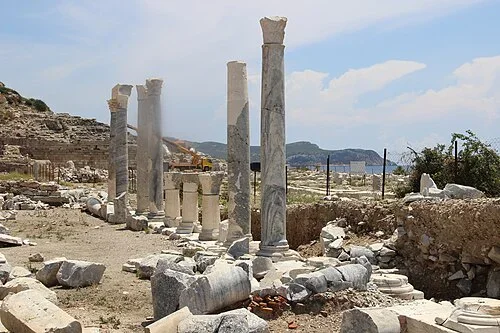 Harbor Street and the Stoa of Sostratus
The Stoa of Sostratus
This long colonnade of marble columns is the Stoa of Knidos, and its architect was the most celebrated Knidian of all, Sostratus. He built it in the third century BC, a hall of one hundred and thirteen metres long and sixteen wide. Inside, small rooms of about five by four metres opened south onto the square in front, one after another. Rescue excavations have been running here since 1996, and about two-thirds of the building has now been uncovered. Sostratus went on to far greater fame elsewhere: he was the builder of the great Pharos of Alexandria, the lighthouse counted among the Seven Wonders of the Ancient World. So the man who lit the harbor of Egypt learned his trade in a harbor town like this one.
Listen in the appVadim Indeikin · CC BY-SA 3.0
07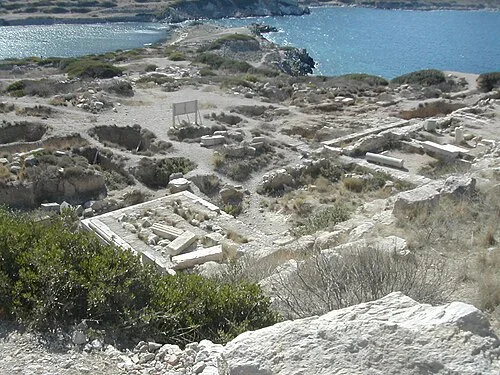 Terrace of Apollo Karneios and the Byzantine Basilica
The Doric Temple of Apollo Karneios
Scattered across this terrace lie the remains of a temple known as the Pink Temple, for the grey-pink limestone it was built from. It stood on a rectangular podium in the Doric order, a peripteros of six columns by thirteen, on a base about twenty-three by thirteen and a half metres. Its exact date is disputed, with the second century BC as one argued-for guess. Even its god is uncertain. A statue base found here, from the Early Roman period, carries an inscription mentioning a dedication to Apollo Karneios, and on that evidence the temple is thought to have belonged largely to him. But the attribution rests on that single later inscription, so the building keeps its secrets. Archaeology often ends this way: a fine temple, and one line of writing to name its owner.
Listen in the appPhoto: Thérèse Gaigé · CC BY-SA 3.0
08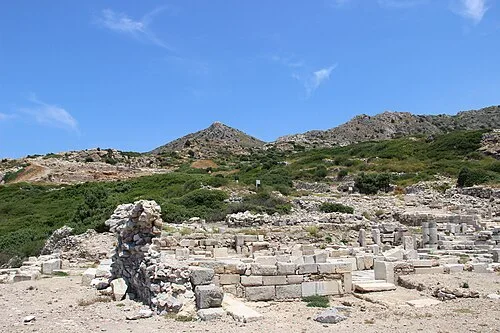 Terrace of Apollo Karneios and the Byzantine Basilica
The Byzantine Church
In the Early Byzantine period a church was built on this terrace, quite possibly using blocks from the old temple in its walls. Colorful mosaic floors from the churches of the site can still be seen today. The change of building marked a change of faith, but not a decline into emptiness. Knidos was still a considerable town, with Christian tombs common in the surrounding country and many Byzantine-style buildings in the ruins. Its bishops travelled to the great councils of the church, including Chalcedon in 451. In 458 the bishops of Caria, the province Knidos belonged to, wrote jointly to the emperor after the murder of the patriarch of Alexandria. Only later did the city slowly fade.
Listen in the appVadim Indeikin · CC BY-SA 3.0
09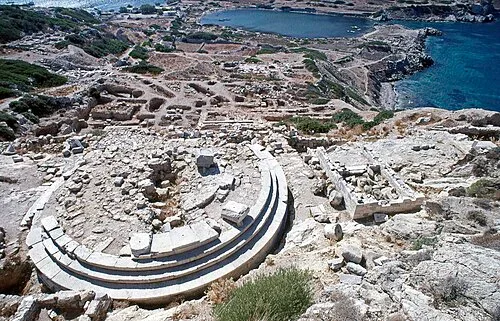 The Sanctuary of Aphrodite
The Circular Temple of Aphrodite
The finest spot in the whole city belonged to Aphrodite. Her temple stood on the terrace above the town, in a position commanding both harbors at once, and it was built on a circular plan, seventeen metres across. That roundness made it unusual in itself; Greek temples are normally rectangular. The statue of the goddess stood at its center, and the temple's doors all opened toward her, so that a visitor stepping inside saw her framed by the doorway. Today only the round foundation survives, the ring of stone visible here. In its day this sanctuary drew travelers from across the Mediterranean.
Listen in the appPhoto: Dosseman · CC BY-SA 4.0
10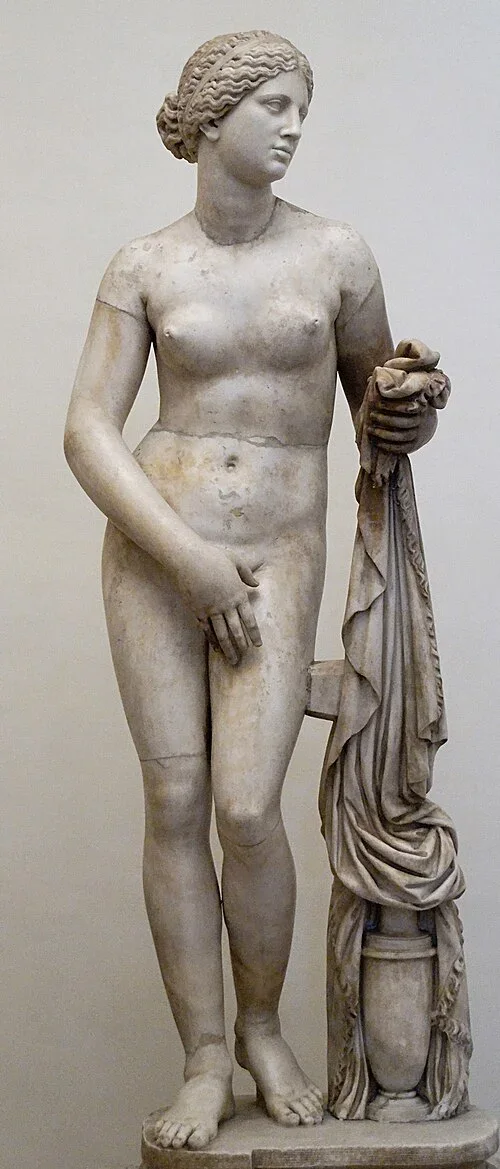 The Sanctuary of Aphrodite
The Aphrodite of Knidos (Roman Copy)
The sculptor Praxiteles made two statues of Aphrodite, one draped and one nude, and let his customers choose. The people of Kos looked at the nude one and refused it; they bought the draped figure instead. The Knidians took the bold one, and it changed the history of art. It is counted as the first life-sized female nude in Greek art, and it turned their city into a destination. Travelers crossed the sea specifically to see her, standing in her round temple above the two harbors. The original has perished, but Roman-era copies survive, and the most faithful of them is in the Vatican Museums. The figure shown here is one of those copies, now in the Palazzo Altemps in Rome, made centuries after Praxiteles, by sculptors who clearly could not let the image die. What the ancients sailed here to see, you can meet in marble.
Listen in the appCopy of Praxiteles; restorer: Ippolito Buzzi (Italian, 1562–1634) · Public domain
- 11
The Sundial of Eudoxus
A carved marble instrument from the city of the astronomer Eudoxus.
- 12
Inside the Sundial's Bowl
Inside the bowl: engraved lines that caught the sun's shadow.
- 13
The Military Harbor
The war harbor with its chain, its towers, and the memory of a great naval victory.
- 14
The Isthmus to Cape Triopion
The sandy isthmus and the headland where six Dorian cities once met.
Knidos
Frequently asked questions
How much does the guide cost?
Free app download. Listed guide price: $0.99. Guide price shown in the app. Audio guide only. Venue admission is separate.
Can I listen without internet?
Yes. Download the guide’s audio, images, and maps in the app before your visit. Your downloaded content is then available offline.
Can I listen in my language?
This audio guide is available in 15 languages, including English.
Do I need to follow a schedule?
No. This is a self-guided experience. Choose your stops, pause whenever you like, and return to a story at your own pace.
At your own pace
Explore Knidos.
Download Stanza, then search for “Knidos”.
Free app download · Guide price shown in the app
Keep exploring
Nearby audio guides
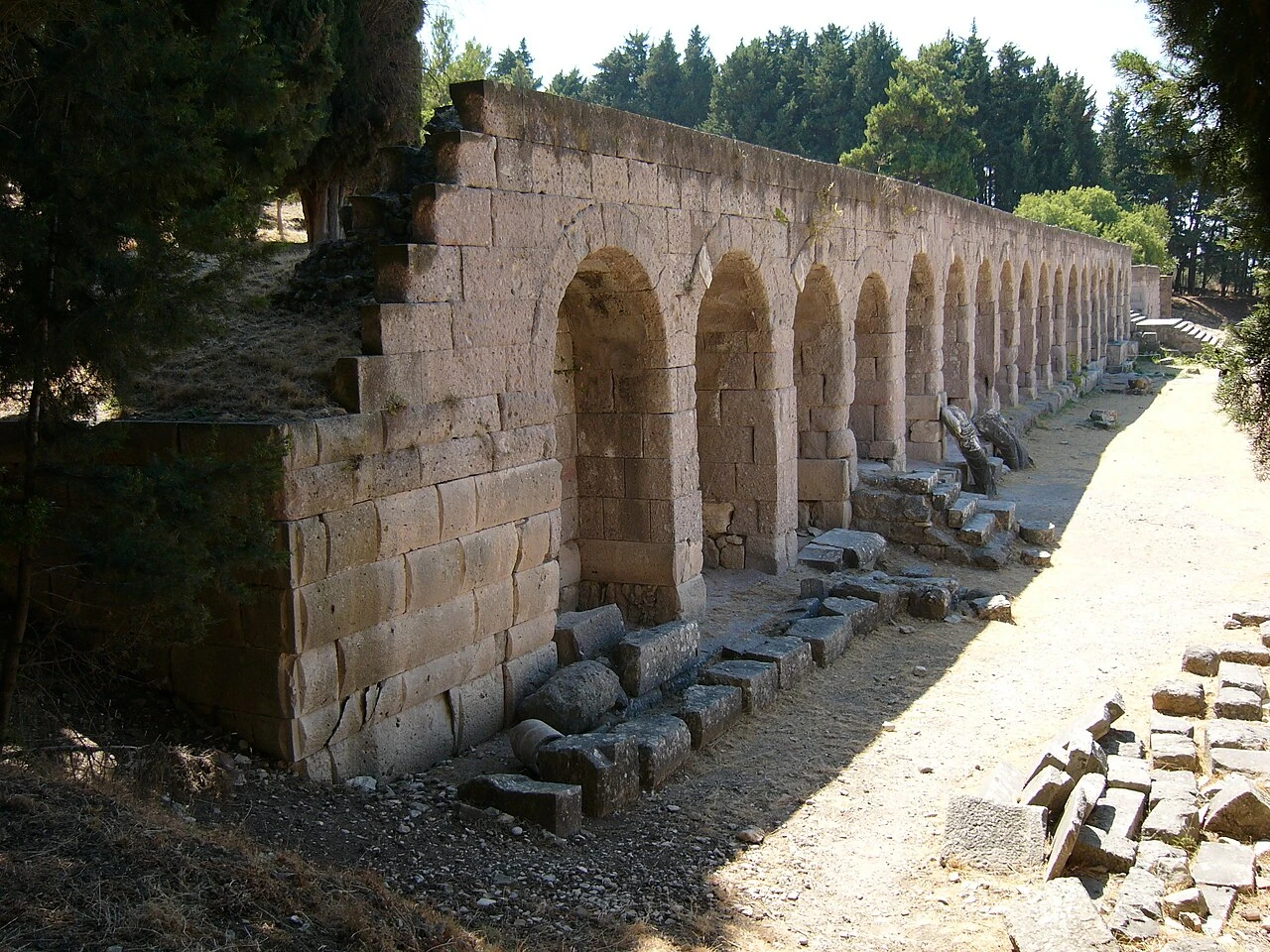
Kos · 24 km
Asclepeion of Kos
Content & sources
Photo: Cup of coffee · CC BY-SA 3.0
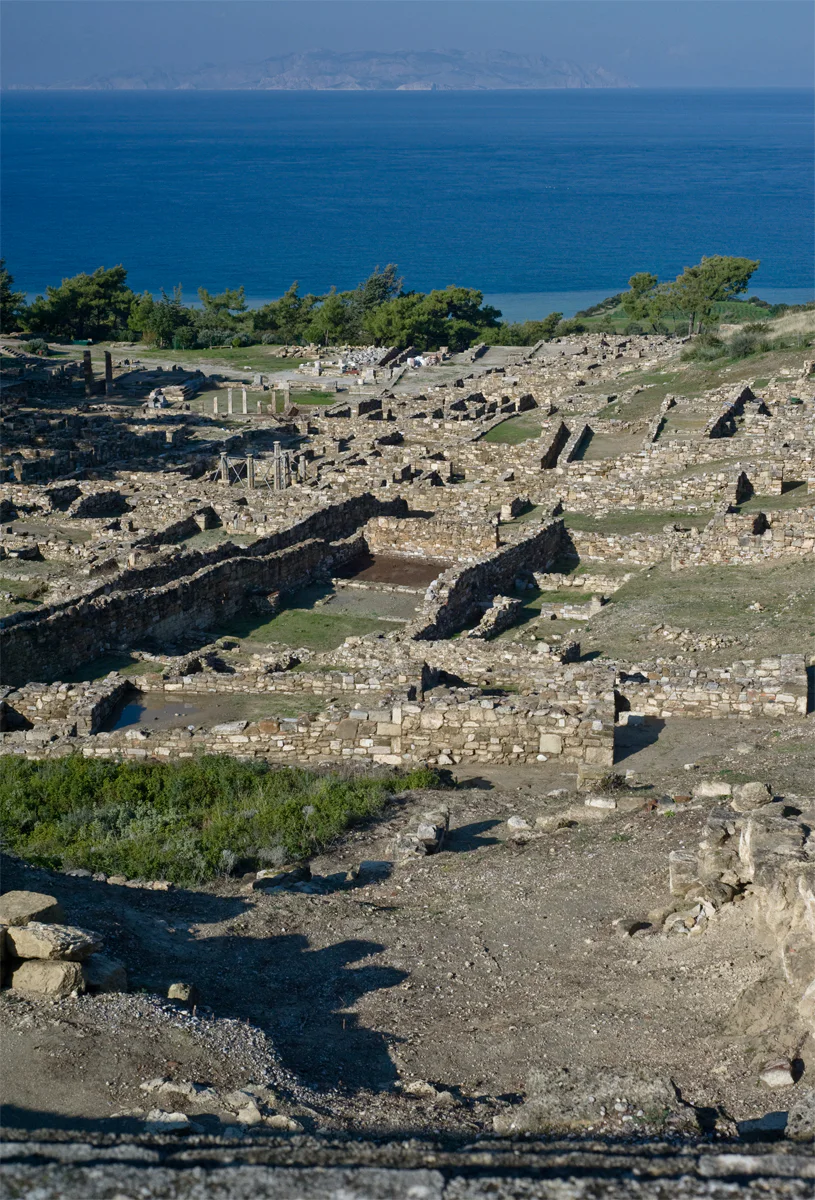
Kalavarda · 62 km
Κάμειρος
Content & sources
Photo: Thanasis Christodoulou · CC BY-SA 4.0
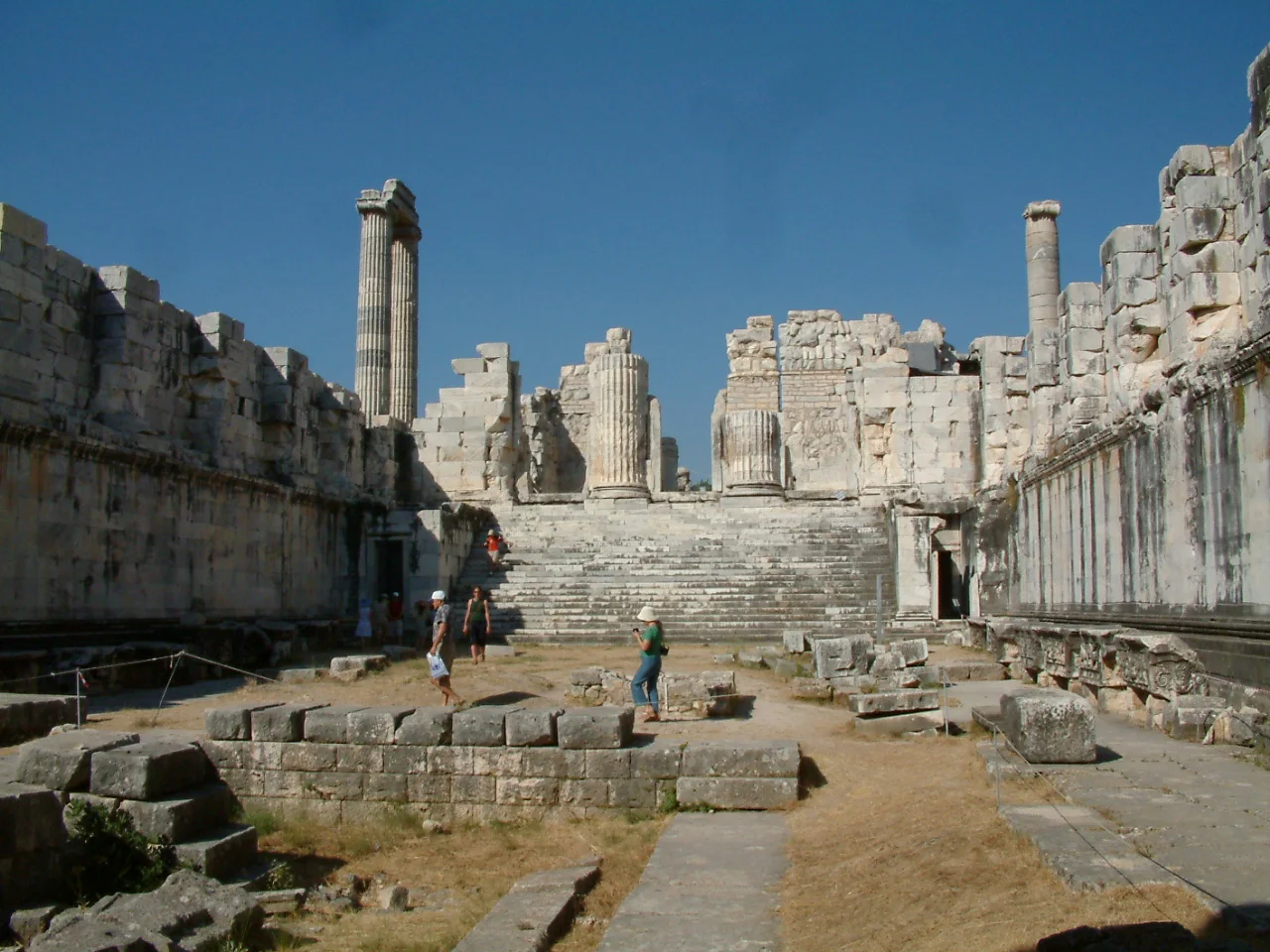
Didim · 78 km
Didyma
Content & sources
Photo: Radomil · CC BY-SA 3.0
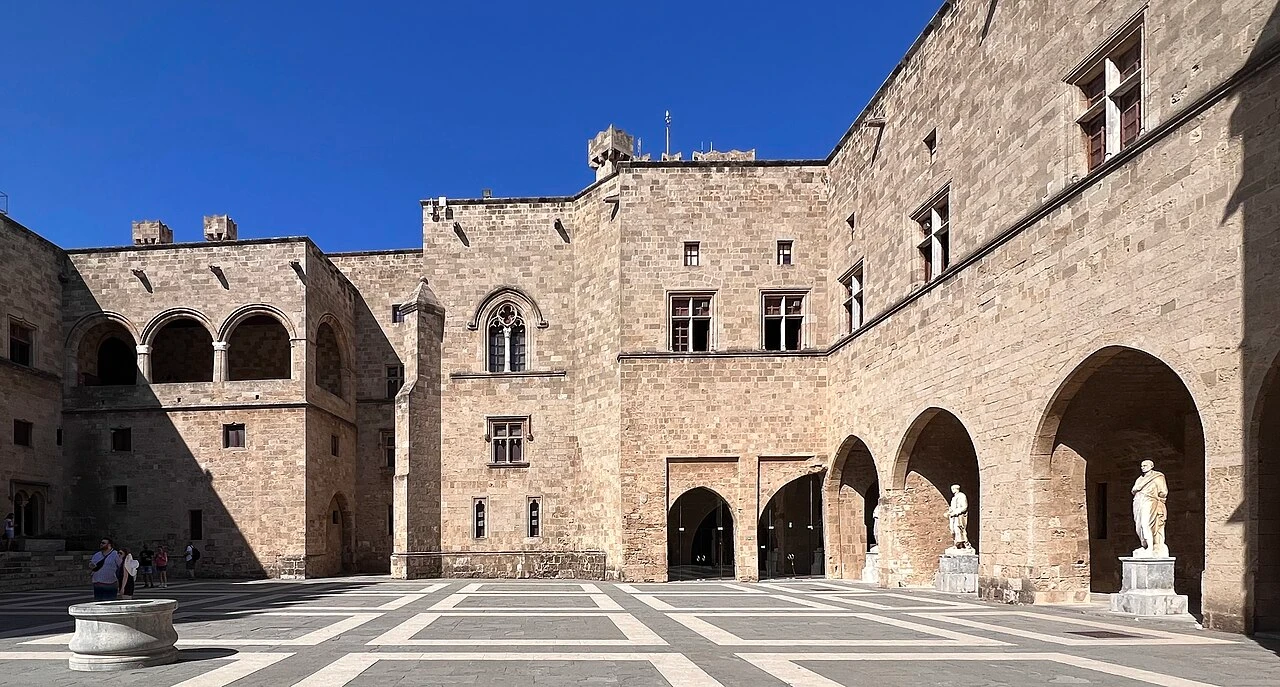
Rhodes · 80 km
Palace of the Grand Master of the Knights of Rhodes
Content & sources
Burkhard Mücke · CC BY-SA 4.0