Stanza · Audio guide
Palace of the Grand Master of the Knights of Rhodes Audio Guide
A place to remember. A story to take with you.
This is a medieval fortress and palace built by the Knights Hospitaller in the 14th century, located within the historic center of Rhodes. It served as the administrative center and the residence of the Grand…
Download Stanza, then search for “Palace of the Grand Master of the Knights of Rhodes”.
About the tour
One guide. Your kind of visit.
This is a medieval fortress and palace built by the Knights Hospitaller in the 14th century, located within the historic center of Rhodes. It served as the administrative center and the residence of the Grand Master.
Ready when you are.
- 01Get the free Stanza app.
iOS & Android
- 02Find your guide.
“Palace of the Grand Master of the Knights of Rhodes”
- 03Download before you go.
Works offline
Audio guide / 31 narrated stops
Inside the guide
Get to know a few of the stories before you go. Open a stop to read more.
01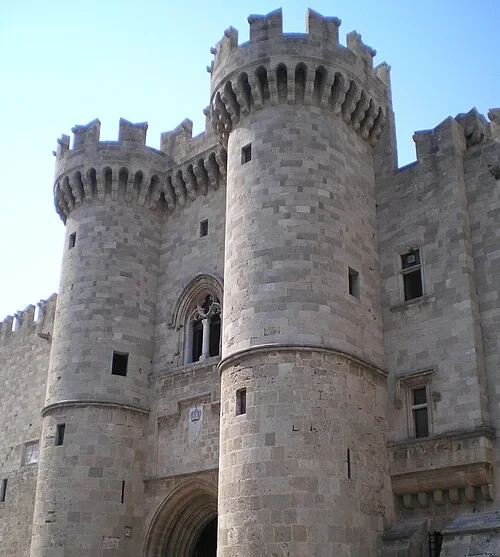 The Grand Entrance and Towers
The Fortress on the Hill
The Palace of the Grand Master sits dominantly atop the hill, overlooking the ancient and medieval city of Rhodes. This site has been a focal point of the island's history for over 1,300 years, serving as a Byzantine citadel before the arrival of the Knights. Local tradition and some historical theories suggest that these very foundations might rest upon the ruins of an ancient temple dedicated to Helios, the sun god. This same location is often cited as a possible site for the legendary Colossus of Rhodes, one of the Seven Wonders of the Ancient World. When the Knights Hospitaller, a Catholic military order, seized Rhodes in the early 14th century, they transformed the existing fortress into this imposing palace. It served as their administrative headquarters and the private residence of the Grand Master, the leader of the Order. The architecture you see reflects a long history of defense and governance, acting as the nerve center for a military state that once controlled the shipping lanes of the eastern Mediterranean.
Carlos Delgado · CC BY-SA 3.0
02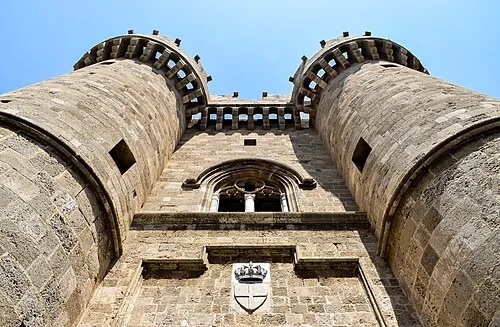 The Grand Entrance and Towers
The Twin Towers
These two cylindrical towers dominate the main entrance, presenting a formidable image of medieval strength. While their foundations and lower sections date back to the 14th century, their current appearance is significantly shaped by a reconstruction project led by Italian architect Vittorio Mesturino between 1937 and 1940. During the Italian occupation of the Dodecanese islands, the palace was largely a ruin following a massive explosion in the 19th century. The Italians decided to rebuild it on a grand scale to serve as a prestigious summer residence for both the Italian King, Victor Emmanuel the Third, and the dictator Benito Mussolini. Mesturino aimed to recreate the Gothic atmosphere of the Knights' era, though he often prioritized dramatic effect over strict historical accuracy. The result is a structure that looks ancient but was actually modernized to accommodate twentieth-century political ambitions. Notice the heavy masonry and the way the towers taper slightly toward the top, a design choice intended to evoke the military power of the original Knights Hospitaller.
Photo: Julian Lupyan · CC0
03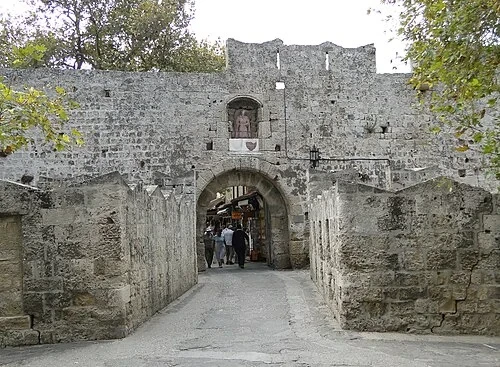 The Grand Entrance and Towers
Saint Anthony's Gate
Saint Anthony’s Gate illustrates the sophisticated defensive strategy used by the Knights Hospitaller. The palace was not just a residence but a fortress within a fortress, designed to be the final point of resistance if the city’s outer walls were ever breached. This gate is part of a massive four-kilometer circuit of fortifications that remains one of the best-preserved examples of medieval military engineering in Europe. The architecture here was deliberately designed to place attackers at a disadvantage. The narrow passageways and sharp turns created bottlenecks, forcing enemy soldiers into confined spaces where they could be easily targeted by defenders from above. Every angle of the stonework served a purpose, minimizing blind spots for the archers and guards stationed on the ramparts. For the Knights, control of such gates was essential for survival during the numerous sieges they faced. The heavy blocks of local stone and the deep, arched entryways reflect a time when the security of the entire island depended on the strength of these walls.
Listen in the appBernard Gagnon · CC BY-SA 4.0
04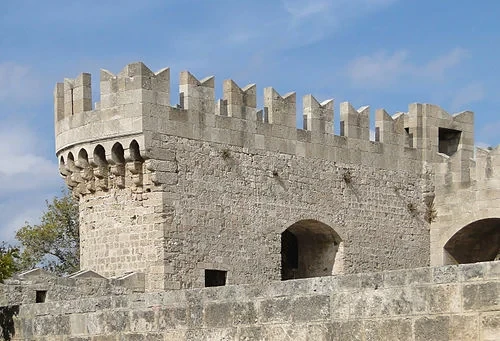 The Cannon Gate
Defensive Machicolations
The overhanging stonework at the top of the walls, supported by decorative-looking brackets, served a lethal purpose in medieval warfare. These structures are known as machicolations. In the event of a siege, the openings between the brackets allowed defenders to drop heavy stones, boiling oil, or other liquids directly onto any attackers who had managed to reach the base of the wall. This design solved a major problem in defensive architecture: the difficulty of attacking soldiers positioned directly below the ramparts without exposing the defenders to enemy fire. By creating a gallery that projected out beyond the wall’s face, the Knights could maintain a vertical line of fire. It was a practical and highly effective piece of military engineering. While the machicolations on the current palace are part of the 20th-century reconstruction, they faithfully replicate the tactical features found in original 14th and 15th-century fortresses. The sheer height of the walls combined with these overhanging platforms made any attempt to scale the palace using ladders an incredibly dangerous undertaking for enemy troops.
Listen in the appBernard Gagnon · CC BY-SA 4.0
05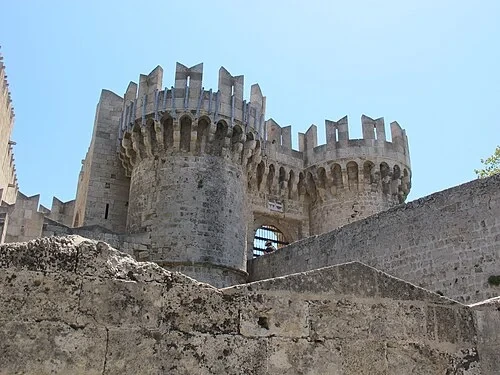 The Cannon Gate
The Cannon Gate marks a clear boundary between the city's residential streets and the sovereign precinct of the Knights. The walls here are exceptionally thick, designed to withstand the increasingly powerful artillery of the later Middle Ages. At the top of the walls, you can see the crenelated battlements, the tooth-like structures that provided cover for archers and, in later centuries, riflemen. These notches allowed defenders to peek out and fire before ducking back behind the stone for protection. The massive scale of the stonework and the depth of the arched tunnels highlight the priority given to security. As you walk through, consider the layers of stone that once separated the high-ranking Knights from the bustling medieval port below.
Listen in the appPhoto: Sailko · CC BY-SA 3.0
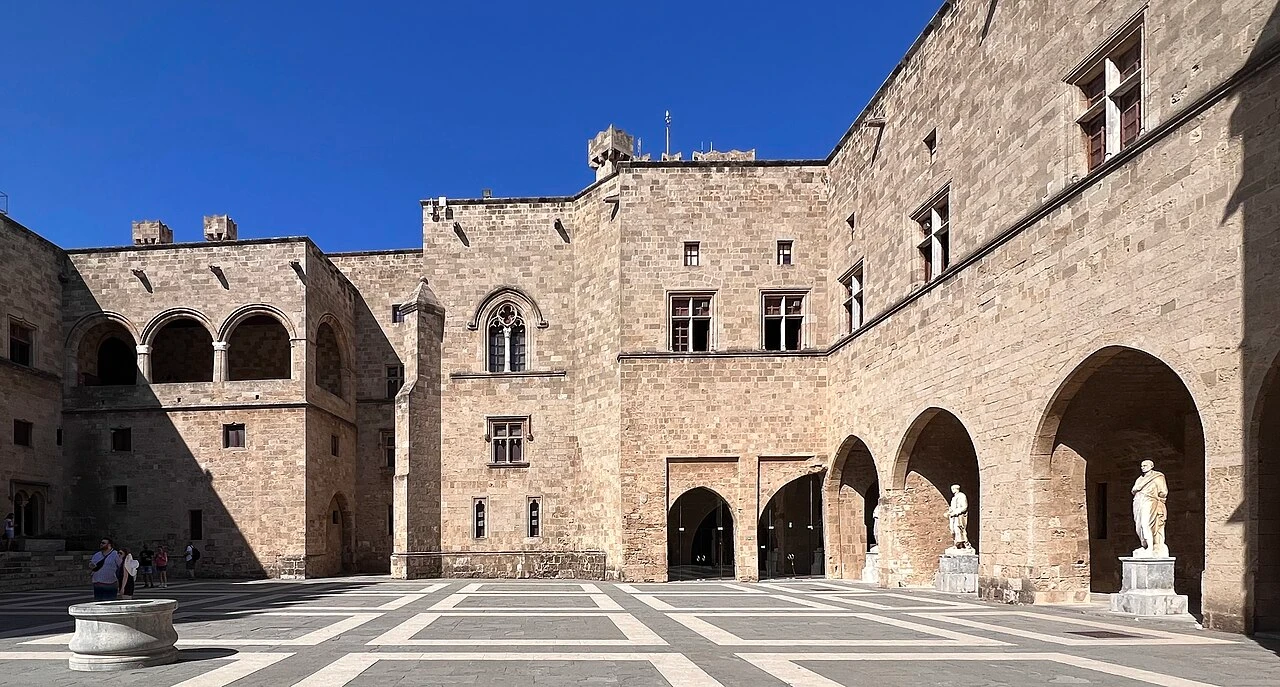
06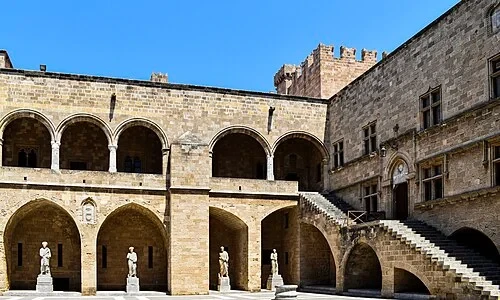 The Central Courtyard
The Grand Courtyard
The Grand Courtyard is a central feature of the palace, designed to allow light and air into the surrounding rooms while providing a large, secure space for gatherings. The architecture here follows a dual-level plan common in medieval aristocratic residences. The ground floor, characterized by sturdy arcades, was originally used for utilitarian purposes, such as storage rooms and stables for the horses of the high-ranking Knights. In contrast, the upper floor, which overlooks the courtyard from its vaulted loggias, housed the Grand Master’s private apartments and official reception rooms. The large windows and more decorative stonework of the upper level reflect its higher status. The geometric paving you see today is a relatively modern addition, installed during the Italian reconstruction in the 1930s. Before that, the courtyard floor would likely have been packed dirt or simple cobbles, much more suited to the heavy traffic of soldiers and horses. This open space also served as a military staging area where the Knights would assemble before departing for battle or parades.
Listen in the appBurkhard Mücke · CC BY-SA 4.0
07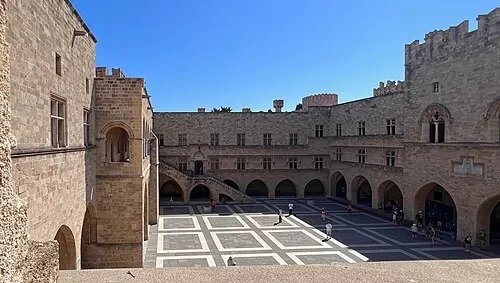 The Central Courtyard
The Heart of the Order
The ground-floor arcades house several statues, but the walls themselves tell a more dramatic story. In 1856, a massive disaster struck when lightning hit a nearby church where the Ottoman administration had stored a large supply of old gunpowder. The resulting explosion was so powerful that it destroyed much of the upper floors of the palace and many surrounding buildings. For decades afterward, the palace remained largely in ruins, a shell of its former medieval grandeur. The structure you are exploring today is essentially the Italian rebuilding of the 1930s, the same project that gave the twin towers at the entrance their present look. Those restorers set the ancient statues in these arcades to fill the empty spaces; the next stop, a statue from the island of Kos, explains where they came from and why.
Listen in the appBurkhard Mücke · CC BY-SA 4.0
08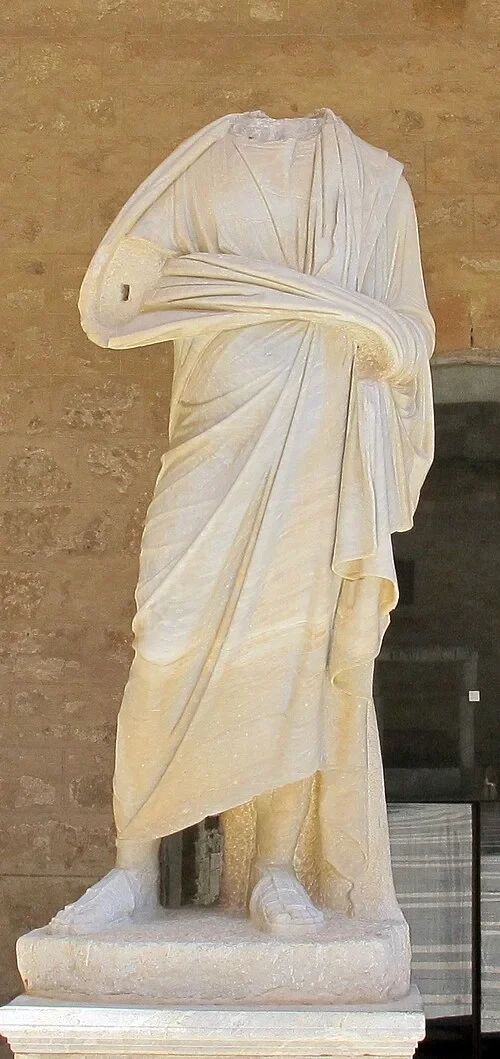 The Central Courtyard
Statue from Ancient Kos
This second-century Roman statue is one of many ancient artifacts brought to Rhodes from the nearby island of Kos during the period of Italian rule. When the palace was being rebuilt in the 1930s, the Italian administration wanted to decorate the interior and exterior with genuine antiquities to enhance the sense of historical continuity. By populating the palace with Roman finds from across the Dodecanese, the Italians were making a deliberate political statement. They sought to connect their modern presence on the island to the glorious classical past of the Roman Empire, suggesting that they were the rightful heirs to this territory. The statue depicts a draped figure in a traditional pose, showcasing the refined craftsmanship of the Roman period. Notice the intricate folds of the clothing and the balanced proportions of the figure. While it was not originally part of the Knights' palace, its presence here today reflects the layered history of the building and the various cultures that have claimed and reshaped this site over the centuries.
Listen in the appPhoto: Sailko · CC BY-SA 3.0
09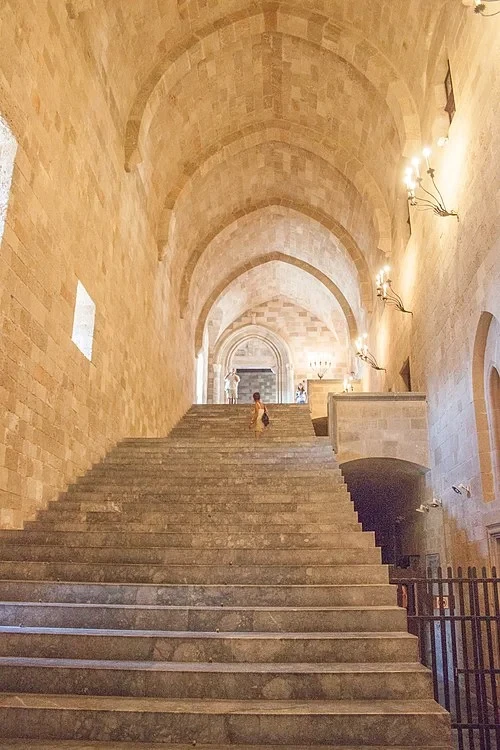 The Grand Staircase
Climbing the Grand Staircase takes you from the functional ground floor up to the piano nobile, or noble floor, where the most important administrative and residential rooms were located. The staircase itself is an exercise in architectural prestige. Notice the high, pointed Gothic arches and the sheer scale of the stone blocks used in the construction. Everything here was designed to impress visiting dignitaries, ambassadors, and fellow Knights with the power and wealth of the Order. The wide steps allowed for a slow, dignified ascent, while the vaulted ceiling created a sense of grand, airy space despite being within a fortified palace. As you reach the top, you transition into the halls where the Grand Master would have held court and received important guests. This staircase was more than just a way to change floors; it was a ceremonial path that underscored the hierarchy of the palace. The heavy stonework remains cool to the touch, and the echoing acoustics of the stairwell serve as a reminder of the quiet, disciplined life of the religious military order that once called this place home.
Listen in the appPhoto: Szilas · Public domain
10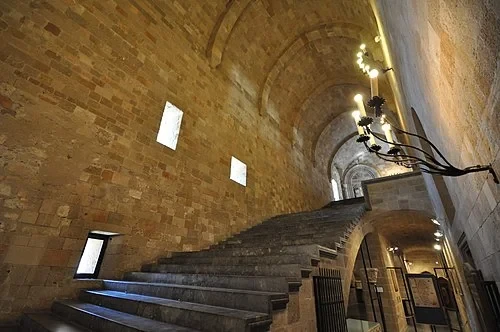 The Grand Staircase
Vaults of the Grand Master
The high, ribbed vaults of the ceilings are a striking feature of the upper floor. While the lower walls of the palace contain much original medieval masonry, these upper vaults were primarily constructed during the massive Italian restoration in the 1930s. Vittorio Mesturino, the Italian architect you first heard about at the entrance towers, was tasked with rebuilding the sections of the palace destroyed in the 1856 explosion. These vaults reflect his twentieth-century vision of Gothic luxury, with their sharp lines and soaring heights. They provide a sense of architectural continuity throughout the palace's interior. As you observe the intersection of the stone ribs on the ceiling, consider how this space was reimagined to serve as a prestigious residence for high-ranking officials of the Italian state, blending historical forms with modern construction techniques.
Listen in the appJorge Láscar from Australia · CC BY 2.0
- 11
Hall of the Colonnades
Enter the first of the palace's grand reception halls, filled with dark wooden furniture and chandeliers commissioned to evoke a crusader atmosphere.
- 12
Ancient Support
Notice the columns supporting the ceiling here, some of which are genuine ancient artifacts that have been incorporated into the fabric of this palace.
- 13
Chamber of the Nine Muses
Step into a room named for its spectacular second-century Roman floor, featuring a mosaic composed of thousands of tiny, hand-placed stone cubes.
- 14
The Muses Mosaic
Examine the layout of this expansive Roman floor, where circular medallions depict the mythological Muses within a complex frame of geometric patterns.
- 15
Urania, Muse of Astronomy
Look closely at this specific circle on the floor to find Urania, the Muse of Astronomy, depicted with the tools of her scientific trade.
- 16
Chamber of Medusa
This room has a noticeably more somber atmosphere than the ones we've just passed through, dominated by a circular floor mosaic.
- 17
The Gaze of Medusa
This second-century Roman mosaic presents a surprisingly human depiction of Medusa, whose hair of snakes was designed to ward off intruders.
- 18
Chamber of the Hippocamp
The heavy tapestries and chandeliers in this room were carefully chosen by Italian restorers to evoke the dignified lifestyle of a high-ranking medieval knight.
- 19
The Nymph and the Hippocamp
A mythical sea creature known as a hippocamp carries a sea nymph across the waves in this classic Roman floor mosaic.
- 20
Chamber of the Leopard
Large wooden chests called cassoni sit alongside a small, energetic mosaic depicting an exotic leopard mid-leap.
- 21
The Leaping Leopard
This Roman mosaic captures the lean power of a leopard in mid-leap, a common subject in ancient art reflecting the era's fascination with exotic wildlife.
- 22
The Laocoön Group
This is a twentieth-century replica of one of the world's most famous sculptures, an artwork with deep historical roots right here on Rhodes.
- 23
The Italian Legacy
The massive fireplace and high wooden ceiling here provide a grand frame for the sculpture, embodying the Italian vision of a noble medieval hall.
- 24
The Palace Chapel
The somber atmosphere and rib-vaulted ceiling of this chapel remind us that the Knights were a religious order as much as a military one.
- 25
Saint Nicholas in Bronze
This bronze statue depicts Saint Nicholas, the patron saint of sailors, who holds a special significance for the seafaring Knights of Rhodes.
- 26
The Governor's Office
Once the office of the Italian Governor, this room transitioned from a site of colonial administration to a venue for modern European diplomacy.
- 27
Plaque of King Victor Emmanuel the Third
A carved stone plaque preserves a direct link to the late 1930s, featuring the name of the Italian king and the coat of arms of the monarchy.
- 28
The Palace Ramparts
Walking along these outer walls, you are treading the same path as the defenders who faced a massive Ottoman army during the great siege of 1522.
- 29
Cannons of the Siege
These iron cannons represent the technological shift that forced the Knights to thicken their palace walls to an incredible twelve meters.
- 30
Street of the Knights
This perfectly preserved medieval street was once the residential heart of the Order, where Knights from across Europe lived in national inns.
- 31
A Sentinel of History
Looking back at the palace, its massive walls dominate the Rhodes skyline, standing as a physical chronicle of over two thousand years of Mediterranean power and transformation.
Palace of the Grand Master of the Knights of Rhodes
Frequently asked questions
How much does the guide cost?
Free app download. Listed guide price: $3.99. Guide price shown in the app. Audio guide only. Venue admission is separate.
Can I listen without internet?
Yes. Download the guide’s audio, images, and maps in the app before your visit. Your downloaded content is then available offline.
Can I listen in my language?
This audio guide is available in 15 languages, including English.
Do I need to follow a schedule?
No. This is a self-guided experience. Choose your stops, pause whenever you like, and return to a story at your own pace.
At your own pace
Explore Palace of the Grand Master of the Knights of Rhodes.
Download Stanza, then search for “Palace of the Grand Master of the Knights of Rhodes”.
Free app download · Guide price shown in the app
Keep exploring
Nearby audio guides
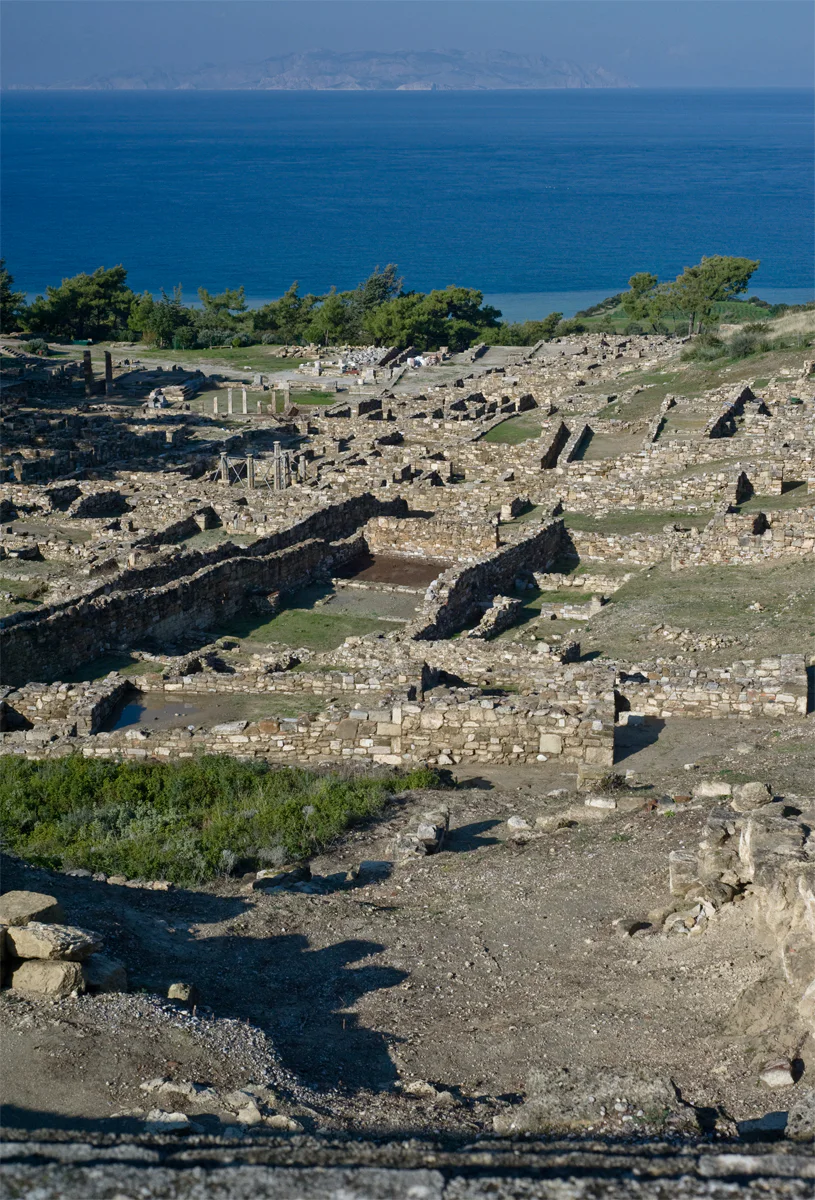
Kalavarda · 30 km
Κάμειρος
Content & sources
Photo: Thanasis Christodoulou · CC BY-SA 4.0
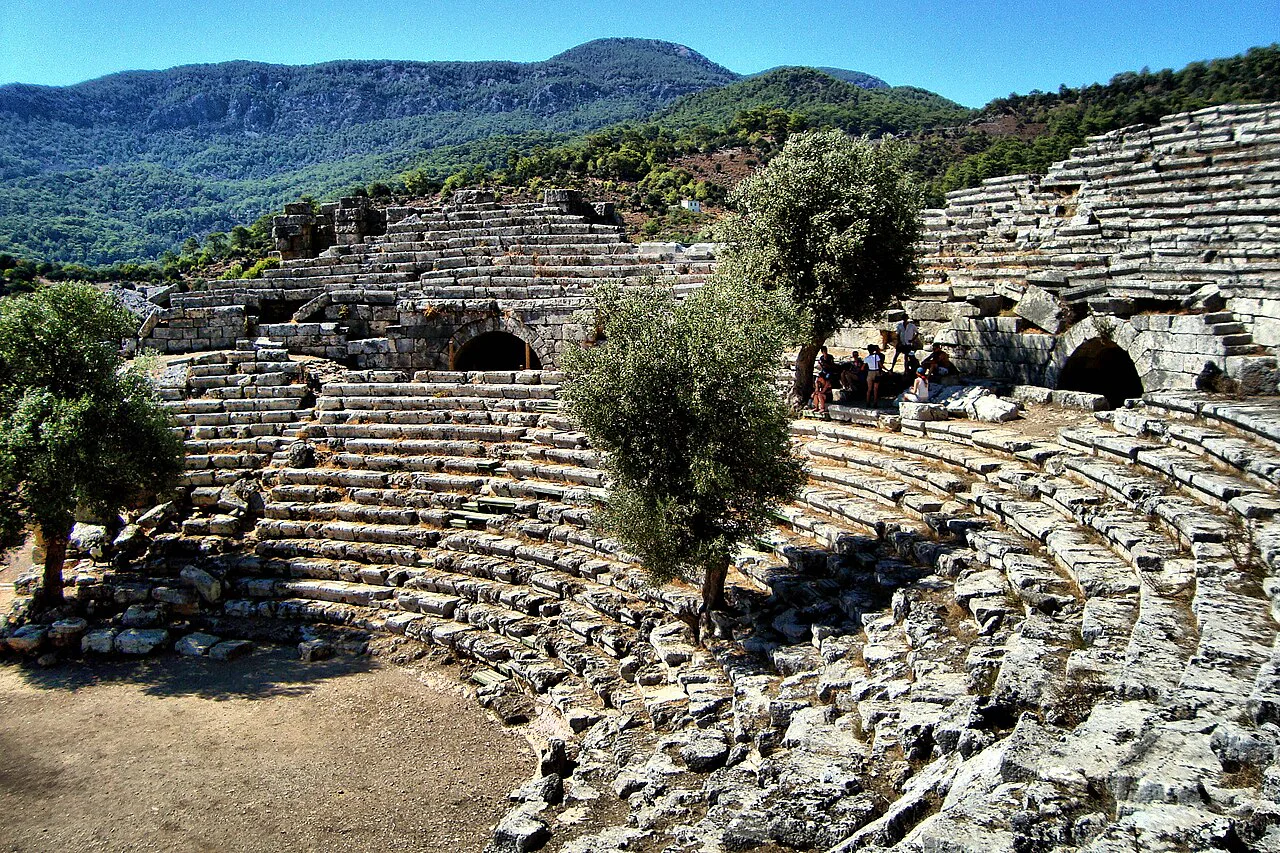
Dalyan · 56 km
Kaunos
Content & sources
HALUK COMERTEL · CC BY 3.0
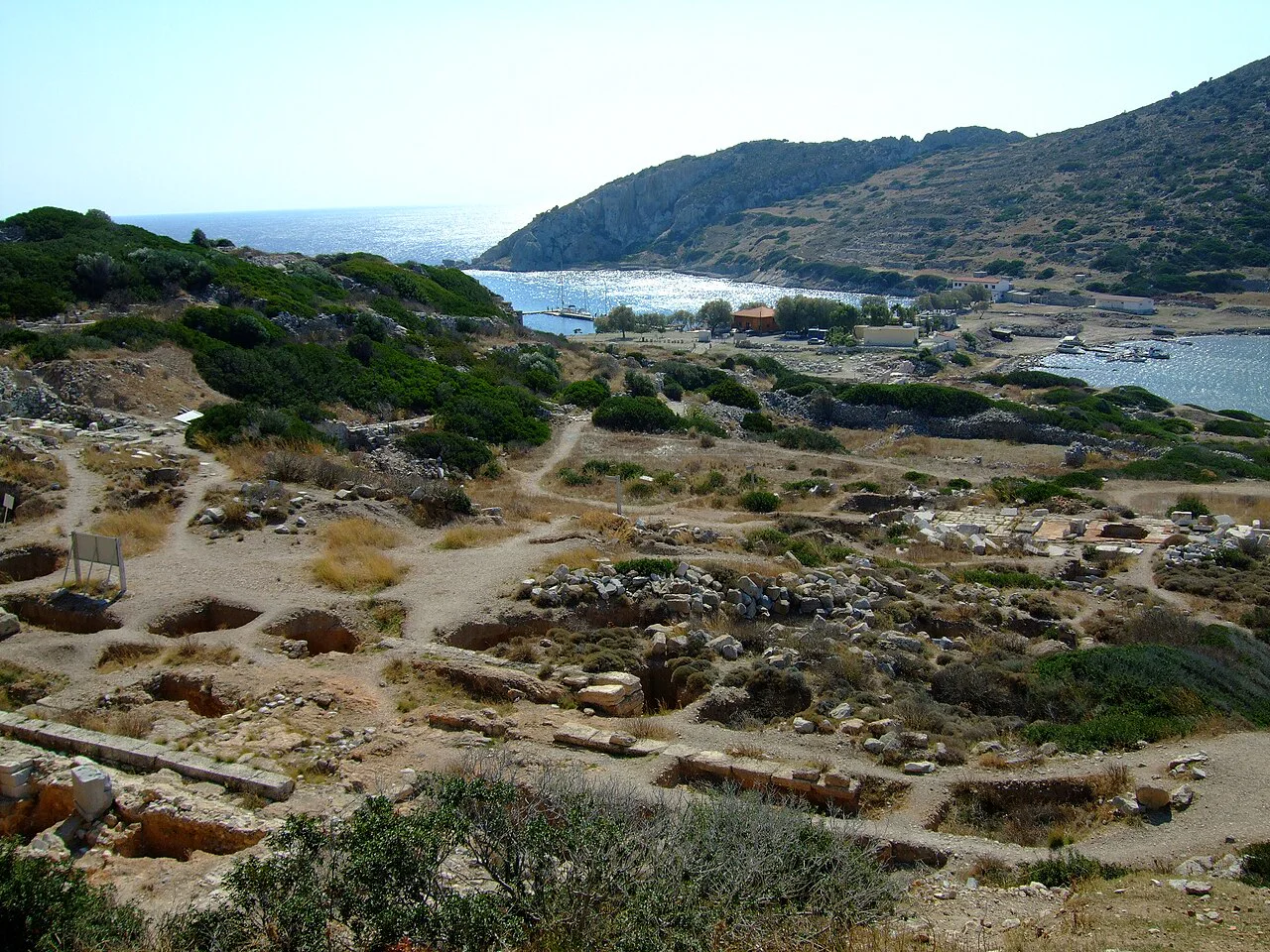
Datça · 80 km
Knidos
Content & sources
Tischbeinahe · CC BY-SA 3.0
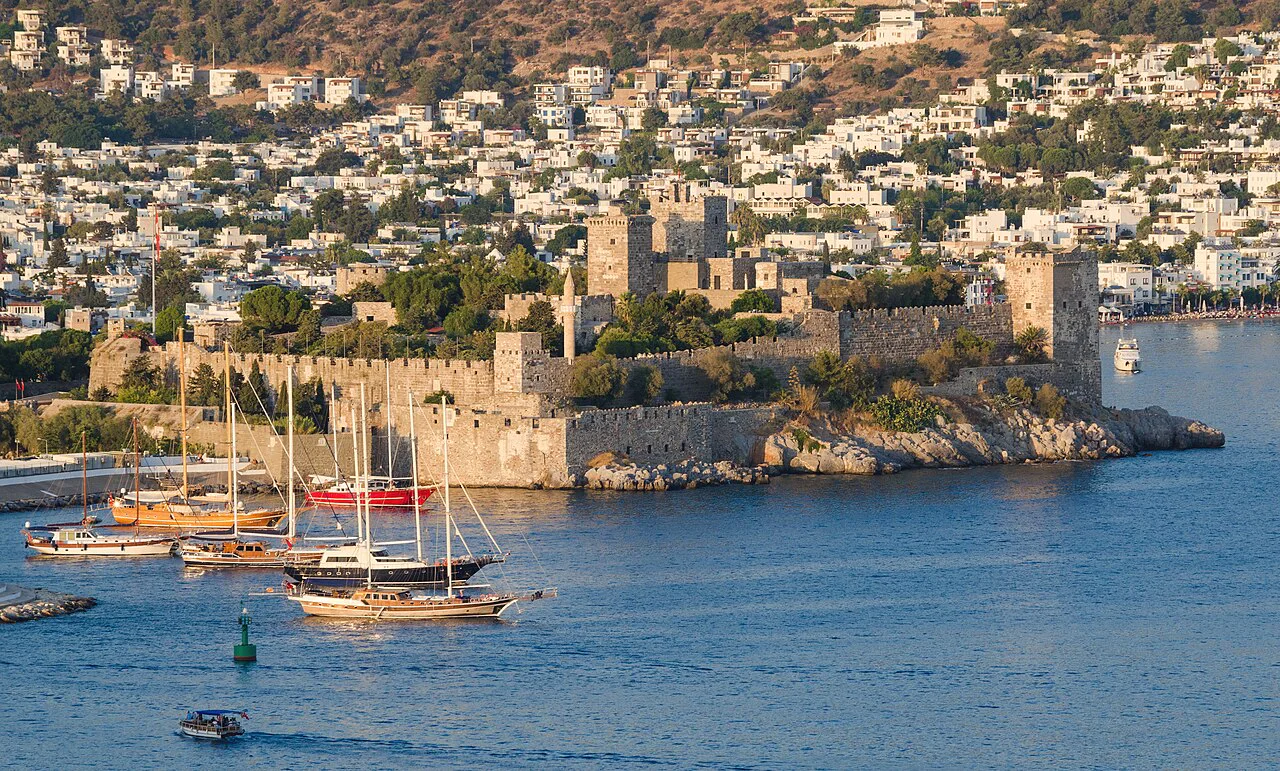
Bodrum · 96 km
Bodrum Kalesi
Content & sources
Photo: Serhio Magpie · CC BY 4.0